You should know your neighbors – so you can save money?

This story highlights an interesting gap in who knows their neighbors. Yet, this statistic is brought up so you can make sure you are not paying their utility bills. First, the statistic:
Photo by Airam Dato-on on Pexels.com

However, chatting to your neighbors is not as common as it used to be. A Pew Center study shows that fewer young Americans are familiar with their neighbors. Among adults under age 30, about a quarter (23%) claim to not know any of their neighbors, compared with 4% of those aged 65 and up.

Why might it be useful to know your neighbors?

That’s what happened to Brooke Patterson. She took to TikTok to explain how she realized that she had apparently been paying for her entire apartment building’s utility bills — for two years.

The gap cited above could be the result of multiple factors. People 65 and up might have lived in places longer. They had different social norms regarding neighborly interaction. They might not rely on technology as much in order to interact with people.

Is the primary goal to knowing your neighbors to save money? Or others might suggest your neighbors could help you look out for your property. Other primary goals for knowing your neighbors could include acting neighborly – looking out for each other, offering aid when helpful – and building community. That could come with cost savings down the road or even positive money if the character of the neighborhood helps boost property values. This might be another difference over time: what people hope to gain through social interaction.

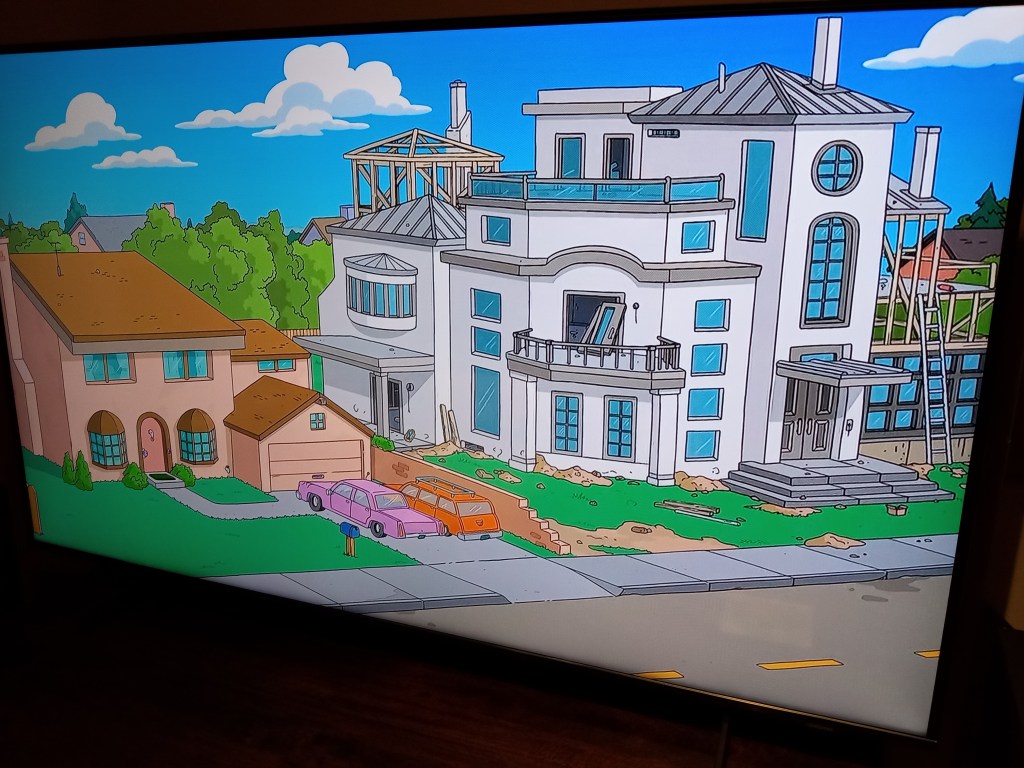
The Simpsons encounter a teardown McMansion

The Simpsons have new neighbors in Season 35 episode 3, “McMansion and Wife.” They get to know each other and enjoy spending time together. But, then the neighbors go from a modest home to a teardown McMansion:

As the new home is under construction, it is called a “reno” and then a “do-over.” Then it turns into a giant home. By my count, the teardown is 3-4 stories, is much bigger in terms of square feet and height as it towers over the Simpsons’ home, and has a mishmash of architectural features. The Simpsons live in a modest suburban home by today’s standards.

This story of a teardown McMansion within an established neighborhood is a common story across the United States. The new home can be considered disruptive by some neighbors even as others might defend the ability of property owners to do what they wish with their home and land and benefit from those changes.

One possible twist this episode briefly explores is the relationship between neighbors in these positions. Can they be friends? Can someone moving into a neighborhood build relationships and soften the blow of tearing down a house and constructing something much bigger on the same spot? Or, do teardowns usually lead to conflict between neighbors?

Neighbors fighting over the presence of pickleball at the local park

I am convinced many communities do not want basketball courts in their parks. Perhaps some also do not want pickleball, a growing sport? An example from Chicago:

Photo by Digital Buggu on Pexels.com

Disgruntled residents unhappy with the noise and the pickleball takeover of the “unique wide-open blacktop area” launched a petition to boot pickleball from the park and restore it to “a safe and open space for kids to play in Lincoln Park,” according to the petition which has garnered more than 780 signatures…

“The confrontations, complaints and frustrations are a direct result of this dishonest and unethical action,” wrote Leslie Miller, who started the anti-pickleball petition, in a March 10 update on the online petition. “Moreover, this dispute has created an atmosphere of tension and unpredictability that feels unsafe for children.”

Pickleball players have countered with their own petition in support of the game, which has attracted nearly 700 signatures so far. Myers said issues with pickleball at the park seem to stem from wanting control, and he can understand some of the counter pickleball points, such as the noise complaints, but not necessarily agree with them…

In a statement Tuesday, the Park District said it “is committed to balancing the needs and interests of the community surrounding Bauler Park. The district recently implemented a plan to dedicate space for pickleball at Bauler Park, Monday through Friday from 10 a.m. to 2 p.m. With the exception of these designated times, the space will remain open for other recreational activities during normal park hours. The Park District will continue to work with the community to identify additional locations to support the sport.”

These concerns are many of the same ones neighbors fight over in neighborhoods and communities across the United States. Who gets to control the use of the property? What land uses are desirable? What about the children? Is there too much noise? The only two common ones missing: any concerns about water (do pickleball courts contribute to water runoff, particularly compared to play areas for kids?) and property values.

On the other hand, it is good that people are using the park and are engaged with its use. Given all of the possible activities residents might want to do in the park, balancing all of these interests can be tricky. Do all parks have to offer certain amenities? How far are people willing to go to find their preferred activity? What should be left to the private sector.

Given the relatively recent rise of pickleball, perhaps this will all die down soon. Or, perhaps this fight is coming to many parks across the country as more established uses give way to more recent trends.

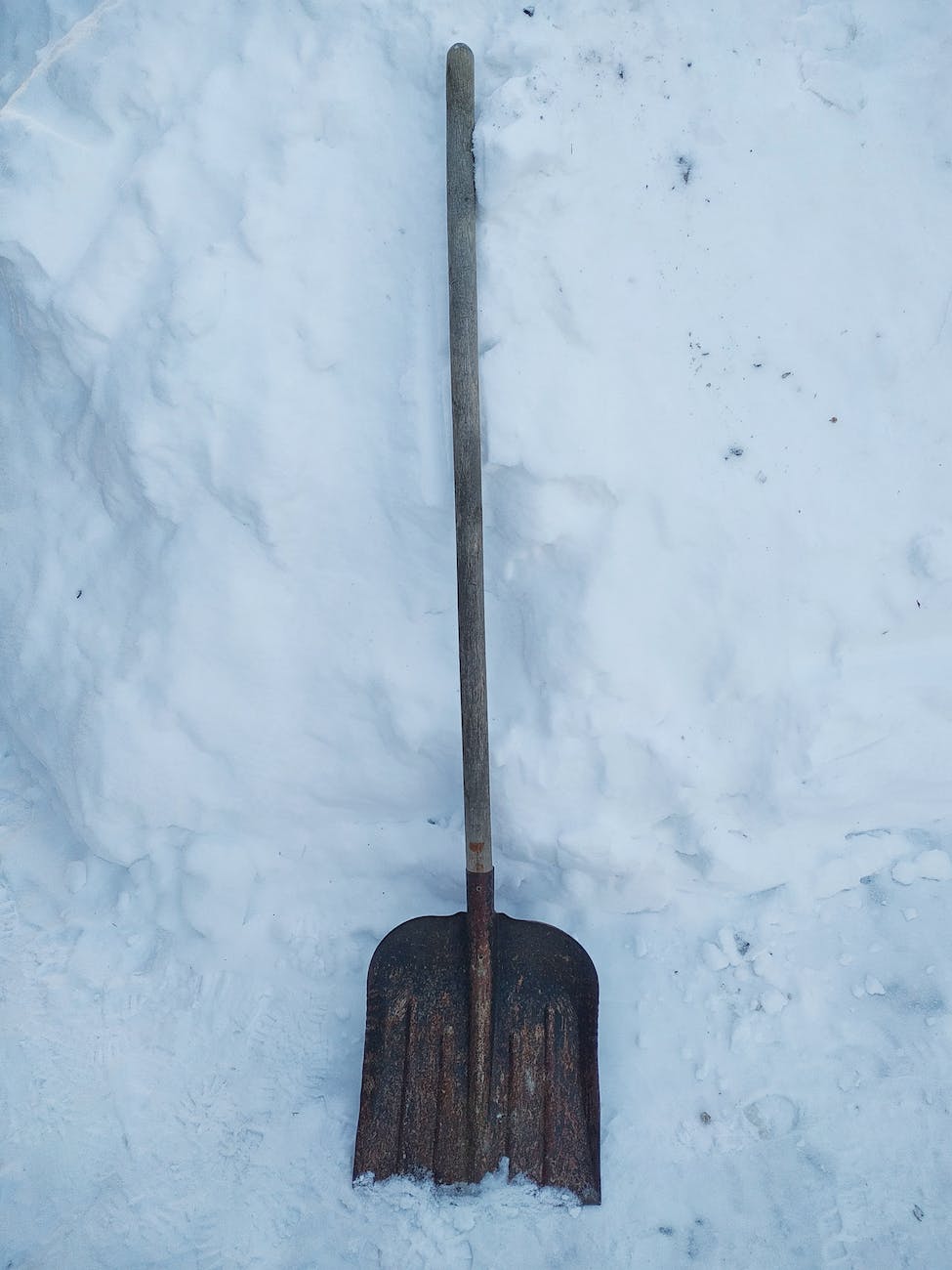
Collective efficacy and the number of sidewalks cleared of snow, Part Three

Given the issues of clearing snow on sidewalks, why not conduct a multi-site investigation of snow clearance and collective efficacy? I could imagine two different kinds of research proposals:

Photo by Vishal Rapartiwar on Pexels.com

-A lot of researchers across the United States commit to walking their neighborhoods for a week after major snow storms in the United States to see if the sidewalks are clear. They do a visual check and take some pictures to document conditions. This is all uploaded to a single site where patterns can be compared, mapped, and discussed.

-Scholars use more indirect observation, whether it is from Google Street View images of places after a snowstorm or camera feeds that are publicly available or even observations from above. Again, they could compare across locations and write up results.

With this data, researchers could look at how different characteristics of neighborhoods affect snow removal including all sorts of demographic data available through the Census, housing type and stock, and local regulations regarding snow removal.

But, perhaps what is most interesting is this question of whether snow removal on sidewalks indicates something about the collective efficacy of neighborhoods and communities. Do people help others clear sidewalks? I think of the example in Chicago of the dibs system where individuals clear out street spaces and then claim them. This system is touted as one where residents overcome the weather odds – and their neighbors – to secure their own parking. This is not a story of communities coming together to help each other. Or, I think of some of the unshoveled sidewalks I have observed around schools in my community. If property owners will not clear snow for kids, when would they?

Across three posts, this is the question that could be answers: what are the kinds of communities that collectively come together to clear snow from the sidewalks?

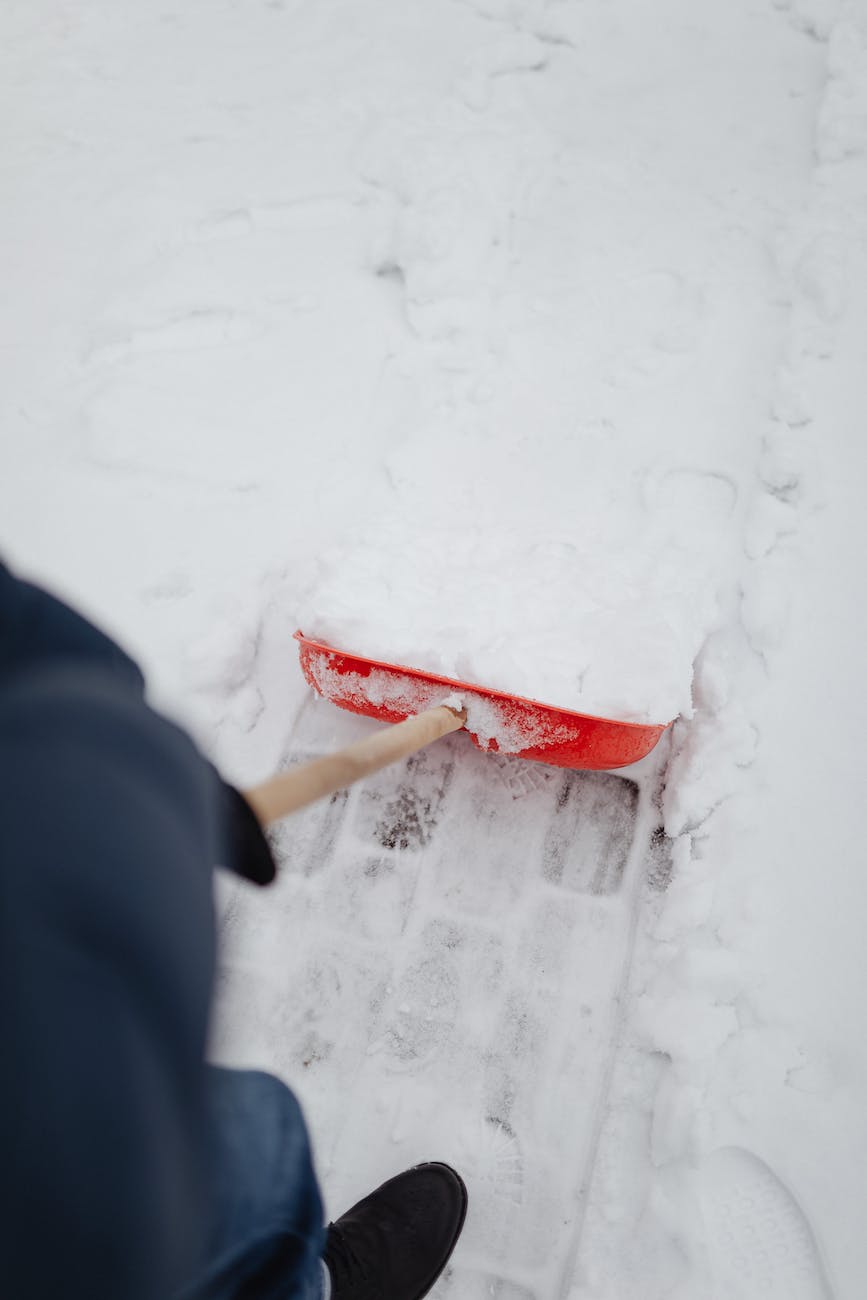
Collective efficacy and the number of sidewalks cleared of snow, Part Two

Continuing to think of sidewalks cleared of snow (or not), why are sidewalks often viewed as the responsibility of a property owner? Are sidewalks a collective phenomena that benefit all or are there they parts of private property that individual property owners are responsible for? The latter response makes it easier to blame individual property owners for not clearing the snow. But, it is hard to imagine walking only the sidewalk in front of one property; the sidewalks connect to many other sidewalks.

Photo by Karolina Grabowska on Pexels.com

Several factors contribute to less interest in a collective responsibility for sidewalks:

  1. Laws and regulations can differ by municipality regarding sidewalks. Are property owners responsible for repairing and maintaining sidewalks? Are they asked to clear their own sidewalks?
  2. As noted yesterday, fewer people are outside. Some people use sidewalks a lot but many people use them rarely. Snow and cold also reduce use.
  3. The suburbs are individualistic, people may not know their neighbors well, and property values are only partly dependent on the neighborhood. People want to act self sufficient.
  4. There is little interest in or experience of the kind of thriving sidewalk life Jane Jacobs described in The Death and Life of Great American Cities. In the picture Jacobs provides, people are constantly using sidewalks in a variety of ways. There are always people out and about, helping to create social norms and providing numerous opportunities for social interactions. Sidewalks in many suburban neighborhoods are more like empty tableaus where an occasional person and sometimes dog passes by. People would often prefer to live in quiet neighborhoods.
  5. Help is often associated with payment. Yes, a neighbor could clear snow as a favor but kids occasionally look to make money by shoveling, people pay to have their driveways cleared, and HOAs take care of this in many neighborhoods.

Put these all together and a good number of sidewalks contain snow and ice. This could suggest that collective efficacy is low in these neighborhoods; I will explore a possible multi-site research design tomorrow.

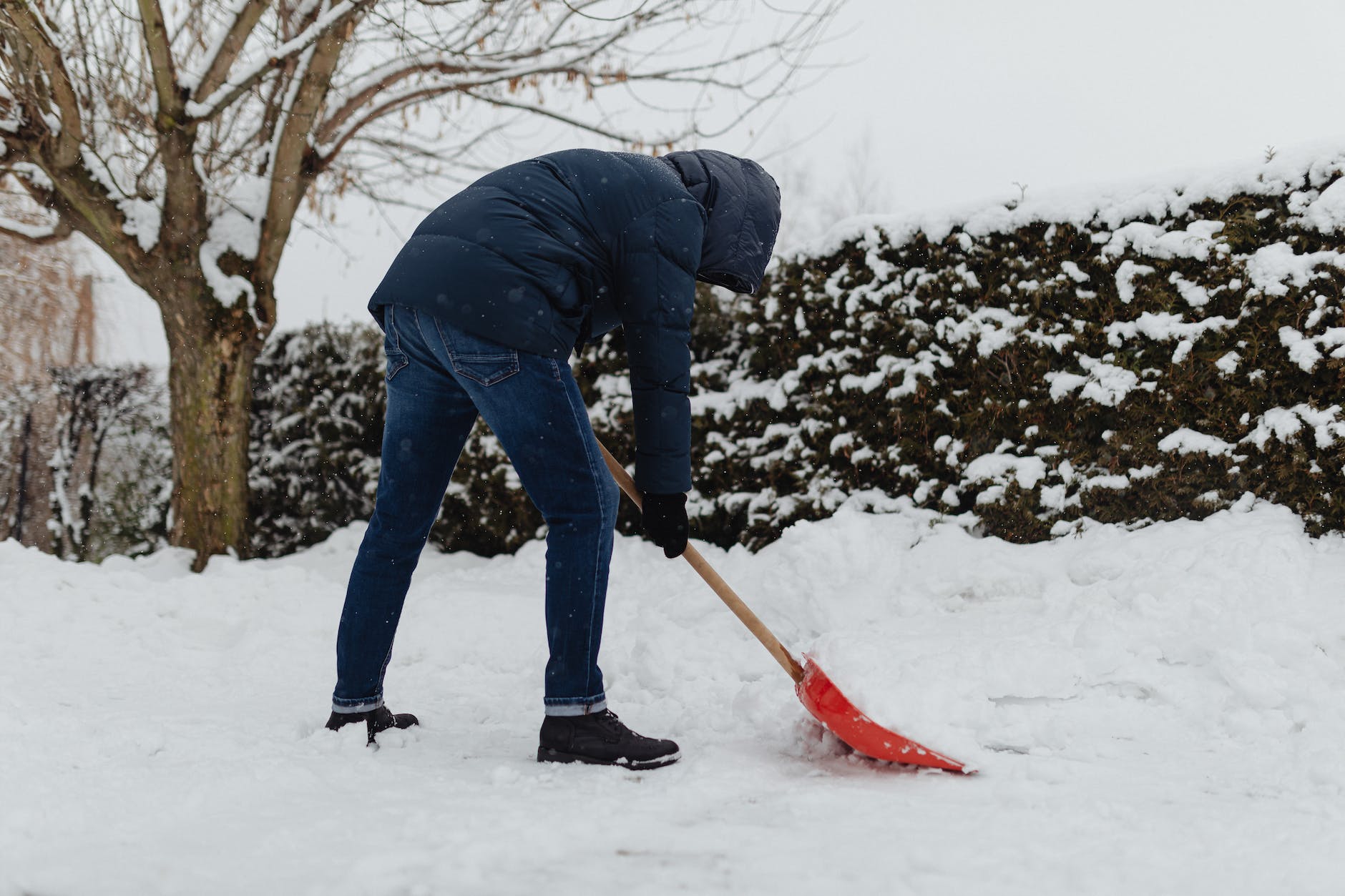
Collective efficacy and the number of sidewalks cleared of snow, Part One

Judging by conversations on Nextdoor and my own observations of nearby streets, there are a good number of property owners who do not shovel their sidewalks to remove snow. What levels of shoveling indicate the neighborhood takes collective ownership of the sidewalks? 50%? 67%? Over 75%? What fewer shoveled walkways might mean about a neighborhood and neighborliness:

Photo by Karolina Grabowska on Pexels.com
  1. People do not walk outside much. If so, they would shovel more. Not shoveling makes it more difficult for pedestrians to get by. When the snow starts melting a bit and is trampled down, it becomes icy. I have observed numerous houses where the driveway is clear but not the sidewalks.
  2. There might be several socially acceptable reasons for not shoveling: illness, old age, and being away from home. Even then, it would be possible to arrange with others to have the sidewalks shoveled.
  3. Dog walkers might be the most interested people in shoveling (this could be tested): they are regularly walking and their dogs too could benefit from cleared sidewalks.
  4. Neighbors do not help neighbors shovel. This might require a lot of effort or not. On sidewalks near me, clearing out a one shovel wide width down multiple sidewalks would not take long (if the snow was not too deep). Or, I hear stories of people with snowblowers clearing a long stretch of sidewalks quickly.
  5. The best cleared sidewalks I see are the ones in neighborhoods with homeowners associations. Residents pay for the cleared snow, among other things.

Put these all together and there is a patchwork of cleared sidewalks mixed with uncleared sidewalks. Tomorrow, I will explore a related question: are the sidewalks a collective responsibility or the responsibility only of individual property owners?

Fights between suburban neighbors turn more rancorous, according to lawyers

According to some sources, legal fights between suburban neighbors are now worse:

Photo by EKATERINA BOLOVTSOVA on Pexels.com

Neighbors have long bickered over fences, hedges and property borders. But lawyers involved in such tangles say the pandemic, which kept many people and their neighbors at home—and on one another’s nerves—far more, turned suburban sparring especially toxic. The rancor, they say, hasn’t eased up. Allegations of late have touched on topics including flying dirt, flowerpot placement and stray balls bouncing into a yard…

The leading reasons for flaps between neighbors are trees, fences, parking and noise, “probably in that order,” said Emily Doskow, a lawyer and mediator who edited the book “Neighbor Law.” “Everyone knows that having problems with your neighbors is one of the worst quality-of-life killers ever.”

The New York Peace Institute, a nonprofit that helps people resolve conflicts, got more calls during the pandemic about neighbor disputes, said Jessica Lopez, a program manager who coordinates mediations. Two years later, the caseload hasn’t slowed, she said, adding, “It’s a new normal.”

In a country where protecting single-family homes is vital, suburbanites prize single-family homes, and homeownership is an ongoing ideal plus suburbanites often relate through “moral minimalism,” perhaps this trend is not too surprising.

At the same time, as a sociologist, there are multiple questions I ask after reading this:

  1. Is there a way to get data on this? Are the number of neighbor disputes up in the courts or in lawsuits? Not all disputes go to court; would qualitative data in communities also reveal this?
  2. What exactly was the role of COVID-19 in this? One answer could be that more people spent time at home. Another could be that COVID-19 racheted up tension and disrupted regular social interactions. A third could be that rising property values and demand for property in some places pushed people to see their property differently.
  3. How many communities have alternative options for mediating disputes like these rather than going to court? Are there implementable models that suburbs could offer?

Going off the grid in a suburban setting

What issues might arise if a suburbanites want to take their residence off the grid?

Photo by Vivint Solar on Pexels.com

Many off-gridders have glanced at their water bills and decided they’d rather use the water that falls from the sky for free, but some states make rainwater collection systems very difficult to install in your home, or have strict limits on how much rainwater can be harvested and how it can be used (for example, Colorado only allows certain properties to collect 110 gallons, which can only be used outdoors). For waste management, installing a septic system in a crowded urban neighborhood will be nearly impossible, and many states have extremely strict regulations surrounding the installation of composting toilets (not to mention extremely strict regulations about what you can do with all that waste once you’ve collected it).

Additionally, local municipalities might have laws that supersede or enhance statewide restrictions, and Home Owner Associations (HOAs) may have rules that prevent you from making the changes necessary to your home. These rules can beprettycomprehensive, too—some HOAs don’t allow clotheslines for drying clothes, for example, and can even forbid solar panels for aesthetic reasons. Condominium boards may also resist some of your off-grid choices. Bottom line: before you do anything, check the local laws and regulations that might apply to you.

Finally, while installing solar panels on your property is more or less legal in every state (and many states encourage it), not all states or local municipalities will allow you to actually disconnect from the power grid. If you feel it’s important to literally be off-grid, you’ll need to do some digging before you assume anything; and in multi-family structures like condominiums it might even be physically impossible to accomplish. Of course, the flip side to remaining connected is that in many cases you can sell excess electricity back to the grid—and if your solar rig fails at halftime during the Super Bowl, you’ll still have power…

Of course, if you’re going to grow your own food in the city, you’ll need enough space for that, too. It’s not impossible to find city homes with yards or large outdoor spaces where you might be able to grow your apocalypse garden (and even raise chickens!), but those houses will obviously be more expensive. And your property deed or local regulations might limit your ability to have “livestock” of any kind on your property (and your neighbors may or may not be excited about those chickens).

Three things strike me after reading this:

  1. Suburban life is ruled by a series of local regulations. Suburbs on the whole might have similar guidelines and expectations compared to other kinds of places but local control can lead to oddities.
  2. The ability to live in one’s own residence is connected to community regulations and a social contract with surrounding residents. This leads to two questions: can a resident go off the grid and should a resident go off the grid? What would the neighbors think?
  3. I wonder how many suburbs are prepared for this possibility. Even if regulations make it more difficult to go off the grid, what would happen in communities if someone really wanted to pursue this and they had the resources and means to pull it off?

It cannot be a McMansion if it is valued at over $30 million and has mansion features

Actor Chris Hemsworth has turned a big home into an even bigger and more luxurious home in recent years. Is it a McMansion?

Photo by Lex Photography on Pexels.com

After buying his Byron Bay family home for $7million back in 2014, Chris, 37, transformed the sprawling property into a compound that has been valued at between $30million and $60million.

The actor carried out extensive renovations on the six-bedroom home, and it now boasts a steam room, gym, media room and games room.

There’s also a stunning outdoor living area, play areas for his three young kids and a 50-metre rooftop infinity pool, which overlooks the ocean…

Angry neighbours were quick to say the rebuild reminded them of a suburban shopping centre, a refurbished RSL club or a regional airport terminal.

Others compared the home, which sits on 4.2 hectares, to a multi-storey car park and a ‘McMansion’.

While there is no mention of the square footage of the home, this description suggests this home is a mansion. Here are several reasons why: it likely has more space that a spacious McMansion (imagine 3,000-6,000 square feet there); it is not a mass-produced, cookie cutter home; it has numerous luxury features; it is not owned or renovated by a regular wealthy person but rather a global film star.

So why would a neighbor call it a McMansion instead of a mansion? I would guess that this was done to link the home to a pejorative term and to critique the architectural style of the home. A “mansion” could still be critiqued but the negative connotations are implied in McMansion. The other descriptions by neighbors have to do with the architectural style of the home, whether they are viewed as ugly or not consistent with the surroundings.

Is there a lesson in this? Here is one option: to fight the big home in the neighborhood, call it a McMansion. Label it a mansion and it might just justify the size, features, and architecture.

Reactions to suburban yards filled with dandelions

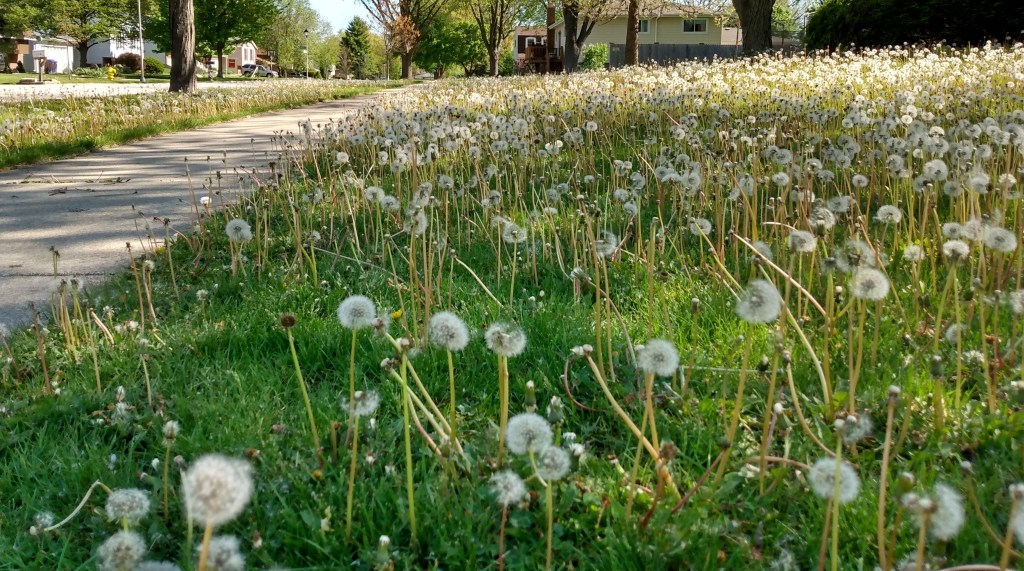
Is a mark of a suburbanite who cares about their property values and yard a lawn free of dandelions? In a recent walk, I saw this yard:

On a corner lot, this yard was filled with dandelions all around. And to compound the issue, two of the next three yards adjacent to this home looked similar.

What does this all mean? Is this a set of households devoted to eco-friendly lawn care? Or, is it a sign that the owners do not care about their property and/or their neighbors?

Remarkably, many of the nearby lots have no dandelions whatsoever. Even as these three lots have helped spread thousands of dandelion seeds, the weed killers used nearby have done their job. The whole neighborhood is not overrun with dandelions. The damage – mostly visual? – is contained to three lots.

At the same time, I could imagine some of the neighbors might not be happy about the situation. The optics of yards given over to dandelions might not play well in a middle-class neighborhood where green manicured lawns are an expectation. What kind of neighbors are these to subject others to this blight? What if someone was trying to sell their home nearby?

Soon enough, the most visible signs of these dandelions will be gone. The seeds will have scattered, contributing to windy days where the air is visibly full of plant matter. Will the neighbors forget the dandelions? Will they be back next year? Is all of this a matter of overwrought suburbanites policing their artificial nature known as a lawn? The grass and the weeds may be more than just that; they are markers of social class and social norms in suburbia.