Education the biggest recipient of local property and IL state taxes

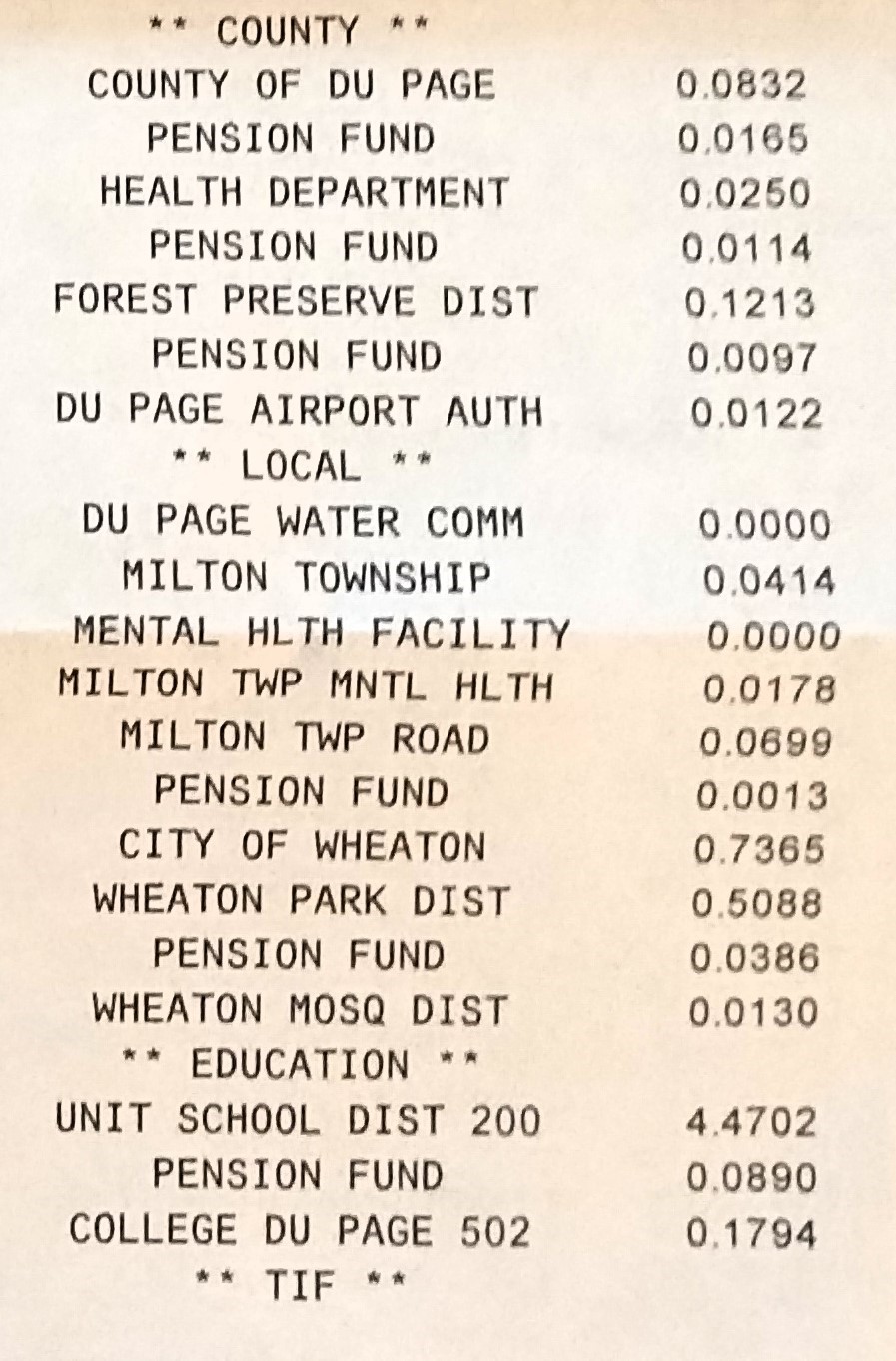
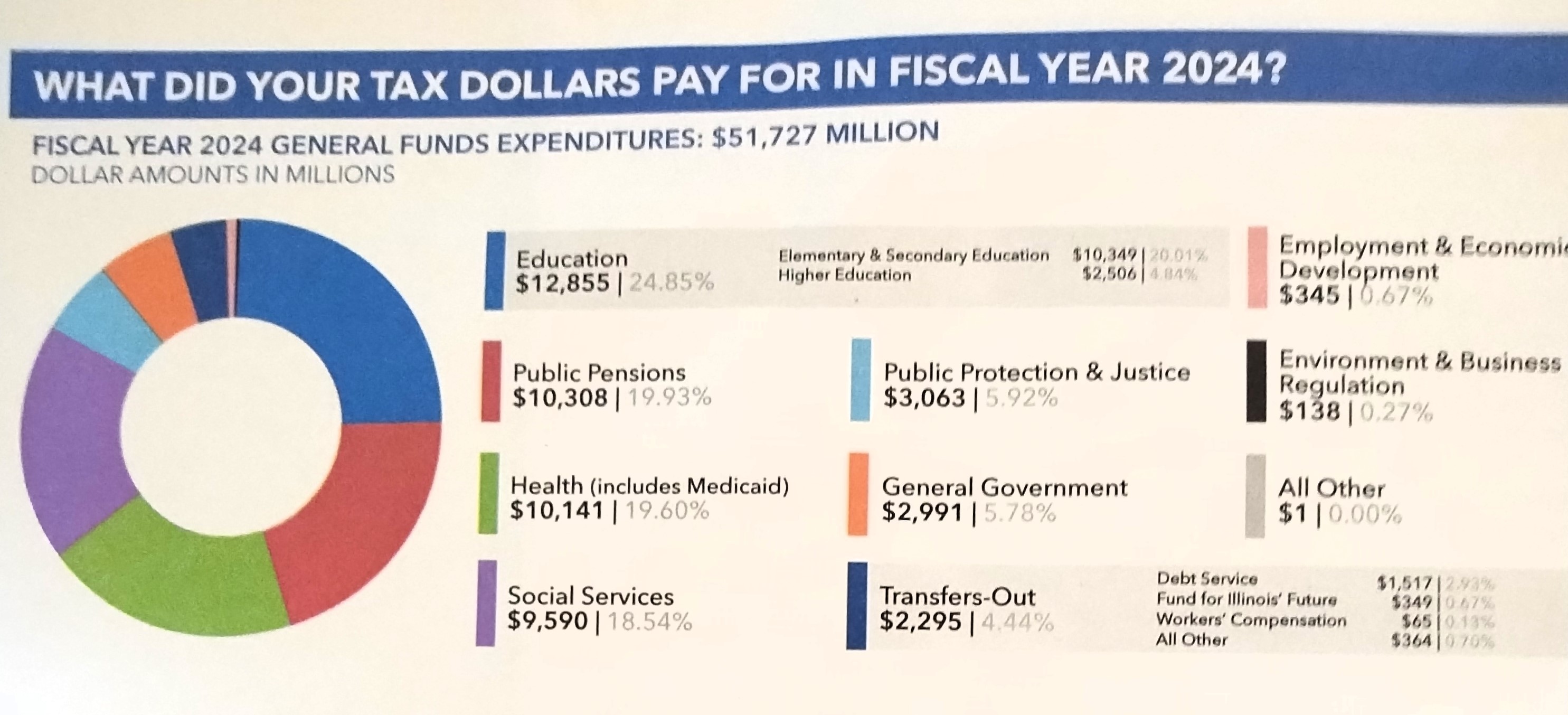
I recently received the breakdowns of where tax dollars for the State of Illinois and DuPage County went in 2024:

In both cases, education leads the way. For state expenditures, education accounts for 24.8% of spending. At the local level, education accounts for 69.4% of the total rate.

The large portions going to education are supported by multiple interests of residents:

  1. Education is often pitched as for children, the next generation, and the future. If we do not spend on education today, how will the children succeed and/or do better than the previous generation?
  2. The quality of local schools is often tied to housing prices and the status of communities. To not spend locally on schools might provide short-term savings but reduce the desirability of properties and communities in the long-term.
  3. The bulk of education costs is in salaries for teachers and staff. Without quality educators, how can schools be successful?

Some might complain about the tax burden – and Illinois does have high property taxes – but it is hard to argue against spending on education. It could be more effective to reign in spending by targeting other areas where there is duplication of local services (such as townships).

Amid rising housing values, Americans “revolting” against property taxes

Florida and at least a few other states are considering limiting or eliminating property taxes:

Photo by Nachelle Nocom on Pexels.com

Florida’s leaders are considering a far-reaching remedy to cut the soaring costs of owning a home: ditching property taxes

“People are getting crushed not just by home insurance but by property taxes,” said GOP state Sen. Jonathan Martin, who is sponsoring a bill that would require a study on the elimination of property taxes be completed by October. “That American dream in Florida is taking five figures a year in local taxes.”

Revolts against property taxes have erupted elsewhere in recent months as homeowners’ tax bills have risen alongside home values. Property values in the U.S. increased 27%, adjusted for inflation, between January 2020 and July 2024, according to the Tax Foundation, a think tank.

“You’re seeing a groundswell of opposition to property taxes generally”—one reminiscent of a wave of protest in the 1970s and 1980s that triggered ballot measures including Proposition 13 in California that capped property taxes, said Jared Walczak, vice president of state projects at the Tax Foundation.

A number of states including Wyoming, Kansas and Montana are weighing significant property-tax limitations, he said. In November, voters in North Dakota rejected a ballot measure that would have eliminated property taxes.

This is the double-edged sword of property taxes in the United States: homeowners like their property values going up but they do not like it when their property taxes adjust to that increased value. In the short-term people do not want to pay more in taxes even as in the long-term they will benefit from selling at a higher price.

So what other taxes might people be willing to pay if property taxes are reduced or done away with? There would be other ways to generate revenue that would not be tied to property values. More taxes on driving? Higher sales taxes? Increased tax rates on business activity?

It would also be interesting to see how local governments would adjust to the change in funding. Would other tax formulas equal the same amounts that come now through property taxes? Who would make up the shortfalls in funding?

Office buildings empty, residential property taxes go up

What happens when the office buildings in Chicago’s Loop have more vacancies? Residents end up paying more in property taxes:

Photo by Burak The Weekender on Pexels.com

The pandemic left the heart of the Loop with vacant offices and stores as workers and customers stayed home, and more people began working remotely. Then, citing the impact of that lost business, the owners of those vacant offices won huge tax breaks from Cook County officials.

The amount of property taxes didn’t get smaller because those taxpayers were now paying less. The taxes were still needed to pay for government services and salaries. So others have had to pay more to make up for that shortfall.

On top of that shift, City Hall and other government agencies have been asking property owners to pay more taxes overall, with total property taxes in Chicago rising from $6.8 billion five years ago to $8.3 billion last year.

That’s a 22% increase in taxes citywide in those five years.

This is one reason municipal officials like thriving commercial and industrial sectors: they contribute to the property tax base of a community. When these properties are worth less, someone else has to pick up the slack. Homeowners do not like rapidly increasing property taxes, if they like property taxes at all.

For residential property owners, the issue is compounded for some because the value of residences has jumped in recent years. With limited new supply and consistent demand for good housing, property values have gone up. Homeowners like this – until property taxes also increase because their home values have increased.

Will residential property owners put up with this and, even if they do not like it, what recourse do they have? Does this mean cities and communities need to put on a full-court press to get office buildings filled or converted?

Would Americans choose lower property taxes if it means giving up local control of funding for local services?

This is an interesting “Would you rather?” for numerous American communities: would residents rather have higher property taxes or give up control of the local funding for schools and other local services because of lower property taxes?

Photo by Pixabay on Pexels.com

There is a silver lining, though. The most radical property tax–related proposals are argued for as either general anti-tax measures or as efforts to privatize schooling. Whatever you think of their intended goals, they would also have an unintended effect of ameliorating one of the worst features of the property tax: its localism.

If North Dakota voters had voted for a repeal of the property tax, much of the revenue used to replace it likely would have come from state taxes. (The group formed to oppose it was called “Keep it Local.”) Similarly, if the state government is supporting school choice vouchers with income or sales tax revenue, that means schools as a whole rely less on local property taxes.

Americans like local control, particularly in the suburbs. To give that up to governments elsewhere who may attach particular guidelines to the funding could be seen as a loss.

And there are some people willing to argue they are willing to pay higher property taxes for what they receive. It is less clear how many residents feel this way or that people do not find ways to limit their property taxes.

I am not sure this has to be pitched as an either/or: higher property taxes or lower taxes and give up financial control to other bodies. Here are two other options:

  1. Do Americans believe that local services can and should be provided more cheaply? This could be about containing costs of existing services.
  2. Another variation for #1 is cutting local services to limit costs.

Both of these options might be unattractive: local services tend to help enhance the status and value of properties and communities. Reducing these or threatening them could be perceived as backfiring and hurting everyone.

The choice might also depend on the local context. Would high housing values in some places lead to residents wanting to do a lot to limit property taxes? Or what if residents felt they could handle funding coming from other places? After all, real estate is local.

Bureaucracy misses property tax assessments, property owners can pay up to 3 years later

A report on errors in property assessments by the Cook County assessor’s office includes this summary of Illinois legislation:

Photo by Karolina Kaboompics on Pexels.com

State law allows county assessors to back-tax property owners for up to three years of missed assessments, even when the homeowners did nothing wrong.

This can have serious consequences:

A homeowner in Northbrook was hit with a nearly $7,800 bill in back taxes this year after the home, built by 2022, was added to the rolls in 2023. The assessor’s office had the permit data on file, records show.

That homeowner’s next door neighbor was hit even harder…

Finished in 2020, it sold for nearly $1.4 million the same year. The owners paid less than $1,800 in property taxes last year because the assessor’s office listed it as vacant land for three years before realizing their error.

Their bill this year: more than $93,000. The sum includes more than $67,000 in back taxes.

In an even more extreme case, Kaegi’s office classified an $11 million lakefront house in Winnetka as vacant until 2022, even though its construction was completed in 2020. This year, its owner owes $651,346 in property taxes, including more than $370,000 in back taxes from 2020 and 2021 — more than 4% of all property taxes being collected by the village of Winnetka this year.

The bulk of the story is about the difficulty the assessor’s office has had in keeping up with current property values. From it not being the top priority to not being able to keep up with all the data they have to not getting the data in the first place, it sounds like there are multiple areas to improve in.

So I wonder about the consequences of this passed along to property owners. They might have choices in local elections about who is in this position. They tend to assume the local government is doing their job. Yet I would guess this position is not the radar screen of most people. They might not be very aware of how to appeal their taxes or how their taxes are calculated. They get their taxes each year and pay the bill.

There is even a story in the article about a property owner who realized their taxes were probably low and tried to ask about it. Nothing happened.

If property taxes are important to local government – and I know they are – then it would behoove them to be on top of assessing properties, collecting taxes, and working with the public.

When housing values and property taxes both go up

American homeowners want their property values to increase. It builds their wealth. The equity they have in the home can be used for other purposes. They can feel like they made a good investment.

Photo by Karolina Grabowska on Pexels.com

On the other hand, fewer homeowners like the idea of paying higher property taxes. Particularly in states with higher property taxes, like Illinois, this is a constant source of frustration: don’t we pay too much? How come other states get away with much lower property taxes?

But, these two forces might just be linked. If your property is worth more, the taxes you pay on that property are likely to go up. In other words, the kind of property appreciation many homeowners want means higher taxes on that more valuable property. (This is not always the case: the value may go up but the property tax rate goes down or some program or exemption limits the property tax amount.)

In a dream world for homeowners, their property would get more valuable and they pay less in taxes. It does not often work this way so instead they may complain about having to pay more in the short term for the ability to gain more money down the road when they sell the property.

Create property tax exemptions for homeowners and some communities have to make up the revenue elsewhere

Homeowners generally like to pay lower property taxes. But, according to a new report looking at Cook County, reducing their own property taxes can affect the community as a whole:

Photo by Pixabay on Pexels.com

UIC professors David Merriman and Rachel Weber, experienced researchers on property taxes and government finances who led the report, said this is one of the first attempts to measure the impacts of exemptions on the county as a whole. In total, $15.8 billion worth of property value in Cook County was unavailable for governments to tax in 2021 because of those breaks, their research found.

That translates into about $1.6 billion in tax revenue, which governments simply shift onto other property owners…

To respond to tax spikes or inflation, state lawmakers have expanded breaks over the past half century. They now include eight types of homestead exemptions: homeowners, seniors, veterans, people with disabilities and those making improvements on their home. Exemptions typically cut down the taxable value of a home to provide relief.

The report noted the effects of these exemptions are not the same in every community. The tax base of the community matters:

Those unintended consequences also aren’t the case everywhere. The effects of homestead exemptions are negligible in cities and villages with a bigger industrial property base, like McCook and Bedford Park, with a concentration of more valuable properties like Winnetka or Kenilworth, or with a lower share of homeowners who qualify, like Chicago.

It sounds like this affects communities that do not have great tax bases to start with. Already behind, homeowner’s exemptions then contribute to a lack of community funds compared to other communities.

I would guess Cook County and Chicago area homeowners would point to the fact that they pay some of the highest property taxes in the nation. In a country that prizes homeownership, these exemptions help enable people to live in their homes. But, as the article notes, there are other ways to fund public goods and services. This reminds me of Prop 13 in California which since 1978 has limited property tax revenues. Without those local tax revenues, governments have sought out other means.

Who can use space in the United States? FOIAed emails and pickleball

One journalist finds in emails that there is a lot of reaction to pickleball in American communities as well as concerted efforts by pickleball enthusiasts to play:

Photo by Mason Tuttle on Pexels.com

“I live near a paddle tennis court, which is basically tennis but on a small court. And at these courts, I saw this big sign that said, ‘Pickleball players, go home’ or ‘Pickleball was not welcome here.’ And I was like, What is going on? What happened was that pickleball players were sneaking onto the courts when they were open and playing pickleball when this was supposed to be a court for paddle tennis only,” Koebler said. “When I saw that sign, I was like, I bet these people are complaining to the government about the pickleball people.”

It turns out that these people were complaining. A lot. And not just in Koebler’s neighborhood. The city of Dallas told him that it had more than 100,000 emails mentioning the word pickleball. They couldn’t even begin to forward them all. The city of Fort Lauderdale said it would need $10,000 to produce all of its pickleball discourse.

These emails are about who can take up public space, and whether pickleballers are taking up too much of it. And if you’re thinking, Who cares?, Koebler says that the fight over who can take up space in this country—it’s kind of at the heart of the whole American project…

I’m going to generalize here and stereotype. But pickleball players are far more organized than other players of other sports, based on thousands of emails that I read. There are these people in city after city who are “pickleball ambassadors.” And they are given a tool kit from this group called USA Pickleball about how to talk to local government to gain access to more public spaces. And USA Pickleball’s strategy is to try to convince city council or the parks department or your local politician to build new pickleball courts. But because of this NIMBY aspect where homeowners don’t want pickleball in their backyard, it’s really hard to build new pickleball courts in certain places. And so what is happening is pickleball players have to use already-existing public infrastructure. This means basketball courts, hockey courts, tennis courts, of course. And if there’s a permitting system, they’re organized and they make sure to book out all of the permits. If there is not a permitting system, I saw emails where it’s like, I will bring my net for crack of dawn to the tennis court and set up my pickleball net. And then we will play in shifts all day so that we keep the court and the tennis players can’t get on here.

I am not surprised property values are mentioned in this interview. The sound and activity on pickleball courts can be a threat to a quiet residential existence.

I am surprised that taxes did not come up in the conversation. Americans pay property taxes to local government bodies that, among other things, build and maintain parks and public spaces. Homeowners, renters, and businesses contribute these taxes. They can all make requests or demands about how this public space is used. In this case, there is a limited public good – courts where people can play tennis or pickleball or in engage in other activity – and people could claim they are paying to provide space for the activity they want to pursue.

Given how American space is used, is this a zero-sum game: if pickleball players play, does that mean other sports must lose? Can tennis courts and pickleball courts stand side by side and be available to players of each sport? Will private pickleball facilities or clubs help alleviate these issues?

Chicago suburbs without property taxes – but perhaps not for much longer

In a region known for high property taxes, at least a few suburbs outside Chicago have no property taxes:

A town of about 40,000, Carol Stream managed to avoid a property tax even when another outlier, Schaumburg — a village with a much larger retail base — took the leap during the Great Recession.

But officials say Carol Stream is facing significant budget pressures from rising pension costs. If it maintains the status quo, projections also show the village would exhaust capital reserves during the third year of a five-year plan for roadwork and infrastructure projects…

In Oak Brook, another town that doesn’t charge a property tax, candidates in the last mayoral race took stock of the financial challenges from flat sales tax revenues. Carol Stream also saw a 2.4% drop in sales tax dollars — the village’s largest revenue source — from calendar years 2017 to 2018.

Suburbs have multiple ways to reduce or eliminate residential property taxes. Sales tax revenue can come from shopping malls, big box stores, and other retail options. Schaumburg and Oak Brook have sizable shopping malls surrounded by many more retailers. Communities can also seek out industry; Carol Stream founder Jay Stream intentionally set aside much land for industrial parks (which are still there). Some suburbs would not like this as industry could conflict with an ideal of quiet neighborhoods of single-family homes.

The article suggests these suburbs with no property taxes will have to reconsider because of declining sales tax revenues and rising pension costs. Given the fate of shopping malls and the problems facing retailers, even in successful malls in wealthy areas like in Oak Brook and Schaumburg, communities need additional revenue.

Suburbs typically do not have the ability to quickly counter declining sales tax revenues. In order to not have property taxes in the first place, certain decisions had to be made long ago. Then, later decisions build within a framework of no property taxes. Making changes to land use takes time for study, approval, development, and then reaping benefits. A suburb cannot say it wants to bring in more sales tax revenue and line up a set of retailers operating within a year.

The fate of these suburbs will be worth checking in five years to see whether they can hold on against levying property taxes.

(Reminder: this does not mean residents in these communities do not pay any property taxes. Rather, their suburbs do not collect property taxes even as school districts and other taxing bodies do.)

Waiting to hear Chicago suburb advertising lower property tax rates

In recent years, multiple Chicago suburbs have advertised for businesses and residents to move there including Elk Grove Village, Bedford Park, New Lennox, and Lemont. Their pitch often includes mention of the suburb’s transportation advantages, amenities (ranging from water supply to community atmosphere), and available land.

Here is one local feature that is missing from these advertisements: lower property taxes compared to other suburbs or Chicago. This would be a competitive edge in a region where residents and businesses face relatively high property tax rates.

There have to be communities that actually do have lower property taxes. There are a number of suburbs that have higher concentrations of commercial and industrial businesses that provide a good tax base. Industrial parks and office parks provide space for businesses and offices. Many suburbs would want this: the companies help carry more of the local tax burden and this provides extra revenue for the community. In comparison, a bedroom suburb may have really high property taxes because it is primarily residents paying the property taxes and there are limited sales tax revenues.

If the advertisements for suburbs are primarily aimed at businesses and not residents, then perhaps the property tax arguments make less sense. At the same time, a strong existing business base could be very appealing for other firms. Some proof that other businesses have thrived in a suburb plus some opportunities for local synergy in addition to lower taxes could all be very appealing.

In the super competitive race between the Chicago suburbs and the city plus competition from other nearby states like Indiana and Wisconsin (let alone Texas and Florida) for businesses and residents, I am surprised to not hear a property tax appeal. Perhaps this simply means that few Chicago area communities could offer any real advantages in this area. Or, maybe there is some reluctance to tout lower property tax rates. Yet, as suburbs compete, I would expect that their mass appeals will continue to evolve.