“Visit your local IKEA store”

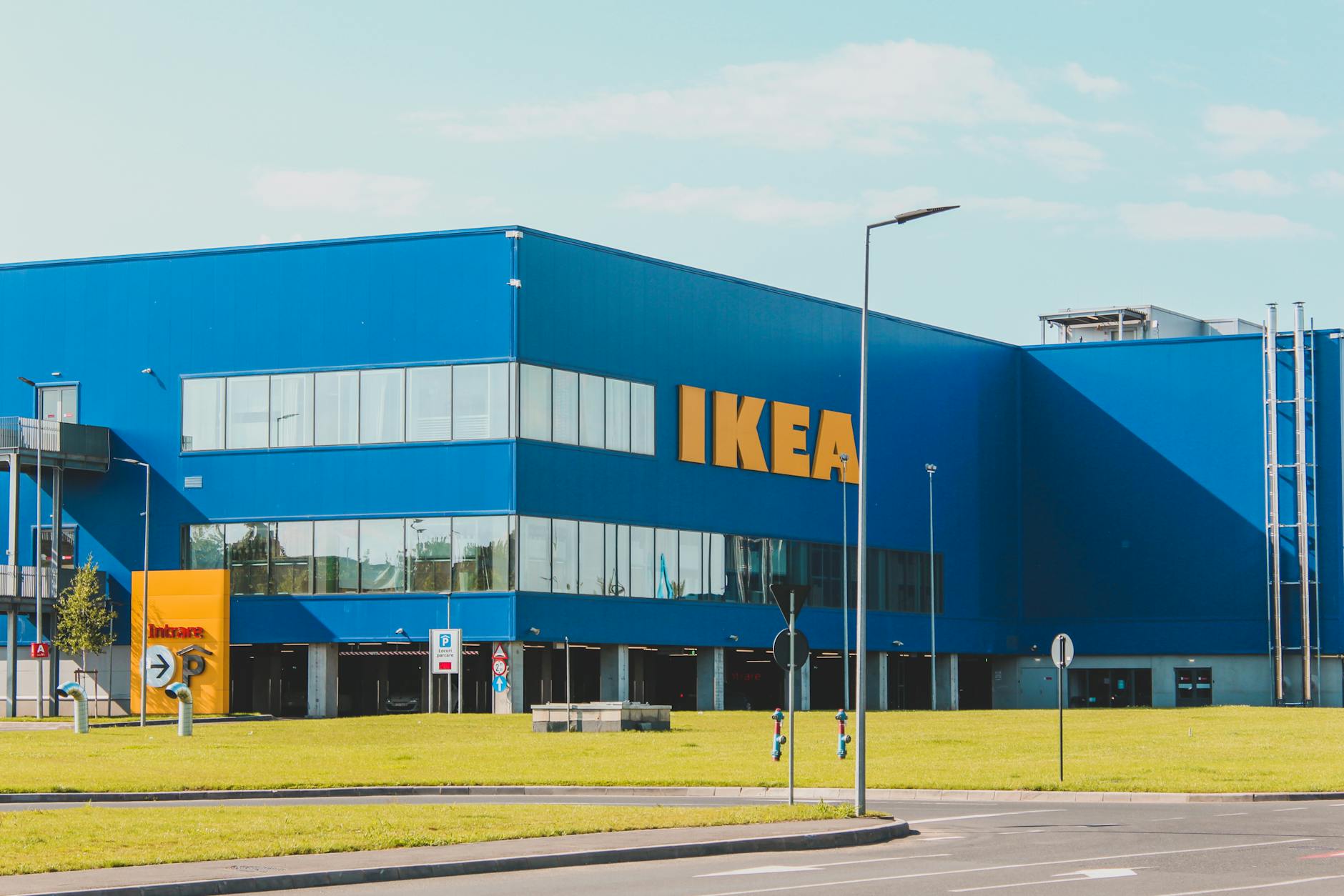
A recent advertisement encouraged people to “visit your local IKEA store.” I get the general idea: I can go find what their latest deals at my closest store.

Photo by Czapp u00c1rpu00e1d on Pexels.com

However, the “local” part of it stuck with me. Do I have a “local IKEA store”? Here is why the term might not work well:

  1. There are two IKEA stores in the entire Chicago region of over 9 million people. One is closer to those living toward the north, one is closer toward those living in the southern part of the region. Thus, many in the region will have to take a bit of a drive to reach a store. These are not stores found in numerous communities. How far away from a residence is a “local” store?
  2. Local can imply local business or smaller in scale and size. All of these might be in comparison to big box stores that offer predictability and many square feet. IKEA is more in this latter category with stores that are large, found along major roads, and are surrounded by large parking lots. These are not local businesses; this is a global corporation with a limited number of stores and pick-up sites in the United States (see the map here). These are destinations, not local businesses near the hearts of communities.

I, like many others, will make a trip to IKEA in the future to look for items and have an experience that cannot easily be found elsewhere. But I will not consider it a local store as I travel down highways to the sizable building located among many other national and international retailers at a convenient nexus of sprawling suburbia.

The symbiotic relationship between online shopping and brick and mortar stores

Can online shopping and brick and mortar stores benefit each other?

Photo by Andrea Piacquadio on Pexels.com

“There was a narrative that as online grew, stores would become less relevant. But it hasn’t worked out that way,” said Neil Saunders, managing director at GlobalData. “In many ways, the store is still the heart or hub of retail.”

It is another example of how online-only retail has its limits, and why physical stores are making a comeback. After years of overbuilding that lead to a sharp contraction, retailers are on track to open more stores than they close in 2024 for the third consecutive year, according to advisory and research firm Coresight Research.

Many retailers have found that it is too expensive and difficult to attract and retain customers without physical stores. And using stores as pickup and drop-off points helps lower the labor, packaging and shipping costs involved in online orders…

Kohl’s now fulfills more than a third of its online orders in stores, Walmart more than half, and Target nearly all its sales from its network of roughly 2,000 locations, according to the companies.

Americans like shopping. This story makes me think that shopping can even be more pervasive. You can be shopping online and in person. You can shop from anywhere and everywhere. It can happen in the online and offline worlds. It is a self-reinforcing system.

Oh yeah, there is still that pesky problem of people not feeling financially comfortable. Is the all-encompassing shopping realm able to overcome this? Is it just a matter of finding good deals or working with some credit or debt to make purchases?

And if shopping is everywhere, there will likely be more need for companies to differentiate their products and services. What will make someone click on that email or that Instagram ad? What will drive people to that location as opposed to making the purchase online?

Why not use President’s Day to sell homes rather than mattresses?

American presidents for at least 90 years have supported homeownership. See these thoughts from Herbert Hoover in 1931. So why not tie President’s Day in February to selling and buying homes?

February might seem a bit early to promote buying and selling homes. It is still cold in parts of the country. The school year still has months to go.

However, I have heard that the housing market tends to pick up after the Super Bowl. Warmer weather is on the way. Families might be more willing to move with less time left in the school year.

Americans like sales and shopping. Why leave President’s Day to mattresses and furniture? Why not kick off the home real estate market every year? Pepper the weekend with quotes from Presidents Obama and Bush. Find some quotes from Lincoln, Washington, and other famous presidents that seem to support the modern idea of homeownership. Match patriotism, capitalism, and holidays.

Filling suburban Bed Bath & Beyond locations

When Bed Bath & Beyond closed all of its stores, it left numerous suburban stores vacant. Many of the locations are empty no longer:

Photo by Prateek Katyal on Pexels.com

Burlington, Michaels, Barnes & Noble, Ollie’s Bargain Outlet, Macy’s, HomeGoods and other chains have replaced old Bed Bath & Beyond stores. Indoor pickleball courts, trampoline parks and bowling alleys have also filled up the vacancies…

The majority of Bed Bath & Beyond’s stores are in the suburbs of mid-size and large cities, and are under 50,000 square feet. These are appealing qualities for retailers as some companies favor smaller spaces, instead of mega stores, to save on rent and labor and as shoppers buy more online. Macy’s, for example, is opening its smaller “Market by Macy’s” versions at old Bed Bath & Beyond stores…

Bed Bath & Beyond spaces have been grabbed up swiftly at rents of up to 50% what Bed Bath & Beyond was paying, according to commercial real estate investment firm CBRE. Landlords are taking advantage of the vacancies, with some dividing former Bed Bath spaces into smaller sizes, said Brandon Isner, CBRE’s head of retail research for the Americas.

“There is little to no concern that any of the spaces will go vacant for long,” he said…

It is interesting to hear that some suburban retail real estate is in demand. This would contrast with the negative news about shopping malls or about some big box and strip mall properties. Perhaps it is the particular size of these stores – a medium size that could appeal to a lot of other retailers – or perhaps it is the low price – which cuts the cost of doing business.

I hope there are some large-scale studies going on regarding the transformation of retail spaces in the suburbs. Imagine taking pictures at 5 year intervals in major shopping districts or along major roadways. At the least, it could detail the changes in buildings and what retailers are present. But, it could also catalogue major changes to structures, what kinds of retailers are present, and how popular these sites are. Just as the shopping mall defined life for suburban teenagers for at least a decade, the major shopping centers and strip malls in suburbs defined life for millions over multiple decades. Plenty of people visited Bed Bath & Beyond and many more could visit these structures – with whatever is in them- for years to come.

Transitioning a glittering downtown shopping mall to a more experiential space

Water Tower Place on North Michigan Avenue has fallen on hard times, as have many malls, and plans are underway to revive the property with new uses:

In consultant-speak, today’s juice is “experiential” retail. It means that people not only want something they haven’t seen before, but they want an experience to go along with their purchase. The Apple Store and the Starbucks Reserve Roastery further south on Michigan Avenue are examples of that — places where shoppers come to see and feel as well as to buy. A pop-up show called the “Dr. Seuss Experience” filled Macy’s former space in Water Tower Place this winter. Down the street, a “Museum of Ice Cream” is opening at the base of the newly renovated Tribune Tower this summer…

But she and her colleagues are already thinking big. A report titled “North Michigan Avenue: Strategies for a Vibrant Future” issued in March by a group of business and city leaders envisions a grand promenade running from the historic limestone Water Tower, past the Museum of Contemporary Art, to the lake along Chicago Avenue; and a soaring pedestrian bridge stretching from Michigan Avenue, over DuSable Lake Shore Drive, to Oak Street Beach. The bridge, modeled on a structure in Moscow, would make it possible to see and get to Lake Michigan from the Mag Mile without descending into dank tunnels under the beachfront drive.

Also in the report: a more run-of-the-mill property tax on landlords raising about three quarters of a million dollars passed the City Council this year; it will be used for cultural events like “Music on the Mile” and for security cameras. The city also awarded Bares’ group money from a federal grant to deploy a team of uniformed “ambassadors” — unarmed security personnel with radios to help tourists, assist the homeless and report criminal activity on the Mag Mile — starting in June.

But most of the report is focused on getting people excited about going downtown to enjoy attractions such as music, art and culture, and Water Tower Place recently scored its own big get on that front. In April, the world-renowned Hubbard Street Dance Chicago surprised everyone and moved from a temporary home on the North Side into the mall’s fourth floor.

For years, shopping in a lively context was enough “juice” to bring in both serious shoppers, curious shoppers, and other visitors. Shopping was one of the most popular activities for Americans and the glamor of a downtown mall plus at least a decent-sized crowd would make it feel exciting.

Now that shopping is decoupled from physical space, these former shopping spaces do not have enough “juice.” They need more experiences, ranging from music to arts to unusual sights to places where people can post intriguing social media images.

Can cities and communities be flexible enough to shift spaces and experiences? And how many experiential areas can there be? On the first question, communities need to open to how spaces might be used in different ways when conditions change. Shopping malls may have worked for decades and brought in significant revenue, but when they struggle, what is next? For the second question, Chicago already has some of these experiential spaces: Navy Pier, the Museum Campus, a Riverwalk, and other concentrations of interesting activity. Can these work together in that a visitor could access several of these in a single day or trip or at some point do they start competing against each other?

The decline of in-person shopping is a big deal and a shift that many communities are struggling to address. Those who find successful alternative uses for these shopping spaces and also develop a mindset of needing to refresh certain places may just come out ahead.

Finding the mean, median, and modal Walmart shopper

An analytics firm describes the “typical” Walmart shopper:

Photo by Michael Burrows on Pexels.com

Numerator found that Walmart’s typical shopper in the US is a white woman between 55 and 64 years old, who is married and living in the suburbs of the Southeast. She typically has an undergraduate degree and earns about $80,000 per year.

She visits Walmart at least once per week — about 63 trips per year — and picks up 13 products for a total cost of about $54 per trip. 13.5% of her spending takes place at Walmart, while she spends about 11% at Amazon.

Her primary shopping categories in-store are groceries, including chicken, fruit, snacks and sweets, but she also gets a lot of fast food. Her favorite five brands at Walmart are Turkey Knob, Cheetos, Betty Crocker, Dole, and Tyson.

I am always looking for examples to help illustrate the differences between the three primary measures of central tendency: mean, median, and mode. When an article or report says something is “typical,” what exactly do they mean? Here is my guess at which data above is which measure of central tendency:

-mean: age, education level, visits to Walmart, money spent per trip

-median: income

-mode: race/ethnicity, marital status, place of residence, what is purchased

Some of these are harder to guess or do not fit these three options well. For example, is the $54 per visit a mean or median? Or, the five favorite brands are not a singular mode and they may lead the list of brands but not actually comprise that much of the total percent of purchases.

Additionally, it would be interesting to add measures of variability. How much variation is there in the age and education level of Walmart shoppers? I would guess the company wants to know more about the $54 spent per trip; how many spend more and what could be done to increase the number of people who spend more? Throw in a standard deviation or some other measure of dispersion and the numbers above become much more interesting.

In the end, the report above does not mean that someone visiting a Walmart will find most shoppers fit that profile. The measures of central tendency here tell us something but using multiple measures plus some measures of variability would provide more in terms of revealing who is at Walmart.

Amazon rediscovering department stores?

Amazon’s online empire is vast but it is also expanding its brick and mortar operations with plans to open department stores:

Photo by Artem Beliaikin on Pexels.com

What solves all of these problems—the high return rates, the cost-prohibitive last-mile freight, the logistics nightmares, the buyer frustration, and the monumental volume of consumer waste it all sends to landfills—on some level? Stores. Going to a store. In America especially, this notion was obvious for more than a century. Department stores were actually such a good idea, something that people like so much and that works so well, that the Gilded Age barons who invented them used their stores to create middle-class identity from near whole cloth and keep it going for generations.

Amazon helped kill most of those stores, but that has only created a vacuum into which more Amazon products and services are ready to be inserted. If Silicon Valley has taught us anything in the past two decades, it’s that if you have a bottomless pit of money, you can remake an industry in your image. You can acquire customers so quickly that they might not realize they don’t totally love everything you’re doing, and you can embed yourself in their lives in ways that would be tangled and inconvenient to remove, largely by snuffing out competition. Which leaves the retail industry in a precarious position: Amazon, and maybe a handful of its largest competitors, will go about deciding how you get to buy the things you need, with very little meaningful pushback. They’ll set prices, they’ll set labor conditions, and they’ll decide which things are too inefficient for you to buy online. Apparently, those things will go into a store.

Amazon and the companies like it invent the solutions to the problems they created, and you pay for them to be implemented. At least in some cases, physical stores may ultimately win out. You can try on your new pants, sit on your new couch, and leave with the thing you wanted immediately, which, it should be noted, is considerably faster than two-day delivery. Yes, you have to go to the store, but doing so will likely obviate the need for you to go to the post office—the dreaded post office—next week. Work smarter, not harder. It’s what Amazon would do.

A physical location offers certain conveniences. But, do not discount the embodied experience of shopping compared to online shopping. In a building, you can:

  1. See and possibly touch the item you want to purchase. This may matter more for some consumer goods than others.
  2. Browse and bump into things – literally. You can end up following rabbit trails online but this is different than seeing something unexpected or just look around.
  3. Be around other shoppers and enjoy the atmosphere. I wrote about this at Christmas; part of the fun is being around people and activity.
  4. Physical spaces can project status and emotions in ways that online portals cannot. The size and layout of department stores can impress and invoke particular feelings. Would you rather think about a soulless and endless Amazon warehouse or a fashionable and high-tech store?

Of course, some of these things can go awry. The item might not be in stock, you do not find what you are looking for, you have negative experiences with other patrons, and the experience is off-putting rather than exciting. But, Amazon might be at the point where they can offer compelling experiences in both realms in ways that others could not.

Missing the collective effervescence of Christmas shopping this year

Americans like shopping. And this year, even amid COVID-19, the shopping will go on. But, it will take a different form for many as the busy stores and shopping malls will be replaced by online shopping and shopping trips intended to avoid contact with people.

There are two components to shopping at Christmas time. First, Americans generally favor consumerism and can make commodities out of lots of things. Second, shopping can involve being around other people. In a large society where private lives are the norm, shopping near people in an excited holiday atmosphere feels like being part of something bigger. Even if you have no interactions with anyone else outside of your shopping group, simply being in the same time and place can be exciting.

Just as religious rituals can produce collective effervescence according to sociologist Emile Durkheim, so too can Christmas shopping. It may be based on consumerism, have no touch of the transcendent, and involve no direct social interaction with other people. Yet, shopping at Christmas is a different kind of experience than shopping for different kinds of items at different times of the year.

Shopping online produces no such collective effervescence. A person and a screen. The social energy is limited. Of course, one could head to social media to share their online shopping exploits. But, it is not the same as being physically near to other people in a space designed to push you toward Christmas cheer and more spending.

American battle: weirdness vs. wealth

In a closer look at what is happening to retailers in New York City, Derek Thompson suggests two contrary forces are at work in urban America:

A war is playing out in American cities between wealth and weirdness. The former encourages the pursuit of national trends and national brands—high-end fitness studios adjoining Sweetgreen franchises—for the purpose of maximizing profit on a per-lease basis. That spirit runs counter to the desire for diversity and experimentation, which requires policies that actively promote the survival of small companies in an economy that would otherwise eat them up.

I would suggest this goes further than just big cities. One could argue this is a larger battle fought since at least the end of World War Two involving revered ideals in American culture.

On one side are the powers of standardization, efficiency, predictability, and national chains. Think the rise of McDonald’s, Walmart, and Google. These companies came to represent whole sectors of business and their actions helped lead to predictable user experiences and outcomes across different geographic contexts. They are good at efficiency, offering customers a cheap service while turning out billions in profit.

On the other side are the powers of small businesses, entrepreneurs, diversity, and American individualism. Think the quirky and interesting shopping districts that attract visitors. Many of the establishments offer unique experiences that are difficult to replicate elsewhere. Think businesses that reflect the traits of their owners. These are people trying out ideas and participating in the local community. Non-conformity and cool are still sought after.

Both of these types of businesses reflect American ideals. Many of the national chains we know today started as the more unusual business options that became wildly successful. Some owners and founders want to remain small and others want to try for everything they can get. Obtaining a good balance of these approaches is likely hard to do from a policy level.

What was present and missing from my peak suburbia drive to Costco

A few days ago, I picked up a few family members and we visited the nearest Costco (utilizing one of their memberships). One family member remarked this may have been a peak suburbia experience – and they may be right for several reasons:

  1. We traveled in a minivan. We didn’t necessarily need all of that space but it could have proved useful at some point.
  2. We stopped at McDonald’s along the way. The minivan went through the drive-through, a common American occurrence.
  3. We traveled to a quintessential big box store: Costco. The store was crowded, we browsed for over an hour, and we purchased a good number of items.

At the same time, we missed a few elements of a truly peak suburban experience:

  1. The trip to Costco was not sandwiched between a kid’s activity. Put a pick-up from preschool at the beginning and a travel to a lesson or sports practice at the end.
  2. The crowds and traffic were not too bad because of the time of day we went to Costco. Instead, make this all part of a evening commute between roughly 3:30 PM and 6:30 PM.
  3. While we certainly purchased items that we did not need, I would not say that we mindlessly consumed on bulk items. Most or all of the items had a justifiable reason for their purchase.

The combination of driving in a large vehicle for consumption purposes among a semi-dense landscape…is this what Americans dream of when choosing to live in suburbia?