
Barbie has a big house, reinforcing ideals in the United States about homeownership:
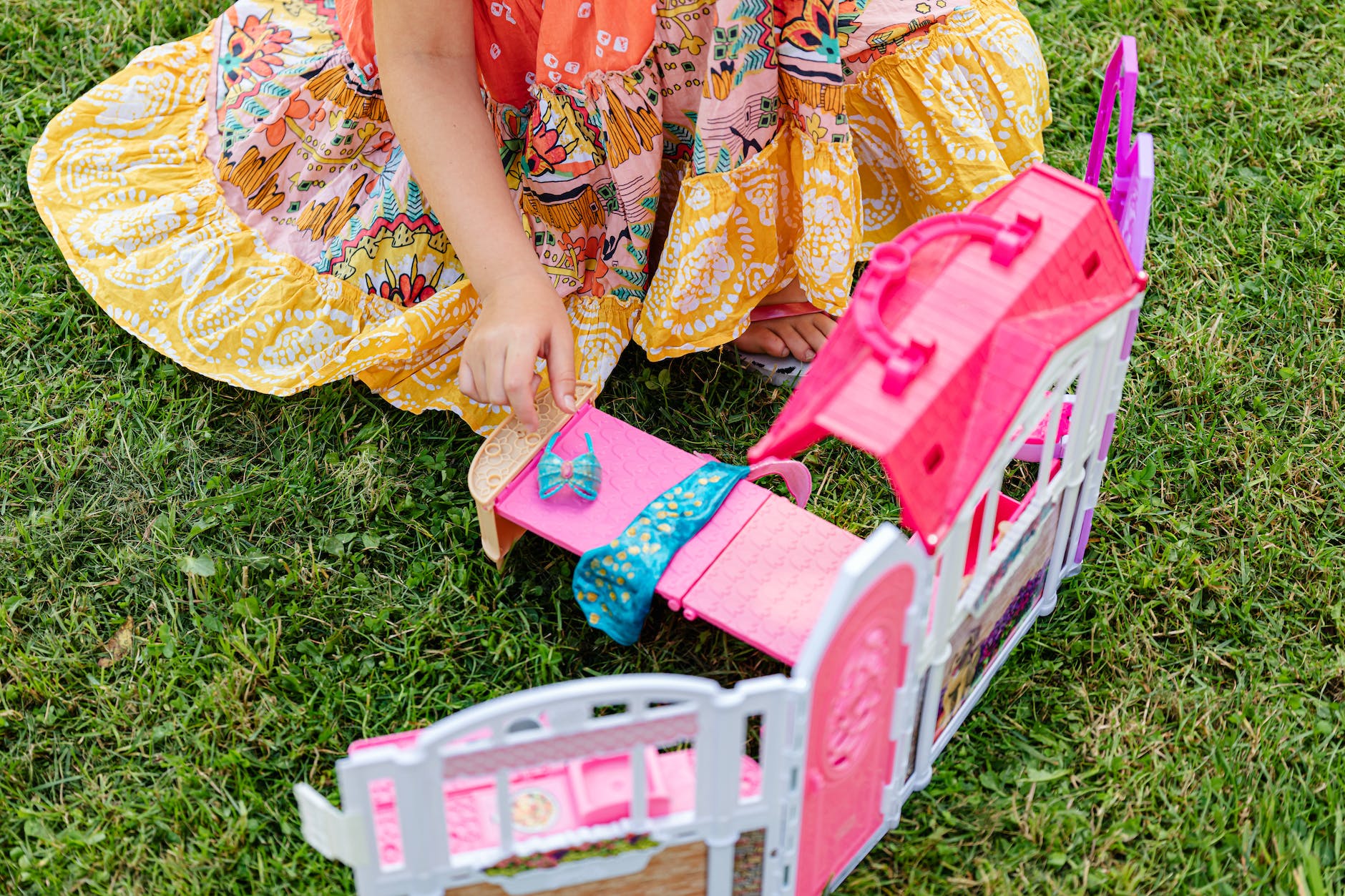
From the beginning, much of Barbie’s existence — her unrealistic physical proportions, the lack of racially diverse dolls, the toy’s reinforcing of gender roles — has been debated in jest and in seriousness. But her home, which has not been as publicly parsed or praised like the doll, has been a mirror for the various social, political and economic changes the rest of the country was experiencing. It has followed housing patterns and trends, from chic, compact urban living to suburban sprawl to pure excess. At times, it has been out of step, ignoring the country’s ills (Barbie’s never been broke; she has never lost her house to foreclosure)…
Financial institutions frequently turned down mortgage applications for women without male co-signers when Mattel debuted the Dreamhouse in 1962, three years after Barbie shook up the toy world, arriving in a one-piece bathing suit and kitten heels…
Society has held up “this promise of homeownership as part and parcel of the American dream,” for centuries, said Ms. Castro. More than 60 years of Barbie’s Dreamhouses have further instilled that in us from a young age.
To own a home at all, especially one with a three-story slide, can feel unattainable for most. From July 2021 to June 2022, home buyers were richer, whiter and older than they had been in decades. The share that were first-time homeowners was the lowest its been since at least 1981. And, the median home price exceeded $400,000 for the first time.
It’s called a Dreamhouse for a reason. We can all dream, can’t we?
Is the Barbie Dreamhouse simply a plot to teach children that they should aspire for a large home with all the latest furnishings and in a bright style?
The American Dream of homeownership is persistent and takes many forms. It includes statements by presidents. It includes decades of policies. It is reinforced in television shows and on television networks. It then would not be a surprise that children’s toys would reflect a similar theme.
How many toys do this? How often does “playing house” explicitly or implicitly support homeownership? Even if children cannot voice what they are doing, living in a society that pushes the American Dream of a suburban single-family home is bound to be picked up early in life.
All of this thinking of the Dreamhouse reminds of Lynn Spigel’s 2001 book Welcome to the Dreamhouse: Popular Media and Postwar Suburbs. I recommend it.
 Legally Sociable