How to “win” at civilization (according to Civilization VII)

What does it look like for a civilization to “win”? The game Civilization VII has five paths to victory (with quoted descriptions from here):

Photo by Marco Alhelm on Pexels.com

-Domination: defeat all other civilizations.

-Scientific: “You must complete 3 Space Race Projects. After completing them all, you unlock the First Staffed Space Flight victory condition.”

-Cultural: “You must house 15 Artifacts in your empire. Completing this Legacy Path unlocks the World’s Fair victory condition.”

-Economic: “You must gain 500 Railroad Tycoon Points from manufacturing goods in your Factories. You gain points each turn for each Factory Resource slotted into a Settlement with a Factory and connected to your Rail and Port network. When this is completed, you unlock the World Bank victory condition.”

-Military: “You must gain 20 points from conquering Settlements. However, before you adopt an Ideology, conquered Settlements count as only one point. After adopting an Ideology, conquered Settlements count as two, and if you conquer Settlements from an opponent with a different Ideology from you, they count as 3. When this Legacy Path is completed, you unlock the Operation Ivy victory condition.”

What if people around the world were asked how their civilization or nation or people group might “win.” Would it be peace and collaboration? Would it be mobility and success for individuals? Would it be amassing military victories and territories?

Some of these are captured in the Civ 7 conditions and some are not. And what people across the world want in “winning” (and this language may strike many as strange) could differ quite a bit.

While this is just a new version of a game in a long-running series, this could easily move to a larger and important conversation: what are humans doing through their efforts? Don’t contexts strongly influence our desired goals (and how we regard the goals of other groups or civilizations)?

(Back to the game: across the various iterations over the years, I have spent time pursuing different victory paths. For example, if one wants to win via culture, they need to make numerous choices along the way that limit success along the other paths.)


Society enables people more than it constrains them, part six

My argument in a series of blog posts in the last week is that society enables individuals more than it constrains them. Rather than viewing modern society as a hindrance to individuals who want to be free to pursue their own objectives, we could instead look at how the human need and capacity for relationships is empowered by institutions, social networks, and society. And what humans can accomplish in societies far exceeds what they can do alone or in small groups.

Photo by Paweu0142 L. on Pexels.com

Looking back, this is one of the key things I have learned in 20+ years of studying sociology. In this particular social setting and time, we are often determined to see ourselves as individuals slowed down by society and its constraints. We cannot do what we really want or be who we really want to be. Our mass society wants us to conform and we want to break free.

But many of the features of life today that we know and take for granted came about because of mass society. Large cities. The Internet and social media. Clean water, available health care, and long life expectancy. Airplanes hurtling through the sky. Educational opportunities. Libraries. Music festivals. And much more.

On the whole, we could argue that society empowers people. To be in relationships with people and institutions can be good. They provide access to things humans not that long ago might only have only dreamed of. These changes might come with downsides – rapid change, traditions that faded away, a changed physical landscape, and so on – but humans working with other humans can lead to increased humanness, not just restrictions and limits.

One last example of how we might see this better. Multiple times, I have asked my Introduction to Sociology students to finish the course by writing a sociological autobiography (a project borrowed from several other sociologists). How would they narrate their life through sociological categories? I ask them to step back from just an individualistic view. In doing so, they both demonstrate that they can apply sociological concepts we have discussed throughout the semester and they can reflect on a different angle to their life: how their individual actions and experiences fit within relationships and social systems around them.

To repeat the argument, over the long term society enables people more than it constrains them. To not be in a society or connected to other humans is not ultimately freeing. How society is best ordered or organized is another matter; humans have promoted and experienced different approaches in different times and places. With relationships with other people and institutions, we can be empowered.

Society enables people through institutions and social movements, part five

Every human is affected by institutions. These durable social collectives outlive individuals, have particular social structures, and can do things that individuals cannot. They are good examples of how society enables people more than it constrains them.

Photo by Pixabay on Pexels.com

Take for example a college or university. This past semester, I taught a class where we looked at American institutions of higher education over time. The oldest institutions are nearly 400 years old while many others have at least a century of history. These institutions have changed in important ways over time – think of the curriculum, their size, their purpose, their values – but they are recognizable in the past and present as places of learning.

No college or university is dependent on the actions of just one person or even a small set of people. We could tell the narrative this way; focus primarily on the president or founder or key leaders. At least some of them likely did consequential things. But there is a broader story to tell of the institution. What did the Board do? How did the college or university interact with legislators or the local community or other actors in higher education? What was the experience of faculty, staff, and students at different points?

As an institution, the college or university can enable people. It can offer classes, experiences, and opportunities that an individual or a small group could not do. There are things it cannot do but there is a reason these kinds of institutions have served societies for hundreds of years.

Institutions are durable and enabling. How might one change an institution or set of institutions? Social movements are mass movements of people working toward a common goal. They are relatively unusual; it takes a lot of effort to get large numbers of people to do something. To organize a local protest or march or campaign needs organizers, participants, resources, and a space. They get receive attention and can rally people to a cause.

And even then, social movements often need openings or certain conditions where what they ask for can be achieved. Hundreds of thousands of people might march within a country and nothing happens. Or it might take years and decades for a movement to see change happen. Successful movements are remembered for a long time because they harnessed the activity and actions of many people and changed societies.

In both of these examples, people are empowered. Institutions can constrain people and they are often associated with bureaucracy. However, bureaucracy exists because large complex institutions need ways to structure their activities. Social movements can fail to reach their goals or disappoint the people who participate. However, they can achieve things that only large numbers of people working together can do.

Society enables people through the human need for sociability, part four

Humans are social beings. They need connections, interactions, and care. They require this early on as babies as newborns can do nothing for themselves. However, the need does not go away as people age; human sociability is essential to being corporately and individually human. Societies provide spaces and resources to be social.

Photo by George Chambers on Pexels.com

Surrounded in today’s ethos of individualism, we often like the idea that we can pick and choose relationships. We can go low contact or no contact with people who might have some claim to interact with us. We choose our friends. We pick our level of engagement in-person and online. We join the groups or organizations we want to join as long as they serve us.

All this choice might represent hard-fought wins of making our own choices free of what we perceive as constraints. But it can also provide the illusion that we do not need other people.

One research project has evidence regarding this issue. The long-running Harvard Grant Study found this regarding the importance of relationships over the long course of life:

“When the study began, nobody cared about empathy or attachment. But the key to healthy aging is relationships, relationships, relationships,” Vaillant says. Close relationships, the data indicates, are what keep people happy throughout their lives. The study found strong relationships to be far and away the strongest predictor of life satisfaction, and better predictors of long and happy lives than social class, wealth, fame, IQ, or even genes. That finding proved true across the board among both the Harvard men and the inner-city participants.

And strong relationships are not only correlated with happiness, but with physical health, longevity, and financial success, too.

“The really surprising finding is that our relationships and how happy we are in our relationships has a powerful influence on our health,” says Robert Waldinger, a professor of psychiatry at Harvard Medical School who is the current director of the study. “The people who were the most satisfied in their relationships at age 50 were the healthiest at age 80. Strong relationships help to delay mental and physical decline. Taking care of your body is important, but tending to your relationships is a form of self-care too. That, I think, is the revelation.”

This revelation can be seen in both positive and negative terms. Meaning that while strong community seems to protect us from the literal coughs and colds of everyday life, a lack of community is also deadly. “Loneliness kills,” Waldinger says. “It’s as powerful as smoking or alcoholism.”

Humans do better when they are not alone. They benefit from strong relationships and connections with others. This does not mean there will not be conflict or hurt in these relationships. Yet the long-term effects can be positive as sociability helps individuals and groups.

Human beings are not the only species that are social. At the same time, the social component of human life helps boost what humans can do. Societies are built on these relationships and interactions, also providing resources and norms regarding how this sociability happens. To interact with, relate with, and care for others is critical to the human experience and what humans can accomplish together.

Society enables people through social networks, part three

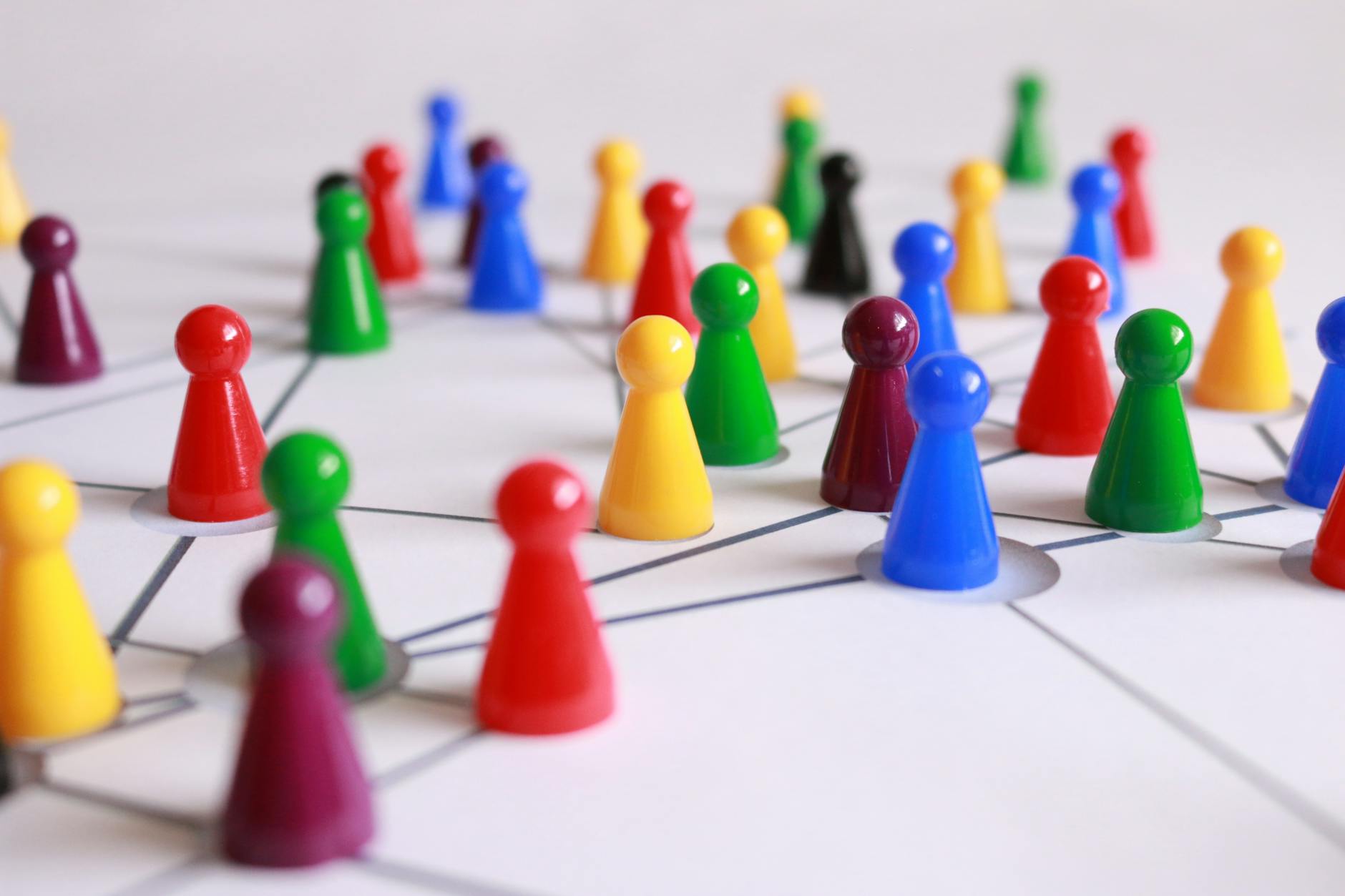
Humans contribute to and benefit from being part of social networks. Social networks are made up of the relationships between people. These relationships can range from weak to strong, can be based on all kinds of social ties, and can connect large numbers of people (think playing “six degrees of Kevin Bacon”).

Photo by Pixabay on Pexels.com

The 2009 book Connected by James Christakis and Nicholas Fowler details features of social networks. They pass information. They connect people. They can heal themselves.

And they are superorganisms, enabling humans to do things in networks that individuals alone cannot. Yes, social networks can lead to negative outcomes such as passing diseases along. This is how epidemics happen. But networks give people access to information, to relationships, to resources. In one famous study, the friends of friends – “weak ties” – provide more access to jobs. A community can do things through its social networks that an individual or a small group would not be able to.

Take any group of which you are a participant. The social network approach examines not the group or institution as an actor but the sets of relationships between people. In a family, there are different kinds of ties and different kinds of resources passed through the network. A network diagram of a workplace would look different, dependent on the size of the network, the density of the relationships, and the shape of those connections. A national society might be much too big to map out but the ways that people are connected can be surprisingly small if we consider nodes and bridging ties.

People and actors can have both bonding and bridging ties. Bonding ties are ones that tend to be close relationships that bring individuals together. Imagine close friends. All enduring groups need some level of this. Think of a religious congregations. There are often close connections at the center of this group that help anchor the organization. Religious congregations also have the capacity to create bridging ties. They can reach out in their communities, working neighbors or other congregations or other organizations. These ties can link together groups that might not otherwise interact. Some congregations might be really good at one of these two kinds of relationships: forming tight bonds that endure or linking together parts of society that can benefit from collaboration. Social networks overall give humans opportunities to thrive. It is in the building and maintaining of relationships that individuals can access what they need and larger groups can operate. To be human is to be part of networks that can empower people.

Society enables people with sports teams and music group analogies, part two

Have you been part of a sports team or in a music group? That collective had a goal, a purpose. Sports teams often want to win. Music groups have a musical work to put together. Both requiring working together, striving together to meet an objective.

Photo by cottonbro studio on Pexels.com

Of course, there are solo sports and music experiences. Numerous sports offer the opportunity to play be oneself, perhaps facing off against a single opponent or even just against some standard. Musicians can and do perform on their own. They can make music with their voice or instrument as a solo artist.

But there is something about the sports and music experiences as collectives that helps illustrate that society enables people more than it constrains them. What one person can do in either field can be very impressive but what a group can do together is amazing. And if you have been part of such an experience, it is a unique one.

Start with being on a sports team. You and your teammates are trying to play hard and win. In team sports, the outcome rarely depends on the actions of just one person; the team is working in sync to accomplish its goals. When all of the team members are contributing, the team feels great. The collective team can do what one player by themselves cannot.

Or imagine being part of a chorus or a rock band. Each person has assigned tasks. Music is often written in such a way to bring together multiple efforts for the same song. When everyone is doing their part, the resulting sound can be profound. The feeling of participating can also be notable; the work of the group can transcend the actions of the all the individuals.

This is not to discount the efforts of individuals. Solo performances require skill and can be moving. But they are different compared to groups playing and making music together. Whether working as a jazz trio or a symphony orchestra or a drumline, the group can do things that the individuals alone cannot. They can make music that is by the group.

Throughout life, we participate in groups and collectives. Society is just one massive-sized collective. We could see the larger goals of societies as analogous to the “win” a sports team seeks or the piece we are playing. We do not always succeed but what we can accomplish as a team or group or society can be empowering.

Society enables people more than it constrains them, part one

As I regularly teach sociology courses, I continually come up against the idea that society constrains people. It tells them what to do. It limits them. It imposes behaviors and beliefs and belonging that they do not necessarily want. Society is an anchor many want to cut loose.

Photo by iSAW Company on Pexels.com

This may reflect my setting: teaching sociology within the United States, a country where students have heard they are to be free to follow their own paths, to pursue their own goals, to become successful on their own merit. Individualism is alive and well in the United States and perceived conformity and constraint are negative.

But I will argue in this post and four to follow that society enables people more than it constrains them. To be human is to participate in social relationships. To live the good life as an individual involves being part of society. To participate in and contribute to social life is empowering in the long run.

Another way to put this: there is no solo human being. To be cut off from others from a long period of time is not healthy. Yes, relationships and society can bring pain and destruction; this is true now and throughout human history. But to now be part of a collective, something bigger than each of us as individuals, is to miss out on something fundamental to humanity.

One brief example from the classroom illustrates these points. What might we gain if we take a college class together as opposed to learning on our own (books, online, etc.)? Many people might feel frustrated by the classroom setting where the instruction, pace, conversation, or setting may not be exactly what they want. But what if we, in the long run, learn from and through experiences with other people? One can have a conversation with oneself but this looks very different than the talk possible when people bring their knowledge, experiences, and struggles to a focused conversation together.

In the next post, I will use the analogies of (1) groups of musicians and (2) sports teams to further the argument that society enables people.

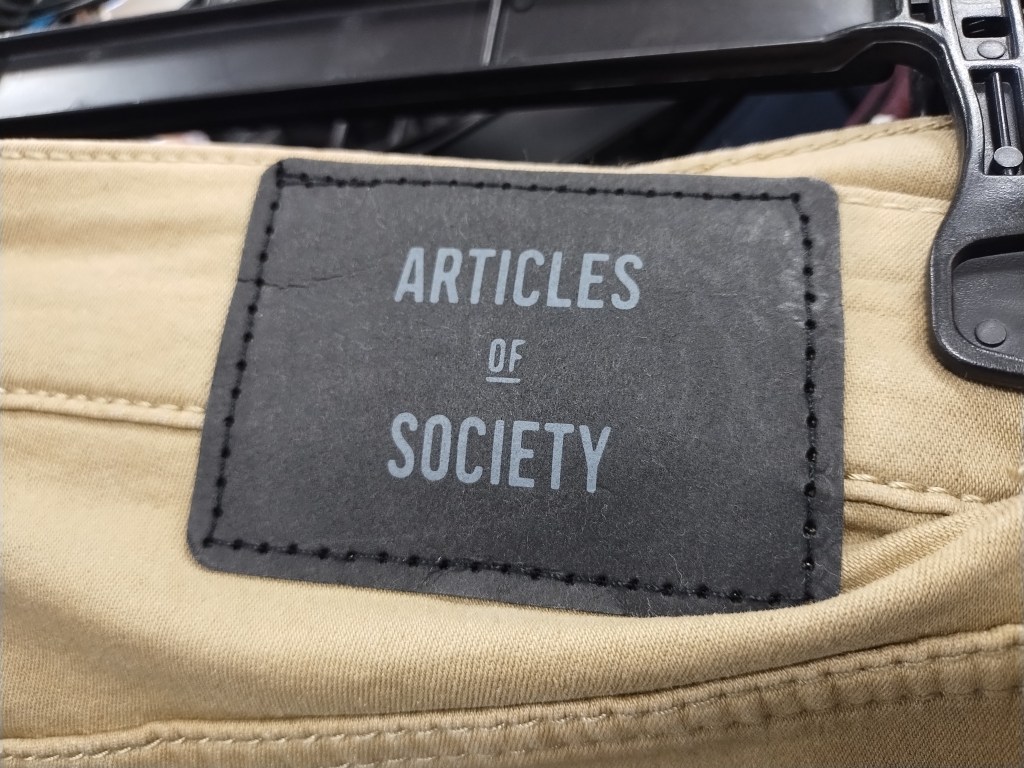
The brand “Articles of Society”

On a recent shopping trip, I found a brand name I did not know. It sounds sociological. Apparently they make clothes.

From their Instagram page:

Live life in Articles inspired by you, created with the earth in mind• #articlesofsociety

Is this a play on the phrase “articles of clothing”? If so, where does society fit in? Is it a reference to how fashion is a negotiation between the individual and the society around them? Or is it meant to be more biting, referencing how we all are just a part of society?

Maybe I am missing the point. One goal of developing a brand is to stand out from other options. A consumer has lots of choices for clothes ranging across design, price, and availability. The brand name caught my attention so perhaps that is the point? I did not purchase the clothing but I did snap a picture and the brand name will live on in my head.

Cat Kid Comic Club and “I blame society!”

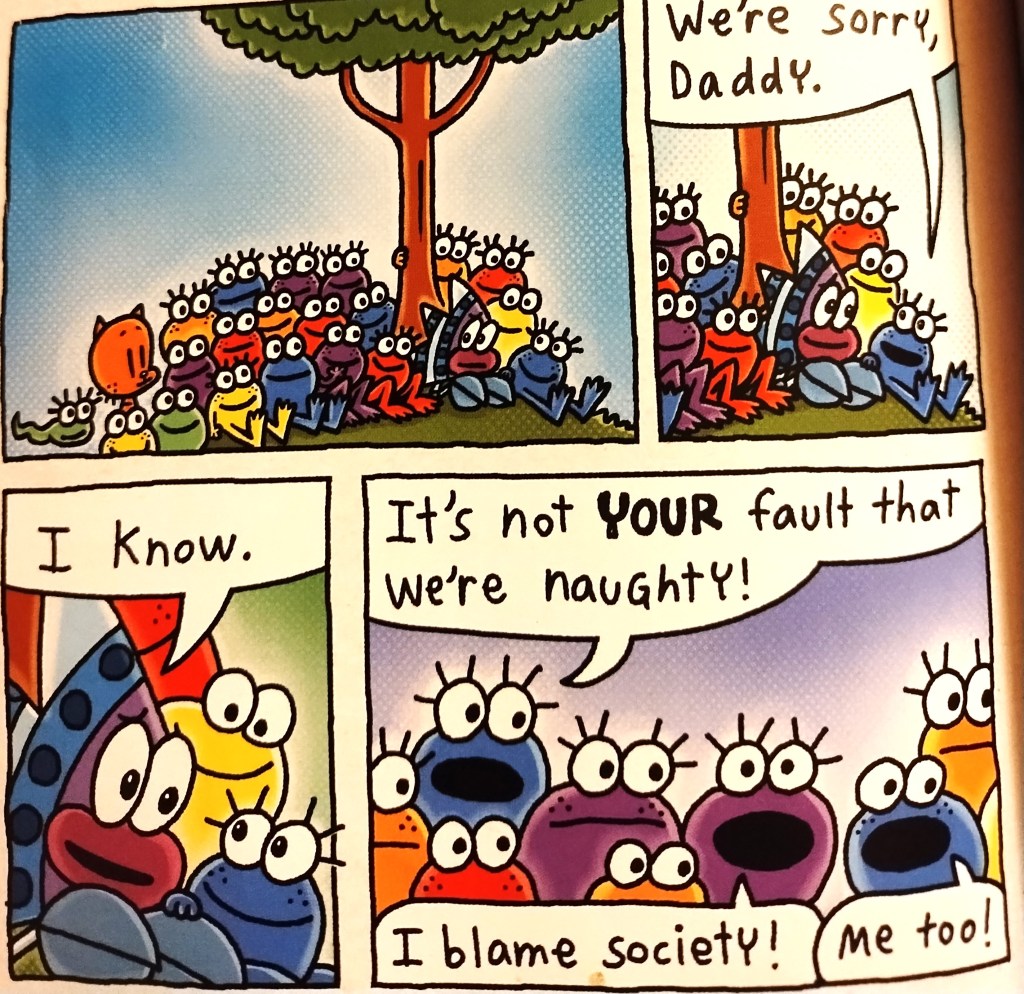
The baby frogs in the Cat Kid Comic Club series interact with society in this one moment:

How many children have tried such a line throughout time? And how effective is this blame?

And yet is there some societal or social influence in how kids act? If socialization is an important process in growing up, could society often factor into choices?

How many kids can define society and/or describe it?

This is also a reminder that books for kids offer plenty of social commentary – and are part of the socialization process themselves.

Searching through millions of paper records of guns, modern crime fighting, and large scale societies

Key to identifying the man who shot at Donald Trump was a large set of paper records:

Photo by Element5 Digital on Pexels.com

Bureau of Alcohol, Tobacco, Firearms and Explosives analysts at a facility in West Virginia search through millions of documents by hand every day to try to identify the provenance of guns used in crimes. Typically, the bureau takes around eight days to track a weapon, though for urgent traces that average falls to 24 hours…

In an era of high-tech evidence gathering, including location data and a trove of evidence from cell phones and other electronic devices used by shooting suspects, ATF agents have to search through paper records to find a gun’s history.

In some cases, those records have even been kept on microfiche or were held in shipping containers, sources told CNN, especially for some of the closed business records like in this case.

The outdated records-keeping system stems from congressional laws that prohibit the ATF from creating searchable digital records, in part because gun rights groups for years have fanned fears that the ATF could create a database of firearm owners and that it could eventually lead to confiscation.

But the urgent ATF trace Saturday proved indispensable in identifying the Pennsylvania shooter, giving authorities a key clue toward his identity in less than half an hour.

On one hand, searching through paper records could appear to be inefficient in the third decade of the twenty-first century. In today’s large-scale societies and systems, the ability to quickly search and retrieve digital records is essential in numerous social and economic sectors.

On the other hand, a large set of paper records is a reminder of the relatively recent shift humans have made to adjust to large populations, and in this case, specifically addressing crime. I recently read The Infernal Machine, a story about dynamite, anarchists at the turn of the twentieth century, and developing police efforts to address the threat of political violence. These changes included systems of records to identify suspects, such as having fingerprints or photos on file.

More broadly, the development of databases and filing systems helped people and institutions keep up with the data they wanted to collect and access. To do fairly basic things in our current world, from getting a driver’s license to voting to accessing health care, requires large databases.