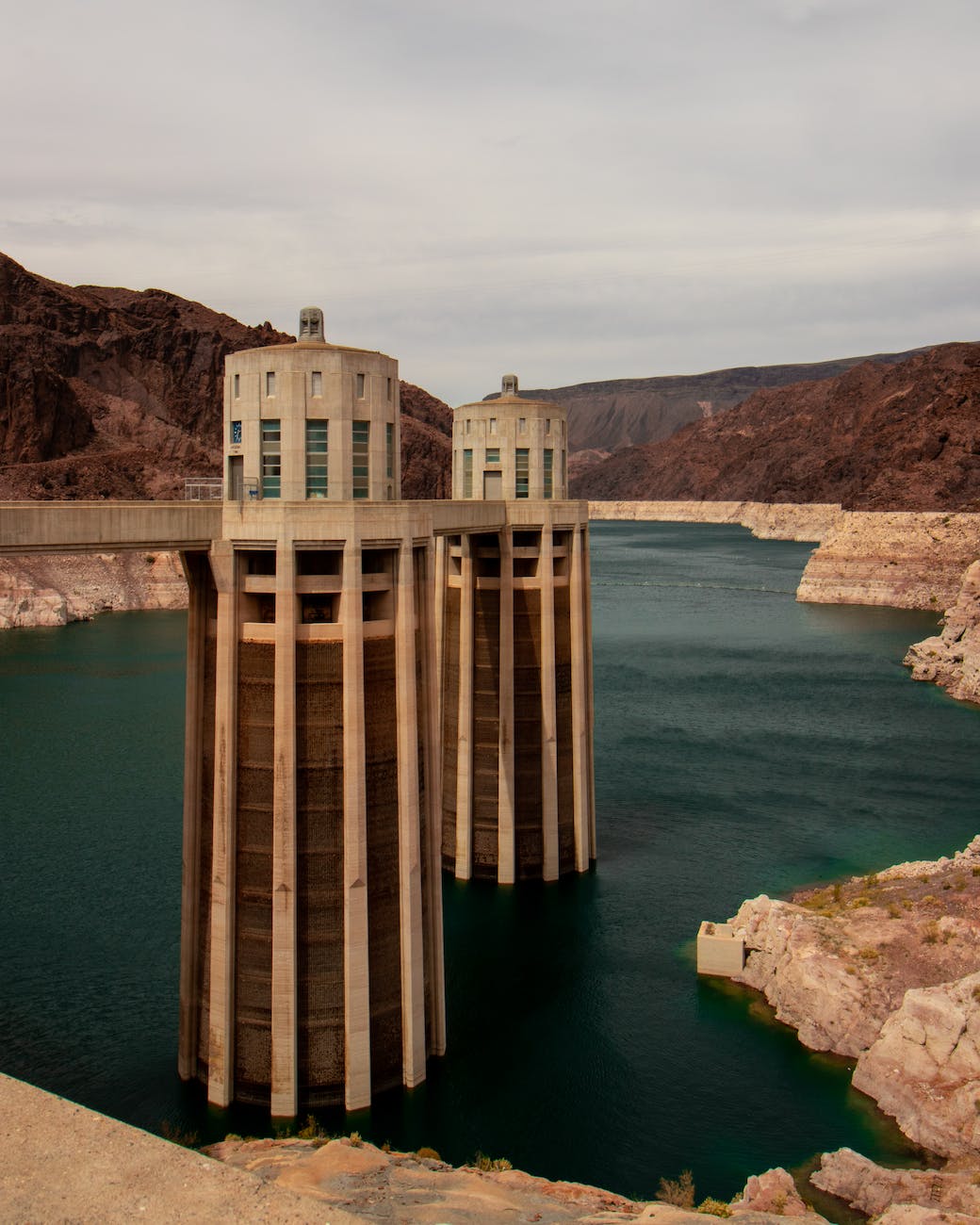
When a sprawling suburban development in the Southwest loses its water supply due to drought

On the edges of the Phoenix metropolitan region, one recently constructed suburban development lost its access to water:

Photo by Steve Johnson on Pexels.com

Joe McCue thought he had found a desert paradise when he bought one of the new stucco houses sprouting in the granite foothills of Rio Verde, Ariz. There were good schools, mountain views and cactus-spangled hiking trails out the back door.

Then the water got cut off.

Earlier this month, the community’s longtime water supplier, the neighboring city of Scottsdale, turned off the tap for Rio Verde Foothills, blaming a grinding drought that is threatening the future of the West. Scottsdale said it had to focus on conserving water for its own residents, and could no longer sell water to roughly 500 to 700 homes — or around 1,000 people. That meant the unincorporated swath of $500,000 stucco houses, mansions and horse ranches outside Scottsdale’s borders would have to fend for itself and buy water from other suppliers — if homeowners could find them, and afford to pay much higher prices…

Water experts say Rio Verde Foothills’ situation is unusually dire, but it offers a glimpse of the bitter fights and hard choices facing 40 million people across the West who rely on the Colorado River for the means to take showers, irrigate crops, or run data centers and fracking rigs.

Given conditions in the West and Southwest, this could become more common for suburban areas. See earlier posts here and here.

One key from the article: when you move into a home, is the water supply guaranteed (as much as possible)? It sounds like there was an agreement to sell water to this new development. If you have such agreements or live in unincorporated areas or depend on other water sources, will they always be there?

Water is typically one of the lower concerns of those moving to the suburbs. It is assumed to be there. There might be the occasional problem with pipes, particularly in older homes, but the water should keep flowing. Other infrastructure concerns tend to take precedence; are there enough roads for new residents? Schools?

Without cheap water, it is harder to live the suburban life. As the article notes, how does one wash laundry or dishes with limited or really expensive water? Flushing toilets? This does not even get close to beloved amenities, like swimming pools.

Many Chicago area suburbs with significant increases in sales tax revenues

For a number of suburbs in the Chicago region, 2022 was a good year for sales tax revenues:

Photo by Karolina Grabowska on Pexels.com

A Daily Herald analysis of 95 suburban sales tax receipts during the state’s 2021 and 2022 fiscal years shows the towns combined to average a 28.6% increase in sales tax revenues, resulting in nearly $230 million more…

First, federal and state laws that took effect in January 2021 required companies to assess sales taxes for online purchases at the rate of the buyer’s hometown…

Then, COVID-19 stimulus funds paid directly to Americans reinvigorated purchases on physical products…

And the final catalyst for sales tax revenue growth statewide has been the historic increase in the inflation rate.

The article goes on to discuss two issues I was wondering about: how will these communities spend this money and will this revenue increase last?

My guess is that there will not be too many major changes even with these increases. Because it is not clear whether the money will continue to come in at similar rates (though the online source sounds durable), the money could be limited to particular items or shorter projects.

At the same time, an increase in monies could help address important needs and build a good foundation for the next few years. Could some communities complete a project that they had been waiting on? Or, could they start something rolling for the longer-term that needed resources to get rolling?

These increases could also lead to some interesting conversations about what to prioritize and spend on. (Additionally, communities without bumps might have interesting discussions.)

How do I tell my friend I do not want to live near her “hideous” McMansion?

Can a McMansion come between friends? From an advice column four years ago:

Photo by Luis Yanez on Pexels.com

Dear Prudence,
My husband and I are moving to the city where one of my dearest friends lives. She really wants us to move to her neighborhood (“You can walk over for barbecues! Go on morning runs together!”). I love the idea of being close, except I hate her neighborhood. It’s a bunch of huge McMansions with things like fake turrets and nonsensical designs. I get why she and her husband chose it—there’s lots of space for their big family—but you couldn’t pay me to live there. On paper, though, it makes a lot of sense: It’s close to my work, in my price range, etc., so my friend doesn’t seem to catch on to my polite demurrals (“That might be a little too much house for us” or “We’re looking in a lot of neighborhoods.”) What can I tell her besides “your house is hideous”?
—Hideous House

Unless she’s calling you every day and going through all the listings in her neighborhood, I think it’s fine to keep offering her polite-yet-accurate demurrals until you eventually find a house elsewhere. There’s a natural expiration date to this conversation, and that will be when you move into a house in a different neighborhood. In the meantime, you can stress how great it is that you two will finally be living in the same city. If you absolutely can’t stand her gentle but insistent questions, then pick a household feature or two you know her neighborhood can’t provide that are absolute necessities for you and tell her: “We’re looking for something with less than 2,000 square feet, and [your neighborhood] just doesn’t fit the bill. Tell me what you think of these two houses we’ve been looking at.”

The term McMansion is typically negative. The answer above suggests it is best not to call out the friend’s home as a McMansion. This might not go over well, even if the person picked the McMansion because they liked it. Instead, emphasize how your own interests are different and move on.

I have wondered about this very topic for years: it is one thing to dislike McMansions from afar or in the abstract. But, what happens if someone you know and/or like lives in a McMansion and likes it? Is having a McMansion a barrier to friendship or a deeper relationship? Should one who dislikes McMansions express this opinion and the ways that McMansions bring blight to the earth? How does it work to criticize McMansions strongly and then know that at least a few McMansions like them and purchase them? Are these sorts of differences part of the sorting of people into different communities and social spheres?

These dynamics play out regularly in many communities, whether they have subdivisions full of McMansions or teardown McMansions. How exactly they affect interpersonal and community interactions and relationships could be studied further.

My thoughts on friendship and the suburbs

In the latest Wheaton magazine, I share some thoughts on friendship and the suburbs:

Photo by fauxels on Pexels.com

Developers began mass producing tracts of parklike suburban housing in the 1920s, and the trend burgeoned after WWII. All along, sociologists have found that parents move to the suburbs in large part for their children’s success. Those goals shaped the housing structure in these new developments, which featured single-family homes and activities centered on nuclear families of parents and children.

“Suburbia is so individualized, privatized, and family-oriented,” said Miller. “Relationships beyond those boundaries are seen as bonuses or good things to have, but not necessary.”

The arrangement of the American suburbs also narrows a person’s potential pool of friends. “When you’re making decisions based on schools, quality of life, and affordability, you end up preselecting your social relationships and possible friends,” Miller said.

In this milieu, Miller said, many Americans end up making friends based on two things: geographic proximity or shared interests. For example, one might find friends at grocery stores, local parks, or children’s activities like schools and sports. But even proximity and shared interests are not enough to push people into deeper friendships, as Langan has found.

Later in the article:

Miller sees this tension in his research on the suburbs, where—again—people prioritize family success over friendships. Over the past two decades, most books published on practicing faith in the suburbs have pushed against the societal current of surface-level and transactional relationships. “You should be forming relationships with people who have nothing to give you, nothing to offer you,” Miller said, summarizing a key theme in Dave Goetz’s 2006 book Death by Suburb: How to Keep the Suburbs from Killing Your Soul (HarperCollins, 2007). “That’s where you may truly meet God and meet people.”

Miller has seen some Wheaton students take these teachings to heart as they graduate. Some friend groups will decide to live together for one or two years post-graduation, focusing on relationships rather than careers. “That’s frowned on as delaying adulthood, but it poses a great question for Christians about what we value,” Miller said. “Is it about going out after graduation and finding the ‘best job’ and then finding people later? Or is it prioritizing relationships, friendships, and connections to a local church? I hope we would say that the latter are more meaningful in the long run.”

Build and idealize a suburban landscape around single-family homes, nuclear family life, exclusion, and driving and these are some of the patterns of social interaction that develop. I am sure there are numerous ways to address this; there are many researchers better suited to comment on that. Yet, it is helpful to know the underlying factors that contribute to difficulties to forming adult friendships at the start of the 21st century in the United States (in addition to oft-cited factors like social media).

Can a relaxed, suburban “third place” get away with selling a high sugar, high caffeine lemonade drink?

Since I am not a regular patron of Panera’s – though there are several within a several mile radius of my suburban address – I was not aware of a new drink in these pleasant and sociable spaces:

Photo by Gilmer Diaz Estela on Pexels.com

Technically, one could do the same thing at a McDonald’s or another more casual fast food spot. But given that McDonald’s isn’t exactly relaxing, it may not be people’s first choice for a leisurely afternoon hang. Panera, on the other hand, is what’s known as a “third place,” a special type of social environment that blurs the lines of work and home.

This concept originates from sociologist Ray Oldenburg’s 1989 book The Great Good Place, wherein he separates daily life into three distinct spaces. The first is the home, the second is the workplace, and the third is any other environment where people can freely gather and exist in public without obligation. Starbucks, notably, is explicitly designed with the third place in mind. As Forbes first wrote in 2015, Panera has increasingly been chasing this idea as well, arranging their stores more like living room spaces and encouraging customers to stick around by offering free Wi-Fi. Particularly with its Unlimited Sips program, Panera has shaped itself to be a third place where people can hang around with a low barrier to entry—even more so than Starbucks, where two drinks would cost as much as a month’s worth at Panera, and there aren’t even free refills.

All of this helps explain what makes this Panera lemonade situation so compelling. If it were a 7-Eleven selling chaos in a cup, nobody would think twice. Instead, it’s this suburban-feeling sandwich retailer that has shaped itself as a simulacrum of the neighborhood cafe. And that’s weird—a Charged Lemonade would be a better fit for the X Games vibe of Taco Bell, a chain that already flavors everything with Mountain Dew and Doritos dust. Panera seems so innocent—until you remember that they’re essentially feeding you a loaf of sourdough with every meal. At Panera, the mayhem is merely disguised by the presence of words like Napa and brioche, and the dissonance of it all abounds.

Nevertheless, for Baus, who says in the video that she hates working from her home, Panera is the perfect environment for both work and leisure. “It’s close to my house and it’s actually quiet,” she said. “I kept going to coffee shops that had loud music and very limited seating. Plus, Panera has the Unlimited Sip Club, which is much cheaper than paying for a coworking space.” For all these reasons, she says, she’ll continue to work from Panera—and yes, continue to glug the lemonade. “I have started watering it down about 70/30, though, because I don’t need that much sugar or that much caffeine,” she said.

My first two thoughts are these:

  1. Panera knows its audience.
  2. This is an embodiment of America today.

Imagine this scene: a semi-busy fast causal restaurant on a December morning with light snow. People are scattered around the tables and seats, some talking quietly, some working on devices. They all have a drink in front of them. Some have coffee, others water, more have a lemonade in different hues. As they drink and work or socialize, the levels of the drinks go down and then are quickly refilled. Some people leave, replaced by others and eventually the lunch crowd raises the volume of the place.

What powers the activity in this third place? Whether in coffee or soda or a lemonade drink, it is caffeine. For a country that sleeps poorly, this is the answer in suburbia.

Three responses to whether suburbanites can successfully steward land and nature

In unveiling a proposed development on a 700+ acre parcel in Lake County, one of the family members who currently own the land said this:

Photo by u00dcnsal Demirbau015f on Pexels.com

“We are committed to providing long-term stewardship that will allow future generations to enjoy the amenities and natural beauty of this ground-breaking residential community”

Is it possible for this to happen in the suburbs? Here are three possible answers:

  1. Suburbanites cannot steward land and natural beauty. By virtue of being suburbia, the land is used poorly, roads and houses are put everywhere, habitats and ecosystems are disturbed, and the land and nature become just echoes of what they once were.
  2. On the opposite end of the spectrum: humans have tended land and nature for millennia. Suburbia can enhance land and nature for human use. Suburbia can even be beautiful if careful attention is paid to ensuring open space, lawns, parks, gardens, trees, and natural features.
  3. A somewhere in the middle position: suburbia can treat land and nature better or worse, depending on decisions about development and how everyday life looks when completed. There are features of suburban nature that are laughable – such as so-called “nature band-aids” in sprawling parking lots – and others that are more admirable – plots of natural plants, preserved trees, and Forest Preserves (to name a few).

I have heard/read all three positions. If the development goes forward as planned or in a similar format, future residents and visitors might find it difficult to envision what was there in a less-developed state. On the other hand, they might see a version of suburban nature that residents and the community see as helpful and worth preserving in the land of single-family homes and driving.

The suburbs are about homeownership but some property owners see more money in rental units

The American suburbs revolve around single-family homes. But, in recent years some property owners see more money to be made in converting housing units into rentals. Here is a recent example from Arlington Heights, Illinois:

Photo by Alexander Mils on Pexels.com

Interra Realty, a Chicago-based commercial real estate investment services firm, announced this week it brokered the transaction — equating to $242,500 per unit — for the property at 1 N. Chestnut Ave. The firm represented both the seller, the Chestnut Street Condominium Association, and the confidential buyer, according to the announcement…

“As long as there remains potent rental demand in desirable communities like Arlington Heights, I expect to see continued deconversion opportunities in select Chicago suburbs,” Interra Managing Partner Patrick Kennelly said in the company announcement. “This submarket, in particular, has become more of an investment target following headlines related to Arlington Park.”

If homes, single-family dwellings and otherwise, are now primarily about financial investments, is this one of the logical consequences?

Suburbanites can often have negative perceptions of renters and apartment-dwellers. How do residents of Arlington Heights feel about more housing units becoming rentals? Does it matter if the conversions are happening in or near suburban downtowns compared to in single-family home subdivisions?

If this continues to spread – and I saw numerous stories in the last few years about single-family homes turned into rentals as well – I would imagine there will be some concern and attempted regulations.

The spread of suburban chickens in the Chicago region

Are suburban chickens different than chickens living in other places? Residents of more Chicago area suburbs now have an opportunity to find out:

Photo by Engin Akyurt on Pexels.com

Once a novel concept, more and more suburbs are permitting residents to raise backyard chickens. Among the latest is Rolling Meadows, which enacted regulations in 2019 allowing them, after rejecting the idea in 2014 and 2018. Others include Bartlett, Deerfield, Des Plaines, Evanston, Glencoe, Grayslake, Highland Park, Schaumburg and Wheeling,

American suburbs have an interesting relationship with nature, or “nature.” Are chickens part of the natural realm or part of the human transformation of land into sprawling subdivisions dominated by single-family homes and cars?

There are clearly ideas in suburbs about acceptable wildlife and animals that are not as accepted. Dogs and cats are in. Coyotes are present but are viewed as a threat. Canadian geese are generally disliked. Bison are rare so therefore interesting when roaming suburbia. Chickens are somewhere in the middle. Here is how the same article describes the different opinions:

Suburban proponents of backyard hens laud their benefits, such as a source of healthy eggs and an affordable food option.

Opponents, however, worry about the possible impact on neighbors, from the noise and odors to concerns about attracting coyotes.

Are chickens enhancing the suburban experience or detracting from it? More Chicago area communities are coming down on the positive. How long until the majority of suburbs allow chickens or are there significant barriers facing suburban chicken expansion?

How the discussion might go regarding 700+ empty acres in the middle of suburbia

A new large plot of land may soon be available in the middle of Lake County, Illinois. What should go there? Here is an early idea:

The family that owns the Chicago Blackhawks wants to turn more than 700 acres of farmland it owns near Mundelein into a housing, commercial and industrial development, village officials confirmed.

If the Wirtz family’s vision becomes reality, the land would be annexed into Mundelein and become the largest development by acreage in Lake County, Village Administrator Eric Guenther said.

“This is a big deal,” Guenther said. “(It) could prove to be a very extraordinary development for Mundelein, the Wirtz family and Lake County as a whole.”…

Guenther declined to detail the family’s specific plans for the land. They will be unveiled to the public at the village board’s Dec. 12 meeting.

Given what I have seen regarding suburban development, here are some of the steps to come and the common responses from involved actors:

  1. The landowners will bring a plan to the municipality that maximizes or at least includes a lot of profit through developing the land.
  2. The Village of Mundelein will receive the proposal and work on it through elected and appointed officials plus professional staff.
  3. There will be public hearings regarding the property and proposed plans.
  4. Community residents will chime in with a variety of concerns, including regarding traffic and noise. The local school district and other actors will wonder how new development will affect local services and amenities. The village will want to consider the tax base on how the tax revenues add up from such a property. Some actor(s) will propose keeping the property or part of it as green space.
  5. There will be some negotiations between the developers and the community. This could go relatively quick or slowly, depending on the changes asked for and the vision of the developers. They could happen behind the scenes or be more visible to the public.
  6. Roughly 1-2 years from now a plan will be in place and development can start.

Each of these steps could proceed differently with the potential for plans to move more quickly or more slowly. There is no guarantee that the proposed project will go forward.

However, given the size of this parcel, there will be a lot of interest from everyone about what happens with this land and how this might affect Mundelein – whether it is the community’s character, revenues, or land use – for decades to comes.

What would a lack of water and power from the Colorado River do to sprawl?

The suburban sprawl in the United States depends on the availability of water and power, among other resources. So what happens if the Colorado River, a source of water and power for numerous people, no longer can supply either?

Photo by Cameron Rainey on Pexels.com

Such an outcome — known as a “minimum power pool” — was once unfathomable here. Now, the federal government projects that day could come as soon as July.

Worse, officials warn, is the remote possibility of an even more catastrophic event. That is if the water level falls all the way to the lowest holes, so only small amounts could pass through the dam. Such a scenario — called “dead pool” — would transform Glen Canyon Dam from something that regulates an artery of national importance into a hulking concrete plug corking the Colorado River…

As the water has receded, so has the ability to produce power at Glen Canyon, as less pressure from the lake pushes the turbines. The dam already generates about 40 percent less power than what has been committed to customers, which includes dozens of Native American tribes, nonprofit rural electric cooperatives, military bases, and small cities and towns across several southwestern states. These customers would be responsible for buying power on the open market in the event Glen Canyon could not generate, potentially driving up rates dramatically.

The standard rate paid for Glen Canyon’s low-cost power is $30 per megawatt hour. On the open market, these customers last summer faced prices as high as $1,000 per megawatt hour, said Leslie James, executive director of the Colorado River Energy Distributors Association.

The issue of water has already increased concerns about development in the Southwest. A landscape full of single-family homes, lawns, lots of roads, and other suburban features requires a lot of water. Can life in sprawl not require as much water or is there a point where no more sprawl is just not possible? Then add in the issue of power. This includes transmission lines, homes, and other structures. Can the existing sprawl even be maintained with less electricity and water?

It also worth paying attention to how these changes with the Colorado River have ripple effects elsewhere. If as much water is not available, where can water come from? I imagine those around the Great Lakes have thoughts. If not as much power is generated, is there electricity capacity elsewhere? How much can be done short-term to shore things up while also considering long-term consequences?

More broadly, what might stop American sprawl? Not having water or power would be a powerful incentive. Others have speculated about a certain price of gas. Perhaps cultural beliefs about the suburban good life change. Or there might be something unforeseen. The conditions with the Colorado River might just offer a glimpse into what happens when sprawl has to stop.