The rise of SUV nation(s)

A look at the impact of increased SUV sales on the environment includes a short history of the rise of the vehicle category:
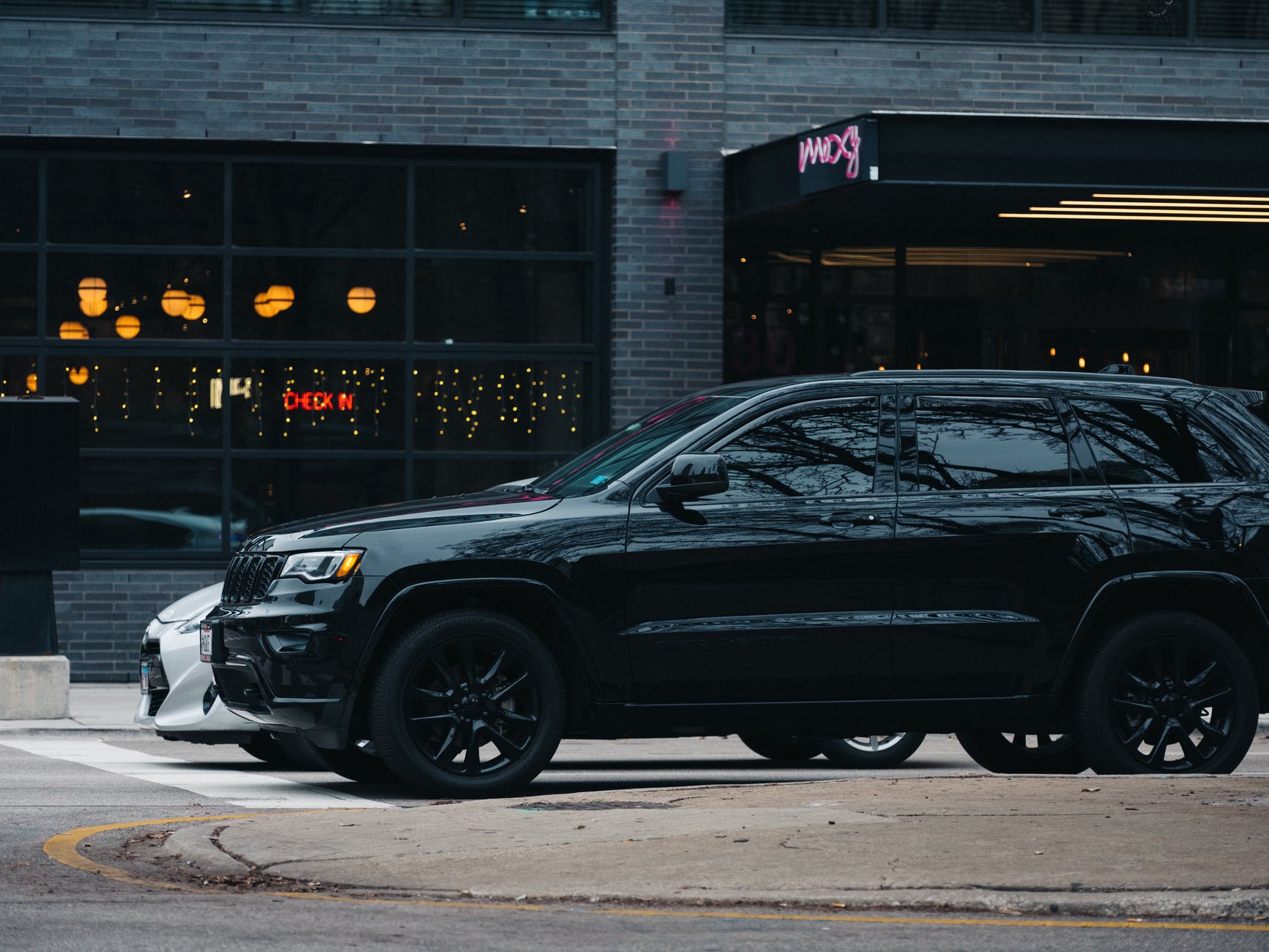
Photo by Ricardo Esquivel on Pexels.com

SUVs raced to a new milestone in 2019, surpassing 40 percent of all car sales worldwide for the first time. The world’s roads, parking lots, and garages now contain more than 200 million SUVs, eight times the number from a decade ago. SUVs’ share of car sales in the U.K. has tripled over the past 10 years; in Germany last year, 1 in 3 cars sold was an SUV…

This global phenomenon has its roots and impetus in the U.S., where in the 1980s the car industry carved out a new category called the “sport-utility vehicle”, a sort of mashup between a truck, a minivan, and the traditional American family car. After successfully lobbying lawmakers to class these vehicles as light trucks rather than cars, binding SUVs to less stringent fuel efficiency standards, the industry set aboutslotting them into almost every arena of American life…

The industry found that American drivers enjoy the lofty seating position of SUVs as well as the capacity and the comforting feel of security their bulk provides, even if half of all journeys taken in the U.S. are mundane trips of under 3 miles to run errands rather than high-octane adventures in the Rocky Mountains. For many Americans, SUVs invoke alluring qualities of fortitude and independence…

As Bloomberg’s Nat Bullard noted in a recent tweet: “We don’t buy cars here. We buy big cars built on truck bodies, and we buy trucks and drive them like cars.” The U.S. is now indisputably an SUV nation, a transformation that has had profound consequences for American cities as well as the global climate.

A few thoughts:

  1. This timeline roughly lines up with connection I have found in my years of studying McMansions: SUVs and McMansions can be viewed as related phenomena. They are both large and represent increases in size from typical earlier versions. The 1980s appears to be a key decade with a bigger economy, plenty of spending, and a growing emphasis on larger consumer goods. And those SUVs may need a three car McMansion garage to fit.
  2. There are hints here but there are also links to a suburban lifestyle that is largely structured around driving and short trips. Granted, just because Americans live in a sprawling landscape does not necessarily mean they need large vehicles to get around; they could use smaller cars. Yet, all that driving – even for relatively short distances – means Americans get lots of time to think about vehicles and what they want to have (and need to have to access many places).
  3. It is interesting to note that SUV sales and use are up in other countries as well. SUVs are often tied to American interests in driving and size; what explains increased sales in Germany and the UK? Car makers could be pushing these vehicles more and why are drivers more itnerested now than earlier?

Bipartisan white suburban support for fewer apartments, more homes

A political scientist shares research findings on how political views affect suburban support or opposition to different kinds of development:

Photo by SevenStorm JUHASZIMRUS on Pexels.com

As a political scientist who has studied local land-use regulations, I’m surprised to see a national political campaign in 2020 place such an emphasis on the issue—which hasn’t figured much in presidential races in half a century. The Trump campaign isn’t wrong to think that white suburban voters—the obvious target of the McCloskeys’ speech—would oppose apartment construction in their neighborhoods. In a nationally representative survey of metropolitan areas that I conducted last year, a substantial majority of homeowners revealed a strong preference for single-family development and opposition to apartments. They also overwhelmingly agreed that residents of a community should get a vote on what is built there…

And yet the history of exclusionary zoning reveals that it has long been a bipartisan activity. Obama’s Affirmatively Furthering Fair Housing rule was the first major action taken by any presidential administration to enforce the 1968 Fair Housing Act, which despite its lofty promises has not resulted in an integrated America. During the 1976 presidential campaign, Jimmy Carter assured voters that he was not “going to use the federal government’s authority deliberately to circumvent the natural inclination of people to live in ethnically homogenous neighborhoods.”

My survey data revealed no significant difference between white Republican and white Democratic homeowners in their opposition to high-density housing. I also found overwhelming agreement that apartment complexes would increase crime rates, decrease school quality, lower property values, and degrade the desirability of a neighborhood…

What this means is that Trump’s approach could conceivably appeal to white suburbanites more broadly, not just Republicans. And yet the evidence suggests that this is unlikely. Most white Democrats support the development of affordable and subsidized housing in the abstract and will feel comfortable rejecting Trump’s similarly abstract opposition to it. Where white Democrats oppose such development is when it arrives in their own backyards. But they do not need Trump to block it.

The Americans suburbs are based around single-family homes, exclusion, and local control (in addition to other factors). Opposition to apartments can be about both changes in aesthetics and character of a suburb and the kinds of people who are assumed to live in apartments.

But, as is hinted above, the real battleground over apartments and affordable housing and residential segregation really is about the local level. Federal or state guidelines could require certain things for municipalities. This is the first line of defense for those opposed to housing or any other development they do not desire. And these are abstract levels of government until local development pressure starts up. Even if such regulations passed, where exactly apartments might be located, in what scale and with what design, and how local residents and officials respond is the real pressure point.

If I am interpreting the last paragraph cited above correctly, white suburbanites in general will mobilize to oppose local development they do not want. This can have multiple effects: (1) it stops apartments and affordable housing from being built; (2) it can push such development into communities that are less able to mobilize or where there is already cheaper housing; and (3) it can create long-standing tensions between community members and prospective residents. In the long run, it means that some of the same patterns that suburbanites might criticize in big cities – uneven development, residential segregation – are replicated in suburbs.

Losing a big tree in a suburban neighborhood

Recently, several big trees were cut down in our suburban neighborhood. These were taller, older trees in a neighborhood full of such trees along the main street and in backyards:

What such trees is perhaps obvious: shade, habitats for birds and other animals, a sense of stability and permanence, connection to nature, a boost to property values. And the problems they could provide also vex suburbanites: leaves, potential for falling down on houses and property, and the potential to become diseased or sick.

But, as we watched the trees cut down, chipped up, and hauled away, I was reminded of another feature of these trees: the ability they have to frame homes and streetscapes. I am reminded of a short passage in James Howard Kuntslter’s TED talk where he describes the purposes of trees in urban planning: to frame the streetscape, to provide shade, and to protect pedestrians from the vehicular traffic. A stereotypical image of American suburbs is the curving two-lane road with a canopy of branches and leaves overhead. But, this also sits aside familiar images of Levittown and other mass subdivisions where all the trees are gone and new saplings can barely fill any space.

Is the big suburban tree a luxury, a status symbol, an aesthetic choice, an intentional choice by a developer? No matter the reason, I hope many of the other large trees around us remain and enhance what would be a bleaker suburban landscape without them.

Where will people move to if the suburbs are “abolished”?

With President Trump’s claims that Democrats want to abolish the suburbs, we can ask this: where will people move to instead of the suburbs or where will suburbanites end up? A few thoughts:

  1. This reminds me of the first and only homeowners association meeting we attended when we moved back to Illinois. The board and attendees discussed efforts to combat some vandalism of association property, mainly some signs at the playground in the middle of our neighborhood as well as on a bridge over a creek. One attendee stood up and told this story (and I’m doing my best to paraphrase: “Any time my family and I move somewhere, we stay until there is crime. And then we move further away from the city until there is no crime and try again. If the vandalism issue is not dealt with, there will soon be babies shot in the street.” The suburb we lived in is rather small and sleepy but I would not be surprised if many people share a similar mindset (given what I see on social media about reactions to local crime).
  2. Those with resources will likely always try to find ways to create protected suburban communities. Depending on what regulations could come down regarding affordable housing, some will try to find loopholes and some might just defy the regulations and fight in court. (Another option: some might move to upscale urban neighborhoods.)
  3. An easy answer might be to embrace telecommuting and working from home and move to more rural locations. Yet, this negates some of the advantages suburbs offer including access to amenities of the city (including cultural institutions, major airports and transportation options) and job centers in the suburbs and cities. How many people truly want small town life (rural, tight local networks, few local options for shopping, dining, entertainment) versus wanting a suburb that straddles urban options and lower density?
  4. What does this do to our understanding of white flight and related phenomena? As it stands, historians, sociologists, and others largely talk about white flight as a process that occurred after World War II as whites left urban neighborhoods for suburbs and black residents moved in. If the suburbs are more open to all (and they already are much more diverse compared to the postwar era), will white flight come to include whites moving from suburbs to more protected suburbs and/or more rural areas?
  5. At the same time, Americans are less mobile than they been in the past. Would a threat to the suburbs actually prompt people to move or would they “shelter in place” or fight in place?

Suburban opposition to apartments has a long exclusionary history

When the McCloskeys of St. Louis spoke at the Republican National Convention about their fears that suburbs would be abolished, what they said specifically would change in suburbs continues a long-standing argument:

They want to abolish the suburbs altogether by ending single-family home zoning. This forced rezoning would bring crime, lawlessness and low-quality apartments into now thriving suburban neighborhoods.

https://www.youtube.com/watch?v=QIL4dft8VNw&feature=youtu.be

What is so important about single-family homes and keeping out apartments? Here are at least three reasons why wealthier suburbs look to avoid most apartments:

  1. A change in aesthetics and character. Single-family homes are emblematic of people who have made it or successful suburbanites. The bigger and nicer the homes, the better off or the higher status the community. Single-family homes are also more spread out while apartments lend themselves to more density. Bigger lots equals higher status.
  2. The contrast between homeowners and apartment dwellers is thought to be stark. Homeowners care about their property and their community. Because their property values are at stake, they will put effort and money into their home and land. In contrast, apartment residents are thought to transient, not interested in the community, and less invested in their property.
  3. Exclusion. Apartments are not just an eyesore and problems for building community; they attract different kinds of residents than wealthy homeowners. In particular, they are connected to lower-income residents, non-white residents, and/or criminal elements. And if a suburb avoids building apartments (or only ends up with more expensive apartments or rental units), certain groups of people are excluded.

Two quick historical examples come to mind.

-My research on the suburban development of Naperville, West Chicago, and Wheaton showed that the subject of apartments was an important one. In my 2013 article “Not All Suburbs are the Same,” I provide some details of fights over apartments in Naperville and Wheaton. In both well-off suburbs, the communities decided not to pursue apartment growth.

The Mount Laurel case in suburban New Jersey involved efforts by long-time black residents to relocate to apartments. The denial of the apartments from the municipality led to a long court battle.

In sum, the argument from the McCloskeys is not just about a change in density; it is also about local control and the ability to keep (stereotyped) apartment dwellers out.

(Update: I have read other commentary that analyzes the coded language used by the McCloskeys. My primary focus in this post is about the mention of apartments: this is a common form of development that wealthier communities often look to limit because they view them as gateways to particular people in a community.)

Communities and character in one slide

In putting together material for the upcoming semester, I found myself summarizing my work on studying the character of particular suburbs. Here is the slide that explains the process:

CommunitiesCharacterSlide

A quick explanation of the (simplified) process depicted on the slide:

  1. Every community or neighborhood has characteristics and circumstances at its founding. These starting traits can prove influential down the road.
  2. Once started, the community continues through inertia. People live their lives.
  3. There are points in time – which I call “character moments” in a 2013 article – where the inertia of communities are disrupted. This often comes in the form of external forces that place pressure on a community. For example, my 2013 article looked at what happened when three suburbs felt suburbanization pressure in the Chicago region after World War II. This led to internal discussions in each suburb about how they wanted to respond and what they viewed as their future. One of the suburbs, Naperville, decided to lean into the growth: they annexed a lot of land, developed guidelines for growth, and experienced multiple decades of explosive growth (read more in my 2016 article on the difficulties explaining these changes in Naperville).
  4. Different decisions in communities will lead to different future paths.
  5. Then, the inertia, external forces, and internal discussions and decisions repeat as circumstances arise. These key decisions build on each other over time which leads communities to be different places and feel different. This is an iterative process and communities can change course.

The ways this plays out in unique communities can differ greatly even as the process looks similar.

(To read more of what helped me think about this starting in graduate school as I looked to enact my interests in urban sociology and the sociology of culture, see this 2000 article titled “History Repeats Itself, But How? City Character, Urban Tradition, and the Accomplishment of Place.”)

Are suburbs now cool or are they just an attractive option at the moment?

An analysis of why the suburbs are currently attractive to millennials starts with a headline about the suburbs being cool but mainly discusses practical life issues:

Photo by Leah Kelley on Pexels.com

Changing attitudes about commutes.

Credit analyst Kailyn Hart was living in a 1,300-square-foot apartment in bustling Mid-City, Los Angeles with her fiancé, Dominic Wilson, and their 1-year-old son when the pandemic forced her to begin working from home. Being able to work remotely gave Hart—who had been watching mortgage rates for a good buying opportunity since 2017 —the kick she needed to purchase a 4-bedroom, 2,300 square-foot house with a backyard in Fontana, Calif, a 47-mile drive from L.A. “My boss told me that I’ll at least be working remote until December, and after that I may only be going into the office just once or twice a week,” says Hart, 32…

A need for more space…

“We’ve seen a surge of buyers who want to leave downtown for the suburbs,” says Nicole Fabiano-Oertel, a real estate agent at Compass in Chicago. “The most common reason is they want more space, whether that’s indoor space or outdoor space, or both.”…

Why pay city prices, when you can’t live the city life?…

Corey Jones, a real estate agent with Better Real Estate in Plainfield, N.J., says affordability is a driving factor for a lot of urban residents who are decamping to the suburbs. “What we’re hearing from clients more and more now is: why rent and pay city prices when you’re working from home?”…

Good public schools.

Generally, public school systems in the suburbs outperform schools in urban areas with respect to test scores, graduation rates, and college placement. Suburban schools also usually have more outdoor space for sports and other recreation. And, a number of parents who send their kids to expensive urban private schools have expressed that they’re less willing to keep paying if the schools go remote this year.

None of these reasons sound particularly cool. They sounds more like calculated decisions given the current circumstances: Americans tend to like larger private spaces, they have a lot of stuff, and they think certain places are better for raising children. These are all part of the ongoing appeal of the suburbs.

Going further, I wonder when suburbs were cool. Even as Americans moved to suburbs in large numbers in the twentieth century, were they ever the place to be? All during this period, critics of the suburbs pounded away at the problems: exclusion, conformity, soulless, mass produced, overreliance on driving, and on and on. Even as millions adopted a suburban lifestyle, it was not always portrayed in media products as the exciting or hip or sophisticated choice. Suburbs may have more entertainment centers than ever but they do not compare to the vibrant cultural centers and neighborhoods of big cities.

Perhaps the connection here is that millennials may be more interested in suburbs right at this moment. As relatively young adults, they have a higher cool factor and are not as locked into life paths. Just moving to the suburbs suggests younger Americans think the suburbs are a viable option…and this may be as cool as the suburbs get.

TN town built to construct atomic bomb helped inspire postwar suburbia

A story connecting Chicago to the development of the atomic bomb included this paragraph about Oak Ridge, Tennessee:

OakRidgeTN

Aerial image of Oak Ridge, Tennessee (via Google Maps)

The decision had already been made that the atomic bomb would be manufactured in a rural stretch of eastern Tennessee. Designated “Site X,” it quickly became Oak Ridge, a city of 30,000 — designed and constructed under the strictest security. The architects of Chicago-based Skidmore, Owings & Merrill had to draft a master plan without knowing where it would be built. Oak Ridge’s curving roads, dotted with clusters of single-family homes, would become a template for the postwar suburban building boom.

The classic historical work Crabgrass Frontier includes this bit about Oak Ridge:

The mobile home park concept was pioneered in the 1920s and 1930s, but the largest experiment with manufactured or prefabricated houses came in World War II. This 1945 aerial photograph was taken of a part of Oak Ridge, Tennessee, a community that not even existed in 1940. In the next few years as atomic workers poured into the area, more than 5,000 trailers supplemented 9,600 prefabricated houses and 16,000 barracks to provide temporary dwellings in this top-secret facility.

Another scholar connects Oak Ridge and Levittown:

His Levittown wasn’t so very different from the utopian plan of Oak Ridge, Tennessee, designed during the way by the prestigious architectural firm of Skidmore, Owings, Merrill, a community itself modeled in part after the TVA communities of the Depression-era utopian Roosevelt planners.

One irony is that the development of the atomic bomb helped lead to existential fear in later suburbs even as the development process helped pave the way for more suburbia.

A connected thought: this is another way that World War II helped contribute to the subsequent decades of sprawling suburbs. In addition to Oak Ridge, World War II helped lead to new loans for returning veterans, pent-up demand for housing (add the war to the Great Depression and little had been built in roughly 16 years), the flowering of the American Dream as including a suburban home (already partly in place in the 1920s), and postwar prosperity with the United States emerging as a victor.


Treating suburban communities as another consumer good to choose among, Part Two

With the New York Times sharing suburban communities to choose among, I argue this could have long-term consequences for how suburbanites think about their community and social life. In short: treat suburbs like objects to consume and suburbs and suburbanites will struggle to form, develop, and maintain community. Here is why:

woman picking wine in store

Photo by Iuliyan Metodiev on Pexels.com

  1. Suburban community is often anchored in moral minimalism. With an attitude of leave each other alone, community is relatively shallow. The emphasis on each resident making the best choice for them could hinder efforts to build community. Consumerism encourages individual choices and often says less about and provides fewer opportunities for collective action.
  2. Making a choice among places of where to live could encourage people to more easily move away from places and/or limit their investment into each community. Purchase one suburb, throw it away when it no longer works for you or no longer meets expectations or another looks more attractive. Suburbs can be picked up and discarded at will, limiting commitment from residents and community members.
  3. Consumerism works through consumers making choices based on the resources they have available. This sorts people based on resources and makes it easier to justify different outcomes – and inequality –  by what resources people had coming in (which can be the result of social and individual factors). For example, one historian highlighted the shift in the 1960s from language about segregating by race or ethnicity to economic resources and social class.
  4. Consumer goods need to be differentiated from other competing consumer goods. The sort of analysis from the New York Times – fairly common in real estate sections – can put a spotlight on a few New York area suburbs and it is very difficult to provide an overview of all suburbs. While suburbs do indeed have unique characters, they also share similar traits compared to other places. Yet, for each of the suburbs highlighted, there are dozens of other suburbs with similar characteristics as well as other unique features. Going even further, trumpeting a few suburbs only might push more residents there while depriving other suburbs of possible residents. Highlighting particular features of places can reinforce statuses and traits and encourage agglomerations of both amenities and a lack of resources. In the long run, this pits suburbs against each other when they actually have multiple common interests and residents need particular services and options.

Articulating a different conception of social life beyond consumers making choices and could be more productive in the long run for nurturing the involvement of residents, deeper social connections, and stronger suburban communities. As I have heard said by multiple scholars, consumers take while citizens benefit as well as have responsibilities to others and the whole.

Treating suburban communities as another consumer good to choose among, Part One

A recent New York Times article made the case for why prospective suburbanites might choose to live in specific desirable communities in the region. Many suburbs have particular characters and ways they differentiate themselves from other suburbs.

family doing shopping in the grocery store

Photo by Gustavo Fring on Pexels.com

Yet, this is an consumeristic approach to suburban communities. Does the typical suburbanite look at all the possible options and then select one that meets specific criteria? I doubt it. Here are a few of the factors that likely come into play:

1. Resources. How much money do they have for housing? This is a key sorting mechanism.

2. Information from social networks. What do people they know say about a community?

3. Quality of local schools and other local amenities and features (parks, crime, noise, density, family-friendly aspects, etc.).

4. Distance to work/commuting distance. The average commute is just under half an hour so staying within a particular radius and avoiding traffic congestion for held or potential jobs matters.

5. The status of the community. Which ones are known favorably (and not)? If you were moving to the New York City region and knew little about the suburban options, which communities would emerge?

6. Proximity to family if present in the area. Why move to Montclair if family members all live in New Canaan?

Even with all of these factors, it may take time of living in a suburb before a resident gets a sense of what is unique, different, and/or desirable.

Tomorrow, I will consider what this approach of searching for the best suburb could lead to.