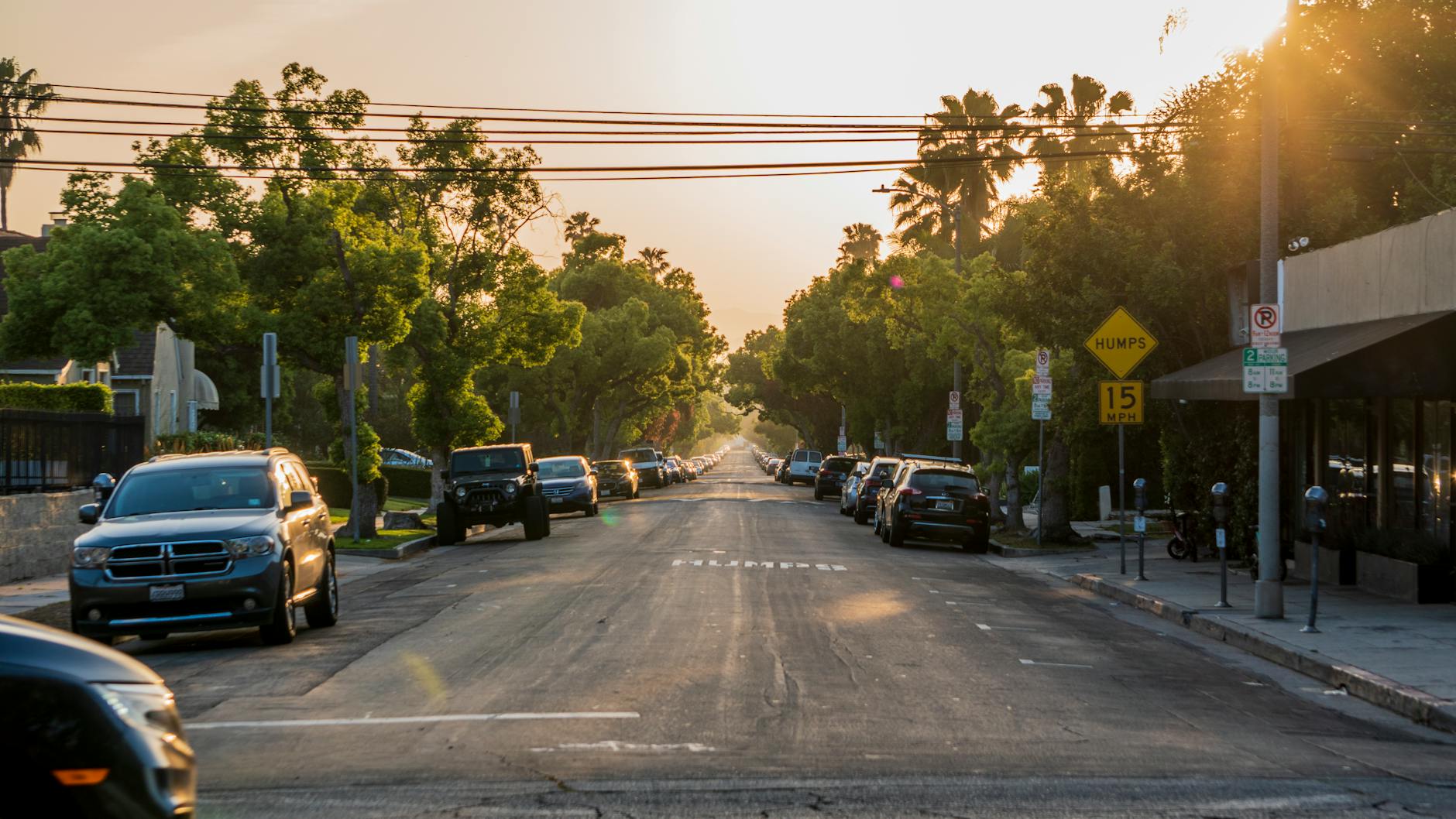
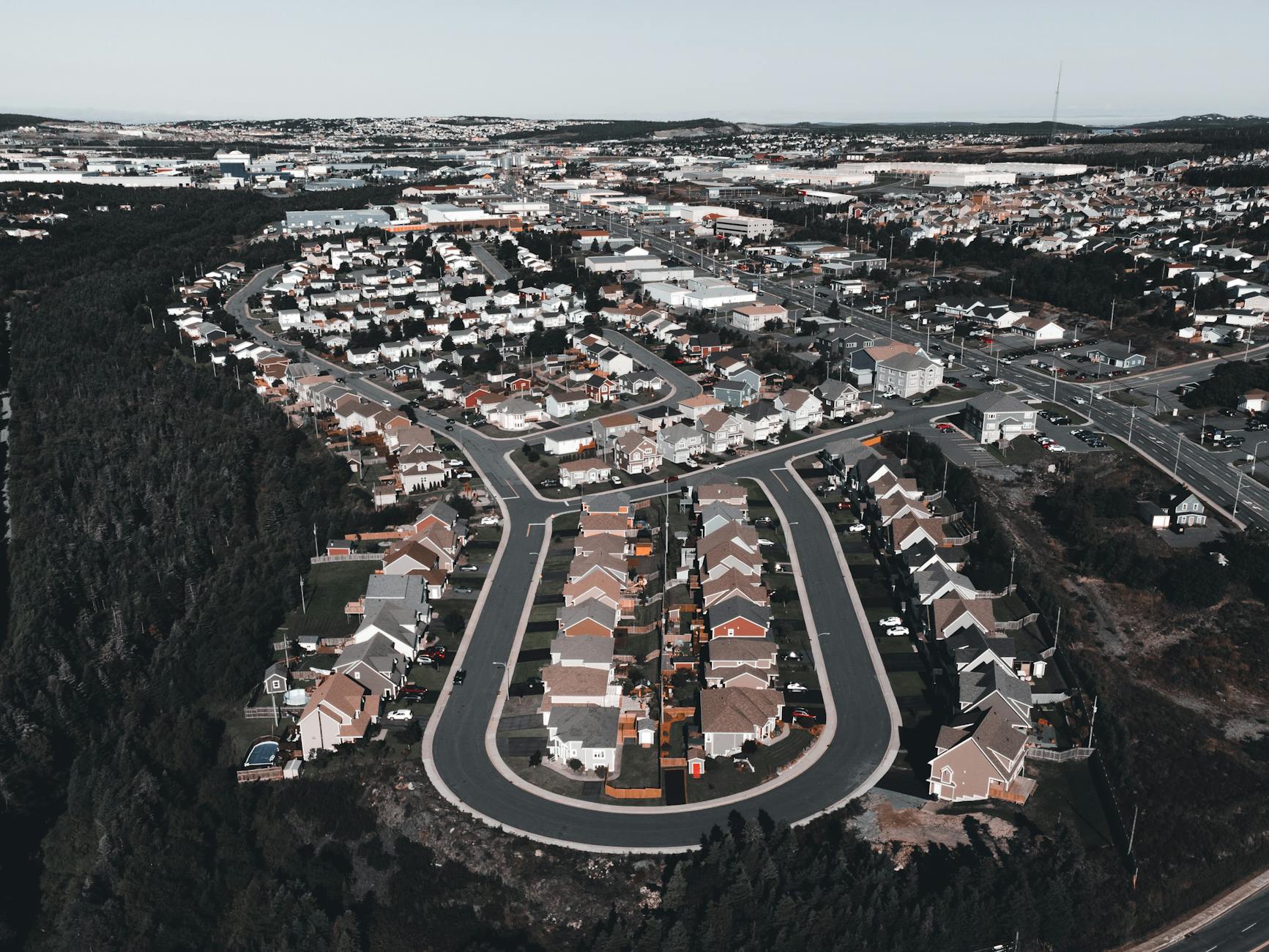
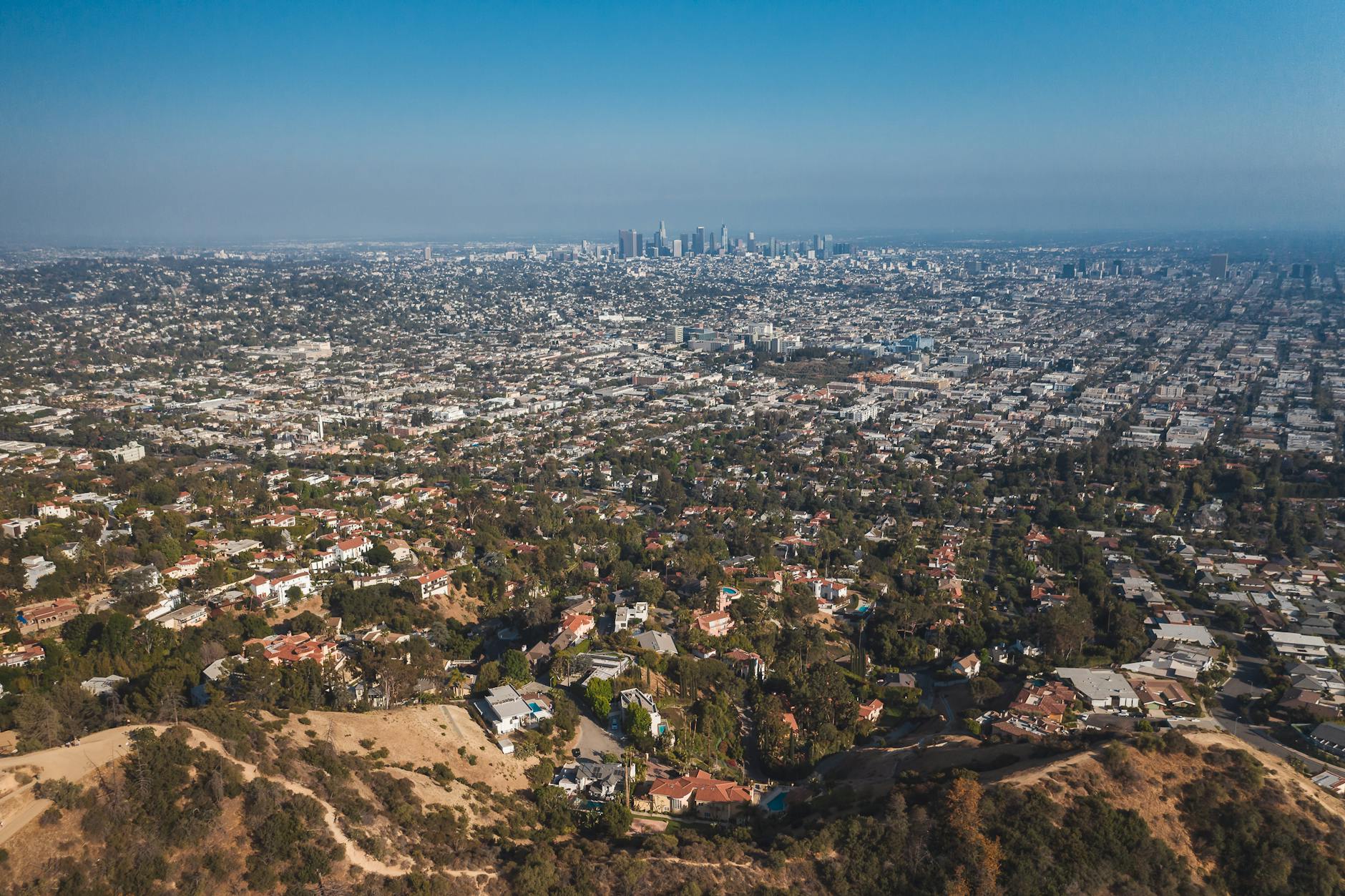
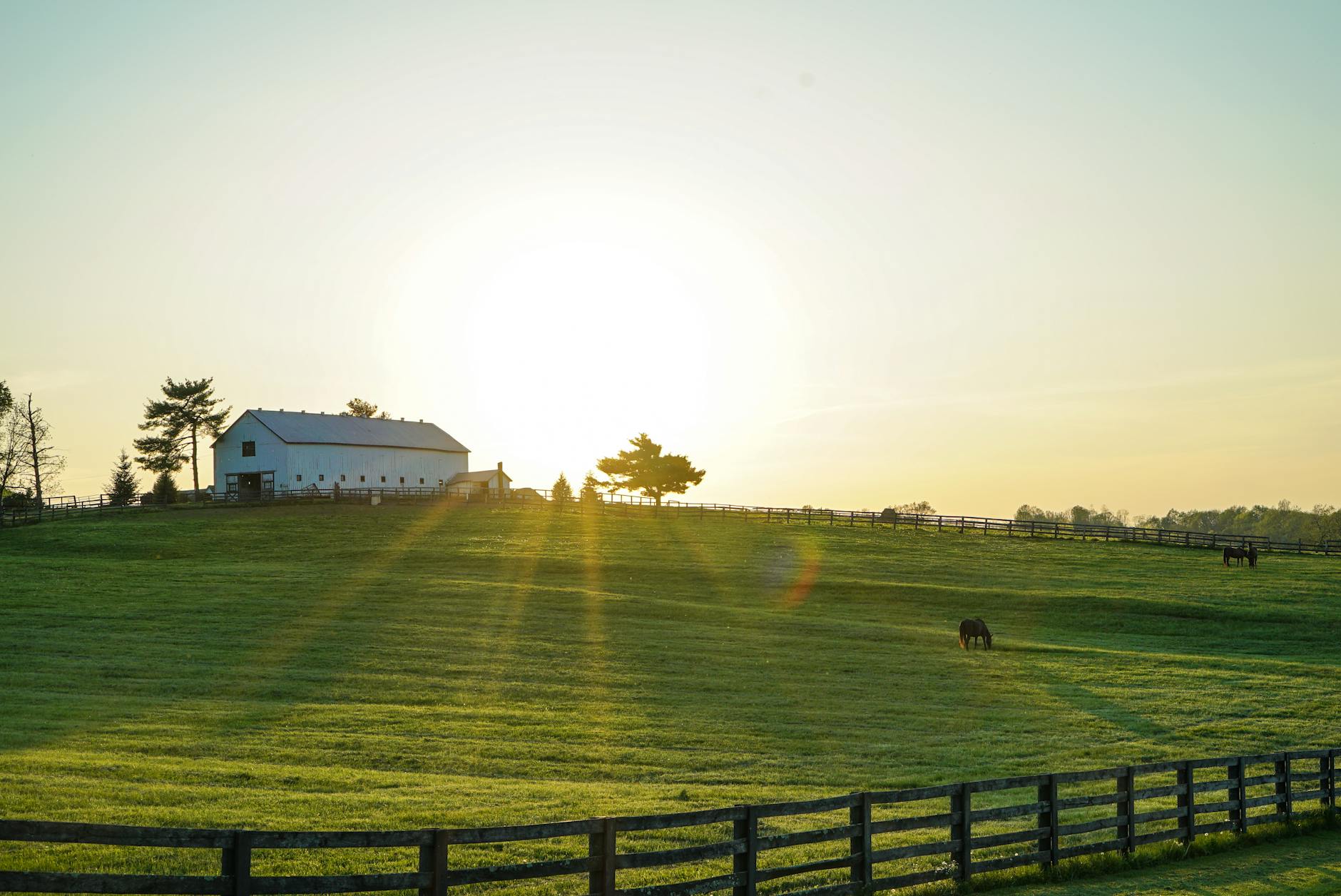
The United States will celebrate 250 years in 2026 and postwar suburbia will be roughly 80 years old at the same time

However the United States celebrates 250 official years in 2026, the year could mark another important anniversary: eight decades of postwar suburbia.

Photo by RDNE Stock project on Pexels.com

With World War Two ending, the United States shifted more focus to domestic concerns. Returning veterans wanted houses. The economy which had been hit with a depression and then global war looked to rev up and wanted new outlets. Americans already had a ideal of suburbia and single-family homes though relatively few people could access it. The population started growing faster again. People needed housing.

Over the next few decades, postwar suburbia took shape. Big developers. Highways. Land annexations. Single-family home subdivisions. Driving all over the place. Fast food stores and shopping malls. Expanding metropolitan regions. Suburban music and TV shows. New structures for mortgages.

All of this required policies, resources, and cultural shifts. It did not happen all at once or necessarily have one origin point in time. Did it start with the beginning of construction of Levittown, New York? Did it begin with a new idea? Did it start with a particular policy (which may have happened before the late 1940s but did not have the other pieces)? How about the invention of the Model T or balloon frame housing?

Thus, we may have to settle for roughly 80 years of postwar sprawl in 2026. Perhaps some group or movement could argue for a particular year. But this also means that almost one-third of the time since the United States started (ignoring the history leading up to that) involves sprawling suburbs. Is this a big amount of time or relatively little?

Trying to remember the farm life that came before today’s suburbia

I was recently looking at aerial photographs of our suburban area from nearly 100 years ago. The outline of suburban communities were there – small sets of houses clustered around railroad lines – but much of the land use involved farming plots. Today, hardly any of that farm land can be seen, let alone evidence of farming life. How can suburban communities remind people of that past?

Photo by Brandon Randolph on Pexels.com

An editorial in the Daily Herald suggests preserving an old farmhouse and providing exhibits and demonstrations can help suburbanites today:

The Forest Preserve District of DuPage County is seeking formal statements of interest from individuals or organizations with a vision for rehabilitating and reusing the 1850s farmhouse at the southeast corner of Greene and Hobson roads…

Our hope is that it could pave the way for Oak Cottage — and a neighboring barn — to someday become an educational resource similar to Kline Creek Farm, a forest preserve district-owned living history museum in West Chicago that depicts what local farm life was like in the 1890s…

Restoring the farmhouse — along with opening the Greene Barn to the public — could help educate future generations about DuPage County’s farming past. We applaud forest preserve officials for at least being open to one of those ideas and wanting to partner with a group to breathe new life into Oak Cottage.

Such efforts can have multiple benefits:

  1. It helps people know their local history. If suburbs are sometimes characterized as “no places” as people move in and out or the landscape looks similar to any other suburbs in the US, such sites can remind people of a particular local history.
  2. It could remind people of a particular connection to land and nature beyond that of suburban lawns. Farming can involve intense agricultural and livestock activity but this is a different interaction with soil and creatures than what suburbanites typically experience.
  3. Land and places go through change. Prior to farming, Indigenous groups lived in the area. White settlers starting in the 1830s cleared much of the land for their preferred methods of subsistence. Sprawling suburbia picked up in the postwar era, leveling the landscape for single-family homes and roadways. The future use of land does not necessarily have to look like it does now.

NIMBY has come to sprawling Sun Belt metropolitan areas

Recent research looks at why housing costs have increased so much around numerous Sun Belt cities:

Photo by lil artsy on Pexels.com

Although the Sun Belt continues to build far more housing than the coasts in absolute terms, Glaeser and Gyourko find that the rate of building in most Sun Belt cities has fallen by more than half over the past 25 years, in some cases by much more, even as demand to live in those places has surged. “When it comes to new housing production, the Sun Belt cities today are basically at the point that the big coastal cities were 20 years ago,” Gyourko told me. This explains why home prices in the Sun Belt, though still low compared with those in San Francisco and New York, have risen so sharply since the mid-2010s—a trend that accelerated during the pandemic, as the rise of remote work led to a large migration out of high-cost cities…

The Sun Belt, in short, is subject to the same antidevelopment forces as the coasts; it just took longer to trigger them. Cities in the South and Southwest have portrayed themselves as business-friendly, pro-growth metros. In reality, their land-use laws aren’t so different from those in blue-state cities. According to a 2018 research paper, co-authored by Gyourko, that surveyed 44 major U.S. metro areas, land-use regulations in Miami and Phoenix both ranked in the top 10 most restrictive (just behind Washington, D.C., and L.A. and ahead of Boston), and Dallas and Nashville were in the top 25. Because the survey is based on responses from local governments, it might understate just how bad zoning in the Sun Belt is. “When I first opened up the zoning code for Atlanta, I almost spit out my coffee,” Alex Armlovich, a senior housing-policy analyst at the Niskanen Center, a centrist think tank, told me. “It’s almost identical to L.A. in the 1990s.”

These restrictive rules weren’t a problem back when Sun Belt cities could expand by building new single-family homes at their exurban fringes indefinitely. That kind of development is less likely to be subject to zoning laws; even when it is, obtaining exceptions to those laws is relatively easy because neighbors who might oppose new development don’t exist yet. Recently, however, many Sun Belt cities have begun hitting limits to their outward sprawl, either because they’ve run into natural obstacles (such as the Everglades in Miami and tribal lands near Phoenix) or because they’ve already expanded to the edge of reasonable commute distances (as appears to be the case in Atlanta and Dallas). To keep growing, these cities will have to find ways to increase the density of their existing urban cores and suburbs. That is a much more difficult proposition. “This is exactly what happened in many coastal cities in the 1980s and ’90s,” Armlovich told me. “Once you run out of room to sprawl, suddenly your zoning code starts becoming a real limitation.”

Glaeser and Gyourko go one step further. They hypothesize that as Sun Belt cities have become more affluent and highly educated, their residents have become more willing and able to use existing laws and regulations to block new development. They point to two main pieces of evidence. First, for a given city, the slowdown in new housing development strongly correlates with a rising share of college-educated residents. Second, within cities, the neighborhoods where housing production has slowed the most are lower-density, affluent suburbs populated with relatively well-off, highly educated professionals. In other words, anti-growth NIMBYism might be a perverse but natural consequence of growth: As demand to live in a place increases, it attracts the kind of people who are more likely to oppose new development, and who have the time and resources to do so. “We used to think that people in Miami, Dallas, Phoenix behaved differently than people in Boston and San Francisco,” Gyourko told me. “That clearly isn’t the case.”

This is an interesting American phenomenon: people benefit from moving to new development that they can afford and then later they resist efforts to offer some of the same opportunities to others who might want to live in the same places but happened to get there later. The residents would surely talk about changes more development would bring. Countless examples of arguments about changes in character, more traffic, more noise, how those who live in apartments do not contribute to the community in the same way. These residents found suburbia just as they loved it and they often do not want it to change. I have seen this across my research and unless there is a major movement in the other direction, it seems like it is going to continue.

This puts people today in difficult situations. Can sprawl keep going and going beyond what already exists? How many people have the resources to live in places with higher housing costs? Will new places become the Sun Belt of today? How these questions are answered will affect American metropolitan regions in the decades to come.

When mass transit is or is not for suburbanites

As Illinois politicians debate what to do about multiple mass transit agencies in the Chicago region, a group of suburban mayors weighed in:

Photo by Constanze Marie on Pexels.com

The Suburban Mayors Coalition for Fair Transit criticizes new taxes proposed in a bill approved by the state Senate to avert a $771 million shortfall facing Metra, Pace and the CTA in 2026.

A $1.50 delivery fee on online orders, excluding groceries and medications, dubbed the “pizza tax” is “regressive, (and) disproportionately burdens low- to moderate-income families,” officials said.

Mayors also panned expanding a real estate transfer tax from Chicago to the suburbs, and allowing the new Northern Illinois Transit Authority to acquire or develop land near train stations for projects such as condos with retail space.

That concept would strip away power over zoning and parking from municipalities and give it to an nonelected board, they argued.

Three major issues seem to be at stake for suburban officials:

  1. Taxes and funding. Will more funds be raised from the suburbs? Will that tax money then be sent in ways that benefit suburban communities and residents?
  2. A loss of local control. More taxes affecting local residents imposed by other government bodies. Not having complete control over local land.
  3. Representation on the board that would oversee a new regional transit agency. How many suburban officials should be there? Should it be evenly balanced between suburban and Chicago interests?

All of this gets at a major reason suburbanites like the suburbs: they like local control. They generally do not like the big city dictating what will happen. They want what they think is best for their suburban community.

Perhaps this is elsewhere in the letter but it strikes me what is missing is a sense of how regional mass transit could be used by suburbanites and improve suburban life. Take the issue of suburban traffic: single communities cannot often address these issues as suburban residents commute from suburb to suburb. Could mass transit help? Or could mass transit help provide suburban residents access to more jobs and housing opportunities?

If the funding and representation issues were worked out, would a majority of suburban communities then want a regional mass transit agency? How many would be interested in more mass transit present in their communities?

Sanctifying Suburbia reviewed in Christianity Today

My book published in early 2025, Sanctifying Suburbia: How the Suburbs Became the Promised Land for American Evangelicals, was just reviewed in Christianity Today. I found two quotes from the review helpful for summing up the argument of the book and its implications. From earlier in the review:

In light of all this, it would be surprising if suburban sensibilities have not shaped evangelical faith and practice. As Miller argues, “It is not enough for researchers and pundits to consider the theological positions and political behavior of evangelicals; accounting for their spatial context is part and parcel to understanding the whole package of white evangelicalism” (italics mine).

And from a later part of the review:

Miller’s point is that the evangelical cultural toolkit appears to have been calibrated by patterns, experiences, and commitments common to suburban life. He’s careful to avoid claiming a direct, causal relationship between suburban norms and prevailing traits among evangelicals. But he makes a compelling case for drawing arrows of motive, means, and opportunity.

It should be easy enough to accept a narrower version of Miller’s thesis that suburban evangelicalism is “formed in regular moments in daily life and in interaction with the social and physical realities of the American suburbs.” It will be harder for many to accept that American evangelicalism in general is essentially suburban in its values and sensibilities…

In the aggregate, as Miller sees it, these institutions take a fundamentally suburban vision and prescribe it as an objectively Christian vision that can guide evangelical faith and practice in any environment. This doesn’t feel like a stretch to me. My own ministry experience and professional work has primarily involved churches in rural and urban environments. Pastors in both places frequently lament that the resources they rely on are clearly tuned to social realities outside their own. It’s fair to say, at minimum, that suburban sensibilities dominate American ministry materials.

Thanks to the magazine and Brandon O’Brien for reviewing the book.

The allure – and disappointment? – of suburbs like Penn Hills

In August Wilson’s 1979 play Jitney, one of the Pittsburgh characters is working to buy a suburban home for his young family. In the opening scene of Act 2, Youngblood describes where the home is:

Photo by Abraham Aldaraca on Pexels.com

I asked Peaches if she would go with me to look at houses, cause I wanted to surprise you. I wanted o pull a truck up to the house and say, “Come on, baby, we moving.” And drive on out to Penn HIlls and pull that truck up in front of one of them houses and say, “This is yours. This is your house baby.”

And a little later in the same conversation:

Wait till you see it. It’s real nice. It’s all on one floor . . . it’s got a basement . . . like a little den. we can put the TV down there. I told myself Rena’s gonna like this. Wait till she see I bought her a house.

In this conversation, the home in Penn Hills is part of achieving the American Dream: a pleasant place where a family can settle in and children can achieve.

Later in the same scene, the older character Becker hears of the potential move and approves of the community:

Good! They got some nice houses out there. That’s a smart move, Youngblood. I’m glad to see you do it. Ain’t nothing like like owning some property.

The vision of a suburban property contrasts sharply with the fate of the jitney station as the city will soon board up the property with some vague notion of redeveloping the land in the future.

But there are also hints that Penn Hills might not be a paradise. In the final scene (Act Two Scene 4), another character comments on Penn Hills:

They ain’t as nice as the houses in Monroeville. Most people don’t even buy houses in Penn Hills no more. They go out to Monroeville.

Reading this reminded me of Benjamin Herold’s book Disillusioned that includes Penn Hills as part of the argument of how the American Dream of suburban living did not extend beyond white families. Penn Hills grew quickly after World War Two, increasing from over 15,000 residents in 1940 to over 62,000 in 1970. But since then white families left (as development extended to Monroeville and other places), the population declined, and Black families who moved to the community found a suburb struggling to maintain its tax base and fund local infrastructure.

Penn Hills may have looked in the early 1970s to hold out hope regarding a successful suburban life but Herold suggests it cannot now promise the suburban American Dream. By the late 1970s, it was changing. The struggles of and in Pittsburgh neighborhoods that Wilson describes extended out to Penn Hills. What was a place of hope turned out to be different than depicted.

Brian Wilson and suburban music

The recently deceased Brian Wilson was from the suburbs of Los Angeles and wrote music about suburban lifestyles:

Photo by Alex Hussein on Pexels.com

Wilson’s legacy includes dozens of hit singles with the Beach Boys, including three Number One singles (“I Get Around,” “Help Me, Rhonda,” and “Good Vibrations”). In the 1960s, the Beach Boys were not only the most successful American band, but they also jockeyed for global preeminence with the Beatles. And on albums such as Pet Sounds, Wilson’s lavish, orchestral production techniques dramatically expanded the sonic palette of rock & roll and showed how the recording studio could be an instrument by itself.

Born June 20, 1942, Brian Wilson grew up in Hawthorne, California, a modest town next to the Los Angeles Airport. Brian was the eldest of three brothers; his younger brothers were Dennis and Carl. Their father, Murry, was an aspiring songwriter and a tyrant. “Although he saw himself as a loving father who guided his brood with a firm hand, he abused us psychologically and physically, creating wounds that never healed,” Wilson wrote in his 1991 autobiography, Wouldn’t It Be Nice: My Own Story.

Wilson grew up playing sports and obsessing over music, teaching his brothers to harmonize with him. Music was his sustenance and his solace, he said: “Early on, I learned that when I tuned the world out, I was able to tune in a mysterious, God-given music. It was my gift, and it allowed me to interpret and understand emotions I couldn’t articulate.”

In 1961, Brian, Dennis, and Carl formed a band with their cousin Mike Love and their friend Al Jardine, managed by Murry Wilson; Brian played bass, took many of the lead vocals, and wrote the songs. Signed to Capitol Records and named the Beach Boys, they started to roll out hits like convertible Thunderbirds coming off an assembly line: “Surfin’ U.S.A.” (with music borrowed from Chuck Berry’s “Sweet Little Sixteen”), “Surfer Girl,” “Be True to Your School,” “Fun, Fun, Fun.” Those Brian Wilson compositions all sounded like insanely catchy jingles for the California teenage lifestyle — surfboards, hamburger stands, pep rallies — but on the flip side of the good times was a real sense of melancholy. Sometimes that was apparent in the lyrics — the lonesome “In My Room,” for example — and sometimes it was expressed nonverbally, with the Beach Boys’ heartbreaking multipart harmonies.

Two connections to the suburbs to note:

  1. Hawthorne, California was a small community in the early 1940s – over 8,000 residents – southwest of downtown Los Angeles and a few miles from the beach. Today, the community houses nearly 90,000 people. The suburb was home to a number of aerospace companies over the years and Mattel was started there in 1945. It grew as the sprawling Los Angeles area grew in the postwar era.
  2. Many of the songs of the The Beach Boys reflect features of suburban life, particularly for teenagers. Numerous early songs discuss driving. Los Angeles became a driving capital in the postwar era and Hawthorne is bordered by multiple interstates. A teenager driving in the early 1960s could easily access the beach, fast roads, fast food, shopping malls, and new subdivisions and communities. Do this all in the sunshine and you might be regularly going in “American Dream mode.” There is also the theme of family. The group includes Wilson’s two brothers and his cousin. Wilson writes and sings about relationships. In the suburbia of the 1950s and 1960s, nuclear families were emphasized. The Brady Bunch, set not that far from Hawthorne, purported to show wholesome family life. That the group and songs involved family life, even amid clear themes of teenager individualism, is not surprising given the suburban context.

Bonus note about the Chicago area: Wilson lived in suburban St. Charles for a few years and recorded an album in his home basement:

Thomas and Wilson met four years ago in Nashville when the producer was recording Stars and Stripes, a country tribute to the Beach Boys. They are an unlikely pair — Wilson the fragile artist and Thomas the beefy Midwesterner who wears cowboy boots and a mullet haircut. But in 1996, their wives bought sprawling homes next to each other in the rolling countryside of St. Charles, Illinois, and a studio was installed in Wilson’s basement to record Imagination.

The Wilsons chose St. Charles almost by chance. “Joe and Brian were in the studio in Chicago one day, so Chris [Thomas’ wife] and I went shopping, because they were looking for a house,” explains Melinda, 51, sitting with Brian in a small, comfortable room off the studio in St. Charles. “We saw this place with a basement that was unfinished, and we thought, ‘Why not?’

“It’s good to get out somewhere, away from everything, where you can work,” she says. “It doesn’t matter about the weather, doesn’t matter about traffic. If Brian doesn’t want to work, he just goes upstairs, and when he feels like it, he comes down. Most artists are not people who can do a nine-to-five trip.”…

Later, over dinner, Wilson feels differently, and he admits that he misses L.A.: “It’s home, where I’ve always recorded, and there’s just something about the vibe there. I like the L.A. vibe.”

After living in St. Charles, Wilson moved back to Los Angeles.

Current owner of “The Brady Bunch” house says it is a “piece of art”

The owner of The Brady Bunch house, bought for $3.2 million in 2023, says it is art:

Photo by Puu0219cau0219 Adryan on Pexels.com

Trahan told the Journal in 2023 that the house was “the worst investment ever,” but has since clarified those comments, telling People that she views the home as a piece of art.

“When I was buying it, I wasn’t thinking, ‘Oh, it was a great investment,'” Trahan told People in 2023. “When I buy art, it’s because I love the art. It’s not because, ‘Oh, I’m going to make money on this.’ If you’re going to make money in art, you have to sell it. I buy art, and then I don’t sell it.”

The first Brady Experience sweepstakes was such a success that Trahan is opening it up for another round. Trahan could not be reached for comment.

Can a home be art? Can a real suburban home that became part of a well-known TV show be art? This might require public and/or critical consensus.

The idea that a postwar suburban house could be a piece of art is not that farfetched. Imagine homeowners of such homes across the American landscape that lovingly take care of their homes, maintaining and improving them. Or preservationist efforts that protect particular homes for future generations. (Which postwar suburban homes might qualify for this is another discussion – which are more art and which are more pedestrian?)

Add to this the iconic nature of this home. For many, The Brady Bunch house represents suburban family life. The show only ran 5 seasons but the family and its home became a part of the postwar culture during its run, through syndication, and ongoing lore. I doubt many critics would say the show was art – it was a normal sitcom – but the iconic status of the show may elevate it in the eyes of viewers.

Perhaps the Brady home is pop art: a slice of a particular time that was revered by many.

Will there ever be another Naperville in the Chicago area?

The suburb of Naperville, Illinois is marked by several characteristics: rapid growth from the 1960s onward, particularly between 1980 and 2000, and lots of land annexation; wealthier suburban residents and numerous white-collar jobs; and a lively downtown with national retailers, local stores, plenty of restaurants, and a nice Riverwalk. Will any Chicago area suburb trace a similar path in the future?

Here is why I would guess no:

  1. Limited population growth in the Chicago suburbs. The whole region is not growing much. Population growth in the suburbs could still be uneven; some places are perceived as more desirable or are more affordable and they could grow faster will others stagnate or even shrink. But explosive population growth in the Chicago area looks like it is done.
  2. At multiple points in Naperville’s history, leaders and residents discussed possible development and regulatory options. They tended to choose growth and in particular forms. These sets of decisions helped give rise to the particular traits of Naperville today. Even if another suburb tried to pursue the same path, not all the pieces might fall together in the same way.
  3. When Naperville grew from 1960 onwards, it was closer to the edge of the metropolitan region. Land was cheap and available. The city could annex land without running into other communities. That growth has since moved out further beyond Naperville’s ring, out to places like Aurora and Plainfield and Oswego. Any future Naperville will be 10-30 miles out from Naperville.
  4. Naperville itself – and other older suburbs – will likely change in the future. If Naperville wants to continue to grow in population, it will need to grow denser and taller. Infill development on small parcels could add lots of townhouses, condos, and/or apartments. Redevelopment in desirable areas and around mass transit options could lead to taller or denser buildings. This all could happen in numerous Chicago suburbs but this will move them away from homes dominated by single-family homes and lifestyles.

For more insight behind the argument above, see these published papers involving Naperville: “Not All Suburbs are the Same: The Role of Character in Shaping Growth and Development in Three Chicago Suburbs;” “A Small Suburb Becomes a Boomburb: Explaining Suburban Growth in Naperville, Illinois“; and “More than 300 Teardowns Later: Patterns in Architecture and Location among Teardowns in Naperville, Illinois, 2008-2017.”

Suburban voters as part of larger political realignments in the US

Political changes in recent election cycles in the United States include the voting patterns of suburbanites:

Photo by cottonbro studio on Pexels.com

The realignments of recent years—the midwestern white working class toward Trump’s GOP and the suburbs toward the Democrats—can be understood as the process of ideological and education sorting coming for groups that were the most out of place in the new political realm: rich suburban Republicans and culturally conservative working-class Democrats. In 2020 and 2024, this realignment came for the nonwhite voters once at the center of Barack Obama’s coalition, especially working-class Hispanics, and most especially those in the rural outskirts of the Rio Grande Valley.

Starr County’s tradition of machine politics, manifest in an unusually strong preoccupation with local elections, marked a place ripe for a sudden political shift. Not unlike the Democratic majorities in the big cities of mid-century, which continue at some level into the present day, political dominance in the region was built not through allegiance to liberal ideals but through political machines that delivered tangible benefits and shaped the political identity of new immigrant groups. This is evident in polling today showing that nonwhite Democrats are much more moderate and conservative than their white counterparts. For a time, ideological differences were subsumed to the work of advancing group interests through machine politics. But in an era of declining party organization and an emptying out of majority-minority cities in favor of more integrated suburbs, the tide of ideological voting could be held at bay for only so long. Once it poured in, America shifted into a new era of politics, from one forged by social connections at the neighborhood level to today’s cultural and ideological polarization, where you vote Republican if you have conservative cultural beliefs, regardless of race.

Two claims here stand out:

  1. “Rich suburban Republicans and culturally conservative working-class Democrats” shifted in recent decades. As the suburbs grew quickly after World War Two, those new suburbanites were assumed to be Republicans. Now, college-educated suburbanites tend to lean toward Democrats. And it also matters where in the suburbs someone lives; those closer to big cities tend to vote Democratic and those more on the metropolitan edge tend to vote Republicans.
  2. The connection made between “more integrated suburbs” and increased polarization. Did the people moving to the suburbs lead to polarization – more residents of different racial, ethnic, and social class backgrounds living in suburbs – or did people moving out lead to polarization? What exactly changed and what led to what? How did suburbs over time become different social and political places?

The pattern seems well-established now: the political state of suburbia has changed. The reasons for it and the long-term consequences are still to be worked out.