Post pandemic evictions up in some cities, down in others

Looking at evictions across American cities and regions after the pandemic shows differences:

Photo by Artem Podrez on Pexels.com

Eviction filings over the past year in a half-dozen cities and surrounding metropolitan areas are up 35% or more compared with pre-2020 norms, according to the Eviction Lab, a research unit at Princeton University.

This includes Las Vegas, Houston, and in Phoenix, where landlords filed more than 8,000 eviction notices in January. That was the most ever in a single month for the county that includes the Arizona capital. Phoenix eviction-court hearings often run for less than a minute. One judge signed off on an eviction after the tenant admitted to missing two rent payments…

Overall, eviction notices were up 15% or more compared with the period before the pandemic for 10 of the 33 cities tracked by the Eviction Lab, which looked at filings over the past 12 months…

Even with the higher eviction rates in several major cities, evictions more broadly have settled to roughly where they were before the pandemic. The first five months of the year had about 422,000 filings for eviction across the 33 cities and an additional 10 states tracked, down slightly from prepandemic norms in those same places. 

In New York City, Philadelphia and some other cities, filings have stayed down due in part to increased protections for renters.

The article does not list all the cities involved but it looks like those with higher evictions post-pandemic are growing Sunbelt cities. The article suggests the differences are due to more protections for renters in some places than others. I wonder if this goes along with several other factors:

  1. These regions are growing at faster rates than some other regions, particularly in the Northeast and Midwest.
  2. Different political regimes in different regions. Are the different levels of renter protections about whether the region (and the state it is in) leans more conservative or liberal?
  3. Different regional histories.
  4. How much did the pandemic affect local eviction policies? It could have led to more protections in some places.

It is cool to now have this data over time. I recommend reading the work – Evicted – that helped make this work possible.

There are at least 2,000 active adult communities in the US

One recent article suggests the United States has at least 2,000 active adult communities:

Photo by MarcTutorials on Pexels.com

There are more than 2,000 active adult communities from Florida to California, and all along the Sunbelt in between. Click on websites such as PrivateCommunities.com or 55Places.com, and the results can be overwhelming. Florida has 673 to choose from. California has 220. Arizona has 151. There are 217 more in the Carolinas. Pennsylvania has 215. 

“Over the past decade, the housing market has been driven, in part, by the 73 million Baby Boomers who have been buying homes as they retire and adopt new lifestyles,’’ says Rob Parahus, president and chief operating officer for Toll Brothers, one of the leading home builders in the U.S. 

Multiple forces helped bring this together: developers and builders seeing an opportunity, a growing number of aging Americans, people with money wanting to have communities with particular amenities and protections against what they might find elsewhere, and an ongoing interest in homeownership.

I imagine there are things missing from these communities. If a group of people with means have come together in an age-restricted community, they will not encounter all the same people and/or neighbors they might elsewhere.

What happens to these communities in a future when there are fewer older Americans who want to live in such places? How easy might it be to convert communities back to the general housing stock?

What is the modal experience in these communities or does it vary quite a bit? Some of these places get more media attention than others. Take, for example, The Villages in Florida is well known. But, it is hard to know from the occasional news story about whether this is a “typical” adult active community or not.

How much will Sunbelt growth slow because of more traffic?

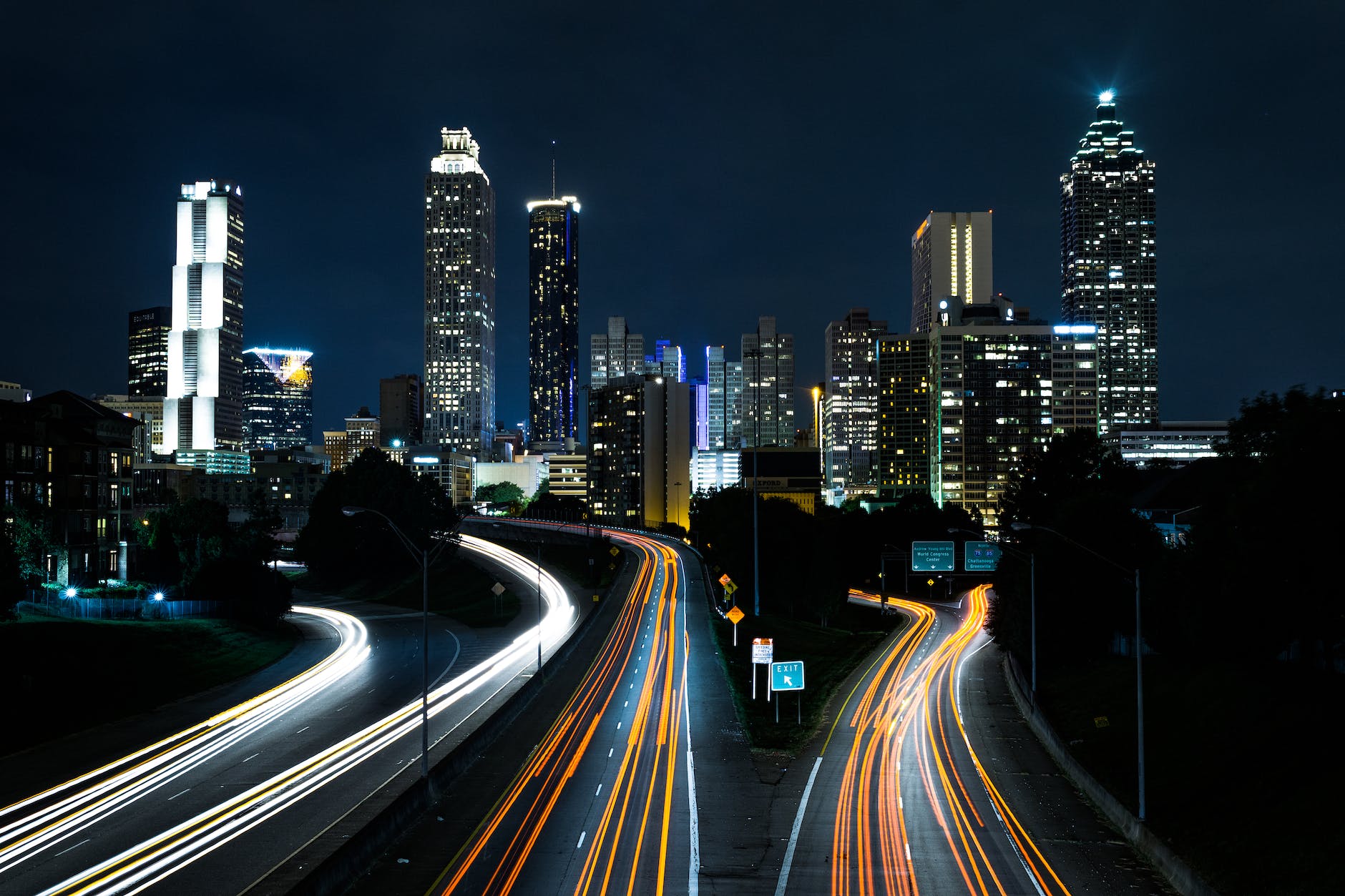
More development and increased populations mean more traffic in multiple Sunbelt metropolitan areas:

Photo by Joey Kyber on Pexels.com

In most U.S. cities, traffic is less congested than it was in 2019, as fewer people commute to offices, according to mobility data company Inrix. In some Sunbelt cities, such as Miami, Nashville and Las Vegas, where the population has surged in recent years, it has become worse. 

These cities also attracted more companies and tourists during the pandemic. Local roads, built decades ago for a much smaller population, are struggling to accommodate the new reality. 

“They way underestimated their growth,” said Robert Cervero, professor emeritus of city and regional planning at the University of California, Berkeley, College of Environmental Design…

Sunbelt cities are particularly vulnerable to congestion because of poor public transit. Driving in New York City’s rush hour can be bumper-to-bumper, but many people take the subway. Most southern cities offer no such alternative…

For now, Sunbelt states are hoping to fight congestion by adding more roads and express lanes. Tennessee lawmakers are considering a proposal to add toll lanes on state roads. Florida Republican Gov. Ron DeSantis recently proposed spending more than $5 billion on highway construction and more than $800 million on rail and transit throughout the state.

Growth is good in the United States – until it threatens some of the attractive features of places that brought people there in the first place.

At what point do residents and businesses not move to growing regions because of congestion? These Sunbelt cities continue to have numerous attractive features even if they have more traffic.

Adding lanes to roads may appear proactive but it can lead to more attractive as more drivers think there is capacity. Considering mass transit is necessary but complicated by suburbanites who do not necessarily want transit to reach them, high costs to get basic mass transit in place (though this could help save money down the road), and limited interest in denser development.

Do smaller cities offer advantages here? I have heard this argument before: you can have more rural property conditions within a ten to twenty minute drive of the main shopping areas or the downtown. Achieving this is more difficult in a more populous area where there is more competition for land.

Locating a new grocery store: too close to “death trap” road? Is it actually in the city?

A letter to the editor in Fort Worth highlights two perceived issues with a new grocery store:

Photo by Matheus Cenali on Pexels.com

The new H-E-B grocery store that was just announced is not really in Fort Worth, in my book. That area is basically Keller or Alliance. If they build a store inside Loop 820, you could call it Fort Worth.

I have no intention of ever driving on Interstate 35W (also known as one of the worst death-trap highways in the state) to go grocery shopping.

In the future, I hope the company might consider North Main in the new Panther Island complex, the Hemphill corridor, Berry Street, Eighth Ave, South Main, Rosedale Street, University Drive or even Lancaster Avenue, to jump start that area.

I talked with a few of my friends, and they have told me, no way are they driving to the far north to buy some taters.

How exactly do companies decide where to locate their stores? Generally, I imagine locating near a major highway is a good thing. That road can help bring customers and suppliers to and from the location. The new location is right near an existing Kroger (as well as other big box stores). The highway might enable more access than if located in a neighborhood with smaller nearby roads.

At the same time, there might be other areas that also would like to have a grocery store. How about in a denser or walkable neighborhood? Bunching a lot of retail options near the highway might not be terribly accessible for some.

The second matter involves which community the new store is in. The official address is in Fort Worth. However, it is quite a ways north of the center of the city. It is a block or so away from the Alliance Town Center mall. This might technically be Fort Worth but it is a sprawling location. (There is also the matter of the planned community of Alliance which includes part of multiple municipalities.)

This hints at the sprawling nature of some cities in the United States, particularly in the Sunbelt. Fort Worth is surrounded by suburban neighborhoods and roadways. Just a short drive from this store location and one is in another municipality as the city sprawls northward.

Let us see how the potential grocery shoppers respond to this new store. This is a sizable investment for a company and I am guessing they imagine a good probability of success.

Tax breaks and suburban and Sunbelt growth

Wells Fargo is seeking a tax break to construct a regional office in suburban Irving, Texas:

Photo by Tara Winstead on Pexels.com

The Irving City Council will vote Thursday on millions of dollars in economic incentives to support the huge campus that’s expected to house 4,000 workers…

The agreement with Irving calls for Wells Fargo to “occupy at least 800,000 square feet of office space in the newly constructed buildings by December 2026. The proposed new office development would serve as a regional hub for Wells Fargo.”…

Irving proposes in its economic incentive agreement to give Wells Fargo up to $19 million in tax increment finance district funds to build a 4,000-space parking garage and “to reclaim a portion of the lake between the two adjacent parcels on the south side of Promenade Parkway.”

A separate economic incentive of up to $12 million would support construction of the Wells Fargo offices.

The project will increase the city’s tax “property value by a minimum of $200,000,000,” according to the City Council filings.

I can imagine the argument from Irving and similar communities about why the tax breaks are worth it:

  1. Such a move helps entice national and international brands to your community.
  2. Such a move brings jobs to the community.
  3. The tax breaks will be outweighed by the tax and physical improvements to the property in question.

All of this helps boost the status of the suburb and the economic prospects in the community.

On the other hand, tax breaks have downsides:

  1. Lots of communities offer tax breaks. The company may be less interested in this specific community and more interested in how much money they can get from a community.
  2. Less money will come into the community than if no tax breaks were offered.
  3. At some point, the tax breaks run out and then what happens to the company and the newly developed property?

As the title of this post asks, how much development in suburban areas like Irving involves tax breaks? Would Wells Fargo locate in Irving or in the region without tax breaks?

12 of the 15 fastest-growing cities in the US in 2021 were Sunbelt suburbs

The 15 fastest growing communities – percentage-wise – the United States between July 2020 and July 2021 included 12 suburbs:

Photo by Curtis Adams on Pexels.com
  1. Georgetown, TX – suburb of Austin
  2. Leander, TX – suburb of Austin
  3. Queen Creek, AZ – suburb of Phoenix
  4. Buckeye, AZ – suburb of Phoenix
  5. New Braunfels, TX – suburb of San Antonio – see earlier post about growth in the community
  6. Fort Myers, FL – a central city in Cape Coral-Fort Myers MSA
  7. Casa Grande, AZ – suburb of Phoenix
  8. Maricopa, AZ – suburb of Phoenix
  9. North Port, FL – a central city in North Port-Brandenton-Sarasota MSA
  10. Spring Hill, TN – suburb of Nashville
  11. Goodyear, AZ – suburb of Phoenix
  12. Port St. Lucie, FL – central city of Port St. Lucie MSA
  13. Meridian, ID – suburb of Boise
  14. Caldwell, ID – suburb of Boise
  15. Nampa, ID – suburb of Boise

This is not just about the Sunbelt continuing to grow, as I saw in several headlines, but also about suburban and metropolitan growth in the Sunbelt. Many of these regions continue to grow, such as Austin, Phoenix, San Antonio, Nashville, and Boise, on the edges.

The list of the fastest growing communities by the absolute number of new residents was also weighted toward suburbs.

Hot rental market in Phoenix and supplying enough housing

In an article about a large and expanding encampment of the homeless in Phoenix, here are some details about how rental prices in the city have shot up:

Photo by Justin Nealey on Pexels.com

“People say, ‘Are you surprised?’ And I say, ‘No, not really, because all of the housing forces in Phoenix and Maricopa County have been working against us for years,’” said Human Services Campus Executive Director Amy Schwabenlender, who works in the area with the encampment, sometimes referred to as “the Zone.” “We’ve had ongoing population increases in Phoenix and Maricopa County. We haven’t had housing production at all income levels keep up and meet that increase in population.”

Real estate investors are pouring cash into Phoenix and driving up prices. Rents there have spiked 25.6% over the past year, compared to a 15.9% increase in the U.S. from January 2021 to January 2022, according to data analyzed by Zillow. (Other popular Sun Belt cities like Miami and Tampa have also seen dizzyingly fast increases in rent.) Vacancy rates in Phoenix, or the availability of places for people to rent, are also at their lowest in 50 years, according to the Arizona Republic

While much of the rest of the article focuses on addressing housing for the homeless, this sounds like a bigger issue. This is an area with a growing population: Phoenix is now the fifth-largest city in the US and had a little over 100,000 residents in 1950 before experiencing double-digit percentage population growth in all but one decade since. Housing opportunities, particularly in rentals, have not kept up. American sprawl often produces a lot of single-family homes but necessarily cheaper houses or multi-family units for those who cannot secure a sizable mortgage.

What can Phoenix and surrounding communities do? Addressing housing in the United States is a difficult task. It will take concerted effort across communities for years. It may not be popular. But, it is essential for ensuring housing for all who need it.

It would be great to have an example of a city and region in the Sun Belt – roughly Virginia to southern California – that has successfully addressed this even as they have experienced significant growth in recent decades. I do not know if there is a great example, outside of some places not becoming too popular such that it raises demand and housing prices.

The ten fastest growing American communities are all suburbs, all in South or West

Growth in the United States continues to occur in suburbs in two regions of the country:

Photo by Ingo Joseph on Pexels.com

The 2020 Census listed Meridian as one of the 10 fastest-growing large cities in the country. All the cities on the list grew at rates of more than 44 percent. They are all in the South and the West. And they are all suburbs…

Meridian and the nine other cities represent a trend, according to U.S. Census Bureau officials. As the country’s biggest cities grow and become increasingly unaffordable to many, their suburbs have ballooned, taking on their own identities…

The Phoenix and Dallas-Fort Worth metro areas have had suburbs on this list every decade, he said. “Sizable amounts of empty land for construction of housing” encourages this population growth, and that land is more commonly available in the West and South. Now, people are often going farther and farther from city centers to search for empty lots, especially in cities that have been growing for the past half-century, Perry said…

Meridian and suburbs like it, Perry said, are “a reminder that there are still some pockets of rapid population growth in certain areas of the country,” despite the past 10 years being the second slowest growing decade for the U.S. population. What the Census data makes clear is that many suburbs are taking on a life of their own.

This is a continuation of several longer trends. The population growth in the United States has generally shifted to the South and West and away from the Northeast and Midwest. Certain suburban communities continue to grow rapidly, driven by expanding metropolitan areas, a quest for cheaper land, and the celebration of sprawl and single-family homes. Many big cities are still growing but they are no longer the fastest-growing places.

At the same time, these ongoing patterns might be surprising for several reasons. First, the suburbs have endured critiques for decades yet the same pattern seems to keep repeating: small towns outside hot metro areas balloon in size and population over the course of several decades. As the article notes, this can bring a lot of change that is not universally liked by the residents there before sprawl or even some of the residents who join the sprawl. The rapidly-growing suburbs are no longer places like Naperville but the descriptions of what is happening are very similar. What have Americans learned in the seven-plus decades of postwar suburban growth?

Second, are these growth patterns sustainable in areas with water and other environmental concerns? Communities in the West are reconsidering growth amid water shortages. Is the land converted to subdivisions stable and have good drainage? Does the emphasis on driving contribute to smog and the use of land that was once more open?

Third, population increases are often accompanied by a gain in status. Larger communities are better-known, have more business activity, and become destinations. Will these rapidly-growing suburbs suddenly be put on the map (also suggesting that other places decrease in status)?

Put together, will there be cheap enough open land outside attractive cities for explosive suburban growth? Or, because there will always be some suburban land somewhere cheaper than properties in the most expensive markets, think New York City, Los Angeles, and San Francisco, there might always be a market for sprawl.

While all other major cities grow, Chicago loses population

According to the latest Census figures, Chicago continues to be an outlier among the largest US cities:

Of the country’s 10 largest cities, the Chicago metropolitan statistical area was the only one to drop in population between 2015 and 2016. The region, defined by the U.S. Census Bureau, includes the city and suburbs and extends into Wisconsin and Indiana.

The Chicago metropolitan area as a whole lost 19,570 residents in 2016, registering the greatest loss of any metropolitan area in the country. It’s the area’s second consecutive year of population loss: In 2015, the region saw its first decline since at least 1990, losing 11,324 people.

By most estimates, the Chicago area’s population will continue to decline in the coming years. Over the past year, the Tribune surveyed dozens of former residents who’ve packed up in recent years and they cited a variety of reasons: high taxes, the state budget stalemate, crime, the unemployment rate and weather. Census data released Thursday suggests the root of the problem is in the city of Chicago and Cook County: The county in 2016 had the largest loss of any county nationwide, losing 21,324 residents…

While Chicago suffered the largest population loss of any metropolitan area, the greatest metropolitan population gains were in Texas and Arizona. The Dallas-Fort Worth- Arlington, Texas, metropolitan area gained more than 143,000 residents in 2016, and the Houston region gained about 125,000. The Phoenix area gained about 94,000 residents and the Atlanta region gained about 91,000 people.

The ascendance of the Sunbelt continues. While this demographic shift has been in the works for decades, at what point can we declare that America is a Sunbelt nation? Granted, there is still significant power in other parts of the country – for example, New York, Chicago, Ohio, Pennsylvania – but the swath of America from Virginia to southern California both covers a lot of residents and has an increasing amount of influence.

As recession fades, Americans again move South and West

New Census data shows the move of Americans to the Sun Belt is picking up steam:

Census population estimates show that the 16 states and the District of Columbia that comprise the South saw an increase of almost 1.4 million people between 2014 and 2015. The 13 states in the West grew by about 866,000 people.

The gains represent the largest annual growth in population of the decade for both regions and signal that the multi-decade migration to the Sun Belt has resumed after being interrupted by the Great Recession of 2007-09 and the economic sluggishness and anxiety that followed.

In comparison, population growth in the Northeast and the Midwest — including what’s known as the Snow Belt — remained sluggish, growing by about 258,000 residents combined…

A search for jobs and more affordable housing were behind two-thirds of the long-distance moves made between 2014 and 2015, according to a separate census report. Family reasons, such as getting married or rejoining relatives, accounted for another quarter of households moving.

People would generally say that mobility like this is good: Americans feel more confident in moving (they can sell their house, find a new job) and chase new opportunities (we’re told a good market requires workers who are willing to go where the jobs are located). At the same time, the states that are losing population could suffer some negative consequences ranging from a loss of status (both perceived and real – the article mentions the shift in House seats) to declining tax bases.

Even as this shift to the Sun Belt continues, it would be interesting to take a long-term perspective: how has this changed the United States as a whole? While Los Angeles has certainly risen to the top (and eclipsed Chicago as the Second City), the South is still often treated as distinct rather than the new normal.