Barbie could only live in the Los Angeles region

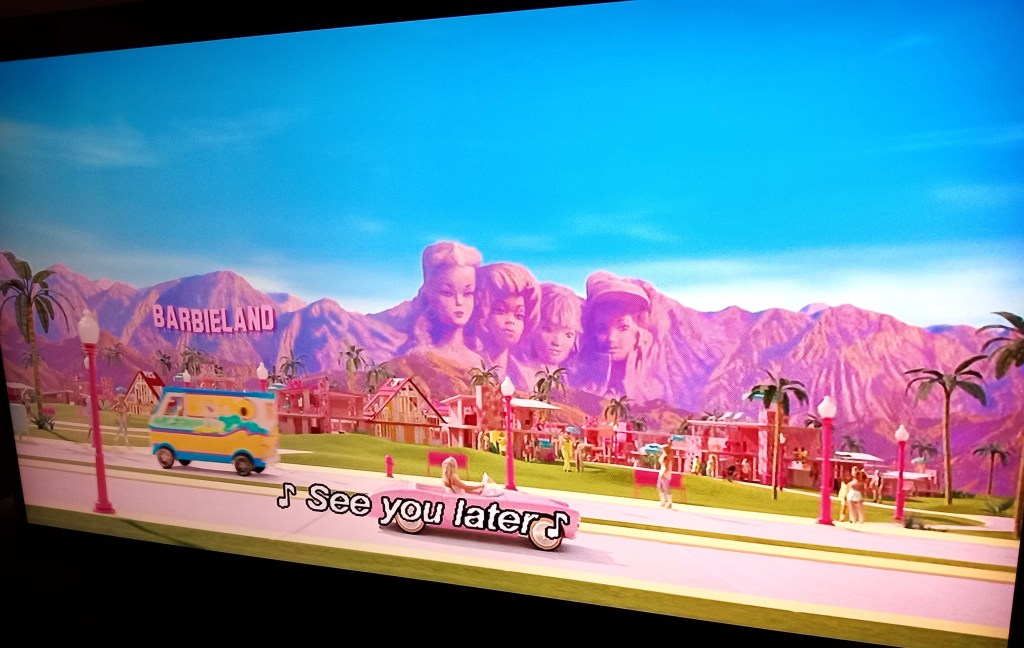
Barbie is one of the most famous toys and she resides near Los Angeles. Could she live anywhere else? I pondered this when seeing Barbie:

This scene, along with others in the movie, firmly place Barbie in and around Los Angeles. There are palm trees. Beach scenes along the ocean and boardwalk. The mountains looming in the background. A replacement for the “Hollywood” sign. Her dreamhouse is in Malibu.

Could Barbie live in other locations? How about Manhattan Barbie? Atlanta Barbie? Omaha Barbie? These are harder to imagine. Barbie has a lifestyle tied to a postwar vision of the American Dream exemplified by life in Los Angeles. She was not alone; TV shows endlessly showed life in southern California, Disneyland first opened there, and sprawling suburbia became a model.

A new city and/or region could become the marker of a new era and new toys. Perhaps Houston? A different city that will grow rapidly and look different or exhibit different patterns of life and development?

Barbie’s Dreamhouse and the dream of homeownership

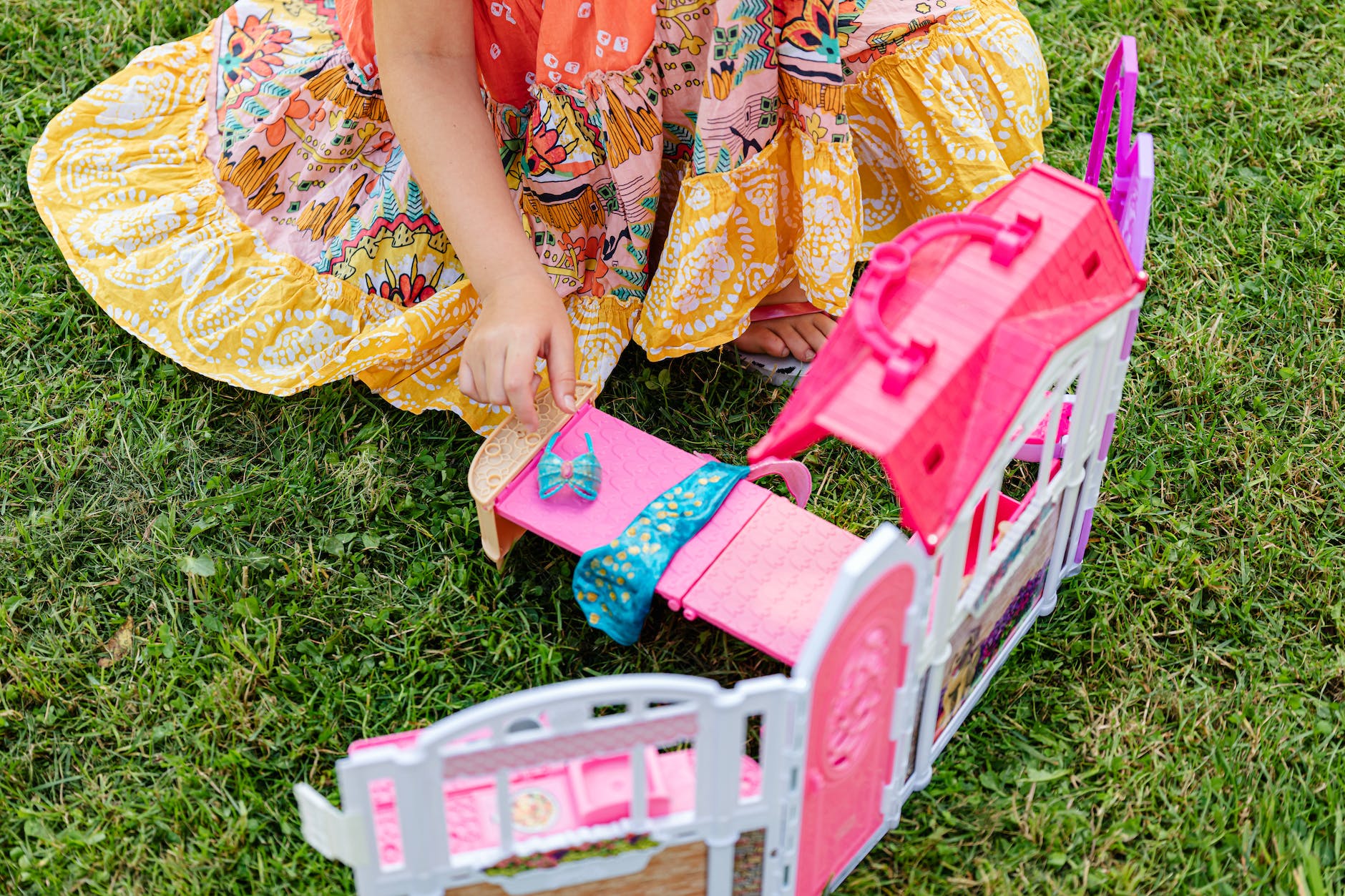
Barbie has a big house, reinforcing ideals in the United States about homeownership:

Photo by Karolina Grabowska on Pexels.com

From the beginning, much of Barbie’s existence — her unrealistic physical proportions, the lack of racially diverse dolls, the toy’s reinforcing of gender roles — has been debated in jest and in seriousness. But her home, which has not been as publicly parsed or praised like the doll, has been a mirror for the various social, political and economic changes the rest of the country was experiencing. It has followed housing patterns and trends, from chic, compact urban living to suburban sprawl to pure excess. At times, it has been out of step, ignoring the country’s ills (Barbie’s never been broke; she has never lost her house to foreclosure)…

Financial institutions frequently turned down mortgage applications for women without male co-signers when Mattel debuted the Dreamhouse in 1962, three years after Barbie shook up the toy world, arriving in a one-piece bathing suit and kitten heels…

Society has held up “this promise of homeownership as part and parcel of the American dream,” for centuries, said Ms. Castro. More than 60 years of Barbie’s Dreamhouses have further instilled that in us from a young age.

To own a home at all, especially one with a three-story slide, can feel unattainable for most. From July 2021 to June 2022, home buyers were richer, whiter and older than they had been in decades. The share that were first-time homeowners was the lowest its been since at least 1981. And, the median home price exceeded $400,000 for the first time.

It’s called a Dreamhouse for a reason. We can all dream, can’t we?

Is the Barbie Dreamhouse simply a plot to teach children that they should aspire for a large home with all the latest furnishings and in a bright style?

The American Dream of homeownership is persistent and takes many forms. It includes statements by presidents. It includes decades of policies. It is reinforced in television shows and on television networks. It then would not be a surprise that children’s toys would reflect a similar theme.

How many toys do this? How often does “playing house” explicitly or implicitly support homeownership? Even if children cannot voice what they are doing, living in a society that pushes the American Dream of a suburban single-family home is bound to be picked up early in life.

All of this thinking of the Dreamhouse reminds of Lynn Spigel’s 2001 book Welcome to the Dreamhouse: Popular Media and Postwar Suburbs. I recommend it.

Barbie’s DreamHouses and American houses

A new book shows how the Barbie DreamHouse changed over time:

The monograph, which the publishers say is “the first architectural survey of the world’s best-selling dollhouse”, features glossy images of the houses captured by fashion photographer Evelyn Pustka, alongside detailed architectural drawings…

The homes themselves range from contemporary influencer houses all the way back to the mid-century bungalow of the 60s.

In this way, the book establishes the Dreamhouse as an early example of homes turning from private domains into a means of expressing and performing our personality for others – alongside the Eames house, the Playboy apartments and Jackie Kennedy’s televised tour of the White House in 1962…

“So there’s this bifurcation where the Dreamhouse is more in conversation with McMansions, which might reference postmodern architecture but lose the kind of ironic quoting involved in using Doric columns.”

The emphasis here seems to be on how the Barbie homes reflected architectural styles. However, how much did these toys shape architectural styles? As people played with these houses, how did it change their perceptions of houses? This might be difficult to ascertain but presentations of homes and what is normal or aspirational can help shape what people expect.

A question: have any constructed houses been inspired by the Barbie DreamHouses? This could be another signal of how Barbie has affected homes.

McMansions and Beanie Babies

A new documentary suggests the Beanie Baby craze began among big houses in Naperville:

Photo by Kayley Dlugos on Pexels.co

The Gist: It all started with a few white ladies in Naperville, Illinois – because of course it did. In the mid-1990s in the culs-de-sac of the affluent suburban Midwest, where triple-wide driveways flank brick McMansions, Joni, Becky and Mary Beth decided they liked cute little hand-sized stuffies produced by modestly sized toy company Ty Inc., and wanted to collect them all. An inauspicious beginning, yes, but one that would find Ty founder, future billionaire and eventual criminal tax evader H. Ty Warner ignoring how Mary Beth helped stir nationwide consumer frenzies for his products, and suing her for copyright infringement. So this story has its heroes and villains, a couple who fall somewhere in-between, and a nation of millions who caused a subsequent consumer demand for plastic totes so they can shove their hundreds of worthless Beanie Babies beneath the basement steps. (The real winner here? Probably Rubbermaid.)

Based on this short snippet, I am thinking of several possible connections between McMansions and Beanie Babies:

  1. These homes offer lots of space for storing and displaying the toys. All those bonus rooms and square footage mean the owners can have hundreds, no, thousands, of Beanie Babies.
  2. The people who can afford McMansions can afford a lot of Beanie Babies.
  3. Related to #2, those who live in McMansions, homes often criticized for their architecture and design, want to own lots of toys that became a fad.
  4. Perhaps the simplest explanation: roughly 50% of Americans lived in the suburbs by the 1990s, most McMansions are in the suburbs, Naperville’s population was booming at this time, and Ty Warner is from the Chicago area…meaning all of these spaces happened to collide in this toy boom.

Designing your own Peytonville, Part 1

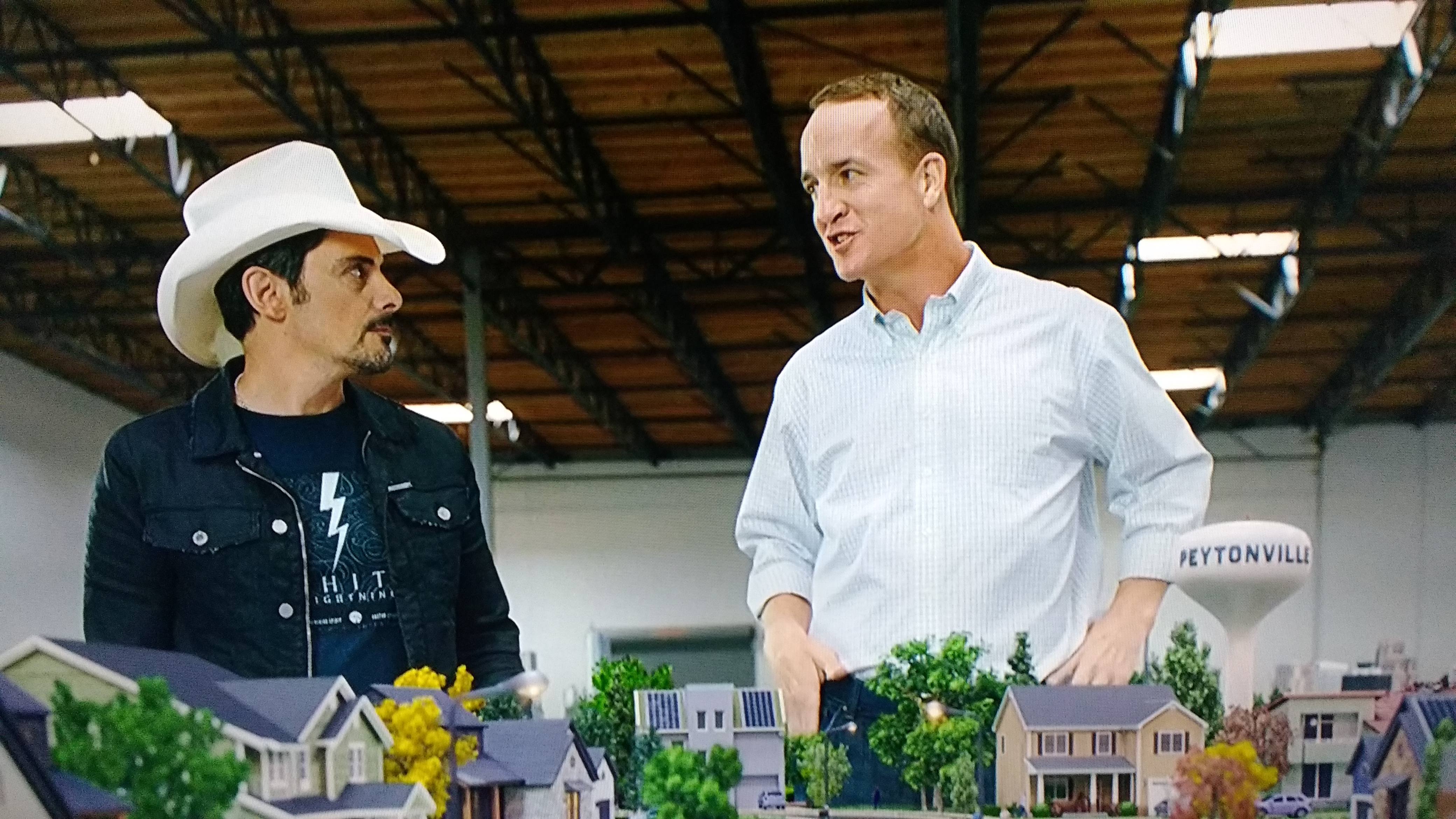
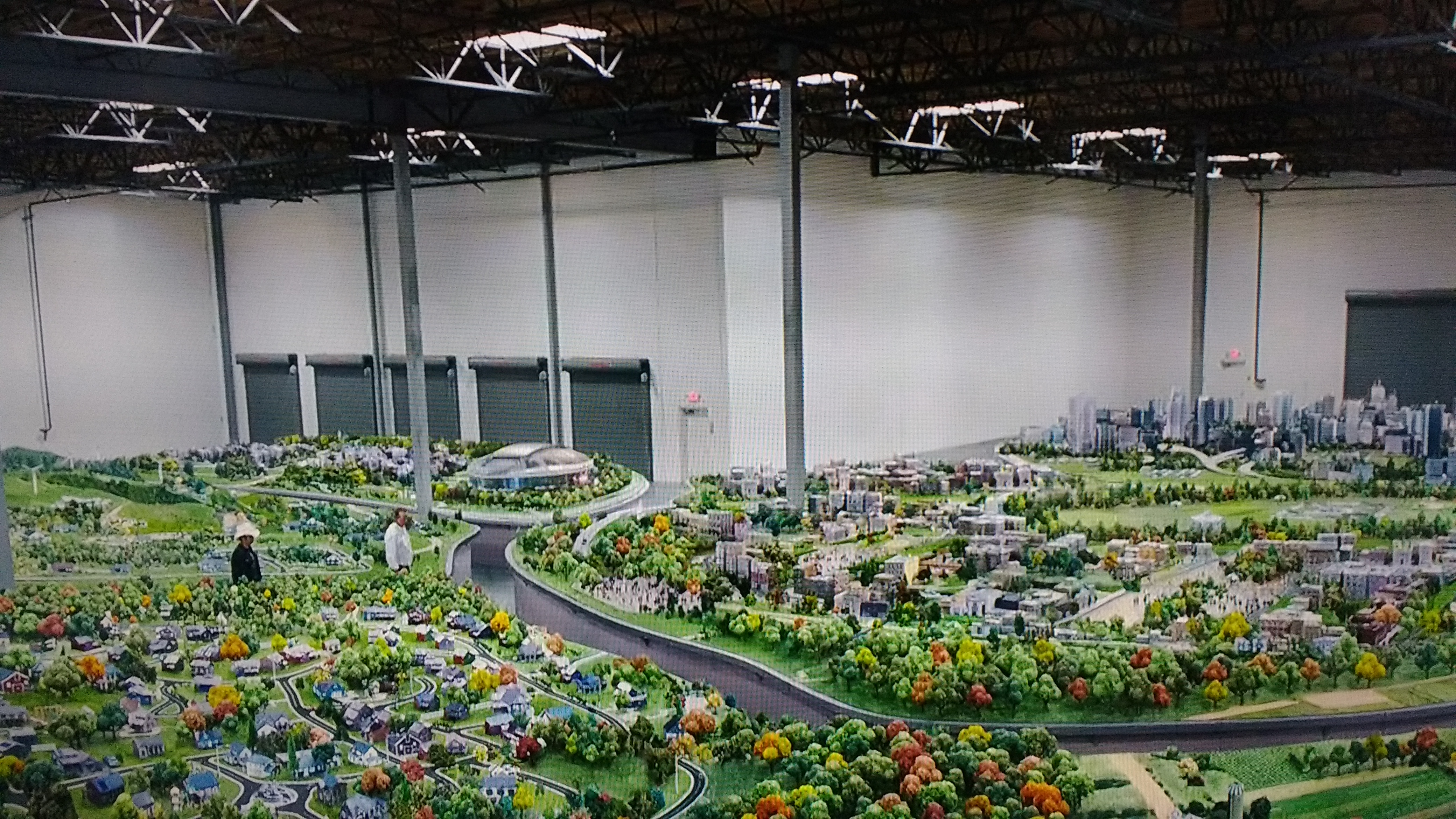
A recent Nationwide commercial has former NFL star Peyton Manning walking within Peytonville, a town set up on a large layout in a warehouse:

Peytonville2

What makes attending such layouts attractive to people? Three quick guesses:

  1. The ability to craft and build an entire community. In real life, no one person could do this on their own. Even a fabulously wealthy person would likely have to rely on a lot of help – think construction workers and others – to put a community together. This sort of layout is possible with a lot of time, materials, and skill (particularly given the size of it all).
  2. The birds-eye/God-like view (and control in #1) possible with such a layout. It is one thing to walk within an interesting place; it is another to consider it from above.
  3. The chance to attach one’s name to a community. This is an honor often given to a founder or a prominent early member of the community. If you control the construction and have a birds-eye view, you can add your own name to it all. The community in the commercial is Peytonville but it could be Peytonton, Peyton Corner, Peyton Park, and other variations.

Peytonville1

It would take a long time to put this together but it could be very fun to maintain, play with, and show off to others.

Is the $11k playhouse for children a mansion or a McMansion?

The title of this expensive children’s playhouse – $11,160 on Amazon – is the “Grand Mansion Portico Playhouse.” Although it is sized for children, is it more of a mansion or McMansion?

On the mansion side:

-Lots of space compared to the typical playhouse.

-Expensive. How many people can afford such a playhouse for their kids?

-The architectural features are symmetrical and not excessively garish.

On the McMansion side:

-The architectural features are only on the front and are likely meant to impress those looking only at the front of the house. (There is nothing on the sides and an adult-sized French door in the back.)

-Two story foyer in the front. (It appears the interior is open two stories throughout the house.)

-An unfinished interior. Not even drywall. This echoes the stories of homeowners putting all the money into a big home and not being able to furnish it.

Summary:

In the end, I would vote this playhouse a mansion because of its price and size. If there was a $500-$1,000 playhouse on the market, that might count as the McMansion of the children’s playhouse world.

Side note: it would be interesting to see the reaction of children if they were presented with this fully constructed abode on Christmas morning.

Fund the Squeezable Skyline toy

Plush toys often involve animals but one set of guys have embarked on a Kickstarter campaign to raise money to make Squeezable Skyline toys:

Instead of creating an Etsy store to sell their adorable plush-sized versions of famous skyscrapers, these dudes are going the Kickstarter route and attempting to raise $25,000 to fund the production of its Squeezable Skyline toys. As a part of its first lineup, the Chicago-based company wants to sell plush versions of the Willis Sears Tower and the Empire State Building. Up next (if enough funding is raised) will be the John Hancock Center. The toys are definitely cute, and any architecture nerd would love to gift one to their toddler, but is this an idea worth $25,000? The team has nearly a month left and have already raised about $4,000 from 67 backers, so it’s looking like they’ll definitely have a shot.

It would be interesting to watch kids interact with these toys. Would they quickly anthropomorphize a building? What would they have the building do? Are buildings huggable (or is this more related to the softness than the form)?

The design also does some interesting things with the straight lines that often mark the tallest skyscrapers. As a plush toy, the buildings now have slightly skewed bearing, like they were drawn in a cartoon style.

Gendered marketing from Lego and other retailers

Lego may provide some interesting architectural models but the company, along with other retailers, is being charged with having gendered marketing campaigns:

Debate over gender-based toy marketing has reached a fever pitch. In December, LEGO — a brand that previously could do no wrong — came out with a girlified version of their beloved blocks called LEGO Friends, and the marketers behind this switch were greeted with a bellowing, albeit virtual, “Why?” Now, a pair of 22-year-old activists for girls, Bailey Shoemaker Richards and Stephanie Cole, have launched a petition to get LEGO to commit to gender equity in marketing…

Bradley Wieners, executive editor at Bloomberg Businessweek, investigated why LEGO was trying to attract more girls at all. On the surface, he discovered they were responding directly to parents like Peggy Orenstein, author of “Cinderella Ate My Daughter” and poster-mom for equal-opportunity play. He quoted Orenstein saying, “The last time I was in a Lego store, there was this little pink ghetto over in one corner. And I thought, really? This is the best you can do?” The goal was to give little girls another option when they reach the “princess phase,” at around four-years-old, the time when boys their age enter their “LEGO-phase.” Because, as BusinessWeek reported, “Unlike tiaras and pink chiffon, Lego play develops spatial, mathematical, and fine motor skills, and lets kids build almost anything they can imagine, often leading to hours of quiet, independent play.”…

“It would be easy to assume that this is just about LEGO, but [it] is part of a much larger marketing environment that puts the interests of girls and boys into … limiting boxes,” said Cole, one of the women behind the new petition agains LEGO Friends. Indeed, other classic brands including Rainbow Brite, Strawberry Shortcake, My Little Pony — and even Troll dolls — have been transformed. The characters are much more slender, many look like they’ve gotten hair extensions, the Trolls carry purses. Sociological Images found nine examples which can be seen below.

Still, LEGO Friends touched a nerve that these other brands didn’t. More than 45,000 people have signed Cole and Richards’ petition, and parents are taking to Twitter, helping to spread word about the campaign with their hashtag #LiberateLEGOs.

Lego has been doing this for years: as a kid, I had Lego castles and pirates while my sister had a Lego ranch with horses and pink fences.

It would be interesting to see how successful Lego has been in selling “girl Legos.” If this petition is any indication, there are plenty of girls who are playing with and buying regular Legos, not Legos specifically aimed at girls.

Why not have a campaign about “boy Legos” as well? Lego has tended to sell boys a lot more violent kits where pirates, medieval characters, and Ninjas wield weapons.

Perhaps lost in all of this are City Legos. These are typically street scenes full of workers, shops, and government facilities (police, fire, etc.). Which gender do these appeal to most?

The builder behind Lego’s architecture series

Perhaps you have seen them in the store: Lego kits that allow you to build the White House, Frank Lloyd Wright’s Fallingwater, and many other buildings. Here is some background on the man who designs these kits:

Tucker is a serious sort, with a vaguely brooding air — not impolite, but not comfortable with niceties. He does not flinch from saying that he is an artist and that the Lego is a real medium. “I have zero interest in this as a toy,” he said, holding up a brick. He did not seem like the type who sets out on a Lego-based career path. And he wasn’t. He’s 40 now, but five years ago he was designing high-end residential homes until the real estate market started going stagnant, he said, and clients started drifting away and canceling new projects. He and his business partner split up, and so, rudderless, he moved back in with his parents.

“Six months into my hiatus, I sat down and wrote up a list of everything I wanted to do in this life,” he said. “Didn’t matter what it was — race car driver, dentist, architect. Then I looked at the list and refined it, and through a process of elimination I realized I wanted to work with my hands and I wanted to be my own boss — because I don’t take authority figures especially well. Also, I wanted to do something with architecture. The thing is, how could I be an inspiration to others if I was working in a medium most people can’t do?”

Here’s what he did: He drove to a Toys R Us in Highland Park and loaded eight shopping carts with Lego kits. He then came home, sat on the floor, spread the pieces out at his feet and, because he hadn’t played with Legos since he was a kid, reacquainted himself. He built samples and took them to a Lego convention in Washington, where he caught the eye of Lego brass.

He found Lego at the right time: After going through a rough patch in the late ’90s, the company was ready to refocus on design, and by 2008, at the height of the financial crisis, sales were up 40 percent, making it the rare company that not only weathered the recession but didn’t feel it. Tucker, meanwhile, rounded up licensing agreements with building owners. “I got a sense he didn’t have many contacts, so I set him with the people in other important buildings,” remembered Randy Stancik, the general manager of the Skydeck at Willis Tower, where Tucker’s Willis Tower kit has long been the most popular tchotchke in the building’s gift shop.

Tucker’s relationship with Lego is complex. He is not a Lego employee. With his wife, Brittny, he runs Brickstructures, which has a long-term contract that says he can only design kits for Lego. He also distributes the Architecture series in North America himself, using Lego’s warehouse in Wood Dale (though Lego distributes the series internationally). When I asked who owns the rights to the kits, he said it’s a gray area.

Is this a success story from the new American economy? Alas, it seems like there is only one such job available…

Some additional thoughts:

1. I’ve wondered this for a long time as a Lego fan: why are these sets so expensive?

2. Does Lego have a larger goal of helping people understand the world’s great architecture? If not, why not bill these as educational products? Then you might really see these fly off the shelves.

3. If I had to guess, I would say these sets are bought primarily by highly educated people. Perhaps we can apply Bourdieu to this: lower-class people buy them because they are fun to play with and make a nice decorative piece while the middle- and upper-classes appreciate the aesthetics (squared off as they may be) and knowing about great architecture.

4. Are Lego creations considered art by the broader art community?

What happens on Dec 25 in Lego Star Wars Advent calendar?

I’ve seen this advertised several times: the LEGO 2011 Star Wars Advent Calendar. I have one big question about this product (besides why it costs so much): is December 25th marked by the birth of Luke Skywalker?