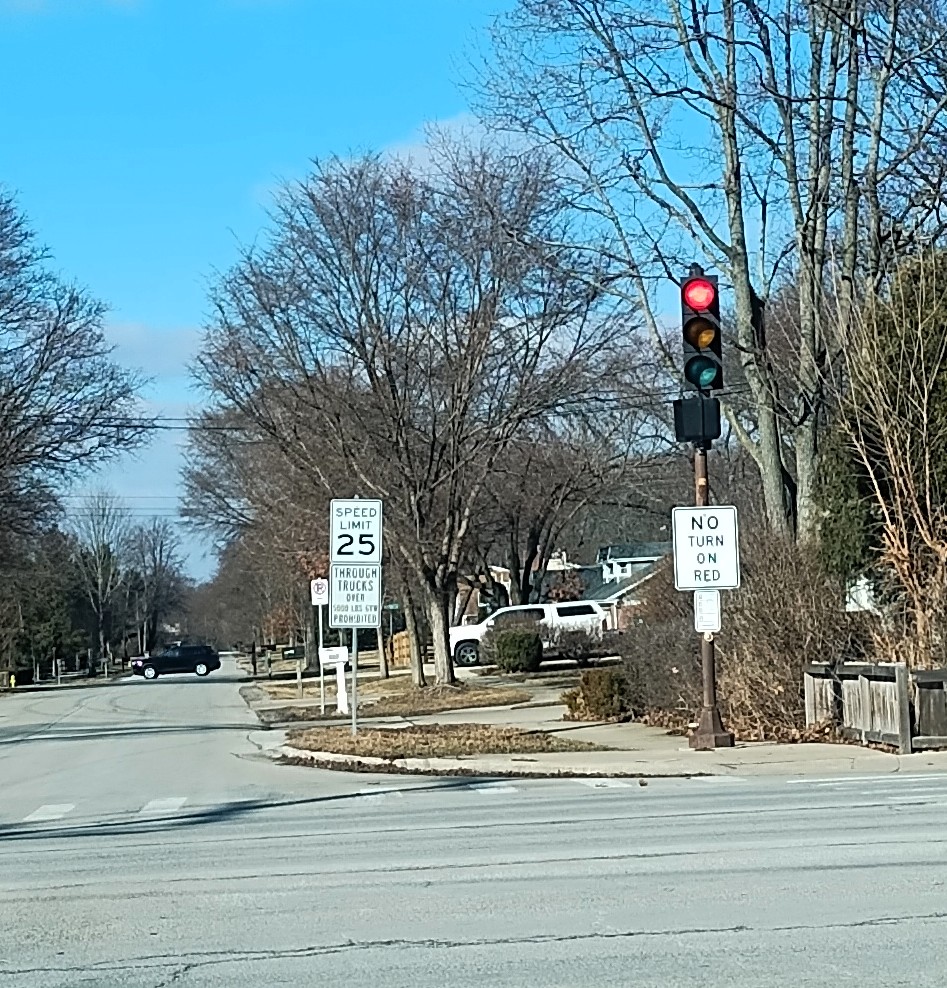
I regularly drive past a sign at the beginning of a residential neighborhood that says: “Through trucks over 5000 lbs GVW prohibited.”
I would guess the primary purpose of the sign is to limit trucks from cutting through this residential area. A driver might want to avoid a busy intersection about a half mile from this sign and driving through the neighborhood could be a shortcut. Residents do not want to hear trucks, breath their exhaust, or have to maneuver around them while out and about their neighborhood.
At the same time, the vehicle weight might matter as well. Heavier vehicles put more stress on roads. Having heavy trucks regularly travel on a road will damage the surface more quickly. These are residential roads, not heavy-duty roads that handle tens of thousands of vehicles each day. The roads are meant to funnel drivers from single-family homes to the major roadways that can handle more traffic.
It is hard to get an exact figure quickly but there appears to be plenty of passenger vehicles that are over 5,000 pounds. Pickup trucks and large SUVs can exceed this weight regularly. Suburbanites drive plenty of these vehicles. Some of the homeowners in this neighborhood may have them.
So even as this sign likely is trying to keep trucks off neighborhood streets, it also hints at the increasing weight of passenger vehicles sold in the United States. They have gotten heavier over time. All roadways could be strained more, not just because of trucks.
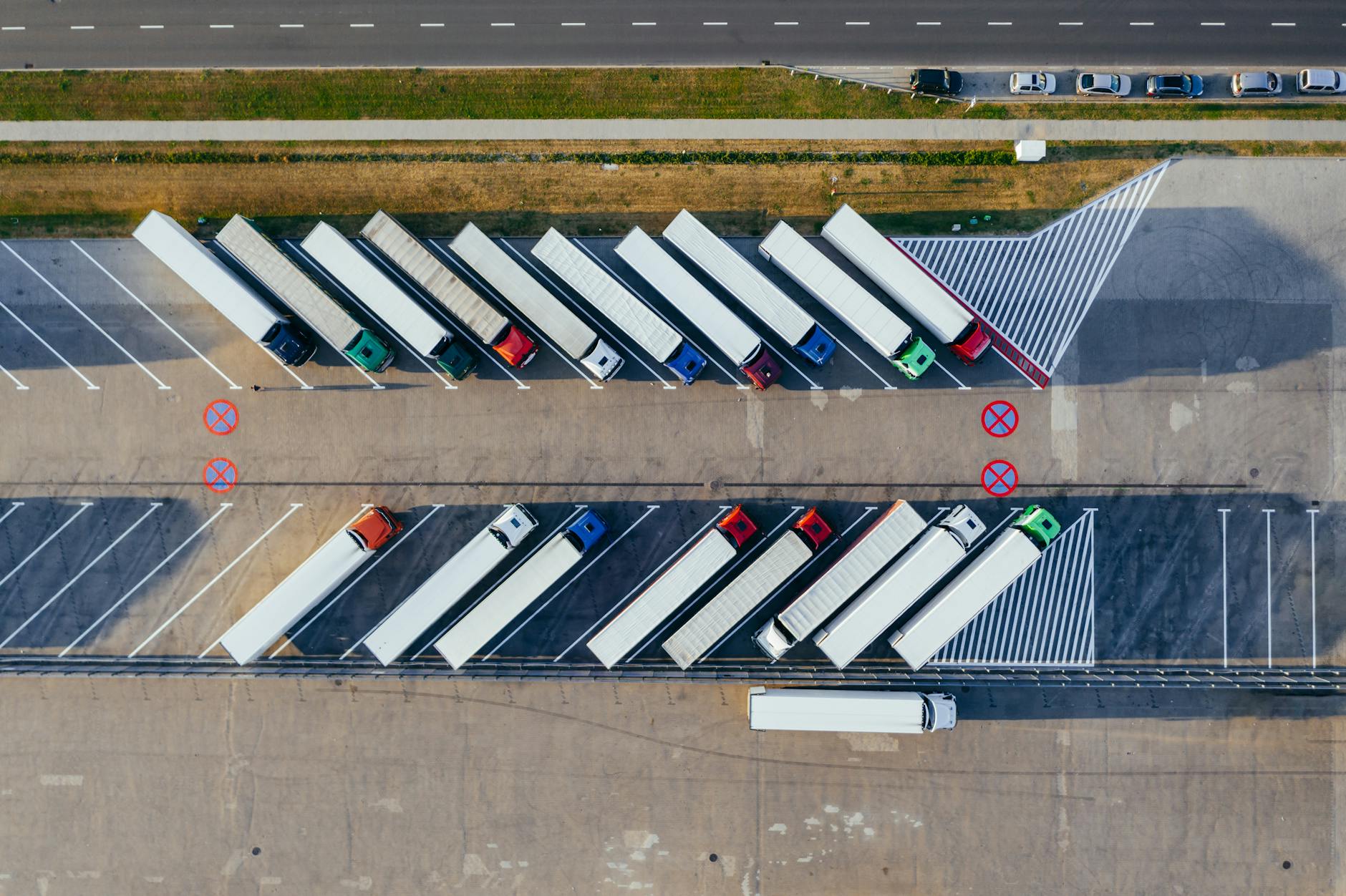
Outpost, an Austin, Texas-based company, is transforming 30 acres at 70 Airport Road into a location where 1,000 semi trucks can park in a safe, secure setting, said Trent Cameron, the company’s co-founder and CEO…
When it opens Oct. 1, the number of parking spaces will exceed the 900 available at the Iowa 80 Truckstop in Walcott, Iowa, which bills itself as the world’s largest truck stop, in part because of the restaurants, stores, truck dealership, movie theater, repair shop and other service businesses spread out over its 220 acres, according to its website.
As Cameron noted, there’s a need for more truck parking. A report done by the American Trucking Association found there is one parking space for every 11 trucks on the road and many drivers spend nearly an hour every day trying to find a place where they can stop, resulting in about 12% lost pay annually.
Beyond that, truck drivers waste a lot of fuel searching for parking and often are forced to park in unsafe and unauthorized locations, the association report said.
Suburbs are not often home to truck stops as these tend to be located further outside of big cities. Developers may see land as more profitable for other uses. Companies may want cheaper land and more of it. As noted later in the article, suburban residents often do not like lots of trucks on local streets and as neighbors.
Additionally, Chicago is an important trucking and transportation hub, serving both the large metropolitan area and a lot of traffic passing through to other places. Many trucks make their way into and out of the region with many warehouses, retail facilities, and communities.
Will large suburban truck stops become more and more common? Will this push residents and communities to make certain choices about land and locations?
For the third time in less than two weeks, police have made a firearm-related arrest in the Naperville Topgolf parking lot…
Coffey’s arrest brings the number of firearm-related arrests made outside the Naperville Topgolf since August 2023 to 22…
Officers were in the business’ parking lot in squad cars when one of them observed Coffey exiting a white Mercedes SUV while smoking what they believed to be cannabis, Krakow said. Officers exited their squads and approached on foot. Their investigation into the cannabis led to a search of Coffey’s vehicle.
Police’s search yielded a 9mm handgun that was recovered from a backpack, Krakow said.
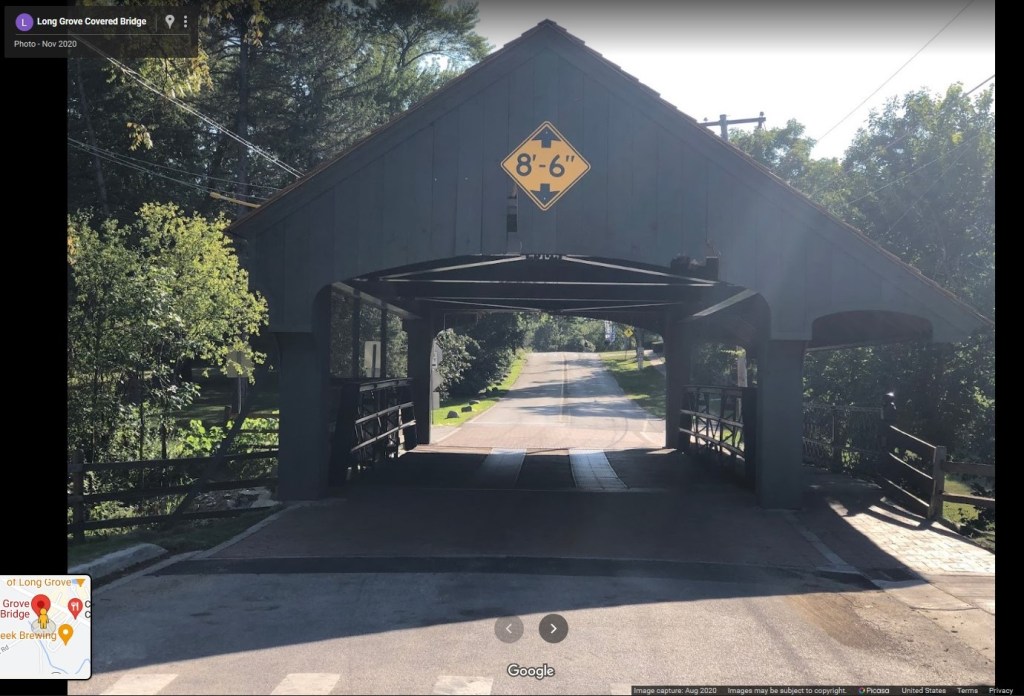
Once again, a box truck became stuck under Long Grove’s iconic covered bridge early Monday morning, with the vehicle taking the brunt of the damage.
“The vast majority of the times this happens, it damages the vehicle,” Long Grove Assistant Village Manager Dana McCarthy said. “The bridge is made of heavy duty steel.”…
Though the bridge has certainly been hit well over 50 times since it reopened in 2020 after an extensive renovation, the village itself doesn’t keep count of the instances.
If this happened a few times, it could be a pattern in suburbs where these things tend not to happen. “Strange but true” stories from the suburbs that happen a few times.
But now people are paying attention – both of these occurrences are now “common” – and they keep happening. The media widely reports on the police work at Topgolf yet more arrests are made? There are plenty of warnings around the bridge about the height but trucks keep trying to drive through?
I assume the phenomena will end at some point but it is hard to know when.
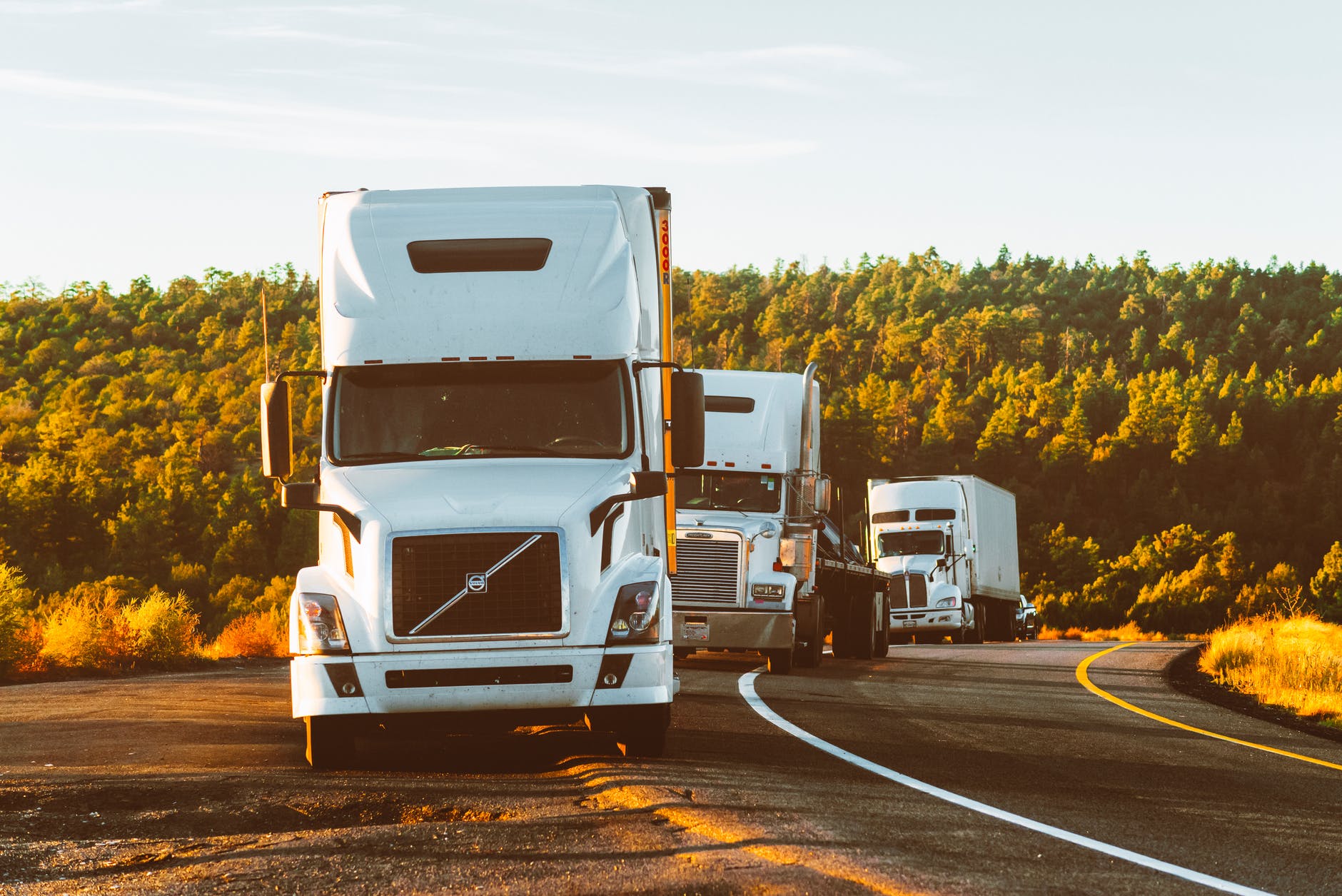
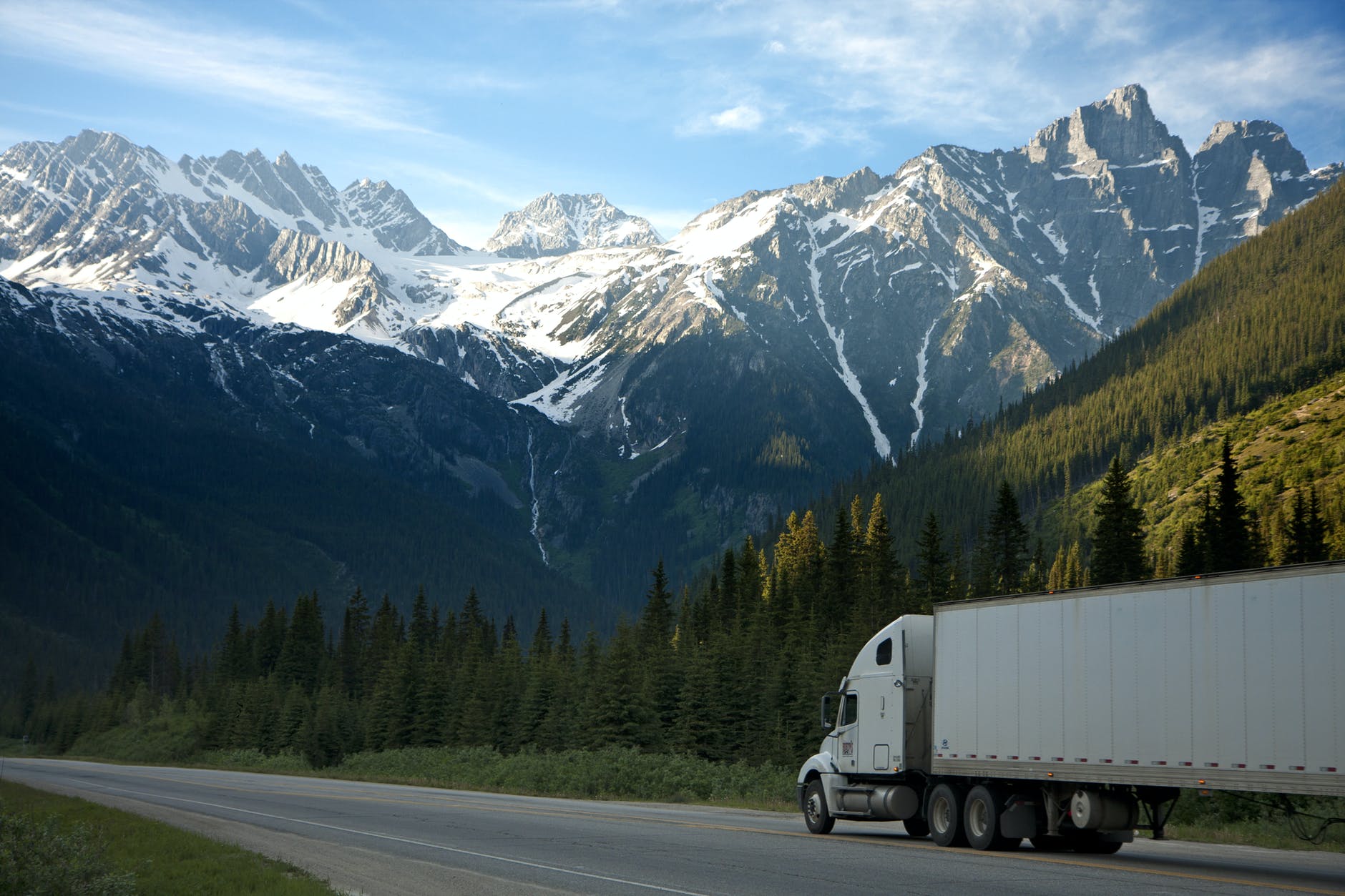
According to the Department of Energy, even though medium- and heavy-duty trucks account for only 4% of the vehicles in the United States, they consume 25% of total highway fuel and create nearly 30% of highway carbon emissions. Stricter standards on smog-forming emissions on trucks will take effect in 2027, which could force companies to turn to electric versions such as this Tesla fleet.
Since trucking is essential, even small improvements to gas mileage and emissions could go a long ways. I am not sure that having full fleets of electric trucks or even autonomous electric trucks in a few decades time would look that futuristic but it sounds like they could help.
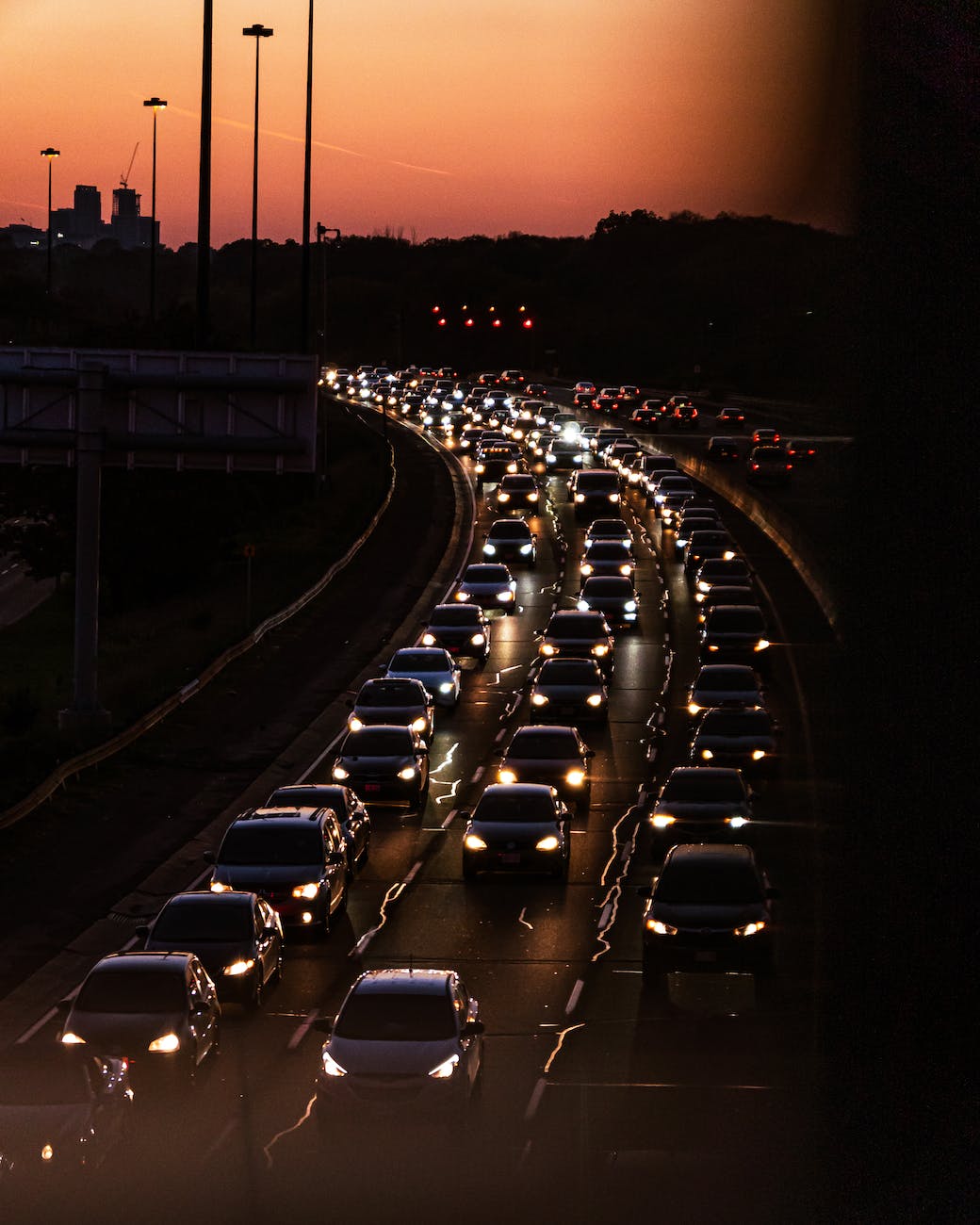
In recently driving in and around several big cities, I was struck by what I could (and could not) see. I certainly observed a lot of motor vehicles on highways and roads.
It is long evident that Americans prioritize cars and trucks on their roads. There might be room for some pedestrians (be safe!), mass transit, and bicyclists and scooter users but these are not as numerous as all of the cars and trucks.
The range of vehicles really does run the gamut. On the same major roads, one can find all sorts of trucks (delivery trucks, dump trucks, tankers, car carriers, etc.) and cars ranging from expensive luxury models to those who look pieced together to newer electric vehicles. If I wanted to see what Americans are driving for personal and business trips, I would recommend driving some of the highways that go right through urban centers and one can observe a wide variety.
Even with at least some people working from home, there are plenty of vehicles at many hours of the day. For many residents and companies, it is easiest to go via vehicle than other option. Driving is still a preferred method, even in cities with busy roadways.
If a driver truly wanted to be safe and only focus on the road around them, there is plenty to see. On many of these busy roads, tens of thousands or even hundreds of thousands of vehicles might pass by each day.
“The key is really getting trucks onto the interstate as safely and efficiently as possible,” said Patricia Mangano, senior transportation planner with the Chicago Metropolitan Agency for Planning.
As the county grows and the region continues to be an important national transportation hub, the study recommends strategies to minimize the negative impact of freight traffic to residents and the environment…
The report says that high volumes of truck traffic have led to safety and congestion concerns, especially in sensitive areas such as historic districts, neighborhoods or environmentally protected areas. The study notes western Will County’s natural and cultural assets, such as Midewin National Tallgrass Prairie, Abraham Lincoln National Cemetery and the Kankakee River, could be negatively affected by new development and traffic…
“We are the proverbial crossroads of America,” he said, noting residents just want to ensure they can get from work to home to their children’s activities without being caught in traffic.
Yet, certain industries do not necessarily mesh well with the suburban single-family home ideal. Trucks are related to a number of concerns residents have about all sorts of land uses: noise, traffic, lights, threats to the residential ideal they hope for.
I see the point of routing truck traffic along particular roads. This also has the effect of altering those roads. I can think of several major thoroughfares near here that are full of truck traffic during the day. Driving on these roads can be quite different than driving on other main roads. And because the way many suburban communities are laid out, there are often not good alternative routes since traffic in general is funneled from smaller residential streets to larger volume roads.
An impractical suggestion that might please suburban residents: have truck only roads that lead from industrial and commercial properties straight to highways. In many locations, this might work as warehouses and distribution centers are clustered together as are big box stores and shopping malls. On suburban roads without big trucks, suburbanites might occasionally find the opportunity to drive like people do in car commercials: on the open road.
Walmart and Silicon Valley start-up Gatik said that, since August, they’ve operated two autonomous box trucks — without a safety driver — on a 7-mile loop daily for 12 hours. The Gatik trucks are loaded with online grocery orders from a Walmart fulfillment center called a “dark store.” The orders are then taken to a nearby Walmart Neighborhood Market grocery store in Bentonville, Arkansas, where Walmart is headquartered…
Walmart, the nation’s biggest seller of grocery items, is testing the Gatik autonomous vehicles as part of its transition to a “hub and spoke” model for grocery delivery where dark stores are closer to the consumer and used to serve several retail stores. Walmart said the use of automated vehicles will also allow store associates more freedom to perform “higher level” tasks, including picking and packing online orders and customer assistance.
“The old architecture of delivery where you have a giant distribution center four or five hours away from the end consumer does not work anymore. Grocers are forced to set up these fulfilment centers close to the customer, and once you get close to the customer you have to shrink the size of your warehouse,” Narang said. “As the size shrinks there is a growing need for doing repeated trips from the fulfillment centers to the pickup points. That’s where we come in.”
The Kroger supermarket chain has tested autonomous delivery with start-up Nuro since 2018 and said it’s now completed thousands of “last mile” deliveries in the Houston, Texas area. Kroger is also using automated warehouses to launch online grocery delivery in Florida and other states where it does not have brick and mortar locations.
Additionally, it would be worth hearing more about fulfillment centers/”dark stores.” Where are they located? How do they operate? How many of them are needed in a sizable metropolitan region to fulfill orders? Depending on some of these answers, this could change where warehouses are located (can they be as concentrated, such as in Will County?) How much more efficient is this system compared to now? Somewhere, a particular community could figure out how to maximize dark stores and reap the benefits.
“We have made so many attempts to make the signs more visible, and it just keeps happening.” said Trustee Jennifer Michaud. “I live very close to the downtown, and I always know when the bridge is hit, because I see the helicopters come in. And I’m just, ‘Oh, another one.'”…
“People look at their phones and their phone tells them to go this way, and Google doesn’t know that they are driving a truck,” she said…
One option is an overhead detection system that would sense when a truck of a certain height approached the bridge and send a warning signal to the driver. Such a system would have recurring costs, including maintenance.
Another option could be to prohibit truck traffic.
This seems like a clash of transportation eras. The covered bridge is from an older era and this is part of its current appeal. The bridge invokes tradition and likely brings in curious visitors. The bridge is part of the local character. Here is how the Historic Downtown Long Grove puts it:
As one of the last iron trusses in The Chicago area, the single-lane Covered Bridge is so iconic, it’s quite literally become Long Grove’s emblem. For over 100 years, the bridge has stood as the symbol of this crossroads town, one of the first in the country to pass a Historic Landmark Ordinance (in 1962) so that new construction need conform to its unique and charming style. The Covered Bridge has transcended its historical role as a functional necessity and a tourist attraction into something of far greater significance – the Queen and Protector of this special place we call Long Grove just 35 miles NW of Chicago.
As the gateway to the historic downtown, the Covered Bridge is where Long Grove’s quaintness begins and ends. Not only does the single-lane bridge buffer the town from being a major thoroughfare to Route 53, but there’s also something enchanting about waiting at a stop sign while the car opposite of you slowly passes over the bridge before your turn.
To paraphrase one resident: “I love how you need to stop, which suggests for you to relax, and prepare to step back in time to a less hectic world. As you ease across the bridge, the sound and feel of the bricks and timbers under you add another reminder that you’re entering a special place.”
At the same time, today’s vehicles are bigger and technology steers drivers down particular roads to get them from Point A to Point B. No community today would choose to build such a small bridge today. Can everyone get what they want in such a situation?
This is not just a problem for this covered bridge. This can happen at drive-thrus, gas stations, parking garages, and other places with limited heights. If someone asked me how tall my vehicle is, I could guess but I would not know for sure. And if I was driving a different vehicle than normal, like a moving truck or a tall pickup, I might not even think about it.
Loucks, a mechanic at Super Truck Service in west suburban Addison, didn’t think anything of the call. But when he got to the semi, he found 14,000 live chickens in the trailer…
He couldn’t tow the truck the nearly 30 miles back to the shop because tipping the trailer up could be even more dangerous for the chickens, Loucks said, so his team chained up an axle and had the semi drive back to Super Truck Service on eight wheels instead of 10. That meant driving 35 to 40 mph down I-90, which wasn’t a very safe option either, Loucks said.
After returning to the shop at 562 S. Vista Ave. in Addison, and with the temperatures rising, Loucks said the first thing he did was grab a garden hose as he started to “water the chickens,” despite being afraid of birds.
Three things stand out to me in this short story that might be easy to ignore since vehicles break down all the time:
The number of chickens on one truck is astounding. Ask people on the street how many chickens would fit on a truck and I wonder how many would be close to this number.
While this is a large number of chickens, this is just one truck. Therefore, this is just a drop in the bucket in the number of chickens in the United States. According to Statista, there are over 1 billion chickens in the United States.
There are numerous ways to ship goods and animals. Moving all of this requires a lot of infrastructure behind the scenes that helps get eggs and chicken to grocery shelves. Put #1 and #2 together and you need a lot of ways to transport everything.
But for reasons that have yet to be fully explained, people in Chicago and its suburbs aren’t breathing dramatically cleaner air during the pandemic…
Likely culprits include buildings, factories and diesel engines that burn coal, oil or natural gas. Diesel emissions in particular remain a chronic problem in Chicago, a racially segregated freight hub where rail yards, warehouses and intermodal facilities are concentrated in low-income, predominantly African American and Latino neighborhoods.
“We already have roughly double the amount of heavy-duty traffic than other major cities in the country,” said Zac Adelman, executive director of the Lake Michigan Air Directors Consortium, a group of state officials from Illinois, Indiana, Michigan, Ohio, Minnesota and Wisconsin…
During the past decade, scientists at the U.S. EPA have discovered daily spikes of soot pollution near intermodal facilities in Chicago and other cities that far exceed average urban concentrations.
The article primarily focuses on Chicago where intermodal and railroad facilities tend to be located near poorer residents. Leaders have sought to move traffic away from the center of Chicago and more to the edges of the region, but this means this is also a problem for the entire region. With numerous facilities far from Chicago, such as in Will County or as far as New Rochelle near Rockford, the air quality for millions is affected. It would also be worth looking at where the suburban and exurban facilities are located; what residents are most affected? How far away are these facilities from wealthier communities?
The article also suggests new regulations mandating cleaner locomotives and trucks would help. How this would play within a region that relies on the transportation industry – Chicago was not only the convergence center for Midwest commodities, it also developed the capacity to move those goods throughout the United States and world – would be interesting to watch. Suburbanites would not like the pollution if they knew about it or were concerned about it in their own neighborhoods or elsewhere nor do they like the inconveniences of a lot of rail and truck traffic. Yet, they like cheaper goods and jobs, perhaps even more so if the immediate problems of pollution are borne by other residents of the region.




 Legally Sociable