Are peripheral suburbs really “the most boring places in the world”?

Looking at data on where millennials are moving includes an evaluation of those places:

Photo by Helena Lopes on Pexels.com

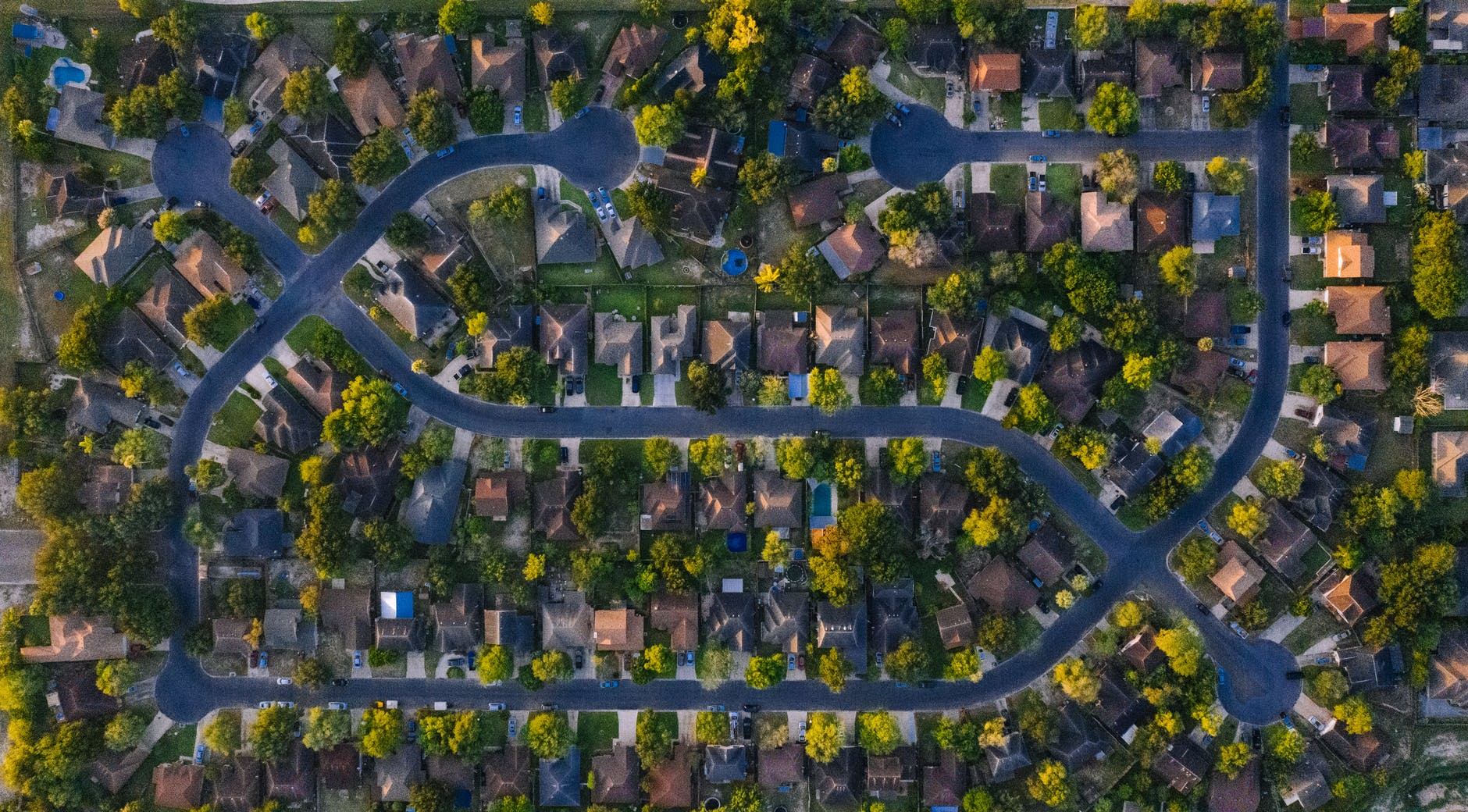
To Lee and his colleagues’ surprise, millennials aren’t moving to nearby dense, walkable exurbs. They’re getting way out to peripheral suburbs.

“It turned out that millennials are moving to the most boring places in the world,” says Lee, who’s now a professor at Seoul National University. “They’re moving to really single-family-dominated areas with very few urban amenities.”

What might make these places less boring?

It’s expensive to live in the places millennials prefer: walkable communities with lots of shops, restaurants, and public space. An analysis published last year found that homebuyers in the 35 biggest American metropolitan areas paid 34% more to live in walkable neighborhoods, while renters paid 41% more. Paul Stout, a millennial landscape-architecture student with a popular urbanist TikTok account called Talking Cities, says he constantly hears from followers who wish they could afford a home within walking distance of places like coffee shops…

But while millennials wallow over the choice between a tiny apartment in a dense city and a lonely, sidewalk-less subdivision, urbanists insist any place can be dense and walkable as long as land-use laws allow it and people want to live there.

“There’s a lot of places in the suburbs that could be really lovely to live if you could only put a grocery store or a coffee shop on the corner,” Stout says. “I’m optimistic that you could actually make living walkable almost anywhere in the US, given the right package of zoning reform.”

America is not known for its walkability (see the dangers to pedestrians) or its third places. Instead, Americans often promote and move to suburbs built around single-family homes and driving.

Does this mean suburbs further out from the city are really “the most boring places in the world”? Or are millennials and many others pushed into binary choices where they prioritize cheaper and larger housing and thus give up other community features? In many American communities, they cannot have both cosmopolitan street life and ample affordable housing they can own.

And I would venture to guess that at least a few of American suburbanites do not find them to be boring places. (One could argue they were pushed into this option rather than chose it but that is a different argument.) Millennials and Gen Z may find them more boring than older adults and this would be interesting data to compare.
McMansions as part of or outside of a changing suburbia?

This description of the changing American suburbs includes McMansions:

Photo by Jeswin Thomas on Pexels.com

The demand for something like urban living is real. Even at the outer edges of growing metro areas, mixed-use walkable developments pop up alongside familiar subdivisions and McMansions. “Mixed-use centers—often in suburban locations—continue to be built from the ground up in many communities across the US,” wrote the Congress for the New Urbanism in 2019.

As more immigrants and millennials become suburbanites, and as Covid and remote work give the suburbs another growth spurt, they are evolving into something different. Between 2019 and 2020, the share of millennials who live in suburbs increased by 4 percentage points; and in 2014, more than 60 percent of immigrants lived in suburbs, up from just over half in 2000.

Many communities that were once white, exclusionary, and car-dependent are today diverse and evolving places, still distinct from the big city but just as distinct from their own “first draft” more than a half-century ago…

If a “second draft” of the suburbs is now being written — at least in some of America’s growing and expensive metro areas — what might it actually look like?

This is part of the complex suburbia we have today. Where do McMansions fit into this? The selection above suggests “mixed-use walkable developments” are near McMansions. But, what happens to the McMansions in the long run? Here are a few options:

  1. The McMansions continue in their neighborhoods for those that want them. Even amid proclamations that McMansions are dead, there are some homebuyers and suburbanites that want such homes.
  2. McMansions themselves are altered in ways to fit the new landscape. Perhaps they are subdivided into multiple units for more affordable housing. They could be added to. Their properties could host accessory dwelling units.
  3. McMansions are demolished and replaced with something else. This could be because the quality of the homes does not stand the test of time or the land is more valuable used another way (some of the teardowns become teardowns).
  4. Some McMansions live on through historic preservation marking a particular era of housing and American life.

For some, McMansions represent the peak of an undesirable suburban sprawl and excess. For others, they are homes that provide a lot for a decent price. Their long-term fate is to be determined both by those who like them and those who detest them as the suburbs continue to change.

Building a car-free 1,000 person development in Arizona

Construction of a small community with no cars is underway in Tempe, Arizona:

Photo by Steven Arenas on Pexels.com

Culdesac, a 17-acre car-free community being built in Tempe, has leased out its final retail spot ahead of its opening later this year.

Culdesac Tempe, which cost $170 million to develop, will have 761 residential units but with zero parking spaces for its residents. The final retail spot fits into Cudlesac’s “post-car” design and ethos – Archer’s Bikes, which will offer bicycle and accessory sales, test rides, rentals and repair.

Three thoughts on this limited description:

  1. This fits with a number of trends including denser areas (both in cities and “surban” spaces) and utilizing other forms of transportation beyond personal cars. Add in an exciting mix of shops, restaurants, and entertainment spaces and I could imagine a new development like this charging top dollar for units.
  2. Such a development could help make more day-to-day activity car-free but residents would likely still need motorized transportation to access areas outside of these 17 acres. It is important for such a development to be near other walkable/bikeable areas and mass transit options so residents can easily access the rest of the city and more of the region.
  3. Once this development opens up, it would be interesting to track residents in how they move, where they work, the relationships they build, and more. If this is going to catch on elsewhere, positive data – and hopefully some data on how such developments could be accessible to a wide range of people – could help make the case.

Millennials looking for “hipsturbia”?

An article about millennials settling in the suburbs of Colorado includes this summary of what millennials are looking for:

Essentially, millennials want the best of both worlds — the more affordable and spacious housing and better school districts found in the suburbs and the walkability and bustle of activity that older city neighborhoods offer.

The Urban Land Institute and accounting firm PwC, in their Emerging Trends in Real Estate report for 2020, have coined a term for the crossbreeding that is taking place — hipsturbia.

“Many of these ‘cool’ suburbs are associated with metro areas having vibrant downtowns, illustrating the falsity of a dichotomy that pits central cities against ring communities,” according to the report.

Sounds like the “surban” place described in the Chicago Tribune: single-family homes with more community amenities within walking distance. And you say the supposed battle between cities and suburbs is not necessary?

From the beginning in the United States, suburbs offered a middle ground between city and country. The early suburbs of the mid-1800s offered single-family homes surrounded by nature and some early suburbs were designed in ways to play up the connection to nature. Also from the beginning, some suburbs were closer to urban life than others and offered homes in denser settings. Some of these suburbs would later become known as inner-ring suburbs. More recently, pockets of suburbia have emphasized higher densities that might have grown around traditional downtowns or around new mixed-use developments. All that say, suburbs can be viewed as occupying a middle ground between different locations and hipsturbia continues that trend with offering features of both suburban and city life.

On a related note, it would be interesting to see if any suburbs come to have a mass of millennials. Just as urban neighborhoods can be ranked by the proportion of their millennial population, so might suburbs. If there is a critical mass, would this significantly change suburban social life?

Going without a car in Tempe, Arizona

Is it possible to not own a car in Tempe? A new apartment project hopes the answer is yes:

The 1,000-person rental community, which broke ground this month in Tempe, won’t allow residents to park cars on site or in the surrounding area as a term of their leases. The founders say it will be the first of its kind in the U.S.

The neighborhood’s scale will be modest, with mostly three-story buildings. In place of parking spaces, the development known as Culdesac Tempe will feature significantly more retail and open spaces than are typical for its size. It will include a market hall for food vendors, coffee shop, plazas, communal fire pits and a building that residents can rent to host events.

The site is next to a light rail that connects residents to a grocery store, Arizona State University, downtown Phoenix and the airport. There will also be designated spots for ride-sharing and an on-site car-sharing service for residents traveling to other neighborhoods…

The Phoenix area might seem an unlikely spot for such an experiment, but Tempe is something of an outlier among its neighbors. The 190,000-person college town has a median age of less than 30 years old, and younger people are less interested in driving than they were in the past.

A suburban community in a sprawling region might not be the location I would first think of in embarking on this new idea. At the same time, the last paragraph cited above suggests Tempe is a unique place.

I wonder if a residential development would attract only certain kinds of residents and whether that is desirable in the long-run either for the developers or the community. The hint in the article is that this might especially appeal to younger adults. It might also appeal to older adults who want a car-free lifestyle, perhaps those who for environmental reasons do not like car ownership or those who cannot drive. There could be a market for such housing. Additionally, what kind of community or culture in the building might arise if many people come primarily because of not knowing a car? This could be interesting to explore down the road.

Going further, it would be worth knowing whether this is a viable concept in different kinds of places and different kinds of housing. It probably makes the most sense with denser housing (multi-unit apartment buildings) but could it work with rowhouses or townhomes built near a mass transit stop or hub?

Walkable + suburban = desirable “surban” places

Homebuyers may still desire to live in the suburbs but they now may want a different kind of suburbia: a walkable, denser, vibrant place.

No longer are McMansions, white picket fences and sprawling square footage topping suburban buyers’ most-wanted list. Instead, proximity to a suburb’s downtown and easy access to restaurants, schools and parks are priorities. For many, walkable suburbs reign supreme…

The shift toward more walkable suburbs started over the past two decades, thanks to planning efforts concentrated on creating mini-downtowns to revive traditional suburban centers, said Kheir Al-Kodmany, a professor at the University of Illinois at Chicago’s College of Urban Planning and Public Affairs…

A 2017 study by the National Association of Realtors found that walkers span the generations. Sixty-two percent of millennials and 55 percent of those born before 1944 prefer walkable communities and brief commutes, even if it means living in an apartment or town home. And 53 percent of Americans would give up a home with a large yard in exchange for a home with a smaller yard that’s within walking distance of the community’s amenities, according to the study. That figure is up from 48 percent in 2015…

A 2016 study from realty site Redfin seems to support Dunne’s point. The study took into account more than 1 million home sales between January 2014 and April 2016 and found that homes with higher walk scores tend to have higher sales prices than comparable homes in less walkable areas. One walk score point can increase a home’s price by an average of $3,250. In Chicago, the study found an increase of one walk score point can bump a home’s price by $2,437.

I intentionally cited the broader data from the article (and not just the anecdotes from buyers, realtors, and local suburbs) because there should be an open question involved with this article: do we have a certified trend toward more walkable suburbs? Do we have clear population data showing people moving to walkable suburbs rather than other places? For a variety of reasons, including enhancing local tax bases and environmental concerns, this has indeed been an emphasis in a number of suburbs across the United States in recent decades. But, I would also guess that it is primarily in suburbs that have more traditional downtowns and mass transit options. In the Chicago region, this means the “surban” experience is easier to create in communities founded before World War II and along the major passenger railroad lines.

This possible shift also does not fit easily into the common narrative that suburbs and cities are locked in mortal combat and there are clear winners and losers. What if in the long term Americans want some of both city and suburban life: a little less density, a single-family home with a yard, a smaller town or city where they feel they can influence local government or organizations if need be, and also walkable and not just a bedroom suburb? Arguably, this tension has been behind the American suburbs for over a century: Americans want a mix of urban and country life. A denser suburbia may just be the newest manifestation of this ongoing balance.

Mixing walkability with other concerns like inequality and building community

The concept of walkability can be tied to a number of other important urban concerns as illustrated by this conversation with a member of Chicago Community Trust:

Q: What’s driving the desire to make neighborhoods more walkable?

A: There are a number of factors but I think there’s more interest in being able to be in the community. It’s not just about walking. It’s about basic, human interactions, the surprise of bumping into people.

As we look to 2050 and see the increased reliance on technology and the diminishing opportunities for basic face-to face-interactions, walkable communities are going to become increasingly important as an essential pathway to building community. Neighborhoods and walkable communities — and the community infrastructure that supports them — will become even more important to facilitate the kind of neighborly interactions, chance meetings, and civic and community building that are so vital to our lives today…

I’ve lived here since 2003 and came from outside of the region. What a surprise it was that many suburbs don’t look like strip malls and housing subdivisions. You have really well-established communities like Oak Park, Aurora, Arlington Heights and Evanston, cities with important bones of more walkable neighborhoods or communities. That’s what Chicago and the region has going for it.

The challenge here is that in neighborhoods and suburbs, the patterns of development and reinvestment have been very uneven. You have haves and have-nots. The south suburbs have struggled with reinvestment for many years and the south and west sides of Chicago have grappled with it. When the Metropolitan Planning Council and the Urban Institute did a study on Chicago segregation, compared to the 100 largest regions we’re the fifth-most economically and racially segregated region. That, to me, is the biggest challenge.

This is a lot to ask of walkable communities. Does a walkable setup necessarily lead to such positive outcomes? Indeed, the last paragraph quoted above hints at this: the real difficult may not be walkability but rather uneven patterns of development and persistent residential segregation.


Mass transit users want three basic things

Fast wi-fi? Cushy seats? A recent survey of mass transit users suggest they want more basic features:

Analyses in the TransitCenter report suggest that riders agree. In one, the researchers compared satisfaction levels with various attributes of regional transit systems between respondents who said they’d recommend their transit service to others and those who wouldn’t. Of all the attributes (charted above), frequency of service demonstrated the largest gap in satisfaction between transit boosters and detractors, and it got the very lowest rating from transit detractors. That suggests that frequent service is essential if you want happy riders…In that same analysis, the second-largest gap in satisfaction was travel time—how long it takes to get from station to station. Translation: Fast trains equal more satisfied riders. A second analysis supports this conclusion. Respondents were asked to ranked the relative importance of 12 potential improvements to a hypothetical bus route (the results are charted below). They ranked travel time number one. (Frequency is a close second, with cost reduction in third place.)…

Finally, the report identifies walkability—here, the ability to walk to transit—as the third key factor at the heart of effective, useable transit. To arrive at this conclusion, the researchers broke down riders into three types: Occasional riders, who use transit only once in a while; commuters, who use transit regularly, but only to get to work; and “all-purpose” riders, who take transit regularly to travel to all types of destinations—work, dining, entertainment, and shopping. That last category is especially important for cities to pay attention to, Higadishe said: “When you have lots of all-purpose riders, that’s a signal that a transit system is really useful.”

Across all three rider types, most survey respondents said they typically walked to access transit. But all-purpose riders did so overwhelmingly, with 80 percent typically getting to transit on foot, compared to 53 percent of commuters and 57 percent of occasional riders. In an additional, more fine-tuned analysis of spatial data from TransitCenter’s national transit database AllTransit, the researchers identified a similar relationship…

Infrastructure tends to work this way: it has to work well and consistently. Perhaps then some extra frills could be considered but as long as they don’t compromise the basic features.

So, if these findings hold across a majority of transit users, why don’t politicians and infrastructure authorities pay more attention to these issues? Are they too expensive to address? Or, are these leaders always looking for cool new features (i.e., wi-fi) to impress the public? Perhaps this exposes a gap between who uses mass transit and who doesn’t – politicians and business leaders likely use it less.

“Turning Suburban Tysons [Corner] Into a Walkable City Will Take Time”

Eric Jaffe discusses the slow transformation of Tysons Corner, Virgina from car-dominated edge city to walkable city:

Last week marked the Silver Line’s first birthday, and with so much riding on it, so to speak, attention naturally turned to the lower-than-expected ridership numbers. The Washington Post reported that the Silver Line is serving about 17,000 daily riders during the work week, well off the pace of 25,000 riders that planners had set by this time. The “bulk” of this ridership aren’t even new users, according to the Post, but rather people who used to take the Orange Line instead…

But while it’s far, far too soon to declare the great Tysons shift a failure, it’s not too early to point out some of the little failings that still need to be addressed.

Poor walkability is one. Citing an internal analysis, Martin Di Caro at WAMU reports that Metro officials believe a lack of “sidewalks, crosswalks, and bike lanes” is a key reason behind the low ridership numbers…

But the neuroscience of driving habits clearly shows that mode choice is most susceptible to change in the early stages of a major life event, such as moving homes or starting a new job. Insofar as Tysons developers have been slow out of the gate when it comes to encouraging transit, walking, and biking, they might be missing a critical opportunity to change commuter behavior…

A third setback might fall more on Metro itself. The Post’s Dr. Gridlock reports that the biggest problem facing Silver Line ridership isn’t the stations—it’s the service. A delay on new rail cars forced Metro to stretch the existing fleet thin. The proposed fix involves running fewer eight-car trains during rush-hour twice a week so the older cars can get maintenance; given the strong ties between transit service and transit ridership, that’s not an encouraging proposition.

Transforming an exemplar of suburban sprawl is not easy: the community has to respond with corresponding infrastructure (improving walkability), changed mindsets (getting people into new patterns and perhaps this requires newer residents), and adequate service to make it viable alternative.

However, we might ask how much time is needed before we could properly evaluate the impact of the Silver Line. Five years? Twenty years? A couple of generations? And it matters who is doing the evaluating and for what reasons. Is this about seeing a financial impact (paying for the construction of the new line plus measuring new development prompted by the new line)? Assessing the decisions of politicians? Trying to reach a magic number of daily users? It will be interesting to watch the ongoing analysis and who gets to take the credit or blame.

The “trick or treat index” for metropolitan areas and Chicago neighborhoods

In a ranking sure to bring in some Internet traffic, Zillow has put together a “trick or treat index”. The top ten cities: San Francisco, Boston, Honolulu, San Jose, Seattle, Los Angeles, Chicago, Washington D.C., Portland, and Philadelphia. You can also see the top neighborhoods for these cities. Here is what goes into the index:

Zillow takes numbers seriously, even when it comes to trick or treating. Taking the most holistic approach, the Trick-or-Treat Index is calculated using four equally weighted data variables: Zillow Home Value Index, population density, Walk Score and local crime data from Relocation Essentials. Based on these variables, the Index represents cities that will provide the most candy, with the fewest walking and safety risks.

A brief and clear explanation. The index includes four equally weighted factors: the price of homes (giving some indication of the wealth in the neighborhood), density (how many people/households are available to go to for candy), walkability (can easily walk to more candy locations), and crime rates (safety while trick-or-treating). All of this presumably adds up to identifying the best places to get candy: wealthy people are likely to give better candy, there are more households within a short walk, and it is safe. But, why don’t we get the actual ratings in these four categories for the top cities?

It is probably not worth anyone doing a serious research project on this but it would be interesting to crowdsource some data from Halloween to see how this index matches up with experiences on the ground. In other words, does this index have validity? This seems like a perfect Internet project – think GasBuddy for Halloween candy.