New mosque on 248th Avenue in Naperville almost complete after a long process

There is an update on a case of zoning conflict in Naperville regarding a proposed mosque (see a 2019 journal article here and two blog posts here and here):

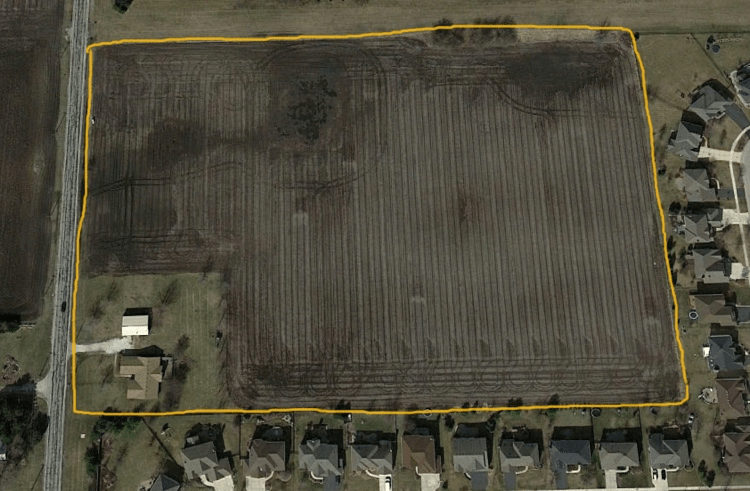
An aerial view of the property circa 2011 when originally purchased by the Islamic Center of Naperville.

Nearly two years after breaking ground, the first phase of the Islamic Center of Naperville’s mosque complex on 248th Avenue is nearly complete.

Phase one work — the construction of a 28,400-square-foot mosque — is set to finish in October, according to Islamic Center President Anees Rahman. As of mid-August, Rahman estimated the mosque was about 90% to 95% complete…

It took 15 meetings held over nine months for the proposed complex to receive a positive recommendation in October 2021 from the city’s Planning and Zoning Commission. The Naperville City Council unanimously OK’d the venture a month later — with a slate of restrictions.

Those included conditions aimed at addressing traffic, parking, fire safety and noise concerns raised by neighboring residents. As part of the approved plans, ICN agreed it would not proceed past phase two — a 41,749-square-foot school — until improvements to 248th Avenue are complete…

With traffic projections estimating the road will average 18,000 vehicles daily by 2050, the city is planning to widen 248th Avenue to five lanes between 95th and 103rd streets and to add storm sewers, curbs, gutters, street lighting, sidewalks and noise walls.

This sounds like a good outcome for the group and its members as the building will open soon. This provides space for worship and fellowship.

At the same time, this was a long process with a lot of public involvement. The property was originally owned by a church who did not build a church building on it. When it was sold to the Islamic Center of Naperville and they put forward plans, neighbors and others responded.

Given what I found in two studies (see more about the second one involving the New York City area) regarding local zoning conflict and religious buildings, proposals from Muslim groups receive more scrutiny. This particular building is almost complete but what are the consequences of longer processes and more questions compared to what others face?

Turning down a big proposed warehouse, thinking about affordable housing for certain members of the community

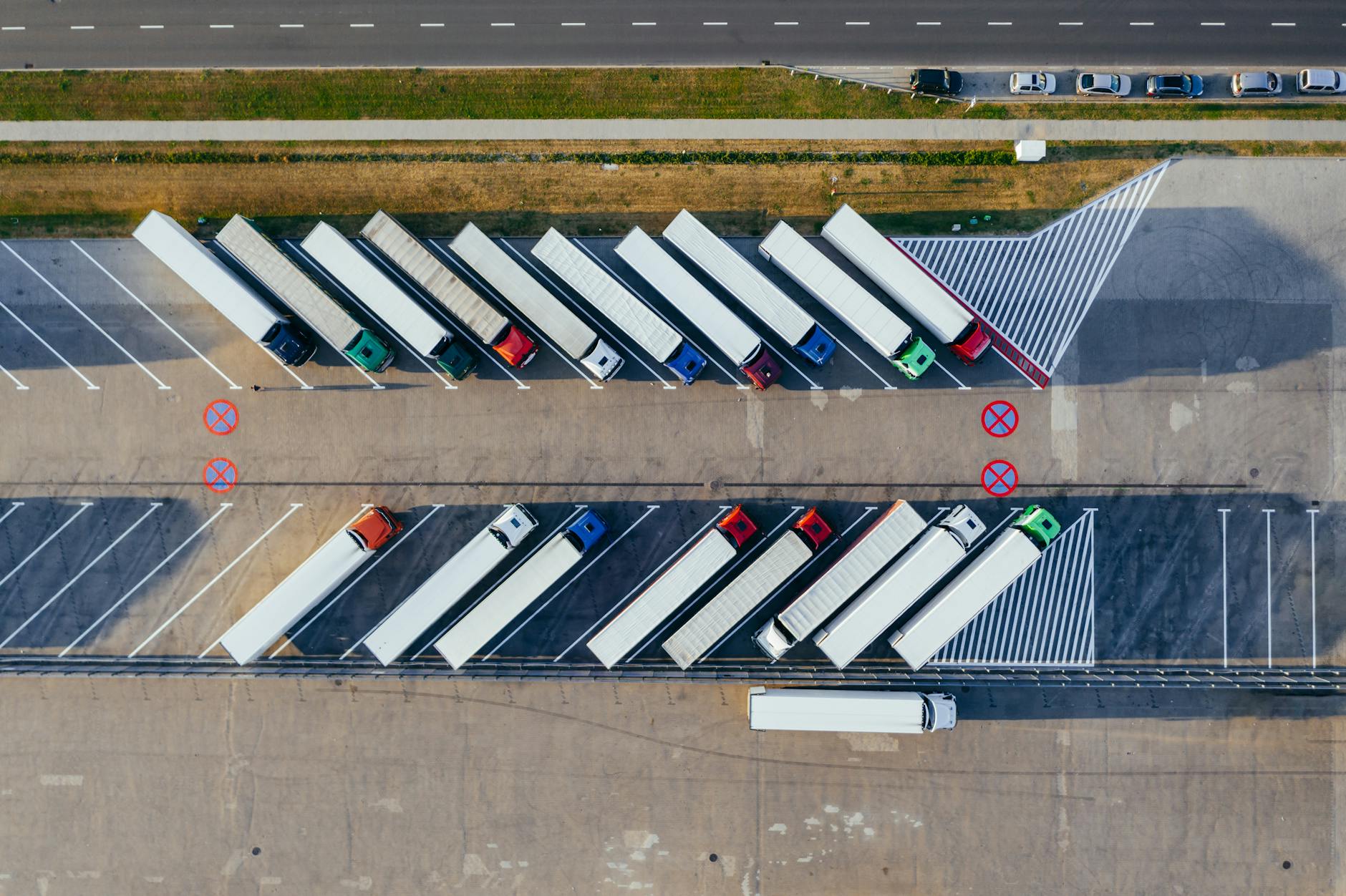
The spread of warehouses in suburban areas can meet opposition:

Photo by Thijs van der Weide on Pexels.com

For the second time in less than a year, the Geneva Planning and Zoning Commission is recommending the denial of a request to allow a 719,200-square-foot warehouse on the northeast corner of Kirk Road and Fabyan Parkway.

The commission voted 4-1 Thursday against Venture One Acquisitions LLC of Rosemont’s requests to amend the city’s comprehensive plan for the 55.62-acre site, changing it from rural single-family residential to light industrial, and approving a site plan.

If not warehouses at a site of suburban open space, what else could go there?

Walendziak said the east-side residents do not want more diesel pollution and truck noise.

“What the residents do want is residential,” Walendziak said. “We need affordable housing in Geneva. This is one of the last big sites left. … Housing for starting families, for seniors that they can afford to stay living here in Geneva.”

Commissioner Mim Evans also suggested that housing is the best use for the site.

“We need housing in this town, even if it isn’t technically affordable housing,” Evans said. “Housing is needed everywhere at every price point, at every level of density.”

If warehouses are the enemy – traffic, noise, out of character for a community due to their scale and industrial aspects – then housing may be more desirable. And housing for certain people groups, including families or young professionals starting out and older residents of the community who want to downsize and stay.

It may be helpful to look at the longer trends. Suburban residents and leaders have had heated debates about land use since at least the beginning of the postwar era. Big proposals could generate conversations about what the community could become. Community needs shift over time as social and economic conditions change.

At the same time, I wonder if there is extra urgency these days due to two factors. First, many suburbs have few large parcels left. This means that decisions like those above feel extra consequential. Second, housing prices are high enough in many places that people want to protect their housing values and extend housing opportunities to certain people.

Figuring what happens with this particular property might take years from additional discussions to planning to actual construction.

A common suburban playbook: zone for big lots, oppose apartments

A new book about Southlake, Texas discusses some of the mechanisms used to keep the community white:

These approaches are found across American suburbs. Start with zoning for larger residential lots which has several effects. It keeps houses further apart. It maintains a more rural image. It avoids having dense housing. It raises the price of homes as each lot is bigger and costs more and the houses can be bigger since there is more space to build.

Next, take apartments and why a good number of suburbanites do not like them. They are denser housing. Suburbanites prefer homeowners, who they think have more commitment to the community and to the property in which they live. They are cheaper and this may drive property values down.

Put these two together and suburbs can keep housing values up and limit who can live in a community. This is not an accident; suburbs often have particular residents in mind when they think about development and the future of their community.

Religion in the American suburbs: numerous religious buildings and buildings used by religious groups

Imagine a stereotypical suburban downtown in the United States. It has two story brick buildings with storefronts on the first floor. There are some offices and places to eat. A few people walk around while cars drive past parked vehicles. There may be train tracks and a station marking the ability to commute to the big city. Not far from such a streetscape are often church buildings of various denominations and traditions.

Photo by Jatuphon Buraphon on Pexels.com

Not all suburbs have downtowns. Many of the postwar suburbs are agglomerations of subdivisions, commercial areas, and industrial parks. But, religious buildings are there too. Go to a major intersection involving a highway; is there a megachurch nearby? Are there congregations meeting in former big box stores and in strip malls? There may not be an obvious walkable center to these suburbs but there are still plenty of congregations.

Religious buildings dot the suburban landscape. They may not be the most desirable land use with congregations not paying property taxes for their property and the opportunity costs of how valuable land might instead by used. Neighbors and local leaders may object to constructing a new religious building or a religious group altering an existing building. However, numerous residents attend these congregations. A number of these congregations and buildings are fixtures and centers in their communities. These congregations host services and can provide services to and space for the community.

These buildings range in size and architecture. Some of this depends on religious traditions. Some traditions have a particular approach to a building. Other traditions have more flexibility. People of faith in the suburbs may meet in a traditional-looking church – even as a member of a faith that is not Christian – or in a school, a movie theater, a mall, an office building, or a home. These approaches might be guided by financial resources or by concerns that certain styles may inhibit people from joining their community.

Thus, the American suburbs can include large Hindu temples, mosques and Islamic community centers, megachurches, and traditional religious buildings large and small. They can meet in old and new structures. They can move between locations as their congregations grows or shrinks, acquires resources or has difficulty finding resources.

Needing thousands of signatures and a ballot initiative to start building a new community

To build on rural land, the backers of a proposed new city in California need to collect signatures and get on the ballot:

Photo by Matthias Zomer on Pexels.com

Former Goldman Sachs trader Jan Sramek unveiled his closely guarded ballot initiative for the proposed community between San Francisco and Sacramento in January, a plan that envisions 20,000 homes, transit infrastructure, schools, jobs and green space for an initial 50,000 residents. He has since amended it twice to address concerns raised by Solano County and a neighboring U.S. Air Force base.

Thursday is the deadline for the county counsel’s office to give the ballot initiative a title and summary, which will allow signature gatherers to hit the streets in search of the 13,000 they need — and preferably thousands more as a cushion. The delays mean the campaign has just two months, not three, to collect signatures if they want to give elections officials the maximum time to verify them…

“We’ve been walking a line of making sure we get this right and also realizing that the clock is ticking,” he said. “At the same time, we believe that the amendments that we made to the measure will significantly help increase our chances of success in November, and it was definitely worth the additional time that it cost us to get it right.”…

California Forever could have avoided this had the campaign shared its proposal with local officials ahead of time, said Ross, the consultant. “It’s very much an outsider approach,” he said…

The initiative specifies that the development agreement will include the 10 guarantees made by California Forever, such as $400 million to help county residents and Travis Air Force Base families buy homes in the community and $200 million for the county’s existing downtowns. An environmental impact review would also be required.

A friendly reminder: you cannot just start building a city or community in the United States. You may have been able to do this in the days before states or even afterward with more undeveloped land and smaller populations. But, at some point, communities had to appeal for incorporation. Later, they could appeal for home rule or other recognition.

Today, land use is governed by zoning guidelines at the county and municipal levels. Any change usually has to be approved by some body of local government. Local officials and local residents may disagree with developers and property owners about the best use of land. Some proposals are turned down while others are approved.

It sounds like this proposal has multiple local governments steps to proceed through. Will there be enough signatures to get on the ballot? Will it be approved by voters? What will local (and state) officials do? There is a long way to go even before any ground is broken.

When you can build a suburban warehouse where an office building used to stand

With less demand for suburban office buildings, the void is being filled with warehouses. One example from the northern suburbs of Chicago:

Photo by Pixabay on Pexels.com

The old Allstate campus was a traditional suburban office environment with lush landscaping, reflecting ponds and thousands of workers. That property now is called the Logistics Campus, a massive industrial development underway in Glenview…

“The ability to put modern industrial in the middle of an established community — it’s unique in the sense that there will be very few other sites of this size that can replicate what we’re doing,” said Neal Driscoll, Dermody’s Midwest region partner.

Development of big-box industrial space in the Chicago region set a record in 2023 with construction of 70 buildings totaling nearly 33 million square feet, according to a recent report by commercial real estate company Colliers International.

The shift to warehouses in the suburbs has been going on for a while. What I noticed in this story was this thought: the unique opportunity to put warehouses (“modern industrial”) in “an established community.” Translation: many upscale suburbs would not chose to put in warehouses. They might generate noise and traffic. They do not provide many white-collar jobs. They are not attractive buildings.

But, empty office parks are also not desirable. Suburban offices or headquarters for Fortune 500 companies are attractive: quality jobs, status, most likely a glass building. No one working in these buildings and companies leaving these spaces leads to issues.

Thus, warehouses might now be found in communities that would not necessarily select them if they had such options. A set of warehouses might be preferable to vacant office buildings or unwanted office buildings. Figuring out the best land use or zoning in a suburb can be less about the most ideal use of land but rather about the possible alternatives at that moment.

What the White House alone can do to help homebuyers

Given the high cost of purchasing a home at the current moment in the United States, what can the President and the Executive Branch do on their own? In addition to supporting legislation for a new tax credit, the Biden White House has ideas about its own actions:

Photo by Aaron Kittredge on Pexels.com

Brainard suggested that President Joe Biden will not wait for Congress. The administration, for example, said that it was advocating for zoning reforms that will help unlock the construction of affordable homes.

“Our Department of Transportation is making billions of dollars in low-cost loans available for developing housing near transportation,” Brainard said.

The administration has also been trying to help first-time buyers who have struggled to gain a foothold into homeownership. Home prices were nearly 6 times the median potential first-time homebuyer income in the third quarter, according to NerdWallet’s recent analysis.

The White House pointed out that it was trying to reduce costs for first-time buyers through the the Federal Housing Administration program. The effort, it said, helped reduce mortgage insurance premiums by 0.3 percent.

Many presidents from the early 20th century onward have promoted homeownership in rhetoric and policy. These proposed actions would continue this pattern. Could a president even if elected if they did not support homeownership for the masses? See great quotes in homeownership.

Of course, the President and the Executive Branch can only do so much in this area. Yet, a number of important changes to housing policy have come through this branch. Will Biden make a significant change or is this about temporary salves? All of these proposals do not alter the fundamental economic realities that make current homes so expensive. They offer incentives or help around the edges. Addressing zoning from a federal level could prove interesting as it is such a local matter.

Addiction treatment center sign goes up but lawsuit with suburb continues

The saga of Haymarket Center attempting to open an addiction treatment facility in the suburbs of DuPage County continues:

Photo by EKATERINA BOLOVTSOVA on Pexels.com

Although the lawsuit remains unresolved, Haymarket has installed a new sign with its logo of a deep-rooted tree in the center of the east side of the building, facing I-290. Haymarket, one of the largest addiction treatment providers in the region, owns the property…

After two years and more than 35 public hearings, Itasca trustees in November 2021 unanimously voted against the project. The subsequent lawsuit alleged officials violated the Fair Housing Act and other laws prohibiting discrimination against people with disabilities, including patients in treatment for substance use and mental health disorders.

Village officials, however, are adamant that Itasca, a town of less than 10,000, lacks the infrastructure to support a treatment center that would serve more than 4,700 patients a year…

The lawsuit argues that Itasca violated the Americans with Disabilities Act and other anti-discrimination laws when it required that Haymarket submit a zoning application as a planned development rather than as a health care facility. As a result, Haymarket was held to a “higher and more onerous standard than would have been required had it been allowed to apply for a special use as a health care facility.”

This is a case I have followed as I think about undesirable land uses within suburban areas. (See earlier posts here, here, and here on this particular case and a recent post on undesirable land uses in suburbs.) I would guess many suburbanites would see such treatment centers are needed within a reasonable drive of themselves – from the article: “Last year, 150 people died from overdoses in DuPage, compared to 137 in 2021” – but few want it in their community.

As the lawsuit unfolds, is the suburb losing out by having an empty building? Suburbs also do not like vacant structures.

And if Haymarket loses, where do they go next to try to open a facility? Do they try a new strategy to sweeten the pot for a community?

The sorting of suburban residents either far or near to undesirable land uses

Ongoing concerns from residents about a possible second waste transfer station in the suburb of West Chicago highlights the issue of which suburbanites live further from or closer to undesirable land uses:

Photo by zydeaosika on Pexels.com

West Chicago is home to the county’s only garbage-transfer station — an in-between location before waste is hauled to a landfill. Earlier this year, city officials gave the green light to add a second facility that would be run by trash hauler LRS and bring 650 tons of solid waste a day and air pollution from hundreds of large garbage and semi-trailer trucks weekly to the city of 25,000…

On Thursday, lawyers for Alcántar-Garcia will argue to state officials that the trash facility should be blocked. 

The Illinois Pollution Control Board has the final say in the matter, and a panel of Gov. J.B. Pritzker’s appointees will be asked to decide whether the city of West Chicago met all the criteria to determine that the new garbage site will not harm the health of nearby residents. That final decision is expected early next year. 

West Chicago is around half Latino, and that raises questions for Alcántar-Garcia’s legal team as to why it is the only DuPage County community targeted for two of these waste sites. Other municipalities, including those that are largely white and affluent, would benefit. 

Perhaps a thought experiment might shed some light on this problem. Imagine a metropolitan region where land uses were randomly distributed. The land uses suburbanites tend not to like, those that generate noise, traffic, and are perceived to threaten property values are randomly placed. Airports, garbage facilities, apartments, drug treatment facilities, railroad tracks, warehouses, and more are spread out. What would happen?

Assuming this is a blank landscape beyond these land uses, where would development pop up? Those with resources and influence might just happen to live and congregate in places away from those land uses. If locations are at least in part determined by the ability to purchase and develop land, those with more resources can better compete for desirable land. And those with fewer options might live closer to those less desirable land uses.

Of course, we do not have random metropolitan landscapes or centralized bodies that could make wise choices about where less desirable but necessary land uses should go. Instead, we have ongoing patterns by race, social class, and durable local history that help guide land uses to certain locations and not others.

Why might suburban residents oppose the sale of park district land to a church? Here are some reasons

I have studied opposition to religious groups using buildings and land (article one, article two). One plan in the Chicago suburbs to sell park district land to a religious group has led to issues as nearby residents have filed a legal complaint in county court. Their concerns? From an online petition:

Photo by cottonbro studio on Pexels.com

1.  Allow Area N to remain a wetland and preserve the open space in line with the South Barrington park district’s overall mission.

2.  If Area N will be sold for a development, access should not be granted through Acadia Drive.   Acadia Drive is within a residential community that has no sidewalks and permitting access to the development through the residential community, without sidewalks (the Woods of South Barrington), presents a nuisance and would be grossly negligent on behalf of the Village and the South Barrington park district.  There is a walking trail (that is accessed from Acadia Drive or feeds residents onto Acadia Drive) where the access would be granted and children and residents are outside after school, on weekend and holidays.  These are all peak worship times.  The school also presents this same safety issues at the end of the school day where children who live in the residential community are walking home from being dropped off by the school bus.  The residential community should remain residential and not be subject to increased development traffic.  As repeatedly noted, this is a significant safety concern.  The safety of our children and residents should be top priority for the Village and the South Barrington park district.  

3.  Further we request access not be granted on Bartlett road at all to preserve the surrounding residential communities from the same safety concerns.

Additionally, some of those signing the petition offered reasons they do not want this particular church in their community.

While this is about a particular piece of land and a particular religious group working within a particular suburban community, these reasons are fairly standard from what I have seen in my research. They have concerns about losing open space/natural space and park land. They are worried about traffic in residential neighborhoods. They do not want a group that multiple commenters call a cult in their community.

This will work its way through the legal system and local government bodies. Suburbanites who do not want certain land uses nearby can be quite persistent in their efforts to make sure proposals they do not like reach a certain outcome. Whether they can guarantee the outcome they want is another matter.