Present disparities in homeownership by race and ethnicity help beget future disparities in homeownership by race and ethnicity

Differences in homeownership now contribute to differences later. Article one:

Photo by Thirdman on Pexels.com

American home buyers are older, whiter and wealthier than at any time in recent memory, with first-time buyers accounting for the smallest share of the market in 41 years, the National Association of Realtors found in its annual profile of home buyers and sellers.

White buyers accounted for 88 percent of home sales during the survey period, up from 82 percent during the same period a year earlier, reaching the highest level in 25 years, according to the association’s findings.

The new findings add weight to a hard truth that many young families have experienced as they struggle to save money to buy a home, competing in the most brutally competitive housing market in modern history: They have been elbowed out by buyers who have something they might never have — all cash…

“This is a feedback mechanism that can potentially supercharge wealth inequality in our economy,” said Austin Clemens, the director of economic measurement policy at the Washington Center for Equitable Growth, who studies housing inequities. “It’s hitting younger people, it’s hitting lower income people. And we also find that this is hitting Hispanic and Black households especially hard.”

Article two:

Though loan denials for both Black and white applicants have slowed since the 2008 financial crisis, the gap in denial rates for Black and white people applying for home loans has widened significantly. Today, 15 percent of Black applicants are denied mortgages while 6 percent of white applicants are denied the home loans, according to a report by the National Association of Real Estate Brokers, an advocacy organization for Black real estate professionals.

The housing market remains persistently and disproportionately challenging for Black prospective home buyers, the report’s writers say, although Black homeownership has been inching forward since the passage of the 1968 Fair Housing Act, which made it illegal to discriminate based on race or religion in all aspects of home sales and rentals. The full report will be released on Wednesday.

Nearly 45 percent of Black households own their homes, compared with more than 74 percent of white households. But in 1970, the gap in homeownership between Black and white households was about 24 percent. Today, it is 30 percent.

The disparity in homeownership rates, as well as widespread appraisal discrimination, are compounding the massive income gap between Black and white households and thwarting Black Americans’ efforts to create generational wealth, the report notes. In 2020, the average white family held 12 times the wealth of the average Black family, and home equity is the largest source of wealth for both Black and white households, the report says.

If a potential buyer cannot purchase now, this has ramifications for years. And if someone could not purchase decades ago, this has implications right now.

Given the American emphasis on homeownership, even by presidents, I am a little surprised there has been limited public conversation about more assistance for first-time buyers. Are there ways on a broader scale to help people purchase a first home that helps increase equity later? With starter homes in low supply, help is needed. And addressing disparities now could help close gaps later.

Also noting here: good homes are needed even if the primary goal of owning a home is not to generate wealth, a relatively recent shift in how Americans view dwellings. Where people live is tied to all sorts of outcomes and experiences.


Need to conduct a census? Invent house numbers

In Democracy’s Data, historian Dan Bouk explains how the process of counting people led to the development of house numbers:

Photo by Vitaly Kushnir on Pexels.com

Numerical addresses owed their very existence to censuses. House numbers are essentially names state offices assigned to lodgings. According to one historian, the idea of marking houses with consecutive numbers dates to the desire of Enlightenment monarchs – like the Austrian Maria Theresa – to make a better count of men who could be conscripted into the military. Houses were also sometimes numbered to count minority groups, like the Jews of Prague in one of the earliest cases in 1727, or to make it easier for rulers to find places where soldiers could be billeted. (This practice of quartering soldiers in private homes was common enough, and widely enough disliked, to be proscribed during peacetime in the U.S. Bill of Rights, in the Third Amendment.) Odd-numbered houses on one side of the street, even-numbered houses on the other, had to be invented too. Philadelphia, the nation’s temporary capital at the time, alternated odds and evens in order to make it easier to conduct the federal census in 1790. New York City copied its neighbor in 1793, as did Paris in 1805. Though people quickly came to rely on numerical addresses to find one another, send letters, or navigate strange and growing cities, those uses were accidental benefits of an apparatus meant to serve the data makers in imperial or national bureaucracies. (58)

It is hard to imagine a world without numbered street addresses today. Perhaps it is just the scale of communities; how would you differentiate between the thousands of addresses within a small geographic area? Street addresses are not the only way properties are identified. Communities have categorization systems for parcels. The way current addresses are set up requires a zooming in approach: you start with the community or zip code, find the street, and then identify the number. Of course, there could be a system that does not use or need numbers, but it is hard to imagine such a system in the quantified world we inhabit.

More broadly, numbers are helpful with addressing particular social issues. Conducting a census helps with social matters like taxation, resource allotment, and more. Having numbers for addresses helps enable counting but also aids mail delivery and others seeking to find particular addresses.

Needing to study both facts and perceptions, NYC crime edition

How do we put together data on crime and people’s perception of crime?

Photo by cottonbro studio on Pexels.com

Emotional stories speak louder than facts, perhaps especially in a city as storied as New York. Writing of the city’s crime narratives during a much more dangerous era, Joan Didion wrote of observers’ “preference for broad strokes, for the distortion and flattening of character and the reduction of events to narrative” — in other words, the nearly universal desire to make stories out of feelings, and then believe them. And when people ask me if “New York is safe,” they don’t want to know about numbers. They’re asking about feelings.

How people perceive crime, and how politicians represent it to the electorate, has less to do with data and more to do with vibes. In October, while fact-checking the claims of rising violent crime that drove many midterm campaigns, the Pew Research Center’s John Gramlich noted that “the public often tends to believe that crime is up, even when the data shows it is down.” Data from the DOJ’s Bureau of Justice Statistics shows that there’s no increase in violent crime across the board in the US, and yet for most years in the last three decades, the majority of America adults thought there was more crime nationally than the year before, even though the opposite was true. Indeed, over three-quarters of those polled in October by Politico/Morning Consult said they thought violent crime was rising nationally and 88 percent said it was increasing or remaining the same in their own communities.

This is why sociologists and others need to study not just what is happening, the facts, and the real numbers. Perceptions also matter and may matter more so as they can drive emotions, behavior, and policies.

This is clear consistently in the area of crime and violence where what people think is thinking may not match reality. For decades, particular perceptions about crime have influenced actions. See, for example, how it plays out in suburban settings. Instead of zooming out and looking at the big picture, certain narratives can prove powerful and persistent.

Thus, presenting facts is not always an effective approach. In this particular case, what would be an effective narrative that would better match the figures?

Address crime and violence in cities by “addressing extreme segregation by race, ethnicity, and income”

Sociologist Patrick Sharkey suggests taking a long view of crime and violence in American cities:

Photo by Sasha Prasastika on Pexels.com

To answer this question requires thinking less in terms of months and years, and more in terms of decades. It requires thinking less about specific neighborhoods and cities where violence is common, and more about larger metropolitan areas where inequality is extreme and the affluent live separated from the poor. And it requires thinking less about individual criminals and victims, and more about bigger social forces, including demographic shifts, changes in urban labor markets, and social policies implemented by states and the federal government. All told, nearly six decades of data on violence in Chicago’s neighborhoods point to an unmistakable conclusion: Producing a sustained reduction in violence may not be possible without addressing extreme, persistent segregation by race, ethnicity, and income…

But we must also expand outward in time and space, and consider why American neighborhoods are vulnerable to violence. Zooming out can help reveal the truth about violence in our cities: This is a whole-society problem, not one isolated in the neighborhoods where it roars. Addressing it requires our whole society’s concern, investment, and attention, and that attention must be sustained well beyond the periods when gun violence is surging.

This is a good example of a sociological approach. Look at deeper, underlying issues. Consider patterns and relationships across contexts and time. Analyze evidence across decades. Think about institutions, structures, and networks at multiple levels (neighborhood, city, nation). Examine multiple causal factors and how they interact with each other.

Whether such a perspective is welcomed or utilized is another story. For many social issues in the United States, it is easier for the public to look for the one factor that many believe will address the concern. Or, it can be difficult to wrestle with longer histories and patterns that involve many. Some might ask if this is just academics making something more complex than it needs to be or they might want proof that a sociological perspective is helpful.

I hope to explain something similar when teaching sociology, whether in Introduction to Sociology to Statistics to Urban Sociology. As Americans consider society, what does a sociological approach look like and bring to the table? At the least, it can help broaden perspectives beyond individualistic mindsets or ones that only highlight a few individual and social forces. At its best, it can be a lens that sheds light on how a large-scale society actually operates with institutions, structures, networks, and relationships shaping contexts and lives.

Casinos in the Chicago suburbs did little to improve downtowns

The Chicago Tribune Editorial Board suggests casinos that opened several decades ago in multiple suburban downtowns did not help revive the areas:

Photo by Pixabay on Pexels.com

Remarkably, Aurora was on board, with city officials calling the new plan “one of the most significant developments in the history of Aurora,” which is exactly what they said when the riverboats came to downtown and were compared by the then-mayor to the coming of the railroads. Penn Entertainment also announced a similar plan for the casino in downtown Joliet, which it also owns.

Better, it said, for the casinos to be near the expressway for easier access. But what about the promises made to downtown Aurora and Joliet?…

Illinois casinos, it seems, have become like NFL franchises, supremely skilled at lobbying and dangling the promise of revenue to cash-strapped cities but on their own ever-changing terms.

Was the Hollywood Casino good for downtown Aurora? It’s debatable. The charming riverwalk got finished and area landscaping improved. The Paramount Theatre came back to life, but on its own merits. And on a recent Sunday night, those new restaurants in downtown Aurora were either closed or mostly empty. The action, it felt, had shifted elsewhere.

Numerous suburban downtowns have struggled for decades as activity moved outward to new neighborhoods and communities plus shopping malls and strip malls. Thus, when an opportunity presents itself, like a casino, many communities would be interested. A new attraction or business or development could help attract visitors, residents, and firms while bringing in new revenues.

Except building thriving downtowns in the suburbs is complicated. The suburban communities highlighted in this editorial are unique industrial suburbs outside of Chicago. Firms and jobs left. Suburban sprawl continued. The riverfront is still there. Other suburban downtowns thrived like Naperville or Arlington Heights, both of which are different kinds of suburbs.

While this is a tale about specific developments, it sounds like a generic development pattern: developer and/or company comes in with grand plans, community agrees to help make it happen, the developed property enriches the property owners, and if another location emerges where more money can be made, the development might move.

As the casino moves from downtown Aurora, what plans does the large suburb have to grow its downtown? What is the new attraction or set of steps to keep the downtown going?

The steps to moving a house

Need to move a house? Here is one description of the process:

Photo by Artem Podrez on Pexels.com

First, engineers must assess if the house is structurally sound to move. Once that’s determined, Mr. Davis said, “then physically we come in and typically excavate around the house and clean the perimeter of the house.”

Following the excavation, the next step is to “jackhammer or cut holes in the foundation and slip a grid of steel under the house,” he added. “I have to design the length and weight of the steel to hold the structure without failure. I need to work out weight of structure before I start to position the jacking and lifting points and give my best estimation of what’s necessary to hold the house safely when it’s under my control.”

If the home isn’t undergoing renovations, it can be lifted or moved with household goods, including furniture in place, because that weight is a small fraction of the total weight, which can be many tons. (The furniture does not have to be secured, Mr. Davis said, but he does suggest taking pictures and mirrors down, along with other fragile items.)…

The home must also be disconnected from utilities before the relocation has begun; gas and sewer lines must be cut and capped as well. Once it’s in its new position, they are reconnected.

I have wondered how many houses have been moved in such a way as it would be very difficult to tell after the fact if a home had been moved to the spot.

Many people who have moved might love to hear that this method does not require moving household goods. You can just move your house instead! But, I imagine the cost plus the process – needing to find land, obtaining permits, etc. – make this an unrealistic way to avoid packing.

If the cost of house moving could be reduced, it would be interesting to consider mixing more houses in different locations. In the United States, many residential neighborhoods contain homes roughly constructed at the same time. But, if houses could be more easily moved, there could be more styles and sizes interspersed through residential areas.

That time I almost had to ride my bike forcefully through a flock of wild turkeys

For a season in college, I rode regularly on the Prairie Path through a more rural area. One day, I made my way down the quiet path at a fairly rapid pace. Up ahead, I spotted something obstructing the roughly six foot wide path. I could not make out what it was.

As I got closer, I could see the obstruction was moving. It was not one obstruction; it was a group of something. I had occasionally seen wildlife along the edges of the path. I had seen plenty of people. Do all the dogs walked along the path count? This was something different.

Photo by Vlad Ioan on Pexels.com

It was a flock of turkeys and they were blocking the path. Would they move? They did not seem to take much notice of my approach. Could I ride through?

I do not recall exactly what happened next. I slowed down a bit. I may have made some noise. The turkeys moved a little. Just enough so that I could ride through at a few miles per hour. They look at me, I looked at them. And then I was back on a quiet path with a few more miles to go before reaching my destination.

Even though I have ridden that part of the Prairie Path dozens of times, I have only encountered a group of turkeys once. And we both lived to tell the tale.

Turning a busy road into a “smart corridor”

The Illinois Department of Transportation has plans to create two new “smart corridors” along major suburban roads:

Photo by Kaique Rocha on Pexels.com

The improvements include: traffic signal upgrades to modernize the corridors, synchronizing signals, dynamic message signs in strategic spots, and accommodations for pedestrians, officials said.

The Route 64 revamp stretches between Smith/Kautz Road and Route 50 (Cicero Avenue); the Route 56 redo runs from Route 59 to York Street.

For walkers and transit users, upgrades to sidewalks, crosswalks and pedestrian signals are coming, plus new, strategically located bus stops that expedite traffic flow.

“The long-range idea is to get those corridors working as efficiently as possible and to help support transit and buses,” IDOT District 1 Program Development Engineer John Baszek said.

These are busy roads – tens of thousands of vehicles each day – with high rates of speed. The project seems to have two goals: (1) improve traffic flow and (2) facilitate use beyond cars and trucks. Can both be done at the same time?

Not only have I driven these roads, I have biked along both roads. There is a lot that would have to be done to make this feel like a safe and pleasant experience for bicyclists and pedestrians. Having more cars flowing more efficiently does not seem like it necessarily fits with this.

As a driver, synchronized lights seem to make a lot of sense. On some of the regular routes I drive, I am pretty sure the lights are intentionally not in my favor; i.e., I turn left at the green arrow from one major road to the next and am immediately met with a red light. Keeping traffic flowing would seem to be good for congestion and the environment (through avoiding idling and stopping and starting).

The difficulty in getting a number on how many housing units needed in the United States

One journalist set out to find out how many housing units the United States needs. The answer was complicated:

Photo by Roberto Nickson on Pexels.com
  • Looking at the number of American households and the number of vacant housing units, Freddie Mac, the government-sponsored purchaser of mortgage-backed securities, estimates a current supply shortage of 3.8 million units, driven by a 40-year collapse in the construction of homes smaller than 1,400 square feet.
  • The group Up for Growth also arrived at an estimate of 3.8 million, using data on the total demand for housing and the overall supply of habitable, available units.
  • The National Association of Realtors compared the issuance of housing permits with the number of jobs created in 174 different metro areas. It found that only 38 metro regions are permitting enough new homes to keep up with job growth; in more than a dozen areas, including New York, the Bay Area, Boston, Los Angeles, Honolulu, Miami, and Chicago, just one new home is getting built for every 20-plus jobs created. The NAR estimates an “underbuilding gap” of as many as 7 million units.

These numbers draw on data such as vacancy rates, household-formation trends, and building trends. But none of the estimates capture what I’ve come to think of as the affordability gap: the difference between the housing we have and the housing we would need in order to ensure that working-class people could once again live in our big coastal cities for a reasonable cost. Freddie Mac does not purport that building 3.8 million units would make New York accessible to big middle-class families and end homelessess in San Francisco. The National Association of Realtors is not contemplating whether janitors can walk to work in Boston…

To come up with that estimate, the two economists built a complicated model that assumed Americans could move wherever their wages allowed and the housing supply would adjust as it would in a place with typical permitting standards. In such a world, they estimated in some associated work, 53 percent of Americans would not live where they are currently living. San Francisco would have an employed population 510 percent bigger than it does today—implying an overall population of something like 4 million, rather than 815,000, with 2 million housing units instead of 400,000. The Bay Area as a whole would be five times its current size, the economists estimated. The average city would lose 80 percent of its population. And New York would be a startling eight times bigger. Some back-of-the-envelope math (mine, not theirs) suggests that the United States would have—deep breath here—perhaps 75 million more housing units in its productive cities than it currently has.

Considering such big numbers can be both helpful and daunting. The sheer size of these figures – multiple millions to tens of millions – highlights the scope of the problem. Housing is not a small issue; it is a large issue that needs addressing. Big numbers can help convince people this is an important social issue to address. On the other hand, these figures are daunting. That is a lot of housing units to consider. How can small efforts contribute to such a big need? Who can address this?

Even if the various methods and experts above do not agree on the same numbers, together they suggest much needs to be done. Can we get a commitment from states or cities to approve more units proportionate to their populations? I could imagine some kind of pledge drive and counting system to see the progress toward a sizable goal. Or, how about a long-term plan on the scale of a Manhattan Project or a space race to get units built? Of course, addressing housing at the federal level is difficult.

Does predicting bad Thanksgiving traffic and airport congestion change people’s behavior?

Each year, INRIX releases a report regarding Thanksgiving congestion. Here are predictions for the Chicago area:

Photo by Miguel Barrera on Pexels.com

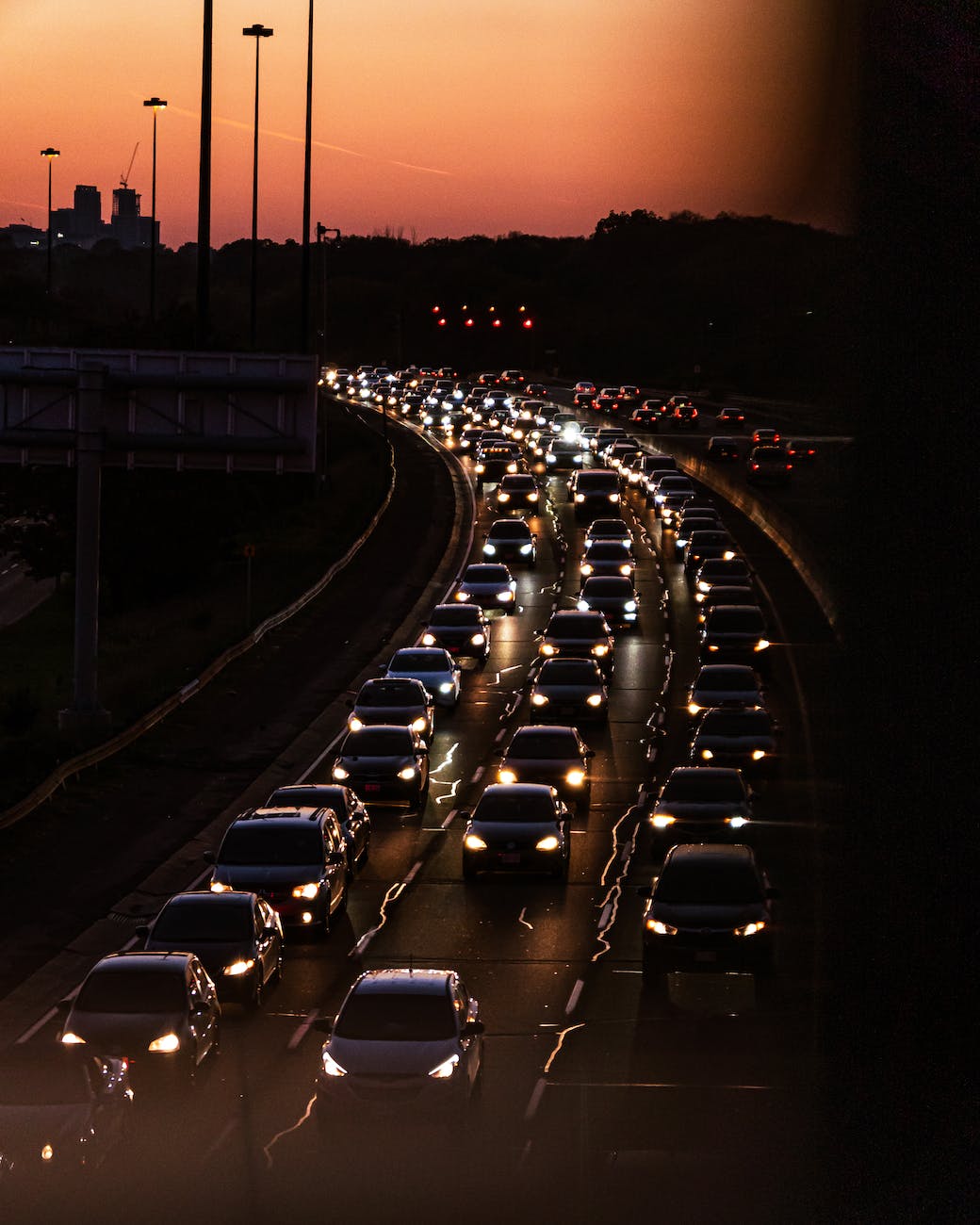
Along with Chicago, highways in Atlanta, New York City and Los Angeles will be the busiest, according to data analytics firm INRIX. To avoid the worst congestion, INRIX recommends traveling early Wednesday, or before 11 a.m. Thanksgiving Day…

The report predicts almost double the typical traffic along a westbound stretch of Interstate 290 from Chicago’s Near West Side to suburban Hillside, peaking between 3 and 5 p.m. Wednesday. Significant additional congestion is expected Wednesday along the same stretch of eastbound I-290, with an anticipated 84% spike in traffic…

The outlook isn’t much brighter for travelers flying out of the city. Chicago-based United Airlines expects O’Hare to be its busiest airport, with more than 650,000 customers anticipated for the holiday. It reports Sunday, Nov. 27, will be its busiest travel day since before the pandemic, with 460,000 travelers taking to the skies. Nationwide, the airline awaits more than 5.5 million travelers during the Thanksgiving travel period, up 12% from last year and nearly twice as many as in a typical November week…

“Regardless of the transportation you have chosen, expect crowds during your trip and at your destination,” Twidale said. Travelers with flexible schedules should consider off-peak travel times to avoid the biggest rush.

The last paragraph quoted above might be key: given the predicted congestion, will people choose different times and days to travel? And, if enough people do this, will the model be wrong?

Transportation systems can only handle so many travelers. Highways attempt to accommodate rush hour peaks. Airports try to handle the busier days. Yet, the systems can become overwhelmed in unusual circumstances. Accidents. Pandemics. Holiday weekends where lots of people want to go certain places.

If enough people hear of this predicted model, will they change their plans? They may or may not be able to, given work hours, school hours, family plans, pricing, and more. These are the busiest times because they are convenient for a lot of people. If all or most workplaces and schools closed for the whole week, then road and air traffic might be distributed differently.

I would be interested in hearing how many people need to change their behavior to change these models. If more people decide they will leave earlier or later Wednesday, does that mean the bad traffic is spread out all day Wednesday or the predicted doomsday traffic does not happen? How many fliers need to change their flights to Saturday or Monday to make a difference?

If people do change their behavior, perhaps this report is really more of a public service announcement.