
More people are stating or acting on their opposition to Flock cameras along roadways:
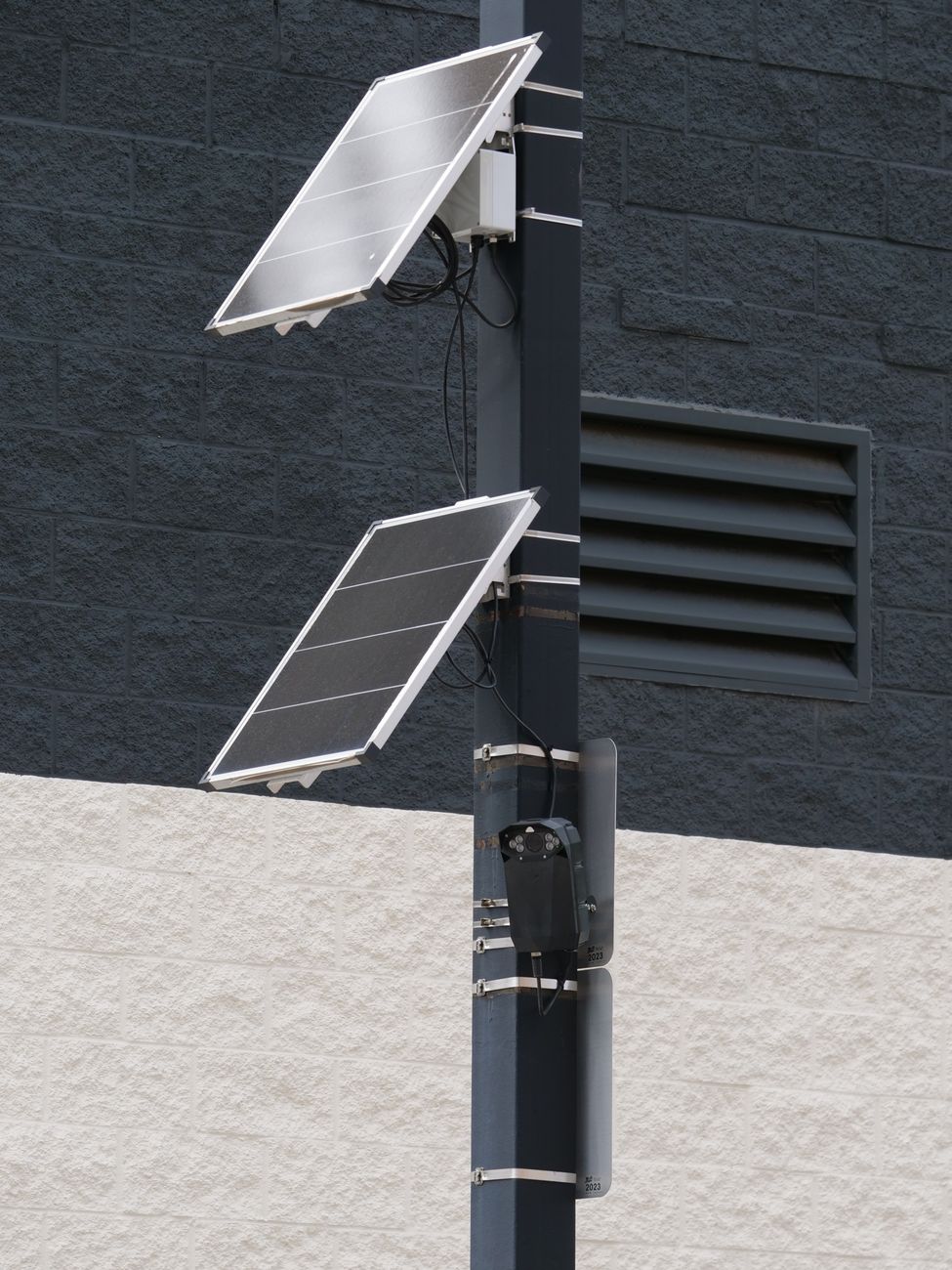
Over the last few months, people have cut down surveillance cameras owned by the company Flock Safety with an electric saw in upstate New York, thrown paint on them in Oakland, California, and rammed a truck into them in Idaho. One man in Florida sits in a lawn chair holding up a piece of cardboard on a pole to block the camera’s view. City governments have joined in by deactivating the cameras or canceling contracts with Flock in Fort Collins, Colorado; Eugene, Oregon; Madison, Wisconsin; Knoxville, Tennessee; Syracuse, New York; and Walla Walla, Washington…
Flock says it has 120,000 automated license plate reader (ALPR) and pan, tilt, and zoom (PTZ) cameras deployed throughout the US, capturing tens of billions of data points a month. Flock’s ALPRs automatically scan every license plate that passes them, while the PTZs record live footage that can be reviewed and analyzed. Because Flock cameras are all connected, the result is a nationwide latticework of recorded activity. Across the majority of states, a police officer in one state can be alerted if a car they’re looking for pops up in another and can inform the local authorities…
Over the last few months, Flock has been making headlines for all the wrong reasons. Police have been caught using the system to stalk exes and colleagues, and journalists have reported that, contrary to the company’s claims that it only logs vehicles, the cameras can be used to track people.
I wondered in October 2025 why there was so little opposition in suburbs to license plate cameras. In that post, I suggested one reason suburban residents may not oppose the cameras is because of fear of crime.
As more Americans now respond to the cameras, which communities will end up cancelling contracts and which ones will keep them? The list above in the first paragraph involves smaller big cities. Does this mean opposition to cameras is primarily in such communities? Or would opposition to cameras drop (1) in places with higher crime rates or (2) in places with higher fear of crime?
It will also be interesting to see how local leaders in different kinds of communities respond to public pressure. Who will resist opposition and what reasons will they give? The company offers a defense of their product and its use; whether local leaders use similar lines remains to be seen.


Pingback: Resistance to Flock cameras but willingness to add doorbell cameras and maybe toothbrush cameras? | Legally Sociable