What is suburban in the “Suburban Fury” of a woman who attempted to assassinate President Ford in 1975?

I recently watched the 2024 documentary Suburban Fury. With “suburban” in the title and promising an interesting story, I wanted to see the documentary.

Vice President Gerald R. Ford by NASA Johnson is licensed under CC-BY-NC 2.0

Sara Jane Moore, the woman behind an assassination attempt, had a strange life. She changed names, worked for the FBI, was married multiple times, and tried to kill a president.

But I think the use of “suburban” may not mean what people expect. Moore lived in the suburbs. She had family life with children. She worked office jobs.

From what I saw in the documentary, this suburban life is not what prompted her to act. She does not explain that she was frustrated with a humdrum suburban existence.

Rather, the suburban in the title refers more to how people would not have suspected a suburban women to try to assassinate the president. As Moore recounts the steps in the day of her assassination attempt, she notes that she dressed like any suburban matron so as not to draw attention. She does not stand out in the crowd that gathers to see Ford.

There is some footage of the neighbor who sold her the gun she uses in the assassination attempt. He describes how Moore appeared to be in her right mind and he did not suspect any foul play. I have seen numerous similar news stories where neighbors can’t believe a community resident could commit such acts.

Is the “Suburban Fury” then that Americans would not expect a resident of the suburbs – places where the American Dream is to be found – to shoot a president? Moore’s story was convoluted but the suburbs are not supposed to produce violent criminals, let alone people who try to take out the leader of the free world.

The suburban dimension to “The Christian Women Who Power the American Right”

Sociologist Katie Gaddini argues in Esther’s Army: The Christian Women Who Power the American Right that conservative women in the suburbs helped Donald Trump become president twice. Here is how she describes “the white suburbanites” (the title for Chapter 6 in the book):

Photo by David Kouakou on Pexels.com

The debate Rebekah had with her Bible study group exemplifies how American suburbia has emerged as a political battleground for the Left and Right. Poised between the Republican-dominated rural areas and the Democratic stronghold of many American cities, the suburbs have been up for grabs since the Republicans lost their dominance there in the 1990s. The partisan nature of suburbia means that when political polarization ripples across the nation, it often feels acute there. This heightened sense of division was especially pronounced during the peak of the pandemic. (136)

But that’s where the commonality between my story and that of the women I researched ends. I moved to Boston in 2008 and continued to hop from one city to another over the next fifteen years: from Boston to Johannesburg to San Francisco, Madrid, London, and then, finally, returning to the American suburban sprawl of my childhood. Along the way, I left evangelicalism, and the Republican party. Meeting women like Rebekah, around my age, who shared a similar background, help up a mirror of what my life might have looked like if i had never left. Maybe I, too, would have taken up the mantle alongside other White middle-class Christian women to defend the suburbs from outsiders. (139)

“I wept when I heard him say that he would protect us,” a wealthy Christian suburban woman told me after hearing Trump at a rally in Coachella, a city in California. Among the diverse groups of people who brought Trump back to the White House in 2024, White Christian suburban women were some of his most enthusiastic supporters. His message of preserving the version of suburbia they knew and loved resonated with them. A solid 60 percent voted for him, Rebekah and Aimee included. (150)

In this sense, Trump endorses suburban women’s role. When he vows to protect the suburbs through strict immigration and housing policies, he is promising to maintain the racial and class homogeneity that has long defined American suburbia. His message validates White Christian women’s decision to live there, framing it as a moral reward. (154)

When Americans started moving to the suburbs in large numbers, first at the end of the 1800s and early 1900s and then more so in the postwar era, commentators expected the suburbs to be conservative. These were suburban residents with means, homeowners, people who emphasized family life away from the big city. (This addressed broader patterns but did not consider the broad range of people and communities across suburbia).

As Gaddini notes, the suburbs have changed as they are more diverse now in terms of race and ethnicity, social class, and religion. This has intersected with politics as plenty of suburbanites vote for Democrats and some suburban communities pursue what might be perceived as more liberal policies.

By considering gender among conservative voters, this book contributes to understanding the American suburbs. Gaddini argues conservative suburban women saw their suburban life and communities as under threat, whether from political liberals and their policies or responses to the pandemic or discussions and actions related to race. The suburban communities to which they had moved – and they would often see as having done so by their own efforts – could decline and they did not want to see this happen. They wanted to hear a national leader push back and say that the idealized suburban life would be defended.

What happens to these more conservative suburban pockets and communities will be interesting to see in coming years. Part of the history of the American suburbs includes exclusion and this will likely continue by a variety of means, including by politics and religion.

More manufactured homes approved for suburbia

One response to rising housing costs in the United States is moving to approve manufactured housing for suburban communities:

Photo by Nick Adams on Pexels.com

For decades, manufactured housing has mostly been limited to trailer parks and rural properties. Now, a few developers are pitching factory-built homes as the way of the future, trying to sell higher-quality homes in a new context: the typical American suburban subdivision…

Stigmatized as low-quality, less-safe housing for the poor, factory-built housing was banned for decades by many towns and cities. But as soaring home prices prompt a search for affordable options, some policymakers have been willing to give manufactured homes a new look.

Villa’s new neighborhood is one of a few dozen similar experiments across the country. The major manufacturer Clayton said it has sold more than 2,000 of its “cross-mod” homes, which are partially factory-built and partially site-built, to 23 subdivisions in 10 states…

“They had a really bad reputation, and a lot of localities put in exclusionary zoning to prevent them from being used in neighborhoods,” said Rachel Siegel, a housing analyst at the Pew Charitable Trusts who believes that modern manufactured homes are of a much higher quality than those of past decades and should be allowed in more places. “We see empty lots that just don’t get filled. We see really old, unrepairable homes not get taken down and replaced because the cost to do a site-built home is just too high. … There’s almost no other way right now to build smaller homes that people can truly afford, that are new, outside of manufactured housing.”

The article suggests this is possibly a new trend or still in experimental mode. The need for affordable housing may push more communities toward changing their zoning and regulations. Many current residents and potential future residents want cheaper quality options. It would be interesting to see more residents and possible residents advocate for this kind of housing.

At the same time, I suspect wealthier and higher-status communities would be slower to approve manufactured housing. Reputations and stigmas can be hard to overcome, particularly if current residents have resources to afford more expensive housing options. This is another way certain communities can distinguish themselves from other suburbs; they are compromising in order to have affordable housing but we do not need to do that.

More drone deliveries coming to suburban neighborhoods

Amazon is expanding delivery via drone to more metropolitan markets in the United States:

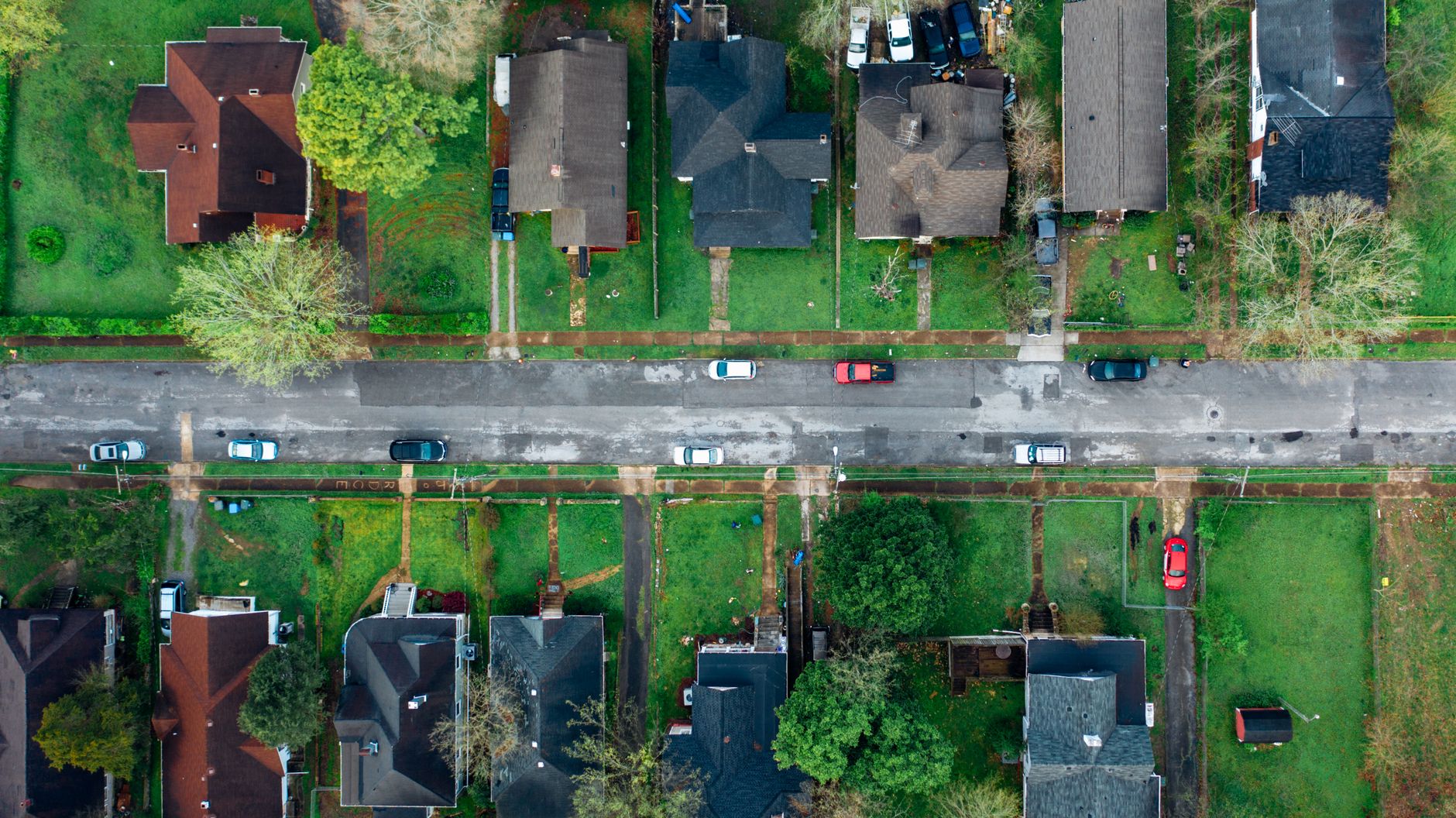
Photo by Matthew on Pexels.com

Amazon said Wednesday it plans to offer drone deliveries in nearly 500 U.S. cities and towns by the end of the year, a sign of momentum for a project that’s been slow to develop since founder Jeff Bezos first laid out his vision for the service almost 13 years ago…

Carbon projected at the time that Prime Air will make 1 million deliveries this year, and said Amazon has the “highest demand drone delivery service in the industry.” The company said Wednesday it made hundreds of thousands of deliveries so far this year, and makes thousands daily…

Amazon in 2024 received a critical greenlight from regulators to conduct long-range drone deliveries, and over the past year has expanded beyond initial markets near Dallas and Phoenix to 11 metro areas, with six other locations coming online soon. Residents in some of those markets continue to raise concerns about drone noise and privacy and how those issues could hurt property values.

And there are other drone delivery competitors in this space:

It’s a nascent space, but one where Amazon faces competition. Alphabet’s Wing crossed 1 million commercial drone deliveries earlier this year, and it operates in 20 U.S. markets through partners like Walmart and DoorDash. Drone delivery startup Zipline operates on four continents and has made 2 million deliveries so far.

Suburbanites tend to like private, quiet spaces. The ideal of the separate single-family home in nature is still alive and well.

Would drone deliveries interrupt this? I imagine drone deliveries will tend to be to the front door of an address – this is the more public facing side – but suburbanites might still see and hear drones overhead. The stillness of the backyard might now include the sound of a drone making a delivery to the front door. Looking up at suburban trees and skies might now include seeing a tethered delivery taking place nearby.

Americans have accepted all the trucks and traffic that go with the modern online economy and all its online ordering. If they can order something and have it within a day or two, adding to the roads is an acceptable tradeoff. Will they feel the same way about drones? Or perhaps the drones could be sold as limiting the need for trucks and street deliveries; roadways will be clearer for Americans to drive on because delivery congestion is now overhead.

Perhaps some HOAs could try to ban drone deliveries to individual address and instead have a delivery pad or station for a neighborhood. Perhaps those with more space and/or resources could create a delivery space for drones at their preferred location so they can keep the drones out of sight.

The 15 “State-Designated Cultural Districts” in Illinois

Several years ago, the State of Illinois started a program: “State-Designated Cultural Districts are communities, towns or specific geographic areas that have a distinct shared historical and cultural identity that binds the community together.” The goals of the program include:

Promote distinct historical and cultural communities

Encourage economic development and entrepreneurship

Encourage the preservation and development of historic and culturally significant structures, traditions, and languages

Foster local cultural development and education

Provide a focal point for celebrating and strengthening the unique cultural identity of communities

Several thoughts:

  1. Such districts combine historical preservation, development, and cultural tourism. The program provides funds to help communities have an officially designated district that they can then maintain and advertise. To have an official designation can help a place stand out among all the other places in Illinois.
  2. It would be interesting to visit all of these districts and see how they operationalize the “cultural” dimensions. If culture in the sociology of culture is “patterns of meaning-making,” how do these places demonstrate meaning-making for residents and visitors? This could overlap with but might be quite different from what people might expect from “cultural sites” which could include arts, entertainment, and museums.
  3. The map of the designated districts shows a mix of locations across the state. The program has only been around for a few years but it looks like there are plenty of places that could have such designations in western and northern Chicagoland, the western part of the state, and the Illinois portion of the St. Louis metropolitan region.

One reason Illinois has so many local governments: old rules limited how much debt governments could take on

Illinois has thousands of local government bodies. Here is one reason for the large number:

Photo by Mohamed hamdi on Pexels.com

Illinois was not unique in its decentralized, generous incorporation and annexation terms or in witnessing the end of the city’s physical expansion in the early twentieth century, phenomena that collectively encouraged fragmented jurisdictions in many metropolitan areas. Relatively unique, however, was Illinois’s strict constitutional limit on local debt, which prompted many suburbanites to create new governments rather than expand the charge of existing ones when new needs arose. Until amended in 1970, the Illinois Constitution restricted local borrowing to less than 5 percent of assessed valuation. This restriction made it difficult to finance big projects, especially for governments in small or rapidly growing places where property assessment increases often lagged years behind the need for services and infrastructure. Residents created new school districts to build high schools, for example, rather than extend elementary school districts’ responsibility into the upper grades (as in most other states). They also created a wide array of special-purpose governments to perform specific functions (like fire protection, building and managing parks, and managing sanitation) rather than expanding municipal functions. By 1970 there were 1,239 local governments in the six-county Chicago region: 280 incorporated municipalities, 121 township districts (with responsibility over unincorporated territory), 384 school districts and 449 special-purpose districts.”

On the one hand, you would not want small government bodies amassing large debts. How would they pay it off? How might servicing the debt affect their ability to provide local services?

On the other hand, this paragraph describes the downside of the debt limits. Have new needs or need more resources? Form a new government body in order to take on debt and pursue your goal.

Once these government bodies are established and raise money, they take on a life of their own. They live out their mandate. They provide local services. They gather resources and build their capacity. They have defenders. For ones formed before 1970, they have over half a century of inertia and history.

Even with changed rules, the number of Illinois local governments remains high. It will take a major sustained effort to reduce the number.

What Chicago suburbs could do in response to “unprecedented” storms and large number of tornadoes

The Chicago area has experienced a lot of severe weather this summer. This includes a large number of storms:

Photo by Zeeshaan Shabbir on Pexels.com

The damaging storms that rolled through the suburbs Tuesday marked the 329th time the National Weather Service office in Romeoville has issued a severe weather warning this year.

That’s more severe weather warnings than issued in all of 2025, and far past the previous record of 273 set in 2006. The warnings are issued for storms that have the potential to produce tornadoes, winds 58 mph or greater, and quarter-size or larger hail.

“It really is pretty unprecedented,” said Gino Izzi, senior meteorologist at the National Weather Service.

And Illinois has had a lot of tornadoes:

Snyder said Illinois will likely pass 200 confirmed tornadoes after Tuesday’s storms, far and away the most tornadoes of any state in the country for 2026, according to the National Weather Service.

If Illinois continues this stormy trend, it may not only add to its state record but perhaps break a nationwide record for the total number of tornadoes in one state in any single year — 232 tornados in Texas in 2015 and 1967.

How could suburbs respond to this (beyond doing nothing and/or hoping this was an unusual year)? Some ideas:

  1. More personnel and effort for clean-up. Storms and tornadoes bring damage. Communities could budget more resources to deal with the aftermath of storms. Roads need to be cleaned. Downed trees and branches need to be cleaned up. Storm sewers need to be clear. Suburbanites expect a certain level of local services and providing more after storms could become more common.
  2. Updating building codes so that structures can better weather storms. This might add to costs – whether in updates or in new construction – but could pay off in the long run.
  3. Changing development plans to stay away from potentially dangerous areas. It is hard to predict the exact paths of storms or tornadoes. It is easier to look at where flooding might occur. Water can cause a lot of damage.
  4. More severe weather centers where people can shelter and/or seek help. This might require centrally located buildings that are relatively safe in storms.

Options such as these might require that suburban residents ask for them. Americans like suburbs in part because they provide encounters with nature. Storms and tornadoes, however, might be parts of nature that are too threatening to the suburban way of life and residents could come to expect suburban governments to provide more help.

Loneliness and social class

Recent data on loneliness in the United States suggests it is related to social class:

Photo by Elements Interactive on Pexels.com

Socioeconomic status is a consistent predictor of loneliness. According to the KFF study, adults in households making less than $40,000 in annual income are about three times as likely to report frequent loneliness as those in households making more than $90,000. In the Harvard survey, 29 percent of those earning less than $30,000 felt lonely, compared to 19 percent of those earning $50,000 and up. In the American Perspectives Survey, 1 in 5 U.S. adults without a college education said they had no close friends—about double the rate of those with at least a bachelor’s. In the American Time Use Survey, people making $25,000 a year or less spent almost six and a half hours alone in an average day, about 90 minutes more than those in the $25,000-to-$50,000 bracket and three hours more than those making $100,000 or more. The poorest group also had the sharpest increase since 2010, when they spent about four hours alone each day…

It’s a common predicament: Low-paying fields have changed. Many workers now have tenuous if any ties to others doing the same job.

In decades past, low-wage positions weren’t like this. “If you were a working-class person in the ’70s, you probably saw the same people every day at work,” said Arran Davis, a researcher at Oxford who studies social interaction and public health. “Maybe you went to one of these working men’s clubs or the same bar after work and you had a fairly large social network.” There was also a sense of pride and belonging in being part of a large, public-facing company, like one of the Big Three auto manufacturers, he adds…

For those in a low-paying sector that does involve a consistent worksite, high turnover in fields like hospitality, food service, and retail impedes bonding among co-workers…

The lack of social cohesion in working-class jobs contrasts with the norms of white-collar fields. Physicians, lawyers, software developers, engineers, teachers, accountants, financial managers, marketing professionals, and journalists are conditioned to see one another as colleagues and build professional networks inside their current place of employment and beyond. Attending happy hours and taking advantage of networking opportunities are often seen as parts of the job. These outlets may produce friendships and ease general socializing.

Sociologists have thought about the benefits of work from the beginning of the discipline. The benefits often include interactions with and relationships with other people. Karl Marx noted that modern work can alienate workers from each other.

At the least, the amount of time people spend at work means it has a high probability of being a place that decreases or increases loneliness. Work takes up a lot of time and humans are built for interaction. To not have interactions or connections at work can render it a difficult environment.

Could an anti-loneliness-at-work argument be pitched as being better for employees and the bottom line? If workers are chronically lonely or struggling to build relationships at work, does this not affect their abilities? Or at least affect the length of time they will spend in a particular role? If the well-being of workers affects work, why not make it a better work environment, which includes addressing loneliness.

Studying the history of an entire country is hard, studying the history of one community is…also hard?

I was recently reading two books that addressed historical changes in two groups of very different sizes: the entire United States versus a medium sized suburb. Is one easier to examine or understand compared to the other?

Photo by Ylanite Koppens on Pexels.com

The one looking at hundreds of years of history in what became the United States cannot go into as much depth. The scholar who wrote the history makes clear statements regarding how they interpret broad patterns. They highlight key moments, people and groups, and places.

Does this mean it is easier to study one community? The scholarly work about the history of one suburb – with a primary on just a few decades – has more details. But the author states that they cannot fully represent the history of the community given all the different perspectives and experiences there. And they also clearly make their own argument about how to interpret this history.

It is hard to compare two different works with such different goals: cover 500+ plus years of history on one topic in one large country and another primarily approaching several decades in the second half of the twentieth century in a medium sized suburb. Yet, they both are making claims. They argue they found things worth paying attention to. They say these findings can help us understand broader patterns.

Even as there are people who study both kinds of cases, my sense is that studies in recent years have more more to the smaller scale. Making big claims about broad sweeps of history requires a lot of work. If there are many stories on the local level, how many more are there with bigger cases.

In doing a little of each kind of work, I find they present their own difficulties. They have satisfying aspects; the details of a smaller case are interesting to understand while trying to uncover the patterns across a lot going on with a larger case is also interesting. They are different sorts of puzzles that can better help us understand what has happened and where we are now.

The falling number of adult men in the US workforce explained by absolute numbers and percentages

What numbers would make it easier to understand what is happening to how many adult men are in the US workforce? This article starts with absolute numbers:

Photo by Roger Lim on Pexels.com

The latest Bureau of Labor Statistics breakdown found that 44.07 million of 132.8 million eligible men older than 15 — or 33.2% — were not in the labor force last month. That’s 9 million more out-of-work men (29%) than in 2012.

The number of men opting not to work jumped by 891,000 over the preceding 12 months alone, as the economy sheds manufacturing and finance jobs.

Those numbers sound big. 9 million compared to fourteen years ago. Nearly 900,000 in just one year.

But how many adult men are in the workforce in the first place? Has this changed much between 2012 and 2026 or even in the last year? How many people live in the United States anyway?

Percentages are provided later in the article:

The share of eligible men participating in the workforce dropped from 77.5% in 1976 to 66.8% last month, the lowest nonpandemic reading since 1948. Meanwhile, the share of eligible women in the workforce has climbed from 47.3% in 1976 to 56.4%, boosted by growing fields, such as healthcare…

The recruiting industry trade group estimates that the number of men leaving the workforce after turning 65 has jumped by 99% since 2000, compared with a 71% increase among women. Currently, 53% of people entering the workforce are women and 47% are men.

The percentages suggest men in the workforce dropped over 10% between 1976 to 2026. And the percentage comparisons to women are interesting.

My guess is that the absolute numbers might catch people’s attention. The headline for the story provides evidence for this: “Millions of men are ditching the workforce.” Whoa, millions of men? What is happening? Something needs to be done.

Percentages are better for understanding the scope of the changes. An over 10% change over 60 years may not catch as much attention but it helps put the millions number in context. This is a change – but there are a lot of men and people in the United States.

Both sets of numbers may be accurate but I would vote for the percentages as they help put the changes in context.