Why so little resistance to license plate cameras across suburbia? Two possible theories

In the last few years, license plate cameras have popped up across suburbs near where I live. It took me a while to recognize what they were, but now that I know what they look like, I see they are in many locations. Why has there been little resistance to the presence of these cameras? I find it hard to imagine suburbanites would have liked this happening several decades ago. Why so little discussion or opposition today?

Photo by Andreas Ebner on Pexels.com

Two conjectures (with no evidence for either outside of my own knowledge of suburbs):

  1. Fear of crime. They see and hear many stories about crime and the role of cars in those crimes. If license plate cameras can track people who commit crimes and do so quickly, that may be a small price to pay to keep their suburban community safe. (See also use of doorbell cameras in efforts to combat suburban crime.)
  2. The surveillance state is already here, whether there are license plate cameras or not. People can be tracked by their phones, their credit card activity, their social media use, through cameras mounted inside and outside buildings. Why fight a system that is already in place and to which we already assented (by using smartphones, social media, etc.)? (See the term “surveillance capitalism” first used in 2014.)

There could be other factors at play. Companies and organizations have pushed these cameras as opportunities and solutions? People haven’t noticed them or don’t know what they are? This is just part of technological and social change?

I will be looking to see if there is more public discussion of their presence and how much information is available about how often they are used.

How much social information can we handle?

Humans are social. People need connections to others. This is how they learn, grow, and accomplish things both as individuals and groups. We understand ourselves in part by knowing about people and the world around us. Is there a limit to how much social activity and information people can take in and still live a good life?

Photo by Negative Space on Pexels.com

Much of the debate over social media seems to focus on either the content of the information or the time spent with it that could be better used elsewhere. Both are concerns but they only hint at this question: can we handle all the information and social interactions?

For much of human history, people lived in relatively small communities. They lived in close proximity to family, often extended family and people of similar people groups. Traditions were important and technological progress was slower. There are examples in history of large urban centers but these are rare; small villages and towns were the more common social space.

The modern era and all that came with it – rationalism, industrialism, growing populations, urbanization, liberal democracies, pushing back against tradition, new technologies – expanded the number of social connections people could have. Big cities – 1 million-plus people – became common. People had more mobility. Access to other people and information expanded rapidly.

The Internet and social media is layered on top of these processes already underway and ongoing. Through these technologies, humans can connect with many more people and can access much more information. Something happens far away and we can know about it in minutes or seconds. Rather than relying on proximity for many of our social connections, we can interact with people and groups all over the place.

Perhaps humans can figure out how to deal with this all. How many would say they would want to go back to times where people primarily relied on people around them for relationships and information? People might figure out ways to shift their focus to all the options in front of them or better compartmentalize the big picture options and the world immediately around them. Or maybe not. We have options now that most humans never had – we can find out a lot and we can interact with or find out about almost anyone we would like – and we will see how we come to grips with them.

The reasons Americans give for fighting against data centers in their communities

As the number of data centers in the United States is growing, some residents are fighting back:

Photo by Brett Sayles on Pexels.com

Meanwhile, grassroots resistance to unchecked growth is on the rise. In Memphis, locals are trying to shut down an xAI facility powered by turbines they say are polluting the air in a historically black community that already suffers high rates of respiratory illness. A couple in Georgia told reporters their water taps went dry after Meta broke ground on a $750 million development in Newton County. In suburban northern Virginia, where the massive warehouses have become a fixture of everyday life, citizens complain that the developments are encroaching on neighbourhoods and homes at an alarming rate. In Prince William County, locals have even coalesced to try to change local ordinances and put an end to the incessant low-grade roar produced by data centre cooling systems.

In Alabama, residents in McCalla and in the City of Bessemer are united against Project Marvel. “We might be fighting an uphill battle,” David says, “but we’re going to fight it to the very end.” Locals have spent months pouring over academic reports and technical documents, trying to understand how data centres have been received in other communities and what risks might attend the development. They’ve also built a substantial coalition of allies in opposition to the project location, if not to the project itself, including Jefferson County Commission President Jimmie Stephens, State Representative Leigh Hulsey, and a wide range of environmental and other public advocacy organisations.

Generally, American communities think growth is good but they do reserve the right to try to have growth on their terms.

Reading this article and seeing online conversation opposed to data centers near me, I wonder which if these factors is more influential in the concerns people have:

  1. The environmental costs of data centers including high water and electricity usage plus possible pollution and noise.
  2. The sense that a community could find or approve better uses for the land rather than for a data center. How many jobs will actually be generated? Will the community actually see some benefits?
  3. A sense that tech and/or certain companies are dangerous or they could corrupt communities.
  4. Resistance to a potential change in local character that having a data center might represent.

Some of these are common responses in American communities to proposals for land use and others are more specific to data centers.

According to this article, there are already over 5,000 data centers in the United States. How many communities will say no to data centers and which ones will say yes?

More data centers and AI, higher utility bills

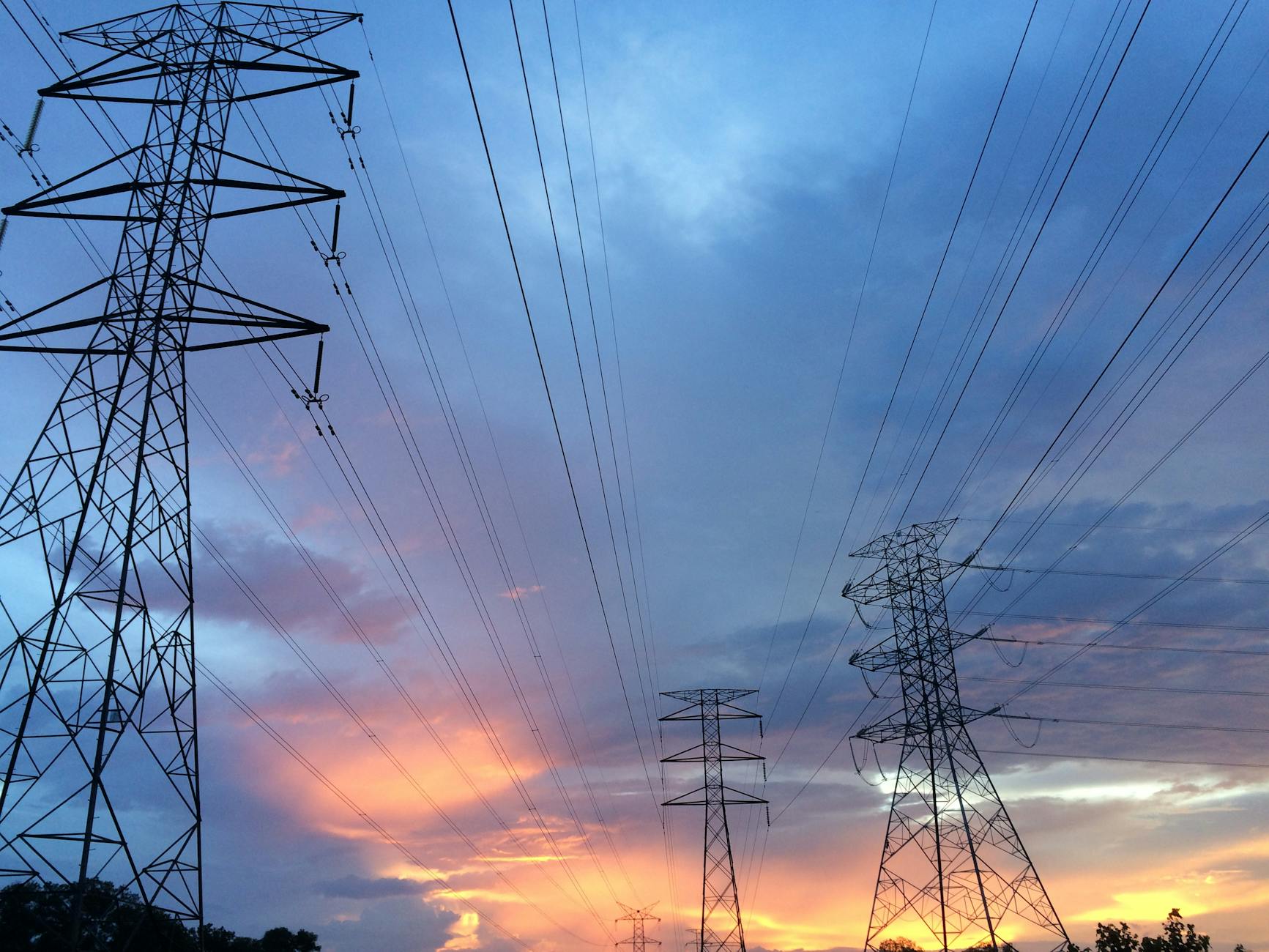
With more AI and cloud-based activity in daily life, it may have one clear effect for people: higher prices for electricity.

Photo by Pok Rie on Pexels.com

As the Sun-Times reported in November, the demand for power from big data centers and a delay connecting new power sources, such as solar and wind, to the electric grid is resulting in ComEd customers seeing their monthly bills go up $10.60 a month on average…

Power demand across the country has skyrocketed as big data centers and artificial intelligence operations have created huge demand. Meanwhile, new sources of “renewable” energy, including wind and solar power, have been slow to get connected to an electric grid that spans from Northern Illinois to the East Coast, said Jim Chilsen, a spokesman for the consumer watchdog Citizens Utility Board.

How much will this register with Illinois customers – will they have no problem paying roughly $10 more a month to help support what they expect on their smartphone and online activity? Technology tends to have costs, even if people tend to think the benefits outweigh the downsides, but it can be hard to pin down. While all of the increased rates may not be due to computing activity, at least some is.

Considering indirect costs may just be difficult to do. Having direct feedback with technology probably elicits different reactions than these more indirect costs. Imagine the new AI feature on your phone comes with a $5 a month surcharge on your phone bill to cover its costs. Or each time you do an AI search you incur a charge. Contrast that with the costs of driving. Automobiles opened up all kinds of new opportunities but driving comes with numerous costs, some direct (like paying for gas, insurance, and maintenance) and some more indirect (taxes for infrastructure, changes in land use, pollution).

If asked how much they would be willing to directly pay for AI, what would Americans say?

Data centers as public utilities

As one company looks for approval to build a data center in an Illinois town, they made this argument:

Photo by Brett Sayles on Pexels.com

“When you use your phone to order an Uber or make a doctor’s appointment, it’s likely going through one of our data centers,” Baumann told a Minooka Village Board meeting in January.

“We consider ourselves a utility, like water or sewer or electricity. It has that kind of importance to everyday life,” he said.

But Equinix is not a regulated utility like ComEd or Peoples Gas. Equinix is a publicly traded company whose top shareholders are Wall Street titans such as BlackRock, State Street and Vanguard. 

It’s a supplier that’s kept on a tight leash by the big dogs of artificial intelligence, namely, its partners, including Microsoft and Google.

Contrasting opinions here from the corporation’s real estate director and the Chicago Tribune. On one hand, it is hard to imagine life today without the Internet, social media, and smartphones. All that data transmitted through the air requires infrastructure including cables, towers, and data centers.

On the other hand, all of this is not considered a utility in the same way by the federal and state government. Gas, electricity, and water have all sorts of regulations so that everyone can access them. They are considered essential to housing. The right to the Internet does not exist yet. And the nod above to the private market may or may make sense; other utility companies are publicly traded and seek profits.

Is this a convincing argument in the long run? Would local officials and residents be more inclined to approve a data center if they think of like a utility or more like a company?

Finding the weather screen that shows everything I want

I have tried numerous weather apps and websites over the years searching for an interface that provides all the information I want in a helpful format.

Photo by Pixabay on Pexels.com

Many platforms seem to want to emphasize the current temperature and conditions and make it harder to see other details. And they want you to view ads.

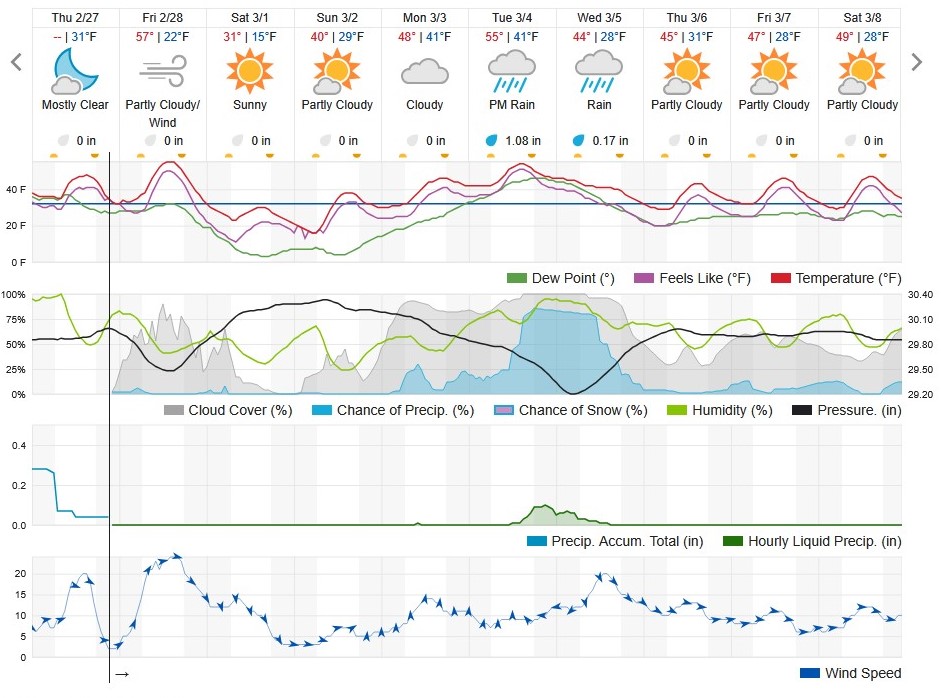
I eventually found Weather Underground’s ten day forecast. It works best on a bigger screen through their website. Here is what it looked like last night:

This does tell me current conditions – I can see them on the left. And there is a temperature high/low and a graphic at the top. But it also does several other things:

-provides info on upcoming days

-graph lines for temperature, wind chill, dew point, cloud cover, precipitation and wind

-the user can move along those graph lines to see the exact prediction conditions at that time so it can operate like an hourly forecast

Perhaps this is too much information for many. But I don’t need to scroll down and down or click to another screen. I can have a current condition graphic and can see current conditions plus can see trends for the future. This is the weather site I am sticking with (though would be open to trying other options).

Orlando planning to add flying car vertiport by 2028

Flying cars could soon come to Orlando:

Photo by Guilherme Rossi on Pexels.com

The Greater Orlando Aviation Authority on Wednesday took steps toward that future by seeking partners to develop and operate a flying car landing pad — called a vertiport — at the airport. The invitation is expected to publish in March with a 2028 target for a finished product.

The airport expects to put the vertiport on land in the East Airfield region on the northeast side or land on the south side near the train station, according to a news release…

Orlando Mayor Buddy Dyer, a member of the aviation authority, said the city is a global leader in Advanced Air Mobility (AAM) — the technology behind flying cars — and having the hub at the airport makes sense…

He said vertiports may help manage the city’s growth, but that’s much farther off. He envisions starting with a four- to six-passenger vehicle operating out of the airport and eventually corridors for flying cars will follow. The small aircraft are expected to use electric power, and take off and land vertically.

Three thoughts on these plans:

  1. It sounds like Orlando wants to pursue this to contribute to its economic growth. It could become a leader in flying cars. How big of an industry could this be? Americans like cars, Americans dislike traffic…could this be a big growth industry in the coming decades?
  2. The connections between this and the numerous theme parks in the area are intriguing. Would visitors be willing to try these because this is an exciting place to visit? Could the flying cars be linked to Disney or Universal or other partners?
  3. Flying car corridors will be interesting to see. How will they work and where will they be? How visible will they be from the ground? Will they also have gridlock?

Flying cars could be cool but if they lead to similar problems plaguing cars at the moment – traffic, expensive to buy a vehicle and maintain it, etc. – it may not get off the ground.

McMansions and McVulnerabilities

The Mc- prefix continues to live on in analysis of American life. As a recent example, here is a description of “McVulnerability” found in social media videos of crying and sadness:

Photo by cottonbro studio on Pexels.com

The weepy confessions are, ostensibly, gestures toward intimacy. They’re meant to inspire empathy, to reassure viewers that influencers are just like them. But in fact, they’re exercises in what I’ve come to call “McVulnerability,” a synthetic version of vulnerability akin to fast food: mass-produced, easily accessible, sometimes tasty, but lacking in sustenance. True vulnerability can foster emotional closeness. McVulnerability offers only an illusion of it. And just as choosing fast food in favor of more nutritious options can, over time, result in harmful outcomes, consuming “fast vulnerability” instead of engaging in bona fide human interaction can send people down an emotionally unhealthy path…

McVulnerability is perhaps an inevitable outcome of what the sociologist Eva Illouz identifies as a modern-day landscape of “emotional capitalism.” “Never has the private self been so publicly performed and harnessed to the discourses and values of the economic and political spheres,” Illouz writes in her book Cold Intimacies. Emotional capitalism has “realigned emotional cultures, making the economic self emotional and emotions more closely harnessed to instrumental action.” That is, not only does emotionality sell goods, but emotions themselves have also become commodities…

McVulnerability, from whichever angle you look at it, is the opposite of generous. It doesn’t require risk. It may pretend to give, but ultimately, it takes. And it leaves most of its consumers hungry for what they’re craving: human connection—the real thing.

The “Mc-” prefix makes sense given the popularity of McDonald’s. The way the term is deployed above seems similar to how the term McMansion has been used for several decades. McVulnerability is a pale substitute for true vulnerability. It is vulnerability in a popular and commodified form.

But can the term stick? It may depend on the popularity of such viral videos. Do they have staying power or will they be gone to be replaced by other trending videos? Will this pattern last for years? Or there might be other terms that describe these videos. Or the critique may not stick – what if most watchers see the emotional expressions as real and valuable? If such expressions become the new normal, perhaps McVulnerability is here to stay.

We’ll have to wait and see. McDonald’s will go on and plenty of other mass produced products and experiences will come along. Which ones will live on in “Mc-” infamy?

What would happen if all social media was gone in a day?

The temporary loss of TikTok in the United States a few days ago was a sort of natural experiment and it did make me wonder: what if social media was gone tomorrow?

Photo by cottonbro studio on Pexels.com

Numerous areas of life would be affected. Here are just a few:

  1. People and companies making money. Whether through ads or selling things or streaming, money flows through social media.
  2. How people use their time. What would people do instead? Watch more TV (this was a primary activity before social media existed)? Talk to the people around them? Go outside?
  3. Where people get information, whether about people they know or the news or the standard information people today are supposed to know (ranging from viral videos to celebrity updates to conflict on the other side of the world).
  4. Connections to people. The easy access to people through posts and profiles and social media interactions would be gone. Could the connections happen through other mediums?
  5. A whole set of rituals, norms, and discussions would be lost. They could not be accessed or scrolled through. All that time managing images and interactions goes away.

Even with all these changes (which would take some time to get used to), this question might be most important: would life be better?

“Symbolic capitalists” driving social media activity

In his analysis of “symbolic capitalists” in We’ve Never Been Woke, sociologist Musa al-Gharbi summarizes research on who uses social media:

Photo by Kerde Severin on Pexels.com

All said, it is a relatively small segment of the population that is “very online” with respect to social media, or that regularly consumes jouranalistic media in virtually any format (TV, online, print, podcasts) – let alone engaging with research by think tanks, nonprofits, activists, or academics. Mostly, it’s people like us. Virtually the entire political and cultural melodrama carried out in academia, policymaking spaces, media outlets, and social networking sites it carried out among symbolic capitalists. The views and priorities of most others are simply unrepresented in these spaces. And for their part, most of those who are not symbolic capitalists are not particularly interested in the highly idiosyncratic struggles we invest so much of ourselves into. (195)

This seems consistent with earlier reports I’ve seen. Social media activity is driven by a small set of users who are not representative of the American population at large.

This could be helpful to keep in mind when wondering if social media is fragmented or how widespread a trend is or whether algorithms could be driving people to different corners of the Internet. These features might be true AND social media as a whole might be driven by a small set of people who share particular positions and practices.

(Read more about the definition of symbolic capitalists here.)