“Communities,”cities and towns,” and “urban, suburban, and rural” in SOTU speech

How did President Joe Biden describe where Americans live? Here are some patterns from his State of the Union speech last night:

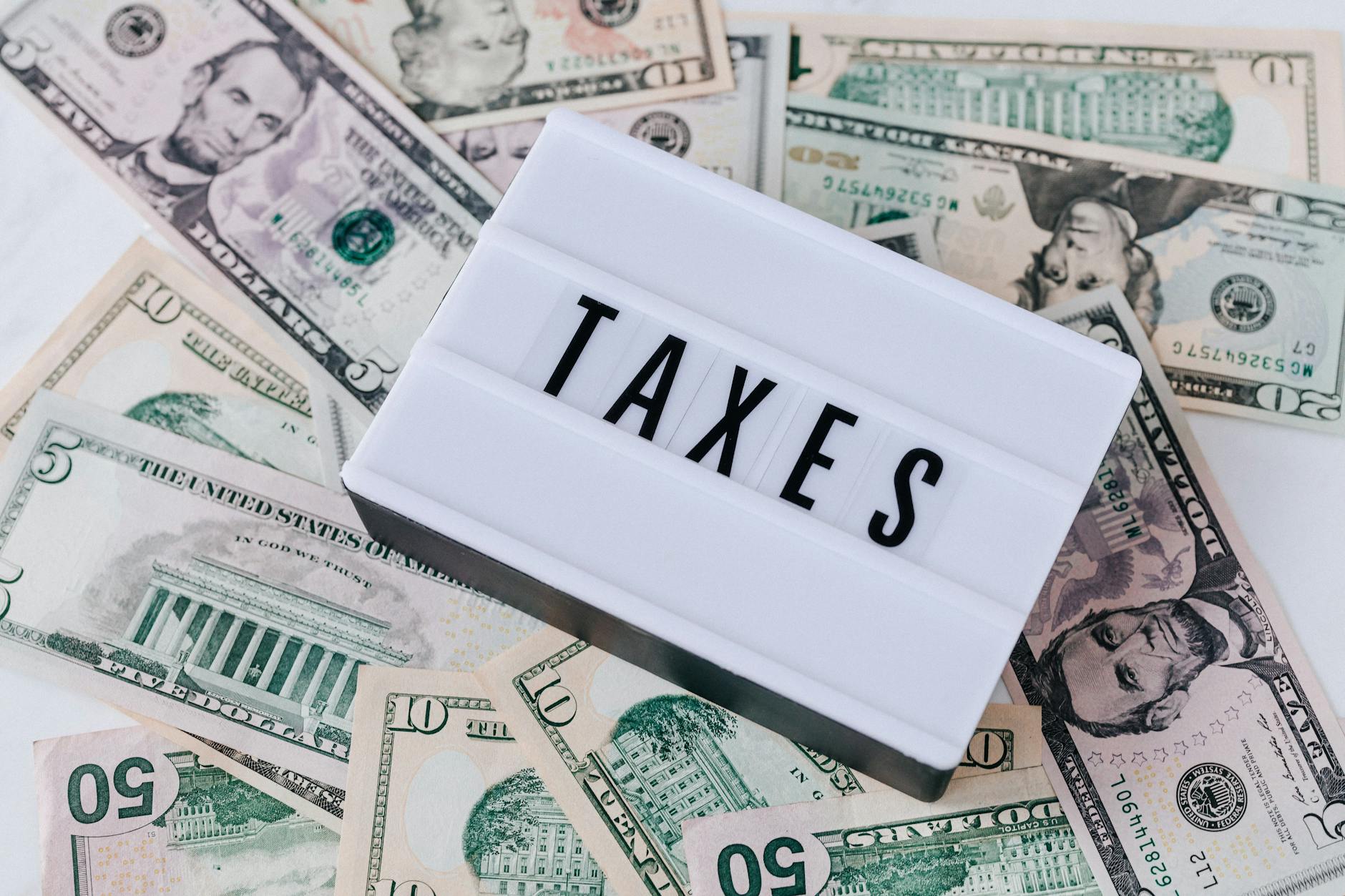
Photo by freestocks.org on Pexels.com
  1. Communities was used five times. This phrase covers a lot of potential places. Here are two uses: “Thanks to our Bipartisan Infrastructure Law, 46,000 new projects have been announced across your communities—modernizing our roads and bridges, ports and airports, and public transit systems.”; “Taking historic action on environmental justice for fence-line communities smothered by the legacy of pollution.”
  2. Cities and towns was used twice. This presumably refers to both places with more residents and those with fewer. Here are several uses: “It doesn’t make the news but in thousands of cities and towns the American people are writing the greatest comeback story never told.”; “Help cities and towns invest in more community police officers, more mental health workers, and more community violence intervention.”
  3. Urban, suburban, rural was used once (and mentioned communities): “Providing affordable high speed internet for every American no matter where you live. Urban, suburban, and rural communities—in red states and blue.”

These uses are likely trying to cover as many different places in the United States at once. I imagine few Americans would not fit into one of these places described. A community could refer to municipalities, geographies, and other social groups that would use this term to describe themselves. Cities and towns covers bigger and smaller places. Urban, suburban, rural is a common set of categories that refers to different places and ways of life.

Are these the most effective terms to use when talking to a broad audience of people in the United States? When people hear these terms, do they recognize their own communities?

American presidents and their relationship to Washington, D.C.

The capital of the United States is a city and not all presidents have enjoyed living there:

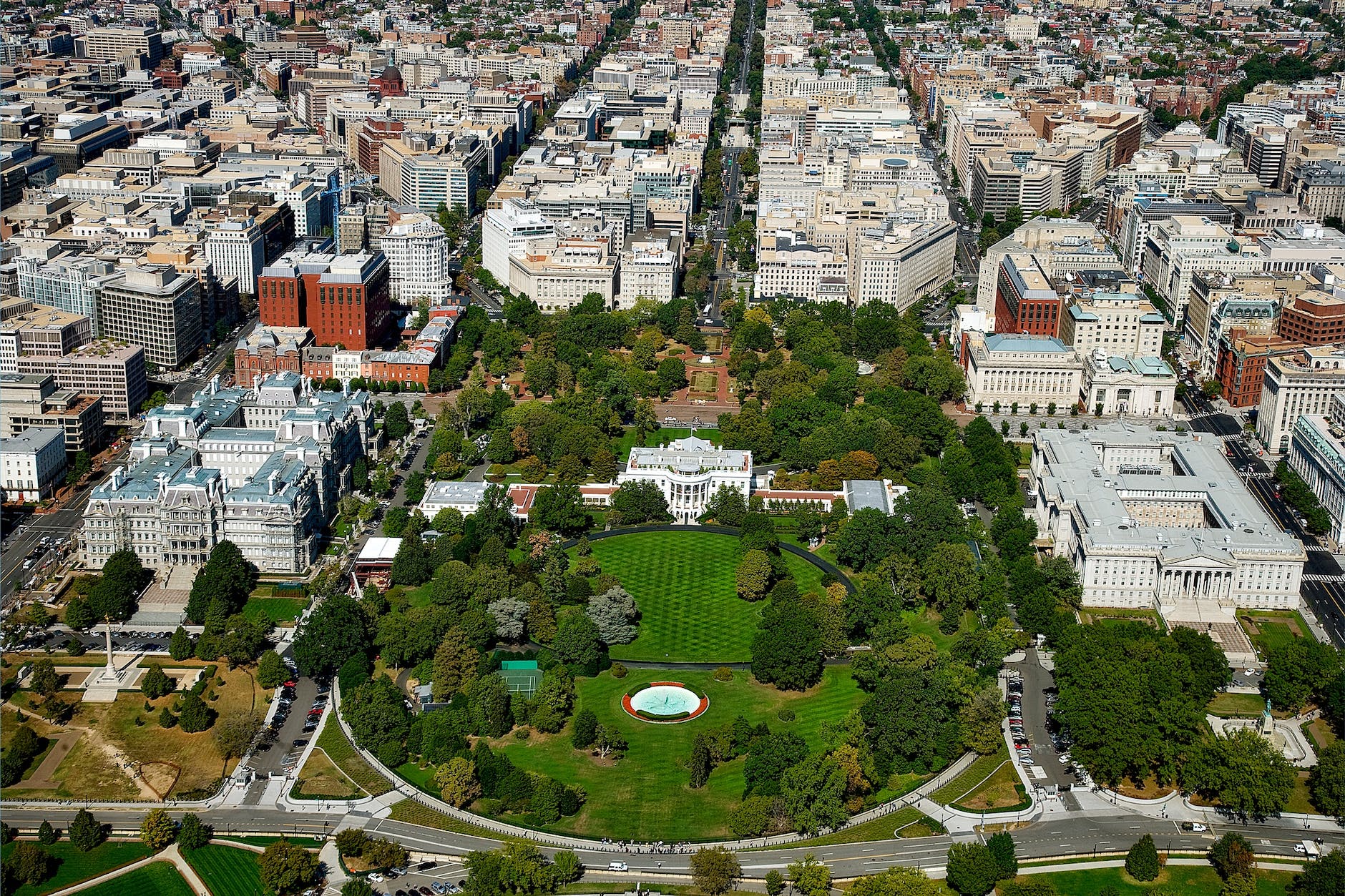
Photo by Pixabay on Pexels.com

Many previous presidents, especially Republicans, have long used Washington as a metaphor for all that is wrong with America. The city is an easy target in many federal campaigns, from both parties. And for all their efforts to get to the city as president, many commanders in chief often seem desperate to leave whenever they can. Franklin Roosevelt spent long periods at Warm Springs in Georgia, where he’d ease lifelong physical repercussions from polio and at his home at Hyde Park, New York. Lyndon Johnson and George W. Bush were always keen to swap the White House for their Texas ranches.

Trump made little effort to embrace the town, getting out to play golf at his course in Virginia or heading to his properties in Florida and New Jersey. Biden spends most weekends in his beloved Delaware. But Barack Obama bucked the trend, becoming the rare president to set up home in the capital after his tenure ended instead of returning to his previous adopted hometown, Chicago.

Some presidents have tried to treat DC like home while in office. Theodore Roosevelt went rock climbing in Rock Creek Park, and decades later, Ronald Reagan saddled up to burnish his cowboy persona and went horse riding there. Abraham Lincoln used to escape the swampy summers to a cottage in Northwest DC where he’d also visit with wounded Civil War soldiers. And of course, he went to the theater at least once, with tragic results. John Kennedy and Richard Nixon, who served as naval officers, loved to take the presidential yacht, the USS Sequoia, down the Potomac River. The vessel was decommissioned by Jimmy Carter, a former submariner who was perhaps more comfortable beneath the waves…

Presidents have also often ventured out of the White House for refreshment. Ulysses S. Grant, Andrew Johnson, Grover Cleveland, Theodore Roosevelt and Warren Harding are all said to have patronized Old Ebbitt Grill, which is open still just around the corner. During the Clinton and Obama administrations it was not unusual to see the presidential motorcade idling outside some of the city’s top restaurants in Georgetown and downtown. Trump, however, rarely went anywhere to socialize apart from his former hotel on Pennsylvania Avenue, whose bars and restaurants became a hot spot for administration officials and Trump-world figures like Rudy Giuliani and a must-see for MAGA tourists in the capital.

Americans as a whole have concerns about big cities. The country has a majority suburban population and often associates cities with particular opportunities and issues.

And the United States has a unique capital arrangement in that the country’s largest city – New York City, the #1 ranked global city – is not the political center. Originally, the city sat between the northern and southern portions of the first states. It was founded after a number of other cities. It could become a political center even as it embodied characteristics of other American cities.

In looking at the list of facilities in the presidential library system, few are located in the biggest cities in the United States. Some are in smaller big cities while more recent facilities are in big cities. Perhaps presidents as a group have not been urban dwellers – and this should not be too surprising given that the United States has never had a majority of its residents living in the biggest cities.

If Americans increasingly do not trust or feel they cannot get answers from local governments, what happens then?

Even as trust in the federal government has fallen in the United States, Americans often have a rosier view of their local governments. What if those local relationships become more adversarial or less open?

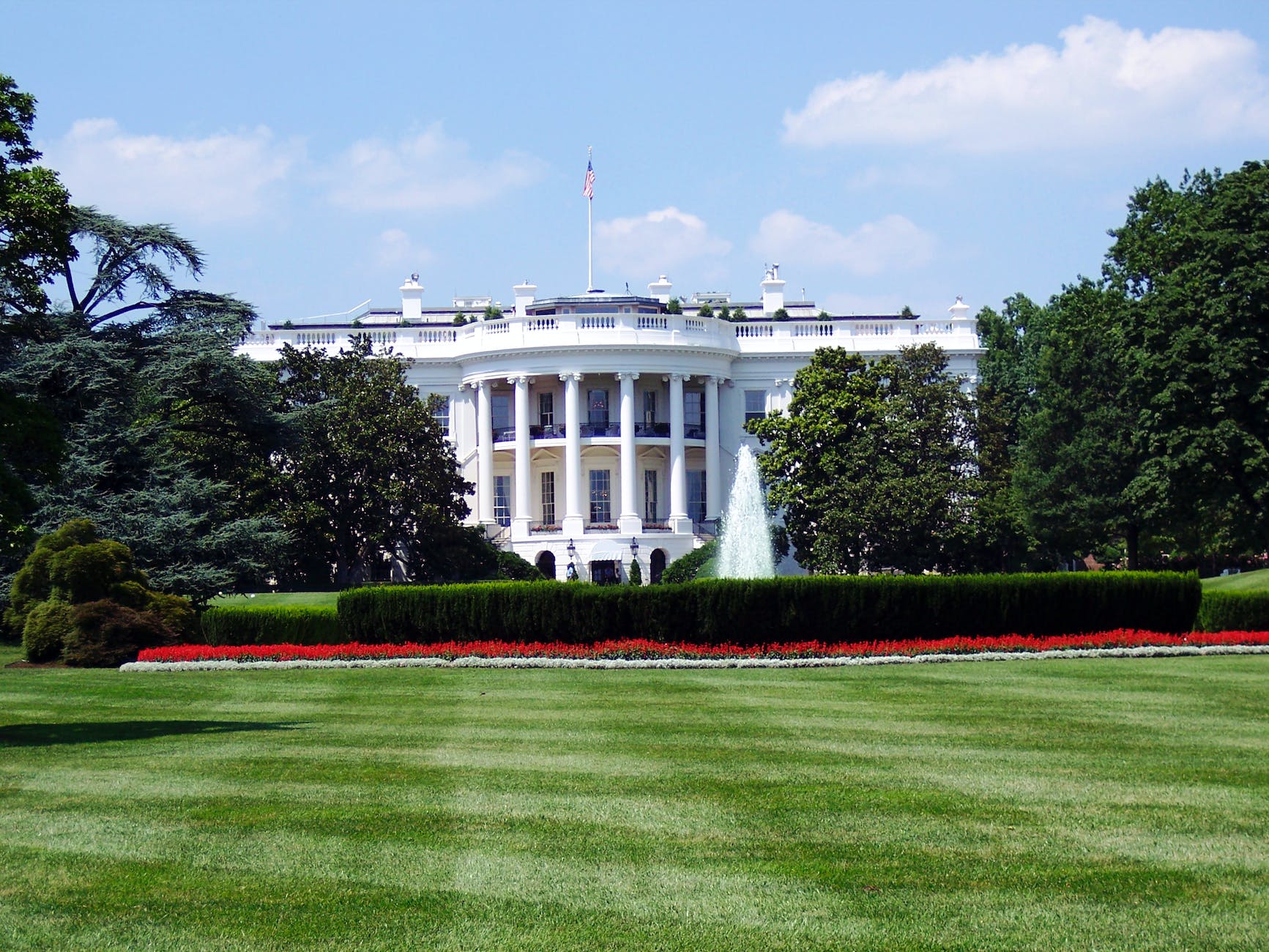
Photo by Pixabay on Pexels.com

The council’s silence leading up to the decision highlights what some observers say is a striking trend toward secrecy among local governments across the U.S. From school districts to townships and county boards, public access to records and meetings in many states is worsening over time, open government advocates and experts say…

Few states compile data on public records requests, and laws governing open records differ by state, making a comprehensive analysis difficult. However, a review by Cuillier of data provided by MuckRock — a nonprofit news site that files and shares public records requests – found that between 2010 and 2021, local governments’ compliance with records requests dropped from 63% to 42%…

Incidents of governments suing journalists and residents for making records requests also have become more common, said Jonathan Peters, a media law professor at the University of Georgia.

Accessing local government meetings is getting more difficult, too. Elected officials are discussing significant public business in closed sessions, observers say. In some regions, they’re engaging in more combative behavior with constituents.

Many Americans like suburban, small town, and city local governments because they are more responsive to local needs, directly use local monies for visible benefits, and are more accessible to residents.

But, if local governments end up looking like what many perceive the federal government to be – faceless, cold, distant, and untrustworthy – what happens? Local government often works on the idea that any resident can show up or see what has been discussed. It is easy to contact local officials. Things need to get done and long arguments about abstract ideals or petty issues detracts from the local quality of life. Getting elected to a local position does not necessarily require independent wealth or political partisanship.

If Americans get to a point where they do not like local government, they might withdraw even further from civic life. Already, local voting turnout is very low. We can already find people online to interact with and drive where we want to rather than engage with neighbors and community members. I hope there is room for local government officials and residents to find ways to work together to serve their communities.

What the White House alone can do to help homebuyers

Given the high cost of purchasing a home at the current moment in the United States, what can the President and the Executive Branch do on their own? In addition to supporting legislation for a new tax credit, the Biden White House has ideas about its own actions:

Photo by Aaron Kittredge on Pexels.com

Brainard suggested that President Joe Biden will not wait for Congress. The administration, for example, said that it was advocating for zoning reforms that will help unlock the construction of affordable homes.

“Our Department of Transportation is making billions of dollars in low-cost loans available for developing housing near transportation,” Brainard said.

The administration has also been trying to help first-time buyers who have struggled to gain a foothold into homeownership. Home prices were nearly 6 times the median potential first-time homebuyer income in the third quarter, according to NerdWallet’s recent analysis.

The White House pointed out that it was trying to reduce costs for first-time buyers through the the Federal Housing Administration program. The effort, it said, helped reduce mortgage insurance premiums by 0.3 percent.

Many presidents from the early 20th century onward have promoted homeownership in rhetoric and policy. These proposed actions would continue this pattern. Could a president even if elected if they did not support homeownership for the masses? See great quotes in homeownership.

Of course, the President and the Executive Branch can only do so much in this area. Yet, a number of important changes to housing policy have come through this branch. Will Biden make a significant change or is this about temporary salves? All of these proposals do not alter the fundamental economic realities that make current homes so expensive. They offer incentives or help around the edges. Addressing zoning from a federal level could prove interesting as it is such a local matter.

Trump on building “freedom cities”

Donald Trump recently said he wants to construct “freedom cities” if elected again. He has had this idea for a while; a story from March 2023 provides more details:

Photo by Brett Sayles on Pexels.com

Former President Donald Trump on Friday proposed building up to 10 futuristic “freedom cities” on federal land, part of a plan that the 2024 presidential contender said would “create a new American future” in a country that has “lost its boldness.”…

He said he would launch a contest to charter up to 10 “freedom cities” roughly the size of Washington, DC, on undeveloped federal land.

“We’ll actually build new cities in our country again,” Trump said in the video. “These freedom cities will reopen the frontier, reignite American imagination, and give hundreds of thousands of young people and other people, all hardworking families, a new shot at home ownership and in fact, the American dream.”

These cities are tied to a bigger project:

Trump’s plan, shared in advance with POLITICO, calls for holding a contest to design and create up to ten new “Freedom Cities,” built from the ground up on federal land. It proposes an investment in the development of vertical-takeoff-and-landing vehicles; the creation of “hives of industry” sparked by cutting off imports from China; and a population surge sparked by “baby bonuses” to encourage would-be-parents to get on with procreation. It is all, his team says, part of a larger nationwide beautification campaign meant to inspire forward-looking visions of America’s future.

When I saw that Trump mentioned this again, I immediately thought about free market cities that some have proposed for different parts of the world. But, that does not seem to be the goal here. Trump wants to build new cities that fit a new vision of American innovation. Freedom = innovation. One implication is that current cities are not free.

For such an idea, multiple practical obstacles exist:

  1. Where would these be located? Which federal lands?
  2. It is hard to build a new city. What is the timeline for this? How many resources will be involved? Will it be all private actors and developers doing the construction?
  3. What will be the guiding mission of these cities? If the goal is innovation, what will be different about these cities compared to existing cities?
  4. What will be the politics of these cities?

All that said, the likelihood of these being built is very low. And I thought Trump was was trying to save suburbia, not necessarily build cities?

Chicago suburbs lobbying at the federal level – and it might pay off?

Multiple Chicago suburbs employ lobbyists in Washington and those lobbyists may pay for themselves:

Photo by Tima Miroshnichenko on Pexels.com

Crashes at one of the state’s most dangerous rail crossings, in Elmwood Park, have killed seven people and injured at least 27 over the last few decades. Village officials want to build an underpass to make the intersection safer, but the village can’t do it alone — the $121 million price tag is more than four times the western suburb’s annual budget, according to Village Manager Paul Volpe…

Elmwood Park has paid $230,000 since 2020 to the transportation lobbying firm Tai Ginsberg and Associates, according to federal lobbying records. So far, the village has received $3 million in federal funds, Volpe said…

Illinois cities, towns, villages and counties besides Chicago spent about $838,000 on federal lobbyists in 2020, $1 million in 2021 and $1.4 million in 2022, lobbying disclosure records kept by the U.S. Senate and analyzed by the Chicago Tribune/Pioneer Press show. This year, they have spent a total of $720,000 so far, per lobbying disclosures. The grand total is slightly inexact because lobbyists are not required to report receipts under $5,000.

One town that’s turned its attention to opportunities in Washington is north suburban Niles, where the village board recently renewed a $60,000 contract with lobbying firm Smith, Dawson and Andrews…

So far, Alpogianis said the village is more than satisfied with that change. He pointed to a recent $200,000 federal grant for the Niles Teen Center the village secured with the help of U.S. Sen. Dick Durbin’s office.

Suburbanites tend to like local government because they believe it is easier to convey their interests and they can see and experience local decisions. So getting more federal money that can be directly used to improve a local quality of life is a win, right?

I could imagine two primary objections:

  1. Do lobbyists always pay for themselves? The story cited highlights several examples of successes. Does this work for every suburb?
  2. Is federal money the money suburbs want? Local government beholden to federal dollars? Some might object, others may not care where helpful money comes from.

It would be interesting to hear from the lobbyist side about firms or individuals that do well for suburbs. What is their success rate?

Participatory budgeting in the US started in Chicago

Participatory budgeting involves community members in discussions of and decisions about local monies. While this is not a widespread process, it started in this country in Chicago:

Photo by Pixabay on Pexels.com

Participatory budgeting, in which members of the public get a direct vote in how tax dollars are spent, has been around in Chicago for more than a decade, and made its U.S. debut here in the North Side’s 49th ward in 2009, led by then-Ald. Joe Moore.

The concept was born in Porto Alegre, Brazil in 1989 and is now used in cities across the world. In Chicago, residents vote on how to spend the majority of the $1.5 million in “menu money” City Council members are allotted for infrastructure projects each year — in the handful of wards that choose to use it. It’s also utilized in a handful of Chicago Public Schools as a form of civic education.

But despite its special ties to the city, participatory budgeting, or PB, has failed to launch on the scale advocates envision, lagging other U.S. cities such as New York and Boston that have implemented different versions of citywide programs. Now, proponents of participatory budgeting see an opportunity with Chicago’s newly elected mayor, who has vowed collaboration with residents, and whose transition report calls for Chicago to be “real pioneer” in participatory democracy.

Many local issues involve money. Where is it coming from? Where is it being spent? Who is benefiting and who is not? One local expert describes the benefits of participatory budgeting:

“That’s what our research shows is that over and over again, people who participate talk about how they learn more about what their needs are in their community, that they meet more neighbors, they feel more positively about their aldermen, they learn more about how government works, they’re more comfortable contacting government agencies and officials,” said Crum, whose group also helps alderpersons facilitate ward-level participatory budgeting processes each year.

Would doing more participatory budgeting help restore public faith in government? If a good number of residents feel that elected people or appointed officials are not using money in ways that are good for the community, it can be easy to criticize the whole system. At the least, participating in budget conversations can help reveal all of the possible priorities and how decisions might be made.

Chicago February municipal election turnout drops

The most recent elections in Chicago featured low voter turnout. From WBEZ:

Photo by cottonbro studio on Pexels.com

Citywide, preliminary turnout currently stands at roughly 34.3%, among the lowest turnout rates for a February municipal election in the last 80 years. The total number of ballots cast in this election isn’t final yet because there are still thousands of vote-by-mail ballots en route to the board of election commissioners.

In 2015 and 2019, the return rate for vote-by-mail ballots averaged nearly 80%. Assuming the same return rate this year, the city’s overall voter turnout rate could reach 35%.

From the Chicago Tribune:

Though early voters smashed city records, overall turnout was low in Tuesday’s municipal election.

Only about 1/3 of registered voters in Chicago cast ballots for mayor, city clerk, city treasurer, City Council and police district councils.

The citywide turnout rate this year was lower than it’s been in the last three municipal elections in 2011, 2015 and 2019. In fact, turnout in 2023 was about 10% lower citywide than it was in 2011.

Notwithstanding the issues of February elections not tied to other state or federal outcomes, I wonder at a few other possible factors involved:

  1. Are the people voting by mail voters who would otherwise not vote or people who would have turned up at a poling place in the past?
  2. Is the motivation of voting in a broader primary with more possible candidates – giving voters more options to find someone who might represent their particular interests – less inviting than having two candidates in the later election and the voters having to choose one or the other?
  3. In a city where leaders tend to be powerful figures, what else might interest voters in selecting these leaders?

Do big bureaucracies or democracies have customer-service problems?

Americans can find it difficult to find accountability with government or businesses:

Democracy’s ideal is built on a foundation of accountability. In the past, many, if not most, of the decisions that mattered to our lives were taken by people and businesses that felt close to us. That’s not the case anymore. Now all roads seem to lead to bad hold music.

Whenever we encounter a problem we didn’t create—like my outrageous electricity charge, or vacations ruined by an incompetent airline, or hospital-billing errors, or a mix-up at the IRS—all we can really do is go online for a customer-service number and cross our fingers that, by some miracle, the call won’t consume the entire day, or worse. When a person coping with cancer treatment spends hours on the phone with her insurance company or Medicaid, she may wonder why her society is so cruel, or so incompetent, or both. And she may start to see the appeal of a demagogue who promises to deliver simple solutions: the “I alone can fix it” candidate…

In the European Union, if an airline causes a flight delay of more than three hours, it has to pay you 250 to 600 euros, depending on the length of the flight. In the U.K., when a train is more than 15 minutes late, I can go to a website and, in a few minutes, demand financial compensation.

For the most part in America, when you screw up, you pay, but when corporations or governments screw up, nobody pays. Even when protections do exist, they’re difficult to navigate, or are unknown to most citizens. Other democracies have made clear it doesn’t have to be that way. It’s not rocket science to solve such maddening everyday problems, and American democracy would be better off if the government devoted more effort to it.

Government could indeed be more on the side of residents rather than the side of corporations and itself.

But, I wonder if a good number of Americans would see this as an inevitable function of the size of government or business. When these actors become large, it can be harder for decisions to be made and mistakes righted. Big government and big business become caught up in trying to achieve their own goals rather than caring about the little people.

There is a long history of this thinking in the United States. How much should the federal or state government control? Do the best ideas come from established entities or from startups and more nimble organizations? It is also part of the appeal of suburbs to many where residents can have more access to and more participation in local government and decisions. One perception is that local governments have to make things work for everyday life to go on.

As sociologist Max Weber noted, bureaucracies can be efficient and necessary in the modern era but they can also lead to an iron cage. Can governments that clearly work for the people reduce this feeling of the iron cage?

American political leaders tend to be homeowners

A recent study looked at how many political leaders in the United States are homeowners or renters:

Photo by August de Richelieu on Pexels.com

The researchers identified 10,800 representatives across city halls, state houses, and federal offices in 2019 and cross-referenced their home addresses with tax records. They found that about 93% of US senators, congressional representatives, federal judges, city council members, state senators, state representatives and governors definitely or likely owned a home.

In another sample of 1,800 city-level officeholders, the discrepancy between voters and their electeds was stark: For the 190 municipalities researchers examined, citywide homeownership rates were around 50%, while 83% of mayors owned their residences…

Despite these high-profile exceptions — both young people of color, like Azeem — researchers found that in city after city, the broader homeownership trend held, even in costly cities like Miami and Boston, where renters dominate. “There aren’t really any cities where large numbers of renters have been elected to local, state or federal office,” Einstein said.

The paper describes two “bottlenecks” that could prevent renter representation: Either fewer renters run, or fewer voters are willing to elect them. By analyzing the housing status of city council candidates in California between 2017 and 2018, they found that the former is more likely…

Elected officials are even more out of step with their communities when it comes to where and how they live. Researchers found that the homes occupied by local, state and federal officials were worth an average of 50% more than their zip code’s median value. The higher the level of public office, the greater the ratio. Nearly 80% of officeholders who owned their houses lived in single-family homes, while only 67% of houses across the country are considered single family.

Who will represent the renters in a country that loudly proclaims its preference for homeownership?

If you have a list of steps one needs to take to be a successful politician, add this one to early in the list: own a residence.

How exactly does wealth play into this? Does wealth lead to both homeownership and the possibility of running for office?

A possible follow-up study: do political candidates run markedly different campaigns given their homeownership status or do they generally play to the ideals of homeownership?