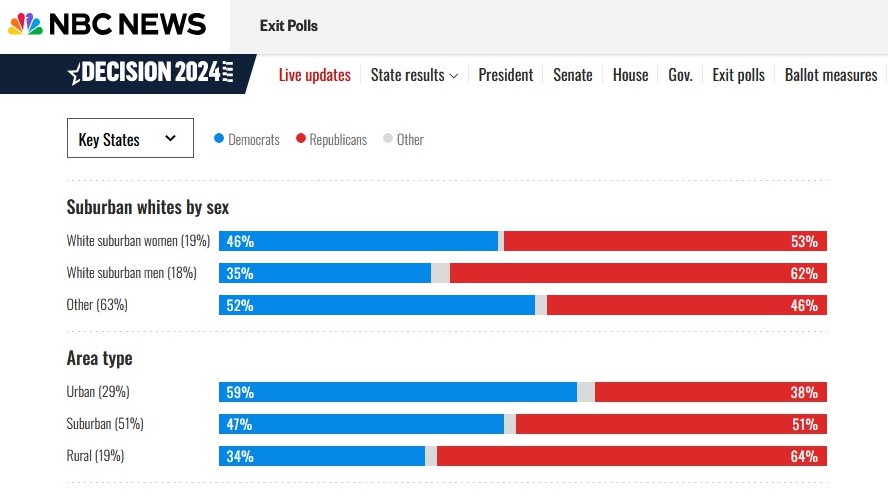
Based on these results, it looks like the Democratic candidate won large percentages in urban areas, the Republican candidate won a majority in rural areas, and suburban voters went slightly for the winning candidate.
If this pattern roughly held across the United States, it would be similar to patterns from previous presidential election cycles. If a candidate wants to win, they need to appeal to enough suburban voters.
What appealed to suburbanites specifically in 2024? If economic conditions was a top concern of voters, is this what drove suburban voters? The top table above suggests white suburbanites in these 10 states voted for the winning candidate. Were they driven by economic concerns or other issues?
And as attention turns to the next election cycle, how will parties and candidates seek to appeal to suburbanites? In addition to those thinking of presidential office, how will House districts involving suburbs speak to suburban residents?
Pittsburgh viewers tuning into Monday Night Football this week watched their Steelers beat the New York Giants — and 26 political ads.
That’s just a small slice of the roughly 2,300 political ads the typical Pittsburgh household has seen on television this year, according to AdImpact, more than any other market in the country.
The nonstop political onslaught for viewers, however, means a windfall for the stations. The local ABC affiliate broadcasting Monday’s game charged as much $150,000 for a single 30-second ad, an astronomical sum for the market.
Pittsburgh is the most extreme example of a phenomenon happening in swing states across the country: Campaigns and their allies are buying so many political ads that local businesses — the personal injury lawyers, car dealers and furniture stores that are usually staples of local news commercial breaks — often can’t reserve any airtime even if they could afford the inflated rates.
While political ads are likely airing almost everywhere due to local and state races, the presidential race depends on a few select states and big markets within them. Which party can turn out the most voters in the key suburban districts?
It would be interesting to see data after the election about how Pittsburgh area residents responded to these ads. How many people did they convince? What did it cost roughly to pickup each vote? How did these big ad buys perform compared to social media campaigns that can target specific individuals? Money was spent…but how effective was it.
Similarly, how might these ad seasons boost local media organizations? Is this like Christmas season for media where the money that comes in during political ad season covers budgets for a much longer time? If political ad season was reduced in length or in spending, how might these media organizations do with less money?
Over the past decade and a half, however, the dynamic has dramatically shifted. In 2008, the top fifth of earners favored Democrats by just a few percentage points; by 2020, they were the group most likely to vote for Democrats and did so by a nearly 15-point margin. (Democrats won the poorest fifth of voters by a similarly large margin.) Democrats now represent 24 of the 25 highest-income congressional districts and 43 of the top 50 counties by economic output. A similarly stark shift has occurred if you look at college education rather than income. Perhaps most dramatic of all has been the change among wealthy white people. Among white voters, in every presidential election from 1948 until 2012, the richest 5 percent were the group most likely to vote Republican, according to analysis by the political scientist Thomas Wood. In 2016 and 2020, this dynamic reversed itself: The top 5 percent became the group most likely to vote Democratic…
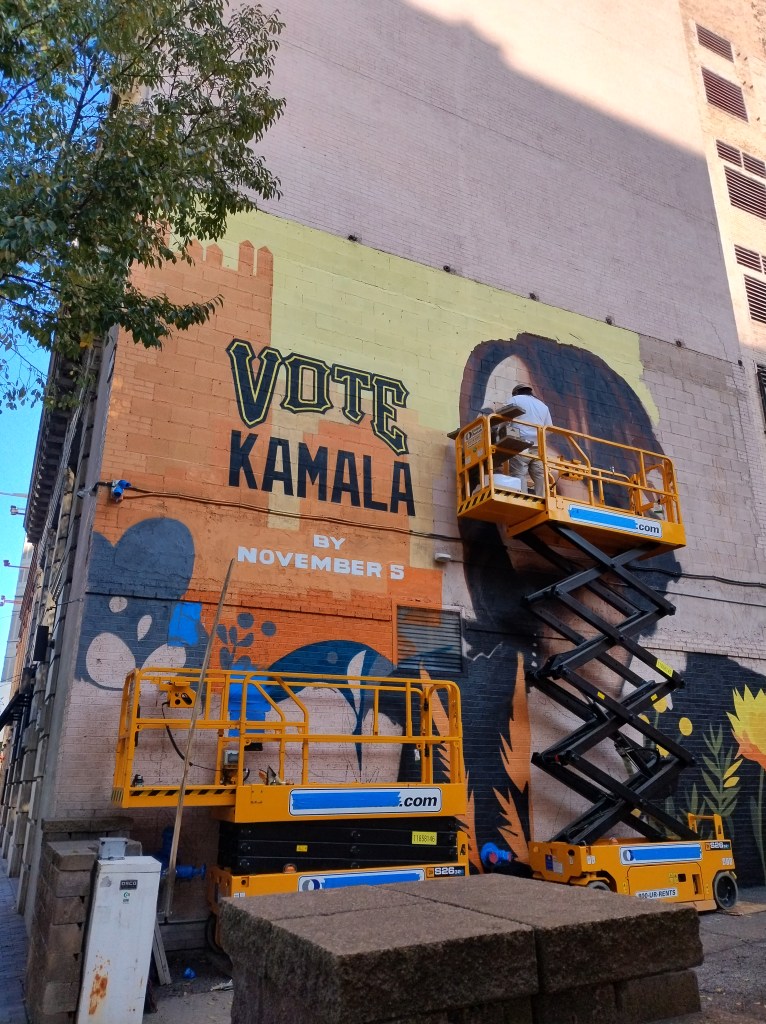
That realignment leaves both parties in a strange place heading into November. Voters consistently say that the economy is the most important issue of the 2024 election. And yet the affluent overwhelmingly support Kamala Harris, whose administration favored bold redistribution and big government spending, while a critical mass of working-class voters favor Donald Trump, whose economic agenda consisted largely of cutting taxes for the rich and trying to kill the Affordable Care Act.
This is not the only political shift in recent years but an interesting one nonetheless. Are these political shifts enduring? Such a shift disrupts short-term activity but there could also be long-term consequences. With the resources and connections elites have, does a shift like this lead to other consequential changes?
While the article focuses on whether these voters are voting in their material best interests, another part is intriguing: how then does this fit with the American obsession on the middle-class and the political rhetoric and activity that goes along with this? Does the composition of who comprises the electorate for a political party than affect how much the party talks about the middle-class or pursues policy aimed to help that group?
And since I think about the suburbs a lot, how does this affect how the two parties view suburbs in the United States? Traditionally viewed as middle-class places with powerful local control, does this shift with new political bases at play?
There are so many units of government in Illinois that people can’t even agree on the total because of differences over what technically qualifies as a government body. The U.S. Census Bureau says 6,930, while the Illinois Department of Revenue, which tracks governments authorized to levy property taxes, reports 6,042. The state comptroller’s office lists 8,529, and a study by the Civic Federation tallied the number at 8,923 as of 2019.
Regardless of the exact answer, the number of governments in Illinois outpaces that seen in bigger states, including Texas (which has 5,533, according to the Census Bureau), Pennsylvania (4,851) and California, a state with a population three times the size of Illinois but half as many local government units…
Today the state has more than 5,700 special-purpose governments, including 851 school districts, 861 drainage districts, 838 fire protection districts, 376 library districts, 348 park districts and 320 multi-township tax assessment districts, according to the state comptroller’s office. Many of the state’s nearly 1,400 districts dedicated to roads and bridges have boundaries overlapping its 1,425 townships.
Most of these governments are outside the Chicago region and represent only a sliver of the state’s population. Nearly two-thirds of Illinois residents live in the six-county Chicago metropolitan area. Meanwhile, 51 of Illinois’ 102 counties have fewer than 25,000 residents, and 15 of those have a population under 10,000, according to a 2021 Civic Federation report. About two-thirds of Illinois’ school districts have fewer than 1,000 students enrolled, and there are 26 school districts with fewer than 100 students.
Two figures stand out:
How do the different counters get to numbers so far apart? The difference is roughly 2,000 bodies of government – what exactly is the scope or taxing ability of these bodies? On the national level, who is considered to have an official count in these area?
Americans tend to like local government that responds to local needs. On one hand, all these government bodies are exerting the will of the people to control local activity. On the other hand, this could be viewed as micromanaging. Certainly there are merges that could happen in some of these categories to take advantage of economies of scale and more efficiently serve a slightly larger population? (I have discussed townships before.)
So is one way to interpret the number of government bodies in Illinois is to suggest that the price of corruption is not enough to convince residents and/or local leaders to give up local control?
Suburbanites, who make up about half of the U.S. electorate and are as racially diverse as the nation at large, are a key prize. Biden beat Trump in suburban counties by about six percentage points in the 2020 presidential election.
Before Biden dropped out, Trump was leading him 43% to 40% among suburbanites in Reuters/Ipsos polls conducted in June and July, reflecting the Democrat’s struggle to energize supporters.
Harris began closing the gap when she launched her campaign in July and led Trump 47% to 41% among suburban voters in polling across September and October. That represents a nine-point swing in the Democrat’s favor, according to the analysis of six Reuters/Ipsos polls that included responses from over 6,000 registered voters…
Winning the middle – whether nationally or in the election’s key states – won’t necessarily crown the victor. Democrat Hillary Clinton, who got nearly 3 million votes more than Trump nationwide in the 2016 election and beat him in suburban counties by about 1 percentage point, still lost the election when Trump flipped six states that had voted Democratic in 2012.
Suburban voters are a sizable block of voters as this is where a majority of Americans live. Do all suburbanites vote the same? No, suburbia is increasingly complex with people in suburbia have different experiences and backgrounds.
Related to the previous point, do suburbanites see themselves as a voting bloc? If I were to take the Chicago metropolitan area as an example, voters across the region might not see themselves as similar to others in the region’s suburbs.
Will the presidential candidates appeal more directly to suburban life in the last few months? If the economy is the biggest issue for voters (as the article suggests), is talking about the middle-class direct enough? Trump in 2020 spoke directly about suburbs; will both candidates do this in 2024?
Political ads are everywhere this time of year and they are hard to avoid:
-During all TV broadcasts. Whether watching football games or news broadcasts or sitcoms, candidates are all over the screen.06
-Internet and social media ads. I do not see many of these due to using adblockers but the ads are over the place.
-Mailings as candidates flood mailboxes with appeals and glossy photos and policy positions.
-Texts asking you to vote for candidates or support a candidate. How many of these numbers do we need to block?
-On the radio. Perhaps not as pervasive as TV but still there.
And I do not even live in a battleground state where I would guess there are even more ads.
The political ads must work to some degree as millions are spent on them. Who exactly is convinced by them? Do they primarily rile up a base who then votes in larger numbers? At the same time, I remember hearing a talk by a sociologist who interviewed campaign managers who reported that social media ads are preferable because it is easier to measure who responds or engages compares to mass media ads.
Commercials are part of the American way of life. Anywhere you turn, you see brands, logos, and appeals for particular products. Given that landscape where we see thousands of ads, why not throw in politicians and parties and issues as just another brand or product to sell?
Like the political yard signs, the ads will disappear after Election Day. They will be back for the next races as different actors try to position their candidates in front of the public in a truly American way.
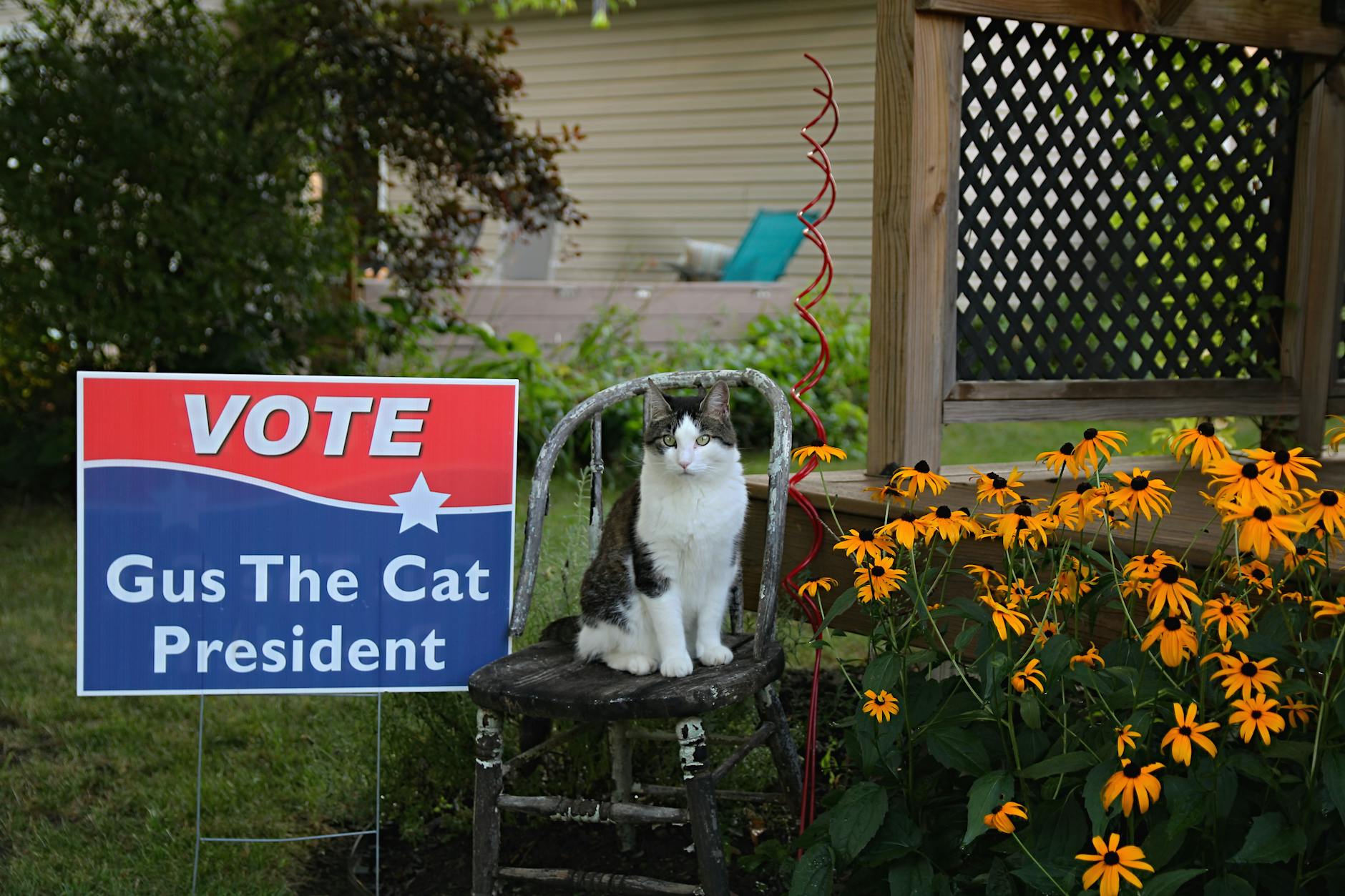
This season is a regular occurrence even as it does not show up every year, it might be more visible on the 4 year presidential election cycle, and it occasionally occurs during primary voting periods in the spring. On its more regular schedule, by early October numerous lawns and public intersections contain political yard signs. Lawns – usually clear of obstructions – broadcast political messages for those passing by. They range from national offices (president, Senate, House) to very local offices (townships, local forest preserves, etc.). They differ in size – some huge, some small and hard to read – and in color, often tied to the traditional colors of the two major parties with some occasional other colors thrown in.
Most lawns do not have signs. Some property owners have them each political yard sign season, others are more occasional participants. The corners of major intersections can be little battlegrounds as people place signs for different candidates and different races.
What difference does political yard sign season make? I do not know. Do those going by at suburban driving speeds (1) have time to read the signs and (2) ever change their preferences or voting patterns? Is it more about political mobilization among residents where signs are symbols of their fervor? For the stories and images I see of signs stolen or removed, do these actions change anything?
Soon political yard sign season will pass. Election Day comes and the signs disappear rapidly. Some might hang on for a while longer, braving the cold and snow of winter. Almost none will be around for the coming of the next construction season. For a short period, political yard sign season blooms and we all experience it.
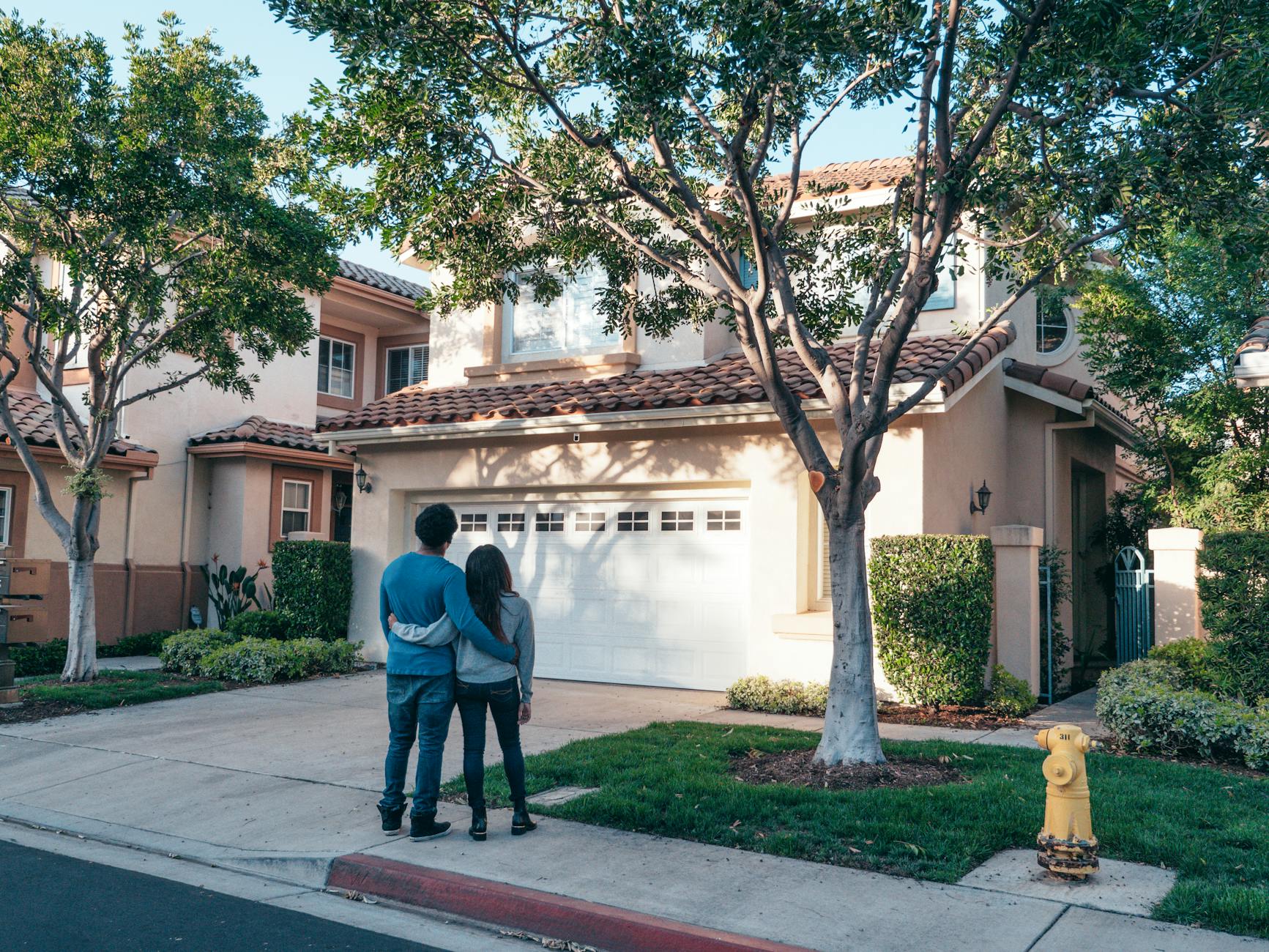
Fall is traditionally a slower time for home sales, but this year, buyers seem extra wary. Uncertainty over the presidential election, questions over the direction of the U.S. economy, and confusion about new rules for home-buying brought on by the National Association of Realtors legal settlement have some buyers hitting the brakes on what could potentially be the biggest purchase they will ever make. Not to mention the possibility of a Federal Reserve interest-rate cut on the horizon.
Is the lack of activity really about the elections? A few other data points:
Goshorn explained that he often hears people say they “just want to see how the election goes” and are reluctant because they “don’t know what’s going to happen.” But he noted that evidence points to election cycles having little effect on the housing market. “Clearly, the numbers don’t lie: Nine out of 11 election cycles, existing-home sales have gone up. Seven out of 8 times, median home prices have gone up,” he said.
Some buyers say they’ll only buy a home “if their candidate wins,” Matthew Purdy, a Colorado-based real-estate agent, said in a Redfin blog post. “Others are waiting because they feel the economy and housing market are shaky, and hope it will improve after the election.”
Though presidents have little direct control over home prices, housing affordability is the issue that will influence younger voters’ candidate choice the most in the 2024 presidential election, according to a recent survey…
Research is mixed on whether consumers actually pull back on spending money on big-ticket items in the leadup to a presidential election…
Even though some buyers have expressed hesitation to purchase homes due to the political climate, the data doesn’t back up the anecdotes, a study by housing consultancy group John Burns Research & Consulting found.
It sounds like there is little effect when considering historical patterns and studies.
But it is an interesting talking point amid other pressures in the housing market. Lots of people might want market conditions to be different. And there is a chance for candidates to respond to the concerns people have.
I know this is too much to ask but what if there was an upcoming debate or set of back and forths between the candidates regarding housing. The article briefly mentions that the candidates have made some statement about improvements for the housing market. Can we get more details and go beyond soundbites that attempt to appeal to parts of the electorate? How much do their plans differ? Where do they see room for improvement or have a vision for sustainable change? Because housing and where people can live is so important for so many other outcomes, a focused discussion or debate about housing could touch on all sorts of important topics.
We should be doing everything we can to make it more affordable to buy a home, not less.
I imagine at least a few listeners would find this appealing. Paying a mortgage or rent is often the biggest expense among households. Price in many places, particularly after the last few years, leave many feeling they cannot live where they want and/or financially uncertain.
The details are harder to work out and put into practice. In this particular campaign ad, Harris mentions fighting banks after the foreclosure crisis, addressing the issue of corporate landlords, and constructing 3 million new housing units. I am sure there are a host of opinions about whether these are the best options or doable options or enough options.
Could housing end up being one of the major policy issues of the 2024 elections? There is still time as the campaigns look for winning messages.
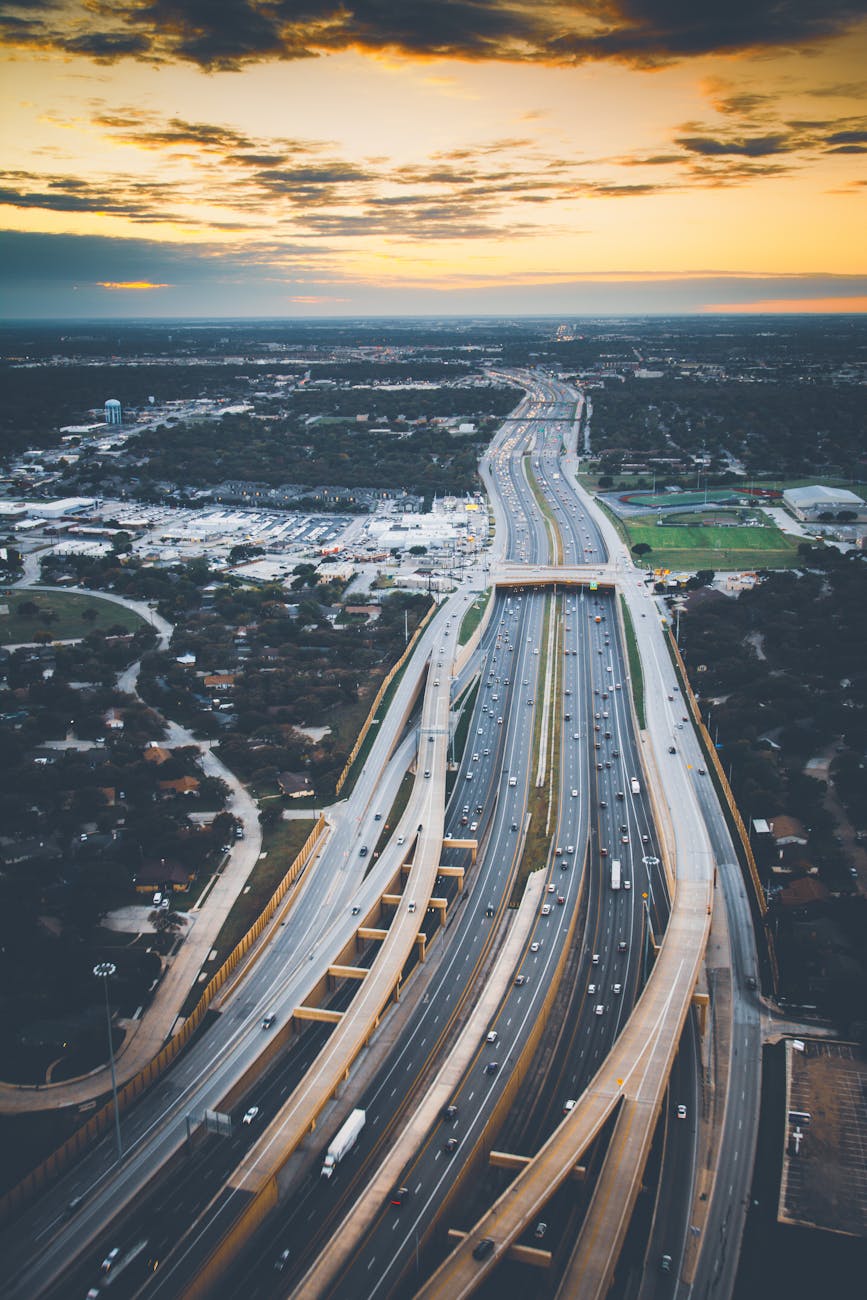
Even in deep-blue states, a bipartisan coalition keeps the highway funding spigot open, said Amy Lee, a postdoc at the University of California, Los Angeles who wrote her dissertation about California’s failure to constrain highway growth. “The construction-materials companies tend to be very big on the right, and organized labor tends to be very powerful on the left,” she said, and these forces form a pro-highway juggernaut. In January, a coalition of construction companies and labor groups sent a letter to California’s top elected leaders defending “funding for infrastructure projects that may potentially increase vehicle miles traveled”—i.e., highway expansions. (The Laborers’ International Union of North America did not respond to repeated requests for comment for this article.) As with electric vehicles, highway construction seems to be a topic in which environmental and union interests diverge.
Transportation departments don’t want to hear no on highways. In 2022 Oklahoma’s department of transportation preemptively bought 23 web domains, like oklahomansagainstturnpikes.com and stoptheeasternloop.com, that could theoretically be used to rally opposition to the state’s $5 billion highway plan. Speaking up against pavement within a department can be difficult and risky. Last year, Jeanie Ward-Waller, a Massachusetts Institute of Technology–trained engineer who served as the deputy director of planning and modal programs for California’s Caltrans, was demoted after questioning her agency’s plans to widen I-80 between Sacramento and Davis. In an editorial published in the San Francisco Chronicle, Ward-Waller wrote, “My concerns were repeatedly brushed off by my bosses, who seemed more concerned about getting the next widening project underway than following the law.”
At the federal level, even asking questions about the collective climate impact of highway building appears verboten. In 2022 Stephanie Pollack, the acting head of the Federal Highway Administration, called on state DOTs to measure the carbon emissions attributable to their highway systems. Republicans were incensed; 21 states filed a suit, and Republican Senate Minority Leader Mitch McConnell advised governors to simply ignore her.
Democrats have supported highway expansions too. The White House called the Bipartisan Infrastructure Law “a critical step towards reaching President Biden’s goal of a net-zero emissions economy by 2050,” but subsequent analysis by Transportation for America found that state DOTs used nearly a quarter of the $270 billion they received through the law to expand highways, a move sure to increase emissions. (After the infrastructure bill was passed, the head of Louisiana’s transportation department said that “some of the winners I think from this project funding will be things like the Inter-City Connector,” referring to the Shreveport project.)
With so many forces pushing for roadway expansions, opposing them requires political bravery.
As noted above, this system requires resources. And both major political parties tend to support it. They might fight particular projects (also highlighted in the article) but they generally find the money needed for fixing roads and creating new ones.
To reverse course then requires a major political change. Resources could be funneled elsewhere. The topic could become a regular campaign issue. It could join with popular support. How might it be pitched? Here are two areas where I could guess these political appeals might work:
The individual costs of driving are high. Paying for gas, insurance, maintenance, storing a vehicle, and more add up. Are all people interested in paying this year after year after year?
A desire among some (not all) for denser living areas that can support less driving. Even American cities can be sprawling but it seems there is some interest for communities that are more walkable and accessible by other means.
There are other arguments to make, of course. The two I listed get at different opportunities people might want. Pivoting from a transportation method that tends to privilege individual choices to travel wherever they want whenever they want might require providing different opportunities.