Through meticulous research, he convincingly demonstrates that the convergence of evangelicalism and suburbia was not accidental, but the result of complex social, racial, economic, and theological forces that have shaped both evangelicalism and suburban life in America since World War II.
This book examines Chicago case studies related to white evangelical flight in the twentieth-century and astutely describes the phenomena of white evangelical suburbia. Carefully cited research and meticulous analysis of data found only in this study makes Miller’s study a vital one to consult for both historians and sociologists.
Thank you to both scholars for taking the time to read the book and consider its argument.
Review of Religious Research just published online a research note I wrote titled “Finding Congregations through Online Searches: Possibilities and Perils.” This comes out of research I have been conducting the last few years looking for religious congregations in the suburbs. With all the congregations with online presences, whether on social media or on websites or in online directories, what can researchers learn? Here is the abstract for the article:
Many religious congregations are active online and people seek out congregations online but existing research is less clear about whether all congregations within a geographic area are discoverable through online searches and what information about congregations is available online. Searching for congregations in a large suburban county on five online platforms – three directories (YellowPages.com, Yelp.com, ChurchFinder.com) and two social media platforms (Facebook, Instagram) – revealed over 700 congregations. The counts showed similarities and differences for certain religious groups compared to the 2020 U.S. Religion Census. It is difficult to have certainty regarding obtaining a complete population of congregations in this county given the ambiguity of some online information and the possible number of congregations not online. Of congregations found online, the different platforms enable researchers to examine locations, buildings, images, posts, links, activities, and interactions with online actors. These findings point to a need for more online searching for congregations in order to study hundreds of congregations at a time, compare online search results to other methods for finding congregations, and contribute to research on congregational activity, online interactions, and closures.
I have analyzed the online presence of congregations in several works as it enables researchers to look across a large number of cases. And it provides needed insights into what congregations are doing online and offline as the worlds are more overlapping than some might imagine. Can looking at congregations online find all the congregations or tell a researcher everything about congregational activity? No, but it offers opportunities that might be hard to match with other methods and insights into the influential online realm.
In light of all this, it would be surprising if suburban sensibilities have not shaped evangelical faith and practice. As Miller argues, “It is not enough for researchers and pundits to consider the theological positions and political behavior of evangelicals; accounting for their spatial context is part and parcel to understanding the whole package of white evangelicalism” (italics mine).
And from a later part of the review:
Miller’s point is that the evangelical cultural toolkit appears to have been calibrated by patterns, experiences, and commitments common to suburban life. He’s careful to avoid claiming a direct, causal relationship between suburban norms and prevailing traits among evangelicals. But he makes a compelling case for drawing arrows of motive, means, and opportunity.
It should be easy enough to accept a narrower version of Miller’s thesis that suburban evangelicalism is “formed in regular moments in daily life and in interaction with the social and physical realities of the American suburbs.” It will be harder for many to accept that American evangelicalism in general is essentially suburban in its values and sensibilities…
In the aggregate, as Miller sees it, these institutions take a fundamentally suburban vision and prescribe it as an objectively Christian vision that can guide evangelical faith and practice in any environment. This doesn’t feel like a stretch to me. My own ministry experience and professional work has primarily involved churches in rural and urban environments. Pastors in both places frequently lament that the resources they rely on are clearly tuned to social realities outside their own. It’s fair to say, at minimum, that suburban sensibilities dominate American ministry materials.
Thanks to the magazine and Brandon O’Brien for reviewing the book.
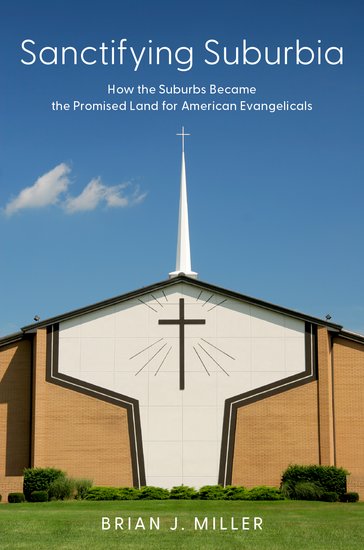
I am looking forward to the release of my book Sanctifying Suburbia: How the Suburbs Became the Promised Land for American Evangelicals on January 14, 2025. Preorder at Oxford University Press and Amazon. Throughout the early part of this year I will be publishing posts about the argument of the book and its implications, surprising things I found while researching, and ongoing possibilities for analyzing religion and the suburbs.
Here is the description of the book:
The suburbs are home to the majority of Americans, including millions of evangelical Christians and thousands of evangelical congregations and organizations. And while American evangelicals are a potent force in society and politics, their connection to and embrace of the suburbs are rarely examined. How did white evangelicals come to see the suburbs as a promised land, home to the evangelical good life and to dense concentrations and networks of evangelical residents, churches big and small, and nonprofit organizations? This book systematically assesses how evangelicals became intertwined with the suburbs and what this means for evangelical life.
Brian Miller shows how evangelical views of race and ethnicity, social class, and gender led to anti-urban sentiment, white flight, and the pursuit of racial exclusivity-all of which has led evangelicals to make the suburbs their physical and spiritual home. At the same time, clusters of evangelical organizations were planting themselves in the suburbs, drawing evangelicals out of the cities. Through sociological analysis, case studies of multiple communities with clusters of evangelical residents, and examinations of evangelical culture, Miller shows that in order to fully understand American evangelicals we must take a deeper look at how evangelicals embraced suburbs and how the suburbs shaped them.
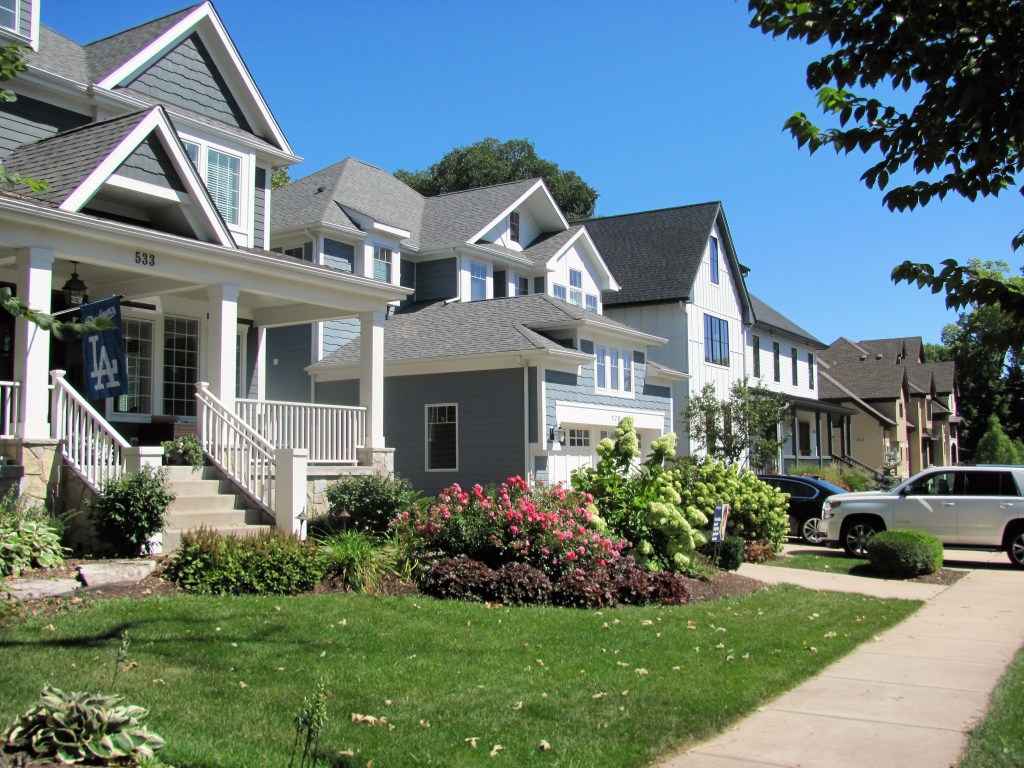
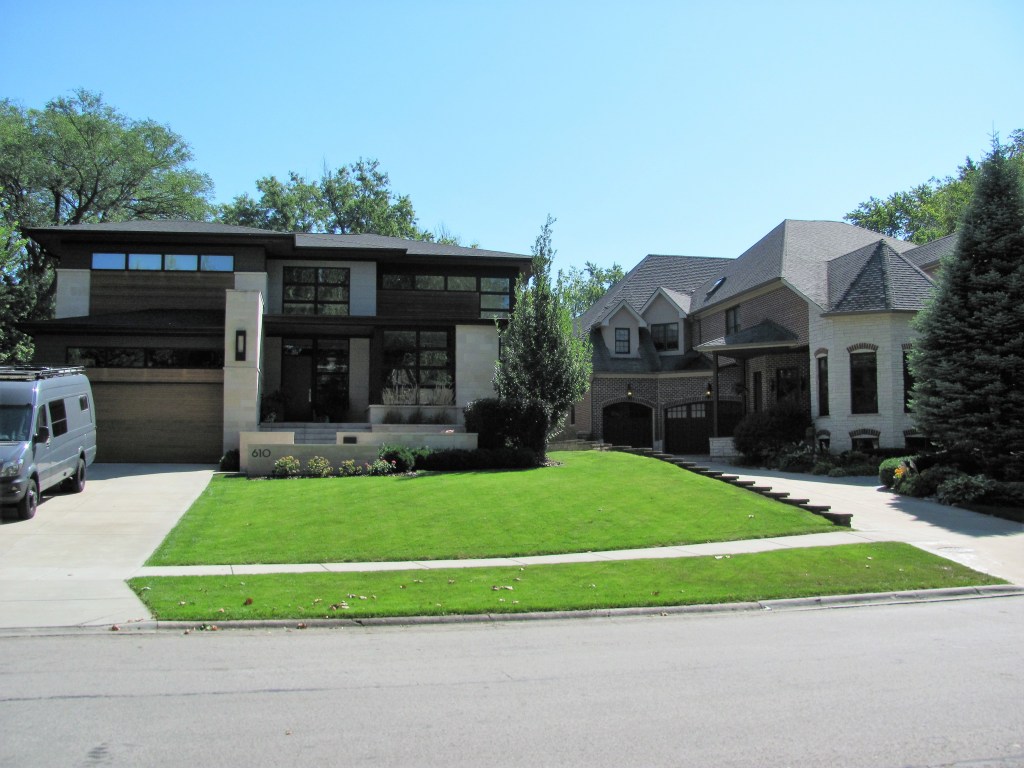
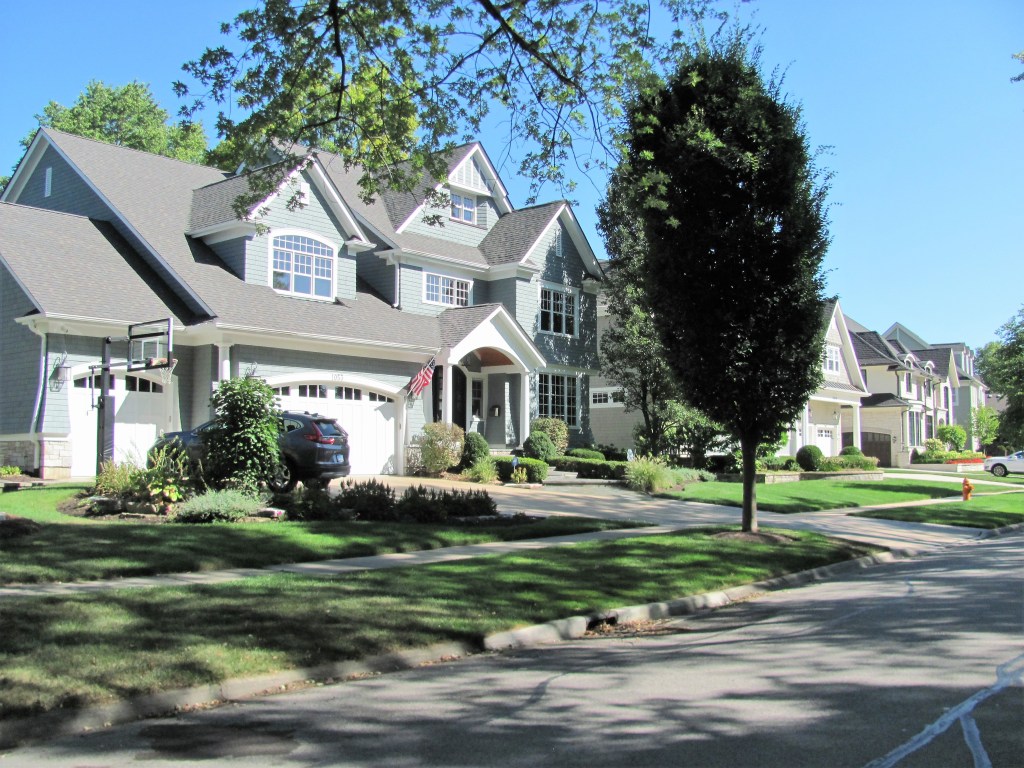
Analyzing before and after images of 349 teardowns between 2008 and 2017 in the wealthy and sprawling suburb of Naperville, Illinois, shows patterns in aesthetic choices and their fit in older neighbourhoods. First, the teardowns are significantly larger and have different features including larger garages and more windows. Second, over 60% of the teardowns feature Victorian styling. Third, the teardowns are often next to other teardowns in desirable neighbourhoods near the suburb’s vibrant downtown. These visual findings show how teardowns that add to the housing stock often imitate common architectural styles yet exhibit disparate features compared to older neighbouring homes.
All three of these streams helped lead to this project. And there is a lot more that could be done in this area as teardowns affect numerous neighborhoods and communities in the United States.
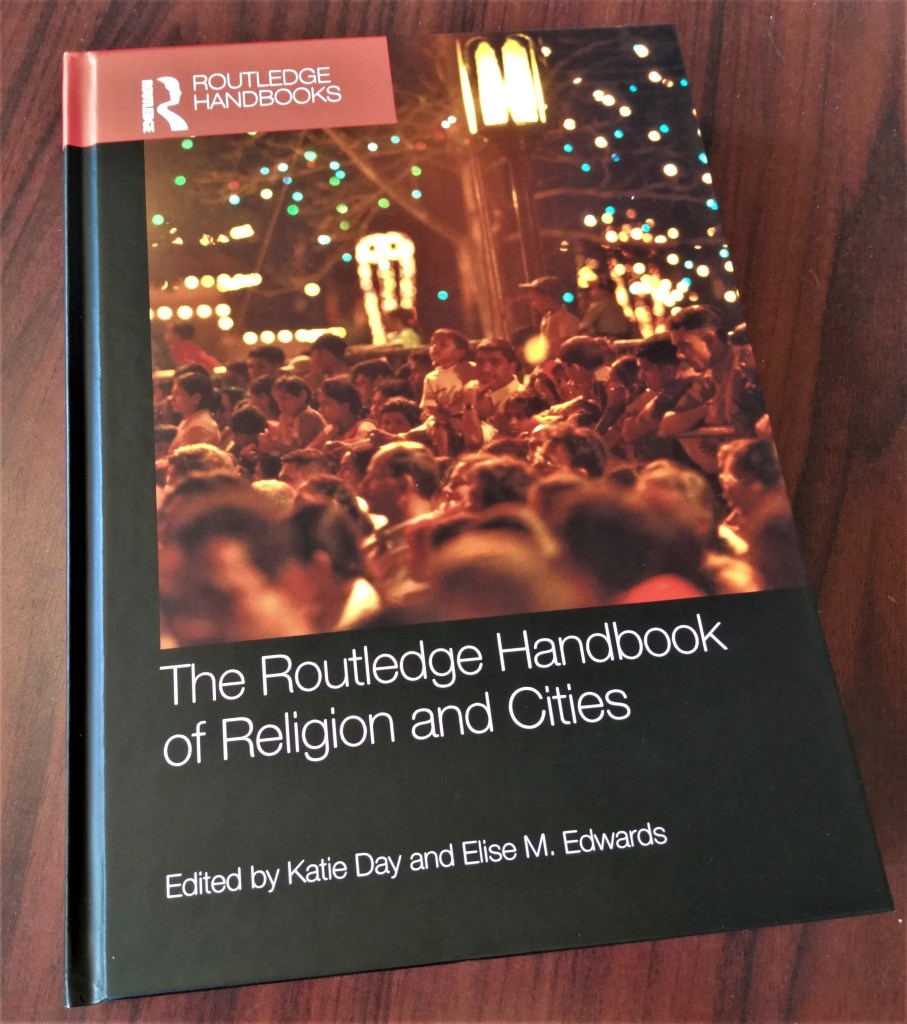
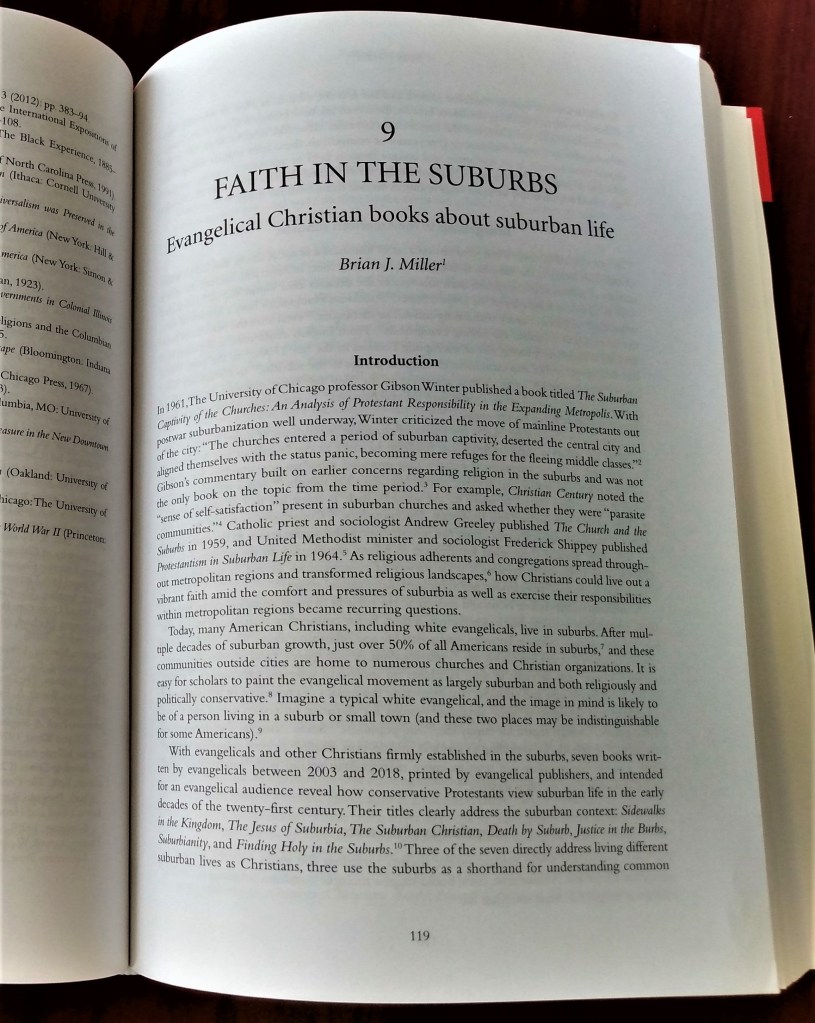
This chapter began in reading several books written over the last two decades where evangelicals considered how to live as a Christian in the suburbs. I slowly collected these books, purchasing some myself and even having one gifted to me by our college’s president. With Americans firmly established in the suburbs at the beginning of the twenty-first century (over 50% of Americans living in suburbs), from different angles the books ask some common questions: do the suburbs present particular opportunities or challenges regarding religious faith? Should Christians live in the suburbs or elsewhere? The chapter I wrote considers common patterns in these books as well as several areas they do not consider.
This chapter is not only about these books; I think these texts also hint at a larger sociological question. How do different spatial environments affect religious faith? Evangelicals do not always consider this; faith is often considered portable, truths are consistent across a variety of contexts, and churches are more about the collections of people rather than buildings and places. Other religious traditions take places more seriously. In the American suburban context with voluntaristic religion, congregations meeting in all kinds of structures, an emphasis on individualism and private property, and geographic mobility, how could a suburban environment not affect religious faith?
The Islamic Center of Naperville, or ICN, is seeking zoning variances so members can develop a mosque, school, multipurpose hall, gymnasium and worship-area expansion in five phases over the next 40 years…
Naperville city planner Gabrielle Mattingly said the city received “an unprecedented volume of public participation” for the hearing, including nearly 2,000 names in support or opposition, 770 written comments and 160 people who signed up to speak…
The commission was able to spend 20 minutes at their meeting this week scrolling through the 1,610 signatures favoring ICN’s plans and the 305 in opposition…
ICN’s development plans show the first phase, expected to start this year, includes constructing a two-story mosque with 26,219 square feet of space to provide space for 692 worshippers, said Len Monson, the attorney representing ICN. It also will include space for offices, conference rooms, storage, multipurpose spaces and washrooms.
One interesting aspect of this proposal is that it lays out several stages that progressively increase the size of the mosque over the next forty years. Building in stages could make sense for a lot of religious groups: they could wait and see how many people are attending and it could help spread out the need for financial resources.
When the Islamic Center of Naperville requested in 2011 that Naperville annex this land with the goal of eventually constructing a facility on the property, neighbors expressed concerns. The City Council unanimously approved the request but the reactions in Naperville occurred around the same time as several other mosque proposals in DuPage County encountered opposition.
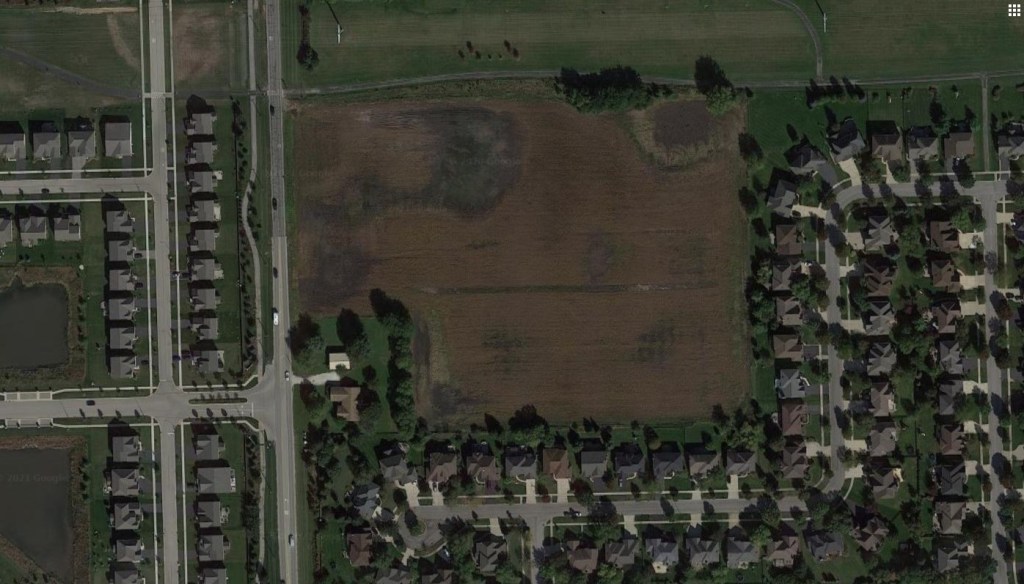
Additionally, this property is surrounded on all sides by residences. I have found in my research that locations near homes tends to increase concerns raised by community members. In Naperville and numerous other communities in the United States, residents used to nearby open spaces or agricultural land can hope the land always stays in that form rather than become home to a new building or development.
It is hard to know from this article how many of the public comments are in support of the proposed changes and how many are opposed. Even if the number of supporters is large or a majority, that would still suggest a sizable number of people with concerns.
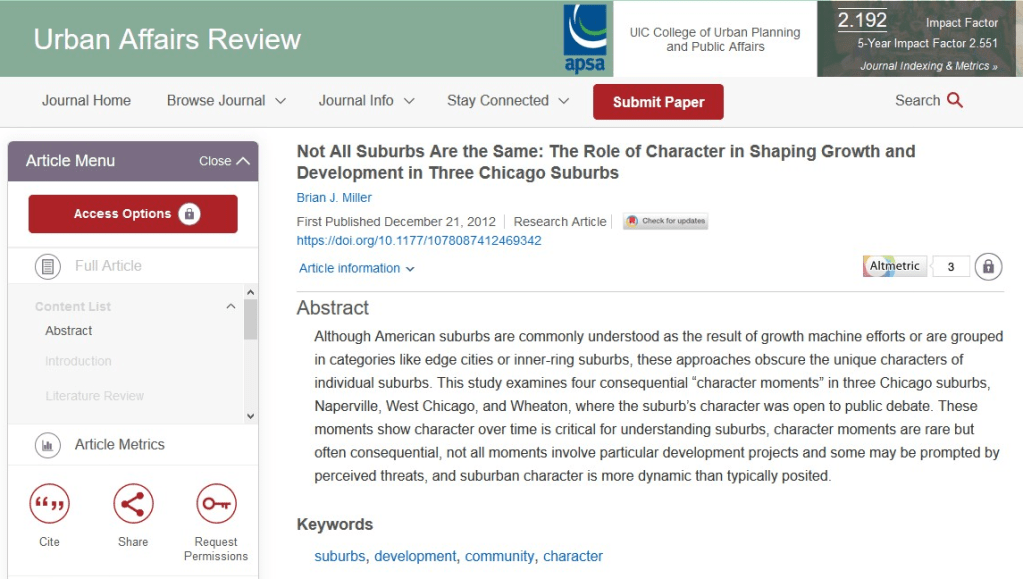
As I prepare to present research tonight on suburbs and race, specifically in Wheaton, Illinois, I reflected on my methodological approach. In sociology and the social sciences, we often seek data that is both generalizable and detailed. In my research, I have largely worked to study suburbs through comparisons with other suburbs. I believe this has some distinct advantages, even as it also presents limitations.
One approach to studying suburbs would consider them as a whole: suburbia. Even though there are thousands of suburbs, they share common characteristics. Suburbs are distinct from other settings and their geography, density, physical arrangements, and social and cultural life separate them from big cities and rural areas.
Instead of focusing on the whole, a study could go another direction: focus on one specific suburban community. Perhaps it is a suburb that exemplifies suburbs as a whole, perhaps it is a more unusual suburb. Studying the history and particulars in depth could provide rich details about suburban communities and life.
My research thus far has tried to take a middle approach. This involves finding a small set of suburban cases to compare and contrast. I studied each of these cases in a good amount of detail. The comparison between cases helps me assess whether patterns in one community are unusual or not. The detail I have about each community helps me know whether these suburbs fit broader patterns.
Selecting the right suburban cases can be difficult. Among all the suburbs, it is better to choose ones that share certain traits or better to find more different ones? All the detail about specific places may not be that useful if the cases cannot relate to suburbs.
Another downside of the historical/comparative method is the amount of time it requires. Gathering details on specific suburbs can take time. Going through the data and finding patterns can take time.
And, the study of American suburbs benefits from all of the approaches I mentioned above: broad patterns in all suburbs, case studies of particular communities, and historical/comparative work among sets of suburbs. Even as my initial study of suburbs took this middle approach, I have also written in the other veins considering suburbs as a whole and focusing in more on a specific community. With complex suburbia and many suburbs to consider, there is plenty to study from multiple angles.