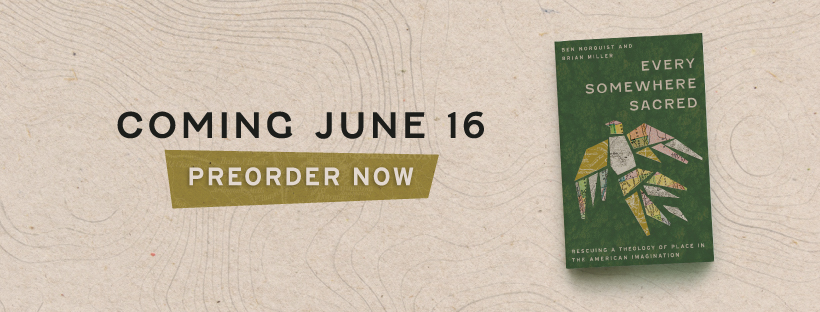
1 day until Every Somewhere Sacred: writing and waiting, learning and doing

Writing a book does not just involve putting words on a page, or, more accurately, typing letters into computer software. It involves thinking, discussing, doing. I find it hard to write something without first turning it through in my mind over and over as well as living out the ideas and the questions. Here are two examples from the process of creating Every Somewhere Sacred.

Photo by manu prasad on Pexels.com

First, I live in the suburbs of the United States. These are unique settings with particular histories. A majority of Americans live there, including many American Christians. (Read Sanctifying Suburbia for more on this.) What does difference, if any, should it make to be Christian and live in the suburbs?

Thinking about this is important. It is easy to live a suburban life, including doing Christian things as part of this life. Doing is also important: Christians are to use their minds and their bodies as they live out their faith.

Second, lots of American communities are home to Christian congregations and organizations. How do these Christian groups shape places and land? Are they primarily focused on their own internal activities or do they contribute to the flourishing of communities and places?

Photo by Luis Quintero on Pexels.com

I ask this as I live and work in a suburb partly known for its religious character. In addition to being home to a known evangelical college, it is home to 40+ churches and many evangelical organizations are in the suburb or nearby. Does this mean the character of the community is different in terms of how people interact (interpersonally and collectively) and how land and creation are treated?

I hope the years spent working with Ben on writing this book also influenced how I act. My question about living in the suburbs or Christians meeting together in certain locations could apply to any place and setting. We address both thinking and doing in Every Somewhere Sacred. We argue we need new tools, metaphors, and lenses to help us recognize what is going on in lands and places and to see what God is doing. We want to act with these lenses, listening to others, open to what we might have missed, and acting in ways that are consistent with God’s mission. If we can see land and place as a gift, sacrament, kin, or home, it can prompt us to better participate in what God is already doing in these settings.

5 days until Every Somewhere Sacred: caring for and learning from a suburban yard

The yard for my suburban house is 0.26 acres. On all four sides, the house is surrounded by grass, bushes and trees, and wildlife. This is part of the American Dream: a suburban single-family home for a family framed by green grass and attractive landscaping. All that nature in the yard allows space for kids to play in a private setting free from threats. Or perhaps it is about keeping the lawn extra green and finely trimmed and completely free of weeds and leaves so that the nature around the home leads to a higher return on investment.

Photo by princess on Pexels.com

What could it look like for Christians to expand their imagination about the nature around them rather than defaulting to American land stories and half-truths? In Every Somewhere Sacred, Ben Norquist and I consider better ways to engage with God’s plans for land and places.

What might that mean for my yard? It is certainly not “wild” land. Humans have been in this area for a long time, including Indigenous people and white settlers starting in the 1830s. This particular plot of land was farmed for decades before a developer started putting up houses in the early 1970s. As they put up houses, they shaped other features of the land, putting in a pond that some of the homes back up to, leaving numerous older trees along the main road through the neighborhood, and situating other homes to back up to a public park.

The land is not there just to serve my financial interests or the specific needs of my household. My yard is connected to other yards and it part of a broader ecosystem. Some animals and plants thrive in suburban settings. Others do not. I regularly see rabbits and have occasionally spotted foxes. Chickadees, robins, cardinals, red-tailed hawks, cormorants, and Canadian geese can be seen and heard. Insects are around. We have a small, simple garden that requires weeding and watering. I do not fertilize my yard or use weed killer. We occasionally trim the bushes and trees.

I want the nature around me to flourish. I am created, nature is created. My yard presents a small opportunity for me to learn from and with Creation about God and the world. We can tend, cultivate, plant, tear up when needed. We can work with nature rather than just extracting value from it.

In our book, we describe four different lenses different Christians have developed to help us better understand the physical world around us: land as gift, sacrament, kin, and home. If I took time with each of these and applied them to my own yard, what could I see differently? As I retrieve a basketball from the rose bushes next to the driveway planted by previous occupants of our home or when I drag the hose to the backyard to water our garden or when I put down mulch in the flower beds or when I hear a woodpecker in a nearby tall tree, how might I better see God and the world?

6 days until Every Somewhere Sacred: walking to know places

Last night, I drove home from church over a stretch of road I have traveled hundreds of times in my life. The road passes by suburban low-rise office buildings and businesses, houses, and open fields. On this warm and humid night, I drove with the windows open, smelling the different contexts as air flowed through the car.

This common driving experience may be how Americans regularly experience places. At speeds from 25 mph to 75 mph, we use a network of roads and highways to get where we want to go. We see driving as offering independence and we advertise it as an enjoyable experience.

In Every Somewhere Sacred (out June 16), Ben Norquist and I discuss how Christians can exercise our imaginations to tell better stories about land and places. And I’m not sure driving does much to further our imaginations of how God has acted, is acting, and will act in and through places.

Photo by Jan Ernest on Pexels.com

That is why I would recommend walking as a great means to get to know a place. Using the bipedal locomotion humans have used throughout history, we can better see, hear, touch, and smell places. Walking limits our speed. It pushes us to consider our own physical bodies as we interact with other physical creations. it gives us space and a rhythm to consider what is happening around us. It gives us the same opportunities that many before us have had, including Adam and Eve walking through the Garden of Eden or the freed people of God walking out of Egypt or Jesus walking the shores of the Sea of Galilee or in Nazareth. Before people wanted to get in 10,000 steps a day or stuck in their ear buds while walking, they used their feet to move in and near their homes and communities.

I did not always like walking. As a kid, I would have preferred to be inside reading or watching sports compared to being outside. But not only is walking necessary at times (even in our car-dependent society), it can be enjoyable. For example, I walked to and from my high school numerous times. Often I had headphones on, listening to new music I discovered or to a Cubs game. The walk took about 20 minutes. As I walked the same route over and over, first around 7 in the morning and later around 3:30 in the afternoon, I started noticing things. How one big field next to the railroad tracks changed over the course of the year. I observed people and houses as I passed. I could see differences between neighborhoods built in different decades.

I try to walk regularly now. I have some set paths near my house as well as around my work. I enjoy walking in big cities, suburbs, and more rural or wild areas. I have walked alone, with people, in crowds, and with dogs. The simple, repeated action of walking has helped expand my imagination for what God is already doing in and through land and places.

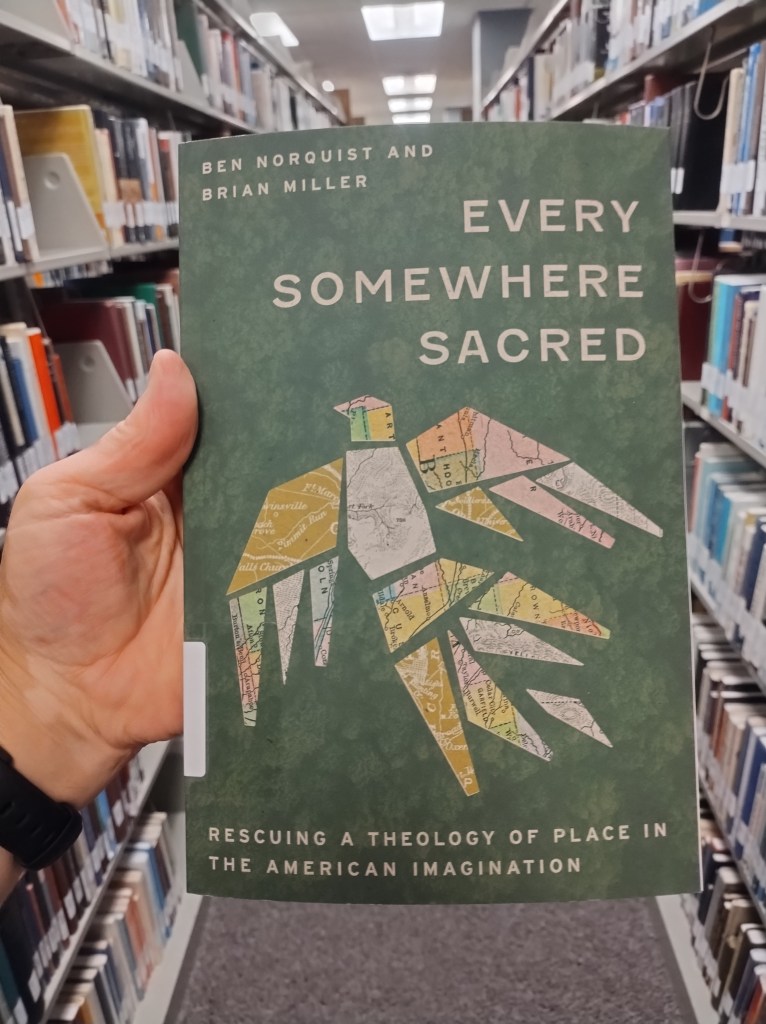
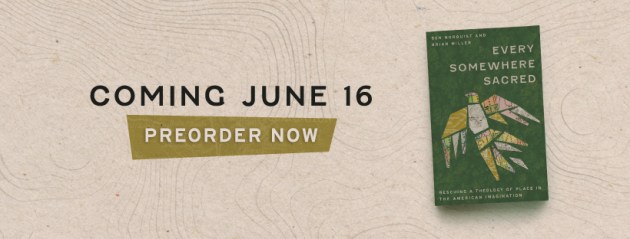
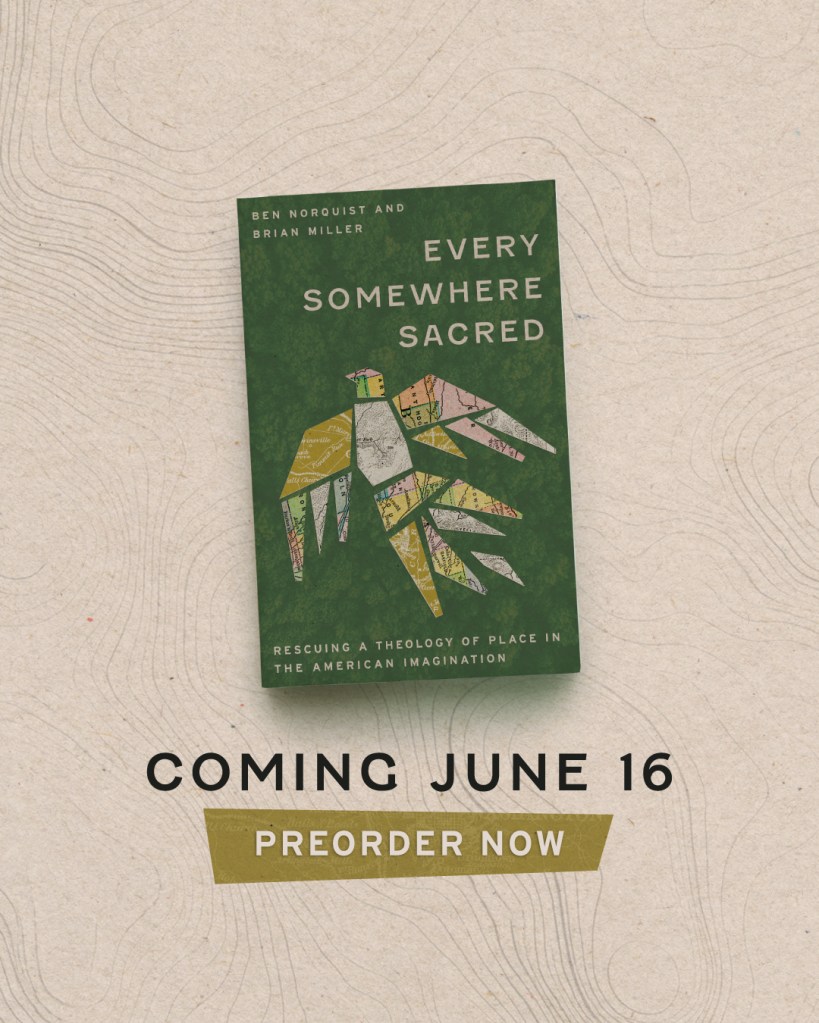
Book cover for Every Somewhere Sacred: Rescuing a Theology of Place in the American Imagination (out June 16, 2026)

Ben Norquist and I have a book titled Every Somewhere Sacred: Rescuing a Theology of Place in the American Imagination coming out June 16, 2026 with IVP Academic. See the cover below:

Pre-order the book here. Download a free chapter here.

Ben and I have worked on this book for years. We had co-authored an article titled “Christian Colleges in the Locational Wilderness: The Locations of CCCU Institutions” that was published Christian Higher Education in 2021. Ben had done some research into his family’s property with those efforts published as “My land acknowledgement” in Christian Century in November 2023.

By November 2022, we had a working outline of the book and a draft proposal for the project. We were excited about the possibilities of considering land and places from a theological and social science point of view. We agreed there was a need for a book that helped American Christians think about approaches to land and place, to consider what did not work currently or in the past and what could work in the present and future.

Going from our proposal to a full draft took a lot of writing, reading, and conversation. We learned a lot. We got words into documents and then revised them. We tried out ideas with friends and colleagues. We finished the full draft manuscript in July 2024.

This is a bit of the back story of what will be released in full in June. I’ll be sharing more about the book in the coming months ahead of the release.