Churches and a digital divide during COVID-19

COVID-19 has pushed more churches into the digital realm but there are patterns in who is operating online and in what ways:

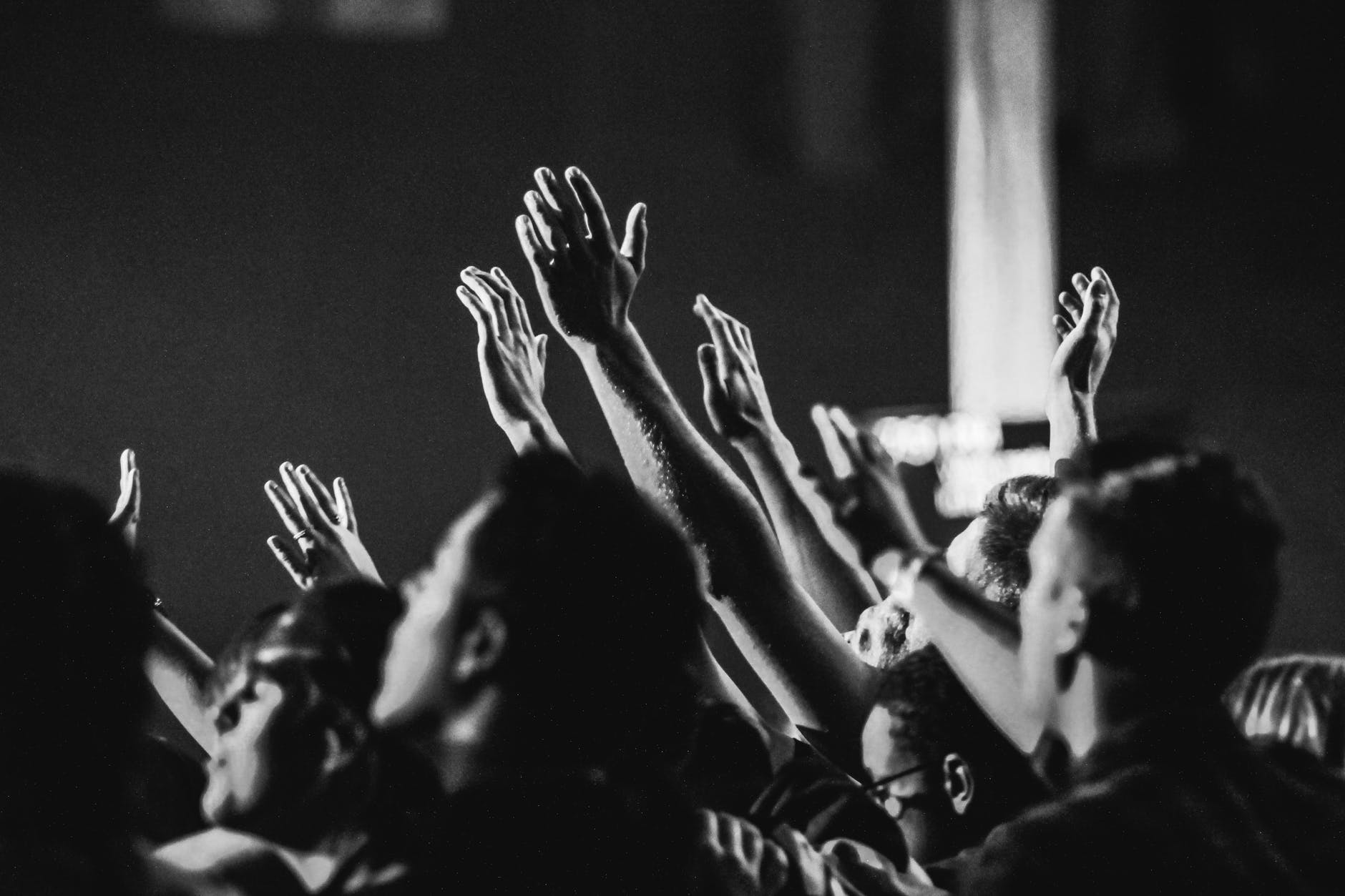
Photo by Shelagh Murphy on Pexels.com

“The digital divide in churches reflects the digital divide in American society more generally,” says Mark Chaves, a theologian at Duke University and director of the National Congregation Study, which has surveyed religious groups in the US since 1998. Churches with less of a digital presence tend to be located in rural areas. Their congregations are more likely to be older, lower-income, and Black. Those demographic groups are also less likely to have access to broadband, and they have been disproportionately affected by the pandemic, both in health and economic outcomes. Those realities have factored into church outcomes too. A survey from LifeWay Research, which focuses on Christian ministries, found that white pastors were the most likely to report offerings that were higher than expected in the past year. Black pastors, by contrast, were most likely to report that the pandemic economy was impacting their churches “very negatively.” Churches often run on tight margins, and those impacts can have long-term effects: LifeWay Research found that a small percentage of churches have had to cut down on outreach, suspend Sunday School or small group programs, or lay off staff members. Black pastors were more likely to say they cut staff pay or deleted a church position…

For the faith sector, the acceleration of new technologies could lead to massive changes. Other industries, like media and retail, have been transformed as they progressively moved online; money, influence, and attention now converge in a small pool of winners, often at the expense of smaller outfits. Some believe churches might experience something similar. “You’re going to have the top 40 preachers that everyone listens to, and the regular everyday preacher is not going to be able to compete,” says William Vanderbloemen, a former pastor and founder of the Vanderbloemen Search Group, an executive search firm for churches. That’s not to say more niche markets couldn’t also emerge. “People will still show up to hear a message from a pastor who knows their specific community on a micro-contextual level. Like, here’s what happened in our zip code this week, and here’s how it relates to how we think of our God.”…

Chaves, who runs the National Congregation Study, says it’s too soon to know whether this year will have a lasting impact on worship practices, and what that impact would be. “Church attendance has been declining slowly for decades,” he says. “Will we see a shift if online participation stays ubiquitous? Or will it mean that more people are participating?” Some early research suggests that churchgoers are eager to get back to in-person services and worshipping together with their community. While smaller congregations, like First Baptist Church Reeltown, are unlikely to continue broadcasting their sermons on Facebook Live, other churches may find value in a hybrid model, where some people come into Sunday services and others watch from their computers.

One way to think about this is to consider the marketplace of American religion. Because there is no state-sponsored religion and there is the free exercise of religion, religious traditions and congregations can compete for people. In this competition, innovation and flexibility can help lead to increased market share. The Internet and social media are additional tools in this competition. Want to appeal to those using those mediums? You have to have a presence. Or, perhaps a group can seek others who eschew digital worship.

Using the Internet for church is not new. But, COVID-19 may have accelerated this market competition. Could churches compete without going online? Just as businesses suffered, how many churches might close because of COVID-19? Who can provide a compelling church service and other activities in online forms? Can you easily translate online viewership to attendance or membership measures? Could certain churches flourish in certain platforms while others utilize other options?

And what this means for religiosity in America is hard to know. In addition to church attendance figures, does this push Americans further down the path of individualistic and voluntaristic faith? Is church via Internet or social media really church in the same way without embodied action and sacred spaces?

“Unprecedented volume of public participation” regarding development plans for Naperville mosque

Updating a case I wrote about in a 2019 article, further plans for a property owned by the Islamic Center of Naperville on the suburb’s southwest side have drawn a lot of public comments:

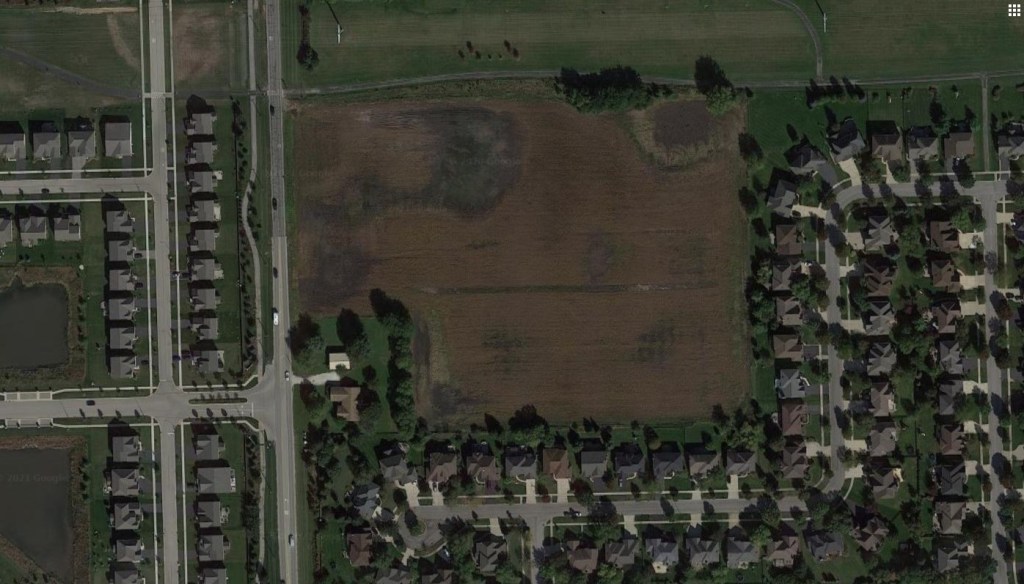
Google Maps

The Islamic Center of Naperville, or ICN, is seeking zoning variances so members can develop a mosque, school, multipurpose hall, gymnasium and worship-area expansion in five phases over the next 40 years…

Naperville city planner Gabrielle Mattingly said the city received “an unprecedented volume of public participation” for the hearing, including nearly 2,000 names in support or opposition, 770 written comments and 160 people who signed up to speak…

The commission was able to spend 20 minutes at their meeting this week scrolling through the 1,610 signatures favoring ICN’s plans and the 305 in opposition…

ICN’s development plans show the first phase, expected to start this year, includes constructing a two-story mosque with 26,219 square feet of space to provide space for 692 worshippers, said Len Monson, the attorney representing ICN. It also will include space for offices, conference rooms, storage, multipurpose spaces and washrooms.

One interesting aspect of this proposal is that it lays out several stages that progressively increase the size of the mosque over the next forty years. Building in stages could make sense for a lot of religious groups: they could wait and see how many people are attending and it could help spread out the need for financial resources.

When the Islamic Center of Naperville requested in 2011 that Naperville annex this land with the goal of eventually constructing a facility on the property, neighbors expressed concerns. The City Council unanimously approved the request but the reactions in Naperville occurred around the same time as several other mosque proposals in DuPage County encountered opposition.

Additionally, this property is surrounded on all sides by residences. I have found in my research that locations near homes tends to increase concerns raised by community members. In Naperville and numerous other communities in the United States, residents used to nearby open spaces or agricultural land can hope the land always stays in that form rather than become home to a new building or development.

It is hard to know from this article how many of the public comments are in support of the proposed changes and how many are opposed. Even if the number of supporters is large or a majority, that would still suggest a sizable number of people with concerns.

Seeing modernization and religious change in one small suburb

One way to approach the significant social changes of recent centuries is to examine broad patterns at a societal level. Another way to understand these changes is to look at what happened in a suburban community outside Boston:

Photo by Rudolf Kirchner on Pexels.com

“What has produced this kind of world is modernization,” Wells said. “The public environment that results from it is modernity. But these words––modernization and modernity––are abstractions to so many people. How could I explain what has happened to my readers in a way that they could get it?”

He found the answer in a small Massachusetts town named Wenham––population 4,875 when Gordon College isn’t in session. Wells opens No Place by explaining how Wenham, settled by Puritans after a 1635 sermon, slid into modernity in stages––telegraphs gave way to radio and television and internet; farmland yielded to suburban homes; horses were replaced with trains and cars and airplanes.

At some point, Wenham crossed a divide along with everyone else, Wells wrote in No Place. “It is as if the ability to make better cars and better airplanes and better medicines and better theories imply an ability to make better selves––to transcend not only our own mortality, which would be no small feat, but also our own corruption, which would be an even larger feat.”

“So many people no longer believe in human nature––something all human being have in common,” he told TGC. Instead, “they believe in the self––the core at the center of each person that is unique to them and unlike any other self. This is really at the root of the extreme relativism of our time where people not only have their own ‘values,’ but also their own take on reality.”

I have not read the book being discussed – No Place for Truth – but this is a common academic approach: use an interesting case to illustrate broader processes. In this case, it sounds like Wenham, Massachusetts can help show how modernity played out in a community roughly twenty-five miles from Boston.

At the same time, I am more interested in the suburban connections here. Again, while I have not read book discussed above, I have been studying religion and place in recent years and there may be some patterns across communities. Here is my attempt to connect the case of Wenham to suburbs and religious change.

Wenham is a small and wealthy community. Founded in the mid-1600s, the community has just under 5,000 residents with population growth of over 30% three decades in a row after World War Two. The median household income is over $90,000 and the community is over 97% white. (All figures from the 2010 Census.)

When a large number of Americans moved to the suburbs during the twentieth century, these new suburban residents were often said to be conservative. This could apply to politics as well as religion. Religiosity soared after World War Two. Many new churches were founded in suburbs while others already present grew substantially.

But, even in small suburbs where religion was important, modernism prevailed. The focus on self became part of the American suburban dream. Even with a suburban focus on providing the best for the nuclear family, suburban residents could focus more on themselves free of the stronger community ties that could be found in either small towns or urban neighborhoods from which the new suburbanites came. And success in the suburbs came to be defined as personal or individual success: a nice house, a good income, leisure time, having all the necessities befitting a suburbanite.

This all had an impact on religious beliefs, behavior, and belonging. A shift to the self changes beliefs about transcendent beings and doctrines, affects how people live their everyday lives, and weakens attachments to religious institutions.

Thus, the argument goes, modernism and religious change came to America and its communities. Life changed everywhere, even in exclusive suburban communities.

Podcast interview regarding Building Faith: A Sociology of Religious Structures

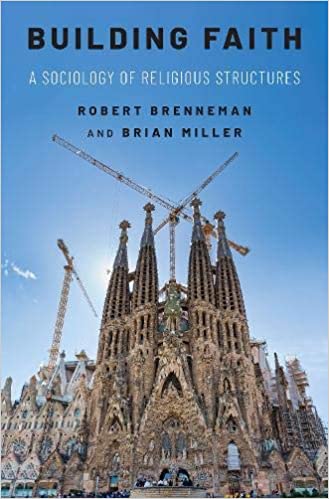
David Hartman and Brooke Christensen of the More Than This podcast recently talked with sociologist Robert Brenneman and me about our new book Building Faith: A Sociology of Religious Structures. If you are interested in religious buildings and architecture, you will want to listen.

More Than This podcast on Anchor

Roughly 3,500 churches close each year; the fate of all their buildings is unknown

In profiling religious buildings that are repurposed into new and unusual spaces, a New York Times story highlights how many potential religious buildings could be repurposed:

A church turned real estate office in Orland Park, Illinois. Image from Google Street View, August 2018.

But not every flock-less church faces an afterlife as living spaces stuffed full of “exceptional quirks around every corner” for hipsters. Many have become different kinds of creative spaces and communal gathering spots, often providing what might be considered “secular ministry.”

It is unclear how many religious buildings are repurposed. Roughly 1 percent of the nation’s 350,000 congregations — or 3,500 — close each year, based on an analysis from Mark Chaves, a sociology professor at Duke University and director of the National Congregations Study. But not all find new uses and some buildings are filled by different congregations.

The eight subsequent profiles of transformed religious spaces are indeed interesting. And this follows a pattern of news reporting on these conversions: look what cool spaces can be created from church buildings! (See earlier blog posts on converting churches to residences here and here.)

Yet, the paragraphs cited above from the beginning of the story note the need to study the full story of religious buildings. What happens to all the buildings associated with congregations that close? A few guesses based on the research Robert Brenneman and I did in our book Building Faith:

  1. Many of these buildings are reused by other religious groups. These can sometimes be groups in the same religious traditions and other times not. A number of congregations are willing to use an existing religious building and then modify it to their own purposes. This might provide a unique opportunity to acquire a building or location for a cheaper price and/or borrow the tradition in an older structure.
  2. Some religious buildings are converted into other uses. I would guess that the percent of all sold or abandoned religious buildings converted into cool uses – ones that become architectural marvels for other uses or feature the kind of activity to be featured in a newspaper – is relatively low.
  3. Some of these church buildings are eventually torn down. It can be expensive to maintain aging structures. It can be costly to convert old structures. The land may be too valuable to be taken up by a religious building. The building might be in a neighborhood or community with limited resources or declining fortunes.

If the buildings are indeed repurposed, the new owners may or may not keep some of the original features. It is hard to tell exactly from the images with the New York Times story but it looks most of these conversions tried to keep some of the church-specific features like stained glass windows, organs, lighting, and ceilings. This may not be desirable for all uses or even for religious groups reusing the building.

The rise of a sermon phrase – “a city on a hill” – to explain American exceptionalism

An English professor describes how a sermon by John Winthrop in 1630 came to describe the United States:

Photo by Felix Mittermeier on Pexels.com

In 1630, John Winthrop, the first Puritan governor of Massachusetts Bay, declared that “we shall be as a city upon a hill.” When President Ronald Reagan used Winthrop’s words to describe America, he helped transform “A Model of Christian Charity” into a foundational text of American culture. In its own day, Winthrop’s sermon went unrecorded, unpublished, and almost entirely unnoticed. It was found and first published in 1838—at which point it continued to be ignored for another century…

Winthrop’s sermon is a communal statement of love—a “model of Christian charity,” exactly as it is called. The question behind his sermon is simple: What do we owe each other? And Winthrop’s answer is the same as Paul’s: whatever redemptive love requires…

The phrase “city on a hill” also has a fascinating and largely unknown 17th century context. The phrase comes from Jesus’ Sermon on the Mount (specifically Matthew 5:14), and in the 1600s, it was Roman Catholics, not Puritans, who loved it most. They used Matthew 5:14 to prove Protestantism false and Catholicism true. The Catholic Church, they said, was the only one visible church since the time of Christ (Jesus “set it on a hill”). Protestants, in contrast, described the true church as small or hidden, turning to Luke 12:32 and Revelation 12. When it came to Matthew 5:14, they had to reinterpret this verse to pry it from Catholic hands. Instead of the universal church being a “city on a hill,” Protestants like Winthrop claimed that “city on a hill” applied locally, to this place or that, wherever the true light of the gospel shone. Because the phrase did not refer to one universal church, it could be reapplied to individual congregations, towns, cities, and eventually—as we have come to see—a nation…

My book moves from the 1600s through the American Revolution and the making of the first national history textbooks in the 1800s to the claims and impact of the influential German sociologist Max Weber in the early 1900s. But for me, the most enjoyable chapters to write were on Perry Miller, a Harvard scholar who had a giant influence on the way we understand the Pilgrims and Puritans today. It was Perry Miller, an atheist, who above all made John Winthrop’s “city on a hill” sermon central to the American story. He did so not just to set the US apart from the USSR, but also to challenge American society, which he saw as having fallen from its Puritan origins. Just a few years before Miller died, the Harvard-educated John F. Kennedy became the first president to use Winthrop’s “city on a hill” sermon in a speech. When Reagan picked it up, it became famous—a linchpin in larger narratives of American exceptionalism.

Another example of how civil religion develops: several centuries after a sermon is given, it is picked up and interpreted by political leaders and others who want to tie several strands of social life together. Implied above is that another politician in another time period – say Grover Cleveland in the late 1800s – may not have been able to prompt the spread of this connection in American life. Ronald Reagan, who tried to be optimistic about American life, helps give the quote, which had some public airing because of John F. Kennedy, new life in a particular context.

The 17th century context of the meaning of a “city on a hill” is fascinating given what the phrase came to represent. If Winthrop meant to use the phrase in contrast to Catholic interpretations, the fact that the phrase came to represent a powerful America is a twist. The Protestant interpretation discussed above applied to a small context. When Americans use the phrase today, they tend to mean a powerful city on the hill, casting light on the countryside below or holding a fortified position or occupying the high ground. The American bastion of freedom and Christendom has replaced the prior holders of this title.

This phrase also gives more credence to cities than Americans have over the course of their history. Even with some important cities on a global stage, Americans are generally anti-urban and instead embrace suburban life. Updating the phrase, perhaps Americans would rather say “the suburban megachurch on the hill” or the “quiet yet stately suburb on the hill.”

New publication: Christian Colleges in the Locational Wilderness

Christian Higher Education just published online an article from co-author Ben Norquist and I titled “Christian Colleges in the Locational Wilderness: The Locations of CCCU Institutions.” Here is the abstract:

This article examines the locations of the 111 governing members of the Council for Christian Colleges & Universities (CCCU) and consider how these locations hinder evangelical Protestants from reaching their goal of engaging American society. We found that CCCU institutions cluster in cities in mid-sized metropolitan regions in the South and Midwest, are more likely than the United States population as a whole to be in rural areas, and have a limited presence in the largest metropolitan regions in the United States, particularly their central cities. In comparison to the top 102 liberal arts institutions and top 101 national universities, CCCU governing members were on average founded later and they have locations more similar to liberal arts schools than research universities. We argue that these patterns are physical manifestations of the modernist-fundamentalist debate, suburbanization pressure and anti-urban sentiment, and concentrations of evangelical residents. We conclude that CCCU members’ locations limit their ability to help students and constituents engage society with locations away from the largest cities and their power, resources, and networks

This project began several years ago amidst a search for data on where evangelicals in the United States are located. Given that Ben and I are in a particular location and working for a CCCU member institution, we dug into this data (with the help of my TA Rebecca Carlson) to uncover the patterns of where CCCU schools are located, particularly in comparisons to other kinds of schools and where Americans live more broadly. The last two sentences of the abstract sum up our findings and the implications: with many locations away from the biggest cities and metropolitan regions in the United States, CCCU institutions may only be able to do so much in engaging a country (and globe) dominated by cities and their metropolitan areas. More broadly, if evangelicals are not present or active in these global cities and regions, their opportunities to engage American society are limited.

Aiming “to bring spiritual richness to corporate America”

Spiritual consultants look to bring spiritual practices and approaches to the American workplace:

Photo by fauxels on Pexels.com

In simpler times, divinity schools sent their graduates out to lead congregations or conduct academic research. Now there is a more office-bound calling: the spiritual consultant. Those who have chosen this path have founded agencies — some for-profit, some not — with similar-sounding names: Sacred Design Lab, Ritual Design Lab, Ritualist. They blend the obscure language of the sacred with the also obscure language of management consulting to provide clients with a range of spiritually inflected services, from architecture to employee training to ritual design.

Their larger goal is to soften cruel capitalism, making space for the soul, and to encourage employees to ask if what they are doing is good in a higher sense. Having watched social justice get readily absorbed into corporate culture, they want to see if more American businesses are ready for faith…

Before the pandemic, these agencies got their footing helping companies with design — refining their products, physical spaces and branding. They also consulted on strategy, workflow and staff management. With digital workers stuck at home since March, a new opportunity has emerged. Employers are finding their workers atomized and agitated, and are looking for guidance to bring them back together. Now the sacred consultants are helping to usher in new rituals for shapeless workdays, and trying to give employees routines that are imbued with meaning…

The Sacred Design Lab trio use the language of faith and church to talk about their efforts. They talk about organized religion as a technology for delivering meaning.

Perhaps this is common elsewhere but this strikes me as uniquely American for multiple reasons:

-The interest in unbundling religion and spirituality from traditional religious practices

-Combining spirituality and work. Perhaps this hints the true religion in America is capitalism?

-Assuming there is a common religiosity that can work across a potentially diverse workforce. Kind of like civil religion, which attempts to unite religion and nationalism, but for the office.

-Religion being less about transcendence or encountering the divine and more about pragmatism: helping corporations succeed and individuals find or interact with their soul.

-The entrepreneurial nature of bringing religion to the workplace. This article profiles consultants and firms bringing it in. (It would be interesting to see how this interacts with more top-down approaches from CEOs or other corporate leaders who bring a strong faith or spiritual elements to their practices and aims.)

I will be curious to see (1) what kind of traction this approach gets – does it have staying power? What kinds of spirituality in the office catch on and which do not? – and (2) what the reaction might be among a range of firms and sectors – is this something limited to educated, managerial suites in particular locations?

Celebrating ordinary work in a hymn

I know wading into opinions of hymns, worship songs, and other church music can be thorny. But, here on Labor Day, I am reminded of verse 4 of the hymn “Earth and All Stars”:

The hymn presents different aspects of Creation and the fourth verse specifically addresses workers, particularly those devoted to building. There are not too many church songs I know of that address how work can be part of worship and devotion. Indeed, many songs could give the impression that Christian activity should primarily consist of sacred duties. Of course, there is a long history of Christians wrestling with work and how ordinary tasks contribute or connect to faith. Adding more music that highlights work, something that occupies many hours and engages the minds, bodies, and talents of many, could go a long way to connecting laboring and faith.

(As a musician and educator, I also notice verse three and five and the ways they connect these activities to religious expression. And in what other setting can you sing about “loud boiling test tubes”? At the same time, there is room in this song to celebrate other forms of work and labor.)

The role of religious buildings in combating global sameness in architecture

A look at the spread of the same architecture around the world – “glass-and-steel” – leaves out religious architecture:

Some time ago, I woke up in a hotel room unable to determine where I was in the world. The room was like any other these days, with its neutral bedding, uncomfortable bouclé lounge chair, and wood-veneer accent wall—tasteful, but purgatorial. The eerie uniformity extended well beyond the interior design too: The building itself felt like it could’ve been located in any number of metropolises across the globe. From the window, I saw only the signs of ubiquitous brands, such as Subway, Starbucks, and McDonald’s. I thought about phoning down to reception to get my bearings, but it felt too much like the beginning of an episode of The Twilight Zone. I travel a lot, so it was not the first or the last time that I would wake up in a state of placelessness or the accompanying feeling of déjà vu.

The primary focus of this article appears to be architectural wonders in business districts. These buildings both reflect the primary values of today’s world – capitalism, finance, power – and dominate modern skylines. They promote a particular global order.

In contrast, religious buildings often refer to other values: transcendence, community, beauty or sacredness. They can be part of hegemony or empire or the spread of a global order. But, they can also signal space that resists oppression or injustice. And, religious buildings can both reflect international styles and/or local religious interpretations.

In the book Building Faith Bob Brenneman and I wrote, we tackle some of these issues. There are modernist religious buildings. There are international structures influenced by the architecture of Las Vegas or glitzy cities. But, there are also small congregations building humble structures, others mixing indigenous architecture and common forms of architecture in particular religious traditions, others converting one kind of structure to another, and others worshiping in more secular structures. Many of these buildings are the opposite of these international symbols of affluence and starchitects. At least in form, they present an alternative vision and with the actions of the congregation within, may actively counter hegemonic order.

https://global.oup.com/academic/product/building-faith-9780190883447?cc=us&lang=en&

Some of the issue may be that the stature of religious buildings have diminished in the center of many global cities. Whereas once religious structures sat at the middle of the city, office buildings and structures devoted came to dominate the central spaces. In Chicago, the central churches moved to quieter neighborhoods near residents and where property values were lower as business came to dominate the Loop. Even the tallest religious buildings are no match for the biggest office buildings or residential structures.