Those that are successful in reemerging from the COVID-19 lockdowns will likely be those that did a better job adapting to the pandemic, said White-Hammond. Eight in 10 congregants in the U.S. reported that their services were being streamed online, Pew said.
Adaptation comes in multiple forms, including in how congregations use their religious buildings. During COVID-19, buildings may have been empty, changing the regular pattern of use with regular services and meetings. The buildings may have been used but in different ways, perhaps with fewer people attending and/or with spacing to try to cut down on spreading COVID-19.
This could lead to long-term changes to how congregations use their space. Do they need their sanctuary of a particular size? Did they need to make room for a broadcast center (lights, microphones, cameras) to better suit services via Zoom? If congregations are providing food and other things for the community during a time of economic and social trial, do they use kitchens and other spaces more?
The most radical turn might be abandoning larger religious buildings for smaller structures where smaller gatherings can happen and there is all the equipment necessary for permanent streaming capabilities. If attendance goes down and more people are interested in accessing services via the Internet/apps/phones, congregations don’t need the same kind of building. I could even imagine a large congregation moving to an office suite in a building and streaming a full and exciting service from there and having better control over lights, sound, and video.
In San Francisco, the historic Old St. Mary’s Cathedral survived when members rebuilt after a fire following the 1906 earthquake but it has struggled mightily during the pandemic to stay open.
The 160-year-old Roman Catholic church, which is heavily dependent on older worshippers and tourists, lost most of its revenue after parishes closed during the pandemic. During those “dark hours,” the Rev. John Ardis had to dismiss most of the lay staff, cut the salary of a priest and close the parish preschool.
The plaster is crumbling, the paint is peeling off the walls and dozens of its stained-glass windows need to be replaced.
Any building requires regular maintenance in order for it to best meet the needs of its users. Churches and religious buildings are no exception. Roofs, heaters and air conditioners, floors, walls, paint, exteriors, and more need checking, repairs, and replacing on a cycle.
The example above hints at two problems COVID-19 brings for the maintenance of religious buildings. First, many congregations depend on tithes or gifts from people in order to keep their building in order. If attendance is down or people are not in the building, they may not give as much in order to take care of the structure. With less money, there are needs to prioritize and basics of the building might fall outside of this as the congregation tries to get by. Second, building maintenance might be tied to the regular presence of people within the building. If a congregation does not meet in the structure for months at a time and/or the group meets online, the building is out of sight and out of mind. It does not need to be maintained in the same way as a structure that regularly has people in and out throughout the week.
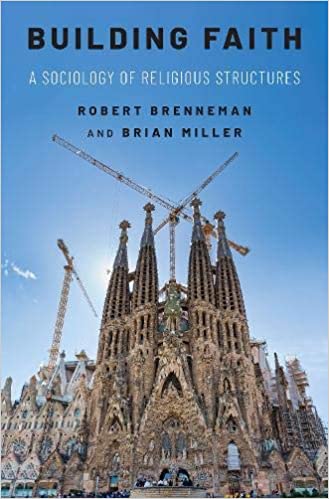
Those who do return to services and gatherings post-COVID-19 might find the building needs some work. As my colleague Robert Brenneman and I argue in Building Faith: A Sociology of Religious Structures, religious buildings play an important role in shaping worship and community. Depending on the age of the structure, the funding during COVID-19, and maintenance over the year-plus, the building may need attention or at least to return to its regular maintenance cycle.
In Maine, Judy Grant, 77, was a newcomer to Waldoboro who started watching the services online and then began attending in person…
“I’m extremely disappointed,” she said. “A lot of churches are closing. I think COVID had a big part in this latest shrinkage, but they were shrinking even before that,” she said…
Afterward, people began removing some of the church’s contents, including religious paintings, some furniture, and other items.
Grant said some hope the building will come alive again with a new congregation: “We have to be positive — and pray.”
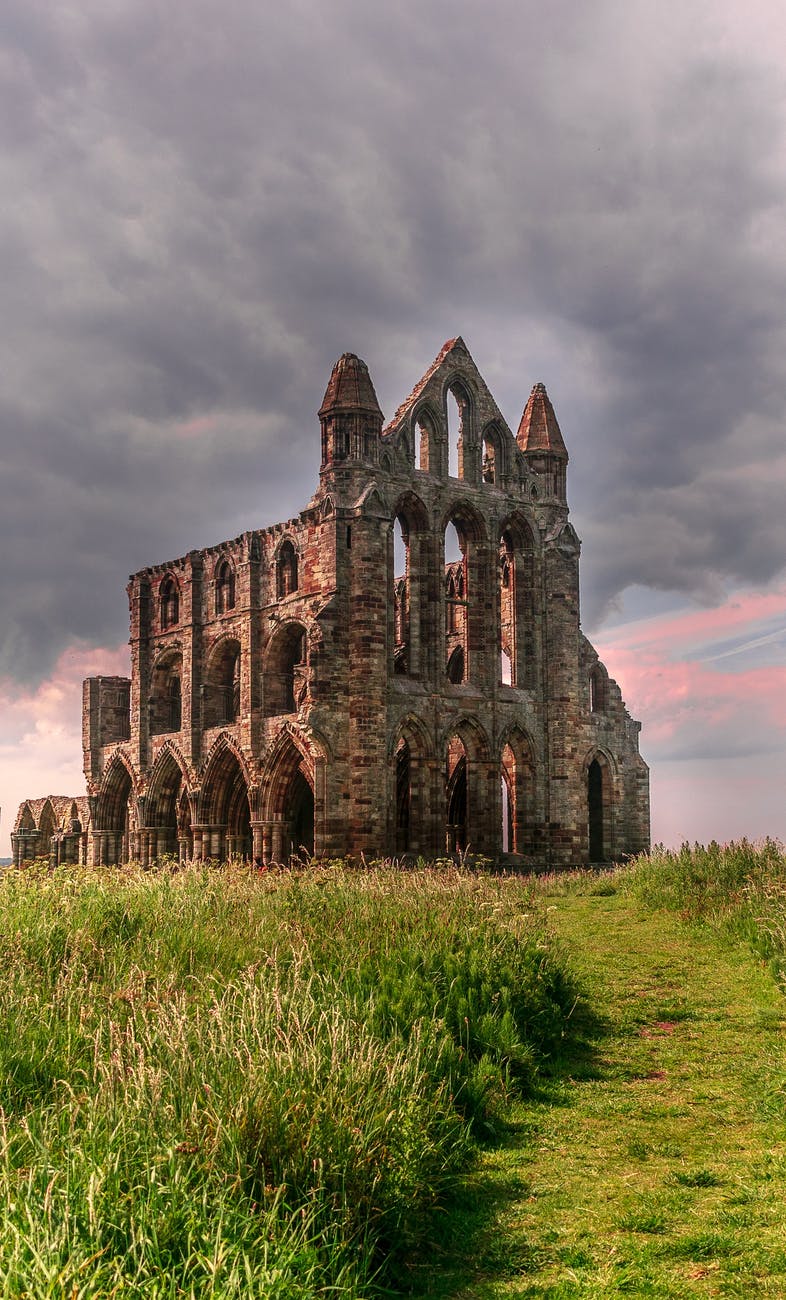
With all that has happened, some religious congregations will stop meeting and will no longer need their building. If there is an uptick in closings of religious congregations, there might be a lot of religious buildings on the market as religious groups look to sell empty buildings.
As the example above suggests, the existing religious structure could be used by another religious group. Building a new structure is a costly task and a new congregation might jump at the opportunity to acquire and modify an existing building. The religious building could be converted to another use, whether a business office or residences. Or, a developer might see the land as good site for another use all together. Some religious buildings occupy important spaces in communities.
The location of mosques in terms of the urban-suburban-town parameters are changing significantly. Mosques in downtown areas and in town/small city locations are decreasing. In 2010, 20% of mosques were in towns/small cities, but in 2020 that percentage is down to 6%. One of the reasons for this decline might be linked to the dynamic that the children of mosque participants are moving away to seek education and better jobs. Many town and small city mosques were established by doctors from overseas who were incentivized in past decades to set up practices in underserved locations. These doctors are now retiring, and mosque attendance is dwindling. The decrease in downtown mosques is most likely tied to the decline of African American mosques and the general move of immigrant mosques to the suburbs.
Mosques are moving and being established in suburbs. Mosques in older suburbs went from 21% in 2010 to 33% in 2020. Mosques in new suburbs went from 7% in 2010 to 15% in 2020. The age-old pattern of immigrants achieving financial success and moving away from cities seems to be repeating itself in the American Muslim community.
If I am reading these categories correctly, the percent of mosques in the American suburbs is close to the percent of Americans overall who live in the suburbs (just over 50%).
But, perhaps more interesting, is the change from 2010 to 2020. Mosques became more suburban over this time frame. The explanation with Figure 4 gives reasons for this: specific migration patterns and general migration patterns in American life with immigrants moving from cities to suburbs over time (known as spatial assimilation). It would be interesting to see if the established research in recent decades on segmented assimilation – or other kinds of assimilation according to scholars – has more to say about different groups of Muslims who may or may not follow these general patterns.
The other big surprise was parents’ views of their religious congregations. The common story is that laypeople just want to dump their kids off at church and have religion taken care of by youth ministers. But we found parents just want church to be friendly and a good environment, but they think it’s their job to take care of religious things. That seemed to be kind of a mismatch in how clergy and youth ministers think about parental involvement and the way parents described that involvement…
In the book, you say that a central part of your argument is that what religion is has fundamentally changed from a “communal solidarity project” to a “personal identity accessory.” Can you elaborate briefly on what that means?
This is my historical interpretation of our findings, trying to make the best theoretical sense I can of what’s going on. The idea of a communal solidarity project is that in a former time in American history, religion would have been much more of a collective, community-based experience. It would have been something people shared in common and that had much more of a social dynamic to it. The parents wouldn’t have had so much burden to promote religion because it would’ve just been living in the community. Over time, that world has dissolved…
And you raised the question of mismatch earlier, but I would say this is the real mismatch. Not so much strategy differences between parents and youth ministers, but what church is for. I think some of the main actors that are gathered in congregations have very different ideas of what they’re even doing there. What’s fascinating, sociologically, is how they can continue that mismatch for years and not really figure out the differences between each other—like not really have it dawn on them, “Oh, we have totally different realities going on here.”
These are big picture issues regarding religion in the United States: what is the role or place for parents even alongside the common idea that children should be able to make their own choices? What are religious congregations about: places of religious community and solidarity or places for individual consumers to take what they can get? How do parents and churches interact when their goals might be similar but their means and/or expectations differ?
One notable feature in the books Smith and his colleagues have written about the faith of teenagers and emerging adults is how these patterns among younger adults help shed light on broader patterns in American society. What teenagers take in and how they act does not come out of nowhere. They may be exacerbating existing trends or remixing elements of culture, but they are building on what is already happening with adults, institutions, families, and others.
It was an honor to be invited to contribute to a symposium titled “Rethinking Religion and Secularism in Urban Planning” in the journal Planning Theory & Practice. See all of the contributions here.
For this particular symposium, all of the authors considered the role of urban planners amidst religion and secularism. Building on my findings, I suggest urban planners can play an important role in helping communities plan for future religious uses and, once a proposal is made, focus on welcoming groups and working with them and the community rather than allow the community to emphasize threats.
This will continue to be an issue in communities across the United States as both secularism and religion continue and change. For example, a recent survey suggesting 43% of millennials do not believe in God received a lot of attention in some quarters. But, it would be a mistake to focus on such a find just at the broader, abstract nation-state level; this has implications for communities.
Our local library has a sculpture outside its entrance of two children sitting on a bench reading. This is what the statue looked like on a recent morning:
This likely occurred because of the chilly morning giving away to normal spring temperatures.
However, I had just finished reading anthropologist T. M. Luhrmann’s latest book How God Becomes Real. She argues that religious people learn how to interpret phenomena many humans might experience, such as getting goosebumps or experiencing sleep paralysis, as religious experiences. Across people groups in the world and even within the same religious traditions, people interpret their bodily and mental experiences in different ways regarding religion. Yet, without these religious building blocks, what Luhrmann refers to as “kindling,” it is hard to maintain religious faith.
This relates to this particular statue because of the phenomena of weeping statues or art work or everyday objects that religious people sometimes interpret as divine activity. I have even seen this up close. When I was in college, my hometown had a tree in the downtown that started “weeping.” In a community with a sizable Catholic population, some viewed this is a religious sign. I heard about it and with a friend we went out at midnight or so – we were in college and had little else to do on a summer night in the suburbs – to see what was going on. The tree had some candles and religious items around it. Something was indeed coming out of the tree.
Could we conclusively say this was a religious sign? We could talk about the biology of what was going on. We could talk to different religious residents to hear their take. We could individually put this through our grid of beliefs and experiences and see what we made of it. I remember seeing it and thinking it was interesting. That was all. My religious tradition does not have much room for or focus much on such manifestations of the Divine. And so life went on.
Luhrmann’s work helps explain why some might see that tree – or statue – as something religious. On a lighter note, perhaps the weeping statue of a child reading is a signal of the lifelong joy of reading all can experience through the library. Or, perhaps it signals more.
On his feed, Kirby has showcased Seattle pastor Judah Smith’s $3,600 Gucci jacket, Dallas pastor T.D. Jakes’s $1,250 Louboutin fanny pack and Miami pastor Guillermo Maldonado’s $2,541 Ricci crocodile belt. And he considers Paula White, former president Donald Trump’s most trusted pastoral adviser who is often photographed in designer items, a PreachersNSneakers “content goldmine,” posting a photo of her wearing $785 Stella McCartney sneakers.
As the Instagram account grew, Kirby started asking more serious questions about wealth, class and consumerism, including whether it’s appropriate to generate massive revenue from selling the gospel of Jesus.
“I began asking, how much is too much?” Kirby said. “Is it okay to get rich off of preaching about Jesus? Is it okay to be making twice as much as the median income of your congregation?”
This is a long-standing issue within Christianity, let alone in American Christianity where money and status have existed alongside religious fervor and practices for a long time. In a society that emphasizes consumption, even conspicuous consumption, plus celebrity, is it a surprise that ministers would want to wear expensive items?
Counterfactuals to these observations might help. Two come to mind:
Are there mainstream religious groups or leaders who actively shun or downplay status? I can think of famous pastors who are not as well dressed. But, are they necessarily poorly dressed? How much does presentation of self matter compared to other noteworthy factors like particular religious doctrines or practices? I assume there is some limit where a pastoral presentation has to fit some parameter or the lack of style or flashiness will be a negative. Is the nature of American religion with its religious economy of competition inextricably tied to status and presentation?
Some evangelicals have raised questions about materialism and consumption for decades. Historian David Swartz’s book Moral Minorityhighlights how evangelicals in the early 1970s questioned the consumption patterns of Americans. If you want to go back further, Max Weber argued in The Protestant Ethic and the Spirit of Capitalism that a particular ascetic approach to spending wealth on oneself helped spur on capitalism. How far did this critique go? By the 1980s, evangelicals largely became associated with conservative economic policies and reside in suburbs where appearances and keeping up with the Joneses matter to some degree. At the same time, evangelicals often claim they do not want to be too flashy or that they are middle-class even if they have the resources to be above that.
Researchers found the cause of the “noise” when they compared the cellphone results with the results of their online survey: social desirability bias. According to studies of polling methods, people answer questions differently when they’re speaking to another human. It turns out that sometimes people overstate their Bible reading if they suspect the people on the other end of the call will think more highly of them if they engaged the Scriptures more. Sometimes, they overstate it a lot…
Smith said that when Pew first launched the trend panel in 2014, there was no major difference between answers about religion online and over the telephone. But over time, he saw a growing split. Even when questions were worded exactly the same online and on the phone, Americans answered differently on the phone. When speaking to a human being, for example, they were much more likely to say they were religious. Online, more people were more comfortable saying they didn’t go to any kind of religious service or listing their religious affiliation as “none.”…
After re-weighting the online data set with better information about the American population from its National Public Opinion Reference Survey, Pew has decided to stop phone polling and rely completely on the online panels…
Pew’s analysis finds that, today, about 10 percent of Americans will say they go to church regularly if asked by a human but will say that they don’t if asked online. Social scientists and pollsters cannot say for sure whether that social desirability bias has increased, decreased, or stayed the same since Gallup first started asking religious questions 86 years ago.
This shift regarding studying religion highlights broader considerations about methodology that are always helpful to keep in mind:
Both methods and people/social conditions change. More and more surveying (and other data collection) is done via the Internet and other technologies. This might change who responds, how people respond, and more. At the same time, actual religiosity changes and social scientists try to keep up. This is a dynamic process that should be expected to change over time to help researchers get better and better data.
Social desirability bias is not the same as people lying to researchers or being dishonest with researchers. That implies an intentional false answer. This is more about context: the mode of the survey – phone or online – influences who the respondent is responding to. And with a human interaction, we might respond differently. In an interaction, we with impression management in mind where we want to be viewed in particular ways by the person with whom we are interacting.
Studying any aspect of religiosity benefits from multiple methods and multiple approaches to the same phenomena under study. A single measure of church attendance can tell us something but getting multiple data points with multiple methods can help provide a more complete picture. Surveys have particular strengths but they are not great in other areas. Results from surveys should be put alongside other data drawn from interviews, ethnographies, focus groups, historical analysis, and more to see what consensus can be reached. All of this might be out of the reach of individual researchers or single research projects but the field as a whole can help find the broader patterns.
But if secularists hoped that declining religiosity would make for more rational politics, drained of faith’s inflaming passions, they are likely disappointed. As Christianity’s hold, in particular, has weakened, ideological intensity and fragmentation have risen. American faith, it turns out, is as fervent as ever; it’s just that what was once religious belief has now been channeled into political belief. Political debates over what America is supposed to mean have taken on the character of theological disputations. This is what religion without religion looks like.
Not so long ago, I could comfort American audiences with a contrast: Whereas in the Middle East, politics is war by other means—and sometimes is literal war—politics in America was less existentially fraught. During the Arab Spring, in countries like Egypt and Tunisia, debates weren’t about health care or taxes—they were, with sometimes frightening intensity, about foundational questions: What does it mean to be a nation? What is the purpose of the state? What is the role of religion in public life? American politics in the Obama years had its moments of ferment—the Tea Party and tan suits—but was still relatively boring.
We didn’t realize how lucky we were. Since the end of the Obama era, debates over what it means to be American have become suffused with a fervor that would be unimaginable in debates over, say, Belgian-ness or the “meaning” of Sweden. It’s rare to hear someone accused of being un-Swedish or un-British—but un-American is a common slur, slung by both left and right against the other. Being called un-American is like being called “un-Christian” or “un-Islamic,” a charge akin to heresy.
This is because America itself is “almost a religion,” as the Catholic philosopher Michael Novak once put it, particularly for immigrants who come to their new identity with the zeal of the converted. The American civic religion has its own founding myth, its prophets and processions, as well as its scripture—the Declaration of Independence, the Constitution, and The Federalist Papers. In his famous “I Have a Dream” speech, Martin Luther King Jr. wished that “one day this nation will rise up and live out the true meaning of its creed.” The very idea that a nation might have a creed—a word associated primarily with religion—illustrates the uniqueness of American identity as well as its predicament.
The particular form of religious activity and civil religion in the United States is unique. But, more broadly, this discussion gets at what religion is. Is it about belief in a transcendent being or a supernatural realm? Or, is it more about what religion does in terms of particular practices?
The argument is one that can be applied to many things that take on the functions of religion such as providing meaning (Apple vs. other corporations, beauty vs. functionality), participating in common rituals (buying new products), and uniting people around common symbols (talking with other Mac users).
Politics can do some of these same things. Politics provides meaning in particular beliefs, policy positions, activities, and group identities. Politics has its own set of common rituals and ceremonies, which could even extend to today’s patterns of reacting to political news via Twitter and other forms of social media. There are common symbols ranging from particular visual images to personas to slogans. Political camps can have their own sacred narratives about how the world works.
Durkheim also had ideas about religion giving way to other forms of cohesion. For example, an expanding division of labor would increase interdependence on each other. Science could help address particular issues that used to be addressed by religion. Is politics – particularly in the form right now in the United States that is marked by polarization – an advancement and a move away from religion?