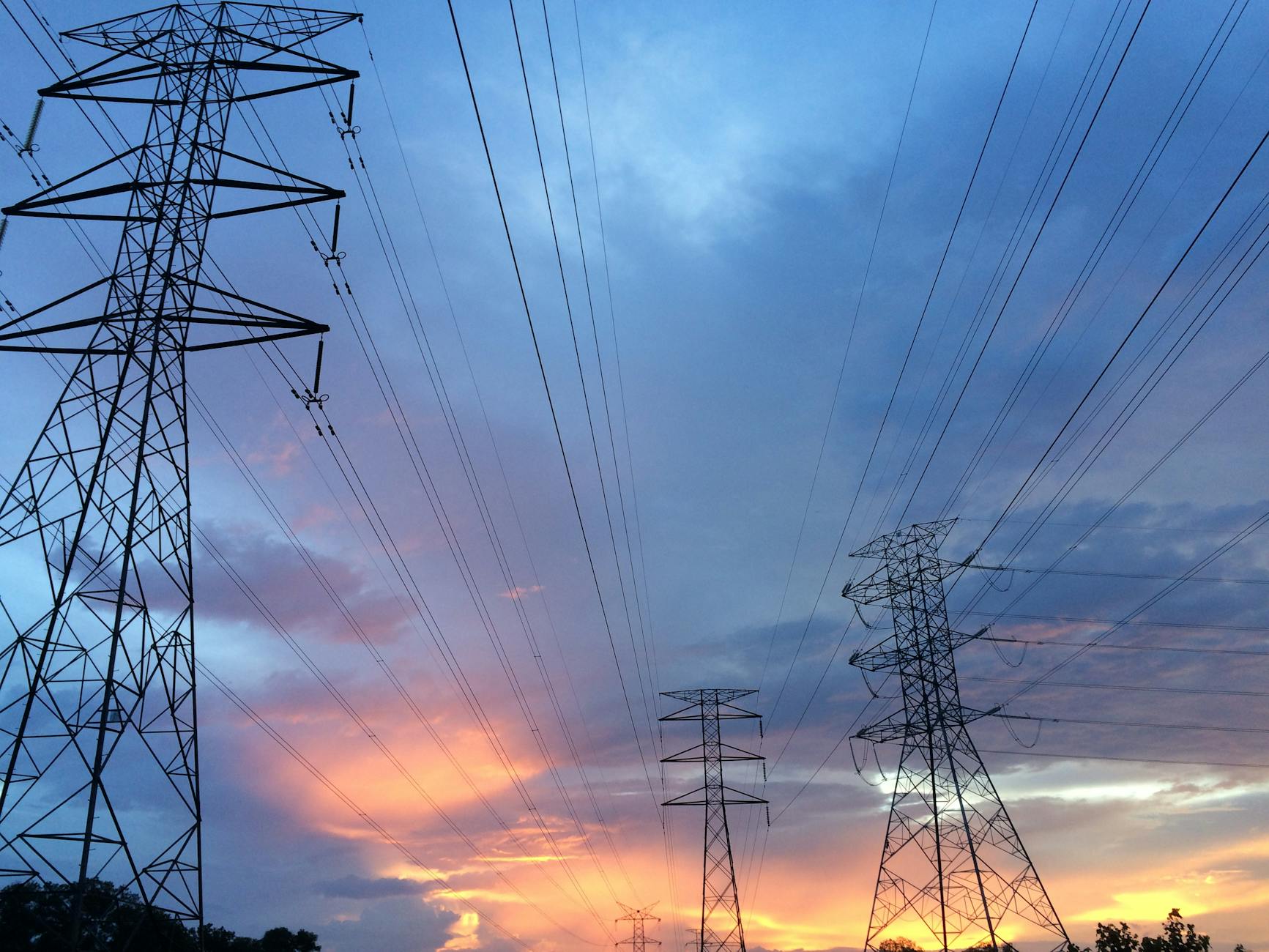
As the Sun-Times reported in November, the demand for power from big data centers and a delay connecting new power sources, such as solar and wind, to the electric grid is resulting in ComEd customers seeing their monthly bills go up $10.60 a month on average…
Power demand across the country has skyrocketed as big data centers and artificial intelligence operations have created huge demand. Meanwhile, new sources of “renewable” energy, including wind and solar power, have been slow to get connected to an electric grid that spans from Northern Illinois to the East Coast, said Jim Chilsen, a spokesman for the consumer watchdog Citizens Utility Board.
How much will this register with Illinois customers – will they have no problem paying roughly $10 more a month to help support what they expect on their smartphone and online activity? Technology tends to have costs, even if people tend to think the benefits outweigh the downsides, but it can be hard to pin down. While all of the increased rates may not be due to computing activity, at least some is.
Considering indirect costs may just be difficult to do. Having direct feedback with technology probably elicits different reactions than these more indirect costs. Imagine the new AI feature on your phone comes with a $5 a month surcharge on your phone bill to cover its costs. Or each time you do an AI search you incur a charge. Contrast that with the costs of driving. Automobiles opened up all kinds of new opportunities but driving comes with numerous costs, some direct (like paying for gas, insurance, and maintenance) and some more indirect (taxes for infrastructure, changes in land use, pollution).
If asked how much they would be willing to directly pay for AI, what would Americans say?
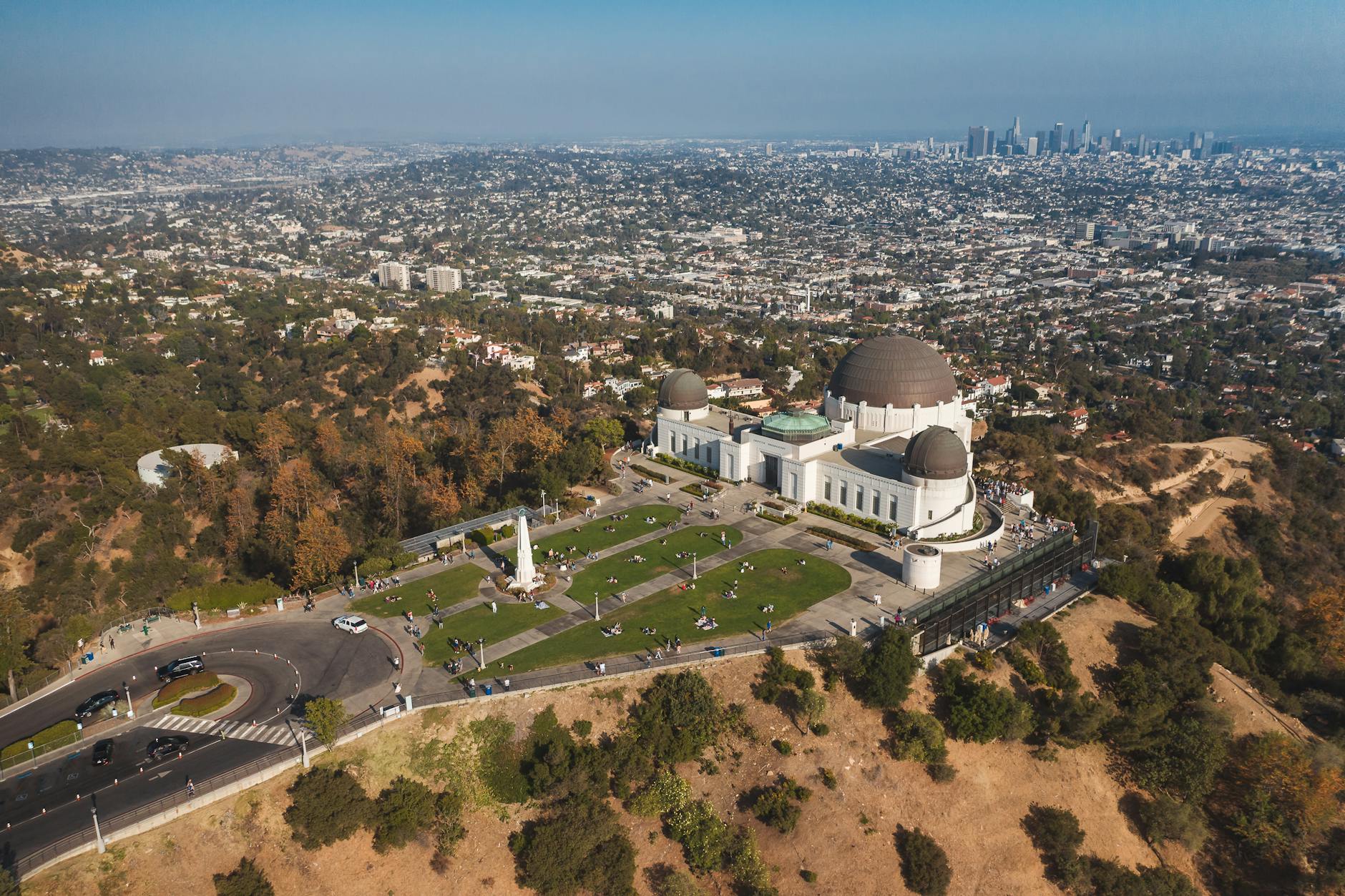
At 4,210 acres, Griffith outshines other extraordinary city parks of the US, such as San Francisco’s Golden Gate, which barely tops 1,000 acres, and New York’s Central Park, a mere 843 acres. Griffith’s peaks tower above those flat competitors too, with nearly 1,500 feet in elevation gain, making it practically vertical in orientation. And LA’s crown jewel of a park is still largely uncut, much of it remaining a wilderness area preserved more than 100 years ago, and barely developed, unlike the pre-planned “wild” designs of Golden Gate and Central Park.
Add its history, views, recreation opportunities, unique and hidden spaces, a free Art Deco observatory and museum, the most famous sign in America and the park’s overall star-power, and you have a compelling case that Griffith is not just epic in scope but the greatest city park in the nation.
There’s something for everyone there: a zoo, playgrounds and an old-timey trainyard for the kids; challenging and steep trails for hikers; dirt paths for equestrians; paved roads for bikers; diverse flora and fauna for nature enthusiasts; and museums for the science and history learners.
Two features stand out in the above description. First, the sheer size of the park. This is very unusual in large cities as they have some space for parks but also have many other land use demands. Second, the variety of features and activities in the park. There is not just one thing to do here; there are numerous options serving different groups.
Given that this is Los Angeles, what might this land be if it had been open to developers? Given what is on some of the other hills, just more expensive houses?
And how much can the claim that the park is “barely developed” matter when it is exposed to the pollution in the region and the activity of many nearby humans?
To settle this, how about a national city park contest? There are a number of important parks and there are a lot of different criteria that could be used.
Both our experts confirmed our suspicions. When it comes to your home’s exterior, the front door is the most important element for setting the tone.
“Think of your front door as your headline,” says real estate pro Charlie Lankston. “It’s one of the first details that draws the eye, and sets the stage for the story your home is about to tell.”…
“Far and away, the most important element is the front door of the home,” he says. “It is what every buyer sees first and with which they form their first impressions before even entering.”…
Along with indicating what potential buyers might find inside, Yee says your front door could also signal certain messages around the neighborhood.
Is this like how the eyes are supposedly the windows into the soul? When you enter a house, your eye is going to be drawn to the entryway so you will see the door. You may even have some time to inspect it closely walking up to it and through it.
But what exactly does it tell you? Some sense of the style of the rest of the home? Something about the upkeep? How much the door costs is going to say something about other upgrades?
I have also seen experts claim front doors have a high return on investment. Compared to other house projects, putting money into the door may be worthwhile.
I imagine there have to be at least some examples of an impressive front door leading to squalor elsewhere. Even if the front door is impactful, can it overcome other significant issues?
Homer Glen-based home rehabber Pawel Radzik paid $66,000 last year for the modest, three-bedroom ranch-style brick house on 141st Place, and he gave it a major overhaul, saying last week that “80% of it is new — new flooring, new cabinets, new plumbing, new electrical, new kitchen.” He then listed the home in January for $219,000 before cutting his asking price to $205,000 later that month and then to $199,900 in February…
Upon the naming of the pontiff, Radzik immediately pulled the house from the market and told Elite Street at the time that he was looking into “what is the best option for me,” regarding the home, given its newly discovered provenance and heightened prominence.
Now, Radzik and his listing agent, Steve Budzik of iCandyRealty, have teamed up with auction house Paramount, with a June 18 auction date. The house has a reserve price of $250,000, meaning that Radzik has the right to reject any offers below that amount…
What a new owner would do with the home is unclear — perhaps turning it into a shrine to the new pope, or alternately restoring it to how it might have looked when the pontiff was a boy. No one disputes that the house has no real equal, as Prevost is the first American ever to become pope, and the 141st Place house is the only home Prevost ever lived in while growing up.
Three things strike me from this news:
The house looks like a typical postwar suburban house in the Chicago area: modest in size by today’s standards and was in need of overhauling. And the community it is in has changed.
This house is famous because of someone who once lived there. What happens to such suburban houses? There must be many such houses in the American suburbs – even though no other ones can claim to be the home to such a religious leader – given the number of Americans who have lived in suburbs over the decades.
The increase in value is striking. Even before the announcement about the Pope, the home went from a purchase price of $66,000 last year to a sales price around $200,000 this year to a set minimum of $250,000 later this year. That a significant appreciation in housing value. Does this end up as a successful house flipping project?
I will be curious to see what the home sells for as it combines an aging yet rehabbed and more valuable home in the suburbs connected to a famous religious leader.
But at the same time, these are not just local issues. There are patterns across places. What happened with public housing in Chicago may not have been exactly the same as what happened in other major cities but the effects of federal legislation and monies and public perceptions about public housing influenced numerous cities. Suburbs have unique characters but types of suburbs – say edge cities or inner-ring suburbs – can have similar experiences and trajectories. The ways zoning is used to privilege single-family homes and exclude people and undesirable uses is common. National ideologies regarding desirable and undesirable housing influences leaders and residents.
Figuring out how to link these two realms regarding housing – national and state-level policies and meanings and local action and sentiment – is very important to addressing any large-scale housing issues. Abandoning larger-scale efforts because all housing is local is not helpful. Focusing efforts only at the state or national level can ignore complexities within communities and regions.
In Orange, Santa Barbara and San Diego counties, the threshold for a low-income single-person household will soon surpass $100,000 if current trends continue, according to data published by the California Department of Housing and Community Development in April.
They would join three Bay Area counties that already hit that bureaucratic threshold.
California defines income levels by how they compare with the area’s median income. But in areas with unusually low or high housing costs, those definitions are often tweaked to reflect the reality on the ground for residents. Therefore, someone earning $100,000 could be above the area’s median income line but be considered low-income because of the high cost of housing. A number of government programs use these income designations to determine who qualifies for benefits such as housing assistance…
Between 2020 and 2025, the threshold to be considered low-income rose 40% across Southern California’s ten counties, reflecting the rising cost of living across the region.
At the same time, median incomes — representing the middle, not the average — across the region rose 35%.
Similar concept applied to a very different housing situation yields very different AMI limits. California housing prices are higher to the degree that the median income needed is much higher than in the Chicago region. Someone from the Chicago region might see this story about California regions and think that the housing situations are barely comparable.
At the same time, both regions struggle to provide affordable housing. The income levels may differ as might the physical landscape but both share limited appetites from municipal officials, developers, and residents for affordable housing.
Thinking beyond these two regions, are there regions that are doing better at constructing more units of affordable housing? Where incentives and local guidelines and people encourage affordable housing? Where there is good housing available at more or all of the points of the AMI limits?
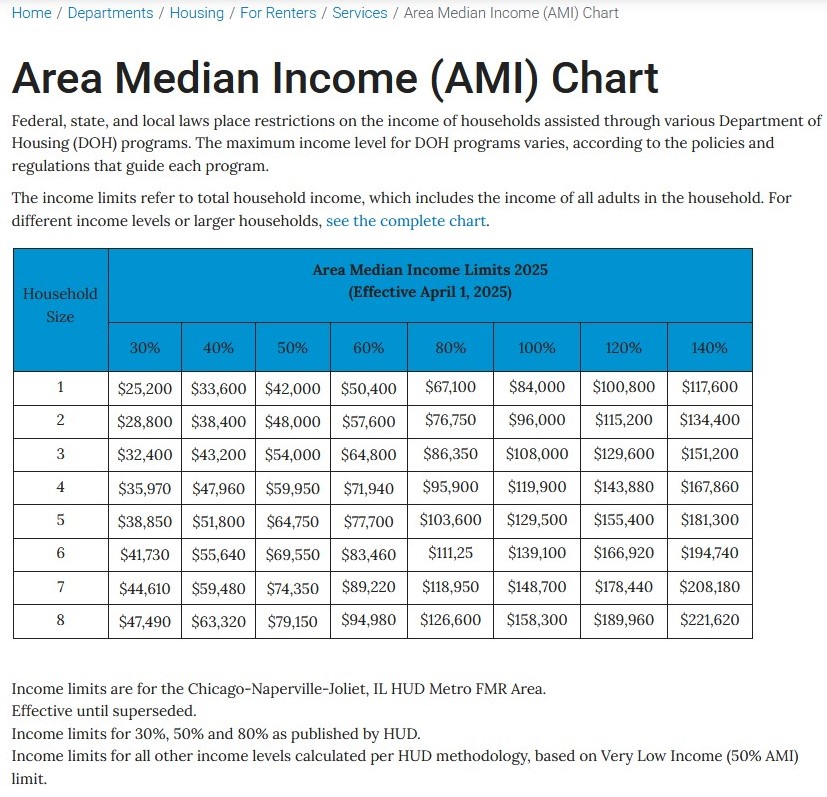
According to a memo, The Residences at River Point would set aside one-quarter of the apartments for households making 30% or less of the area median income. Roughly half would be earmarked for households making 60% or less of the AMI, and the rest would be for those making 80% or less of the AMI.
According to the federal Housing and Urban Development Department, the AMI for the Chicago metropolitan area, which includes Kane County, is $50,976 for a four-person household.
The AMI is set by HUD who has a chart of the various cutoff points for the AMI for the entire region. From the City of Chicago:
For those who have not run into these figures before, several things from this chart might stand out:
The AMI depends on household size. Discussions of housing and affordability can often focus on median household incomes but HUD adjusts for the total number of people in the household. This fits with housing with more space and bedrooms generally being more expensive.
The AMI figures are for an entire region. The Chicago region includes more than 9 million residents and hundreds of municipalities. While the AMI limits for Chicago might differ quite a bit from other regions, there can be quite a bit of variation within the region as well regarding incomes and housing prices.
These income guidelines apply to a number of programs but are not the only metrics that might be used regarding housing affordability.
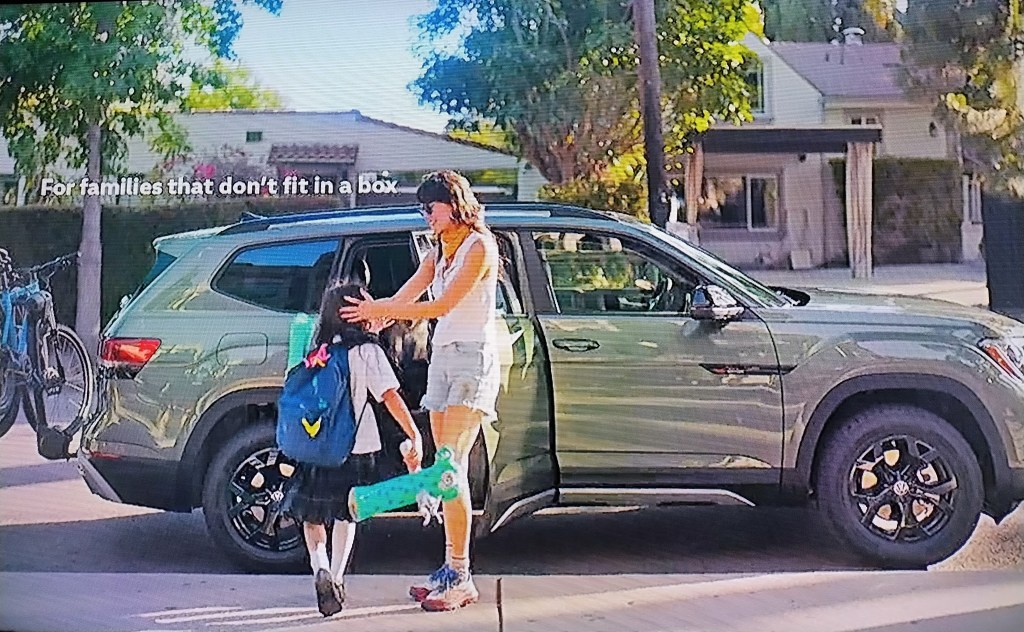
A new Volkswagen TV commercial features the song “Little Boxes” sung by Malvina Reynolds. This song originally critiqued the sprawling mass suburbs of the postwar United States but now is used – and in a remixed version! – to sell an SUV:
Four thoughts related to this advertising campaign:
The song was protesting conformity in sprawl. Does buying a particular SUV counter conformity and sprawl?
The tagline above – “For families that don’t fit in a box” – seems to suggest that people who own this vehicle are doing things outside the box. This vehicle allows you to escape the normal suburban life. Can this happen when almost everyone has an SUV already?
The song said houses were boxes; are SUVs boxes? This particular model might be less boxy than some others but it still looks like a box. Are SUVs cool boxes where as suburban ranches houses were considered by some to be uncool boxes?
If the primary target of this campaign is suburbanites, then a song critiquing suburbia is being used to sell products suburbanites. We have come full circle: do what you can to sell SUVs to suburbanites!
Between 1925 and 1990, the rate of suburbanization differed by Protestant denomination. Some denominations were already more likely to be in the suburbs (their suburban presence predated mass suburbanization), some moved to the suburbs in increasing numbers, and some hardly moved at all. The general pattern among these groups was an increasing percentage of their churches in suburban locations, a process that was underway by the 1930s and 1940s and continued after World War II…
In this study, churches were influenced by settlement patterns in the Chicago region and the presence of numerous churches already existing in suburban communities. In addition, the racial and ethnic identity of some denominations helped dictate their choices for new suburban locations.
This article built on important work by multiple scholars about white flight in the Chicago area. Mark Mulder in Shades of White Flightlooked at how The Christian Reformed Church and The Reformed Church in America churches, both Dutch Reformed denominations, moved to the suburbs. Irving Cutler in The Jews of Chicago examined how Jews moved to suburban communities. Eileen McMahon in What Parish Are You From?analyzed how one Catholic parish responded to changing neighborhood populations, including moving to the suburbs.
As the story is told of American suburbanization, particularly after World War Two, the story should include the role religious institutions and adherents played in supporting white flight. I say more about the ways this played out with evangelicals in Sanctifying Suburbia.
Pope Leo XIV grew up in Dolton, Illinois, a suburb just south of the city of Chicago. Is this a story not just of the first American pope but a pope who grew up in the changing American suburbs? Over the years, what happened in his suburban community that had its first white settlers in the 1830s? First from the Encyclopedia of Chicago:
The mixture of railroads and the Little Calumet River proved to be a good site for industry. Dolton grew as a center for truck farming and manufacturing. It has produced bakery equipment, brass castings, shipping containers, cement, furniture, agricultural equipment, steel tanks, and chemicals. This diverse activity attracted an ethnically varied workforce. In the 1960s the Calumet Expressway (now the Bishop Ford Freeway) improved automobile and truck access to Chicago by two interchanges serving Dolton. In recent years large numbers of African Americans have moved to Dolton. The 2000 census reported a population of 25,614 with 14 percent white, 82 percent black, and 3 percent Hispanic.
According to a table on this page, Dolton was 99.9% white in 1960, 58.1% white in 1990, and 14.3% white in 2000. According to the Census Bureau, Dolton is now 4.9% white.
This is the story of how one small town became trapped in a downward spiral that poverty experts say follows a well-worn pattern of deindustrialization that leads to a disenfranchised economic class. Communities of color inherit a legacy of decline and then lack the resources, both financial and political, needed to turn things around.
The focus is Dolton, but it just as easily could be Riverdale, Harvey, Dixmoor, Posen, Calumet City or other nearby suburbs that once were powered by steel and other industry but over time slowly coalesced into a broad swath of economic distress. In other parts of Illinois, such as North Chicago to the north or Maywood to the west, the details change but the problems are often much the same.
It was no one single thing, but a cascade of events that changed the fortunes of Dolton and its neighbors. The decline of manufacturing led to a loss of job and pay opportunities, which in turn fed a wave of white flight as longtime residents left and were replaced by African-American city dwellers lured by better, yet not too expensive, housing.
But luring new investment to now majority black communities proved a challenge and housing values began to fall, taking down with them the tax revenues needed to keep up public services. Next came widespread foreclosures and an invasion of real estate scavengers who bought houses on the cheap, transforming a community of homeowners with a deep financial stake in their town into one of renters with looser bonds.
All the while, the political fabric vital to turning things around continued to fray. Government stumbled amid patronage and gridlock, rendering even more challenging the task of drawing needed new investment.
His parents had been living in a 1,200-square-foot brick house on East 141st Place in Dolton. They bought it new in 1949, paying a $42 monthly mortgage.
His father Louis Prevost was superintendent of the south suburban schools in District 169. News clippings from 1945 show he served as a Navy lieutenant in the Mediterranean in WWII. He had graduated from the old Central Y.M.C.A. College in 1943 while living in Hyde Park.
The new pope’s mother, Mildred Martinez Prevost, studied library science at DePaul University. Her death notice, in 1990, said she and her husband started the St. Mary’s library in the basement of the old school building and mentions jobs she had in the libraries at Holy Name Cathedral, Von Steuben High School on the North Side and at Mendel from 1969 to 1975.
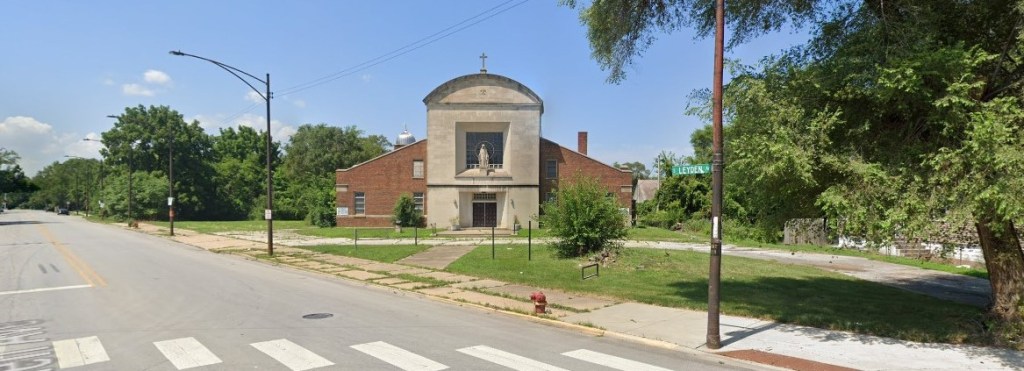
The Prevosts attended a Catholic parish – St. Mary of the Assumption – just inside the southern borders of Chicago and next to the suburbs of Dolton and Riverdale. Here is what the property looked like as of July 2024:
Like St. Mary’s, other Catholic institutions that helped shape the future cardinal are long gone, closed over the past several decades as the Catholic population around where he grew up and elsewhere plummeted. Among those bygone institutions:
• Mendel College Prep High School, where Prevost and his mother worked.
• St. Augustine Seminary High School in Michigan.
• Tolentine College in Olympia Fields, the suburb where he briefly lived.
• Mount Carmel Elementary School in Chicago Heights, where his father was principal.
Several of these communities mentioned – Olympia Fields, Chicago Heights – experienced racial change similar to that of Dolton.
If white Catholic residents indeed left Dolton and other communities on the South Side of Chicago and its southern suburbs and American suburbia became more complex, where did they move to? How did this shape the ministry of Pope Leo XIV?





 Legally Sociable