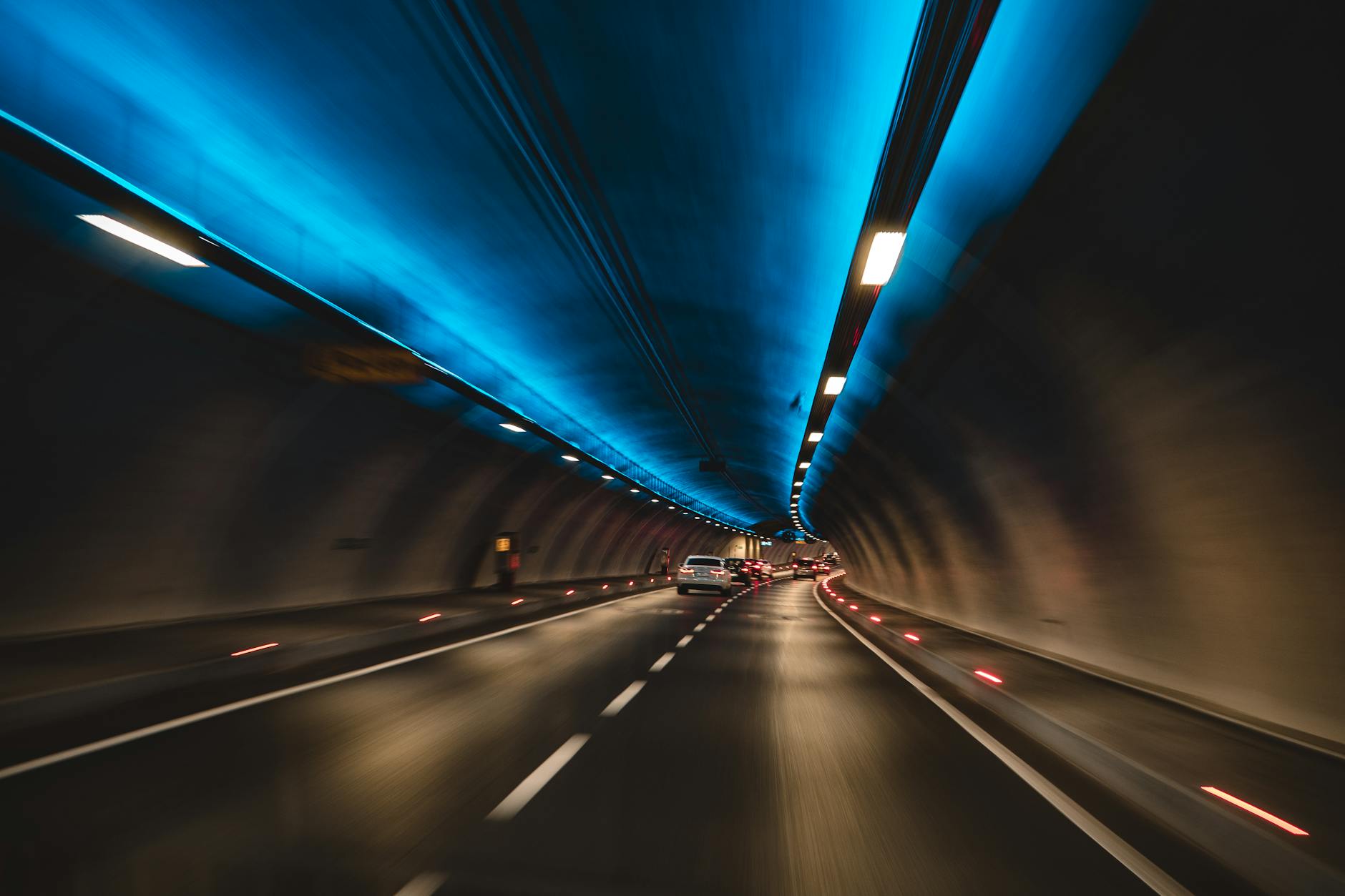
Tunnels allow more hybridization of ground-level activities, he said. Pedestrians on the earth’s surface can more easily walk without car infrastructure.
Menard added that residents can look to Singapore, a country that has heavily invested in tunneling, as an example.
On the ground, the country has developed a strong recreational economy with expansive pedestrian walkways.
Underground, citizens can easily transport from one area of the country to another.
For those who would like cities to be less oriented around cars, could this be a solution? Moving cars and trucks underground would open up space, move the noise and traffic out of sight, and make the surface safer.
From an infrastructure standpoint, in how many cities would this be possible? Can tunnels underground work in every city given conditions underground and what may already be down there? (And then there is the potential cost to get it all up and running – I assume this is a large cost.)
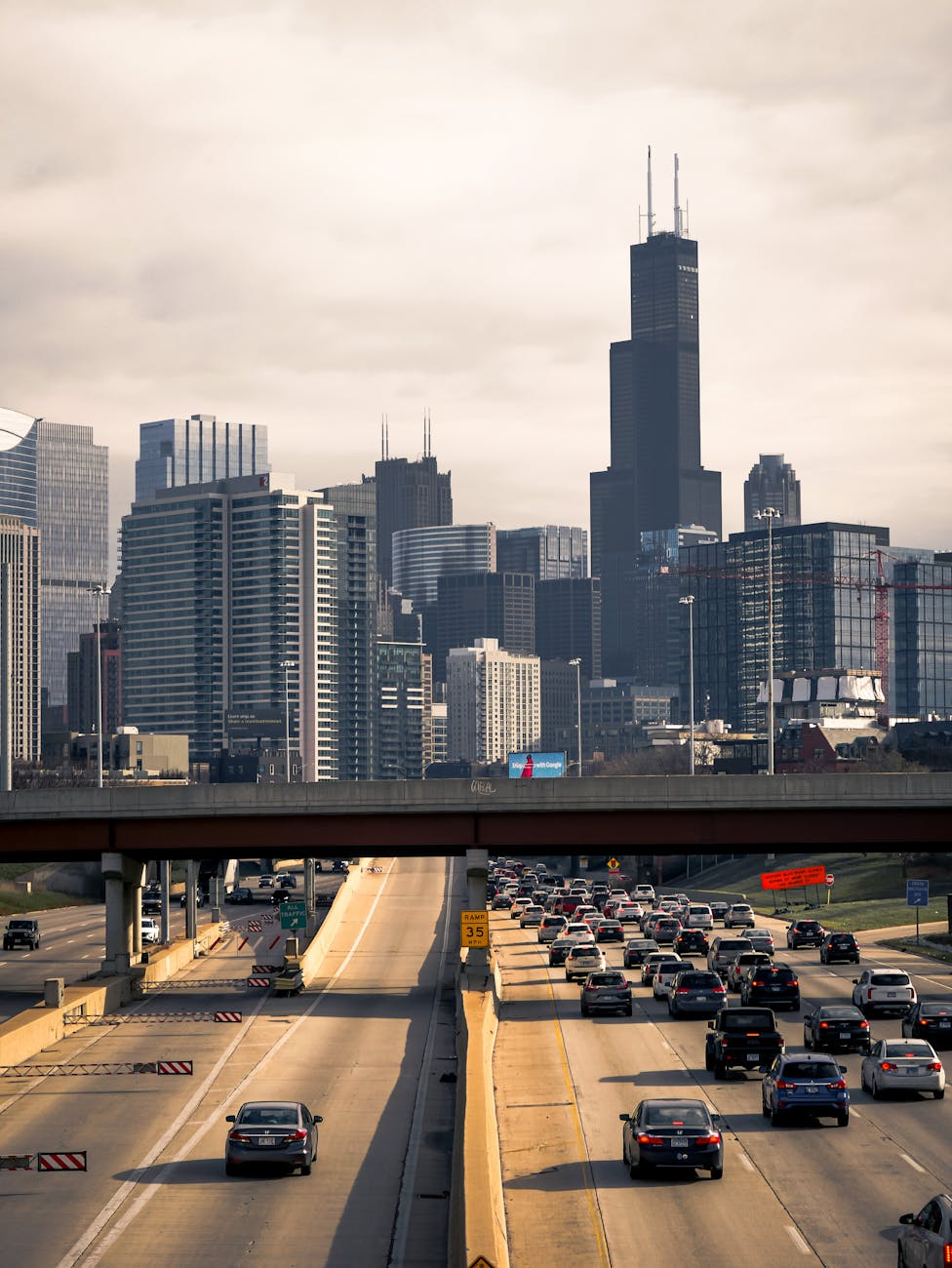
Finally, how would drivers react to moving mostly underground? This can be done now in some places but it is certainly a different environment to drive in. (Experiencing Lower Wacker Drive in Chicago is instructive.) Imagine underground traffic. Or being down there for half an hour or more before emerging to daylight.
Photo by ud835udce2ud835udcf1ud835udceaud835udcf7ud835udcee ud835udce6ud835udceeud835udcfcud835udcfd u2122 on Pexels.com
Chicago is one of the most congested cities in the country, ranking second only to New York City last year for the severity of traffic, a recently released annual study found.
The region also had one of the biggest jumps in traffic congestion in 2023 compared with pre-pandemic, according to the new report from mobility analytics firm Inrix, made public Tuesday. Traffic was up 18% over 2019 levels, tying for the highest growth among the cities studied…
Chicago’s traffic woes could be exacerbated by construction, or by drivers taking more trips at the same time, Pishue said. Inrix found traffic around Chicago, like in other cities nationwide, no longer revolves around peak morning and evening rush hours, but instead can tick up around midday and through the evening.
And adding to the traffic is continued low transit ridership, he said.
Addressing the growing traffic requires a comprehensive approach tackling multiple issues at once. This includes:
Online shopping deliveries.
Truck and freight traffic within the region and through the region.
Getting more people to use mass transit (trains, buses, etc.).
Planning for changing work schedules, whether is more work from home or more people returning to the office or more flexible hours in the office.
Ride sharing.
Alternative modes of transportation, including walking and biking.
Shifts in population and business centers throughout the region.
This involves numerous municipalities, counties, the state, the federal government, and private actors throughout the region. Would the local government actors rather fight over whether the mass transit agencies should merge? Would suburbanites prefer someone else tackle these issues and leave them – and their tax monies – out of it? How many people will be willing to budge from driving when they want to help address the larger issues?
The time to address traffic is now so that the problem does not become worse.
Planning in the United States tends to emphasize driving. This shows up in many ways over many decades and in many places.
Perhaps the store and the apartment are part of separate developments constructed at separate times. Building them at the same time may have presented an opportunity to provide a linking walkway.
Could it be a question of who would pay for the walkway and who would pay to maintain it?
Has there been local public support for a walkway? Debate at local government meetings? Has the question been raised repeatedly?
Americans tend to at the official levels and in individual choices promote driving. Many developments in the United States, particularly in suburbia, rely on driving. It can require working against the grain to promote other modes of transportation, including walking.
Some Wall Street banks, worried that landlords of vacant and struggling office buildings won’t be able to pay off their mortgages, have begun offloading their portfolios of commercial real estate loans hoping to cut their losses…
But these steps indicate a grudging acceptance by some lenders that the banking industry’s strategy of “extend and pretend” is running out of steam, and that many property owners — especially owners of office buildings — are going to default on mortgages. That means big losses for lenders are inevitable and bank earnings will suffer.
Banks regularly “extend” the time that struggling property owners have to find rent-paying tenants for their half-empty office buildings, and “pretend” that the extensions will allow landlords to get their finances in order. Lenders also have avoided pushing property owners to renegotiate expiring loans, given today’s much higher interest rates.
But banks are acting in self-interest rather than out of pity for borrowers. Once a bank forecloses on a delinquent borrower, it faces the prospect of a theoretical loss turning into a real loss. A similar thing happens when a bank sells a delinquent loan at a substantial discount to the balance owed. In the bank’s calculus, though, taking a loss now is still better than risking a deeper hit should the situation deteriorate in the future.
Four questions come to mind:
How long will banks wait before aggressively working to drop these loans? It sounds like this is happening a little bit. Is there a possible tipping point? In other words, how much “extend and pretend” is doable?
How much does this behavior toward commercial tenants reflect how the same lenders or other banks treat residential loan holders? If a homeowner is not making their mortgage payments, do they get treated the same? Is the issue more of the size of these loans and not necessarily what kinds of properties are involved?
Given the foreclosure crisis of the late 2000s and the COVID-19 pandemic, is it safe to assume there are plans in place if banks need to move a lot of these loans at once? Who would benefit the most from aid to get out from under a lot of commercial property losses in a short amount of time?
What happens to these vacant properties in the short and long-term? How quickly can they be filled by other uses? How do these vacancies affect the communities in which they are situated?
Erin is one of millions, from teachers to therapists to managers to hairdressers, whose work relies on relationship. By some accounts, the U.S. is moving from a “thinking economy” to a “feeling economy,” as many deploy their emotional antennae to bear witness and reflect back what they understand so that clients, patients, and students feel seen. I’ve come to call this work “connective labor,” and the connections it forges matter. It can be profoundly meaningful for the people involved, and it has demonstrable effects: We know that doctor–patient relationships, for instance, are more effective than a daily aspirin to ward off heart attacks.
But this work is increasingly being subjected to new systems that try to render it more efficient, measurable, and reproducible. At best, firms implement these systems assuming that such interventions will not get in the way of workers and clients connecting. At worst, they ignore or dismiss those connections altogether. Even these complex interpersonal jobs are facing efforts to gather information and assessment data and to introduce technology. Moneyball has come for connective labor…
Connective labor is increasingly being subjected to new systems that try to make it more predictable, measurable, efficient—and reproducible. If we continue to prioritize efficiency over relationship, we degrade jobs that have the potential to forge profound meaning between people and, along the way, make them more susceptible to automation and A.I., creating a new kind of haves and have-nots: those divided by access to other people’s attention.
To quantify relationships could be difficult in itself. It requires attaching measurements to human connections. Some of these features are easier to capture than others. In today’s world, if a conversation or interaction or relationship happens without “proof,” is it real? This proof could come in many forms. A social media post. A digital picture taken. Activity recorded by a smart watch. An activity log written by hand or captured by a computer.
Then to scale relationships is another matter. A one to one connection multiplied dozens of time throughout a day or hundreds or thousands of times across a longer span presents other difficulties. How many relationships can one have? How much time should each interaction take? Are there regular metrics to meet? What if the relationship or interaction goes a less predictable direction, particularly when it might require more time and care?
Given what we can measure and track now and the scale of society today, the urge to measure relationships will likely continue. Whether people and employees push back more strongly against the quest to quantify and be efficient remains to be seen.
The concept of reducing these shades of pain to a single number dates back to the 1970s. But the zero-to-10 scale is ubiquitous today because of what was called a “pain revolution” in the ’90s, when intense new attention to addressing pain—primarily with opioids—was framed as progress. Doctors today have a fuller understanding that they can (and should) think about treating pain, as well as the terrible consequences of prescribing opioids so readily. What they are learning only now is how to better measure pain and treat its many forms.
About 30 years ago, physicians who championed the use of opioids gave robust new life to what had been a niche speciality: pain management. They started pushing the idea that pain should be measured at every appointment as a “fifth vital sign.” The American Pain Society went as far as copyrighting the phrase. But unlike the other vital signs—blood pressure, temperature, heart rate, and breathing rate—pain had no objective scale. How to measure the unmeasurable? The society encouraged doctors and nurses to use the zero-to-10 rating system. Around that time, the FDA approved OxyContin, a slow-release opioid painkiller made by Purdue Pharma. The drugmaker itself encouraged doctors to routinely record and treat pain, and aggressively marketed opioids as an obvious solution…
But this approach to pain management had clear drawbacks. Studies accumulated showing that measuring patients’ pain didn’t result in better pain control. Doctors showed little interest in or didn’t know how to respond to the recorded answer. And patients’ satisfaction with their doctor’s discussion of pain didn’t necessarily mean they got adequate treatment. At the same time, the drugs were fueling the growing opioid epidemic. Research showed that an estimated 3 to 19 percent of people who get a prescription for pain medication from a doctor developed an addiction…
A zero-to-10 scale may make sense in certain situations, such as when a nurse uses it to adjust a medication dose for a patient hospitalized after surgery or an accident. And researchers and pain specialists have tried to create better rating tools—dozens, in fact, none of which was adequate to capture pain’s complexity, a European panel of experts concluded. The Veterans Health Administration, for instance, created one that had supplemental questions and visual prompts: A rating of 5 correlated with a frown and a pain level that “interrupts some activities.” The survey took much longer to administer and produced results that were no better than the zero-to-10 system. By the 2010s, many medical organizations, including the American Medical Association and the American Academy of Family Physicians, were rejecting not just the zero-to-10 scale but the entire notion that pain could be meaningfully self-reported numerically by a patient.
Measurement in many areas is not an easy process. There appear to be multiple complicating factors in this situation: pain perception can differ across patients; people are self-reporting pain; reports of pain are tied to particular medical options; doctors, nurses, and others are interpreting reports of pain; and there are numerous ways this could be measured.
If measurement is so difficult, what else could be done? I would guess people will continue to look for accurate measurement tools. Having such tools could prove very beneficial (and perhaps profitable?). It could also hint at the need for relational holistic care where a point-in-time report of pain is understood within a longer-term understanding between patient and provider. And greater scientific understanding of pain – and managing it – could help.
In the meantime, imprecise measurement of pain will continue. Should this affect how we answer the 0-10 question when asked?
The tech giant is opening ‘the largest semiconductor manufacturing complex in America’ in Taylor, near Austin, bringing thousands of jobs and billions in investment to the area.
Taylor is currently a small, quiet city with just 16,000 residents, but that is set to change.
Mayor Brandt Rydell told KVUE: ‘From 2020 to 2030, Taylor will be one of the most rapidly growing cities in Texas, if not the nation.’
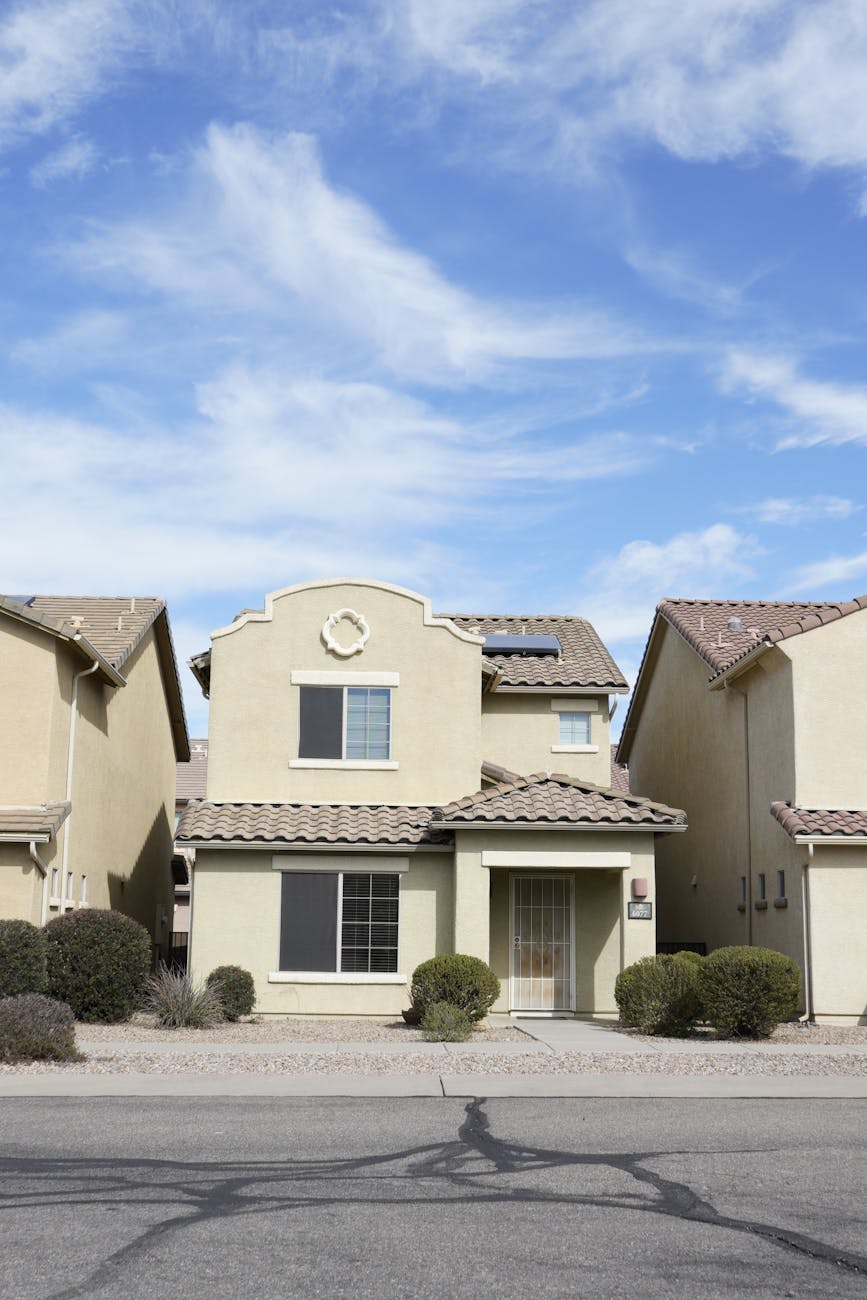
The average house price is just $298,000, but with the plant expected to open later this year, house prices could rise as more luxury properties are built.
The main focus in this article is the expected rise in housing values with some discussion of jobs and economic development. What else might change?
Higher status. Not all suburbs have a major Samsung plant.
More traffic. This includes employees traveling to and from the plant as well as supplies and products moving in and out.
New civic service and local revenue issues to confront. How will the community spend new tax monies that come in? What services will the plant and its operations require?
A larger population. Do some long-time residents dislike the changes? Does new development alter the character of the community?
Will the arrival of Samsung lead to other businesses moving to town? Or support businesses (where will all those plant employees spend their money)?
In other words, come back to Taylor in ten years and it might look and feel different.
I enjoyed thinking this week about pop and rock music about the suburbs. As I considered the music of Malvina Reynolds, the Beatles, Ben Folds, Arcade Fire, and Olivia Rodrigo, several thoughts come to mind:
These genres do not often write directly about the suburbs. They may tell stories about people and situations based in suburbia but the role of suburban places is minimized. Many popular songs do not say anything about where they take place geographically.
Finding songs that portray suburbia in a positive light is difficult. Surely they exist. Perhaps they do not become as well-known? Perhaps music artists tend to associate suburbia with negative traits? Perhaps other genres do this differently?
At the same time, there is plenty about suburban life that could make for compelling music. Millions of Americans, including many musicians, have experience this life. The songs profiled this week included looks at houses, daily routines, remembering childhood, listening to music, driving, and relationships. For all the reasons Americans love suburbs, why not tackle those themes? (I realize it might be hard to write about suburban local government but I am guessing it could be – and probably already has – been done.)
I will keep listening for music that references and is about specific places. This includes the suburbs but also cities and rural areas as place could be a fascinating topic for a new single or album or bonus track.
I’m rockin’ the suburbs Just like Michael Jackson did I’m rockin’ the suburbs Except that he was talented
The song pokes fun at “being male, middle-class, and white” as the protagonist angrily goes through life. Folds highlights one group of suburbanites – what would he do with the increasingly complex suburbia?
The song parodies Korn and Rage Against the Machine. Folds stated of the song “I am taking the piss out of the whole scene, especially the followers.”[1]
This reminds me of a sidewalk square nearby in suburbia that immortalizes “Korn.” Both groups provided music and lyrics that could be used to express discontent about a suburban America.
The kids want to be so hard But in my dreams, we’re still screaming And running through the yard And all of the walls that they built in the seventies finally fall And all of the houses they built in the seventies finally fall Meant nothing at all Meant nothing at all, it meant nothing
By the early 2000s, millions of Americans had grown up in suburbs. What was that childhood like? How could it be put into music?
One interesting note: the group is Canadian but The Suburbs is based on growing up outside of Houston. How does this mixing of experiences change their interpretation of suburbia?








 Legally Sociable