Illinois Tollway, Canadian Pacific Railroad fighting over railyard land

Both railroads and tollways are important in the Chicago region so which should get their way when they both want the same land?

The Tollway has already built part of I-390 with the intention of extending it east to O’Hare. A new tollway would meet I-390 and connect it north to I-90 and south to the Tri-State Tollway along the airport’s western border. The project is expected to cost about $3.5 billion…

In March 2014, Canadian Pacific asked for $114 million for land acquisition and improvements to its Bensenville yard. The Tollway wants to use about 36 acres of the yard for the highway project. But the Tollway said CP restricted Tollway access to the yard, interfering with its ability to study the area to respond to the offer.

Schillerstrom said that the Tollway presented plans that addressed the railroad’s operational and land acquisition worries in November 2015, but CP ended discussions and since then has not been willing to discuss anything…

“With $140 million in federal dollars already invested in the project, Sen. Durbin is concerned about Canadian Pacific’s newfound unwillingness to work with the Tollway and other stakeholders,” Marter said. “After years of working toward a mutually beneficial solution, the railroad’s about-face is troubling.”

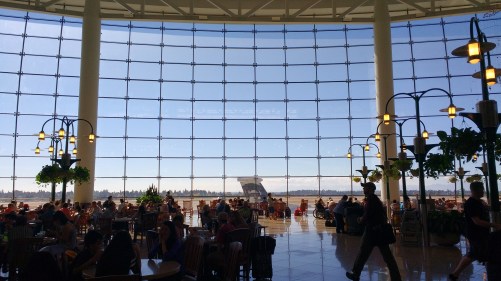
I’m a little surprised the state let this go so long and/or they didn’t wrap this piece of the puzzle up before they put themselves between a rock and a hard place. I imagine the public might rally around the cause of the tollway here – the road could help a number of drivers – but CP is correct about the level of railroad gridlock in the Chicago region. Say more about this particular railyard here; the picture at the top highlights the size of the facility.

Might this call for some sort of deal where the land in this railyard is traded for some other land or access elsewhere in the region? One solution to railroad congestion is to funnel more traffic around the edges of the region.


Better ways to signal pedestrian crosswalks

The death of a cyclist recently in Mount Prospect has led to an examination of how to stop drivers for walkers and bicyclists:

Using data from studies of 16,716 vehicles at crosswalks equipped with amber beacons in seven states, including Illinois, researchers found on average 72 percent of drivers yielded to pedestrians. Interestingly, only 33 percent out of 1,402 vehicles yielded in Illinois.

Drivers tended to stop more frequently if the amber beacons were located overhead instead of alongside the road, near a school or transit stop, and on roads with fewer lanes, the study stated.

A different Federal Highway Administration report found a huge gap in drivers obeying amber beacons at crosswalks that ranged from 19 percent at one site in Illinois to 98 percent at a Colorado location…

Meanwhile, another type of crosswalk signal with a red light offers a promising track record. Known as a pedestrian hybrid beacon, the device typically hangs over an intersection and is dark until someone presses a button activating a yellow warning light, then a red beacon for drivers.

Studies of 3,504 drivers in Texas and Arizona showed 96 percent on average stopped.

All the road signs and traffic lights in the world will not lead to 100% compliance from drivers. Of course, some solutions are more effective than others. Later in the article, an expert explains:

“Traffic engineering is harder than drivers may think,” Fitzpatrick said.

Another problem that could be solved with self-driving cars. Until then, cyclists and pedestrians have to be really careful with cars driven by humans who can have all sorts of reactions to people crossing the road.

Building a new subway in a big city is difficult, Rio edition

A new subway line in Rio illustrates the issues of constructing subway lines in large cities:

Though it was barely completed in time for the opening ceremonies on August 5, the fact that Line 4 opened this year, let alone this decade, is undeniably because of the Olympics. The state government, which funded the $3.1-billion line, argues that the subway will vastly improve transportation options in the city. The state department of transportation said in an emailed statement that Line 4 will “provide locals and visitors a transportation alternative that’s fast, modern, efficient and sustainable.”

But many outside the government worry that Line 4 was built to primarily serve the Olympics and the upscale real estate developments that are planned in the event’s wake. Critics say Line 4 prioritizes access to the main event venues and wealthy neighborhoods, and disregards the transportation needs of the rest of the city. “This is to serve only the higher classes,” says Lucia Capanema Alvares, an urban planning professor at the Federal Fluminense University. “It’s not to serve the people.”…

This linear design leaves much of the area inside the arc—and the millions of people who live there and in the hinterlands beyond—with little access to rapid transit.

While there are likely unique issues at play in Rio, I suspect these issues would be present in any major city that undertook new subway construction:

  1. Huge costs. Building under a major city is expensive and costs often go beyond budget. The best way to fight this is to have foresight and build such lines sooner rather than later.
  2. Disruption. Again, a large city has all sorts of systems already in place and construction on this scale can take a long time.
  3. Charges of inequality. Who should mass transit serve? Do many major cities primarily have subway and rail service to wealthier areas? (And are these areas better off because they have had mass transit access?) And, why does it take so long to provide service for people who need it?

Such large infrastructure projects are not for the faint of heart but if done well could provide benefits for decades.

Mass transit users want three basic things

Fast wi-fi? Cushy seats? A recent survey of mass transit users suggest they want more basic features:

Analyses in the TransitCenter report suggest that riders agree. In one, the researchers compared satisfaction levels with various attributes of regional transit systems between respondents who said they’d recommend their transit service to others and those who wouldn’t. Of all the attributes (charted above), frequency of service demonstrated the largest gap in satisfaction between transit boosters and detractors, and it got the very lowest rating from transit detractors. That suggests that frequent service is essential if you want happy riders…In that same analysis, the second-largest gap in satisfaction was travel time—how long it takes to get from station to station. Translation: Fast trains equal more satisfied riders. A second analysis supports this conclusion. Respondents were asked to ranked the relative importance of 12 potential improvements to a hypothetical bus route (the results are charted below). They ranked travel time number one. (Frequency is a close second, with cost reduction in third place.)…

Finally, the report identifies walkability—here, the ability to walk to transit—as the third key factor at the heart of effective, useable transit. To arrive at this conclusion, the researchers broke down riders into three types: Occasional riders, who use transit only once in a while; commuters, who use transit regularly, but only to get to work; and “all-purpose” riders, who take transit regularly to travel to all types of destinations—work, dining, entertainment, and shopping. That last category is especially important for cities to pay attention to, Higadishe said: “When you have lots of all-purpose riders, that’s a signal that a transit system is really useful.”

Across all three rider types, most survey respondents said they typically walked to access transit. But all-purpose riders did so overwhelmingly, with 80 percent typically getting to transit on foot, compared to 53 percent of commuters and 57 percent of occasional riders. In an additional, more fine-tuned analysis of spatial data from TransitCenter’s national transit database AllTransit, the researchers identified a similar relationship…

Infrastructure tends to work this way: it has to work well and consistently. Perhaps then some extra frills could be considered but as long as they don’t compromise the basic features.

So, if these findings hold across a majority of transit users, why don’t politicians and infrastructure authorities pay more attention to these issues? Are they too expensive to address? Or, are these leaders always looking for cool new features (i.e., wi-fi) to impress the public? Perhaps this exposes a gap between who uses mass transit and who doesn’t – politicians and business leaders likely use it less.

Having a McMansion with a carport

Living in a McMansion yet also having a carport seems incongruent. Yet, this recently was an issue in Austin, Texas:

Given a Planning Commission vote and a range of opposition willing to stay late to fight, it seems unlikely that McMansion rules on carports and garages will be changing any time soon.

At their most recent meeting, Planning Commissioners considered an amendment that would change part of Subchaper F, aka the McMansion Ordinance, that eliminates exemptions for carports when they are enclosed. (Enclosing carports, of course, turns them into garages.) Instead, staff is recommending that the exemption be based entirely on where the structure is located in relation to the house, not whether it is a carport or a garage.

Senior Planner Greg Dutton explained that, under the current code, carports get a 450-square-foot exemption when 10 feet or farther from the main house. If closer, the exemption is 250 square feet. However, if exempted carports are subsequently enclosed, that exemption is reduced, and can cause problems for unsuspecting homeowners.

The change was initiated after a perceived flurry of requests for waivers from that rule hit City Hall. Those requests came from homeowners who put doors on what they thought were unfinished garages, only to be told their homes were now out of compliance because those structures were previously considered carports under city code. Dutton said the influx of waivers seems to have died down.

I could see two reasons for having a carport rather than a garage:

  1. They are cheaper to construct because you don’t need to enclose the whole structure.
  2. With warmer weather, carports become more viable because all you want is a roof over the vehicle. (Hence, there are not as many carports in colder weather climates.)

Yet, the first reason would feed into a common critique of McMansions: so much money is spent on trying to impress people from the street – usually with the size of the home or the overblown architectural elements – that there is little leftover for other features like the back of the house or a carport. In other words, if you spend a lot of money to build a McMansion, couldn’t you go a little further and construct a garage as well?

To be honest, I’ve never seen a picture of a McMansion with a carport. Indeed, one of the nicknames for McMansions is “snout houses” because they tend to lead with a large garage. Perhaps carports occur more in teardown situations where the size of the lot makes it more difficult to have a large garage on the front and an existing carport in the back or on an alley is a viable alternative.

Overcrowded sidewalks in Manhattan

Manhattan is crowded and this includes the sidewalks:

While crowding is hardly a new problem in the city, the sidewalks that cemented New York’s reputation as a world-class walking city have become obstacle courses as more people than ever live and work in the city and tourism surges. The problem is particularly acute in Manhattan. Around Penn Station and the Port Authority Bus Terminal, two of the city’s main transit hubs, commuters clutching coffee cups and briefcases squeeze by one another during the morning and evening rushes. Throngs of shoppers and visitors sometimes bring swaths of Lower Manhattan to a standstill, prompting some local residents to cite clogged sidewalks as their biggest problem in a recent community survey.

Foot traffic has slowed to a shuffle along some of the city’s most famous corridors. On Fifth Avenue, between 54th and 55th Streets, 26,831 pedestrians — enough to fill Madison Square Garden and Radio City Music Hall combined — passed through in three hours on a weekday in May 2015, up from 20,639 the year before, according to city data.

Transportation officials are taking measures to alleviate the congestion. To help accommodate foot traffic, they are adding more pedestrian plazas across the city, expanding the presence of a streetscape feature first embraced by the administration of Mayor Michael R. Bloomberg. One is scheduled to open soon on 33rd Street near Penn Station. There are also plans to widen a half-dozen sidewalks in Flushing, Queens, in the next year (the city’s sidewalks vary in width, but must be at least five feet wide).

While a crowded sidewalk is simply a symptom of a crowded city, it resonates deeply because it affects almost everyone. Unlike overstuffed subways or tourist attractions like, say, Times Square, there is no going around the sidewalks. They are to New York what freeways are to Los Angeles: an essential part of the infrastructure. Sidewalks not only get people from Point A to Point B, but also serve as a shared public space for rich and poor, native and tourist alike.

As Jane Jacobs highlighted, crowded sidewalks are critical for thriving cities. And, don’t most urbanists today want more people walking? As the article notes, this is a problem in numerous cities where tourism is encouraged and there are a mix of important uses in proximity.

There seems to be an easy answer that is not discussed here: close more streets for stretches to allow for more pedestrian traffic. If there are so many people walking, this shouldn’t hurt businesses too much. Additionally, it could allow for pedestrian corridors that might also then reduce foot traffic on nearby streets. At least, perhaps some areas would benefit from road diets. If you have so many people in a small area and then prioritize vehicular traffic, problems like this will arise.

Even more radical than limiting vehicles in major urban stretches would be some version of the High Line in high-trafficked areas. Imagine raised platforms for walking above the sidewalk that could add both capacity and recreation options.

Taxing drivers by mile “unwaveringly unpopular”

Recent surveys suggest Americans do not like the idea of having to pay per mile driven:

The Mineta Transportation Institute, which has polled the public on a variety of tax questions for the past seven years, found that the mileage tax was “unwaveringly unpopular.” In the latest survey, which covered 1,500 people and was released this month, the institute found that support ranged between 23 percent and 48 percent, depending on how the question was framed. More people liked the idea if the mileage tax varied by how much a car pollutes…

According to the latest Mineta survey report, authored by Asha Weinstein Agrawal and Hilary Nixon, which was presented this month at the Commonwealth Club of California, between 31 percent and 75 percent of people supported increasing the gas tax — the higher figure if it was dedicated to maintenance.

While majorities may dislike a tax per mile driven, it sounds like more support could be garnered depending on how the tax is structured. Require each car to be tracked by the government via GPS? Dislike. No breaks for smaller vehicles or more fuel-efficient cars? Dislike. The money collected via the new method of taxation funneled away from road maintenance? Dislike.

In other words, this is likely to happen in the coming years but there will be a lot of negotiations as well as attempts to make this more palatable to voters.

A declining number of American gas stations

The number of gas stations in the United States has dropped in recent years:

But gas stations have been in decline for decades. Between 1994 and 2013, the number of retail fueling sites in the U.S. fell from 202,800 to 152,995—a 25 percent decline. In 2015, the number had slipped to about 150,000. (See page 31 of this report from the National Association of Convenience Stores.) And with several powerful megatrends arrayed against them, there are signs that their numbers could shrink significantly in coming years.

Let’s start with gentrification. (And this is the good news.) In many urban areas, gas station owners are finding it simply doesn’t make economic sense to keep selling gasoline—for reasons having nothing to do with demand for their product. As America’s great cities revitalize and attract more wealth, land is becoming exceedingly expensive. In many cities, and especially in New York, a gas station falls far down on the list of the best things to do with a piece of land. Owners realize they can run their businesses at modest profits for years to come or sell out to developers for giant premiums. In Manhattan, where the best use for a gas station is a site for condominium or office development, the number of gas stations fell by a third between 2004 and 2014—to just 39. As the New York Times reports, “Today there is not a single operating gas station left on the city’s East Side from the southern tip of the island to 23rd St.” The conversion of gas stations into apartments and offices is also starting to happen in other land-constrained cities such as Boston; Washington; and especially San Francisco, where at least two-dozen gas stations have made way for other developments over the past six years.

Several other trends are afoot that will lessen the underlying demand for gas stations’ core product. Gasoline, which was pretty much the only transportation fuel for vehicles until very recently, is slowly being displaced by a couple of sources, neither of which relies on gas stations to deliver them. First, there’s natural gas. Cheap and abundant thanks to fracking, compressed natural gas and liquefied natural gas are emerging as options—not so much for consumers and individual cars but for fleets. One of my favorite sites, NGT News, documents how operators of huge delivery fleets such as UPS or giant armadas of garbage trucks such as Waste Management are systematically switching their fleets to run on natural gas–based fuels instead of gasoline…

The other force is electricity, of course. The penetration of electric cars in America’s fleet is still very low. But every month, several thousand new cars hit the roads—Teslas, mostly—that don’t use any gasoline at all and will never, ever, ever stop at gas stations (unless their drivers need to make a pit stop for a Fresca or beef jerky). Sales of all-electric cars are running at about 6,500 month, according to Hybrid Cars. But there are signs of greater electrification. About 6,000 plug-in hybrids, like the one I drive, are sold every month. And there are many, many more to come. Tesla has already taken reservations for more than 370,000 Model 3s.

If this is indeed a declining industry, it will be interesting to see who is able to stay afloat the longest.

Two additional thoughts:

  1. While it is widely accepted that Americans like driving, it is less discussed how many other industries and firms depend on this. Gas stations exist because people regularly need to fill their vehicles and then a set of practices arises around stopping for refreshments and the restroom (they become convenience stores), getting a car wash, being able to take road trips, etc. What happens to drive-thrus if self-driving cars take over? What about big box stores and shopping malls? Less driving means not just fewer cars but a changed way of life.
  2. The paragraph above on gentrification hints at this but all that land formerly occupied by gas stations represents a significant opportunity. Imagine Shell goes out of the American gas station business. Who takes over all that prime real estate? The market might be limited for such land (just how many fast food chains can there be) even though it is often located at busy intersections.

The most common job in 37 states

Moving goods around the country requires a number of drivers:

More than 3 million people drive trucks in the United States. In fact, according to Steve Viscelli, author of “The Big Rig: Trucking and the Decline of the American Dream” and a lecturer in the Department of Sociology, it’s the No. 1 occupation in 37 of 50 states.

Americans don’t generally pay much attention to infrastructure but the trucking industry may be lower than average on the list of infrastructure components. Outside of complaining about large trucks on the road (driving next to them, the noise they generate), it is difficult to remember that so much of what we purchase comes at least part of the way through trucks. And if trucking all moves to self-driving vehicles, perhaps trucking will become even more faceless.

But, perhaps one way we will hear about the future changes in trucking: a significant loss in jobs. Will drivers be able to transition to new jobs better than millions of manufacturing workers or others who have lost jobs because of a changing economy in recent decades?

Infrastructure Week in Illinois intended to sell needed repairs and funds

This week is one intended to help promote needed funding for infrastructure in Illinois:

With a new Illinois capital program delayed as the state goes 11 months without a budget, transit leaders have been sounding the alarm in both Washington, D.C., and Springfield about the dangers of waiting too long to invest in infrastructure. Business, labor and transit leaders will ramp up discussion nationwide Monday for the start of the thrillingly named Infrastructure Week.

It’s a tough sell — roads, buses and trains seem to work just fine until they don’t, and politicians don’t like to raise gas taxes or other user fees. Regional Transportation Authority Executive Director Leanne Redden admits that funding for bridges, signals and tunnels is not a sexy topic, but it’s crucial to keep the system going the way it should…

The Metropolitan Planning Council, which consulted with RTA officials and other experts around Illinois, determined that meeting the state’s transportation deficit requires an additional $43 billion over 10 years — on top of what is already expected in terms of capital funding…

He noted that no system is going to be in perfect shape all the time — it’s like your house, you want to keep it in a state of at least 90 percent repair, with a few projects on a to-do list. But Illinois’ state of repair is currently below 80 percent and could drop below 60 percent in the next five years, Skosey said.

It is unclear from this article whether this week is aimed at the public – who often doesn’t pay much attention to infrastructure and generally doesn’t like paying increased taxes for public services – or state officials and legislators – who aren’t doing much of anything in Illinois these days. I assume the general goal is to raise awareness but what would they like the public to do? Call a political leader? Vote different in the 2016 election?

Thinking about the role of governments, the public tends to assume or hope that governments will do the prudent thing for the future. In terms of infrastructure, this usually means keeping up with maintenance and taking care of needed changes before the situation gets dire. But, given the short-term outlook of many politicians these days plus many competing interests, infrastructure needs are often kicked down the road. Yet, compared to other major issues that can continue to be kicked down the road, at some point roads, railroad systems, airports, electric grids, and other necessary pieces of infrastructure can and will literally crumble and will require immediate attention.