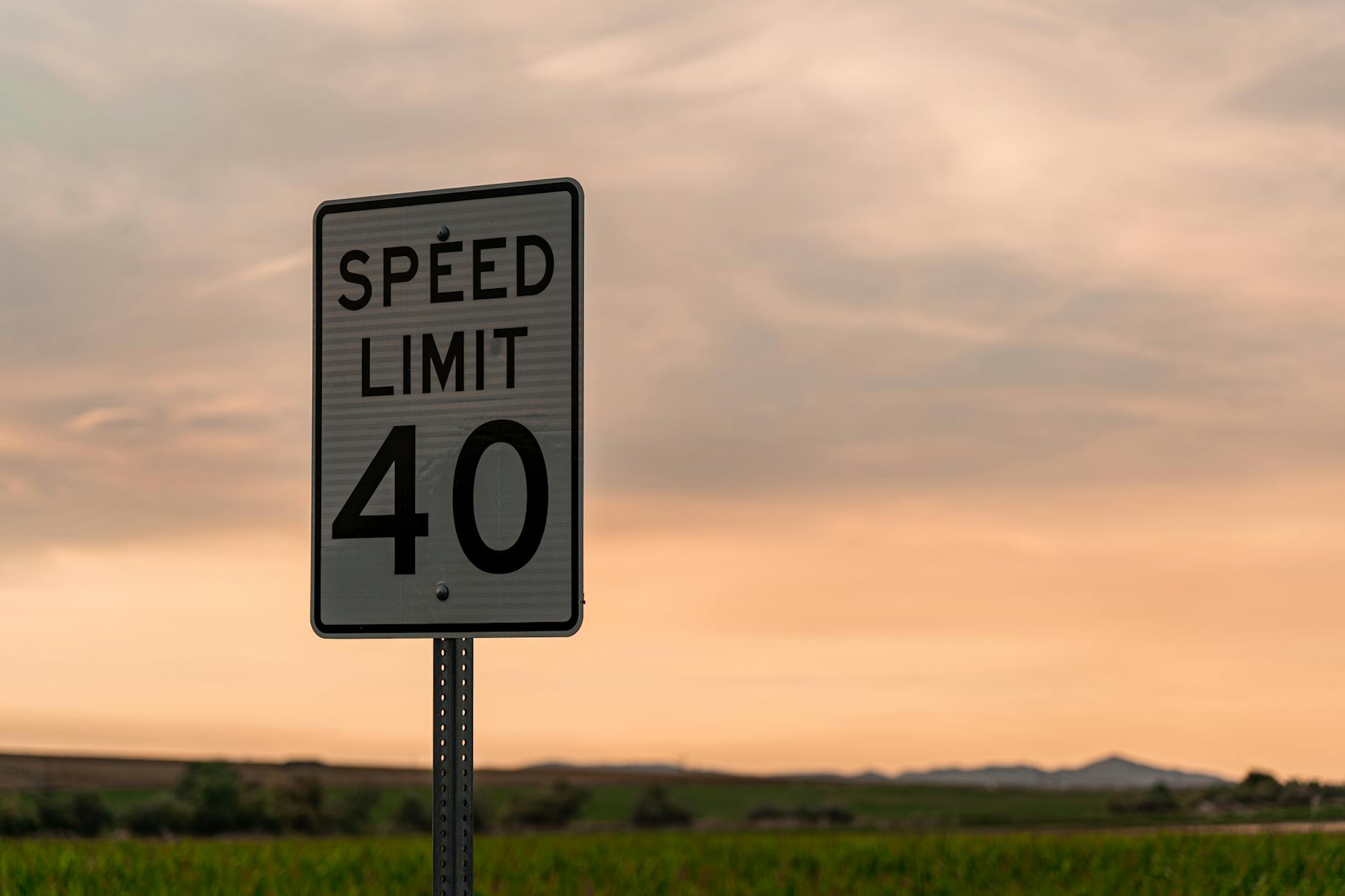
It is rare to find drivers on major roads that will only go as fast as the speed limit. If anything, the speed limit seems like an anchor at the bottom end of possible speeds so that people do not just drive at whatever speed they want. If the speed limit is 45, few will go only 42 or 44 but the speed limit might keep them from going 75 because that is far away from 45. Future technology might change this: if cars have speed limiters, where will the line be set?
One way to address this is to have no speed limit. Only a few places do this.
Why not try a speed range? Imagine Chicago highways that have a speed limit of 50-70. Some people might feel more comfortable at the lower end, some at the higher end.
Is the real issue that drivers will not follow any limit unless there is enforcement? Technology could lead to automatically fining drivers (speed cameras, GPS, toll devices, etc.). Or, is it about current conditions (less traffic can lead to higher speeds, more congestion slows speeds)? Some roadways now have variable speeds where digital signs change the speed limits for the given conditions.
All this to say, a speed limit seems more like a number that most American drivers treat as a recommendation and not an imperative. This has big implications for the driving experience, how Americans regard driving, and safety.
The proposal is part of a broader look at transit funding, as the region’s public transit agencies face a combined $730 million budget hole once federal COVID-19 relief funding starts running out, which could be as soon as 2025. Transit agencies have warned failure to plug the financial hole could lead to catastrophic service cuts and fare increases, and the Chicago Metropolitan Agency for Planning was tasked by the Illinois General Assembly with developing recommendations to overhaul transit, which were delivered to lawmakers in December.
The decision to introduce legislation is a signal of how some lawmakers and civic organizations want to proceed. Already, the transit agencies have sought more state funding, while the civic organizations and lawmakers say funding must be linked to changes to the way transit is overseen. But debate about consolidating the transit agencies and funding could prove thorny in Springfield.
Still, merging the transit agencies has garnered some support. The Civic Federation, a business-backed Chicago watchdog group, recently endorsed the idea, and Cook County Board President Toni Preckwinkle also previously expressed her support for the concept…
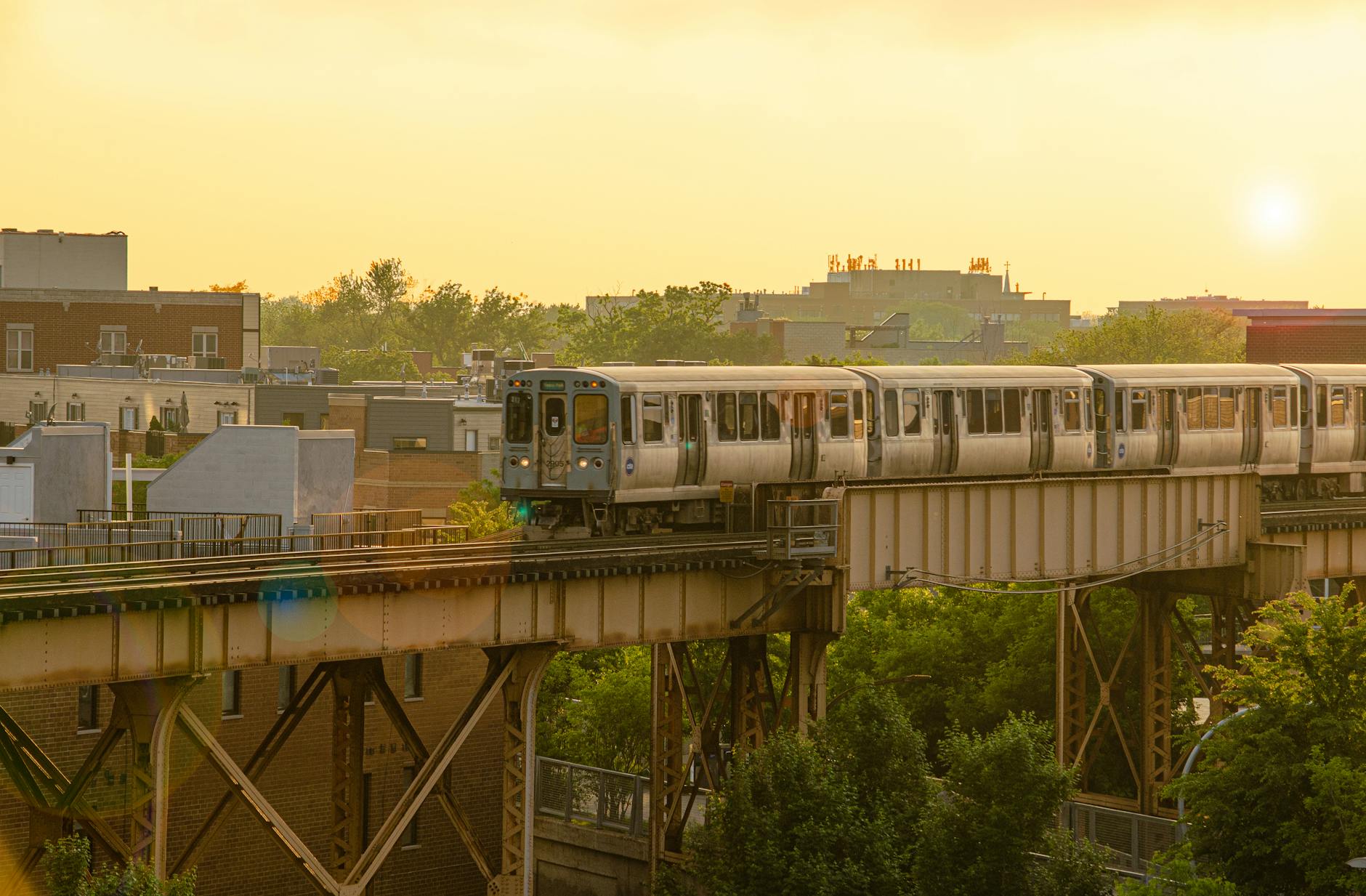
The proposal set to be introduced this week in Springfield is expected to replace the Regional Transportation Authority, which coordinates financing for the agencies, with a new Metropolitan Mobility Authority. The new agency would oversee the operation of buses, trains and paratransit, rather than having the CTA, Metra and Pace each operate their own services.
The proposal would revamp the number of board members on the new agency and who appoints them. The current system is complex and layered, regional planners have pointed out, with 47 board members across the agencies appointed by 21 elected officials. That has given nearly two dozen state, suburban and city officials varying levels of influence on the transit boards.
There is a lot to be worked out. No one community can address this issue. Even if the big city in a region has a great system, that city does not stand alone as people and business moves throughout the region. Indeed, in many regions, many of the jobs and much of the activity takes place in the suburbs where driving is even more prominent. Thus, I am in favor of this if it can improve transit options, create budget efficiencies, and help the region plan for the future.
One outcome is consistent in postwar era in the United States: we tend to get more roads and increasing traffic. In many regions, there are multiple competing interests regarding transportation. Do suburbanites want mass transit lines? What infrastructure already exists? Who controls the budgets? What political processes do ideas and plans need to work through? In a country devoted to driving, it can be hard to promote alternative options.
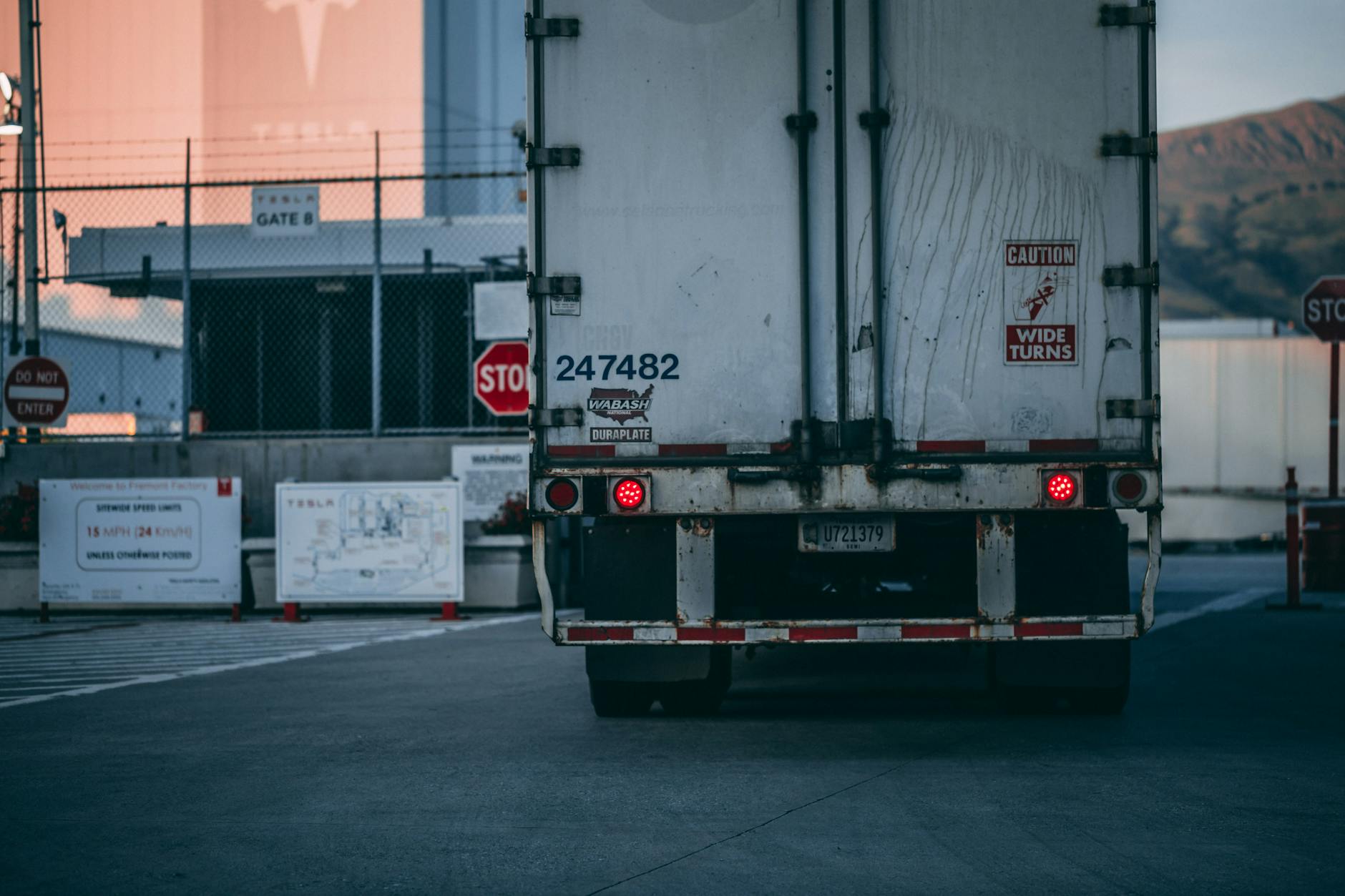
Whatever the outcome, Archer Heights and Joliet already illustrate one of the stark lessons of Chicago’s warehouse boom — that Americans can’t expect to enjoy the benefits of rapid, ever-growing freight shipments without paying for the necessary infrastructure and without encountering increasingly sophisticated demands from the towns being smothered by trucks.
Some of the listed negative consequences of all this trucking and shipping: traffic, noise, air pollution, extra stress on roads, and industrial neighbors for residents.
The primary positive consequences for a community: money from the land use and local jobs. The indirect consequence for many inside and outside the community: goods get to them faster.
Is it worth it? Would it work better to have giant shipping and trucking zones outside metropolitan areas where the pollution and noise and traffic could be minimized for nearby communities? This would require both foresight and resources. It reminds me of airports that are now surrounded by development or other major necessary infrastructure that is now folded into metropolitan landscapes.
Could one city or region figure this out? Imagine a special trucking and train zone outside of the metro region. The transportation actors get some tax breaks to locate there. The revenues from the land use are shared throughout the metropolitan region. Some current facilities are relocated to the new area.
Trucking may be essential to the American economy but it does not necessarily have to conflict with goals local residents and leaders have for their communities. It would require acting creatively and quickly to move shipping facilities away from people.
It’s strange to imagine now, but prior to the 1920s, city streets looked dramatically different than they do today. They were considered to be a public space: a place for pedestrians, pushcart vendors, horse-drawn vehicles, streetcars, and children at play.
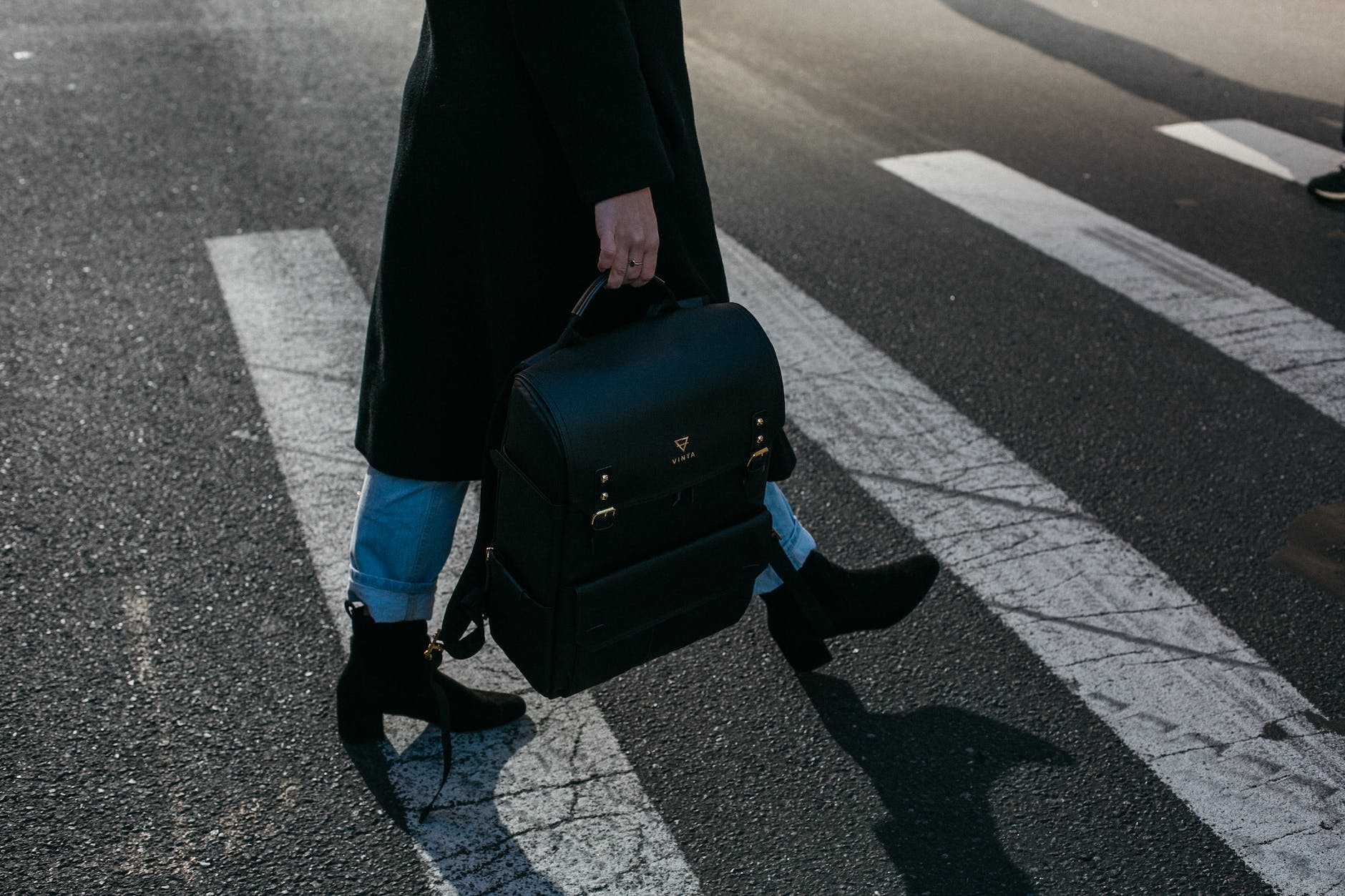
“Pedestrians were walking in the streets anywhere they wanted, whenever they wanted, usually without looking,” Norton says. During the 1910s there were few crosswalks painted on the street, and they were generally ignored by pedestrians.
As cars began to spread widely during the 1920s, the consequence of this was predictable: death. Over the first few decades of the century, the number of people killed by cars skyrocketed…
The turning point came in 1923, says Norton, when 42,000 Cincinnati residents signed a petition for a ballot initiative that would require all cars to have a governor limiting them to 25 miles per hour. Local auto dealers were terrified, and sprang into action, sending letters to every car owner in the city and taking out advertisements against the measure…
In response, automakers, dealers, and enthusiast groups worked to legally redefine the street — so that pedestrians, rather than cars, would be restricted.
This reminds me of Jane Jacobs’ description of the busy streetscape in The Death and Life of Great American Cities. She wrote of a street with plenty of pedestrians, lots of activity on the sidewalks, and numerous uses for nearby buildings. It is the kind of lively place that is relatively rare in American cities. As Jacobs notes, this is due, at least in part, due to the prominence given to vehicles. If the emphasis is on moving as many vehicles as quickly as possible through places, this lively streetscape will not happen.
The answer here it probably not to eliminate jaywalking as pedestrians would have a difficult time crossing wherever they want. Instead, addressing jaywalking would require rethinking streets all together. What is the role of pedestrians? What is the role of vehicles? What do we want for our streets?
Imagine the best weather for infrastructure. It is probably not the four seasons of weather in the Chicago region:
From the State Climatologist Office in Illinois:
Chicago lies midway between the Continental Divide and the Atlantic Ocean, and is 900 miles north of the Gulf of Mexico. Chicago’s climate is typically continental with cold winters, warm summers, and frequent short fluctuations in temperature, humidity, cloudiness, and wind direction. Many consider the more moderate temperatures of spring and fall to be the most pleasant. Lake Michigan provides a moderating influence on temperature while boosting the amount of snowfall received in the city.
Such fluctuations in the Chicago region lead to potholes, closures of airports and roads plus delays, flooding, and pressure on systems at both the hot and cold ends of the temperature spectrum. Coming out of a major snow storm and heading into several days of subzero temperatures, some of everyday activity is disrupted but mostly life goes on. Humans have developed systems and practices that make it possible to live in many different conditions.
What might be ideal? How about a place with more consistent temperatures, few storms, and no flooding? I am sure there are locations in the United States that meet this more than others. Everywhere else, people and systems adapt.
Modern infrastructure that makes everyday life possible is remarkable enough in addition to adaptability to different climates and making repairs when local conditions make it difficult.
Naperville is one of a growing list of suburban cities that have seen buses ferry migrants to their communities — unannounced — over the past few weeks. The spread of migrant-carrying buses to collar communities comes in the wake of more stringent rules for migrant drop-offs adopted by the city of Chicago earlier this year…
In an effort to hold bus owners accountable to the November policy, Chicago aldermen on Dec. 13 approved tougher penalties for rogue arrivals. Essentially, buses face seizure, impoundment and fines for unloading passengers without a permit or outside of approved hours and locations…
Instead of more coordination, Chicago officials have said that bus drivers, in direct correlation with tighter drop-off rules, have started to unload migrants in unauthorized places — including suburban train stations — to work around penalties…
Last week, five buses stopped at Aurora’s Transportation Center. In response, the Aurora City Council Friday passed an ordinance regulating buses coming to the city to drop off migrants who are en route to Chicago.
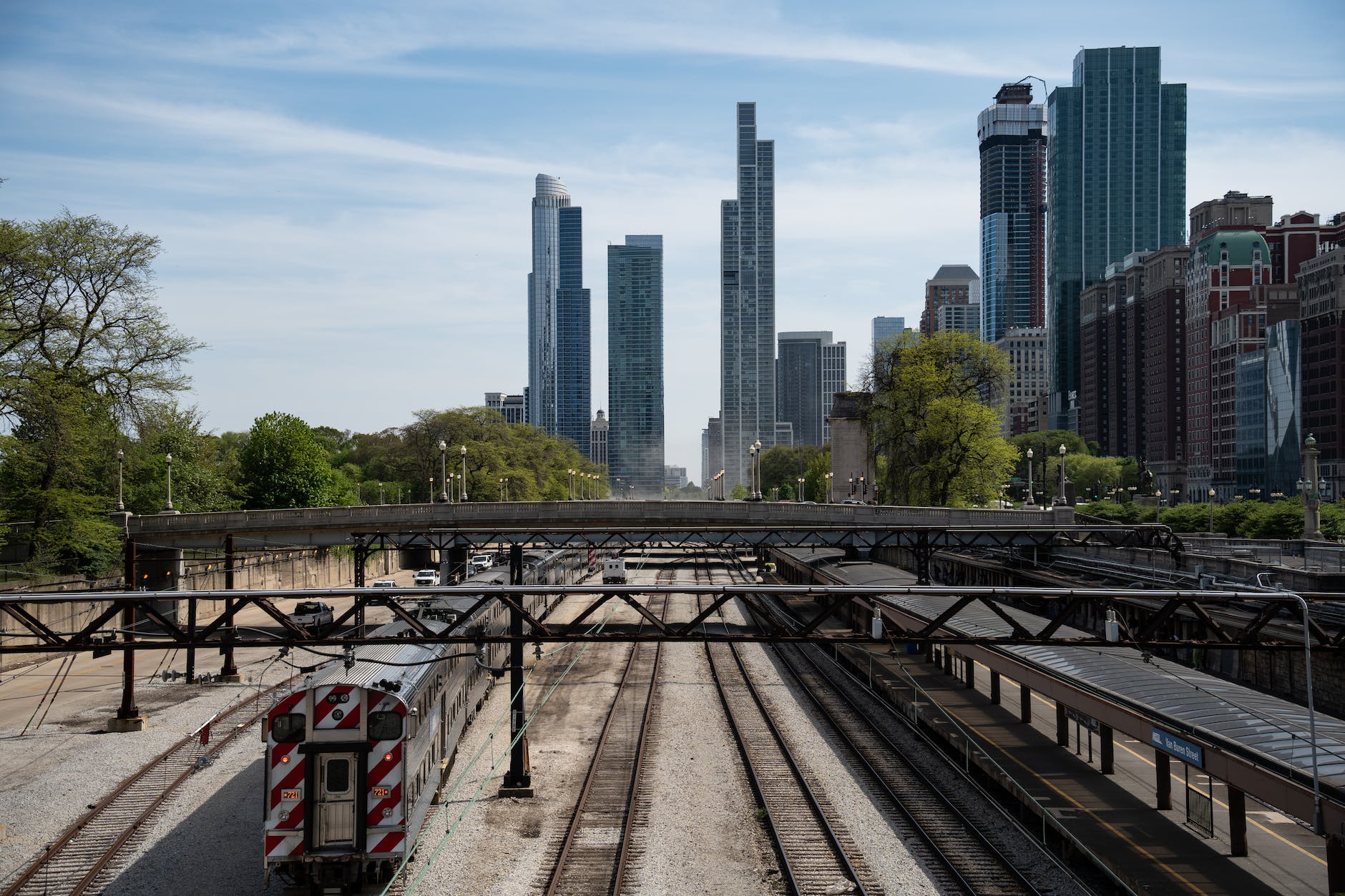
Chicago has long had a hub-and-spoke railroad system where lines radiating out from the city bring passengers downtown. This system has been around for over a century as lines coming out of Chicago connected surrounding counties to the growing city.
This same system that enable commuting to the Loop makes it possible for migrants to get to Chicago without having buses dropping them in the city proper. There are numerous trains stations spread throughout the suburbs that could serve as points where people can board trains for Chicago.
An investment firm know for buying up newspaper publishers then gutting them is behind the recent shuttering of dozens of Greyhound bus stations across the country, a new report has revealed.
Twenty Lake Holdings LLC, a subsidiary of Alden Global Capital, purchased 33 Greyhound stations across the U.S. from transport company FirstGroup in 2021, reported Axios…
Since the change of ownership two years ago, Greyhound has closed scores of its central bus stations around the country, either by cutting services completely, or moving to far out sites as a cost-saving measure to sell off the depots to real estate developers…
But as demand fell – with passengers numbers dropping by a third from 1960 to 1990 and then halving again between 1980 and 2006 – and running costs increased, they became less economically viable to run.
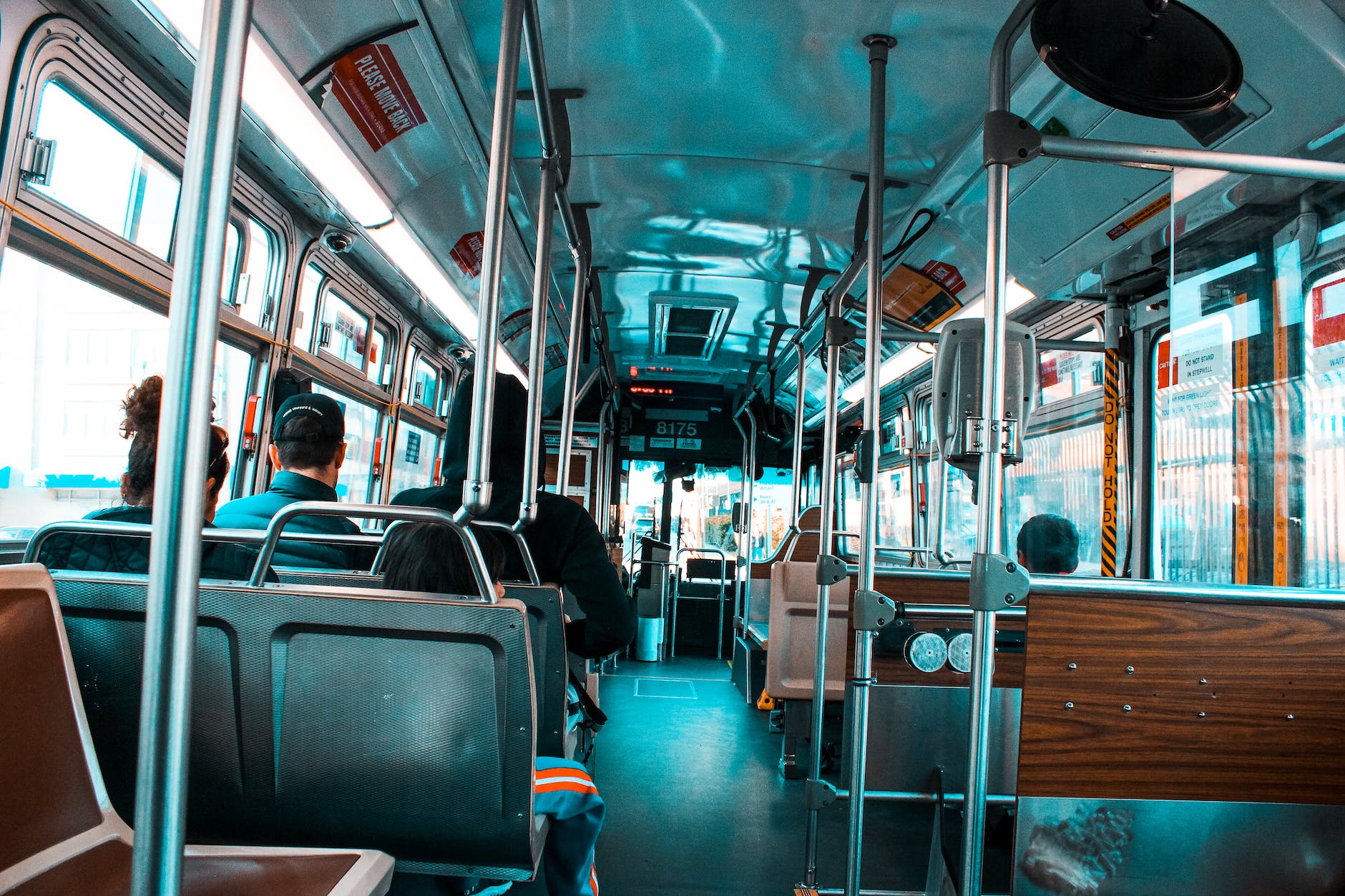
Given the American emphasis on driving, buses offer opportunities to move a lot of people along existing road networks. This limits the needs for fixed railroad tracks and buses can make more stops.
Like most transit hubs, buses and bus stations are shared spaces where members of different neighborhoods or social classes mix—which has made them important symbolic battlegrounds in civil rights history.
Black Americans, escaping the Jim Crow South for better opportunities in the north and west, used Greyhound buses during the Great Migration. The Freedom Riders used Greyhound buses to protest segregation and to test new protections on interstate passenger travel. In 1961, a mob beat and firebombed the Riders’ bus in Anniston, Alabama, attempting to trap the passengers, who escaped through the windows and door; the Riders had to be evacuated from Anniston through a convoy…
The accessibility of bus services and the mutability of their routes have historically made it an effective method for cities to move systemic problems elsewhere. Prior to the 1996 Olympics, for example, Atlanta leaders aimed to make the city more hospitable to the world by reducing its hospitality to people experiencing homelessness. The city bought thousands of one-way bus tickets to other locales to remove homeless populations from sight.
With more emphasis in the United States on driving individual vehicles – and this is a marker of self-sufficiency and freedom – buses can get short shrift. For those who cannot afford cars and other travel options, buses can offer opportunities – if they are available.
Rosemont could cite and fine bus companies from Texas, impound their vehicles, and arrest drivers for dropping off migrants in town, under an ordinance approved Monday.
The new rules — which are similar to ones in Cicero and tighter penalties being considered by the Chicago City Council this week — come after about a half dozen buses started bringing asylum-seekers to Rosemont last Wednesday.
Each bus had about 40 to 50 people, who were being let off in front of the Donald E. Stephens Convention Center, the Metra Rosemont station on Balmoral Avenue, and the Metra O’Hare transfer station on Zemke Boulevard on airport property next to Rosemont.
“We’re not going to let them just drop people off and drive away,” Mayor Brad Stephens said Monday. “It’s inhumane dropping them off on a concrete sidewalk on a day like today.”
Migrants are no longer being dropped off at the city’s landing zone on buses from the southern border, causing people to wander with no direction looking for shelter, according to an aide to Mayor Brandon Johnson.
Cristina Pacione-Zayas, Johnson’s deputy chief of staff, said the lack of communication is directly correlated with the city’s harsher penalties for bus owners whose vehicles violate rules to rein in chaotic bus arrivals from the southern border. She suspects bus companies are finding other ways to get migrants into the city. As of Saturday, more than 25,900 migrants had arrived in Chicago since August 2022, according to city records.
Under revised rules Wednesday, buses face “seizure and impoundment” for unloading passengers without a permit or outside of approved hours and locations. Violators will also be subject to $3,000 fines, plus towing and storage fees.
If this “works,” how many suburbs and cities will adopt similar approaches?
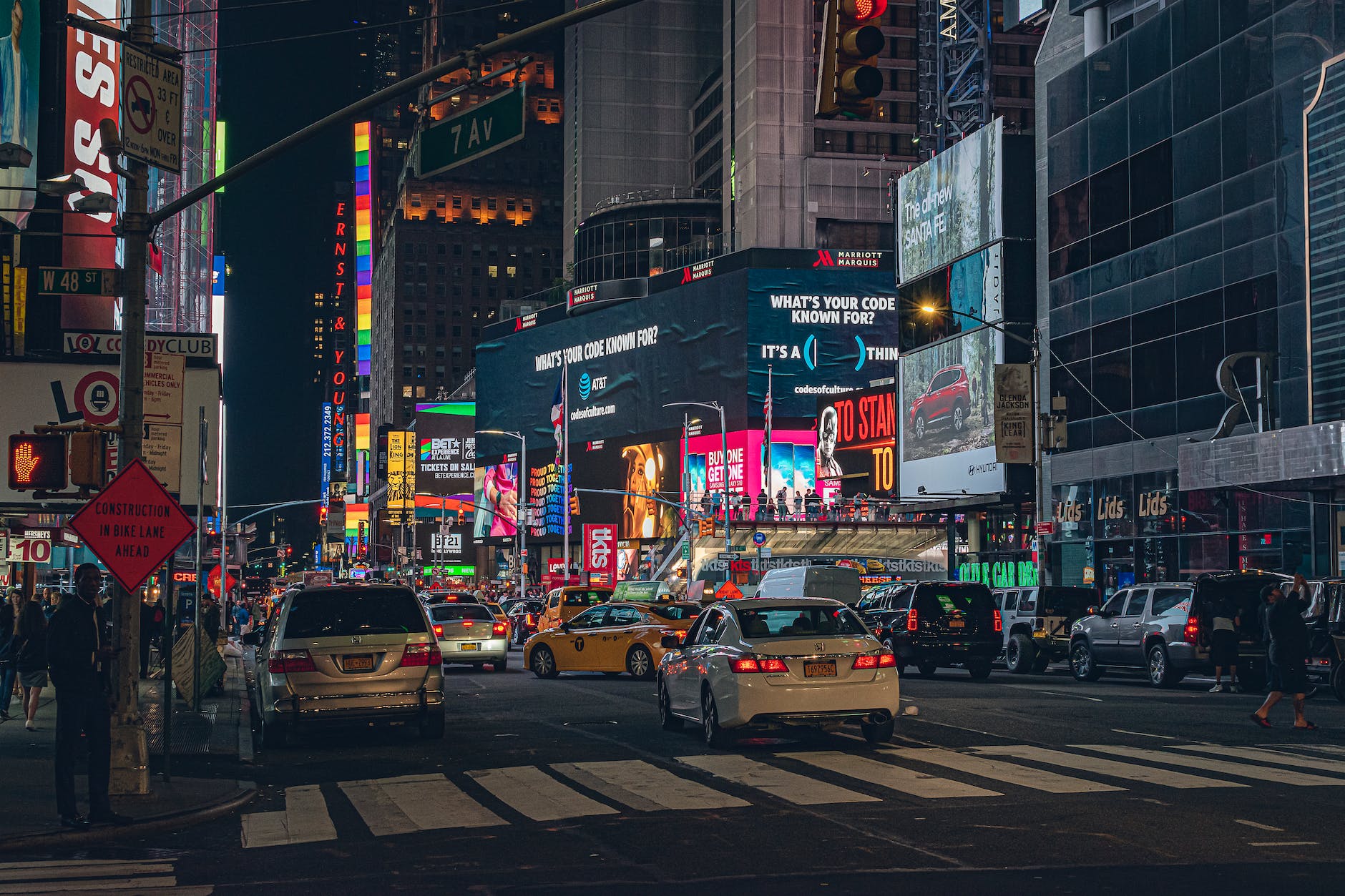
Under the plan, passenger car drivers entering Manhattan south of 60th Street during daytime hours would be charged $15 electronically, while the fee for small trucks would be $24 and large trucks would be charged $36.
Cities such as London and Stockholm have similar programs in place, but New York City is poised to become the first in the U.S.
Revenue from the tolls, projected to be roughly $1 billion annually, would be used to finance borrowing to upgrade the city’s mass transit systems…
Officials say that in addition to funding needed transit improvements, congestion pricing will result in improved air quality and reduced traffic…
“The Traffic Mobility Review Board’s recommended credit structure is wholly inadequate, especially the total lack of toll credits for the George Washington Bridge, which will lead to toll shopping, increased congestion in underserved communities, and excessive tolling at New Jersey crossings into Manhattan,” Murphy, who filed a federal lawsuit over congestion pricing in July, said in a statement.
In the US city with the highest rate of mass transit usage, this makes some sense. The roadways are crowded. Mass transit systems need money. At least some of the vehicles entering the city can afford the fee.
If this goes forward in Manhattan, how soon until it comes to other American cities? Those places may have fewer alternatives to driving but the revenue – and other benefits – might be hard for other places to pass up.
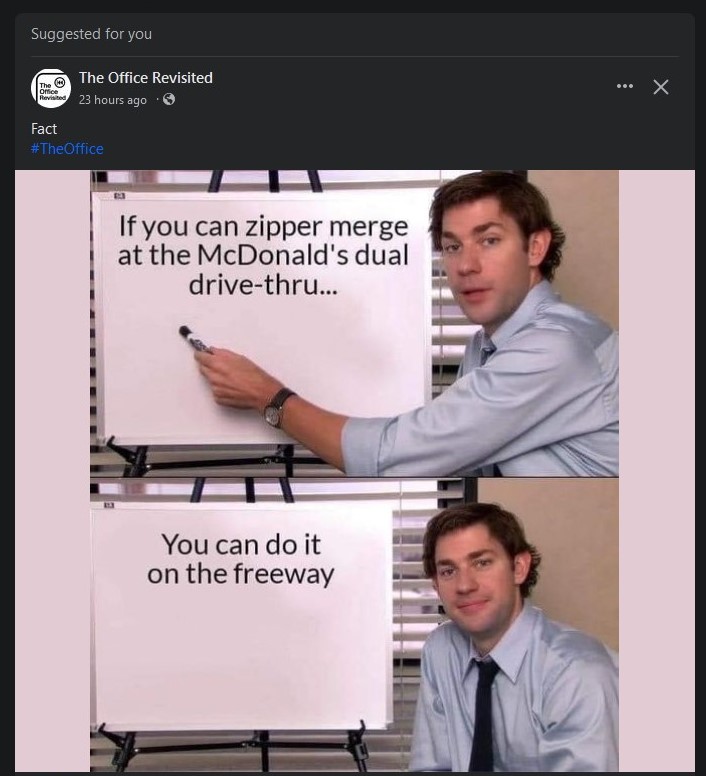
McDonald’s has several advantages in encouraging a smooth zipper merge process:
A shorter runway to merging. You often go around a turn, order, and immediately merge. In contrast, highway merges can sometimes be seen from a mile or more away and some want to block all that space.
A physical separation of the lanes before merging. The vehicles are ordering before merging and the need to have a display board and speaker means the lanes cannot be crossed into. Even if a driver wanted to block the other lane, the physical barriers make that difficult.
People want to get their food. While driving on the highway, the goal is to get somewhere quickly. Different motivations.
Might it matter that McDonald’s is private property while highways/roadways are more of open or public space?
Some of these principles could be applied to highways. Imagine temporary physical barriers between the lanes to force a merge closer to the end of the lanes. Or, reminders that blocking lanes has (legal?) consequences even though it is more public space.



 Legally Sociable