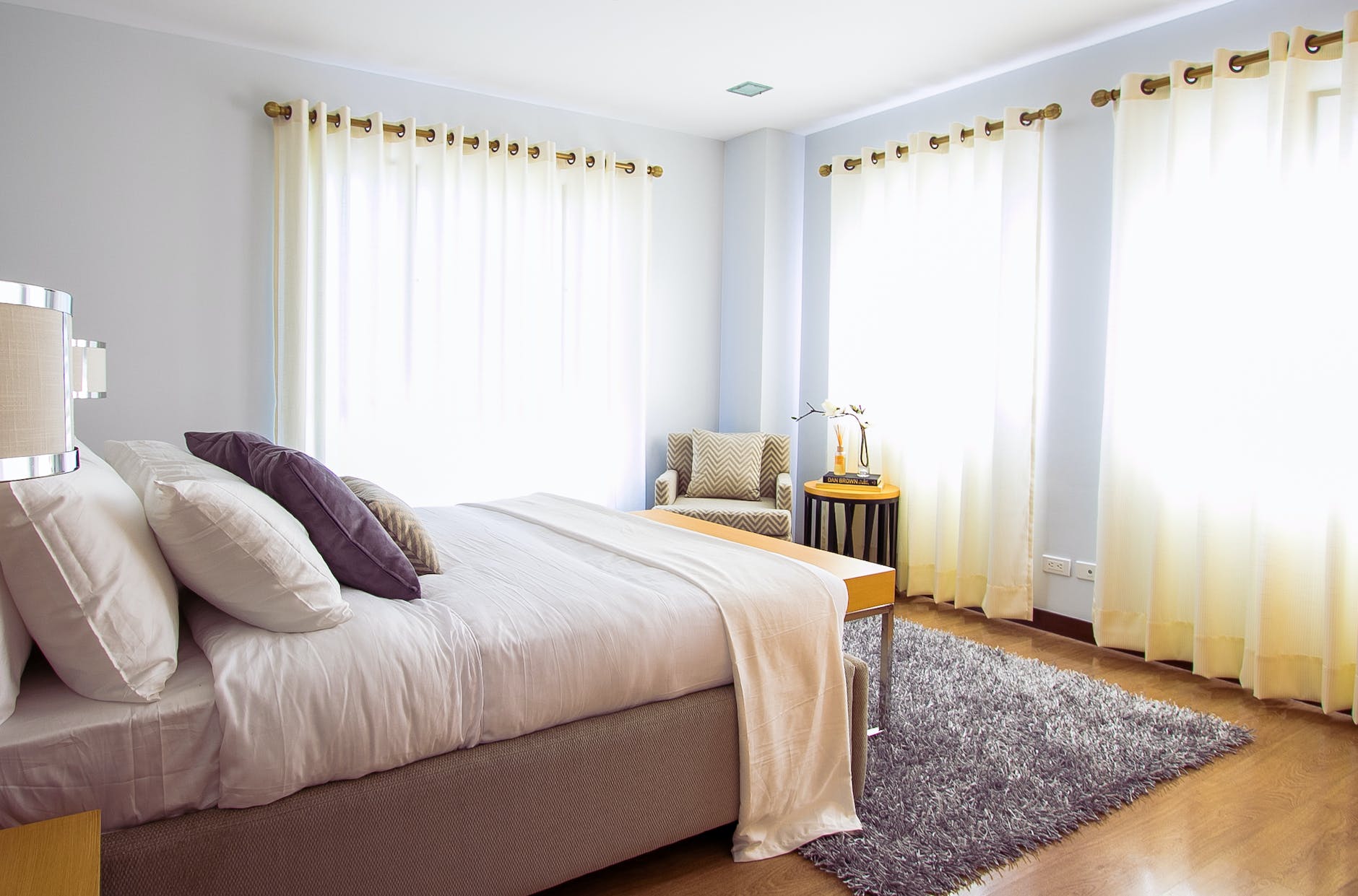
Can a relaxed, suburban “third place” get away with selling a high sugar, high caffeine lemonade drink?

Since I am not a regular patron of Panera’s – though there are several within a several mile radius of my suburban address – I was not aware of a new drink in these pleasant and sociable spaces:

Photo by Gilmer Diaz Estela on Pexels.com

Technically, one could do the same thing at a McDonald’s or another more casual fast food spot. But given that McDonald’s isn’t exactly relaxing, it may not be people’s first choice for a leisurely afternoon hang. Panera, on the other hand, is what’s known as a “third place,” a special type of social environment that blurs the lines of work and home.

This concept originates from sociologist Ray Oldenburg’s 1989 book The Great Good Place, wherein he separates daily life into three distinct spaces. The first is the home, the second is the workplace, and the third is any other environment where people can freely gather and exist in public without obligation. Starbucks, notably, is explicitly designed with the third place in mind. As Forbes first wrote in 2015, Panera has increasingly been chasing this idea as well, arranging their stores more like living room spaces and encouraging customers to stick around by offering free Wi-Fi. Particularly with its Unlimited Sips program, Panera has shaped itself to be a third place where people can hang around with a low barrier to entry—even more so than Starbucks, where two drinks would cost as much as a month’s worth at Panera, and there aren’t even free refills.

All of this helps explain what makes this Panera lemonade situation so compelling. If it were a 7-Eleven selling chaos in a cup, nobody would think twice. Instead, it’s this suburban-feeling sandwich retailer that has shaped itself as a simulacrum of the neighborhood cafe. And that’s weird—a Charged Lemonade would be a better fit for the X Games vibe of Taco Bell, a chain that already flavors everything with Mountain Dew and Doritos dust. Panera seems so innocent—until you remember that they’re essentially feeding you a loaf of sourdough with every meal. At Panera, the mayhem is merely disguised by the presence of words like Napa and brioche, and the dissonance of it all abounds.

Nevertheless, for Baus, who says in the video that she hates working from her home, Panera is the perfect environment for both work and leisure. “It’s close to my house and it’s actually quiet,” she said. “I kept going to coffee shops that had loud music and very limited seating. Plus, Panera has the Unlimited Sip Club, which is much cheaper than paying for a coworking space.” For all these reasons, she says, she’ll continue to work from Panera—and yes, continue to glug the lemonade. “I have started watering it down about 70/30, though, because I don’t need that much sugar or that much caffeine,” she said.

My first two thoughts are these:

  1. Panera knows its audience.
  2. This is an embodiment of America today.

Imagine this scene: a semi-busy fast causal restaurant on a December morning with light snow. People are scattered around the tables and seats, some talking quietly, some working on devices. They all have a drink in front of them. Some have coffee, others water, more have a lemonade in different hues. As they drink and work or socialize, the levels of the drinks go down and then are quickly refilled. Some people leave, replaced by others and eventually the lunch crowd raises the volume of the place.

What powers the activity in this third place? Whether in coffee or soda or a lemonade drink, it is caffeine. For a country that sleeps poorly, this is the answer in suburbia.

Three responses to whether suburbanites can successfully steward land and nature

In unveiling a proposed development on a 700+ acre parcel in Lake County, one of the family members who currently own the land said this:

Photo by u00dcnsal Demirbau015f on Pexels.com

“We are committed to providing long-term stewardship that will allow future generations to enjoy the amenities and natural beauty of this ground-breaking residential community”

Is it possible for this to happen in the suburbs? Here are three possible answers:

  1. Suburbanites cannot steward land and natural beauty. By virtue of being suburbia, the land is used poorly, roads and houses are put everywhere, habitats and ecosystems are disturbed, and the land and nature become just echoes of what they once were.
  2. On the opposite end of the spectrum: humans have tended land and nature for millennia. Suburbia can enhance land and nature for human use. Suburbia can even be beautiful if careful attention is paid to ensuring open space, lawns, parks, gardens, trees, and natural features.
  3. A somewhere in the middle position: suburbia can treat land and nature better or worse, depending on decisions about development and how everyday life looks when completed. There are features of suburban nature that are laughable – such as so-called “nature band-aids” in sprawling parking lots – and others that are more admirable – plots of natural plants, preserved trees, and Forest Preserves (to name a few).

I have heard/read all three positions. If the development goes forward as planned or in a similar format, future residents and visitors might find it difficult to envision what was there in a less-developed state. On the other hand, they might see a version of suburban nature that residents and the community see as helpful and worth preserving in the land of single-family homes and driving.

Metrics we need: claim that an expensive and lengthy construction project will cut delays 50%

With the unveiling of the reconstructed Jane Byrne Interchange in Chicago, this promise was made:

Photo by Life Of Pix on Pexels.com

Illinois Department of Transportation engineers are promising a 50% improvement in traffic delays as the interminable Jane Byrne Interchange rebuild wraps up…

It’s estimated the redo could save more than $180 million hours annually in lost productivity from workers in traffic jams and result in a one-third reduction in greenhouse gases.

Can we start tracking this immediately and see if the promise is true?

With numerous major projects facing longer-than-predicted timelines and significant cost overruns, perhaps this is a way forward in marketing. Ignore the extra time and money; it will be worth it!

At the same time, why not use similar metrics for all sorts of infrastructure projects? Infrastructure is needed for many areas of modern life to go well. Yet, people may not want to endure construction or costs. Promises like this at least fix a number on what people might experience as a positive outcome. And if the modeling is so difficult, does this mean that it might be hard to justify a big project? (I could imagine a different number that is also accurate but less negative: without this project, there will be this % of a negative outcome.)

The multiple barriers to converting office space into housing units

Henry Grabar details the many issues in switching office space to living space:

Photo by M&W Studios on Pexels.com

What’s going on? One problem is simply with the shape of office buildings: Their deep floor plates mean it’s hard for natural light to reach most of the space once it’s divided up into rooms. Their utilities are centralized, which requires extensive work to bring plumbing and HVAC into new apartments. Either way, they require significant architectural intervention. The older stock of prewar offices, which are better suited for residential units, have often already been converted in cities like Chicago and Philadelphia. Another issue is with zoning codes that bar housing from office districts. A third obstacle is the building code: Early residential conversions, like those in SoHo’s lofts, were usually illegal, sometimes for complicated reasons that seem less important than mandating a window in every bedroom.

What’s more, business districts don’t empty out building by building but with vacancies here and there across the skyline. You wouldn’t convert Twitter’s building, since it’s partially occupied by workers. So, in one sense, Musk’s bed stunt is an example of his already innovating at Twitter. Very mixed-use! “You’re not going to run into a building that’s 100 percent empty, ready to be converted,” said Anjali Kolachalam, a researcher with Up for Growth. She recently ran office space in downtown Denver through a filter to find good conversion targets—tall buildings with high vacancy rates and small floor plates built before 2010. She wound up with just 4 office buildings, out of the 208 total.

Finally, converting buildings to residential use is expensive. Couple that with the fact that office rents are higher per square foot than residential rents are, and you see why developers aren’t champing at the bit to get new projects underway. Van Nieuwerburgh gave me an example from San Francisco, where Juul’s old headquarters—down the block from Twitter’s improvised dormitory—is for sale for $150 million. That’s a lot less than the $397 million the embattled nicotine vape company paid for it in 2019. But at $400 a square foot to buy and another $400 a square foot to renovate, he said, the conversion would still produce a building with rents too high even for San Francisco. In other words, offices may be down, but they’ll have to fall a lot further before adaptive reuse becomes a bargain.

While the challenges are present, I wonder if someone has this figured out – this could be a company, developer, or community. Are there ways to quickly address the issues listed above or does it require a sustained effort? Imagine someone figures this out and there is a way to make some cool conversion from an exciting work space (if this is possible) or name to an interesting housing unit. If this can happen for churches and religious buildings, why not for office buildings?

If this does not work easily now, could we anticipate new buildings that could more easily switch between uses? There are ways to plan, zone, and build with more flexibility in mind so that adjustments could be made given needs and market conditions. Would it cost more to construct a building in this way? If so, perhaps the possible higher occupancy rates and the ability to adjust could bring in more money in the long term.

The advantages of a 3D-printed house

Why build or purchase a 3D-printed house? Here are several advantages:

Photo by Lucie Siegelsteinovu00e1 on Pexels.com

3D printing offers potential solutions to major challenges for the U.S. housing market: reducing the greenhouse gas emissions causing climate change and rising housing prices contributing to surging homelessness. Some experts expect the American industry to boom in the next two to three years…

But 3D-printed houses are already 5%-10% cheaper than a regular build in the United States, according to Zach Mannheimer, CEO of Alquist 3D, which aims to build affordable 3D-printed homes to serve lower-income communities, and experts predict costs will go down as the industry expands. A 2018 study in the academic research publication IOP Science: Materials Science and Engineerings, based in the U.K., argues that 3D printing can cut costs by at least 35%

If scaled up, 3D-printed buildings are significantly better for the environment than those that are built from scratch on-site. The building process cuts waste by 60%because it only manufactures the materials required. There’s no need to trim or subtract excess materials so they aren’t sending unused wood, concrete or glass for window panes to the landfill, according to academic research. And 3D printers work better with nontraditional cement alternatives such as “hempcrete” — a mixture of hemp, sand and other materials — than they do with regular concrete. That could encourage the concrete industry to pursue more sustainable alternatives to concrete, which creates significant greenhouse gas emissions in its production…

HUD seems optimistic about 3D-printed houses as a climate change solution. “3D printing is one of the promising advances in construction which the HUD team sees as having the potential to lower housing costs and increase energy efficiency and resilience,” a HUD spokesperson told Yahoo News in an email.

While there are still multiple barriers to overcome, the advantages listed above sound intriguing. If costs are consistently lower, building speed is quicker, and there are sizable environmental payoffs, this could interest many in the housing industry ranging from those looking to make money to people searching for cheaper housing.

All those advantages noted above lead me to wonder about barriers to entry in this field. Can conventional builders pivot or would they rather continue with their approaches? Are there companies more in the tech or manufacturing fields who would get into housing? Can we envision a point where individual property owners could use 3D-printing to do their own thing?

With one person in the article estimating only 10 such homes were built in the United States last year, even a small increase in numbers next year could lead to a sizable percentage increase.

Asking again: did Kevin McCallister live in a McMansion!?

An overview of movies where Santa is the bad guy included this aside about Home Alone:

Photo by Irina Iriser on Pexels.com

The 1989 film (which is about a boy setting booby traps in his mansion on Christmas Eve to stop a killer Santa) earned a small measure of fame when its creators sued the makers of Home Alone (which is about a boy setting booby traps in his McMansion on Christmas Eve to stop some robbers) for the similarities between the two.

Is the Winnetka, Illinois home a McMansion or a mansion? Several pieces of evidence for the latter:

Atlas Obscura calls it a mansion and says, “Built in the 1920s, the building is comprised of red brick and was built in the colonial Georgian style.” It is hard to call a home as old as this as a McMansion. Additionally, it is built in a classic style, not imitating a classic style.

According to Zillow, the home has 5,398 square feet, 6 bedrooms, and 6 bathrooms. It is worth over $2 million. While the home size is in McMansion territory, that price is not.

-Did director John Hughes have a thing for suburban McMansions? This discussion in reddit.com/r/McMansionHell suggests no.

For more discuss, see my 2019 post.

Bonus information: according to Tripadvisor, seeing this home is the #1 thing to do in Winnetka.

American households lost trillions in 2022 due to stocks and inflation yet also gained trillions due to housing equity

A recent report detailing wealth losses in the United States also found housing equity increased in the first three quarters of 2022:

Photo by Pixabay on Pexels.com

American households lost about $6.8 trillion in wealth over the first three quarters of 2022 as the stock market shed more than 25% of its value, the Federal Reserve reported Friday in the government’s quarterly financial accounts.

Nominal net worth fell 4.6% to $143.3 trillion, as the market value of assets fell by $6 trillion and liabilities rose by about $900 billion. Households’ balance sheets were propped up by a 10% increase in home equity, which is the greatest source of wealth for most American families…

Homeowners, in particular, were in good shape financially as September ended, with the equity in their houses rising to a near-record 70.5% of market value from a record low of 46% in 2012. But if home prices continue to fall as they have done in the past several months, homeowners without much exposure to the stock market will begin to feel poorer. What will happen to home prices as mortgage rates rise is a major unknown facing policy makers and homeowners alike.

Homeownership continues to bolster wealth. This fits with the emphasis on homeownership as an investment. And if people cannot purchase homes, they will not be able to build wealth in the same way.

Thinking out loud: after what happened in the late 2000s with housing prices, how would people respond to a significant reduction in housing values? Or, how would this be received if inflation is ongoing and the stock market struggles? For now, some can rest assured that their homes will retain value. But, this is not guaranteed.

Proposed Illinois legislation would not allow communities to offer tax breaks to entice firms in other Illinois communities to move

Companies can play communities off each other to see who is willing to offer tax breaks and other perks for moving to a specific municipality. A new proposed law in Illinois would aim to stop this practice among Illinois communities:

Photo by Karolina Grabowska on Pexels.com

It is long past time for Springfield to take municipal cronyism off the table, permanently. One of us, state Rep. Joe Sosnowski, R-Rockford, has introduced legislation in Springfield to that effect.The Local Government Business Anti-Poaching Act, HB0211, would prohibit local governments from offering special favors to Illinois businesses in exchange for relocating to their communities. It would end business incentives from politicians spending taxpayer dollars. It requires that businesses relocate based solely on their evaluation of a location and their ability to serve their customers with better prices, products and services rather than taxpayer funded special deals.Under this legislation, Illinois lawmakers and businesses would both refocus their energies on the state’s economic, education, law enforcement and infrastructure policies to put the state’s economy to work for everyone, not just the privileged few.Anti-poaching legislation will make Illinois’ economy as competitive as any state in the country, all year round.

My first thought in reading this: won’t Illinois companies then seek communities just over the border or in other communities if they cannot find better deals in Illinois?

A related thought: a municipal tax breaks seen as part of a freer market where companies and communities can compete for jobs, economic growth, profits, and more? If so, is an anti-poaching law limiting competition?

This may get into too many details but I wonder how the state or others might differentiate between moving because of a nice financial package and doing it solely for business reasons. There cannot be an announced deal in place? Are there penalties for Illinois communities who make offers and companies who ask for them or accept them?

The suburbs are about homeownership but some property owners see more money in rental units

The American suburbs revolve around single-family homes. But, in recent years some property owners see more money to be made in converting housing units into rentals. Here is a recent example from Arlington Heights, Illinois:

Photo by Alexander Mils on Pexels.com

Interra Realty, a Chicago-based commercial real estate investment services firm, announced this week it brokered the transaction — equating to $242,500 per unit — for the property at 1 N. Chestnut Ave. The firm represented both the seller, the Chestnut Street Condominium Association, and the confidential buyer, according to the announcement…

“As long as there remains potent rental demand in desirable communities like Arlington Heights, I expect to see continued deconversion opportunities in select Chicago suburbs,” Interra Managing Partner Patrick Kennelly said in the company announcement. “This submarket, in particular, has become more of an investment target following headlines related to Arlington Park.”

If homes, single-family dwellings and otherwise, are now primarily about financial investments, is this one of the logical consequences?

Suburbanites can often have negative perceptions of renters and apartment-dwellers. How do residents of Arlington Heights feel about more housing units becoming rentals? Does it matter if the conversions are happening in or near suburban downtowns compared to in single-family home subdivisions?

If this continues to spread – and I saw numerous stories in the last few years about single-family homes turned into rentals as well – I would imagine there will be some concern and attempted regulations.

The spread of suburban chickens in the Chicago region

Are suburban chickens different than chickens living in other places? Residents of more Chicago area suburbs now have an opportunity to find out:

Photo by Engin Akyurt on Pexels.com

Once a novel concept, more and more suburbs are permitting residents to raise backyard chickens. Among the latest is Rolling Meadows, which enacted regulations in 2019 allowing them, after rejecting the idea in 2014 and 2018. Others include Bartlett, Deerfield, Des Plaines, Evanston, Glencoe, Grayslake, Highland Park, Schaumburg and Wheeling,

American suburbs have an interesting relationship with nature, or “nature.” Are chickens part of the natural realm or part of the human transformation of land into sprawling subdivisions dominated by single-family homes and cars?

There are clearly ideas in suburbs about acceptable wildlife and animals that are not as accepted. Dogs and cats are in. Coyotes are present but are viewed as a threat. Canadian geese are generally disliked. Bison are rare so therefore interesting when roaming suburbia. Chickens are somewhere in the middle. Here is how the same article describes the different opinions:

Suburban proponents of backyard hens laud their benefits, such as a source of healthy eggs and an affordable food option.

Opponents, however, worry about the possible impact on neighbors, from the noise and odors to concerns about attracting coyotes.

Are chickens enhancing the suburban experience or detracting from it? More Chicago area communities are coming down on the positive. How long until the majority of suburbs allow chickens or are there significant barriers facing suburban chicken expansion?