Housing market slows, first-time buyers hit hard, higher priced homes not down as much

Headline: “June home sales drop to the slowest pace in 14 years as short supply chokes the market.” But, not everyone in the housing market is having the same experience:
Photo by RDNE Stock project on Pexels.com

First-time buyers are struggling the most. Their share of June sales fell to 26%, down from 30% in June 2022. That is the lowest share since the Realtors began tracking this metric.

The higher end of the market, however, appears to be recovering. While sales were down across all price points, they were down least at the higher end. That was not the case last year, when higher-priced home sales were dropping off sharply.

The bifurcated housing market continues. At the cheaper end, the bar for entering keeps rising. With prices up, mortgage rates up, and supply down, it is harder to purchase a first home. At the more expensive end, those with means continue to be able to buy and sell.

This is not new. The starter home is hard to find in the 2020s for multiple reasons. If people cannot buy a home early on, this limits opportunities down the road. If you are already in a more expensive home, you have more options.

Whether the differences between these two ends of the housing market is addressed in ways that help long-term remains to be seen.


Can McMansions make a whole town the ugliest in its state?

One look at the ugliest communities in each state picks Panama City Beach, Florida because of its McMansions:

Photo by Nur Andi Ravsanjani Gusma on Pexels.com

Panama City Beach, Florida is a resort town full of lots of fun and scenic views. In a very confusing naming twist, there’s also Panama City, Florida which is just right down the road from the resort town. Unfortunately, people don’t think it’s nearly as beautiful or fun as PCB. 

The main complaint of residents, who are in agreement that Panama City isn’t the prettiest place to live, is all of the McMansions that seem to pop up all over the place. They’ve hit a critical mass of boring, tasteless homes and now it’s starting to drag the city down! 

A resort town where the McMansions are the aesthetic problem in the community? This is a community with big hotels, a Ripley’s Believe It or Not, a waterpark, and many of the typical establishments found along roads in the United States.

I wonder if the issue with McMansions is more about (1) changes to existing neighborhoods and/or (2) the McMansions are more visible to residents while the resort areas appeal more to tourists.

Thinking more broadly, in a beach town, how easy is it to fight against McMansions? Being on the water leads to higher real estate prices and more demand.

Barbie’s Dreamhouse and the dream of homeownership

Barbie has a big house, reinforcing ideals in the United States about homeownership:

Photo by Karolina Grabowska on Pexels.com

From the beginning, much of Barbie’s existence — her unrealistic physical proportions, the lack of racially diverse dolls, the toy’s reinforcing of gender roles — has been debated in jest and in seriousness. But her home, which has not been as publicly parsed or praised like the doll, has been a mirror for the various social, political and economic changes the rest of the country was experiencing. It has followed housing patterns and trends, from chic, compact urban living to suburban sprawl to pure excess. At times, it has been out of step, ignoring the country’s ills (Barbie’s never been broke; she has never lost her house to foreclosure)…

Financial institutions frequently turned down mortgage applications for women without male co-signers when Mattel debuted the Dreamhouse in 1962, three years after Barbie shook up the toy world, arriving in a one-piece bathing suit and kitten heels…

Society has held up “this promise of homeownership as part and parcel of the American dream,” for centuries, said Ms. Castro. More than 60 years of Barbie’s Dreamhouses have further instilled that in us from a young age.

To own a home at all, especially one with a three-story slide, can feel unattainable for most. From July 2021 to June 2022, home buyers were richer, whiter and older than they had been in decades. The share that were first-time homeowners was the lowest its been since at least 1981. And, the median home price exceeded $400,000 for the first time.

It’s called a Dreamhouse for a reason. We can all dream, can’t we?

Is the Barbie Dreamhouse simply a plot to teach children that they should aspire for a large home with all the latest furnishings and in a bright style?

The American Dream of homeownership is persistent and takes many forms. It includes statements by presidents. It includes decades of policies. It is reinforced in television shows and on television networks. It then would not be a surprise that children’s toys would reflect a similar theme.

How many toys do this? How often does “playing house” explicitly or implicitly support homeownership? Even if children cannot voice what they are doing, living in a society that pushes the American Dream of a suburban single-family home is bound to be picked up early in life.

All of this thinking of the Dreamhouse reminds of Lynn Spigel’s 2001 book Welcome to the Dreamhouse: Popular Media and Postwar Suburbs. I recommend it.

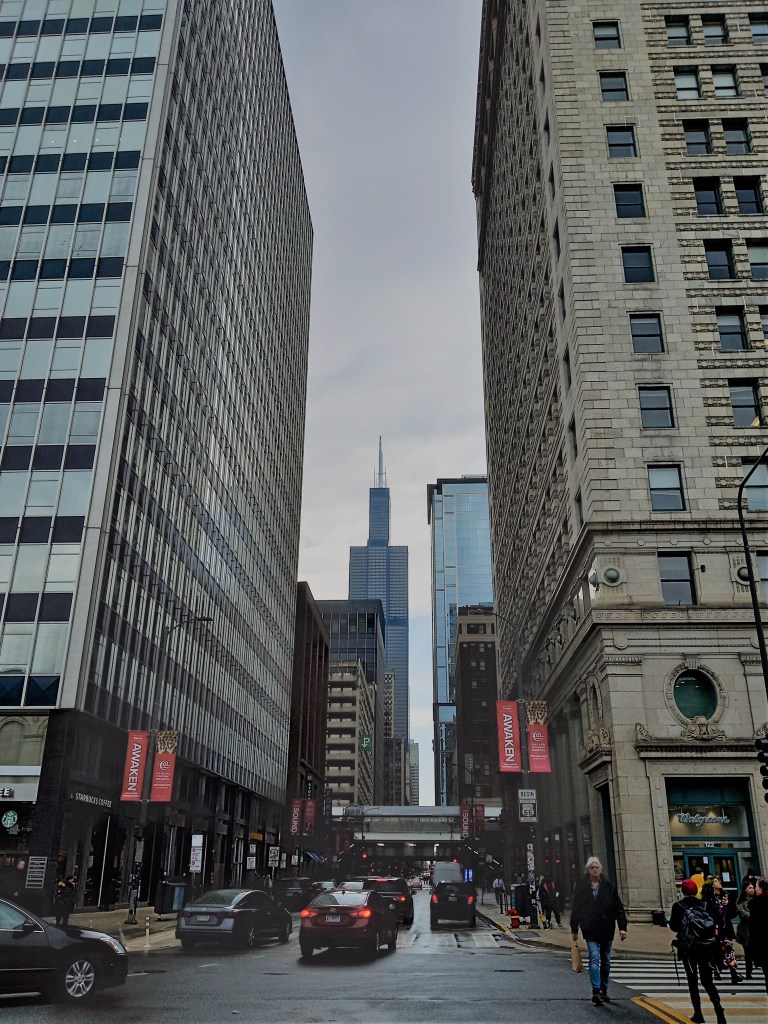
Chicago (the big city) vs. Naperville (the suburbs)

Thanks to a recent local news segment that asked people in Naperville about Chicago politics, the two communities are being compared. Why?

Let’s be real, though: The mayor was also taking a dig at Naperville. It’s become a Chicago tradition. Whenever a Chicagoan complains about the proverbial suburbanite who claims to be from Chicago, it’s always someone “from Naperville.”…

I really wasn’t finding anything in Naperville that I couldn’t get in Chicago. That explains why I only visited every 10 years. I could live a complete life without ever going to Naperville, especially since it’s such a long haul on the train. But I’m sure that’s also true of Lemont or Schaumburg or Libertyville. Of all suburbs, why do Chicagoans single out Naperville for scorn? At the Naper Settlement, I met a woman who offered an answer. Jeanne Schultz Angel grew up in Naperville, went to Waubonsie Valley High School, then moved to Norwood Park, from which she commutes back to her hometown to work as associate vice president of the history museum. That evening, she was helping set up for a Weezer tribute concert.

“Speaking both languages, I think there’s this perception and then there’s the reality,” Angel said. “People in Chicago might think they know the brand, which is idyllic suburban. We always make the top lists of where to live. Chicagoans tend to get beaten up about living in Chicago. There’s a lot of learning curve that can increase understanding. People who think Naperville is this very idyllic, very American place, it does surprise. We have a Patel Brothers. Naperville has a constant transient population, but I think a lot of people who grew up in Naperville had their careers here and bought homes here. I love the city. I love Naperville, too. It’s a different kind of life.”

Chicagoans need to respect Naperville’s differences and stop cracking jokes at its expense. Stop thinking about Naperville altogether. It’s so far away. Why let it bother you? I just spent a day in Naperville and I probably won’t think about it for another decade, when I find a reason to visit again.

On one hand, these explanations make some sense. Naperville is a successful suburb. It is the second largest suburb – after Aurora – in a sprawling region of over six million suburbanites. Chicago is a big city whose big city problems can often be in the news or political conversations. Residents of the two communities might have different ideas about the kinds of lives they want to live. Thus, the two places serve as shorthand for a long-standing American competition between cities and places outside of them.

On the other hand, there are plenty of stories and reports that take a similar tack to this piece. The journalist or researcher from the city comes out to the suburbs to examine the life they find unusual. What do those suburbanites actually do day-to-day? How do they survive in such a place devoid of culture and sophistication?

The two municipalities might do better to cooperate more as leaders within a metropolitan region that could better coordinate its efforts to help all in the region thrive.

Office vacancies in Chicago suburbs hit record high

The Chicago suburbs are also experiencing high levels of office vacancies:

Photo by Marc Mueller on Pexels.com

The office vacancy rate in the suburbs has ticked up again and is now at a record high. Real estate services firm Jones Lang LaSalle says the suburban office vacancy rose to 28.9% in the second quarter, up from 28.5% in the first quarter. A year ago it was 27.1% and at the beginning of 2020 it was 22.1%. The data is further evidence that companies are still shrinking office footprints as remote work continues. JLL says the suburbs have lost more than 3 million square feet of office space since 2020, nearly the same amount that was lost during the Great Recession that started in 2008.

If these office spaces are lost permanently, here are several things suburban communities would lose:

  1. Property tax revenue. These payments contribute to municipal budgets and might help reduce property tax burdens for residents.
  2. Prestige. Having office space and big corporations is a source of civic pride. Not all suburbs have this. These are visible symbols of economic success.
  3. Jobs within the suburb. Even if a majority of employees come from outside of the particular suburb in which the offices are located, communities and leaders can tout the number of jobs located in the suburb.

On the flip side, if a number of these jobs permanently move to people’s residences, particularly single-family homes, this might help redefine what the suburban single-family home includes. The suburban home might no longer be a strong, private refuge from the outside world, but instead be a combination workplace and home.

A wealthier suburb debates who affordable housing is for

The Chicago suburb of Glen Ellyn has a proposal in front of it regarding transforming vacant hotels into affordable housing. Who might live in the affordable housing?

Photo by Pixabay on Pexels.com

Affordable housing advocates say the hotel site “checks all the boxes.” It’s accessible to public transit, schools and health care. It’s across the street from a park and within a quarter-mile of three grocery stores…

Exorbitant housing prices in Glen Ellyn keep entry-level teachers, police officers and health care workers from living in the town they serve, advocates say. Parents of young adults with disabilities say their children should be able to stay in their community as they gain independence, but affordable, supportive housing options are scarce…

But Glen Ellyn’s median home value was $465,200 in 2020 — nearly $150,000 higher than the county median. Smaller, more affordable homes are being demolished and replaced with larger ones as Glen Ellyn becomes more affluent…

Full Circle partners with other organizations to provide on-site supportive services. The Elgin complex offers transportation assistance, health and wellness programs, and case management. In Glen Ellyn, Full Circle would build units for people with disabilities and a range of incomes.

Affordable housing is not a concept some suburbanites want near them. They might see such housing as a threat to their property values and/or the local quality of life.

Of those who advocate for more affordable housing in wealthier suburbs, who might might live in such residential units? Is it people who cannot afford housing in the community, surrounding area, or region? Is it lower-income residents or lower-wage workers? Or, is it intended for public servants like firefighters and teachers? Or, is it needed for people with disabilities? Or is it for those who are older and downsizing and want to stay in the community? Or, is it for young professionals who want to start out in the community?

In the public discussions I have seen in wealthier suburbs (see an example here), the latter sets of people tend to attract more support regarding affordable housing. What these discussions can signal is who is more welcome or not in a community.

Consequences of the mansion tax in Los Angeles

Los Angeles has a new mansion tax since April 1 and here are some of the consequences:

Photo by Roberto Nickson on Pexels.com

Measure ULA adds a transfer tax of 4 percent for sales above $5 million and 5.5 percent for deals above $10 million; real estate transactions in the city below those levels pay the already-established transfer tax rate of .56 percent.

“The flurry of activity that happened up until April 1 was pretty phenomenal,” says real estate attorney Loretta Thompson, a partner at Withers Worldwide. “And then, of course, after that, people started pulling their listings. There’s been a quantifiable pause in anything that’s over $5 million. It chilled the market immediately, which was what everyone expected it would do.”…

There are some winners. Independent Los Angeles County cities like Beverly Hills and Malibu have become more desirable since the measure does not apply to them. It is also shifting the balance of power in luxury real estate, long a seller’s market. “Buyers are being picky right now,” says Nourmand, adding that some people are willing to wait in hopes that sellers bring down prices on mansions: “They feel they have the upper hand in the high-end market. They don’t feel like they have to rush — they think time is on their side.” James Corden, for instance, listed a Brentwood house in January for $22 million, then dropped it to $18 million before selling it in July for $17.1 million. According to Dirt.com, Corden’s sale is subject to nearly $1 million in taxes under the ULA Measure.

However, many hope the tax will be revamped or rescinded. With two lawsuits already challenging the measure, the City of Los Angeles finance director has been instructed to hold any monies received, rather than use them as planned to create affordable housing options in the city.

Will any of these consequences affect legal rulings? Whether this is allowable is a different kind of question compared to how it is working out in practice.

Will the new revenue effectively address affordable housing? At the moment, the revenue is tied up. But, put together taxes from several of these sales and some new housing units could emerge.

It will be interesting to see where the turning point in the market is. Wealthier homeowners will still want to buy and sell property. There will likely still be demand from those outside the region who want to move into these homes.

Every major rain provides reminders that Chicago and parts of the region were built on swamps

When a large amount of rain is dumped on the Chicago region in a short amount of time, the infrastructure cannot keep up. The swamps underneath the third largest metropolitan region in the United States continue to influence everyday life:

Photo by Eva Bronzini on Pexels.com

The region’s struggle with chronic flooding begins with its location. Chicago and many of its suburbs were built on swamps, and storm runoff has become more difficult to manage as the region has been paved over.

These swamps had at least one advantage. The area between the Chicago River and the Des Plaines was swampy and this portage helped lead to Chicago’s growth as the Great Lakes and Mississippi could be connected.

But, think of all the effort required initially to drain the swamps or fill them in or build on and near them. Some early settlers built plank roads to try to stay above the mud. Then, there are consequences still today with major rains leading to flooded basements and sewage released into waterways. Planning for dealing with water requires resources and time, ranging from retention ponds to dealing with the effects of new nearby development to cleaning up after floods to building the massive Deep Tunnel project.

The article notes the decades-long efforts to address this. Communities within metropolitan regions might not like to pool resources but this seems like an issue that should bring together everyone to make serious headway on solutions in the next few decades.

Selling suburbs where the daytime population swells

I recently heard a radio advertisement for the suburb of Schaumburg, Illinois. The pitch included this fact: the suburb has a daytime population of 150,000 people.

According to the Census Bureau, the population of Schaumburg is over 76,000 people.

Photo by Ingo Joseph on Pexels.com

A suburb that almost doubles in population during the day is not the typical image of suburbs in the United States. Yet, it is one part of the increasingly complex suburbia where some communities are the stereotypical bedroom suburbs and others are office and retail centers.

Schaumburg was an “edge city” as identified by Joel Garreau in 1991. These suburbs have lots of retail and office space and more workers than residents.

Why advertise the number of people in Schaumburg during the day even if they are not there overnight? The daily population presents a business opportunity. What might all those workers, shoppers, and visitors be interested in? Perhaps they need food or a particular good or certain services. In a region with over nine million residents, being able to reach 150,000 each day could be attractive.

(On the other hand, do residents of Schaumburg want more businesses or office space? The suburb is not a small one in terms of population. Is the brand residents want to promote? See previous posts on advertisements for Schaumburg here and here.)

The somewhat arbitrary percent Americans should devote to housing vs. what they actually spend

Where do recommendations come from regarding the percent of their incomes should Americans spend on their mortgage?

Photo by Karolina Grabowska on Pexels.com

I interviewed nine real-estate experts to help me understand why the numbers vary so much and, I hoped, help me figure out the right one to use for myself. They confirmed that, yes, the mortgage-affordability numbers are all different, and though some lenders use them to approve mortgages, they are basically guesstimates. “To some extent, they’re plucked out of the air,” Robert Van Order, an economics professor at George Washington University, told me. “A lot of these numbers are pretty arbitrary,” added Edward Seiler, the associate vice president of housing economics at the Mortgage Bankers Association. “It’s just based on people staring at data and thinking, What are the tipping points that force people into delinquency?” If the percentages don’t seem ironclad, it’s because they aren’t.

If these numbers are at the upper end of what people should spend, what do people actually spend?

Despite hearing the 30 percent figure from many of the experts I talked with, I was surprised to learn that most current homeowners actually spend much less on their housing. So do most renters. The median homeowner with a mortgage spends 16 percent of their gross income on their house payment, including taxes and insurance. That number is higher—24 percent—for low-income households, but it’s still less than 30 percent. Renters spend an average of 26 percent of their income on housing. In other words, if you take the mortgage calculators at their word and spend 28 percent, you’re paying much more for a house than the average American does.

Medians can disguise a lot of variability. In certain housing markets or in certain economic conditions or certain personal circumstances, the top end percent might be very helpful. In other situations, it may not matter as much.

Even with the variation in recommendations, it appears they roughly fall into a range of 25-35% of income. Would it be better then to suggest to people that they should aim to spend at most a quarter to one-third of their income on housing? This does not have the convenience of a single number but the range could fit a broader set of conditions and circumstances.