The grass cannot be much greener if the grass is already green, American society edition

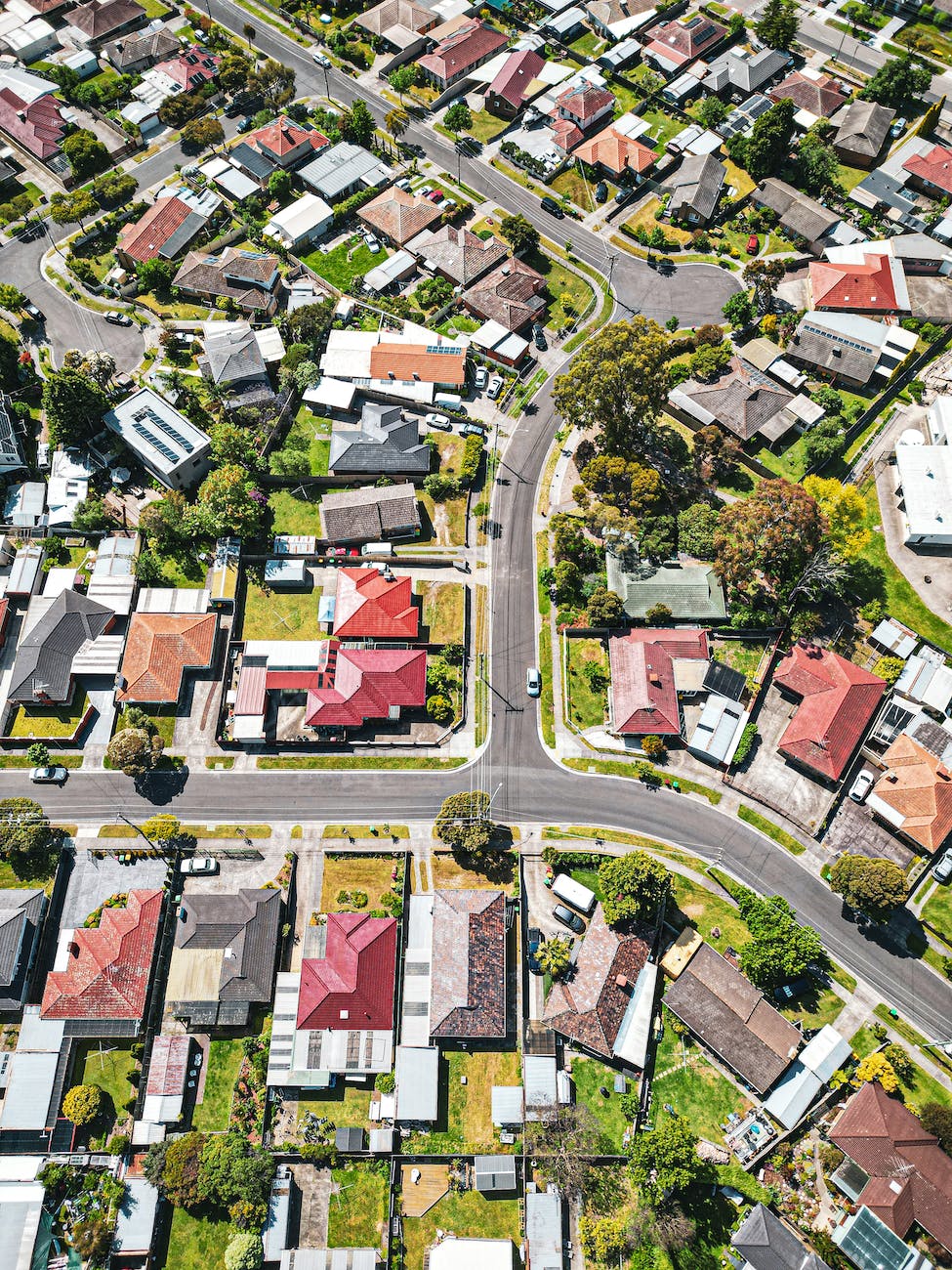
If the lives of some people in the United States are already pretty good, it is hard to improve on that:

Photo by Karol D on Pexels.com

Low interest rates, high salaries and membership discounts scored before and during the pandemic often can’t be matched today, binding people in golden handcuffs. Many feel comfortable, but stuck…

In matters big and small, people feel they cannot improve on their current situations. They’re mentally or emotionally ready for a change but can’t bring themselves to walk away.

This is how it can affect housing:

Their findings suggest that people with 3% mortgages today could be about 30% to 40% less likely to move than they otherwise would be, says Lu Liu, an author of the paper and a finance professor at Penn’s Wharton School. 

When homeowners don’t move, that limits the number of houses that are bought and sold. And Liu found that those who locked in low mortgage rates are less likely to move in response to wage growth in nearby areas, potentially making the labor market less dynamic. 

This all seems related to a basic assumption in the American Dream: life will continue to get better and better. The next generation will have it better than the current one or previous ones. Progress will continue to improve lives and outcomes.

But, what if this does not happen? Does improvement always occur over time?

The American Dream does not allow much space for stagnation or decline. There can be blips, temporary setbacks like a Great Depression or a housing crisis in the late 2000s. Otherwise, housing values should keep going up. The stock market should keep going up. Job opportunities should continue to be there. Standards of living should improve as should technology.

Whether the American Dream has peaked or whether room for improvement is limited because so much improved over the last century or so is interesting to consider. To some degree, we may not know for sure until we can look back and see the broad patterns. But, there are likely plenty of people willing to dig into the data and/or make these arguments.
How much do Americans deserve to own a home?

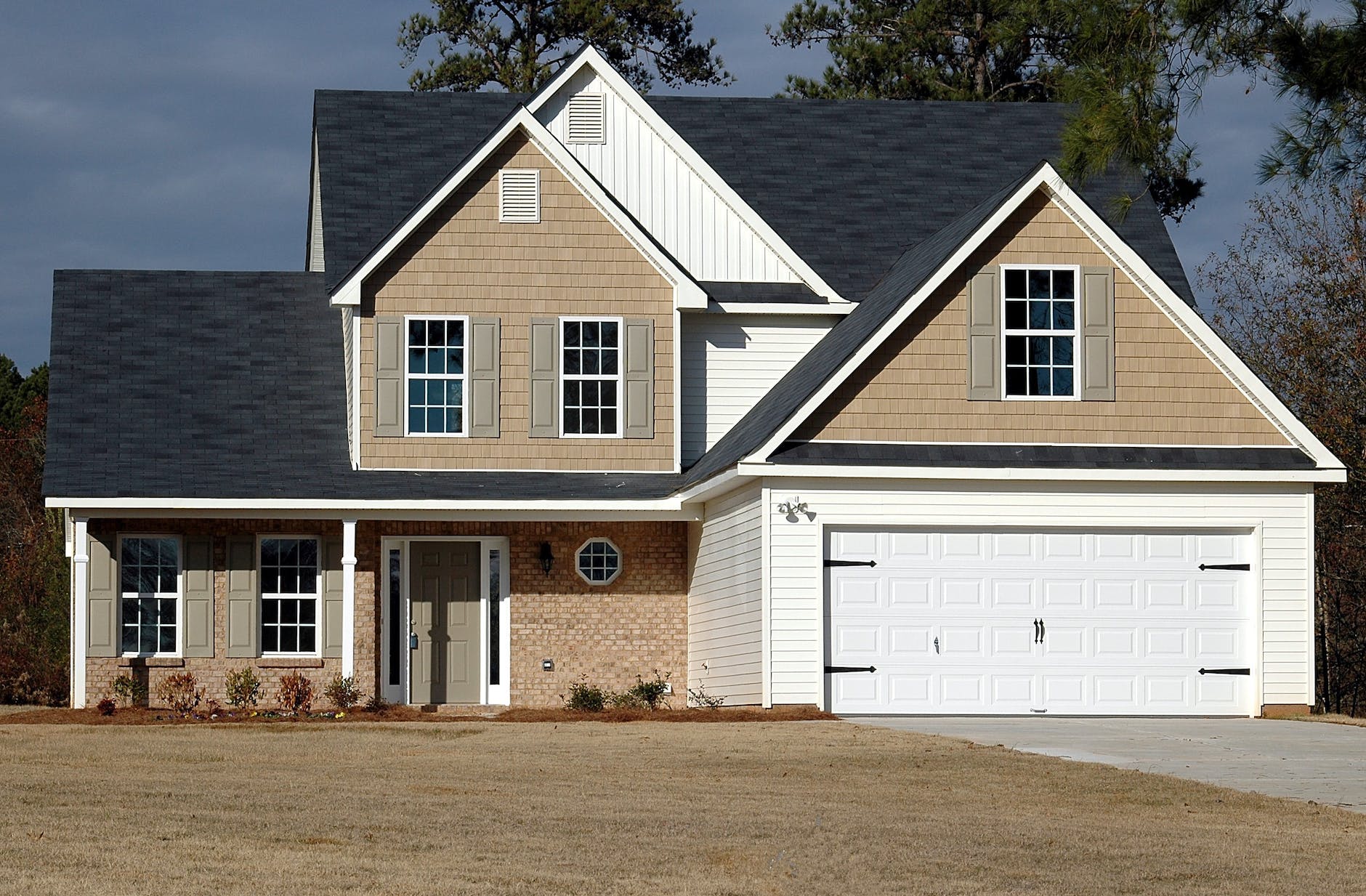
Building on yesterday’s post regarding the growing homeownership rate of millennials, I wonder: how much do Americans today feel they deserve to be able to own a home? It is one thing to make a choice to buy a property, it is another to feel that the economic and social conditions render this difficult or impossible. Here are several factors complicating this issue:

Photo by Pixabay on Pexels.com

-For at least one hundred years, American leaders and residents and cultural narratives have held up homeownership as an important marker of success.

American policies have also helped make homeownership possible. It is not just that people wanted to own homes; the American system helped make this possible.

Homes are a primary driver of wealth. If Americans feel they cannot purchase a home, they are missing out on this wealth-building instrument.

Homeownership is often viewed more favorably than renting. To own suggests stability and involvement in the community. To rent suggests transience and lack of financial resources.

-There is an expectation that younger or upcoming generations will able to achieve more than previous generations. This is part of the American Dream and tied to homeownership: shouldn’t younger Americans have bigger and better housing options?

The American social contract includes a house. Many Americans expect they should be able to purchase a home. I would guess that Americans and the American structures will continue to pursue and promote homeownership, even when it might be difficult. A big change might require a significant event or a steady long-term process moving toward different housing preferences and possibilities.

Barbie’s Dreamhouse and the dream of homeownership

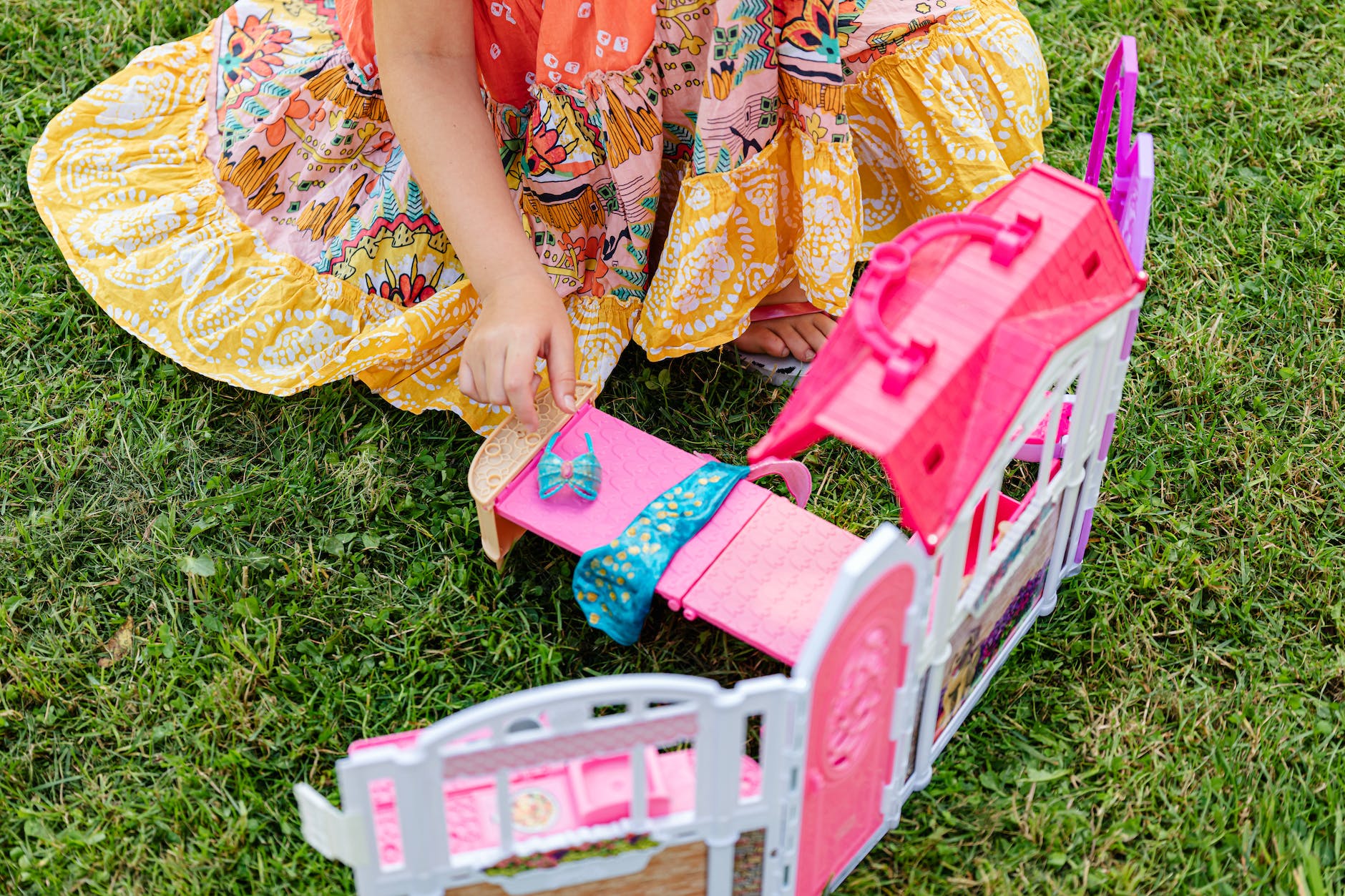
Barbie has a big house, reinforcing ideals in the United States about homeownership:

Photo by Karolina Grabowska on Pexels.com

From the beginning, much of Barbie’s existence — her unrealistic physical proportions, the lack of racially diverse dolls, the toy’s reinforcing of gender roles — has been debated in jest and in seriousness. But her home, which has not been as publicly parsed or praised like the doll, has been a mirror for the various social, political and economic changes the rest of the country was experiencing. It has followed housing patterns and trends, from chic, compact urban living to suburban sprawl to pure excess. At times, it has been out of step, ignoring the country’s ills (Barbie’s never been broke; she has never lost her house to foreclosure)…

Financial institutions frequently turned down mortgage applications for women without male co-signers when Mattel debuted the Dreamhouse in 1962, three years after Barbie shook up the toy world, arriving in a one-piece bathing suit and kitten heels…

Society has held up “this promise of homeownership as part and parcel of the American dream,” for centuries, said Ms. Castro. More than 60 years of Barbie’s Dreamhouses have further instilled that in us from a young age.

To own a home at all, especially one with a three-story slide, can feel unattainable for most. From July 2021 to June 2022, home buyers were richer, whiter and older than they had been in decades. The share that were first-time homeowners was the lowest its been since at least 1981. And, the median home price exceeded $400,000 for the first time.

It’s called a Dreamhouse for a reason. We can all dream, can’t we?

Is the Barbie Dreamhouse simply a plot to teach children that they should aspire for a large home with all the latest furnishings and in a bright style?

The American Dream of homeownership is persistent and takes many forms. It includes statements by presidents. It includes decades of policies. It is reinforced in television shows and on television networks. It then would not be a surprise that children’s toys would reflect a similar theme.

How many toys do this? How often does “playing house” explicitly or implicitly support homeownership? Even if children cannot voice what they are doing, living in a society that pushes the American Dream of a suburban single-family home is bound to be picked up early in life.

All of this thinking of the Dreamhouse reminds of Lynn Spigel’s 2001 book Welcome to the Dreamhouse: Popular Media and Postwar Suburbs. I recommend it.

What companies could embody the slogan “Delivering the American Dream”?

I recently saw on the side of a truck the slogan for a company: “Delivering the American Dream.” Before I say which firm uses this, some thoughts on what kinds of companies this could fit:

Photo by Tima Miroshnichenko on Pexels.com

-Take the first part of the slogan: “delivering.” Could this fit a major delivery company? Imagine this as the slogan of UPS or FedEx; would it fit as they delivery so many different items to people?

-The second part of the slogan references “the American Dream.” This could refer to housing and the suburbs. (And I did spot this slogan in the suburbs.) Could a house be delivered or could it refer to some essential parts of homes (furniture, appliances, etc.)?

-The whole phrase suggests the American Dream can be delivered. This is a big promise. As noted above, the Dream can be symbolized by tangible objects but it is also an important ideology encompassing multiple factors.

Time for the reveal: this is the slogan of 84 Lumber. Here is part of the company’s history on their website:

Founded in 1956 and headquartered in Eighty Four, Pennsylvania, 84 Lumber Company is the nation’s largest privately held supplier of building materials, manufactured components, and industry-leading services for single- and multi-family residences and commercial buildings.

The company operates 310 facilities which includes stores, component manufacturing plants, custom door shops and engineered wood product centers in 35 states. 84 Lumber also offers turnkey installation services for a variety of products, including framing, insulation, siding, windows, roofing, decking and drywall.

In the early days, founder Joe Hardy, in conjunction with his two brothers, Norman and Bob Hardy, and family friends Ed Ryan and Jack Kunkle, pooled together $84,000 in funds to purchase land and buildings for a new “cash and carry” lumberyard. The idea was that customers would pay by cash or check and if merchandise was unable to be “carried” out, an additional charge was implemented to have the item personally delivered…

Since then, 84 Lumber experienced exceptional growth, powered by Maggie’s vision to expand, and evolve the business. With tenacious leadership, and the 84 Lumber team’s true passion for their company, a new 84 Lumber emerged from tough economic times to become the powerhouse it is today. Now, 84 Lumber is a certified national women’s business enterprise and has held a spot on the Inc. 5000 list of America’s fastest growing companies for several years in a row. The company hit $7.9B in sales in 2021, and increased to $8.78B in 2022.

The slogan does indeed refer to the single-family home and other buildings. They deliver some of the essential components of structures that many Americans use without any knowledge of where the materials came from.

If any company could live up to this slogan, this seems to be a good fit. While other companies could make a good claim with other goods and services, a close connection to single-family home construction connects closely to the American Dream.

Addressing sorting and inequalities with lotteries and luck

Sociologist Dalton Conley suggests using lotteries to counter the inequalities in the United States due to Americans sorting people into different locations:

Photo by Dids on Pexels.com

As our society has become less random, it has become more unequal. Many people know that inequality has been rising steadily over time, but a less-remarked-on development is that there’s been a parallel geographic shift, with high- and low-income people moving into separate, ever more distinct communities. In 2019, the median household income in Washington, D.C., was $92,266. The corresponding figure for Mississippi was $45,792. Even locally, spatial differences are stark. New York City’s Fifteenth Congressional District, which covers the South Bronx, is the poorest in the nation, with a median income of thirty-one thousand dollars. The nation’s richest district, New York’s Twelfth, is just a mile or so to the south; it includes the Upper East Side and has a median income just shy of a hundred and twenty-five thousand dollars. Sorting occurs even in areas where people of multiple social classes overlap: people of different incomes often frequent different establishments on the same city block…

ut there’s another route to consider. What if, instead of paying taxes where we reside, and then reaping their benefits locally, we sprinkled taxation and revenues randomly—and therefore evenly—across the United States? What if, instead of paying a third of my taxes to New York City and State, I instead paid them to Pod No. 2,264—a group to which I was randomly assigned by a lottery the year I turned eighteen? What if, instead of camping out on the sidewalk the night before the school-enrollment date in hopes of getting my kids into a well-funded public school, I received a monthly check from Pod 2,264 that was meant to pay for my children’s schooling wherever I wanted to send them? In such a system, the retreat of affluent people from the places where they live doesn’t matter. In fact, it doesn’t matter where anybody lives. Nobody can escape contributing to the public sphere, no matter how far they move…

Some of us would lose in a more lottery-based society. But many of us would win. And we might end up being more compassionate toward one another; we’d be forced to acknowledge that much of our lot is the luck of the draw. We argue endlessly about the meaning of luck, even if we don’t always realize it. How much are we responsible for what happens in our lives? What’s the difference between luck and choice? How much should society try to help the unfortunate? Much psychological research shows that Americans who believe that luck plays a large role in our lives tend to be more liberal, supporting redistributive policies. Yet almost all of us seem to wish for a society in which luck plays no role, and in which everyone gets what they deserve, whether through their own actions or through mutual aid…

Despite this common goal, we tend to reach for lotteries only as a last resort, as President Nixon did when waging an unpopular war. We tell ourselves that we are successfully squeezing randomness out of life, by means of ever more refined algorithms and targeted social policies. But one lesson of our pod-based thought experiment is that we already live under the reign of lotteries—lotteries of birth, of location, of economic and social fate. We’ll never truly randomize America, but even entertaining the possibility can help us see that it can be useful to acknowledge randomness, and even to incorporate rolls of the dice into our collective life. What if, instead of trying to erase luck, we embraced it?

Since we do not control into which families, locations, and conditions we are born, there is some dimension of randomness from early ages. Some people have certain conditions, others have different conditions.

This also reminds me of the documentary Waiting for Superman. There, a lottery provides spots in a charter school for students and families who want opportunities. If I remember correctly, the message there is less about using a lottery to allocate scarce resources and more about suggesting that all children should be able to go to good schools.

How much would it take to get Americans to support such systems? Persistent in American ideology is the idea that people contribute greatly to their own outcomes. If people do not like the idea of random selections, would considering the possibilities of lotteries help people think about other ways of allocating resources or distributing opportunities?

The suburbs are not having a “surprise revival” as they never went away

A summary of several recent patterns involving the American suburbs starts with this:

Photo by Geometric Photography on Pexels.com

American suburbia— once marked by dying malls and empty office parks — is thriving.

But, given the already-existing love in the United States for the suburbs, are the suburbs back?

Take one of the pieces of evidence cited. A recent survey suggests a good portion of millennials want to settle in the suburbs:

For eight years now, as millennials have entered their thirties and forties, also known as “homebuying age,” Bank of America has surveyed over 1,000 members of the generation once a year for its Home Work series. And for 2023’s edition, it finds a “suburban nation” alive and well. Older millennials (age 31–41) are almost three times as likely to move into a house than an apartment, the survey found, and they’ve got a hunger for the Costco dog, so to speak. 

Migration patterns during the pandemic have clearly established that most homebuyers have wanted to flee big cities, with some “zoomtowns” such as Boise benefiting in particular. But the survey reveals something even more drastic. In a section called “suburban nation,” BofA reveals that 43% to 45% of millennials—of every age—expect to buy a house in the suburbs…

The interest is pervasive across the generation, and maybe means that the suburb is in for a new and better revival. And a 2021 study from Pew Research Center found that one in five adults preferred city life, compared to one quarter of adults in 2018, those who favored the suburbs increased post COVID-19 as well. One of suburbia’s worst qualities or stereotypes was its pervasive whiteness, now with the surge in interest the suburbs are starting to grow to reflect the diversity of the country at large. Big suburbs are actually now more racially diverse than the nation, according to a Brookings analysis

I take this less of millennials now really want to go to the suburbs and more of millennials are following the patterns of previous generations of Americans. What exactly the suburbs are today is different – they are more complex – but they are still structured around single-family homes, family life, and attaining the American Dream.

All places go through some fluctuations in conditions and appeal. It will take longer than just a few years to doom the suburbs as Americans have now devoted decades to celebrating and pursuing them.

One approach to the broken dreams of the American suburbs: realistic expectations

After reading Jonathan Franzen’s latest novel Crossroads, I have a not-original answer to the problem of the brokenness lurking behind the promise of the American Dream in the American suburbs: realistic expectations about what life in the suburbs is like.

Photo by Lara Jameson on Pexels.com

Much is expected of the American suburbs and Americans love them for multiple reasons. They are the land of opportunity. Home to the middle-class and the hard-working. A symbol of success. A setting meant to guarantee success to future generations. The land of private single-family homes where owners can control their own destiny.

What if the suburbs could never deliver on all of these promises? What if it was only available to some? What if the humans who tried to pursue these goals still faced difficulties and heartbreak? What if the suburbs covered up a whole host of issues in American society?

Numerous novels, films, songs, and creative works have addressed these questions over the last century. They have clearly showed the cracks in the suburban facade, the tragedies masked by the suburban sprawl.

But, these works often struggle to propose a solution. Get rid of the suburbs? Do not move to them in the first place? Stop promoting them?

If anything, these works serve as a cautionary tale: the suburbs may not be as impressive as they are made out to be. They are home to the problems all humans face as well as have their own particular issues due to their histories and current realities.

At the same time, through policy and ideology, millions of Americans have moved to the suburbs. Balancing the dire stories told of life falling apart in the suburbs alongside the narratives of success and comfort in the suburbs, is there a more realistic narrative available about what suburban life is?

“Driving in ‘American Dream mode'”

Driving during a stretch of pleasant fall weather, I thought of a phrase I heard a few months back in a radio conversation: “driving in ‘American Dream mode’.” The idea was this: putting the windows down, turning up the radio or music, and enjoying the drive is an ideal expression of the American Dream. Freedom. Cars. Moving quickly through the landscape.

Photo by cottonbro on Pexels.com

Many car commercials play off this idea. These commercials rarely feature traffic and stopping for traffic lights or stop signs. The driving is often through pleasant landscapes. The drivers and the passengers are enjoying the experience. The cars are new and loaded with features.

Numerous social forces converged to this point where a particular driving experience embodies the American Dream. The construction of roads and highways. Sprawling suburbs. The rise of fast food, big box stores, and road trips. Driving is an essential part of the American way of life.

Even if relatively few people get to regularly drive in “American Dream mode,” it is a powerful symbol.

What children learn from HGTV #3: Houses are symbols of success and making it

In watching HGTV with children and studying suburbs and housing, I have several ideas of what kids learn while watching the network’s programming.

Photo by David McBee on Pexels.com

Put together the ideas in the previous two posts – homes involve emotionally satisfying arcs and they pay off financially in the end – and add decades-long American ideology and houses are symbols of success and making it. The house, typically a single-family home on HGTV, is a visible, tangible monument that the owner is successful. Residents and show hosts talk about how the house symbolizes all of the struggle and work of a family. They talk about passing down a legacy to kids. They usually do not come out an say it but the home and its exterior provide a positive impression to neighbors and those passing by about the status of the residents.

Homeownership is celebrated on HGTV. An attractive house that meets the needs of the residents and broadcasts a message of success to others is the ideal. Almost no one wants to rent or live long-term with family or friends. Almost everyone is trying to move up to a better and/or more attractive home. The goal is to acquire one’s own home which provides well-being and financial security.

Ultimately, HGTV helps perpetuate homeownership and its link with the American Dream in the way it presents houses and what they are for. The people on the network find success in acquiring and improving homes and almost nothing else is discussed. Kids watching HGTV see that people need to acquire and/or improve a house to be a successful adult.

Great Quotes in Homeownership #4: Obama in 2013

Speaking at a Arizona high school in August 2013, President Obama both addressed specific policies he hoped Congress would pass regarding homeownership as well as the dream of middle-class homeownership. Here is part of the speech connecting middle-class aspirations and homeownership:

Photo by Myburgh Roux on Pexels.com

What we want to do is put forward ideas that will help millions of responsible, middle-class homeowners who still need relief.  And we want to help hardworking Americans who dream of owning their own home fair and square, have a down payment, are willing to make those payments, understand that owning a home requires responsibility.  And there are some immediate actions we could take right now that would help on that front, that would make a difference.  So let me just list a couple of them…

So I want to be honest with you.  No program or policy is going to solve all the problems in a multi-trillion dollar housing market.  The housing bubble went up so high, the heights it reached before it burst were so unsustainable, that we knew it was going to take some time for us to fully recover.  But if we take the steps that I talked about today, then I know we will restore not just our home values, but also our common values.  We’ll make owning a home a symbol of responsibility, not speculation — a source of security for generations to come, just like it was for my grandparents.  I want it to be just like that for all the young people who are here today and their children and their grandchildren.  (Applause.)

These sections echo common themes of how the American public often thinks about housing:

  1. Homeownership is a symbol of successful hard work and responsibility. Put it in the time and effort and it should lead to a home.
  2. Systems and particular actors can conspire against possible homeowners – financial speculators, irresponsible people – but the government should be in the business of helping people achieve homeownership.
  3. Homeownership is a goal across American generations, from grandparents to current adults to future children.
  4. The middle class and homeownership are intertwined.

Even as President Obama sought specific actions, he appealed to cultural goals and narratives very familiar in American life.

(This is part of a very occasional series of quotes about homeownership. See #1 featuring William Levitt, #2 featuring Herbert Hoover, and #3 involving George W. Bush.)