Trahan told the Journal in 2023 that the house was “the worst investment ever,” but has since clarified those comments, telling People that she views the home as a piece of art.
“When I was buying it, I wasn’t thinking, ‘Oh, it was a great investment,'” Trahan told People in 2023. “When I buy art, it’s because I love the art. It’s not because, ‘Oh, I’m going to make money on this.’ If you’re going to make money in art, you have to sell it. I buy art, and then I don’t sell it.”
The first Brady Experience sweepstakes was such a success that Trahan is opening it up for another round. Trahan could not be reached for comment.
Can a home be art? Can a real suburban home that became part of a well-known TV show be art? This might require public and/or critical consensus.
The idea that a postwar suburban house could be a piece of art is not that farfetched. Imagine homeowners of such homes across the American landscape that lovingly take care of their homes, maintaining and improving them. Or preservationist efforts that protect particular homes for future generations. (Which postwar suburban homes might qualify for this is another discussion – which are more art and which are more pedestrian?)
Add to this the iconic nature of this home. For many, The Brady Bunch house represents suburban family life. The show only ran 5 seasons but the family and its home became a part of the postwar culture during its run, through syndication, and ongoing lore. I doubt many critics would say the show was art – it was a normal sitcom – but the iconic status of the show may elevate it in the eyes of viewers.
Perhaps the Brady home is pop art: a slice of a particular time that was revered by many.
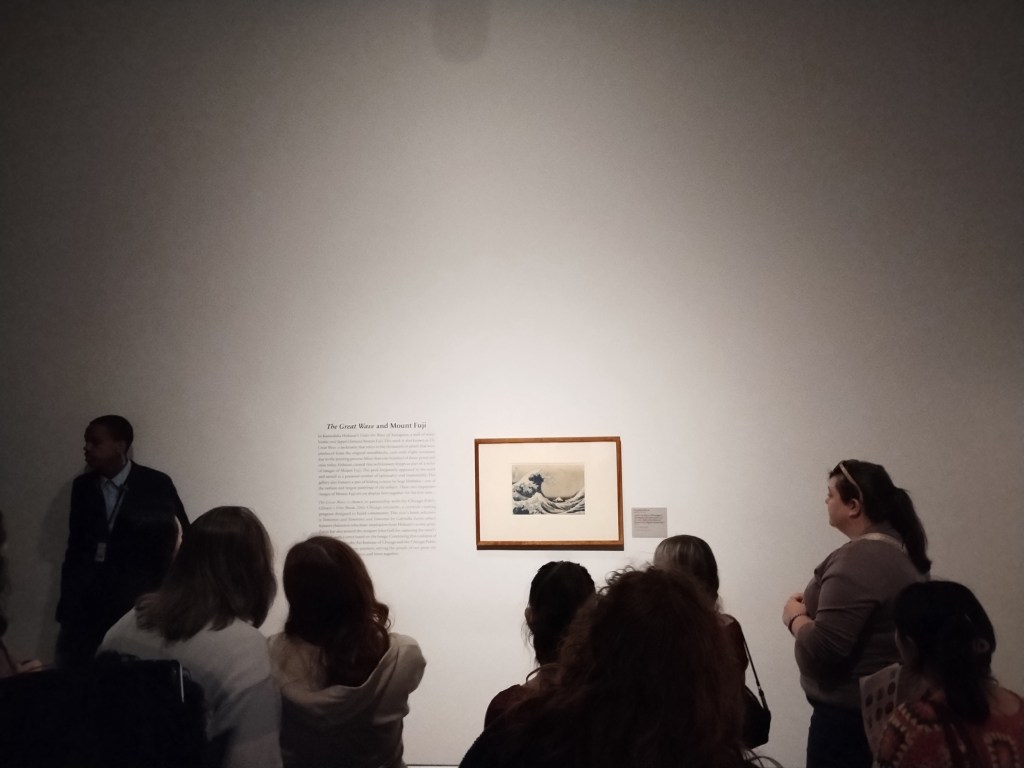
But it was also notable the setting in which the print is displayed. The Ando Gallery is unique; hear the audio tour experience here. The room has darker lighting and there is a high ceiling. The print is on a long wall to the back left from the entrance.
Because the print it smaller and the gallery has space, here is what the scene looks like:
On the day I was there, the print had a small crowd around it as people took in the work and the text on the wall. I was reminded of the gallery of The Louvre with the Mona Lisa where a large crowd presses to see what is a smaller painting. In both places, the work and its status attracts crowds.
This is a different experience compared to other common settings. First, large paintings – like A Sunday on La Grande Jatte at the Art Institute – can attract crowds. However, the size of the painting means many people can still see the whole thing even when there are numerous people around. Second, numerous works in art museums have few or no people looking at them. Even on busy days, one can find quiet rooms where there are no crowds and an observer can take it all in on their own.
Even as we might interact with art as individuals regularly, whether in museums or in books or elsewhere, this also serves as a reminder that we often do it in interaction with others. The small crowd around The Great Wave were quiet, even reverent, as each person or group took it in. But they could not ignore that many others were also right there having their own experience.
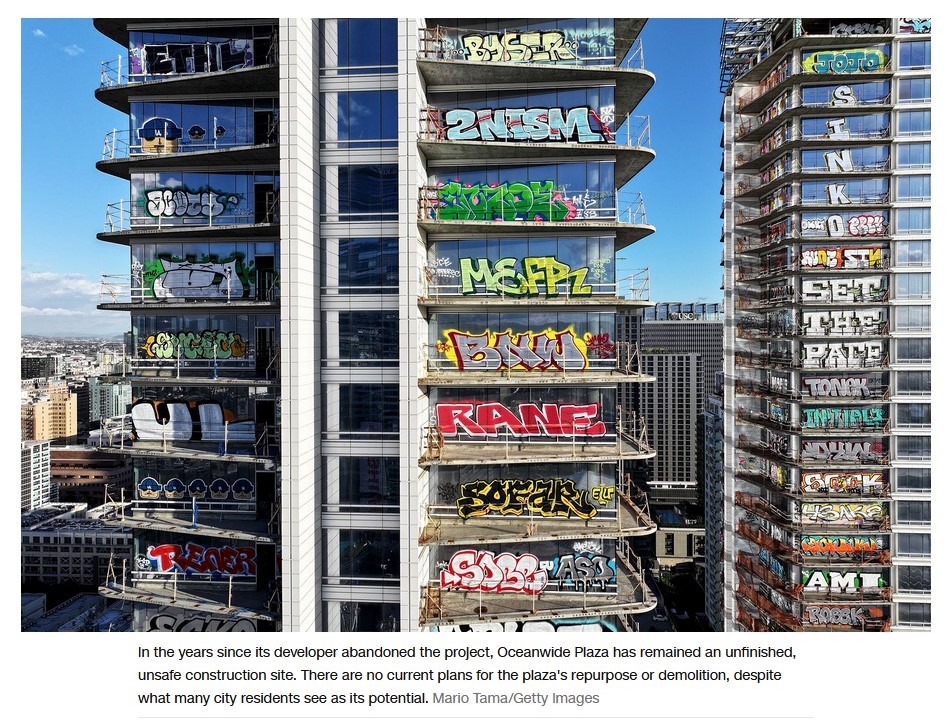
Climbing up abandoned, unfinishedfloors and tightrope walking across balcony ledges, backpacks clanging with cans of alkyd and acrylic, a collective of Los Angeles graffiti artists have transformed their craft beyond urban aesthetics to champion community issues.
Their choice of canvas: Oceanwide Plaza in Downtown LA. Occupying over a full square city block, the plaza was imagined as a vast mixed-use building project, offering city residents over 500 lavish condominiums, a five-star hotel, retail spaces, restaurants and a private 2-acre park.
However, construction on the $1 billion project, which began in 2015, was shelved after the Chinese-backed contractor Oceanwide Holdingsran out of funding in 2019 — and it has lain unfinished ever since…
Transformed in part into an art installation, Oceanwide became an opportunity for the graffiti artists to leave a message to the city below, and a call-out to policy makers who leave buildings to rot…
“People forget that people live here. People own businesses here and they don’t want to have to spend the time and money to clean it up,” said Blair Besten, executive director of the Historic Core of Downtown Los Angeles, an organization which works to improve the quality of life in downtown neighborhoods. The Historic Core prioritizes street sweeping, trash collection — and graffiti removal.
This article showcases the multiple sides of an ongoing public debate about graffiti: is it a response to difficult social and economic conditions? Is it art? Is it criminal behavior that should be punished?
At the same time, how is there such a large abandoned project in Los Angeles? What can a municipality do to finish the development or pursue another use?
Put these two ideas together: are there cities willing to have large-scale platforms for graffiti in or near their downtowns? If graffiti and its place in society is multi-faceted, how might Los Angeles or other large cities incorporate it or work with graffiti artists?
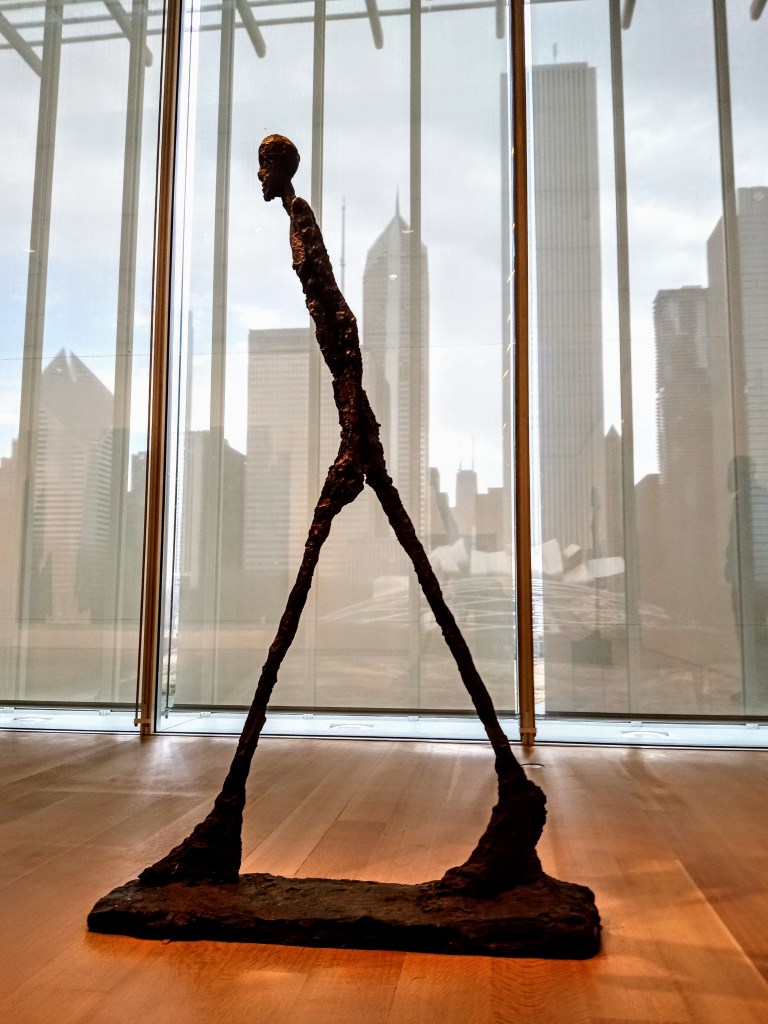
“Walking Man II” by Alberto Giacometti at the Art Institute of Chicago
Many spaces in the United States privilege driving rather than walking. Driving is often faster. In the same amount of time, a driver can likely go farther than a pedestrian.
But, driving is not what humans have done throughout most of history. Driving is much faster. It requires technology to make and maintain vehicles. There needs to a lot of infrastructure to support driving. The scale changes as a vehicle is moving much faster and needs more room.
Even to see the statue above, many visitors will take a vehicle on a roadway. This enables millions to visit the museum and take in this image. Yet, they will contemplate a depiction of a human walking while primarily traveling via other modes.
Asking Americans to not drive as much or at all is a tall order. Cars are an integral part of the American way of life. Maybe reflecting on “Walking Man II” can help people remember a past and envision a different future.
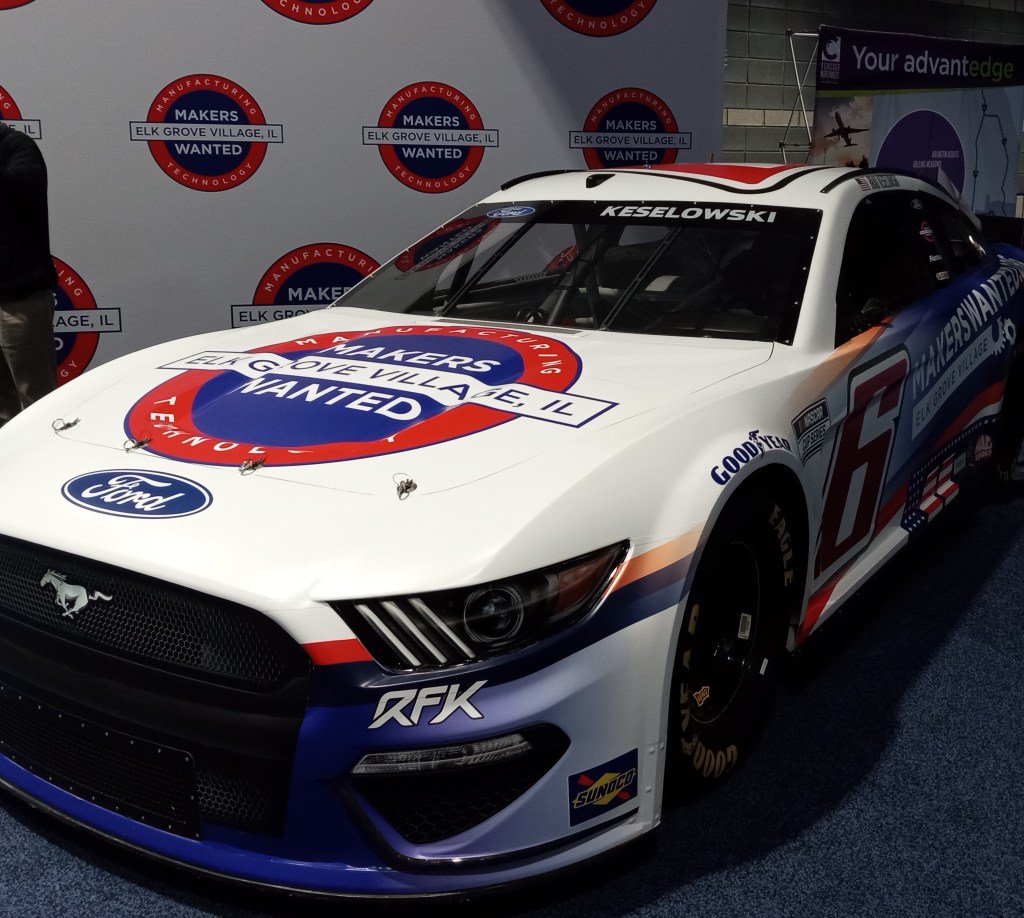
But, why not have cars and trucks driving around the Chicago region with the same branding? It probably does not cost much to put decals or magnets or paint jobs on vehicles and then have a bunch of vehicles advertising “Makers Wanted.” This might be particularly helpful in a region with hundreds of suburbs and where there is a perceived need among some suburbs that they need to stand out for particular reasons.
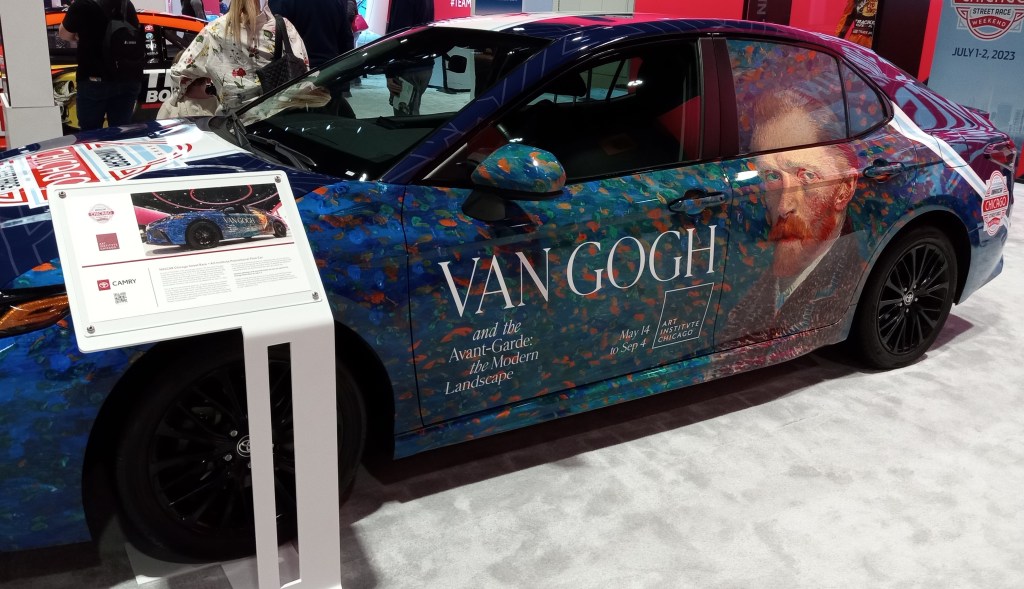
The second car is a more unusual advertisement: an art exhibit at a world-class art museum. The Art Institute does not advertise broadly in mass media. But, what if there were a lot of Van Gogh vehicles driving along local roads? (There would need to be allowances for the “Van Go” jokes.”) Van Gogh and his works are widely known and some people might even want a Van Gogh painting on their vehicle for aesthetic reasons.
Even with all the colorful paint jobs at the Auto Show this year (lots of bright blue and yellow), this could be an opportunity for someone or some place to exploit without having to pay too much.
In a statement, Christie’s said that the famed auction house will sell off more than 150 ‘masterpieces’ belonging to Allen’s foundation. The collection spans over 500 years of art history while the value of the works is more than $1 billion. The auction is titled: ‘Visionary: The Paul G. Allen Collection.’ The proceeds will be divided up among various charities.
Among the artists’ whose work is featured in Allen’s collection include Paul Cezanne, Jasper Johns, David Hockney, Edward Hopper, Pierre-Auguste Renoir, Georgia O’Keefe, Paul Gauguin, Roy Lichtenstein and Claude Monet. Following Allen’s death, it was revealed that he was the anonymous buyer of Monet’s haystacks painting titled Meule in 2016. The painting sold for $81.4 million.
Because I am teaching a class titled Culture, Media, and Society this semester, a sociology of culture course, this news caught my attention for several reasons:
The amount of wealth concentrated in a set of created objects is fascinating to consider. This is considered a good investment for those with the means:
In the aftermath of the Covid-19 pandemic, the art world continues to see major gains. According to a UBS study, the art market generated over $65 billion in 2021 alone. The US art market made up 43 percent of the value share.
This is a reminder of the amount of wealth – and presumably networking – involved in the major art markets. People with fewer resources can see major works in museums or galleries but the owners of such works are in different social categories and circles.
Living with such work that is considered important and/or expensive must be interesting:
In 2015, he told Bloomberg: ‘To live with these pieces of art is truly amazing. I feel that you should share some of the works to give the public a chance to see them.’ Allen said in the same interview that his art collection was a ‘very, very good investment for me.’
How does someone become invested – economically, socially, personally – in art? According to Allen:
It was a visit to London’s Tate Gallery that exposed him to classical works by J.M.W Turner as well as the pop art of Roy Lichtenstein. That visit left Allen ‘profoundly moved.’ The bio continues by saying: ‘That experience ignited within him a passion for art — and for making art accessible to more people.’
As we consider culture as “processes of meaning-making” (definition from sociologist Lyn Spillman), there is a lot of meaning-making in Allen’s milieu, actions, and legacy.
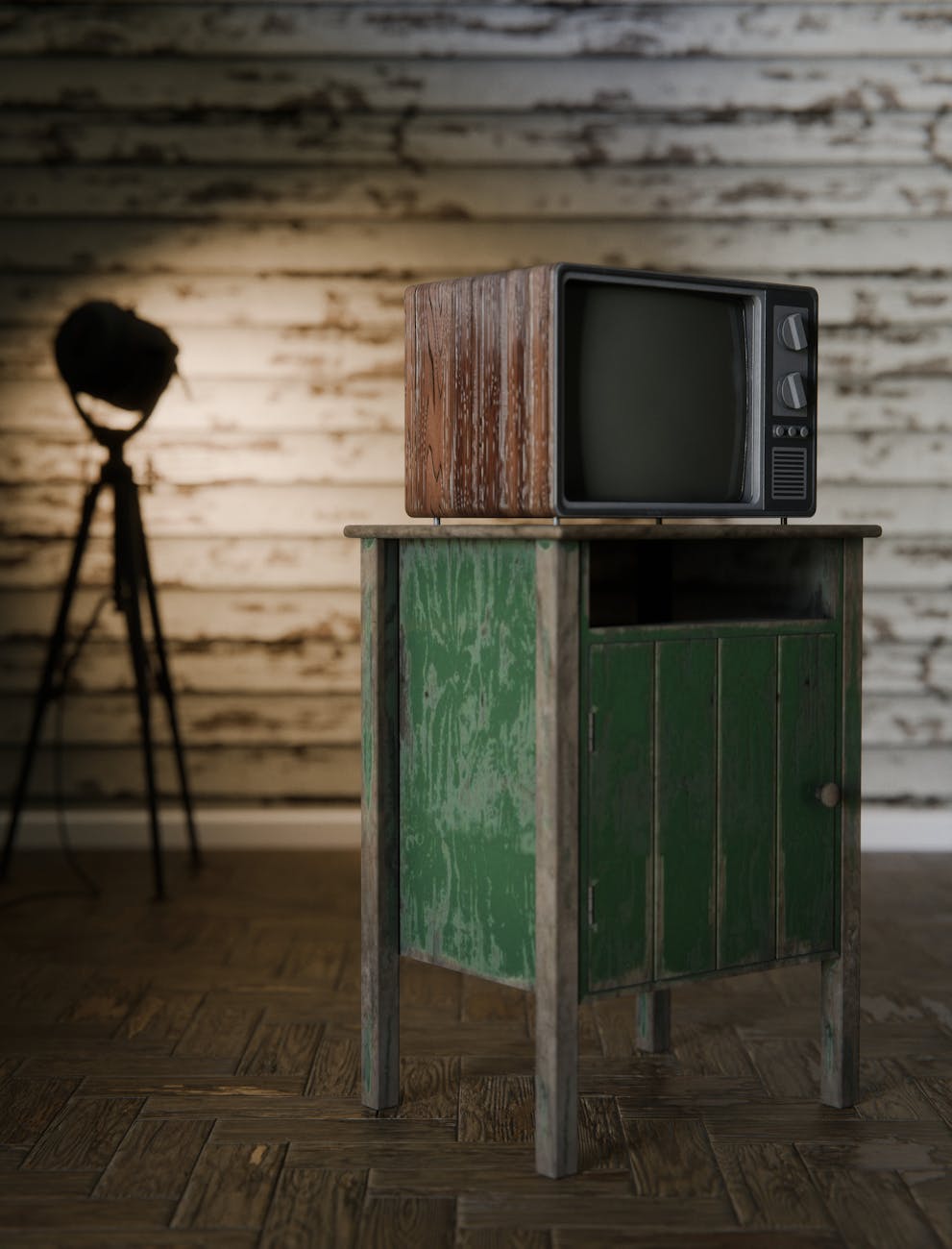
When Josh Kline debuted his “Climate Change” series at the 2019 Whitney Biennial, the slick sci-fi work looked a little smug. The New York-based artist, who at 43 has pieces in the collections of the Whitney Museum of American Art, the Guggenheim and the Museum of Modern Art, is known as a political fantasist with a dyspeptic view of life under capitalism. A recent series of dirty, resin-soaked American flags shaped into televisions, for example, is meant to critique Fox News.
Even so, Kline’s apocalyptic vision of warming seas for the biennial had outdone itself for corporate-chic confidence: a series of 12 greyscale photos of emblems of U.S. power — San Francisco skyscrapers, the front desk of Twitter’s headquarters, a statue of Ronald Reagan — partly submerged in water in plexiglass cases and lit with medicinal ambers and greens. Pumps recirculated the water over the prints, erasing them slowly, like the washer in a darkroom or a hotel water feature or, maybe, liberal tears. The message was propagandistically clear: climate change is real; the water is rising; turn back the tide while you still can.
Now, three of these flooded works appear at LAXART, a nonprofit project space in Los Angeles, as part of Kline’s new exhibition, “Adaptation.” In this setting, they seem less declarative, more hunkered down. The relentless combination of time and trickling water soaks the photographs with an aura of romantic decline. A Silicon Valley McMansion’s peaked roof peers through a curtain of cloudy fluid in “Luxury Home, Los Altos Hills.” A white patch of blight creeps up from the bottom of “Deck, Rosewood Sand Hill Hotel, Menlo Park.” In “432 Park Avenue, Manhattan,” which depicts a supertall residential tower that may be more an investment storehouse than an actual home, a little scummy foam jiggles on the water’s surface.
Kline’s earnest warnings about the effects of climate change are still blunt — the immediate greed of energy and tech and lifestyle companies will still doom our civilization, if not the world, to a watery end. (In fact, the artist doubles down: the back room also features “Consumer Fragility Meltdown,” 2019, a soy wax model of two commercial buildings slumping and sweating on a heated steel table.) But as each image breaks apart, Kline’s message also erodes. Ambivalence creeps through the gaps. Then, when the emulsion has been rinsed away, the print is replaced and the cycle begins again.
The second way of linking McMansions and climate change is to use the symbol of McMansions as indicating larger concerns about sprawl, pollution, land use, and environmental destruction. McMansions are an easy target for an era in the United States revolving around consumption, the use of resources, and limited action regarding consequences. It is less about the individual dwellings than it is about an ethos or an era without regard for environmental consequences.
Put that McMansion in Silicon Valley and perhaps the symbol is even more potent: in a time of technological and lifestyle changes, people lived in these environmentally destructive homes in one of the wealthiest and most influential parts of the United States.
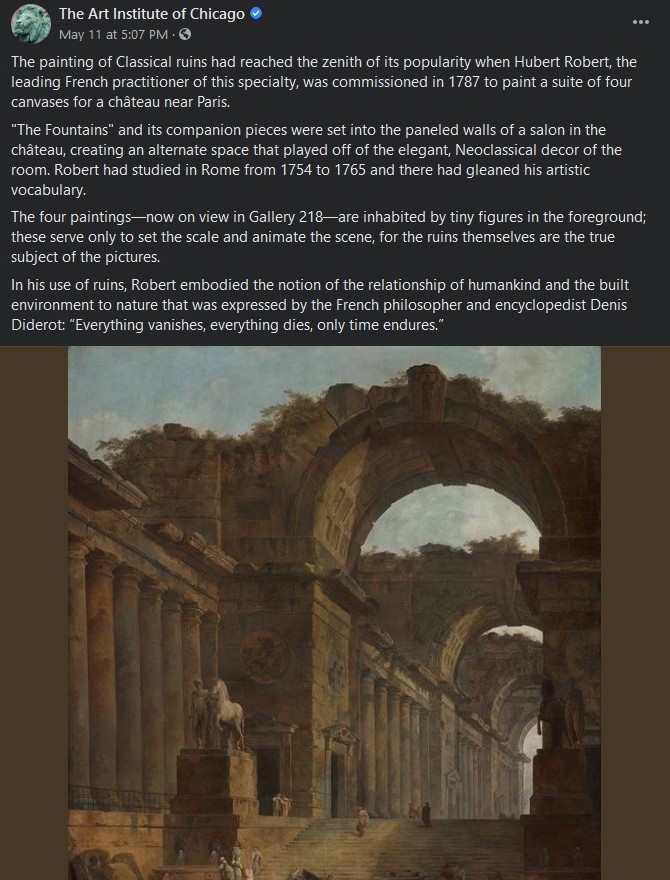
The Art Institute of Chicago recently featured on social media a painting by Hubert Robert:
Among the many worthwhile works on the second floor of the Art Institute are these four works in one room. I have always enjoyed them. Building off yesterday’s post about how today’s buildings could become tomorrow’s fossils, these paintings romanticize ruins from past civilizations. Imagine walking through such structures. There may have been centuries when people could wander through such ruins in Rome, Greece, Egypt, and more. Today, such a site would be hard to find as many ruins are swarming with tourists.
What always impressed me about these paintings was the scale of the buildings. As the social media post notes, the people at the bottom are very small. The buildings are massive and impressive. They connote great civilization and activity. Imagine this building above with a full vaulted ceiling and full of people. The buildings have lived on even as the individual leaders and residents changed.
The Diderot quote above is an interesting one. These buildings are falling apart and time will conquer them. At some point, the pillars will fall, the arches will be no more, and the scene will look very different. But, rulers and leaders construct such buildings in the first place so that the structures outlive them. They will not last forever, but even as ruins or remains in the ground they can still attest to a past era.
Now, the pandemic is prompting a wider exodus from the British capital, pushing up real estate values in outlying regions. Months of remote working have made city dwellers reassess their housing priorities. And like many office workers, contemporary artists such as Mr. Allan — who makes art under the moniker “Dominic from Luton” — are also finding that they no longer need to be in a big city…
Hastings, with its scrappy mix of stately but unkempt 19th-century houses, 1970s seafront amusements, poor transportation links and limited employment opportunities, was recently ranked as the most deprived town in southern England by Britain’s housing ministry. But its distinctness and affordability have long been valued by artists…
Supported by a new [Croydon] City Hall-funded initiative called Conditions, 27 such spaces are being offered for £138 to £230 a month in a repurposed bicycle factory and office building. Katie Sheppard, one of the artists based in the complex, makes digitally embroidered portraits based on selfies; another, Felix Riemann, makes sound sculptures for performances…
This vision of an accessible, locally grounded art scene is very different from the elitist flying circus of blockbuster exhibitions, auctions, fairs and biennials in destination cities that has dominated the art world in recent years.
On one hand, as is noted in the story, the Internet and the smartphone make art possible from anywhere.
On the other hand, art is more than just a single genius creating while sitting quietly somewhere. Local conditions, such as housing costs, matter. Having a set of like-minded arts around who provide support and spur creativity may be essential. Funding, local resources, and neighborly or community goodwill help.
One of the biggest barriers to art in these communities may just be the decades of suburban and small town critiques that suggest they are dull and backward locales. Can art only work there when conditions in big cities are too difficult for artists?
More broadly, this speaks to the concept of art worlds in which artists and numerous other actors operate. The creation of art is a social activity involving multiple pieces and social forces. Art can indeed flourish in many locations, including suburbs and small towns, if the conditions are right.




 Legally Sociable