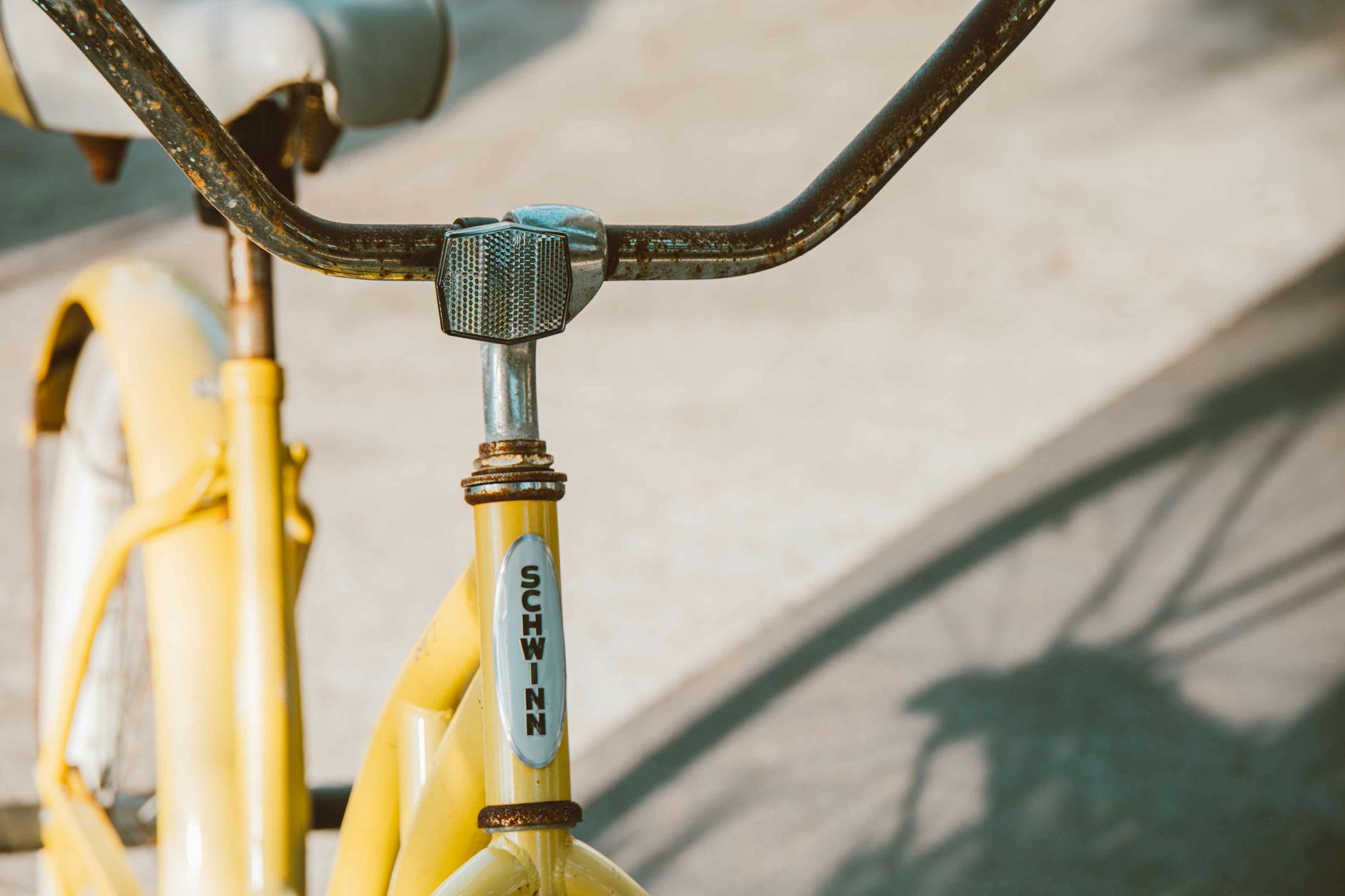
Schwinn once an important Chicago company but the industry and the world changed

A look at a new documentary on the bicycle company Schwinn tells of how it was once a Chicago company and then it was not:

Photo by Jess Loiterton on Pexels.com

The story starts in 1895, when German immigrants Ignaz Schwinn and Adolph Arnold founded Arnold, Schwinn & Co. in Chicago. Schwinn would subsequently buy out his partner and build an enduring family business that would reign over the bicycle industry for generations, surviving the rise of the automobile, the Depression and two world wars.

In fact, the original six-story Schwinn factory at Lake and Peoria streets in Fulton Market still stands as a monument to Chicago’s erstwhile bike company, with plans to redevelop the now-vacant building into office space…

As market share dwindled, Schwinn began outsourcing production. By 1983, Schwinn ceased its Chicago manufacturing, laying off 1,800 employees and moving most of its production overseas to Taiwan.

In 1992, struggling with debt, the storied Chicago company filed for Chapter 11 bankruptcy under fourth-generation owner Ed Schwinn…

The bike company has rolled on under a succession of new owners and is now part of Dutch conglomerate Pon, with Schwinn based in Madison, Wisconsin. But the movie focuses on the Chicago glory years, when the Schwinn brand ruled the sidewalks, schoolyards and bike lanes.

This might be the story of a number of companies over the years. They had success with lots of work and new ideas. They rose to become a known and popular brand. But then industries and places changed. People no longer wanted the product in the same way. They moved manufacturing overseas. They hit hard financial times and even though the brand name lives on, it has done so under the ownership of different companies and the company is now based in another city.

And this could also be the story of places. Chicago, like a number of American cities, particularly in the Northeast and Midwest, were centers for manufacturing. American companies produced a lot for decades. And much of that went elsewhere by the end of the twentieth century. Sociologist William Julius Wilson describes these shifts and their effects on neighborhoods in When Work Disappears. The loss of tens of thousands of manufacturing jobs was a hard blow to many cities who struggled to pursue or grow other businesses or industries in subsequent years.

In the big picture, both companies and places go through cycles and lifespans. They do not necessarily continue as they have been, even when they are successful. We tend to like the stories of their rise and it can be harder to wrestle with their falls. But both are part of the human experience.
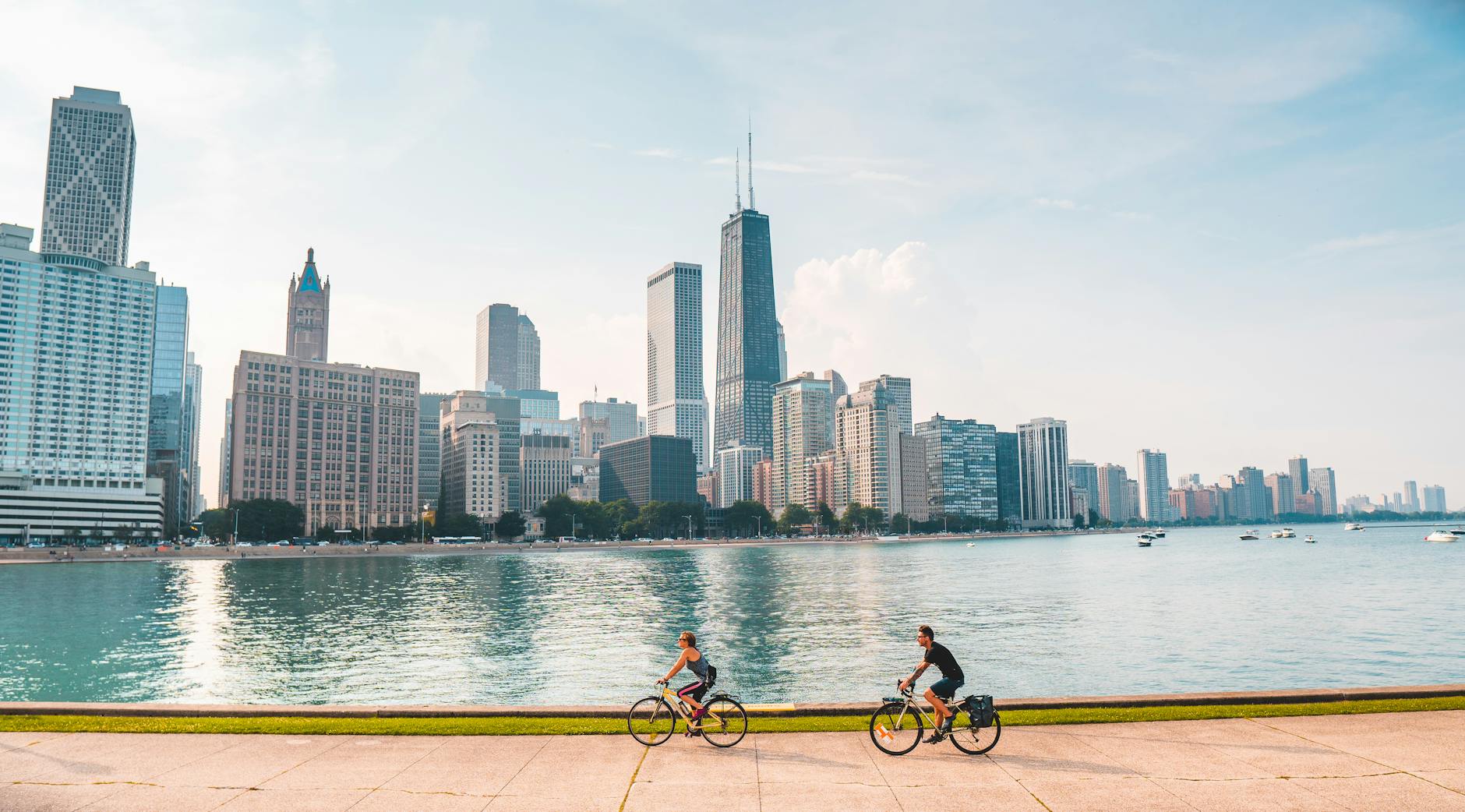

Aiming for zero road deaths in Chicago

Bicycle fatalities are down in the last year in Chicago. Could this help lead to zero road deaths in the city?

Photo by Chait Goli on Pexels.com

It was the only bicyclist death so far this year, suggesting what some hope signals the beginning of a decline in such fatalities.

Some even contend the number of all traffic deaths in Chicago — cyclists, motorists and pedestrians — could be reduced to zero with the right improvements.

Others are more guardedly optimistic.

Before that August crash on the West Side, Chicago had gone 10 months without a cycling death. That was the longest such duration dating back to at least the beginning of 2019, the earliest year available from the city’s daily traffic crash data.

“Statistically, this drop appears too large just to be entirely good luck,” said Joseph Schwieterman, a transportation professor at DePaul University. “It’s not likely the fatalities will stay at this level, unfortunately, but this is encouraging.”

The rest of the article talks about methods that could be implemented to make roads in Chicago safer.

As I have read about similar efforts in recent years, reducing traffic deaths seems to go well with multiple other efforts:

  1. More sustainable cities with fewer cars on the road and other viable non-driving transit options.
  2. More inviting and lively streetscapes with less emphasis on motorized vehicles.
  3. Encouraging walking and biking, which are healthier options.

Safety alone may or may not be a compelling reason to change conditions but combine safety with other interests people have and perhaps there will be a steady shift away from only emphasizing driving.

That time I almost had to ride my bike forcefully through a flock of wild turkeys

For a season in college, I rode regularly on the Prairie Path through a more rural area. One day, I made my way down the quiet path at a fairly rapid pace. Up ahead, I spotted something obstructing the roughly six foot wide path. I could not make out what it was.

As I got closer, I could see the obstruction was moving. It was not one obstruction; it was a group of something. I had occasionally seen wildlife along the edges of the path. I had seen plenty of people. Do all the dogs walked along the path count? This was something different.

Photo by Vlad Ioan on Pexels.com

It was a flock of turkeys and they were blocking the path. Would they move? They did not seem to take much notice of my approach. Could I ride through?

I do not recall exactly what happened next. I slowed down a bit. I may have made some noise. The turkeys moved a little. Just enough so that I could ride through at a few miles per hour. They look at me, I looked at them. And then I was back on a quiet path with a few more miles to go before reaching my destination.

Even though I have ridden that part of the Prairie Path dozens of times, I have only encountered a group of turkeys once. And we both lived to tell the tale.

Turning a busy road into a “smart corridor”

The Illinois Department of Transportation has plans to create two new “smart corridors” along major suburban roads:

Photo by Kaique Rocha on Pexels.com

The improvements include: traffic signal upgrades to modernize the corridors, synchronizing signals, dynamic message signs in strategic spots, and accommodations for pedestrians, officials said.

The Route 64 revamp stretches between Smith/Kautz Road and Route 50 (Cicero Avenue); the Route 56 redo runs from Route 59 to York Street.

For walkers and transit users, upgrades to sidewalks, crosswalks and pedestrian signals are coming, plus new, strategically located bus stops that expedite traffic flow.

“The long-range idea is to get those corridors working as efficiently as possible and to help support transit and buses,” IDOT District 1 Program Development Engineer John Baszek said.

These are busy roads – tens of thousands of vehicles each day – with high rates of speed. The project seems to have two goals: (1) improve traffic flow and (2) facilitate use beyond cars and trucks. Can both be done at the same time?

Not only have I driven these roads, I have biked along both roads. There is a lot that would have to be done to make this feel like a safe and pleasant experience for bicyclists and pedestrians. Having more cars flowing more efficiently does not seem like it necessarily fits with this.

As a driver, synchronized lights seem to make a lot of sense. On some of the regular routes I drive, I am pretty sure the lights are intentionally not in my favor; i.e., I turn left at the green arrow from one major road to the next and am immediately met with a red light. Keeping traffic flowing would seem to be good for congestion and the environment (through avoiding idling and stopping and starting).

The limited safety of pedestrians and bicyclists even in quiet residential neighborhoods

Street and intersections in quiet suburban subdivisions are not necessarily designed with the safety of pedestrians and bicyclists in mind:

Photo by Jeswin Thomas on Pexels.com

The station reached out to county officials and the local police precinct; everyone sure scratched their heads about that one. There was supposed to be a stop sign there, said the county, and they didn’t know why there wasn’t one installed. The police made sure to point out that it wasn’t their fault, either, because, they said, residents hadn’t complained. “Some residents have now reached out to us requesting additional signage,” said the precinct’s commissioner, James Mett. “In the coming days, we plan to examine and research the issue to determine the best course of action moving forward.” A few phone calls later, it was announced that a new stop sign would be installed Thursday.

So, that’s one thing that made this street unsafe. But there are plenty of other problems, not unique to this intersection but common to many, many American streets, that also made it unsafe. There’s no signage of any kind to alert drivers to the possibility that walkers or cyclists might want to cross. There are no traffic-calming design elements, like speed bumps, raised crosswalks (or any kind of crosswalk), or extended curbs. There’s no protected bike lane.

The speed limit on this road is 30 miles per hour, as it is on roads in all Texas cities. Last year a Texas lawmaker introduced a bill to lower the speed limit on such roads to 25 miles per hour. Cars traveling 30 miles per hour are 43 percent more likely to kill pedestrians they hit than cars traveling 25 miles per hour, according to the AAA Foundation for Traffic Safety. This is the lawmaker’s third attempt to pass this bill, and it seems to have been just as successful as the first two times, as nothing has happened to the bill in more than a year. (We don’t know how fast the driver of the Hyundai was traveling. Maybe she was going less than 30 miles per hour. Or maybe she was going faster; after all, Google Street View suggests you can drive the entire length of Kings Mill Road, a circuit of nearly a mile, and never see a single speed limit sign.)

And notably, the driver who struck and killed Chase Delarios was driving a midsize SUV. The heavier the car, the more likely it is to kill a person if it strikes them. At between 3,500 and 5,000 pounds (depending on specific model), a 2017 Hyundai Santa Fe is more than a match for an 8-year-old and his bike. (The post-crash local news coverage shows the bike, horribly, jammed under the Hyundai’s rear wheel.)

And the conclusion:

Like most American streets, Kings Mill Road is not a safe area for pedestrians or people riding bikes. It’s designed for drivers, and drivers use it that way. That’s the system we’re trapped in…

In the United States, cars and vehicles with engines rule the roads. We have built whole systems and ways of life to accommodate them and ease their travel. It is supported by public and private money, public sentiment, and an ongoing series of decisions.

If you are traveling via other means, you have to be aware and careful. Know where vehicles are at all times. Be cautious in crossing, even at clearly marked walkways. Be ready to move quickly if needed. Make yourself visible to vehicles.

To change this or seriously address this would require a long-term effort to redesign basic aspects of everyday American life. It can be done, but a sustained series of actions is difficult to organize and execute.

What I can access in a 10 minute drive from my suburban location

Following up on an earlier post this week on the desire some Americans have to live within 10 minutes drive from what they need on a daily basis, I briefly catalogued what I could access within ten minutes drive of my suburban residence. Ten minutes does not necessarily get my very far from my house given residential speed limits and the number of stop signs and traffic lights in my way. For most of these locations, I can access them by bicycle in about the same time (though I cannot carry as much).

Photo by UnknownNFT on Pexels.com

Here is a rough count of what is within 10 minutes:

Grocery stores: at least 5

Gas stations: at least 3

Fast food/fast casual restaurants: at least a dozen

Parks: at least 5 community parks, two forest preserves, one linear pathway

Schools: at least 4

Other shopping: one second-tier shopping area at a major intersection, multiple strip malls, lots of car repair and automotive parts places, etc.

Transportation: 1 commuter train station

Almost 10 minutes away (usually more like a 12-15 minute drive away): 1 suburban downtown with a public library, local stores and restaurants, civic buildings; 2 interstates; many more stores/schools/parks; multiple big box retailers

All of this within a residential part of suburbia with medium levels of suburban density. The people around me could walk or bike to many of these locations but many do not since a short drive is convenient and normal. I would guess many residents would say the quick driving access to so many amenities is a contributor to the high quality of life.

The sidewalk problems for walking and biking in the suburbs

Using suburban sidewalks is not easy for a variety of reasons. Here is a short list of the problems:

  1. Sidewalks with too many or too big of cracks and/or dips. This is less of an issue for walking but can range from annoying to tire-popping for bicycles.
  2. A lack of curb cuts or good ones in going between sidewalks and roads. It is can be enough work to watch out for vehicles at intersections but then many of the transitions between sidewalks and streets are poor.
  3. A lack of shade on sidewalks. This is particularly pronounced in newer developments where there is a lack of trees near the street or in places where diseases have limited trees.
  4. Too much vegetation along sidewalks so that users of the sidewalk have to dodge low branches or overgrown bushes. This is inconvenient for single users and could be really difficult when people are passing each other.
  5. No sidewalks at all. While this is a pronounced issue in more rural locations or unincorporated areas where sidewalks were never built, it can also pop up in weird in-city locations where a sidewalk will simply end, forcing a user to cross over to the over side or use the street.

All of these issues could reduce sidewalk use in a country where bicycling and walking is already dangerous and more people would benefit from moving around. The lack of sidewalk users might contribute to the poor conditions listed above and more local advocacy could help reverse these conditions.

When sidewalks and paths are in bad shape

I was reminded by seeing Blair Kamin’s complaints about a path at Northerly Island in Chicago that the condition of sidewalks and paths can matter a lot for those who want to use them. A few thoughts about my experiences with local sidewalks and paths:

  1. On one hand, I grew up near and am still located near a tremendous bike path system: the Prairie Path. Originally an electric interurban line that closed for good in the late 1950s, local residents and officials started converting it into a recreational asset in the 1960s. The path is generally wide, covers dozens of miles with connections of other trails, and offers access to a number of communities and parks. On the other hand, riding a bike on the path can be frustrating at times, particularly in sections with more roads and tracks that need to be crossed (and there are other parts where one can ride much longer without interruption) as well as more pedestrians who are less speedy and often take up more of the path. Additionally, the path offers access between communities but one can often be stuck with limited options with roadways and sidewalks as soon as they leave the path.
  2. Nearly all suburban roads are built for cars. People like to drive fast. Not all roads, particularly in older parts of town, offer adequate space for pedestrians or bikes. Many drivers do not look for bikes or pedestrians.
  3. Sidewalks are sometimes present and sometimes not. I know this is often dependent on the regulations when the road was built but it can be confusing how sidewalks suddenly appear and disappear.
  4. Sidewalks that do exist are often in various states of repair. Some are really narrow. Cracks are common as are different angles and difficult ramps on and off streets. This may be something I am more aware of because I have a road bike that can be harmed by these imperfections as well as young children who can more easily trip on uneven surfaces. Hence, I would almost always rather ride in the road because the condition of the street is usually much better than the sidewalk.

In other words, life for non-vehicles in the suburbs can be difficult, particularly when the infrastructure provided for them is less than ideal. I get it; the suburbs are about cars. At the same time, without adequate opportunities for walking and biking, people will likely simply not try them as much. And this likely continues to fuel a car-driving, suburban society.

(If one wanted to go further, the New Urbanists place a lot of emphasis on street life and allowing residents to get to important places within a reasonable walk. They are usually referring to mixed-use neighborhoods where people are consistently on the sidewalks. Some newer subdivisions are full of walking and bike paths, though these may have few connections to anything outside the neighborhood. In other words, there are some people arguing sidewalks and paths are important – particularly those interested in vibrant street life or interested in boosting property values – but this has not trickled down to all suburban places.)

Social change through a bureaucratic manual

Producing a manual may not seem like an effective pathway to social change but it can help in certain areas, such as new standards for bicycling in American cities:

To codify their emerging practice, they turned to the National Association of City Transportation Officials (NACTO). NACTO had been formed in 1996 as a forum for big-city transportation planners to swap ideas, but it had never published a design guide before. That became one of its top priorities after Sadik-Khan was named president of the organization. For several months beginning in 2010, a group of 40 consultants and city transportation planners reviewed bike-lane designs from around the world and across the United States.

The result was NACTO’s Urban Bikeway Design Guide, the first national design standard for protected bike lanes. Like other standards, it answers the questions of space, time, and information that are at the heart of street design. How wide should a protected bike lane be? At least five feet, but ideally seven. How does one mix bike lanes and bus stops? Send the lane behind the bus stop, with enough space for bus riders to comfortably board and get off the bus. What about when bike lanes and turn lanes meet? Give bikes their own exclusive signals, or create “mixing zones,” shared spaces where people in cars and on bikes take turns entering the space…

The publication of the NACTO bikeway guide didn’t directly result in the creation of any new bike lanes. But the planners and engineers who wrote it recognized that for each of them to further progress in their own city, they had to collaborate on standards that would enable progress in any city.

As it turns out, the Urban Bikeway Design Guide was just the beginning. NACTO later released the more comprehensive Urban Street Design Guide, a broader effort to push back against America’s car-first road designs and define streets that support urban life, with narrow lanes that encourage reasonable driving speeds and traffic signals that give people plenty of time to cross the street. More recently, the organization has published guides on designing streets to speed up public transit, and incorporate storm-water infrastructure.

It sounds like the manual was the culmination of collective efforts in multiple cities as well as the form that would be recognized in that particular field (urban planning). But, it hints at larger issues involving social change: it can happen through a variety of materials and people. If I were to teach about social change in an Introduction to Sociology class, we might talk about (1) large-scale social movements or (2) significant shifts in large institutions (like the economy or politics). We acknowledge material changes here and there: think the revolution of the printing press, the arrival of social media or smartphones, the invention of air conditioning, etc. Yet, bureaucratic changes (except national laws) receive little attention even though such shifts can influence many people without even knowing. Take the bike lanes example from above: the average city resident may notice the shift but would probably attribute the change to either local officials or local interest groups (and both would be partly true). But, the manual behind the changes will only be known to experts in that field.

Another danger of at-grade RR crossings: bike crashes

One at-grade railroad crossing in Knoxville, Tennessee illustrates the danger such crossings can present to bicyclists:

As many riders know from painful experience, crossing rails embedded in the street is a treacherous undertaking on a bike. There are at least 100,000 at-grade rail crossings in the U.S., not counting city trams and streetcars (which are also notorious for taking down cyclists). But it’s tough to gather data on how many crashes they cause because so few are communicated to the authorities. “The work I looked at, we saw people getting hauled off on ambulances and other things, but very, very few police crash reports,” says Cherry. “There’s a lot of rail infrastructure throughout Tennessee, and I can only imagine how many unreported crashes are occurring statewide or even nationwide.”

That’s part of what motivated Cherry and company to conduct what they call the nation’s first “empirical analysis of rail-grade crossings and single-bicycle crashes.” To them, the problem wasn’t with the cyclists. It was with the roadway design and the fact nobody knows, scientifically speaking, the best way to bike over railroad tracks….

Most experienced riders know the ideal way to do it: As the folks at Bicycling say, cross at a 90-degree angle. That’s the “gold standard” many infrastructure designers strive for. But in cases when the crossing has gaps running in different directions, it might be best to pedal through at 45 degrees. Of course, all this is more complicated when metal tracks are wet, a situation that can turn even a savvy cyclist into a hollering missile directed fast into the pavement…

After pondering a 90-degree crossing that would cost $200,000, partly due to the route being near a river and needing retaining walls, the city and the railroad company settled on a cheaper, roughly 60-degree “jughandle” detour on the side of the street where people were tumbling into traffic. “The total cost was $5,000 for all of that, which is unbelievable, really,” Cherry says. “This has been years in the making, with probably hundreds of crashes there, and it took $5,000 worth of in-house crew time and materials.” (The city later made the path on the other side, located on a greenway, angled to about 60 degrees.)

In addition to bicycles, at-grade crossings are notoriously dangerous for cars and pedestrians. All would do well to pay extra attention when crossing these, even if they are familiar or rarely involve trains. For example, there are several crossings I can think of within a ten mile radius that involve either extra bumpiness, steep approaches, or multiple train lines crossed at once.

While the solution above for bicyclists seems pretty simple, the long-term goal of reducing the number of such crossings is an expensive proposition. It is costly to build bridges and underpasses since in addition to the typical costs of building a bridge or underpass, a solution requires using more land (I recall a proposal to build an overpass in downtown Wheaton that would have obliterated a good portion of the downtown just to provide the necessary ramps) and it can be expensive to construct something while still allowing traffic through (even if roads are closed, trains have a much harder time finding alternative routes).