Pushing back against the housing plans of the wealthy in suburban Palo Alto

One elected local government official wants to limit what wealthy residents can build in suburban Palo Alto:

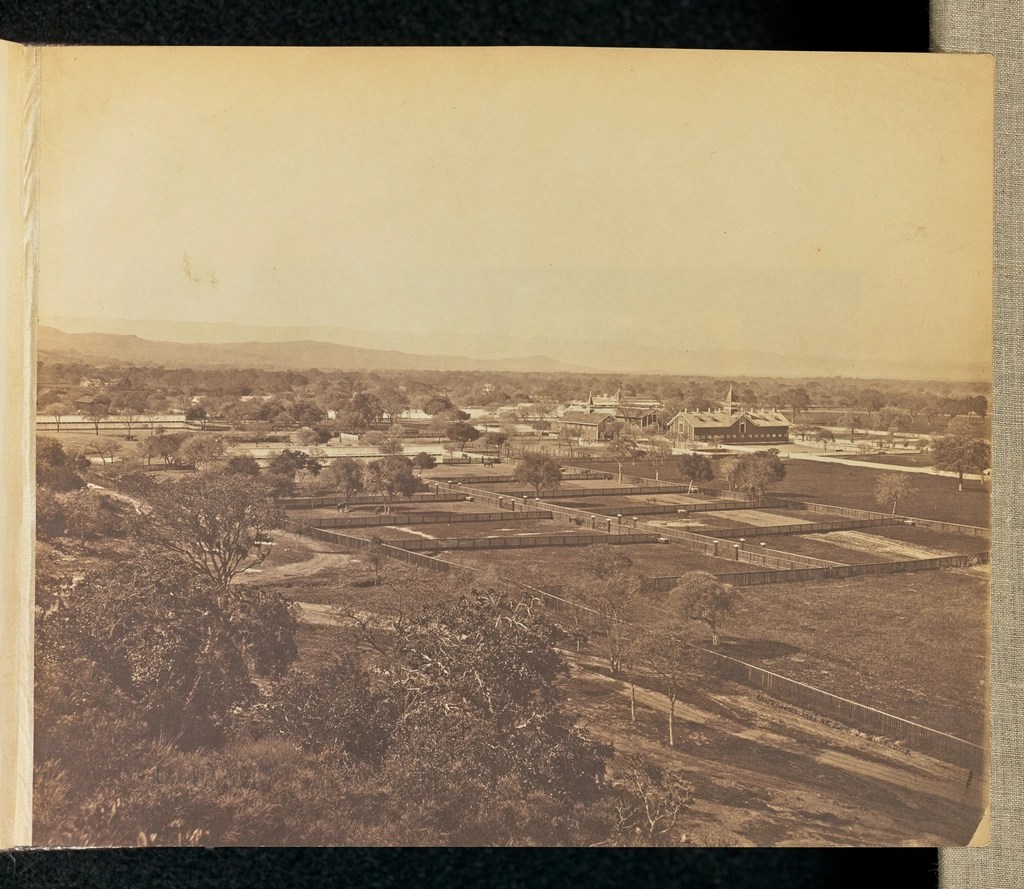
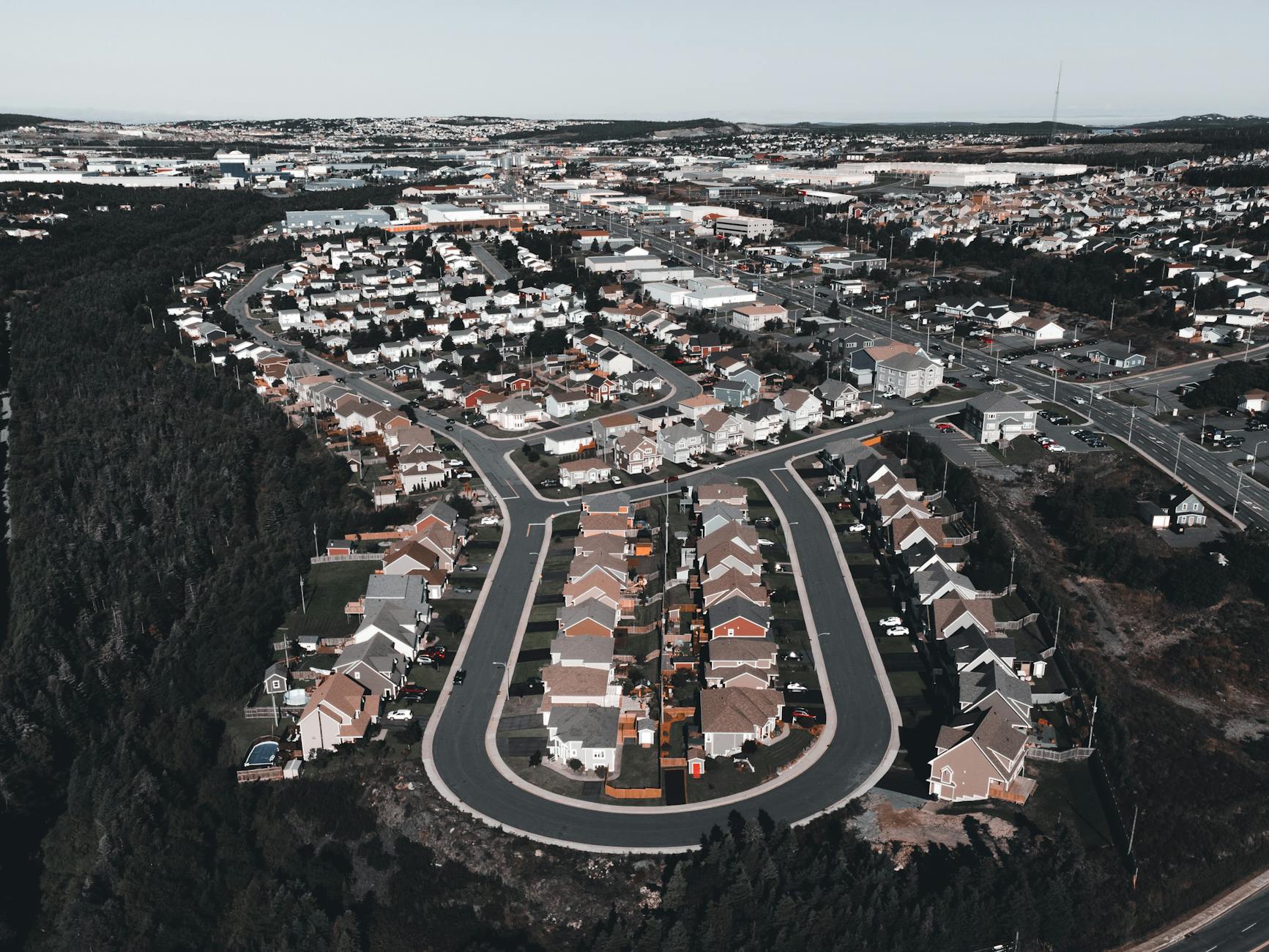
View Palo Alto, California Eadweard by thegetty is licensed under CC-CC0 1.0

The proposed legislation would apply to people who buy three or more homes within a radius of 500 feet, roughly the length of a city block. Any construction project expected to last more than 180 days would need a detailed daily schedule of construction work to prove it can be conducted without double-parking vehicles or blocking driveways or bike lanes.

After finishing one construction project, homeowners would need to wait three years to begin another unless a major emergency occurred. Homes could not be vacant for more than six months in any given year.

The proposal relies on neighbors for enforcement, leaving it up to another homeowner or tenant living within 500 feet to file a lawsuit.

The proposal would place new restrictions on private security guards across Palo Alto, not just those serving wealthy homeowners. All security vehicles would have to be marked and permitted by the city. Security guards would have to identify themselves to the public when asked. They would be prohibited from harassing or intimidating passers-by on public property…

The full Palo Alto City Council is likely to take up Mr. Stone’s proposal in January or February. Mr. Stone said he is confident that a majority of the seven-member council, which has taken a keen interest in housing affordability, would support the general framework but could send it to a committee or city staff member for refinement. It could take six months or longer to reach a final vote, he said.

Three things strike me about this proposal:

  1. It is clearly aimed at particular residents. Not just people with some wealth, who might be found across American suburban communities, but people who are truly wealthy and can afford this kind of construction and property ownership and all that goes with it.
  2. Communities often deal with these concerns at the zoning level. How big can a structure or house be? Are the guidelines in particular areas or in regards to property lines? The proposal above seems to deal with other matters that come along with regular approval of megahouses and properties.
  3. The regulations are about property but local conversations often have to do with local character and community life. Do such homes (and people) fit in the community? Who can live in a place where such properties are common? Who is Palo Alto for? Suburbs often implicitly or explicitly have these discussions while considering development.

Now that this proposal is out there, how do wealthier residents respond and what will the final local regulations be?

Zillow, realtors, and who can be a “neighborhood savant”

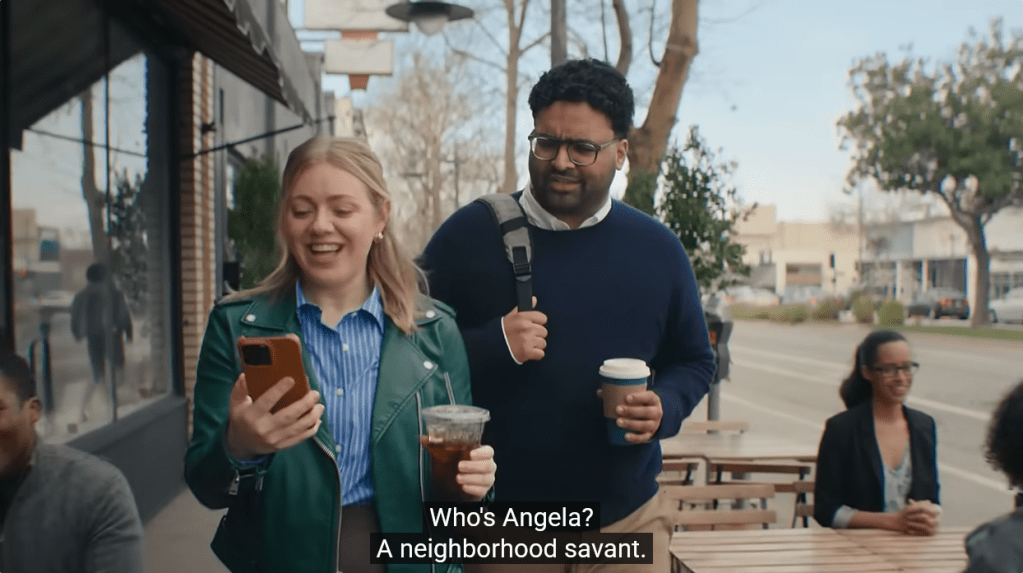
A Zillow commercial refers to their agents as a “neighborhood savant.” Are Zillow agents or realtors the best people to claim this title?

A real estate agent might know a lot about neighborhoods or communities. Looking at the local marketing realtors do, I see that they claim to know about different suburbs. In particular, they have knowledge about the local housing market through what has sold and what has not. They can also talk about other aspects of the community, such as schools and nearby amenities.

If I go to websites like Zillow or Realtors.com, they offer neighborhood information with each property listing. This includes a map, walkability scores, ratings of local schools, other nearby listings and recent sales, and more.

But what does it take to know about a neighborhood? Who can accurately describe what it is like to live there or how the character of a place plays out? Does anyone offer insights from local residents? Do real estate agents live in the communities they sell in or have secondhand information from local residents and organizations?

This reminds me of two posts I put together years ago on how to learn about a suburb. There are lots of sources of information about communities and some of it is available online. But some of it is not. Talking to people or walking through a community or reading local histories can provide some insights that are harder to intuit online.

Who else might be a “neighborhood savant”? A local journalist, where they are still available. A local political official or a longstanding member of a community institution. A local historian. Residents who take an interest in and actively participate in their neighborhood.

Not knowing about significant local events, bridge collapse edition

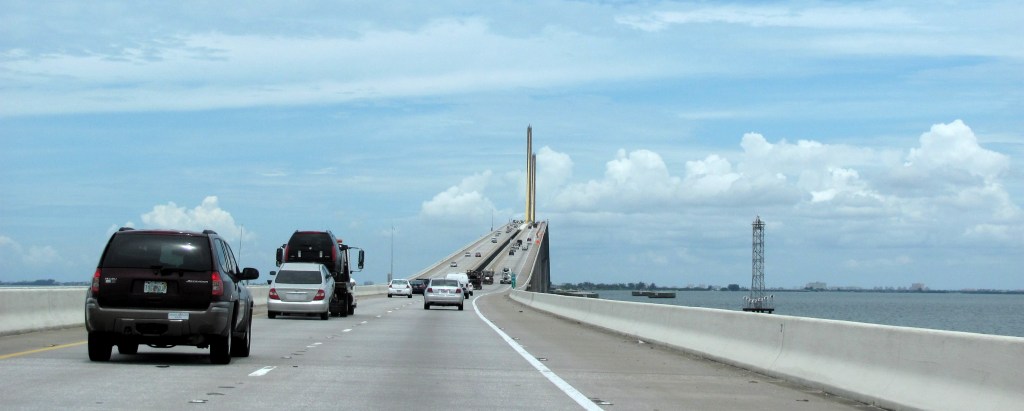
I have driven over the Sunshine Skyway Bridge a number of times when flying into Tampa and driving south. Here is an image of the roadway leading onto the bridge from 12 years ago:

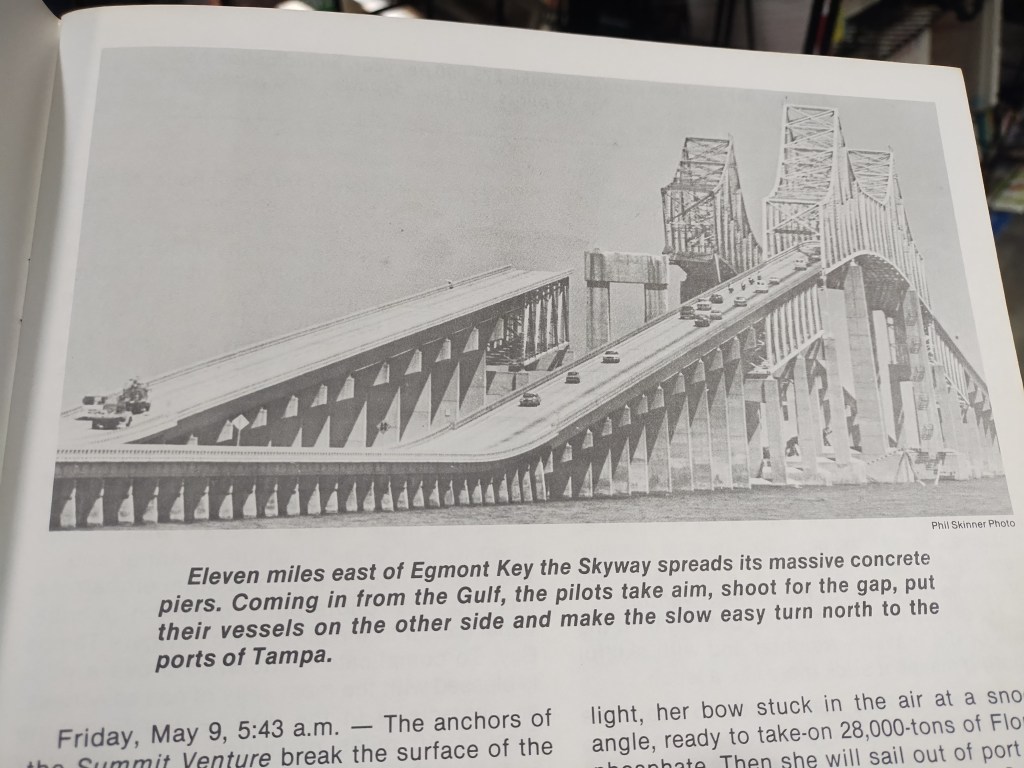
Recently looking through used books at a local library, I learned that part of the prior span collapsed after being hit by a boat in 1980:

Wikipedia’s description of the disaster:

The second incident came on the morning of May 9, 1980, when the freighter MV Summit Venture collided with a support pier near the center of the bridge during a squall, resulting in the catastrophic failure of the southbound roadway and the deaths of 35 people when several vehicles, including a Greyhound bus, plunged into Tampa Bay.[13] Traffic was diverted onto the surviving two-lane span for several years until the replacement Skyway Bridge was completed, at which time the old bridge was partially demolished and converted into two[14] long fishing piers.

This is a significant local event that I had not heard of before. Such events are rare and likely stick in people’s memories for a long time. But as a visitor to the area, even one who has been there at least a few times, I did not know that this bridge had once collapsed.

What else am I missing when visit places near and far? In my research on suburbs, I have focused on key moments involving character, times when communities had public discussions about the choices they faced. Looking back, it was clear that these choices then shaped subsequent decisions and the character of the community.

Could local disasters have a similar effect on local character? Catastrophic events can rally a community, impacting people far beyond just those direct affected. Do people remember when they heard about the bridge collapsing? How many people wondered about their own drive over the bridge?

The most likely ways I could imagine finding about such events is either through reading about what happened or talking with someone who lived in the area. And some events might be more important than others; a major hurricane in an area is going to have a larger effect than a smaller matter.

Seven suburbs added over 40,000 residents between 2013 and 2023

American suburbs are used to growth; as a whole, they have been growing for decades. But some suburbs grow much more quickly than others. A recent analysis suggests these seven suburbs added more than 40,000 residents in just ten years: Meridian, Idaho, Horizon West, Florida, Buckeye, Arizona, Santa Clarita, California, McKinney, Texas, Frisco, Texas, and Enterprise, Nevada.

Photo by Erik Mclean on Pexels.com

All of these locations are in the South or the West. All of them are sizable communities; the smallest has over 60,000 residents and several are over 200,000 residents.

Imagine how this much growth in a short period of time could change a community. More development and land in the community. Increased levels of local services, everything from school to libraries to firefighters to road maintenance. More traffic and activity. A different sense of who the community is.

At some point, the rapid growth of these ten years slows or stops. There is less land for development. There is limited appetite for building up or at higher densities. Growth moves to other nearby communities or other metropolitan areas.

It may take years for these suburbs to settle into being a place (1) that once had such fast growth and (2) that lives with the consequences of their now larger size.

Pizza, place, and local character

A recent study looked at what helped some local pizza places thrive:

Photo by Pablo Macedo on Pexels.com

I think another hugely important part about pizzerias is the atmosphere they offer. There’s a sentence you wrote in the article: “Rather than focusing only on speed or price, they compete by offering character, inventive toppings, personal service and a sense of place that chains just can’t replicate.” What does that sense of place feel like to you when you enter these pizzerias?

De la Cruz-Fernández: That’s an important sentence and a good question, because I would go a little beyond pizzerias to say that businesses themselves, exploring the idea of a business becoming part of our life, is one of the goals of this project. Usually, when you think about culture, you think about people reading books or people watching TV. And in this case, it’s how the businesses that you patronize every day are also part of your own growth. But everything goes back to that organization, that business that someone has managed and allowed to become your space. So someone has put labor, has put thinking, has put finances into it. And that makes business part of the history of humanity, to put it too broadly, maybe. But for business historians, that is how we think; what we want is to understand that business also is part of social life and culture.

We recently gathered with family at such a place. It had been there for decades. Through different features inside, it showed that it was part of the community. On this weekend night, the tables were full of families and larger groups gathering for pizza and conversation.

People like to gather around food. A McDonald’s or a Starbucks can act like a third place in certain situations. But these are chains that promise more predictability than they do local character. Local restaurants have an opportunity to do something different; it can be both a distinctive compared to the national chains and it can be part of the business model to be a place for the local community.

On the community side, how many American communities have a restaurant like this? How many or what percentage of residents have to visit regularly to make it a community place? A restaurant could claim this status for themselves. Or a small group of residents might have a place in mind.

It would also be interesting to know how many pizza places make it over the years compared to those who do not. Is that local character there from the beginning – and this is what helps them get through the start or difficult years? – or does it develop over time as the business and the community interact?

Shining a light on suburban communities facing significant challenges

A review of a new book provides a reminder that not all suburbs are wealthy enclaves with many top-notch amenities:

Photo by Brett Sayles on Pexels.com

Herold opens his book by visiting his hometown, a Pittsburgh suburb called Penn Hills. In many ways, the story of this particular suburb captures it all. When Herold’s family moved here in 1976, the average home price in 2020 dollars was $148,000. Now it’s $95,000. Herold knocks on a door just down the street from where he grew up, and there meets Bethany Smith, who has recently purchased the house with her mom. She’s single and Black and undaunted, raising a son, Jackson, for whom she wants the absolute best, which means finding a well-resourced, nurturing school and buying a home, an investment that will serve as a foundation to building wealth. (She’s also gotten priced out of her gentrifying neighborhood in Pittsburgh.)

But Bethany has walked into a mess of a town. Signs of wear and tear are everywhere: most notably, a collapsing sewer system and a school district that is $9 million in debt. According to Herold, the town didn’t invest in infrastructure improvements, kicking any needed repairs down the road. Financial mismanagement is everywhere. Enrollment in the schools has steeply declined. White families like Herold’s have moved out; Black families have moved in. It’s a pattern, Herold writes, repeated in suburb after suburb. It’s what I witnessed in Cicero with Latino families. Herold poses the question that drives his reporting: “How are the abundant opportunities my family extracted from Penn Hills a generation earlier linked to the cratering fortunes of the families who live there now?”

We have, Herold suggests, been looking directly at this problem—and either haven’t acknowledged what’s occurring or, worse yet, don’t care. He points to Ferguson, Missouri, an inner-ring suburb just outside St. Louis, where in the summer of 2014 a white police officer shot and killed Michael Brown, a Black teen. In the news coverage that followed, people were shocked to learn that more than 20 percent of the town’s operating revenue came from fees, fines, and court summons collected from the town’s mostly Black residents, a result of aggressive policing. This was because Ferguson had gone the way of so many inner-ring suburbs…

Charles Marohn, whom Herold describes as “a moderate white conservative from Minnesota,” is the one to lay out Ferguson’s decline to him. According to Herold, Marohn had a hand in building suburbs, but he has since had an awakening. Marohn suggests that what’s happened in places such as Ferguson and Penn Hills is the equivalent of a Ponzi scheme. It’s “the development version of slash-and-burn agriculture,” he tells the author. “We build a place, we use up the resources, and when the returns start diminishing, we move on, leaving a geographic time bomb in our wake!”

I have not read the book. As someone who studies suburbs, here are the first four thoughts that come to mind:

  1. Inner-ring suburbs are a unique type of suburb. Right next to a big city, they often look similar to urban neighborhoods (denser buildings), have similar demographics to cities (more residents of color), and can face similar issues as cities. They are suburban but day to day life may not look like that of sprawling subdivisions of recently-constructed single-family homes. That white residents have left these suburbs and these communities may struggle for resources is true. I recommend Bernadette Hanlon’s book Once the American Dream: Inner-Ring Suburbs of the Metropolitan United States.
  2. Suburbs as a whole and as individual communities experience different waves of development. Inner-ring suburbs were some of the first suburbs in the United States (and some were annexed into the big city). The issues described in this review also face other suburbs who may have had a particular character for decades. Communities change as both external forces and internal forces are applied to the suburb.
  3. The review highlights ongoing residential segregation patterns in suburbs. White residents leave suburbs they do not wish to stay in.
  4. Sharing revenues and resources across metropolitan regions and across suburbs could happen but it is likely very unpopular as suburbanites like the idea of local government serving their needs.

How many communities in the United States have histories we should know?

After seeing SNPJ, Pennsylvania on the map and recently reading Radical Suburbs by Amanda Kolson Hurley (recommended), I thought about this question: how many more histories of communities in the United States should we know? SNPJ appears to have a unique background and purpose and Hurley considers multiple suburbs with different visions of what a suburban community could be. But, there are thousands of communities in the United States – are they all unique enough to pay attention to?

Photo by Engin Akyurt on Pexels.com

One way to consider this is to think about patterns in we might pay attention to some communities and not others. In the United States, population size and growth is often emphasized. Bigger places often receive more attention and their unique histories and features are more known. At the same time, it takes efforts by numerous actors for history to become known and narrated over time. Discrimination, a lack of power, and limited resources mean some histories are not as known.

There is certainly value for people living in a community to know their own local history. I have written about seven steps for knowing your suburb and how to take additional steps. This local knowledge can help longstanding members of a community, new residents, and visitors. It can take some digging to hear multiple voices, see what is told and not told, and think about how a community came to be.

In the next post, I will explain why I see value in both larger categories – such as examining suburbs as distinct places compared to cities and rural areas – and looking at specific histories and characters of communities. In my own work, I found linking these two levels can provide further insights into places and experiences within them.

Seeing the community SNPJ on a map

On drives from the Midwest to locations further east, we often pass a community with an interesting name: SNPJ, Pennsylvania. This is an unusual name. No vowels. An acronym? A misprint? Wikipedia suggests this is an unusual place with just 15 residents:

Photo by Pixabay on Pexels.com

S.N.P.J. stands for “Slovenska Narodna Podporna Jednota” (Slovene National Benefit Society), a fraternal society and financial co-operative based in North Fayette, Pennsylvania. The society applied to have their 500-acre (200 ha) recreation center in western Pennsylvania designated as a separate municipality in 1977. The S.N.P.J. borough was created so that the society could, among other things, get its own liquor license. North Beaver Township, the municipality in which the center was originally located, restricted the sale of alcohol on Sundays (blue law)…

It is more of a recreation complex than a community, and has 60 rental cabins, 115 mobile home slots, and an artificial lake. It is open to the public as a summertime resort and facility for bingo, weddings, and dances. Members of the society get a discount on the events.

Wikipedia offers few additional details but there is enough here to hint at an interesting history: a fraternal group for a white ethnic group, efforts to bypass liquor laws, providing recreational opportunities, and very few permanent residents.

This leads to the post for tomorrow: how many communities across the United States have unique histories worth knowing? How many communities are like SNPJ and does it matter if there are just a few or a lot?

Places that represent America, in memes and other forms

Ohio is a running meme in social media:

Photo by Mohan Reddy on Pexels.com

According to Know Your Meme, treating Ohio as a joke started in 2016 after the meme “Ohio vs the world” went viral on Tumblr. User @screenshotsofdespair posted a photo of a digital marquee in an unknown city that read, “Ohio will be eliminated.”

At the time, the joke was Ohio was secretly plotting to take over the world, hence the photo calling for its silencing. By the time 2020 rolled around, jokes about the state had evolved…

Now, most memes about the state are saying “so Ohio” or “only in Ohio” about something bizarre or random. It’s usually tied to images, GIFs or videos that highlight something ridiculous. The memes imply that Ohio is a place where strange things happen. Ironically, it’s actually been named one of the “most normal” states in the U.S.

Describing the internet trend, Know Your Meme explains how the memes have essentially re-branded Ohio. Now it is “an American middle place, existing as a capitalist wasteland of chaos and mayhem, akin to creepypastas, lore and randomness, becoming an imagined epitome of American signifiers such as Breezewood, Pennsylvania.”

The Ohio memes have become so near-constant that they’ve taken on a life of their own. To date, the hashtag #Ohio has 33 billion views on TikTok, while #OnlyInOhio has about three billion. In some cases, people have made memes about the memes.

I am intrigued by this idea of particular places embodying America, whether normal or weird. Breezewood? I look forward to driving by it several times a year. The Midwest as the “heartland”? In the sociological tradition, how about “Middletown” and the long set of studies devoted to this community (which was Muncie, Indiana)? Or, what about the claim that Chicago is the most American city? Or, the idea that one can see real America at Walmart or at an emergency room on a weekend night? Perhaps this has a long tradition, even if it is now taking the form of memes.

And then there could be places and communities that are known but cannot embody all of America. Could New York City all about America or does its status as the leading global city and its particular history and character mean that it cannot embody all of the United States? (Perhaps normal American cities are Cleveland.)

Suburbs as diverse, welcoming to all (but not criminals), and open for business

The village president of Oak Brook touted the suburb’s approach to crime as part of its success. He ended the op-ed with this:

Photo by Ketut Subiyanto on Pexels.com

Oak Brook is a diverse community, welcoming to everyone except criminals. We’re open for business!

A little bit more on each of the three pieces of diversity, welcomes, and business activity.

Regarding diversity, the U.S. Census Bureau QuickFacts say the community of just over 8,000 residents is 61.8% white, 30.3% Asian, 4.5% Hispanic or Latino, and 0.6% Black or African American. The median household income is $146,409, the median housing value of owner-occupied units is over $801,000, and the poverty rate is 4.9%.

Many suburbs say they are welcoming and few, if any, would say they welcome criminals.

The community has plenty of business activity as it is home to Oakbrook Center and numerous offices along I-88.

Is this formula – diversity + welcoming + business – the secret to suburban community success? Or, is this a viewpoint from suburbs with certain features and character?