Can we now regularly compare NYC, LA, Chicago, and Houston?

Comments from the newly-elected mayor of Houston compare the four largest cities in the United States. The Chicago Tribune editorial board thinks this is a problem for Chicago.

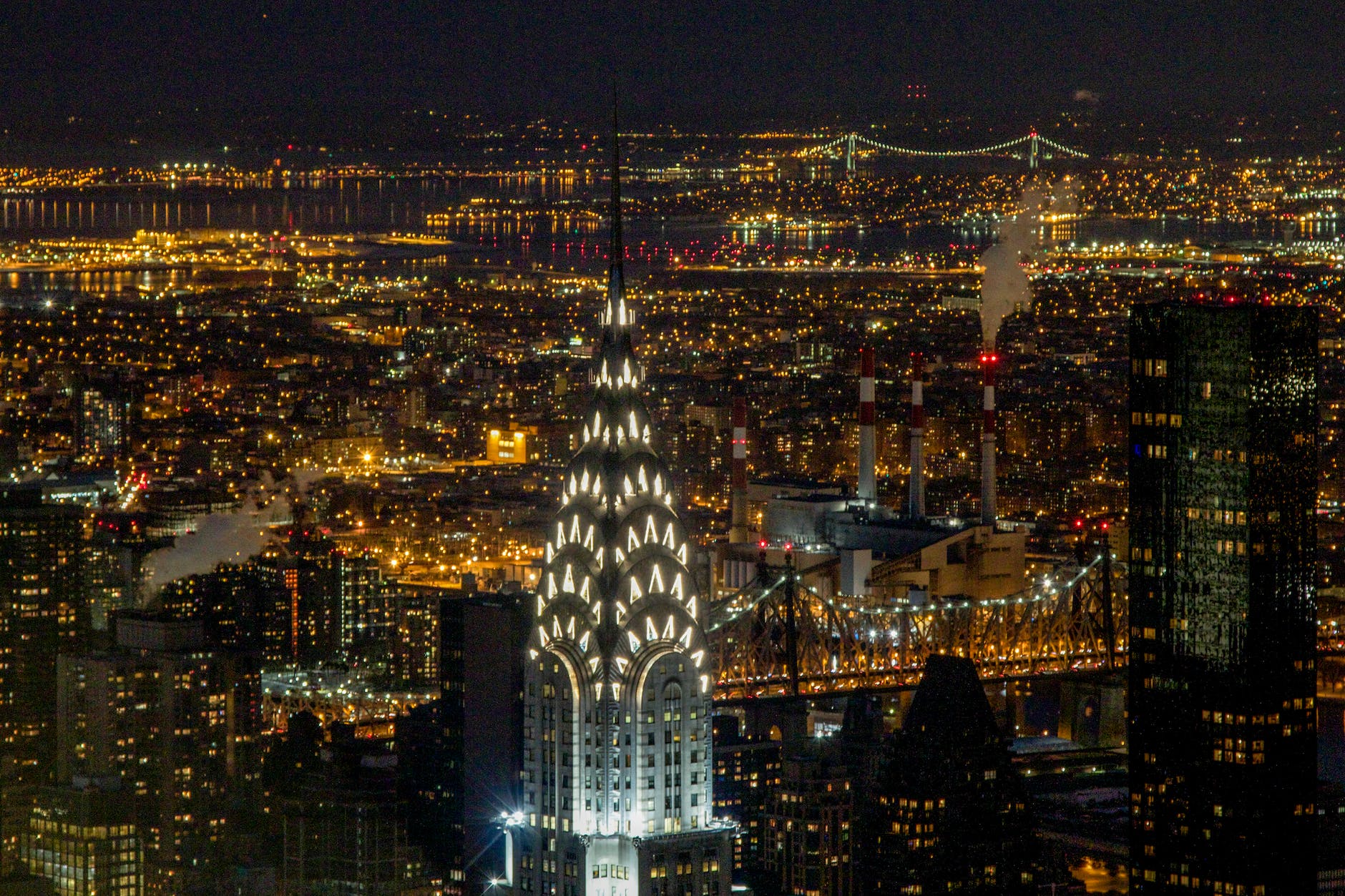
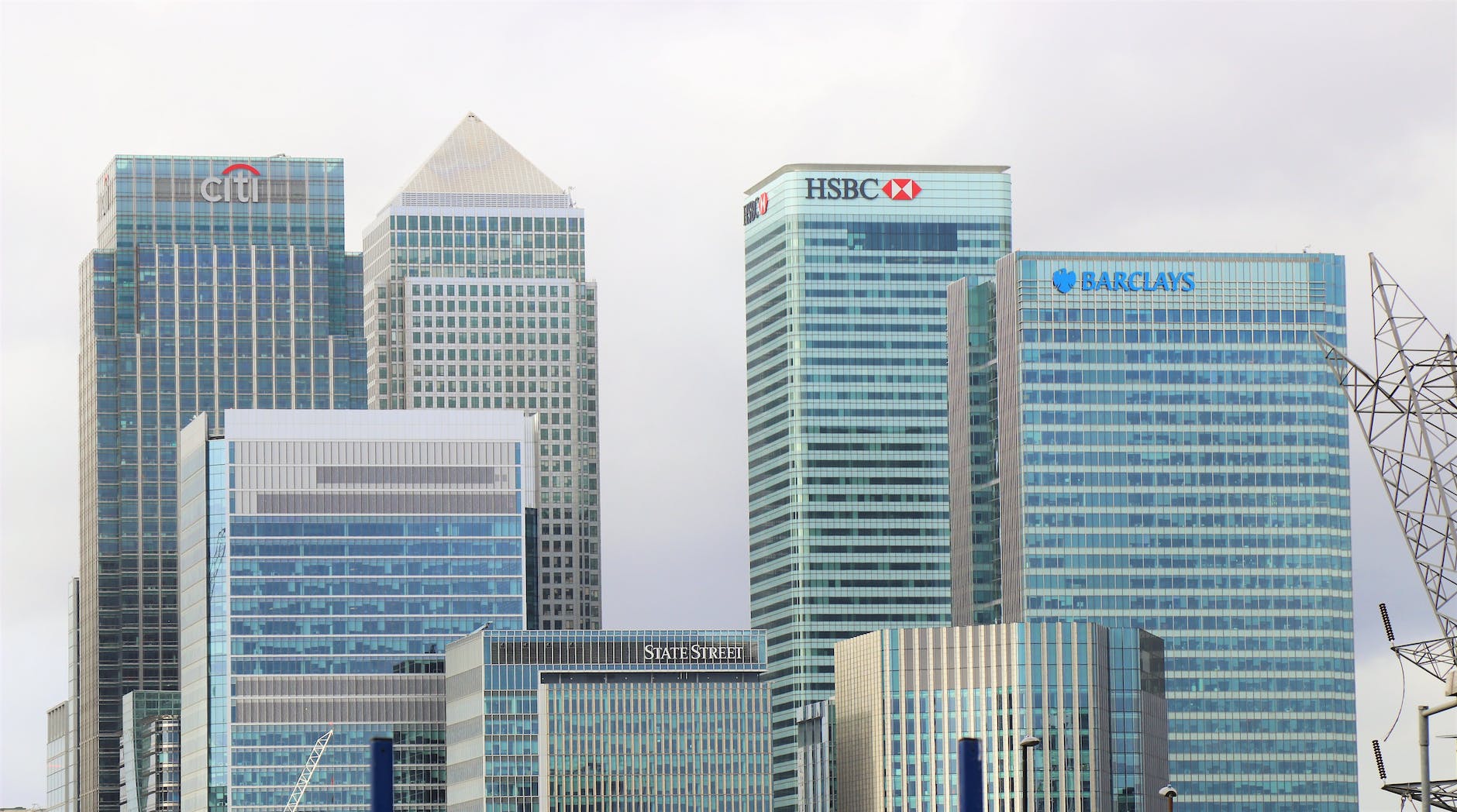
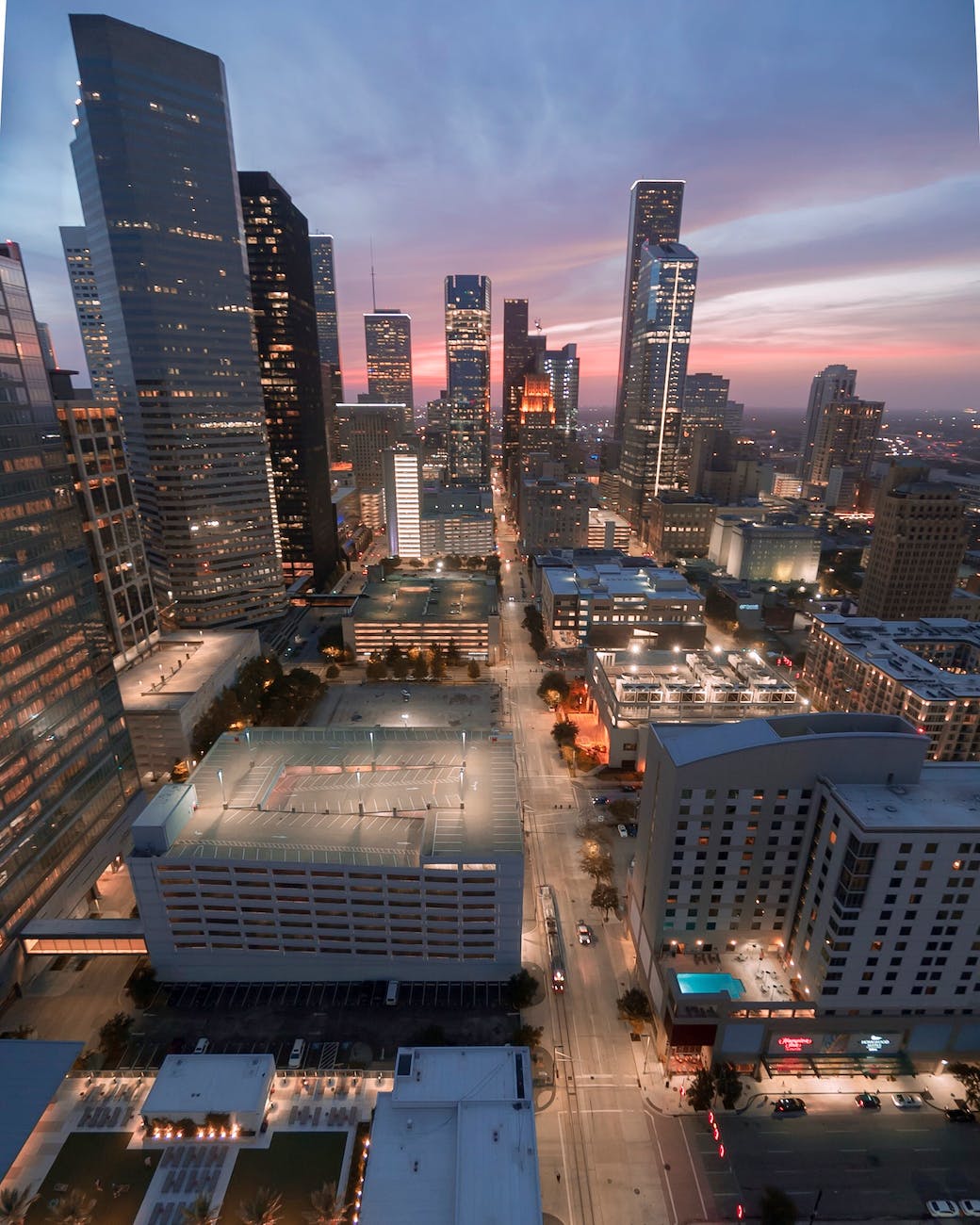
Photo by Nick Bee on Pexels.com

“We’re not New York. We’re not L.A. We’re sure not Chicago. We fix our problems.”

Quick quiz: Who recently said that? Ron DeSantis? Greg Abbott? Nikki Haley?

The answer is John Whitmire, a Democrat who over the weekend resoundingly won election as mayor of Houston, the nation’s fourth largest city and on track to overtake Chicago as third largest if present demographic trends continue…

Politically, Chicago comes across to much of the rest of the country as a city that’s off course, focusing not on the issues at the top of residents’ priority list (public safety, jobs, public transit, for example) but on progressive to-do lists. Not only are Johnson and his City Council allies choosing to spend their time and political capital on issues the majority of Chicagoans view as less than pressing, they’re doing a poor job even when it comes to their own priorities.

Several factors appear to be at work. First, as noted, Houston is approaching Chicago’s population. Chicago was once the second city, then became the third city, and likely will soon be the fourth city. This means a decline a status, both internally and from the outside.

Second, Chicago has long had a reputation as “the city that works.” It might have all sorts of problems but things got done. If the perception inside and outside is that things do not get done, then people might have concerns.

Both of these might be existential issues for a city that is regarded as a global city and has always been behind at least one other major American city.

Additionally, are New York and LA ready to be mentioned in the same breath as Houston?

Trump on building “freedom cities”

Donald Trump recently said he wants to construct “freedom cities” if elected again. He has had this idea for a while; a story from March 2023 provides more details:

Photo by Brett Sayles on Pexels.com

Former President Donald Trump on Friday proposed building up to 10 futuristic “freedom cities” on federal land, part of a plan that the 2024 presidential contender said would “create a new American future” in a country that has “lost its boldness.”…

He said he would launch a contest to charter up to 10 “freedom cities” roughly the size of Washington, DC, on undeveloped federal land.

“We’ll actually build new cities in our country again,” Trump said in the video. “These freedom cities will reopen the frontier, reignite American imagination, and give hundreds of thousands of young people and other people, all hardworking families, a new shot at home ownership and in fact, the American dream.”

These cities are tied to a bigger project:

Trump’s plan, shared in advance with POLITICO, calls for holding a contest to design and create up to ten new “Freedom Cities,” built from the ground up on federal land. It proposes an investment in the development of vertical-takeoff-and-landing vehicles; the creation of “hives of industry” sparked by cutting off imports from China; and a population surge sparked by “baby bonuses” to encourage would-be-parents to get on with procreation. It is all, his team says, part of a larger nationwide beautification campaign meant to inspire forward-looking visions of America’s future.

When I saw that Trump mentioned this again, I immediately thought about free market cities that some have proposed for different parts of the world. But, that does not seem to be the goal here. Trump wants to build new cities that fit a new vision of American innovation. Freedom = innovation. One implication is that current cities are not free.

For such an idea, multiple practical obstacles exist:

  1. Where would these be located? Which federal lands?
  2. It is hard to build a new city. What is the timeline for this? How many resources will be involved? Will it be all private actors and developers doing the construction?
  3. What will be the guiding mission of these cities? If the goal is innovation, what will be different about these cities compared to existing cities?
  4. What will be the politics of these cities?

All that said, the likelihood of these being built is very low. And I thought Trump was was trying to save suburbia, not necessarily build cities?

Fear of crime near record highs even as crime rates are down

Recent data from Gallup suggests more Americans are fearful of crime:

Photo by Lennart Wittstock on Pexels.com

A recent Gallup poll found that 28% of Americans worry frequently or occasionally that they will be murdered, according to a Nov. 16 news release. That’s a near-record high…

This heightened apprehension has had a detrimental effect on the daily lives of Americans, causing them to curb commonplace activities.

Four in ten Americans — the largest number in three decades — are afraid to walk within a mile of their homes alone at night, according to the poll. The last time concerns about walking alone were so high was in 1993, when nationwide crime was near an all-time high, according to a 2016 report from the Brennan Center for Justice…

Violent crime in the U.S. peaked in 1991 at a level of 758 offenses per every 100,000 people, according to the FBI. Since then, it has precipitously fallen, though there have been occasional upticks…

Research has shown that there is no connection between crime rates and levels of concern about crime, Barry Glassner, a sociologist and author of “The Culture of Fear: Why Americans Are Afraid of the Wrong Things,” told McClatchy News.

Perceptions and reality are two different things. Sociologists need to study both as perceptions can drive a lot of actions, policy, and beliefs. Simply repeating the actual numbers will not necessarily convince people.

While television news and politicians are implicated at the end of the story, I wonder about the role of social media. It is relatively easy to share stories of single events. Social media collapses the broader social world by amplifying smaller patterns and individual occurrences. Does it spread fear about crime (among other fears)?

Additionally, how much is this tied to long-standing anti-urban sentiments in the United States? If the majority of Americans live in suburbs but perceive crime to be a problem in cities, this can intersect with their existing ideas about cities.

We maybe should not drag the rural into the city but we can keep cultivating gardens in the city

In watching again James Howard Kunstler’s TED talk “The Ghastly Tragedy of Suburbia,” this line stood out:

And we’re not going to cure the problems of the urban by dragging the country into the city, which is what a lot of us are trying to do all the time.

Yet, one thing humans have done for a long time is to cultivate gardens in cities and communities. Think the Hanging Gardens of Babylon. Or, urban farming in Detroit and other cities. Or, rooftop gardens. Urban gardens can, and have, thrived:

Humans will continue to garden in the city and cultivate plots of land or space. This is different than the “nature band-aid” approach Kunstler criticizes where slapping a few bushes or trees into a setting is viewed as adding nature.

Skyscrapers happened because real estate was really expensive

A quick history of the Chrysler Building in New York City provides a reminder of a key reason skyscrapers emerged in American cities:

Photo by Following NYC on Pexels.com

Dominating the New York skyline brought prestige and publicity, but tall towers also resolved a more prosaic problem: As land prices climbed, developers had to build upward to turn a profit, pushing their projects as high as engineering, natural light and, eventually, zoning would allow. “Skyscrapers were a self-fulfilling prophecy of the heated real estate market,” writes Neal Bascomb in his 2003 book Higher: A Historic Race to the Sky and the Making of a City. By the 1920s, with Europe in ashes after World War I, these buildings became brash totems of a new world order. Manhattan in particular had become the “harbor of the world, messenger of the new land … of the gold diggers and of world conquest,” wrote the German architect Erich Mendelsohn in his seminal 1926 book Amerika, published the year after New York overtook London as the world’s most populous city.

In a dense space like Manhattan, demand for land pushed prices up. To make more money from the same plot of land, skyscrapers offered more space. The addition of thousands of square feet of office space, even if it could be hard to fill at times, provided profit.

I would be interested to see analysis shows the profits of a skyscraper over a lifetime compared to other options builders, developers, and companies could have pursued. Instead of building up in major cities, here are other options they could have pursued: building underground; building dense and wide buildings (imagine ones that cover several city blocks at a height of ten stories or so); constructing large buildings in other parts of the city and suburbs; and pursuing multiple business districts rather than centralized locations where everyone wants to gather.

Even if there was profit at stake, there is also the matter of the prestige of skyscrapers. Skyscrapers are important symbols in a city skyline. Were skyscrapers both profitable and status-enhancing or did the increased status mean that the absolute numbers did not matter quite as much?

Lenders and commercial properties that stay vacant for a long time

Here is one explanation of why commercial properties in the United States can stay vacant for so long:

Photo by Expect Best on Pexels.com

So if COVID isn’t to blame for all the shuttered stores, what is? Well, when a landlord doesn’t lower the rent to get a new retail tenant, it’s because that landlord can’t. The market that sets retail rents isn’t only between tenants and landlords. It’s also between landlords and the banks that finance the buildings. And the banks, in many cases, won’t let property owners lower their rents enough to fill their properties. The pandemic may have emptied out America’s storefronts, but it’s banks that are keeping them that way…

So if you’re trying to lower the rent on your retail space, your bank may say no. And even if it says yes, it might demand you pay off a chunk of the mortgage up front, to account for the way you’re lowering the building’s value by lowering its rental income. In short, reducing the rent on your storefront might land you a tenant — but it could cost you big-time with your bank.

Of course, nothing is forcing banks to be all hard-assed about it. They’re free to renegotiate or refinance the terms of mortgages, given the extraordinary downturn facing retail storefronts. In some cases, according to real-estate brokers I spoke with, banks have apparently decided not to stand in the way of landlords in San Francisco who are offering shorter-term leases and lowering retail rents anywhere from 20% to 50%. One popular restaurant space in the city’s tech-heavy South of Market neighborhood that has been dark since 2020 is finally set to reopen this year as a bar and “entertainment concept” — but only because the landlord is offering the new tenant a below-market rate and improvements to the space…

You’d think everyone involved would be motivated to fill an empty storefront — landlords aren’t making money, cities aren’t getting taxes, and the neighborhood has an eyesore. But that eyesore may actually still be profitable to the landlord and the banks. “In SoHo, something vacant isn’t necessarily vacant,” says Ortiz. “Someone’s paying rent there, and the landlord’s perfectly fine with it. It’s a vacancy to the pedestrian, but not to the landlord.”

Vacant properties can create all sorts of problems for communities. The focus on this story is on city properties but vacant properties are issues in suburbs as well. As the story suggests at the end, encouraging properties to be vacant for shorter periods of time and/or for banks to be more flexible might require some creativity.

I wonder if there is more third party actors – not the lender or the current lease holder – could do to provide solutions. Are there certain land uses that could be more temporary but fill vacant spaces? Are there agreements to be made between lenders and a tenant to make something of the property without t being a fully functioning property?

Could communities also more directly pressure lenders about vacant properties? Perhaps this happens more behind the scenes but imagine a community group organizes around asking a specific lender about a particular property in the neighborhood. They make some noise, make the lender public, ask for changes.

Universal basic income pilot programs in multiple US cities – and could they work in more places?

A look at multiple small universal basic income programs suggests they are effective in a number of big cities:

Photo by Karolina Grabowska on Pexels.com

Pilot programs have sprung up across the country, from liberal strongholds such as Los Angeles and Baltimore to more centrist and conservative cities like Columbia, South Carolina; Birmingham, Alabama; and Gainesville, Florida. Just Income, the Florida program, also focused its stipends on formerly incarcerated individuals, with a rationale similar to Middleton’s. “It costs Floridians about $28,000 a year to hold someone in prison,” the director of the Gainesville program said in a press release earlier this year. “Alternatively, we’re investing just $7,600 directly to one of our valued neighbors, giving them a vital income floor.” In city after city and cohort after cohort — old, young, single parents, ex-convicts — universal basic income has improved health outcomes, raised employment, and bolstered childcare opportunities (and recipients have had consistently better outcomes than control groups).

According to Jefferson, guaranteed income — which she calls “unrestricted cash transfers” — impacts recipients’ lives almost immediately. Early results from her firm’s analysis, she said, “really show that cash can improve people’s financial stress and mental health remarkably and quickly.”

With more data at hand than theoretical projection, the evidence is overwhelming: Universal basic income is working nearly universally.

This article seems more interested in the political aspects of such programs working in both Democratic and Republican states and then wondering if there is political appetite for larger-scale programs.

I am interested in the place-based aspects of these programs. Does success across a range of cities mean that it could or should work in all American cities? Some programs or contexts might lead to particular successes or difficulties. Is there a model or two that can be emulated or do programs need to be tweaked?

Is the success limited to cities or would similar programs in metropolitan regions or rural areas get similar results? Disadvantage and lack of resources can be found across American contexts.

If places do not matter as much regarding effectiveness, does that mean a federal program would be more effective? Or, if there are local contexts that matter, could the federal government provide monies to states or municipalities to distribute?

It would also be interesting to see a timeline across different locations of when larger programs might roll out.

Quickly describing the worst-case scenario of “the urban doom loop”

What might an urban doom loop look like? Here is one brief description:

Photo by Stas Knop on Pexels.com

The worst-case scenario would go like this: With more people working from home, companies from Milwaukee to Memphis are rethinking their leases or pulling out of them altogether. That drives vacancy rates up and makes it harder for landlords to attract new tenants or sell buildings for a healthy price.

Then property owners might struggle to pay off their mortgages or clear other debt. Business districts would dry up, stifling tax revenue from commercial properties or employee wages. Shoppers and tourists would have fewer reasons to venture downtown to eat or shop, choking off spending and forcing layoffs at restaurants and retail stores.

“Once those offices are empty, there are few alternatives and not a lot of life after hours,” said Stijn Van Nieuwerburgh, a professor of real estate and finance at Columbia University’s Graduate School of Business who is one of the authors of a paper that coined the “urban doom loop” phrase. Midsize cities “have a much bigger chasm to cross than what New York City has to go through. The situation is worse in those places with so little else in place.” He added, “It is a train wreck in slow motion.”

Once the primary use of a district starts disappearing, it can be hard to reverse the pattern. This is true in downtowns where much of the space is used for offices. It can be true for other uses as well, such as when retail dries up at shopping malls or a particular industrial activity slows down in a one industry place.

Is the primary way of addressing this right now simply to hope it the doom loop does not get too far? Are there any interventions that could help protect against worsening conditions? This could be an interesting time for experimentation across American cities as places and firms adjust to less need for permanent office space.

Trying to clear paths for the redevelopment of vacant urban lots

Several big cities are working to make it easier to improve vacant lots:

Photo by RIDVAN AYRIK on Pexels.com

Detroit officials want to triple property-tax rates on vacant land and reduce rates by an average of 30% for homeowners. The idea is to spur development on 30,000 neglected vacant lots held by owners who pay almost no taxes. It is a tall order. The city’s population has fallen by two-thirds since its 1950s heyday, and the Detroit land bank holds another 63,000 vacant lots. 

In Pittsburgh, the city council this month passed a measure to more easily transfer the 13,000 or so city-owned lots and vacant properties to a municipal land bank and into the hands of developers or nonprofits. The city’s population is down by more than half since its peak in the 1950s.

Chicago, whose population has fallen by about a quarter since the 1950s, has more than 10,000 city-owned vacant lots. Another 16,634 are caught in a limbo of back taxes and unpaid fees. Every other year, the county tries to unload such properties in a tax-lien auction known as the Scavenger Sale. Only about 8% of the properties in the auctions from 2007 to 2019 went to buyers who managed to obtain a clear title, the Cook County Treasurer’s office found…

A measure signed into law last week by Illinois Gov. J.B. Pritzker aims to resuscitate such properties. It cuts interest rates on overdue property taxes to 9% from 18%. It also allows Cook County to automatically acquire tax liens on delinquent properties before they reach the Scavenger Sale, reducing the time it takes to clear titles and transfer them to developers or nonprofits.

Even with reduced obstacles, it will take time for the number of vacant properties to be significantly reduced.

Once the property can be purchased and redeveloped, new questions emerge. What will be built there? What do owners, developers, and builders see as the price points that make it worth their time? How do new buildings and/or land uses fit with the existing neighborhood?

In other words, this is a multi-decade story worth paying attention. How did these properties become vacant and where did the residents go? Where do things stand now? What will they look like in the future? Specific decisions now could help alter the story to come.

More Americans live in a single-person household in cities

With reports this week that 29% of American households include just one person, where are more of these single-person households located?

Photo by Timur Saglambilek on Pexels.com

Living alone is much more common in large cities. Singles now make up more than 40 percent of households in Atlanta, Seattle, San Francisco, Minneapolis and Denver, according to a paper by the British historian Keith Snell. Half of all Manhattan dwellings are one-person residences. Snell identified a Midtown Census tract where 94 percent of households comprised a single person

There are likely a lot of factors influencing these numbers in cities. This includes available jobs and economic conditions, family formation processes, cultural and entertainment opportunities, and housing options.

There are also old American narratives about where families live. How about the story about young people in the big city forming families or households, having kids, and then leaving for the suburbs? Do cities provide more opportunities for people in single-person households?

It would be interesting to see the variation in single-person households within and across American cities. Certain cities are listed above at over 40% and certain Manhattan neighborhoods are cited. Does this also mean the numbers are quite different in other New York City neighborhoods or in other American big cities?