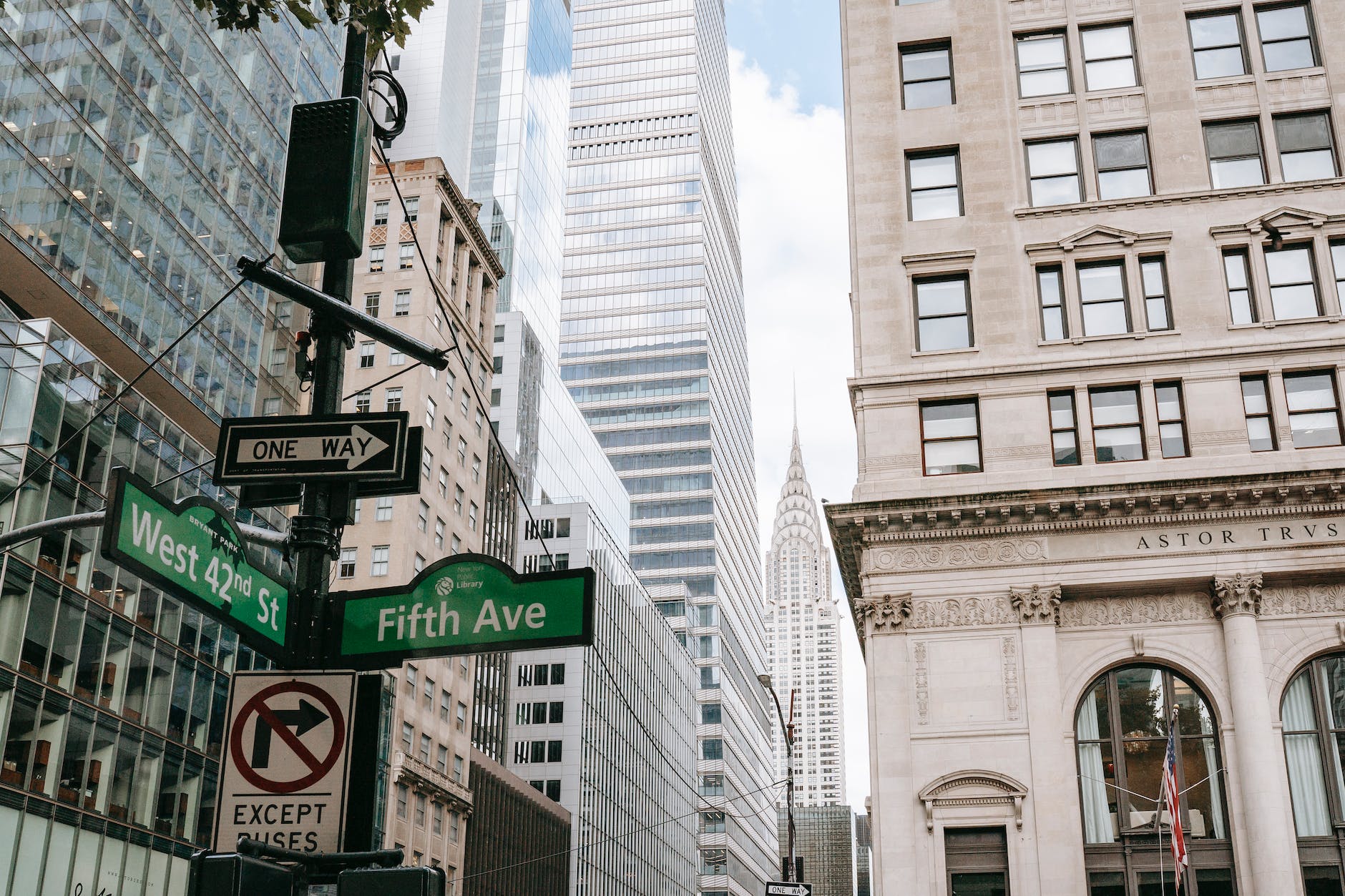
After seeing plenty of vehicles and buildings while driving recently through cities, I also observed a lot of signs. When driving at fast speeds, large signs are necessary so that drivers can read them and so that they catch people’s attention.
What can be learned from these signs? Here are a few of the domains:
-Information about roadways. From street signs to exit signs, there is a uniformity to information drivers need to navigate. These signs can help a driver navigate a complicated city full of other vehicles and buildings.
-Information about goods and services. Advertising signs are all over the place. They might be for a particular brand, a product, a store or restaurant, or an experience. While road signs are bland and to the point, advertisements tend use more images and text to deliver a particular message.
-Information about local attractions. These could be simple notes on highway signs for a stadium or park or more elaborate advertisement for specific local institutions.
In other words, there are a lot of signs vying for a driver’s attention. If there is time to read even most of the signs (such as being stuck in traffic or at an intersection), they can reveal much about the location and the city. But, add all these signs to the buildings and vehicles and it can be hard to take it all in.
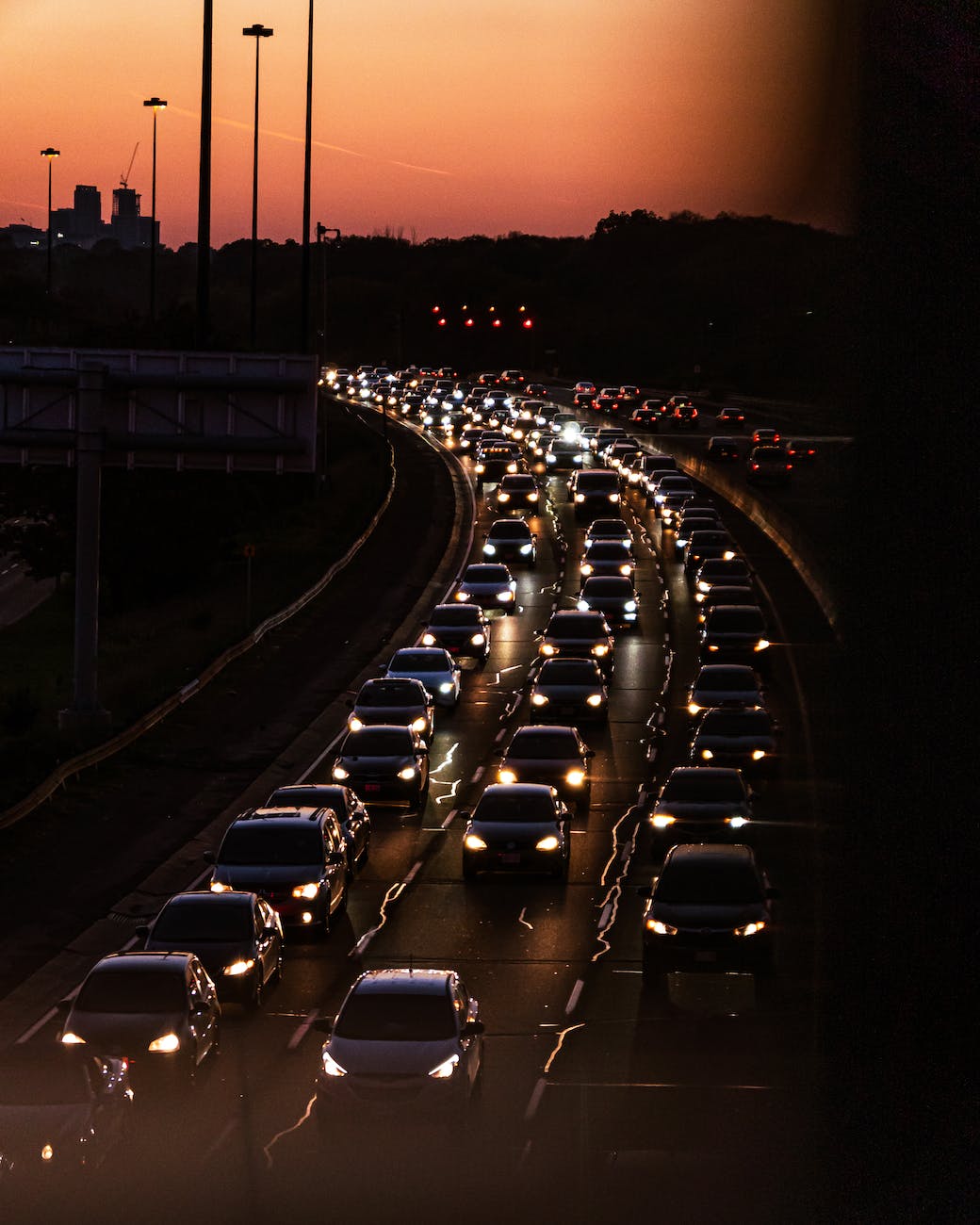
In recently driving in and around several big cities, I was struck by what I could (and could not) see. I certainly observed a lot of motor vehicles on highways and roads.
It is long evident that Americans prioritize cars and trucks on their roads. There might be room for some pedestrians (be safe!), mass transit, and bicyclists and scooter users but these are not as numerous as all of the cars and trucks.
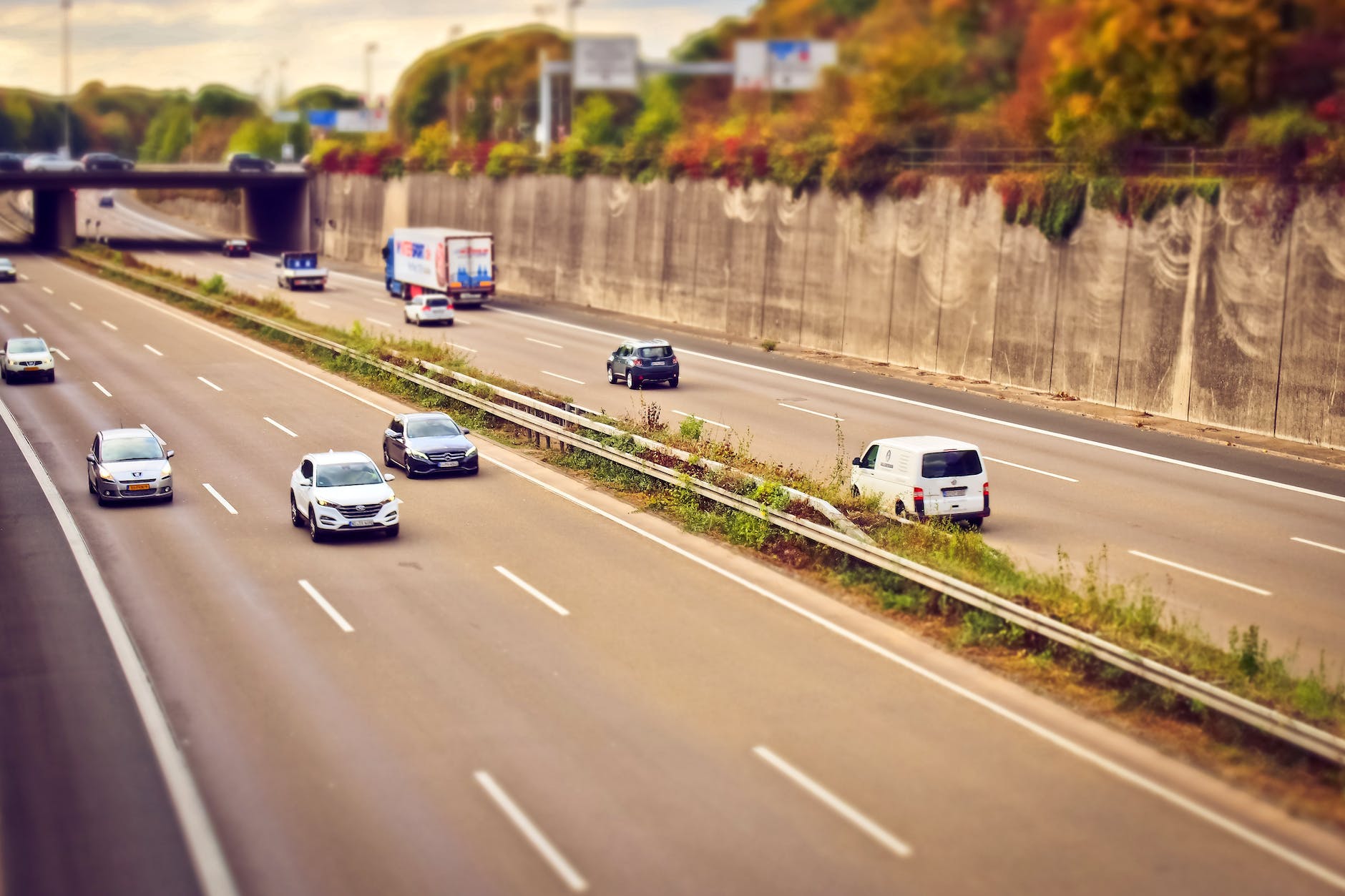
The range of vehicles really does run the gamut. On the same major roads, one can find all sorts of trucks (delivery trucks, dump trucks, tankers, car carriers, etc.) and cars ranging from expensive luxury models to those who look pieced together to newer electric vehicles. If I wanted to see what Americans are driving for personal and business trips, I would recommend driving some of the highways that go right through urban centers and one can observe a wide variety.
Even with at least some people working from home, there are plenty of vehicles at many hours of the day. For many residents and companies, it is easiest to go via vehicle than other option. Driving is still a preferred method, even in cities with busy roadways.
If a driver truly wanted to be safe and only focus on the road around them, there is plenty to see. On many of these busy roads, tens of thousands or even hundreds of thousands of vehicles might pass by each day.
With talk of empty urban office buildings leading to a decline in property values, how might this affect tax revenues collected by cities? Here is one estimate:
Municipal governments have even more to worry about. Property taxes underpin city budgets. In New York City, such taxes generate approximately 40 percent of revenue. Commercial property—mostly offices—contributes about 40 percent of these taxes, or 16 percent of the city’s total tax revenue. In San Francisco, property taxes contribute a lower share, but offices and retail appear to be in an even worse state.
These are not huge numbers but they do contribute to the overall local budget picture. Office or commercial buildings in cities that are not being used or are being turned over to lenders or are prospects for building conversions will not generate as much tax revenue as they might when demand for such properties is higher.
How will cities address this? It will be interesting to see different approaches that could be affected by local real estate markets, housing needs, and budget specifics. If there are a few cities that are able to limit the revenue damage, they might serve as models for others.
(This is also a problem for suburbs with large amounts of office and commercial space.)
Kansas City officials are now looking to repair some of the damage caused by the highway and reconnect the neighborhoods that surround it. To date, the city has received $5 million in funding from the Biden administration to help develop plans for potential changes, such as building overpasses that could improve pedestrian safety and better connect people to mass transit.
The funding is an example of the administration’s efforts to address racial disparities resulting from how the United States built physical infrastructure in past decades. The Transportation Department has awarded funding to dozens of projects under the goal of reconnecting communities, including $185 million in grants as part of a pilot program created by the $1 trillion bipartisan infrastructure law.
But the project in Kansas City also shows just how difficult and expensive it can be to reverse long-ago decisions to build highways that slashed through communities of color and split up neighborhoods. Many of the projects funded by the Biden administration would leave highways intact but seek to lessen the damage they have caused to surrounding areas. And even taking out a roadway is just a first step to reinvigorating a neighborhood.
“Once you wreck a community, putting it back together is much more work than just removing an interstate,” said Beth Osborne, who served as an acting assistant secretary at the Transportation Department during the Obama administration and is now the director of Transportation for America, an advocacy group.
In the name of fast travel between outlying areas and the city, such highways removed people and buildings, disrupted economic corridors, and created barriers between neighborhoods.
From the examples provided in this article, it sounds like this money will be used to try to reestablish streetscapes. Wide highways made it difficult for pedestrians to walk between places. Businesses had to rely on vehicle traffic. Decades after the highways were constructed, there may be relatively little activity on roadways near the highways.
Simply creating better paths over a major highway could be helpful. Removing a highway can also help, as evidenced by at least a few projects in American cities. But, there is a lot that goes into a streetscape. It takes time and resources to recreate thriving neighborhoods with multiple factors at play. Even then, vibrant sidewalks and streetscapes are relatively hard to find in American communities given the other priorities Americans emphasize.
His insights hit a nerve at a time when evangelicals were realizing that “postmodern” and “urban” challenges—religious diversity, isolation, transience—were becoming common in rural and suburban contexts as well.
In the American context, suburbs often served as a refuge from perceived problems of the city. Religious diversity in cities involved all sorts of religious traditions as people flocked to cities in the late 1800s and early 1900s. Even with the number of people in cities, Americans often celebrated an ideal of families living in suburban single-family homes rather than feeling atomized in large cities. Whereas people moved in and out of cities and urban neighborhoods, Americans often perceived suburbs as built around family and children, neighbors, and community groups.
How might we evaluate these features separating places? It is hard to discuss religious diversity without addressing race and ethnicity. As suburbs often excluded people who were not white, religious diversity was limited. Suburbs are increasingly diverse in terms of race and ethnicity and social class. Regarding isolation, plenty of narratives have been shared and told where individuals found the suburbs to be isolating. Compared to suburbs, cities offer opportunities for exploration and finding a place among other similar people. The suburbs may have celebrated certain social relationships but they were also quite transient for decades in the postwar era as people took advantage of opportunities.
If the lines between cities, suburbs, and rural areas are now more blurred, are evangelicals better equipped to address a changing world? How might they address complex suburbia?
Looking at these two lists, several things stand out:
Among the most expensive cities, not all have turned negative regarding college graduates moving in or out. What is different in Boston, Honolulu, Miami, San Diego and Seattle? (Some possible factors: different economic activities, the weather, relative prices, their locations within certain regions, they are not the biggest cities.)
Other large metro areas might have cheaper housing and lower costs of living but they are not necessarily attracting college graduates. This includes Buffalo, Detroit, Hartford, Milwaukee, and Rochester. Is it a coincidence that these are Rust Belt metropolitan regions?
Generally, cities and regions want college graduates who can add to the population and the human capital available. But, the sorting of the college graduates across locations could have profound consequences.
The NOPD posted the commercial—”Everywhere Else Is Cleveland”—to its social media accounts at 9 a.m. Wednesday…
“Everywhere Else Is Cleveland”—which features women, people of color and members of the local LGBTQ community—was commissioned by the foundation as part of a broader recruitment push to help fortify the city’s shrinking police force. To broaden their applicant pool, the department recently relaxed restrictions around past marijuana use, credit scores and physical appearance—including tattoos, facial hair and nail polish.
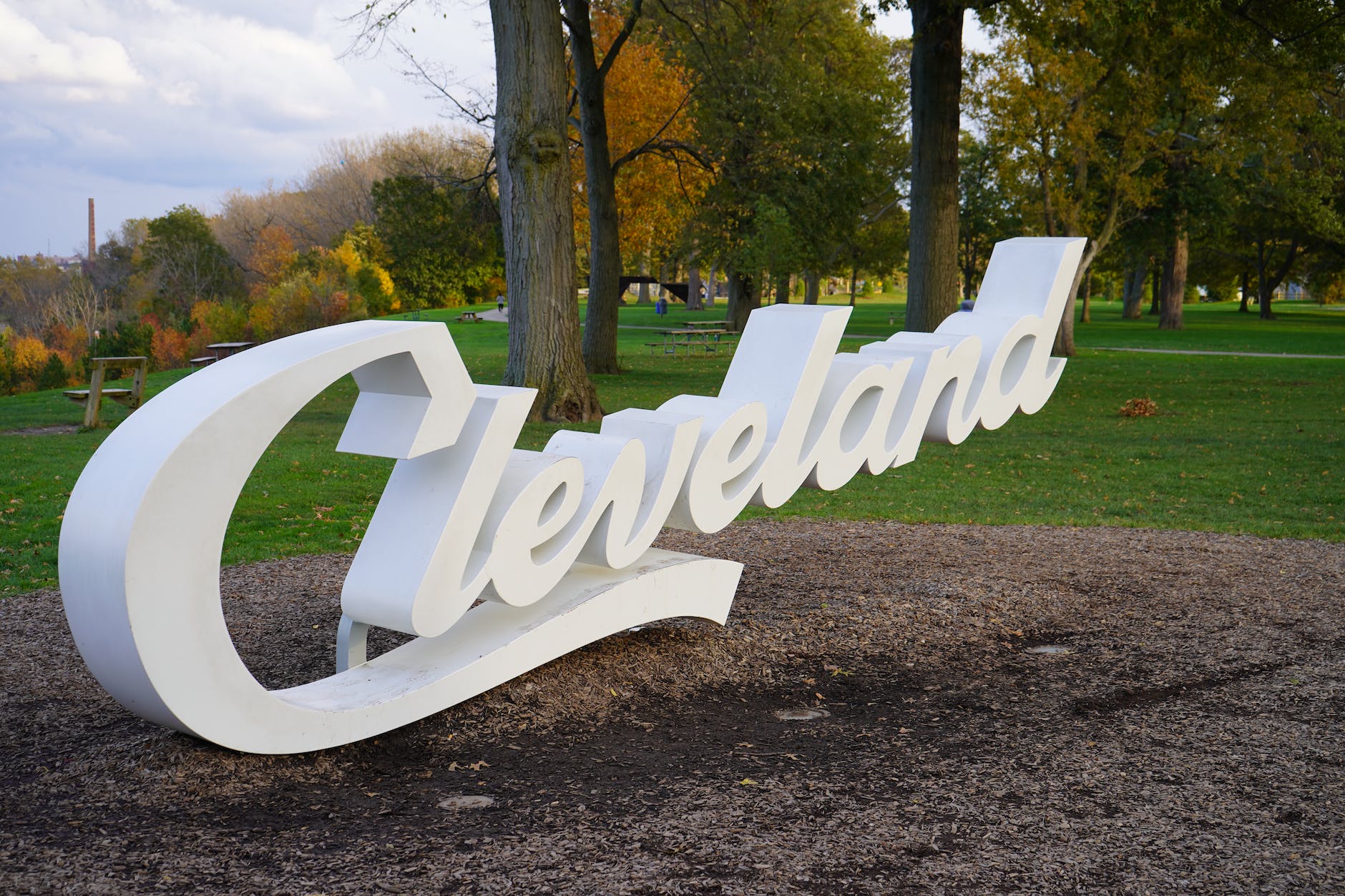
The commercial’s title is a play on the famous Tennessee Williams quote: “America has only three cities: New York, San Francisco, and New Orleans. Everywhere else is Cleveland.”
This quote referenced above hints at a larger issue for those who study American cities. When is it helpful to lump cities together as similar enough or helpful to put them in different categories because they have unique traits? All big cities share some common characteristics but they are also different in certain ways. Is size, the time of settlement or rapid population growth, density, political system, cultural opportunities, or something else the factor we should use to analyze cities?
The quote above suggests there are four categories of cities: three that stand on their own then a much larger category represented by Cleveland. Cleveland is the stand-in here for all nondescript cities compared to three American cities that have unique personalities and settings. The ad suggests New Orleans is a very different kind of place.
Is this objectively true? As far as I know, there is no New Orleans School of urban thought, but this does not mean there should not be. Urban sociologists and theorists tend to squabble more about the biggest cities and whether New York, Chicago, or Los Angeles are the best models for understanding urban processes.
“Never have there been proposals for restrictions — on the contrary, this is a new opportunity: more choice, more services, more desire to thrive in one’s neighbourhood,” he said.
“Since the start of 2023, the concept of the 15-minute city has been subject to conspiracy theories, produced and shared by people already well known for spreading disinformation about Covid, the climate, vaccines and politics,” he said…
Particular claims debunked by AFP Fact Check in recent weeks have targeted the English city of Oxford and Edmonton, Canada. Claims surfaced in various languages, including English, French and Portuguese.
“You can’t leave a 15-minute city whenever you please … The city walls or restrictions or zones or whatever you want to call them won’t be used to keep others out, they’ll be used to lock everyone in,” says one man in a video viewed more than 59,000 times on Facebook, commenting on the Edmonton plan…
Supporters of 15-minute cities include the worldwide C40 cities alliance plus the United Nations and the World Economic Forum -– targets of numerous false claims that are subject to frequent fact-checks.
Would these particular fears about denser communities fit under long-running fears that a globalist structure wants to restrict the everyday lives and freedoms of workers? One way to control people is to restrict geographic mobility. Doing so would increase population densities and limit what people could access.
Imagine an even-simpler version of the original late-’80s “SimCity” video game: a crude digital map dotted with a handful of pixelated single-family houses. But try to click on the screen — like, say, on the icon of a bulldozer or a factory, or just anything — so you can start laying out commercial blocks and parks and creating your pretend metropolis, which is the objective of most city-building sims, and you’ll be met with a jarring sound effect and a pop-up message: “ERROR. CAN’T BUILD IN NIMBYVILLE.”
Below that is one of many snarky excuses: “Housing is a human right! Just why does it have to be here?”
Such are the Sisyphean pleasures of “Sim Nimby,” a new desktop city-building game where more clicks just lead to more error messages, and nothing ever gets built. The only winners in Nimbyville are the ones programmed to prevail: Not In My Backyard neighbors, or NIMBYs, who block new housing developments at every turn…
So Nass and Weeks hunkered down in a Park Slope bar one evening and hashed out the litany of anti-development NIMBY-isms — more than 50 in total — that the game spits back at prospective builders as a jazzy 8-bit music theme plays. There’s some comic hyperbole at the expense of preservationists (“We can’t tear down that historic brownstone. It’s where Gene Quintano wrote ‘Police Academy 3: Back in Training’”) and some dad-joke-grade gags (“The only thing urban I want to see here is Keith Urban”). Other one-liners — “This is a NICE neighborhood,” “Will someone please think of the property values?” and “Affordable housing? What, you gonna build them an affordable country club too?” — are perhaps less fanciful to housing advocates.
How realistic should city building games be? I have wondered this for years starting with playing Simcity in the late 1980s. How much does the game reflect actual city planing practices and urban outcomes versus presenting a glamorized experience where it is easy to plop in properties, development happens easily, and issues are quickly addressed (as long as the player has enough money and a little bit of sense). Overall, it is pretty easy to build a thriving city.
This version might be too realistic. Players of video games want some level of difficulty or obstacles to overcome but not ever-present problems that make it difficult to do anything. Random disaster? Okay, a player can deal with that. A never-ending chorus of NIMBY concerns? It is too much to handle. The concerns of residents in Simcity are usually addressable; for example, move the residence further from industry, quickly put a park nearby to quiet the criticism, or find another way to improve the quality of life.
I do not know if the player gets some extreme options to address the NIMBY concerns. Have them annex themselves into their own community and build in a neighboring community? Remove all of the residences via eminent domain? Wage a political battle against them? If this is a Simcity where the residents do not want anything new, then growth is not possible and that does not work even in video games.
What’s going on? One problem is simply with the shape of office buildings: Their deep floor plates mean it’s hard for natural light to reach most of the space once it’s divided up into rooms. Their utilities are centralized, which requires extensive work to bring plumbing and HVAC into new apartments. Either way, they require significant architectural intervention. The older stock of prewar offices, which are better suited for residential units, have often already been converted in cities like Chicago and Philadelphia. Another issue is with zoning codes that bar housing from office districts. A third obstacle is the building code: Early residential conversions, like those in SoHo’s lofts, were usually illegal, sometimes for complicated reasons that seem less important than mandating a window in every bedroom.
What’s more, business districts don’t empty out building by building but with vacancies here and there across the skyline. You wouldn’t convert Twitter’s building, since it’s partially occupied by workers. So, in one sense, Musk’s bed stunt is an example of his already innovating at Twitter. Very mixed-use! “You’re not going to run into a building that’s 100 percent empty, ready to be converted,” said Anjali Kolachalam, a researcher with Up for Growth. She recently ran office space in downtown Denver through a filter to find good conversion targets—tall buildings with high vacancy rates and small floor plates built before 2010. She wound up with just 4 office buildings, out of the 208 total.
Finally, converting buildings to residential use is expensive. Couple that with the fact that office rents are higher per square foot than residential rents are, and you see why developers aren’t champing at the bit to get new projects underway. Van Nieuwerburgh gave me an example from San Francisco, where Juul’s old headquarters—down the block from Twitter’s improvised dormitory—is for sale for $150 million. That’s a lot less than the $397 million the embattled nicotine vape company paid for it in 2019. But at $400 a square foot to buy and another $400 a square foot to renovate, he said, the conversion would still produce a building with rents too high even for San Francisco. In other words, offices may be down, but they’ll have to fall a lot further before adaptive reuse becomes a bargain.
While the challenges are present, I wonder if someone has this figured out – this could be a company, developer, or community. Are there ways to quickly address the issues listed above or does it require a sustained effort? Imagine someone figures this out and there is a way to make some cool conversion from an exciting work space (if this is possible) or name to an interesting housing unit. If this can happen for churches and religious buildings, why not for office buildings?
If this does not work easily now, could we anticipate new buildings that could more easily switch between uses? There are ways to plan, zone, and build with more flexibility in mind so that adjustments could be made given needs and market conditions. Would it cost more to construct a building in this way? If so, perhaps the possible higher occupancy rates and the ability to adjust could bring in more money in the long term.







 Legally Sociable