Society enables people with sports teams and music group analogies, part two

Have you been part of a sports team or in a music group? That collective had a goal, a purpose. Sports teams often want to win. Music groups have a musical work to put together. Both requiring working together, striving together to meet an objective.
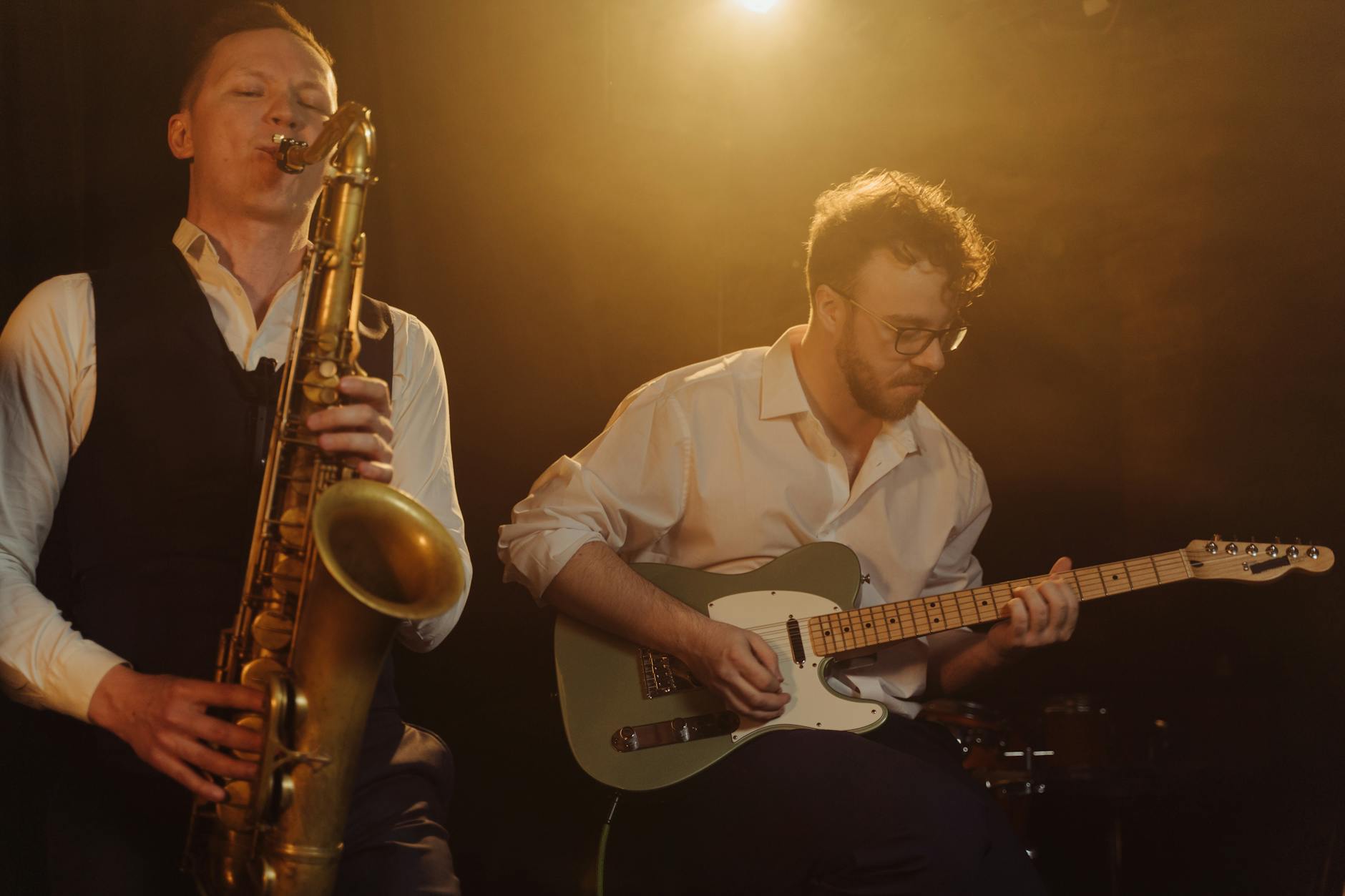
Photo by cottonbro studio on Pexels.com

Of course, there are solo sports and music experiences. Numerous sports offer the opportunity to play be oneself, perhaps facing off against a single opponent or even just against some standard. Musicians can and do perform on their own. They can make music with their voice or instrument as a solo artist.

But there is something about the sports and music experiences as collectives that helps illustrate that society enables people more than it constrains them. What one person can do in either field can be very impressive but what a group can do together is amazing. And if you have been part of such an experience, it is a unique one.

Start with being on a sports team. You and your teammates are trying to play hard and win. In team sports, the outcome rarely depends on the actions of just one person; the team is working in sync to accomplish its goals. When all of the team members are contributing, the team feels great. The collective team can do what one player by themselves cannot.

Or imagine being part of a chorus or a rock band. Each person has assigned tasks. Music is often written in such a way to bring together multiple efforts for the same song. When everyone is doing their part, the resulting sound can be profound. The feeling of participating can also be notable; the work of the group can transcend the actions of the all the individuals.

This is not to discount the efforts of individuals. Solo performances require skill and can be moving. But they are different compared to groups playing and making music together. Whether working as a jazz trio or a symphony orchestra or a drumline, the group can do things that the individuals alone cannot. They can make music that is by the group.

Throughout life, we participate in groups and collectives. Society is just one massive-sized collective. We could see the larger goals of societies as analogous to the “win” a sports team seeks or the piece we are playing. We do not always succeed but what we can accomplish as a team or group or society can be empowering.

Superfans and experiencing “collective effervescence”

What superfans experience in a community of like-minded people could be described this way:

Photo by anna-m. w. on Pexels.com

Picture a crowd swaying in unison to a beloved song. Everyone assembled feels the same emotion simultaneously, says Paul Booth, a professor of media and pop culture at DePaul University. The euphoria catches and builds.

The experience, known as “collective effervescence,” can feel transcendent, he says, almost telepathic.

“I think it has to do with wanting something in our lives that we can lose ourselves in,” he says. At a time of increasing polarization and cynicism—not to mention that coming election—it’s an especially wondrous connection, he adds…

Fandom asks us to latch ourselves to something outside of us, to allow a person or object we don’t have control over to become part of our identities. How much easier to stay cool and removed, rather than risk having our enthusiasm batted down or betrayed.

Concerts, conventions, sporting events, etc…gather with thousands of like-minded people and the activity and emotions can move people in unique ways. At one point in The Elementary Forms of Religious Life, sociologist Émile Durkheim asked:

What other name can we give to that state when, after a collective effervescence, men believe themselves transported into an entirely different world from the one they have before their eyes?

It is not just a place where music is playing or a game or a bunch of activities in a convention hall; it is a particular experience that individuals alone have difficulty producing. It is the product of communal energy.

As the article notes, what happens if people experience fewer collective effervescence moments? Do humans need a certain amount to thrive – or do they suffer ill effects with fewer moments of collective effervescence?

One of the joys of Easter: a full sanctuary singing

As someone who enjoys music, is a musician, and likes some large collective activities, part of the joy of Easter is having a full sanctuary with people singing.

Photo by Brett Sayles on Pexels.com

This level of congregational singing does not happen every week. Our church is full on Easter. The songs are familiar. Many people arrived early and the level of conversation beforehand was high.

Sure, this musical experience might be replicable elsewhere, such as at a club where everyone is dancing and singing along with popular songs or being in that right place with the right music that gives you goosebumps. But, this is a different experience. It is the Christian holiday on the calendar. It is an annual ritual. It is happening in a building intended to direct people’s attention toward worship. And people are singing, not just attending a loud performance.

Collective effervescence in dancing all night at the club

An overview of the unique experience of the nightclub dance floor hints at Durkheim’s idea of collective effervescence:

Photo by Mauru00edcio Mascaro on Pexels.com

“I feel one with the crowd of energy and lose my sense of self. I don’t feel myself as expressing anything in particular on the dance floor, I’m doing the opposite—I’m just being present in the moment, dancing, being a part of the greater whole of the night. I’m able to do this because I become engulfed in the intense sensations from the music, lights, and the energies that reverberate from the rest of those dancing,” said Jason Friedlander, another dance floor patron from Manila, Philippines. 

For Friedlander, dance floors are a place where differences dissipate, conflict seizes, and equality reigns. 

“On the dance floor socio-economic hierarchies are leveled and each becomes equally subject to the wonders of melody and rhythm. Unlike other communities fostered through sports teams or most organized religions, the cult of music is neither founded on conflict nor opposition, but on harmony.”

Get caught up in the music, the crowd, and dancing and the group on the dance floor is melded together through the common activity and energy.

Is such an experience available to anyone who joins the dance floor? How much do the conditions of the club/venue and the particular participants shape the collective effervescence?

Geotagging music to specific places

How much is the experience of music connected to specific locations? One band’s efforts offer a way to link music and places:

Photo by John-Mark Smith on Pexels.com

When it came time to launch “Rand McNally,” the band decided to celebrate its long live history by launching Death Cab for Cutie Map, which directed people to go on a scavenger hunt to find the track. All they had to do was go to one of more than 800 places Death Cab has played, whether the venues were still standing or not. Once there, fans could use their phones to access a geotag that would unlock the track, making the launch a little more fun and experiential than your typical song drop…

Speaking of history, Harmer dreams of a world where this kind of geotagging is available for all of his favorite bands. “It would be cool to be able to go on Apple Maps and search for the old tour routes and histories of The Who or The Beatles,” he says. “Just from a historical perspective, I’d love to be able to see where and when they played. I learned only recently that Led Zeppelin played a concert at Green Lake Park in Seattle. There used to be this little outside amphitheater, and I’d never heard of a show being played there ever, much less a Zeppelin concert. As we start to really explore all the data that’s available to us, that kind of map would be a cool thing to have access to.”

A concert experience is a unique one. It is affected by the venue, the sound system, the audience, and the band or musical act. It is certainly different than listening to music through a radio or a phone or stereo speakers or headphones. Being in a crowd focused on live music can lead to collective effervescence.

My guess is that such geotagging will be most enjoyable for those who attended specific concerts in the past. Going back to the venue and getting a new song combines both reliving the concert experience and building on that with new music. It helps add music and sounds to our full-sensory understanding of places.

I could also imagine a future where playing a specific track could pull up a virtual reality experience of being in the crowd where the artist is performing the particular piece.

“The stadium is the spiritual home”

With the opening of a new stadium for Nashville SC, the team’s CEO described its importance:

Photo by Tuur Tisseghem on Pexels.com

“For any team, whether it’s in soccer or other sport, the stadium is the spiritual home,” Nashville SC chief executive officer Ian Ayre said. “If you’re renting, it’s not the same as owning, right? Of all the infrastructure and the parts we build, it’s the most important.”

The team’s coach added:

Nashville SC coach Gary Smith called the crowd “magnificent,” adding that the players felt the energy from the moment they walked onto the field for warm-ups. “The expectation and excitement that surrounded this opening game was huge,” he said after the match. “To think that the players didn’t feel that would be inhuman. The atmosphere was terrific.”…

“To have our own home is vitally important,” Smith said. “This venue now will be the place over the coming years and decades that fathers and sons will come to and look back on and say, ‘Do you remember?'”

As a sports fan, I understand this sentiment. Going to the physical home of your favorite team or to an interesting stadium or a stadium where there is clearly fan interest is exciting. It is not just watching teams play in a physical setting; there is a collective effervescence that can arise to the level similar to how people describe spiritual experiences.

On the other hand, the team benefits from this spiritual home in the terms of dollars and cents. The stadium and all it entail makes money. It is an improved property. And increasingly so these days, owners and teams develop the land around the stadium in ways to further enhance revenue. This is not a sacred place maintained for the well-being of people who visit; it is for a business.

This mixing of business and spirituality is not uncommon in the United States or elsewhere in the world. Is the spiritual homeness of the sporting event ruined because money is being made? Perhaps not for most of the fans who are there for what the trivial can produce. For some of those fans, the sports stadium is more sacred than a religious building or congregation. At the same time, a new stadium and sports in general are big business where producing spiritual homes and transcendent experiences keeps consumers coming back for more and cities eager to keep teams or introduce new teams to the local economy.

Not hearing the same 20 Christmas songs over and over in public spaces this year

Part of the collective effervescence of Christmas activities involving other people is the music. If people are out shopping, eating, looking at lights, watching festivals and tree lighting and other Christmas and winter activities, they are likely to hear Christmas music. The sounds are unmistakable and are a key part of the holiday season.

Photo by Negative Space on Pexels.com

At the same time, many of these locations play the same songs – and even the same versions – of Christmas songs over and over again! How many times have you been shopping and heard “Holly, Jolly Christmas,” “Rockin’ Around the Christmas Tree,” and “All I Want for Christmas is You”? Or heard the same songs on the radio? Or on TV or in movies?

Why this happens makes some sense. Many of these Christmas favorites come from an era, the 1930s to the 1950s, that induces nostalgia. Music helps bond people together. The familiar can be comforting. When people think of Christmas, the music is part of it. The ritualistic nature of the holiday where patterns repeat year after year is part of the appeal of Christmas and rituals.

As sociologists argue there is “civil religion” in the United States, perhaps these popular songs reflect what we might call “civil Christmas.” The songs are generally about good cheer, parties, happy characters like Santa and Rudolph, getting together. The songs played in more public settings tend not to refer to the religious nature of Christmas but rather elements of the holidays that could appeal to many. The songs are about a lengthy celebration…and who is opposed to at least a month of cheery music and festivities right around the darkest days of the year?

Perhaps the Christmas public music canon will expand in the future. New songs might be added here and there while others let go (see the debate over “Baby It’s Cold Outside” in recent years). There is no shortage of songs to choose from or artists and styles for familiar songs. (I say this after working for years at Wheaton College Radio where we featured over 2,000 songs in our 24-hours-a-day Christmas music rotation. Listen to a reconstituted live stream of WETN Soundtrack for Christmas.) Regardless of whether the music stays the same or we all retreat to our headphones for our personal Christmas playlists, the music will continue to matter as we prepare for and celebrate Christmas.

Missing the collective effervescence of Christmas shopping this year

Americans like shopping. And this year, even amid COVID-19, the shopping will go on. But, it will take a different form for many as the busy stores and shopping malls will be replaced by online shopping and shopping trips intended to avoid contact with people.

There are two components to shopping at Christmas time. First, Americans generally favor consumerism and can make commodities out of lots of things. Second, shopping can involve being around other people. In a large society where private lives are the norm, shopping near people in an excited holiday atmosphere feels like being part of something bigger. Even if you have no interactions with anyone else outside of your shopping group, simply being in the same time and place can be exciting.

Just as religious rituals can produce collective effervescence according to sociologist Emile Durkheim, so too can Christmas shopping. It may be based on consumerism, have no touch of the transcendent, and involve no direct social interaction with other people. Yet, shopping at Christmas is a different kind of experience than shopping for different kinds of items at different times of the year.

Shopping online produces no such collective effervescence. A person and a screen. The social energy is limited. Of course, one could head to social media to share their online shopping exploits. But, it is not the same as being physically near to other people in a space designed to push you toward Christmas cheer and more spending.

Is an emotional experience in church really like a drug?

Several sociologists of religion make an interesting claim about worship experiences: they are like drugs.

Wellman and co-authors Katie E. Corcoran and Kate Stockly-Meyerdirk analyzed 470 interviews and about 16,000 surveys on megachurch members’ emotional experiences with their churches. Four themes emerged: salvation/spirituality, acceptance/belonging, admiration for and guidance from the leader, and morality and purpose through service.

Many participants used the word “contagious” to describe the feeling of a megachurch service where members arrive hungry for emotional experiences and leave energized, the study says.

One church member said, “(T)he Holy Spirit goes through the crowd like a football team doing the wave. …Never seen it in any other church.”

Wellman said, “That’s what you see when you go into megachurches — you see smiling people; people who are dancing in the aisles, and, in one San Diego megachurch, an interracial mix I’ve never seen anywhere in my time doing research on American churches. “We see this experience of unalloyed joy over and over again in megachurches. That’s why we say it’s like a drug.”

I haven’t seen this full study but I wonder about this comparison. here is what it could mean:

1. It is just a metaphor. Drugs can give people euphoric experiences and religious experiences can also generate euphoria.

1a. Some sociologists might argue that this kind of euphoria is generated more by a collective effervescence (Durkheim) or collective emotional energy (Collins) than religion itself. Put enough people together, give them a common focus, and you might be able to generate similar feelings in a sports stadium, at a rock concert, in a mob, etc.

Indeed, the researchers seem to be building on this. From another report on this study:

Megachurch services feature a come-as-you-are atmosphere, rock music, and what Wellman calls a “multisensory mélange” of visuals and other elements to stimulate the senses, as well as small-group participation and a shared focus on the message from a charismatic pastor.
The researchers hypothesized that such rituals are successful in imparting emotional energy in the megachurch setting — “creating membership feelings and symbols charged with emotional significance, and a heightened sense of spirituality,” they wrote.

2. There could be a suggestion that churches have a sort of power over people. In other words, the conditions are set up so that people are pushed into these upbeat experiences. Outside of this megachurch setting where people’s senses are bombarded, people may not have such experiences.

3. This seems like a great time to include neuroimaging in a sociology study. One could compare the physical response in the brain to drugs versus the physical response to certain worship settings. Do they both engage the same areas of the brain and to the same level? If they do, it doesn’t mean there still isn’t a sociological phenomenon to study but it does link physiological responses with social interactions and outcomes. I suspect we’ll see more and more of this sort of matching of social and physical data in the coming years.

Collective effervesence: from Man U. vs. Man City to voting

An editorial in The Guardian suggests we seek out more moments of collective effervescence:

As every Mancunian football fan will tell you, tomorrow evening sees the most hotly awaited derby in Premier League history when Manchester City and Manchester United square up for the last time this season. Whatever the outcome, what we will witness in abundance – at least while the ball is in play – is what the father of sociology, Emile Durkheim, called “collective effervescence”, a ritually induced passion or ecstasy that cements social bonds.

Given the current Europe-wide epidemic of melancholia induced by various crises, financial and political, and not helped in the UK by an April deluge, predicted to last through May, the good news is that we are all about to experience opportunities for a veritable season of effervescence. We report on these pages how three giant puppets walking the streets of Liverpool as part of the 100th anniversary of the sinking of the Titanic have attracted 250,000 people on to the streets and raised the spirits of the city hugely. Over coming months, even arch cynics – those allergic to red, white and blue, republicans and lifelong couch potatoes – may find themselves succumbing, just a little, to communal and classless pleasures as, for instance, the celebrations connected to the Queen’s diamond jubilee gather traction. The Olympics become ever more imminent and the prospect of a gold medal or two potentially binds stranger to stranger regardless of income, ethnicity and background, in the alchemic way that victory in sport can…

Any festivity, inevitably in this day and age, comes saturated in commercialism. It will be difficult over the next several months to find a china cup and tea towel that isn’t festooned with crowns, coronets or concentric rings. Nevertheless, there will be events and occasions – many of them free –which will proof themselves again commodification and remain beyond the reach of the marketplace simply because they require only our time and interest….

This week sees London mayoral and local elections in addition to a referendum on elected mayors in 10 English cities. Inertia, rather than effervescence, is likely to mark the experience. But while dancing in the streets strengthens our collective sense of solidarity, we improve its health still further by exercising our hard-won right to vote. As Professor Michael Sandel pointed out in his Reith lectures on BBC’s Radio 4 in 2009: “The virtues in democratic life – community, solidarity, trust, civic friendship – these virtues are not like commodities that are depleted with use. They are, rather, like muscles that develop and grow stronger with exercise.”

Translation: while the world may look like it is in bad shape, there are still moments in which we can come together, advance the common good, strengthen relationships, and be part of something bigger than ourselves. It is interesting, however, to note that some of these examples require choosing one side or another. For example, will fans of Manchester United or Manchester City be celebrating the game of football together or hoping the other side loses disastrously? In voting, is everyone pursuing the common good or hoping their side gets enough political power to force the other side to kowtow to its interests? Perhaps there are still moments where people can come together in larger settings, such as at the Olympics (national pride? celebrating humanity?) or at large rock concerts or a few other places.

Also, I’m having a hard time imagining an American newspaper editorial invoking Emile Durkheim. Would many newspaper editors in the United States know who this is?