I recently shopped at a mall with protected wetlands:
The first thought I had upon seeing this was of “nature band-aids” that can often be found in suburbia as described by James Howard Kunstler. Shopping malls are known for many things but nature is not one of them.
Or, perhaps these are real wetlands that make contributions to the local ecosystem? This outlet mall has a location similar to many other malls: in the suburbs along a major roadway. I could imagine a need for land for animals and water amid development in the recent decades.
It would be interesting to know how these areas came about. Was part of the development of the land contingent on setting land aside for wetlands? Was a discovery made later about local nature? Is there some precedent among shopping malls for this?
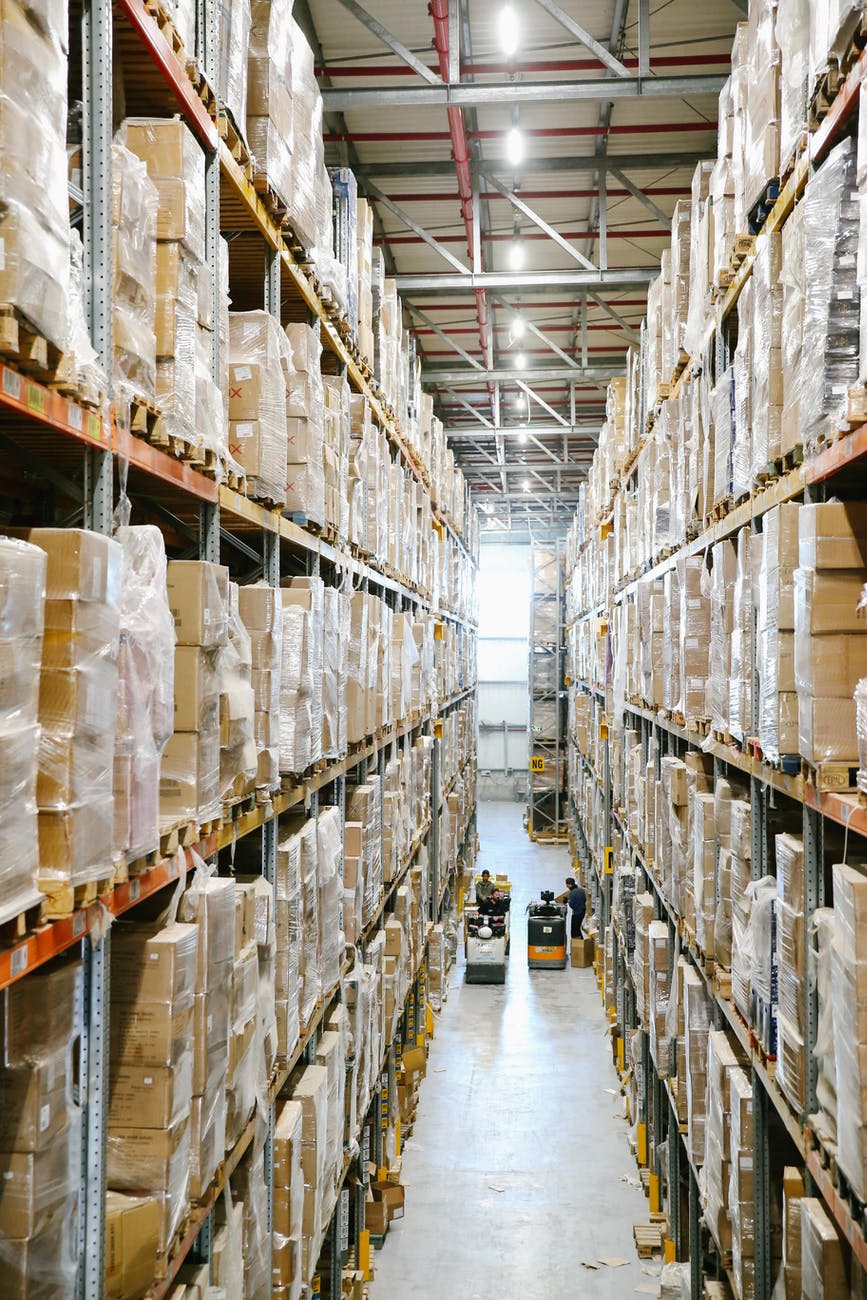
Molto plans to break ground this month on a 1.1-million-square-foot distribution facility, the first phase of its 110-acre Minooka Ridge Business Park in Minooka, a village near I-80 and southwest of Joliet. The company is also developing Weber55 Logistics Park, a two-building complex on 60 acres at the northeast corner of Weber and Taylor roads in Romeoville, another Joliet suburb. That site will include distribution facilities of 627,840 square feet and 270,000 square feet…
Other developers are just as active. At the end of March, 44 buildings of more than 200,000 square feet, a record-breaking 23.7 million square feet in total, were underway across the Chicago metropolitan area, according to Colliers International.
And tenants are plentiful. In the second quarter alone, Amazon leased a 1-million-square-foot warehouse in Joliet, and another in Kenosha, while other companies, including NFI, SC Johnson and RJW Logistics, signed deals for more than 500,000 square feet.
The amount of big-box industrial space that is vacant in the Chicago area tanked during the first quarter of 2022 because so much space was leased or occupied. The industrial vacancy rate fell ”by more than a full percentage point to 2.61%, a record low by a wide margin,” Colliers reported.
Elsewhere in the article, the increase in warehouse space is tied to jobs and possibly cheaper prices for consumers. But, adding such space may not always work out so well in comparison to how else land could be used. And the locations cited in the article suggest Will County is a warehouse center as are other locations more on the edges of the Chicago region.
The meetings tend to be formal. But people’s participation tends to be, well, a little unmeasured, Fruchtman told me. “Hysteria,” he said. “There’s often a sense of hysteria at these meetings that is not reflected in what you read in the press.” He recalled the time that a person described his fight to prevent the construction of a navigation center for homeless services as a kind of personal “Little Bighorn.” Or the time another person objected to the conversion of a parking lot on the grounds that it would increase traffic. Such rhetoric is “intellectual malpractice,” Fruchtman added. And the intemperate rants of the people who show up matter, as city officials hear such impassioned claims mostly from a privileged class trying to keep things as they are.
Having studied my share of public meetings, this description rings true. This does not mean every public comment rises to this level but residents and neighbors can regularly attempt to make their point strongly.
As this article notes, public commenters have little incentive not to state their case forcefully. They are living in the area. They think their property is at risk. Local officials serve at their behest (whether elected directly by residents or not). Who is going to call them out on their strong emotions or statements?
Now this would make for an interesting record: cataloging the ways that residents oppose development proposals. Based on what I have seen, I could imagine these themes would come up regularly: traffic, light, noise, too much density, a difference in character with the existing neighborhood would come up regularly, and a threat to property values. Additionally, how do residents present these concerns, with what tone, and with what public displays?
The Reedy Creek Development Act can be traced back to 1967.
It was a pivotal negotiating factor in convincing Disney to locate his company in Florida and allows the company to do just about whatever it wants on its land.
“The ability, the power to build a nuclear power plant, an airport manufacturer, distill and distribute alcoholic beverages and lots of other things,” said Dr. Richard Foglesong, author of “Married to the Mouse” in an interview with WFTV in 2021.
Many would love to have this kind of freedom to do what they want with a large property. In contrast to what was possible through this act, many property owners would have to apply to local governments for uses of the property beyond what is allowed through the local zoning.
If leaders in Florida follow through with revoking this act and Disney wants to go elsewhere, does this shape up to be a second Amazon HQ #2 situation? Or, does Disney have a lot fewer possible locations to go to given its need for a lot of land and good weather?
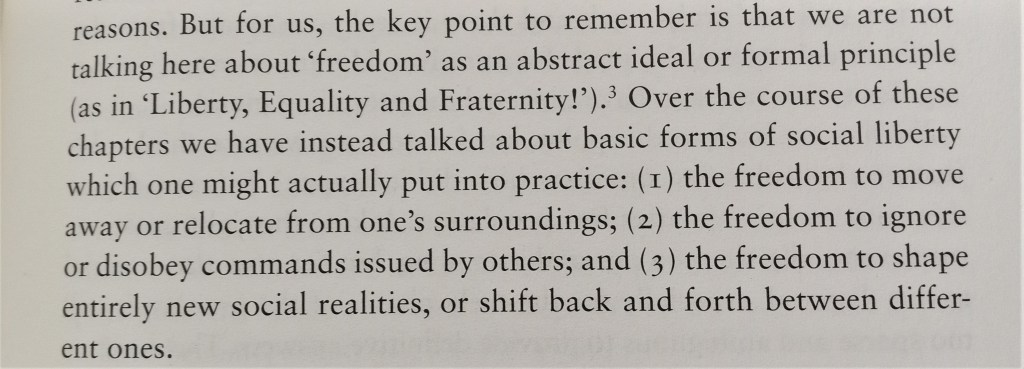
I recently finished reading The Dawn of Everything: A New History of Humanityby anthropologists David Graeber and David Wengrow. I highly recommend the book for its argument about how evidence from recent decades disrupts the common idea that people moved from hunter-gatherers to agriculture and cities and “civilization.” The reason I put civilization in quotes has to do with the argument they make regarding the freedoms humans used to have:
If we do not have these freedoms today what went wrong? The argument and the evidence is worth considering.
Rather, changes in home price growth, the supply of homes for sale and upticks in rock-bottom interest rates are more likely to stabilize the market after an unpredictable 2021, they said. That likely won’t mean an end to competition or high prices — and it doesn’t bode well for first-time homebuyers — but the market could ease up compared with 2021…
In the nine-county Chicago metro area, the median home sale price from January to November was $300,000, up nearly 12% over the same months in 2020, according to the Illinois Association of Realtors…
Prices are likely to rise next year, but won’t continue the exponential growth of 2021, said Daniel McMillen, head of the Stuart Handler Department of Real Estate at the University of Illinois at Chicago. Without an influx of new residents to the area or big increases in incomes, that growth will become unsustainable, he said…
Homebuyers are continuing to look for amenities like home offices and workout areas, Melbourne said. Kitchens are a priority. Condo-buyers are looking for bigger units, rather than one-bedrooms.
The pressure from COVID-19 moves will hopefully subside. Then, the more regular patterns in Chicago area real estate might take over again. There are at least several interrelated factors:
Uneven development within the region where some neighborhoods and suburbs will be popular and others not. Prices will go up in desirable places.
Construction of new residences has been down. What kind of units will be built? If recent trends hold, it will be housing aimed more at wealthier residents. Additionally, these units will be constructed in some locations and not others.
In October, Tokens.com, a blockchain technology company focused on NFTs and metaverse real estate, acquired 50 percent of Metaverse Group, one of the world’s first virtual real estate companies, for about $1.7 million. Metaverse Group is based in Toronto but has virtual headquarters in a world called Decentraland in Crypto Valley, which is the metaverse’s answer to Silicon Valley. Decentraland also has districts for gambling, shopping, fashion and the arts.
“Rather than try to create a universe like Facebook, I said, ‘Why don’t we go in and buy the parcels of land in these metaverses, and then we can become the landlords?” said Andrew Kiguel, a co-founder and the chief executive of Tokens.com…
For those wondering why a company would want to invest in a virtual office in the metaverse, Michael Gord, a co-founder of the Metaverse Group, said that skeptics should look at the trends catalyzed by the pandemic…
The Metaverse Group has a real estate investment trust and it plans to build a portfolio of properties in Decentraland as well as other realms including Somnium Space, Sandbox and Upland. The internet may be infinite, but virtual real estate is not — Decentraland, for example, is 90,000 parcels of land, each roughly 50 feet by 50 feet. Among investors, there’s a sense that there’s gold in those pixelated hills, Mr. Gord said.
Let the artificially-induced-scarcity-fueled-boom begin!
Seriously though, this offers an opportunity to acquire real estate that otherwise might be very difficult to find online or offline. In the offline world, how often do significant new parcels of land or developments come available? If they can be bought, they are not cheap, they probably attract a lot of interest, and there might be restrictions based on what is already there or what is possible on the site. In the online world, it could be difficult to predict where users might show up, how long it could take for sites to develop, and what it all might be worth?
In the meantime, investors and speculators will wait and see what happens. The bet could pay off massively: if the metaverse is successful with a few years or even a decade or two, those who got in early in prime locations with the right offerings could gain a lot. And if the metaverse does not develop in this way or other factors go awry, the money lost will be in a long line of those who hoped for the best with property and nothing materialized.
Overall, the city’s population increased by about 50,000 during that decade. But aside from those top 10 communities — which are found mostly on the North Side or near downtown — the rest of the city actually declined in population by more than 40,000 people.
WBEZ conducted an analysis of growth in Chicago community areas within the past decade, examining growth in population, new construction permits, jobs, and licenses issued to new businesses. The analysis showed that majority-white communities, collectively, experienced high growth in all areas: population, jobs, new construction and new businesses. The same was true for areas experiencing significant growth in white population, like the Near West Side and the Near South Side…
When compared with majority-Black and majority-Latino communities, and communities with no majority racial or ethnic group, majority-white communities also had higher rates of job growth, new construction and new businesses…
“Race is a big factor in the growth and development and revitalization in Chicago communities,” said Saunders, who studies Rust Belt cities and urban dynamics. “It’s a big factor that many people do not want to acknowledge.”
Such disparities across Chicago neighborhoods and the role of race are not new. The 77 community areas and how many neighborhoods have had different reputations and resources available. For decades, Chicagoans have celebrated how these different communities can have a common identity while knowing that this did not mean they were treated the same.
And this is not an issue limited to Chicago or just big cities. Uneven or unequal development is a prominent feature of communities in our current system. Within metropolitan regions, some suburbs are wealthy and continue to accrue residents and businesses (see the example of Arlington Heights in the Chicago news) while others struggle. These patterns often follow race-based settlement patterns and residential segregation.
This could be a critically important issue for the twenty-first century: how to encourage development and growth within places that historically have not attracted residents or capital. Without significant interventions, these patterns do not easily change.
Construction of the East-West Tollway and widening of Illinois Route 53 changed the Arboretum landscape, resulting in new lakes, roads, and a staffed gatehouse.
In a recent popular exhibit, the Arboretum even leaned into the nearby development with one installment looming over the highway:
Note the large power lines, the evidence of two major highways nearby (I-88 and I-355), and office buildings.
Recently, I drove around the east side of the property. This land has had a number of office and warehouse properties for years. This makes sense: the properties have access to multiple highways and there are plenty of residents/workers nearby.
However, I have noticed a more recent addition to this set of land uses: there is a parking lot just for Amazon trucks and vehicles. As far as I could see, there was no building next to the lot; just many spaces for vans and trucks. Looking at Google Maps, there is indeed a parking lot there among some other development and some undeveloped land. There is an Amazon facility nearby – one of many in the Chicago region – but it is not directly connected to the parking lot so drivers would have to exit to the main road and then turn back into the Amazon facility.
It is hard to completely escape development when in the Arboretum. Traffic noise can be heard, airplanes fly overhead, and houses and other signs of suburbia are visible from different vantage points. Yet, the presence of an Amazon parking lot reminded me of what nature is in the suburbs: present but often in-between roads, homes, and other buildings that speak to the ways that humans have and continue to transform natural features to their own particular suburban goals.
This was not always the case. The urbanization of the United States was quite rapid and gave rise to numerous big cities by the mid-twentieth century. In the early 1900s, the United States was less than 30% urban and less than one hundred years later was 80% urban. See this table from a 2002 US Census publication:
Before this, certain cities boomed. Chicago went from a small community in the 1830s to the second largest city in the United States in 1890. Numerous Sunbelt cities exploded in population, whether Atlanta or Phoenix or Las Vegas.
But, the United States now has relatively few new big cities. For decades, numerous small suburbs have truly expanded. One of the most noteworthy, thank to journalist Joel Garreau’s work Edge Cities, is Tysons Corner, Virginia. Once a rural intersection, the construction of a shopping mall and the arrival of thousands of square feet or retail and office space created a new kind of suburban community: one dominated by business rather than residents. While Tysons Corner has plans for additional residential units, it is a convergence of business and office activity at the intersections of several major roads outside Washington, D.C. Instead of new big cities, Americans get office parks and retail in the suburbs that rivals that of smaller big cities.
More broadly, where other places around the world have focused some development attention and resources on new cities, the United States has continued to fund and pursue suburbs. There are multiple reasons Americans love suburbs – I highlight the top seven – but this is still an interesting choice given how new cities might have non-linear benefits in certain areas that could help people and the country meet new challenges.