Fatal car crashes on six Chicago area highways rank among the most in the country

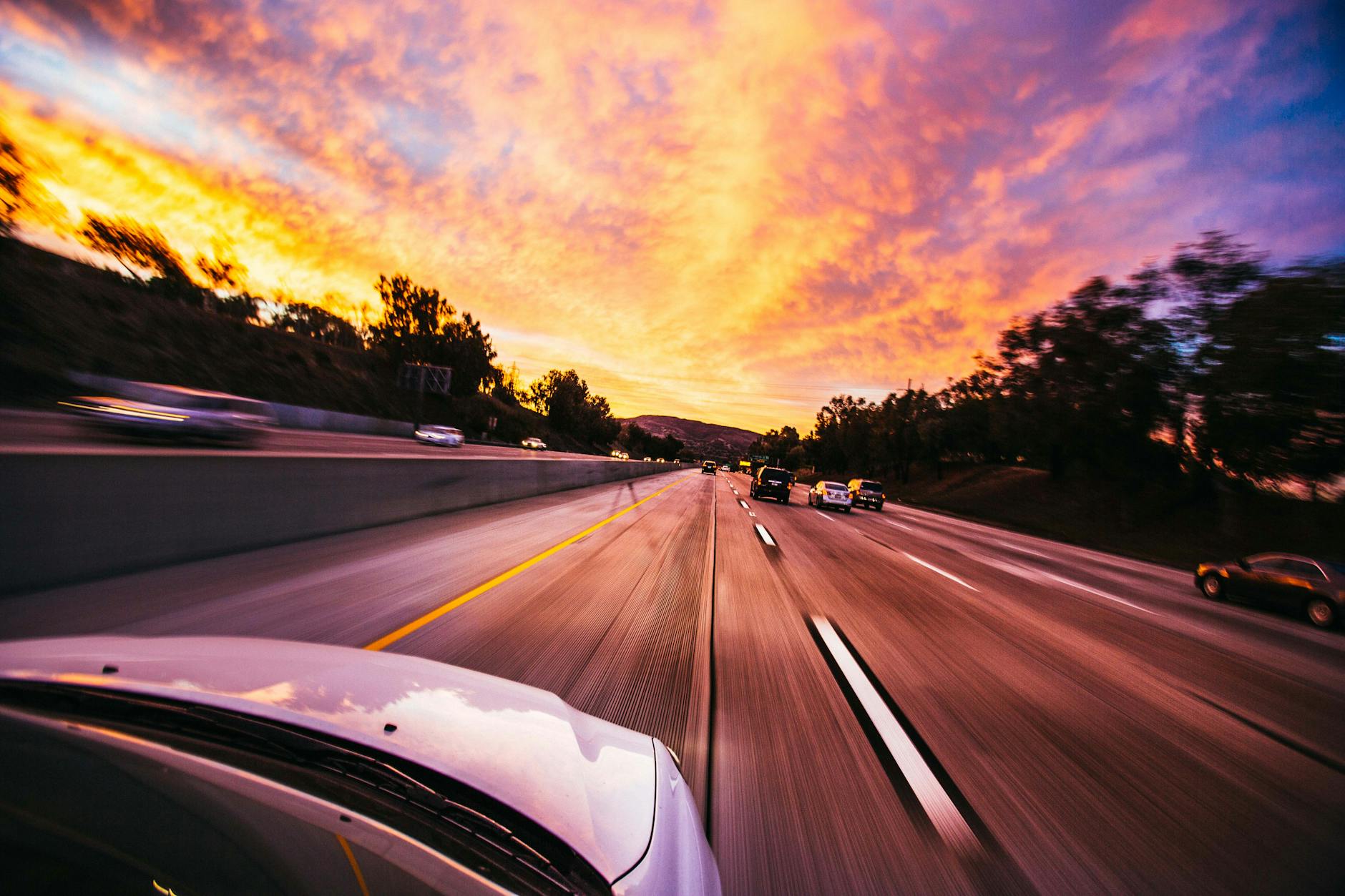
A report from a law firm looking at the highways with the most fatal accidents in the last three years puts six Chicago area roadways among the country’s top 100:

Photo by Taras Makarenko on Pexels.com

Here are the highways numbered by their national rank and with the number of fatal accidents listed at the end:

4. I-94 in Cook County, 52

20. I-80 in Lake County, 33

41. I-57 in Cook County, 26

53. I-290 in Cook County, 24

89. I-294 in Cook County, 21

89. I-90 in Cook County, 21

Driving is one of the riskiest behaviors Americans regularly engage in given the number of accidents and deaths that occur each year. One estimate of 2024 fatal crashes from the National Highway Traffic Safety Administration suggested just under 40,000 people died last year.

But to get around metropolitan areas in the United States almost requires using highways. Driving is required in most places and people might be able to avoid faster roads for specific destinations or shorter trips. However, completing a lot of trips – whether suburb to suburb or in and out of major population centers – will involve highway travel.

There are already numerous efforts to make highway driving safer. Vehicle features. Signs. Public service announcements. Traffic enforcement. Are there other methods to try or is this more of a question of public will – are people willing to change driving habits and our public infrastructure in order to reduce the number of deaths?

In a country with so much driving, rising numbers of car repossessions are consequential

If the number of car repossessions is headed up this year, this affects not just economic sectors but the many lives of people living in a country where having a car is necessary for daily life:

Photo by Stephan Mu00fcller on Pexels.com

The number of seized cars hit a 14-year high of 2.7 million in 2024, according to data from the Recovery Database Network (RDN), which processes around 90pc of all requests from lenders for repossessions.

Kevin Armstrong, editor of CU Repossession, an industry publication, expects the total will hit three million this year based on current trends, only just shy of the 3.2 million peak seen in 2009…

High levels of car repossessions are a threat to the economy in several ways. For lenders, repossessions usually mean losses given that only around one in three cars tied to bad loans are being recovered.

For borrowers who do get their cars repossessed, they are often losing their way to get to work and continue supporting themselves. Their credit rating will also get hammered.

Many Americans may like to drive but most need to drive. To get to work, school, the grocery store, to have goods delivered to their residence requires driving. In many places, there are no alternatives. To pursue the goals Americans want to pursue – homeownership, pursue success, etc. – requires driving.

Driving has always had costs. A single commuting trip may not seem to cost much but put together the costs of maintenance, insurance, fuel, and the indirect costs of pollution and time used (among others) and the price of driving adds up. For those with less money or fewer resources, driving can consume a higher percentage of a budget but the rest of the budget requires costly driving.

Given this, why not promote policies that help more Americans secure reliable and affordable vehicles? Those with more resources could buy vehicles with more features but why not help average residents have a car? Because Americans value homeownership, policies over the decades have helped make this opportunity available to more people. Thirty year loans. Government backup on mortgages. Programs intended to help people find housing. Could a similar thing be done for vehicles?

No Kings protests throughout the Chicago suburbs

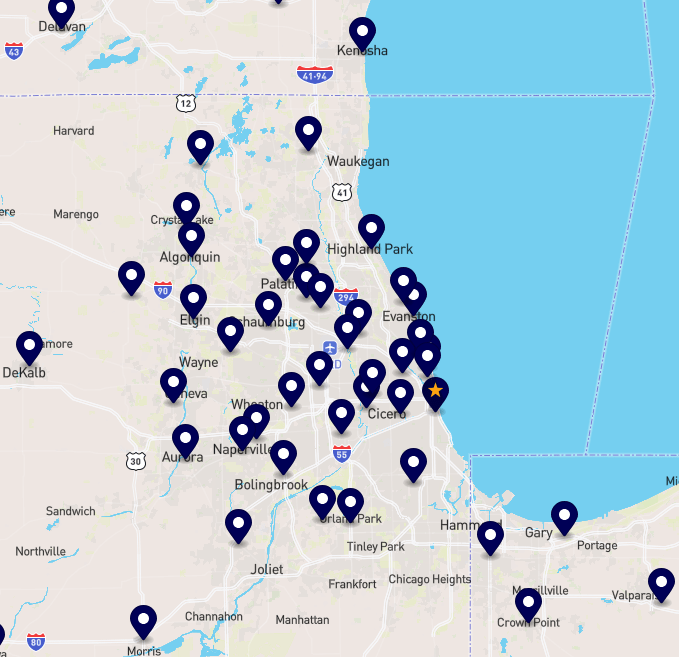
In the last decade or so, protests in the United States do not just take place in big cities. For example, the No Kings website listed over 30 gatherings in the suburbs of Chicago:

The website listed 7 sites in Chicago itself, including the primary site in the Loop which drew over 100,000 people. But people in the region had plenty of options where they could join others. Some of these locations are close to the city while others are on the edges of the metropolitan region. From what I can see on the map, most residents were with 10-15 miles of a protest site and many could access multiple options.

Three related thoughts:

  1. The portrayals of suburbia in the postwar era tended to emphasize its conservative or Republican bent. This may have been true in numerous places but is harder to sustain these days with suburbs closer to cities often leaning Democratic and suburbs on the suburban edges often leaning Republican.
  2. It would be interesting to look more closely at these suburban protest sites. Where can people gather in the suburbs for political purposes? Suburban downtowns or city halls? Shopping areas or busy streets? Public parks and public spaces? Which places helped increase the solidarity among those gathered and which ones helped them reach others who did not come?
  3. The suburbs are built around driving. How many protesters around the Chicago region drove, parked, and then protested? Protests tend to happen on foot but people have to be able to get there and options are limited in some suburban settings.

Why so little resistance to license plate cameras across suburbia? Two possible theories

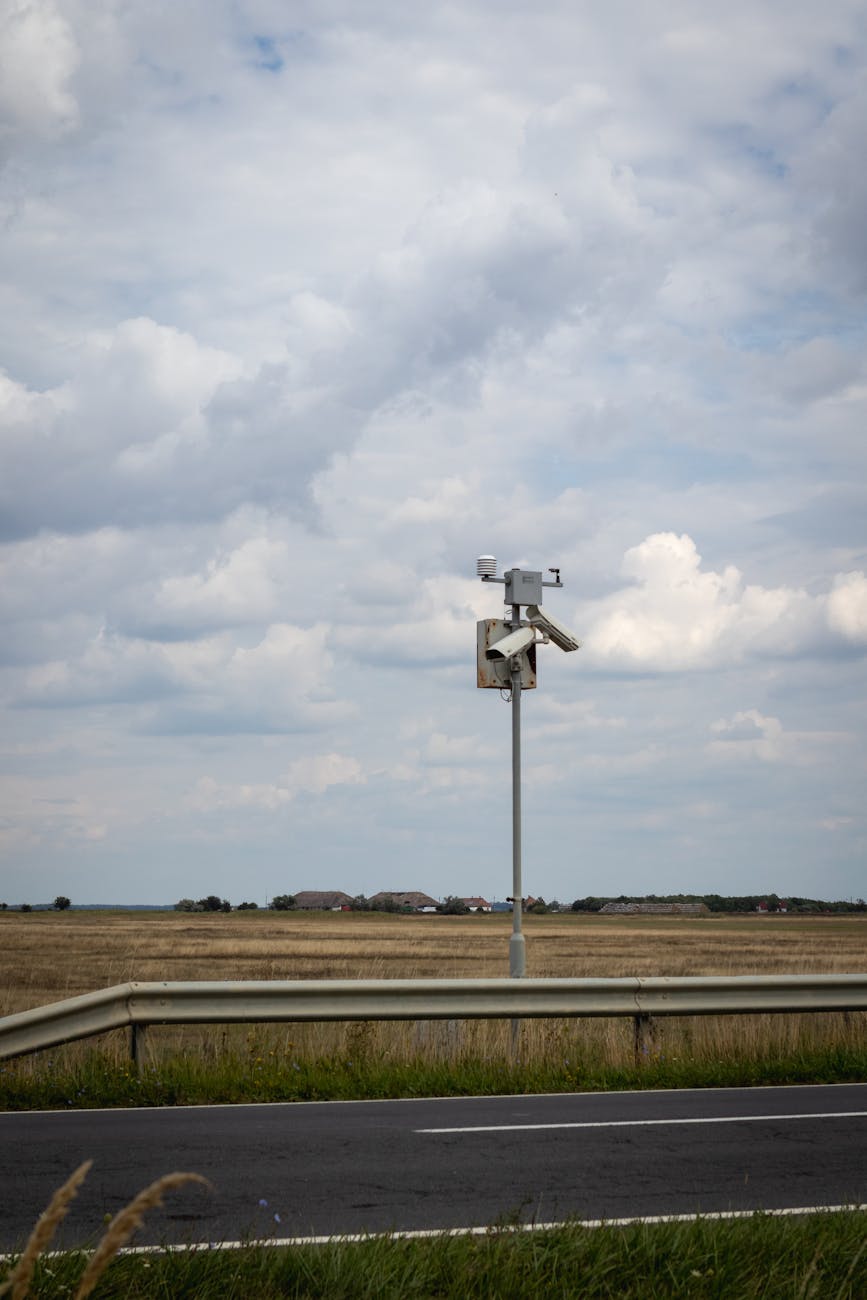
In the last few years, license plate cameras have popped up across suburbs near where I live. It took me a while to recognize what they were, but now that I know what they look like, I see they are in many locations. Why has there been little resistance to the presence of these cameras? I find it hard to imagine suburbanites would have liked this happening several decades ago. Why so little discussion or opposition today?

Photo by Andreas Ebner on Pexels.com

Two conjectures (with no evidence for either outside of my own knowledge of suburbs):

  1. Fear of crime. They see and hear many stories about crime and the role of cars in those crimes. If license plate cameras can track people who commit crimes and do so quickly, that may be a small price to pay to keep their suburban community safe. (See also use of doorbell cameras in efforts to combat suburban crime.)
  2. The surveillance state is already here, whether there are license plate cameras or not. People can be tracked by their phones, their credit card activity, their social media use, through cameras mounted inside and outside buildings. Why fight a system that is already in place and to which we already assented (by using smartphones, social media, etc.)? (See the term “surveillance capitalism” first used in 2014.)

There could be other factors at play. Companies and organizations have pushed these cameras as opportunities and solutions? People haven’t noticed them or don’t know what they are? This is just part of technological and social change?

I will be looking to see if there is more public discussion of their presence and how much information is available about how often they are used.

Once again, my pathway was blocked by a flock of turkeys

On a recent trip to a nearby state, I was driving on a country two lane road near dusk. The road had some small hills and I was going about 55 mph. In the distance I could see something in the roadway. It looked short. It did not cast much of a shadow. What was it? I slowed down as I neared and then I recognized the unmistakable shape: turkeys!

Photo by Mark John Hilario on Pexels.com

This is not my first encounter with turkeys while moving a wheeled vehicle. The first time occurred years ago while bicycling through a local forest preserve in the late afternoon.

The turkeys acted similarly in both situations: they stood there, not making much noise, blocking the way forward. On this road, I honked several times as I neared a stop. The turkeys finally looked up and then scampered off the asphalt and into the tall grass next to the road.

I do not know how much experience wild turkeys have with cars. They did not seem particularly interested in the presence of a vehicle. They were doing their thing and I until I was very near and made some noise, they did not look like they wanted to move.

I am now curious when I will again encounter turkeys in my way. I do not have many vehicle options left; I rarely, if ever, use a scooter or skateboard. I do not skate. Where will I next nearly run into a flock of turkeys?

Does that autonomous semi also make stops at Buc-ee’s?

Drivers traveling at night between certain American cities have some new company on the roads:

Photo by cottonbro studio on Pexels.com

Autonomous trucks are now driving highways at night, hauling food and dairy between Dallas and Houston…

Aurora’s trucks do have a human behind the wheel, just in case. So do autonomous Kodiak trucks operating on highways from Dallas to Atlanta, Houston and Oklahoma City—some of which drive at night…

Aurora is now testing the system between Phoenix and Fort Worth. The journey takes around 16 hours and typically requires two drivers to complete, with a stop for a handover. Federal law allows long-haul truckers to drive a maximum of 11 hours in a 14-hour period, followed by a mandatory 10-hour break.

There are a lot of potential consequences of this. One I have not seen discussed is what happens to the road trip establishments and culture in the United States. Drive any highway in the United States and they tend to be lined with certain establishments: gas, food, and lodging options, plus tourist sites. Drivers count on these and communities, businesses, and employees benefit from the revenue.

If more vehicles are autonomous, do these roadside features disappear? Or do the people still riding in the vehicles – they may or may not be in trucks, would likely still be in passenger vehicles – still need or want to stop? What if being in a vehicle becomes even more about only what is inside the vehicle; a person enters at the start of the journey, does what they want in the moving room, and only exits at the end? Or perhaps the autonomous vehicle will have to stop to recharge batteries?

Chicago has at least 250 traffic circles

Chicago’s road grid is interrupted at least 250 times for traffic circles:

Photo by Tuesday Temptation on Pexels.com

The Chicago Department of Transportation reports it’s aware of 250 that appear on landscaping lists. The department is currently not clear on the likely sizable number of circles that require no landscaping.

One of the best features of traffic circles is that they force drivers to slow down and pay attention. They cannot blow through a stop sign or traffic light or unmarked intersection. If they can successfully yield and do not need to stop, they can keep their momentum going at a more reasonable speed.

This is an interesting way to count road features: those that need landscaping need to be on some list so that maintenance can be done. Those without the landscaping need would have to be on some other list to be counted. Is this the sort of task AI could do in the future with access to websites with satellite imagery?

Is mass transit best pitched to Americans through comparisons to places where it is plentiful and works well?

Many Americans and American communities have resisted using mass transit or devoting more money to mass transit. In reading a recent pitch for Americans to prioritize it more, I was struck by one line of argument: describing places where it worked well. Might this help convince people?

Photo by Alec Adriano on Pexels.com

The discussions of the possibilities and perils of mass transit in the Chicago region included these comparisons. First, a contrast to another American city:

One of my stepdaughters recently relocated to Atlanta and returns home with a greater appreciation of our transit system.

A sprawling region like Atlanta can highlight how places with more transit in place – like Chicago – are appealing.

Second, comparisons to other major cities shows how far Chicago and other American cities can go:

“My wife had to go to Japan for work earlier this year. She was blown away that the train was 20 seconds behind schedule and how effusively the people apologized for it. I’m like 20 seconds?” Buckner said.

On vacations, Buckner subjects family to his transit nerdiness. Istanbul’s train terminal has a library inside. London has one of the best in the world. Beijing’s rapid transit is top-tier. Paris’ is fantastic. Seamless, quick and clean.

There are all world-class cities, like Chicago. If have efficient and elegant mass transit, why shouldn’t Chicago?

One issue might be whether a sufficient number of Chicagoans have been to these places. How many have gone to Atlanta, driven around the metro area, and found the traffic and experience worse than getting around Chicago? Or gone to Beijing or Paris and used the mass transit.

Another issue is that these comparisons may resonate and still pale to the issues of mass transit in Chicagoland or the liking people have for driving.

Overall, it appears to be hard to convince Americans to move away from driving. Whether they deeply like it or not, it is often the default after decades of policy decisions, cultural narratives, and choices made by numerous actors,

Illinois considering testing “road usage charge”

If more vehicles now require less gas, Illinois is considering making up the funding lost through the gas tax through another means:

Photo by Cu00e9sar Baciero on Pexels.com

Legislation proposed by state Sen. Ram Villivalam, D-Chicago, takes aim at that problem by creating a pilot program to explore the viability of establishing a “road usage charge,” essentially a tax on miles driven…

Under the current tax structure, vehicles that don’t rely on gasoline, such as electric vehicles, do not pay the gas tax that helps maintain state infrastructure, said Marc Poulos, executive director of Operating Engineers Local 150, which strongly supports the proposed legislation…

On Illinois toll roads , drivers pay approximately seven cents per mile, according to Poulos. With a mileage-based system, drivers could expect to pay three to four cents per mile. That would come on top of any tolls already being paid, similar to the gas tax.

Participants in the pilot would report their car’s fuel efficiency and mileage to the Illinois Department of Transportation. Roughly 1,000 motorists could sign up for the program with the Illinois Secretary of State’s office, Poulos said.

As the article goes on to note, more states and municipalities are looking for ways to recover revenues that come through the gas tax.

Given the current economic situation – many Americans feeling anxious about higher prices and less certain about their economic future – how might people in Illinois and elsewhere respond to these proposals? Americans generally like to drive and generally do not like the idea of new taxes. But if they are paying less at the pump, would they be willing to pay for driving through a different method?

More broadly, how much would Americans be willing to pay for driving? At what point do the costs of energy to drive (gas or electric) or the price of vehicles or tolls and congestion taxes push them too far? Or at what price do they switch to alternative forms of transportation or no transportation (making fewer trips)?

Orlando planning to add flying car vertiport by 2028

Flying cars could soon come to Orlando:

Photo by Guilherme Rossi on Pexels.com

The Greater Orlando Aviation Authority on Wednesday took steps toward that future by seeking partners to develop and operate a flying car landing pad — called a vertiport — at the airport. The invitation is expected to publish in March with a 2028 target for a finished product.

The airport expects to put the vertiport on land in the East Airfield region on the northeast side or land on the south side near the train station, according to a news release…

Orlando Mayor Buddy Dyer, a member of the aviation authority, said the city is a global leader in Advanced Air Mobility (AAM) — the technology behind flying cars — and having the hub at the airport makes sense…

He said vertiports may help manage the city’s growth, but that’s much farther off. He envisions starting with a four- to six-passenger vehicle operating out of the airport and eventually corridors for flying cars will follow. The small aircraft are expected to use electric power, and take off and land vertically.

Three thoughts on these plans:

  1. It sounds like Orlando wants to pursue this to contribute to its economic growth. It could become a leader in flying cars. How big of an industry could this be? Americans like cars, Americans dislike traffic…could this be a big growth industry in the coming decades?
  2. The connections between this and the numerous theme parks in the area are intriguing. Would visitors be willing to try these because this is an exciting place to visit? Could the flying cars be linked to Disney or Universal or other partners?
  3. Flying car corridors will be interesting to see. How will they work and where will they be? How visible will they be from the ground? Will they also have gridlock?

Flying cars could be cool but if they lead to similar problems plaguing cars at the moment – traffic, expensive to buy a vehicle and maintain it, etc. – it may not get off the ground.