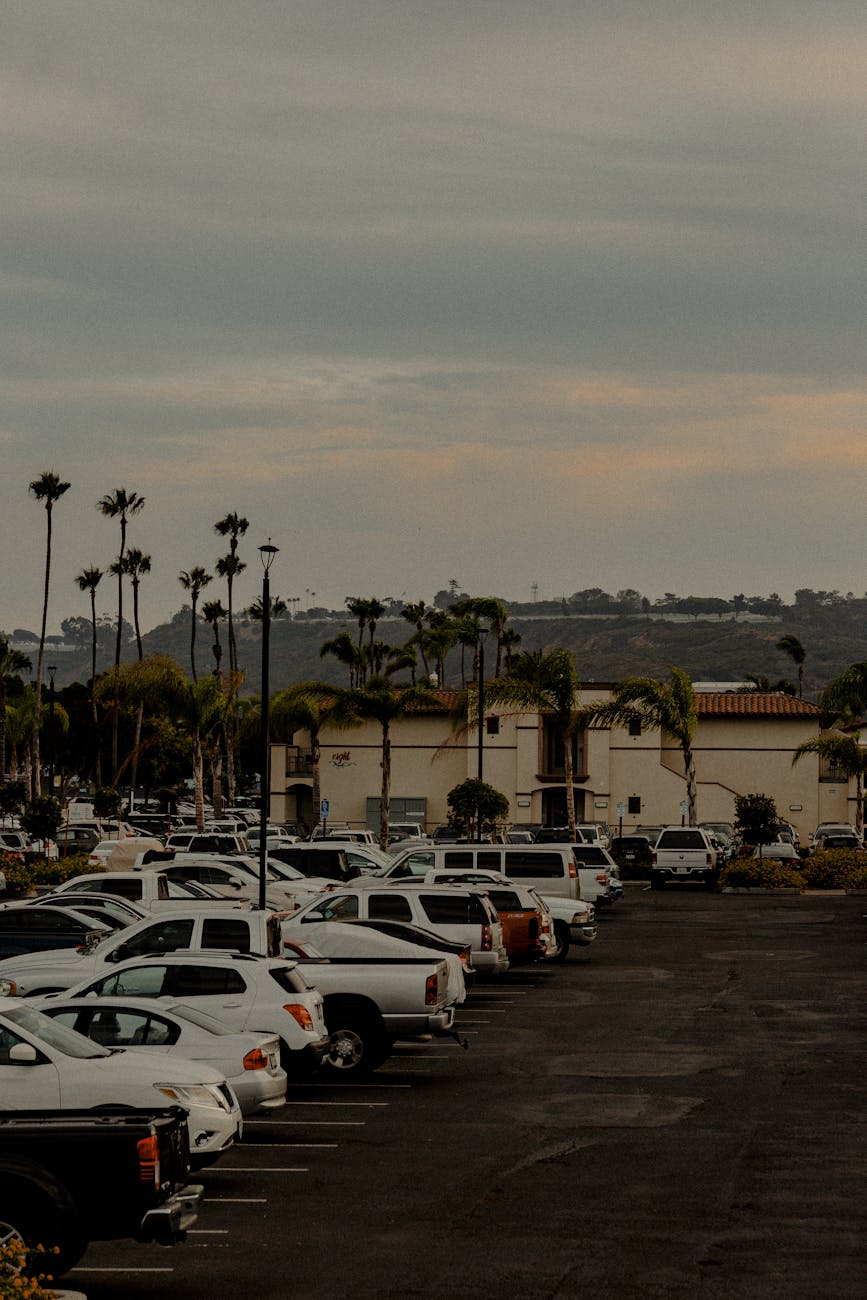
Parking lots may appear to be safe and controlled traffic environments. Drivers are usually not traveling very fast. Drivers need to be attentive to carts, curbs, and people walking around. New drivers go to parking lots to build their skills.
Yet parking lots can be the Wild West of driving situations. This is particularly true of lots where there are few or no traffic signs and markings. You have rows and arteries through the parking lot that have no stop signs or signs of where to go.
Last year, we had an incident in such a lot. Driving around the outside of the lot on a roadway separated by curbs from the parking rows, someone pulled out and into the side of the front of our vehicle. There was no stop sign at the end of the row or marking on a pavement. Anyone could be turning in and out of the rows. Presumably they should look to see if vehicles are coming toward them? Presumably everyone is supposed to yield (though there are no yield signs)?
I feel this in parking garages as well where there may be signs and markings but they can be hard to see in the lighting and a cramped environment. Vehicles come quickly around turns. Drivers are looking to back out and pull in.
Since parking is essential in American places due to the heavy reliance on driving, are there better solutions to lots with few signs? Is the primary goal of a parking lot to move vehicles quickly through the space? Is it to help customers or residents or visitors to safely make it to their destination? Is it to fit as many vehicles as possible in/
Street grids have benefits, including offering multiple routes should congestion arise at one intersection or certain routes are off-limits. But what if a driver or pedestrian wants to move quickly through the grid at a diagonal?
Different communities may offer options for this. Perhaps there are alleys one can cut through. These back ways offer even more alternatives through the grid if the main streets are congested. Or there might be an occasional diagonal roadway that crosses at an angle to other roads. Depending on the way one is traveling, the diagonal route might be more direct.
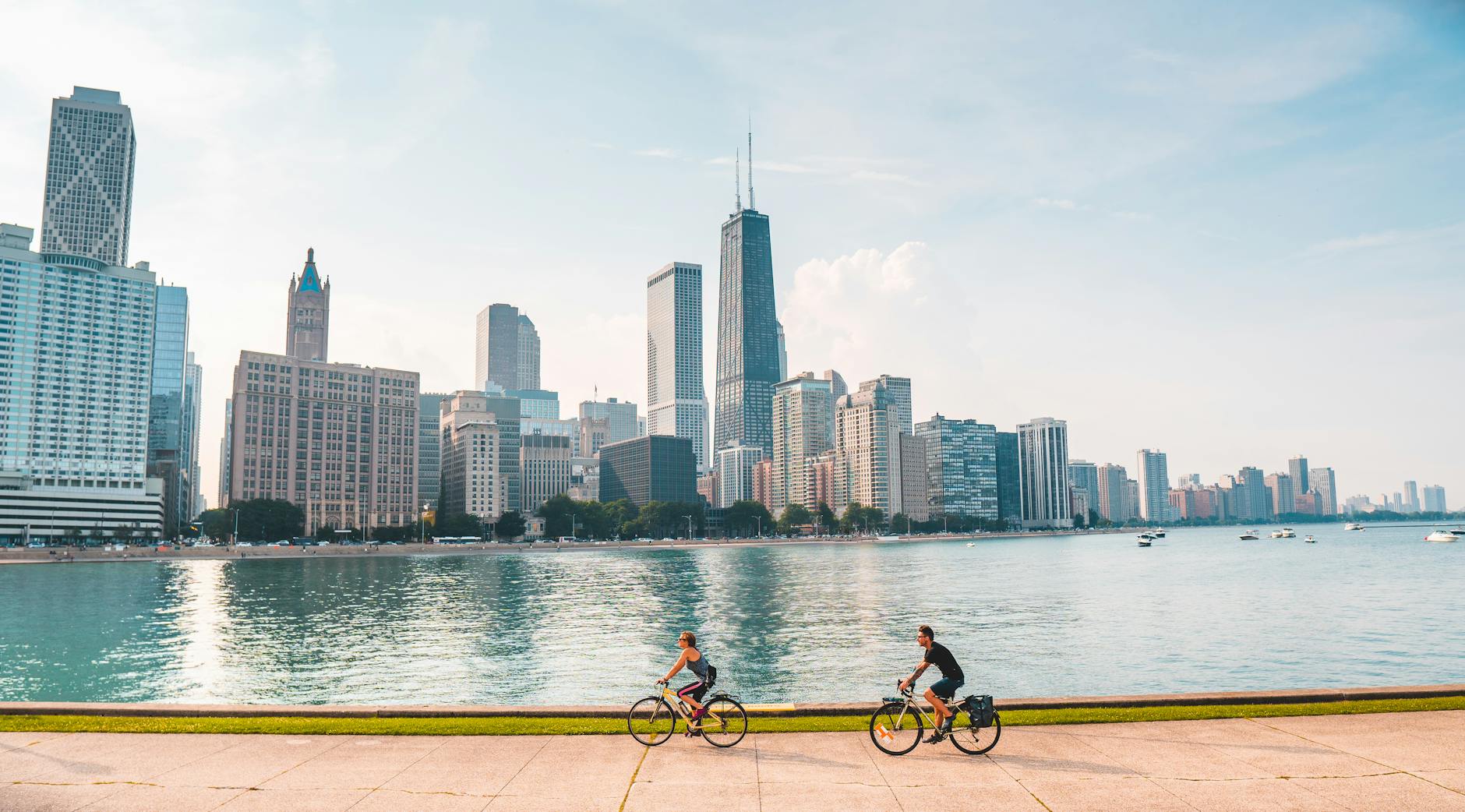
Chicago is a good example of having both options in numerous neighborhoods. The flat Midwestern city primarily has a road grid that stretches for miles. East-west and north-south streets can go a long way from one end of the city to the other (and beyond). At the same time, alleys and diagonal streets provide other travel options. The diagonal roadways can create some interesting intersections – these present travelers with different visuals and traffic patterns than they might be used to – but offer more direct routes at an angle to the grid. Numerous alleys take some pressure off the roads for garages, garbage, and other uses.
I imagine other places might offer different options. Any city offer an underground grid at a 45 degree angle to the ground-level grid? Or pedestrian skyways or tunnels that offer paths that cross the grid in different ways?
It was the only bicyclist death so far this year, suggesting what some hope signals the beginning of a decline in such fatalities.
Some even contend the number of all traffic deaths in Chicago — cyclists, motorists and pedestrians — could be reduced to zero with the right improvements.
Others are more guardedly optimistic.
Before that August crash on the West Side, Chicago had gone 10 months without a cycling death. That was the longest such duration dating back to at least the beginning of 2019, the earliest year available from the city’s daily traffic crash data.
“Statistically, this drop appears too large just to be entirely good luck,” said Joseph Schwieterman, a transportation professor at DePaul University. “It’s not likely the fatalities will stay at this level, unfortunately, but this is encouraging.”
The rest of the article talks about methods that could be implemented to make roads in Chicago safer.
As I have read about similar efforts in recent years, reducing traffic deaths seems to go well with multiple other efforts:
More sustainable cities with fewer cars on the road and other viable non-driving transit options.
More inviting and lively streetscapes with less emphasis on motorized vehicles.
Encouraging walking and biking, which are healthier options.
Safety alone may or may not be a compelling reason to change conditions but combine safety with other interests people have and perhaps there will be a steady shift away from only emphasizing driving.
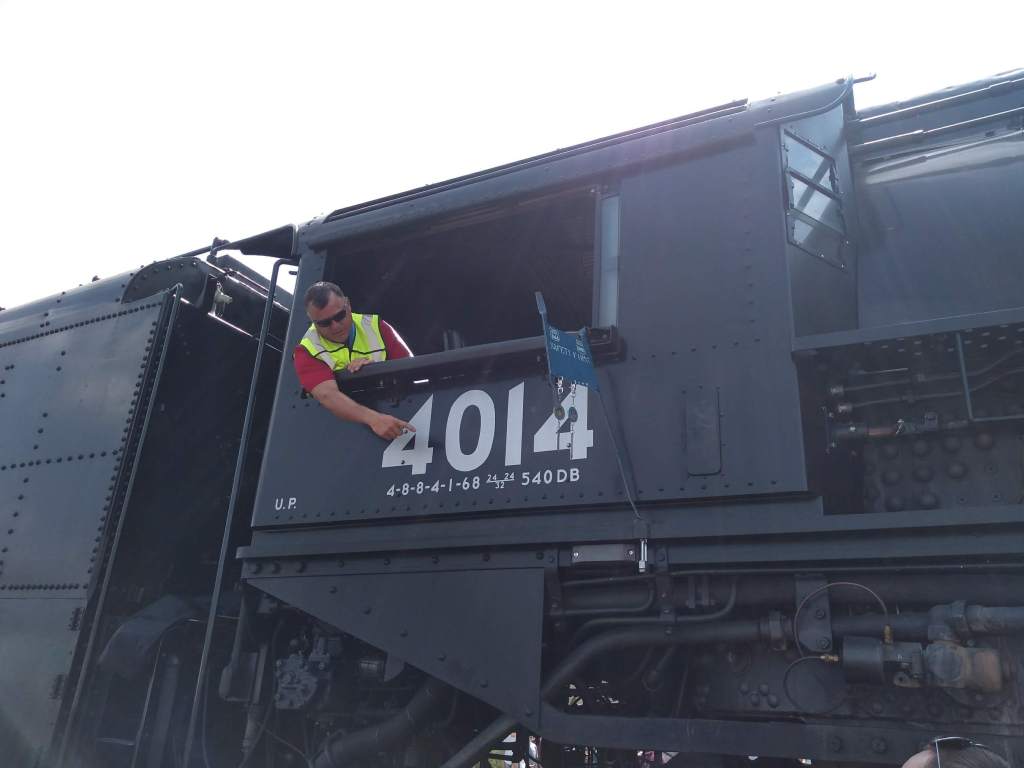
At least a few suburbs in the Chicago area and outside cities throughout the United States owe their founding to early railroad lines that provided quick access to the bi city and other points beyond. So when a large steam locomotive passed along the same suburban tracks in 2024, at least a few people took note:
With a shiny yellow-and-gray streamlined passenger train in tow, the Union Pacific “Big Boy” No. 4014 steam locomotive rolled through the western suburbs Monday morning to the delight of railroad enthusiasts and casual observers alike.
Roughly two hundred years ago, steam locomotives opened up all kinds of possibilities. One opportunity involved the possibility of larger and further-flung suburbs: a resident outside could travel quickly in and out of the big city. It no longer took a day or more to use horses or a carriage. No more need to travel a long distance over poor roads. Large amounts of freight could be shipped overland from the interior to big cities.
The early railroad lines tended to connect important cities and locations to each other. Along these lines, residents gathered near stations. Lots were developed. Businesses moved there. Churches opened. Houses were built. Communities grew. Regular train service emerged.
Eventually, these railroad lines were dwarfed in importance by cars, trucks, roads, and highways. Many of the lines still exist but more people drive. Much suburban development since World War Two has happened between railroad lines as cars offered access to more land.
Amid the regular clatter of passenger and freight trains through suburbia, an occasional steam locomotive with a loud whistle and billowing smoke provides a reminder of an older era. Yet, that older era helped give rise to the automobile dominated suburbia of today.
The traditional American 9-to-5 has shifted to 10-to-4, according to the 2023 Global Traffic Scorecard released in June by INRIX Inc., a traffic-data analysis firm.
“There is less of a morning commute, less of an evening commute and much more afternoon activity,” said Bob Pishue, a transportation analyst and author of the report. “This is more of the new normal.”
Now, there is a “midday rush hour,” the INRIX report found, with almost as many trips to and from the office being made at noon as there are at 9 a.m. and 5 p.m.
Also, commuters have all but given up on public transportation. Ridership sank during the pandemic, Federal Reserve Bank of St. Louis data shows, and never fully recovered.
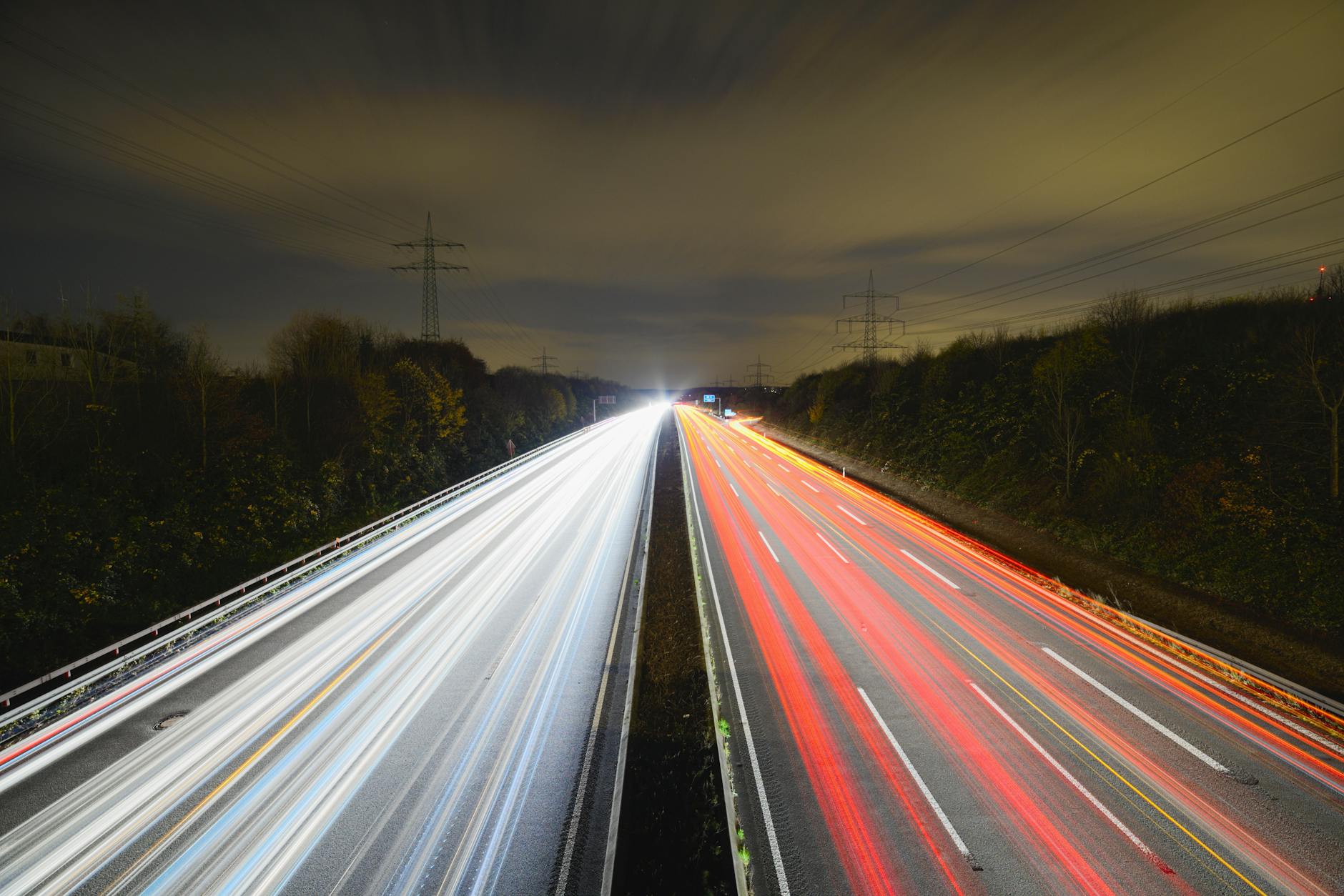
The rush hour increasingly seems to be “traffic all the time!”
Since this has now been going on for a few years and also includes changes to truck use and ride sharing, what are cities and regions doing differently? What incentives do drivers and organizations have to choose other than drive by themselves when they want?
There does seem to be some possible good will to change traffic patterns when there are major issues, like significant highway repairs or the Olympics. When does regular traffic become a large enough issue that people start acting together?
“Right now, our transit system reflects an old design,” DuPage County Board Chair Deb Conroy testified in Naperville. “One that saw commuting as merely bedroom communities serving downtown workplaces.”
“All suburban residents deserve the same level and access to and from Naperville to Rosemont or from Oak Park to the Morton Arboretum in Lisle.”
College of DuPage student Rowan Julian experienced that disconnect trying to get from Wheaton to Batavia to see a friend, a 20-minute car trip. She wanted to use public transit but found it could take up to one hour and 40 minutes.
“For me I felt like I had no choice … so I chose to take my car,” she said.
Even in deep-blue states, a bipartisan coalition keeps the highway funding spigot open, said Amy Lee, a postdoc at the University of California, Los Angeles who wrote her dissertation about California’s failure to constrain highway growth. “The construction-materials companies tend to be very big on the right, and organized labor tends to be very powerful on the left,” she said, and these forces form a pro-highway juggernaut. In January, a coalition of construction companies and labor groups sent a letter to California’s top elected leaders defending “funding for infrastructure projects that may potentially increase vehicle miles traveled”—i.e., highway expansions. (The Laborers’ International Union of North America did not respond to repeated requests for comment for this article.) As with electric vehicles, highway construction seems to be a topic in which environmental and union interests diverge.
Transportation departments don’t want to hear no on highways. In 2022 Oklahoma’s department of transportation preemptively bought 23 web domains, like oklahomansagainstturnpikes.com and stoptheeasternloop.com, that could theoretically be used to rally opposition to the state’s $5 billion highway plan. Speaking up against pavement within a department can be difficult and risky. Last year, Jeanie Ward-Waller, a Massachusetts Institute of Technology–trained engineer who served as the deputy director of planning and modal programs for California’s Caltrans, was demoted after questioning her agency’s plans to widen I-80 between Sacramento and Davis. In an editorial published in the San Francisco Chronicle, Ward-Waller wrote, “My concerns were repeatedly brushed off by my bosses, who seemed more concerned about getting the next widening project underway than following the law.”
At the federal level, even asking questions about the collective climate impact of highway building appears verboten. In 2022 Stephanie Pollack, the acting head of the Federal Highway Administration, called on state DOTs to measure the carbon emissions attributable to their highway systems. Republicans were incensed; 21 states filed a suit, and Republican Senate Minority Leader Mitch McConnell advised governors to simply ignore her.
Democrats have supported highway expansions too. The White House called the Bipartisan Infrastructure Law “a critical step towards reaching President Biden’s goal of a net-zero emissions economy by 2050,” but subsequent analysis by Transportation for America found that state DOTs used nearly a quarter of the $270 billion they received through the law to expand highways, a move sure to increase emissions. (After the infrastructure bill was passed, the head of Louisiana’s transportation department said that “some of the winners I think from this project funding will be things like the Inter-City Connector,” referring to the Shreveport project.)
With so many forces pushing for roadway expansions, opposing them requires political bravery.
As noted above, this system requires resources. And both major political parties tend to support it. They might fight particular projects (also highlighted in the article) but they generally find the money needed for fixing roads and creating new ones.
To reverse course then requires a major political change. Resources could be funneled elsewhere. The topic could become a regular campaign issue. It could join with popular support. How might it be pitched? Here are two areas where I could guess these political appeals might work:
The individual costs of driving are high. Paying for gas, insurance, maintenance, storing a vehicle, and more add up. Are all people interested in paying this year after year after year?
A desire among some (not all) for denser living areas that can support less driving. Even American cities can be sprawling but it seems there is some interest for communities that are more walkable and accessible by other means.
There are other arguments to make, of course. The two I listed get at different opportunities people might want. Pivoting from a transportation method that tends to privilege individual choices to travel wherever they want whenever they want might require providing different opportunities.
One of the proposals would forbid Washington’s local government from banning right turns at red lights. Another would do away with the automated traffic-enforcement cameras that ticket D.C. drivers for speeding, blowing stop signs and other violations.
The provisions are not just a case of earnest traffic-engineering wonkery sneaking into Congressional oversight. They represent a culture-war cause just as real as D.C.’s needle-exchange efforts or mask mandates, two other targets of current GOP riders. At the core of it is the politically revealing question of cars versus other ways of getting around.
In blue cities across the country, local road policy in the past decade has been tweaked in the name of making things safer and more enticing for non-drivers — often by making things slower and more annoying for motorists…
In a polarized country, it was inevitable that this would become more than just a disagreement over traffic circulation and moving violations. After all, the 21st century push to promote alternative modes of transportation cites a Democratic-coded cause (climate change) to promote ways of getting around (by foot, bike, bus, or subway) that are a lot more convenient in dense blue cities.
On the right, for more than a decade, there’s been a refrain about the “war on cars” right alongside the war on Christmas. “There is a loud constituency that does not want you to drive your car,” said Jay Beeber, executive director for policy at the National Motorists Association, which has championed the measures dictating Washington policy. “A lot of this is virtue signaling.”
Four thoughts:
Is it “inevitable” that this would become a culture war issue? I am sure there is an interesting history in here. Does this go back to seat belt laws? Speed limits on highways set in the 1970s?
It is relatively easy to break this down into cities versus other areas. What about groups or political discussions in between such as suburbs promoting more walkability and bicycling, small towns and rural areas trying to lessen dependence on cars, and regions emphasizing different transportation policies? Are there Republicans for different road policies and Democrats for more driving?
The interplay between federal and local policies is worth paying attention to. Americans tend to like local government oversight of local issues. Do Americans tend to think the federal government does too much regarding traffic policies or not enough?
Where does this issue rank in the range of culture war issues? Is this more like a proxy war or the big issue? Americans like driving so this could get at core concerns about American ways of life.
Doubling down on something she discussed with The Times in April, Bass told reporters at the 2024 Paris Olympics that she envisions expanding public transportation to a point where fans can take trains and buses to dozens of sports venues, from Crypto.com Arena downtown to SoFi Stadium in Inglewood to the beaches of Santa Monica.
“That’s a feat in Los Angeles — we’ve always been in love with our cars,” she said at a news conference Saturday, adding that people “will have to take public transportation to get to all the venues.”
The LA28 organizing committee — a private group charged with staging the Games — prefers to say it is planning a “public-transit-first” Games. Some venues will have ample parking, others will not. Organizers say no one will be told they cannot drive to a competition, but public transportation might be an easier option.
This is a bold vision in a city and region famous for driving, highways, and sprawl. The realism is okay too; trying to do this all in 4 years is a tall task.
But why stop at the Olympics and that several week window? Why not imagine a Los Angeles in ten or twenty years that relies much less on cars? Why not pursue some of the same strategies – working from home, staggered work schedules, more buses – with additional strategies – more mass transit options that do not involve roads, ban planning that does not just keep adding lanes, etc.?
Even if these efforts require the long view and a large amount of resources, the time to start is now. Developing needed infrastructure is costly but pays off down the road. What if the lasting legacy of the Olympics in Los Angeles was not property or stadiums that people do not know what to do with (a common issue in recent Olympic cities) but a new approach to the streetscape and getting around?
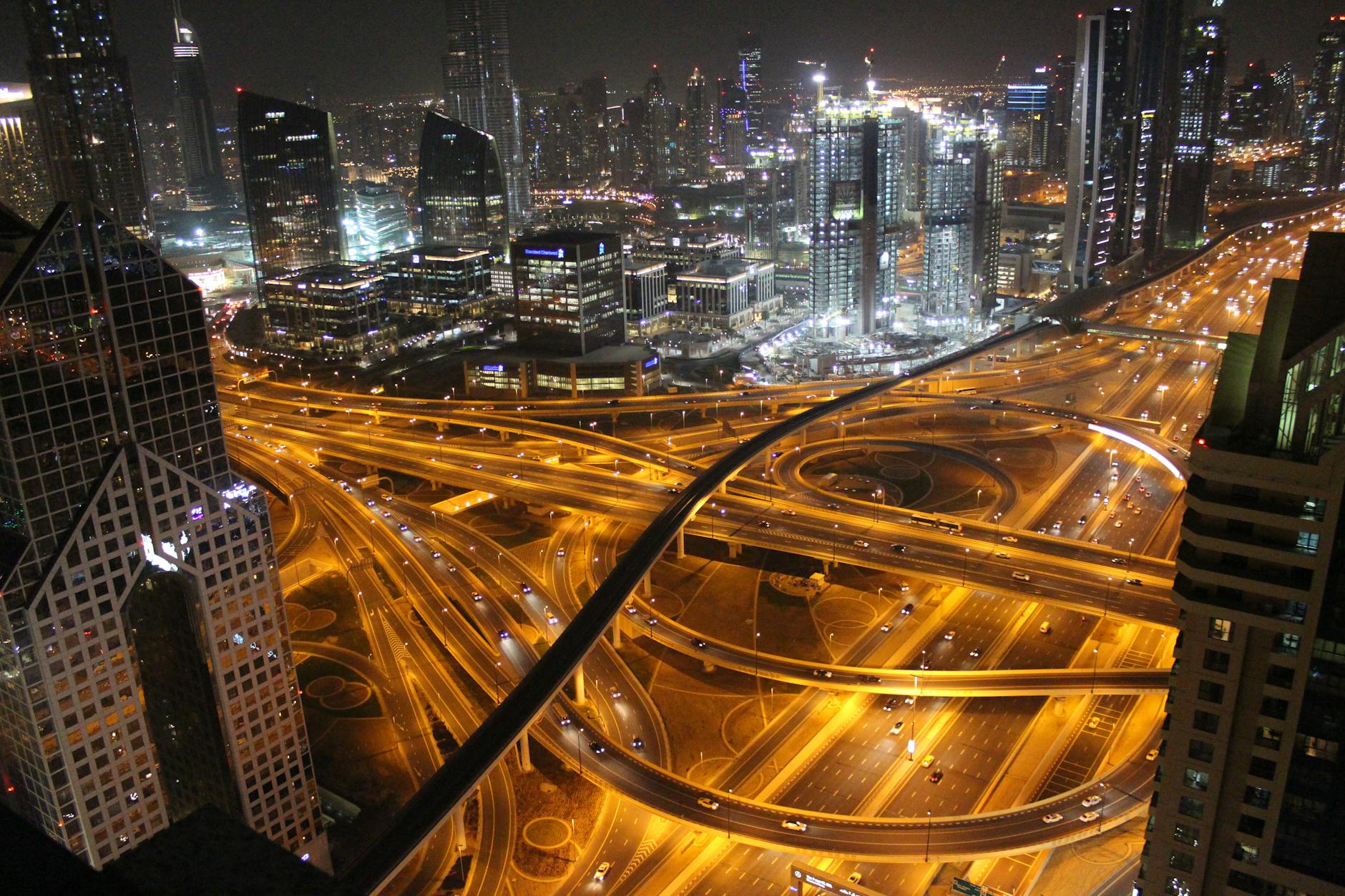
URB has released conceptual designs for a 64-kilometer-long highway that would see Sheikh Mohammed Bin Zayed Road, one of the city’s main traffic belts, transformed into a “Green Spine,” complete with autonomous, solar-powered trams and smart traffic management…
The autonomous solar-powered tram is just one aspect of the proposed highway’s transport system: above the tram line, a network of green areas, parks and overpasses would increase connectivity and walkability of the city, which is currently tough to navigate on foot.
The highway would also integrate smart technology, such as “internet of things” (IoT) sensors, to manage traffic and optimize energy use.
Bagherian’s designs allow for 300-megawatt solar panels and a storage system to be embedded in the tracks, that would power the tram line, as well as generate clean energy for an estimated 130,000 homes.
And the green spaces — including parks and community gardens — would provide space for one million trees, which would also help cool the city and improve air quality.
Does making driving greener and roads less invasive in communities make driving more palatable to critics? A number of critics want to reduce driving all together for a variety of reasons including reliance on fossil fuels and changing the scale of communities from human oriented to moving heavy boxes quickly and efficiently.
Perhaps this sort of approach is pragmatic. It might be very difficult to get rid of cars and vehicles. Transitioning to alternative fuels will take time. Cars have some advantages compared to other transportation options. Reducing the impact of vehicles could be the way to go: the vehicles keep moving but they are less visible and less disruptive.
I would not be surprised if driving continues at similar volumes in the future and roadways are transformed in ways that mean they do not just serve the vehicles traveling on them.


 Legally Sociable