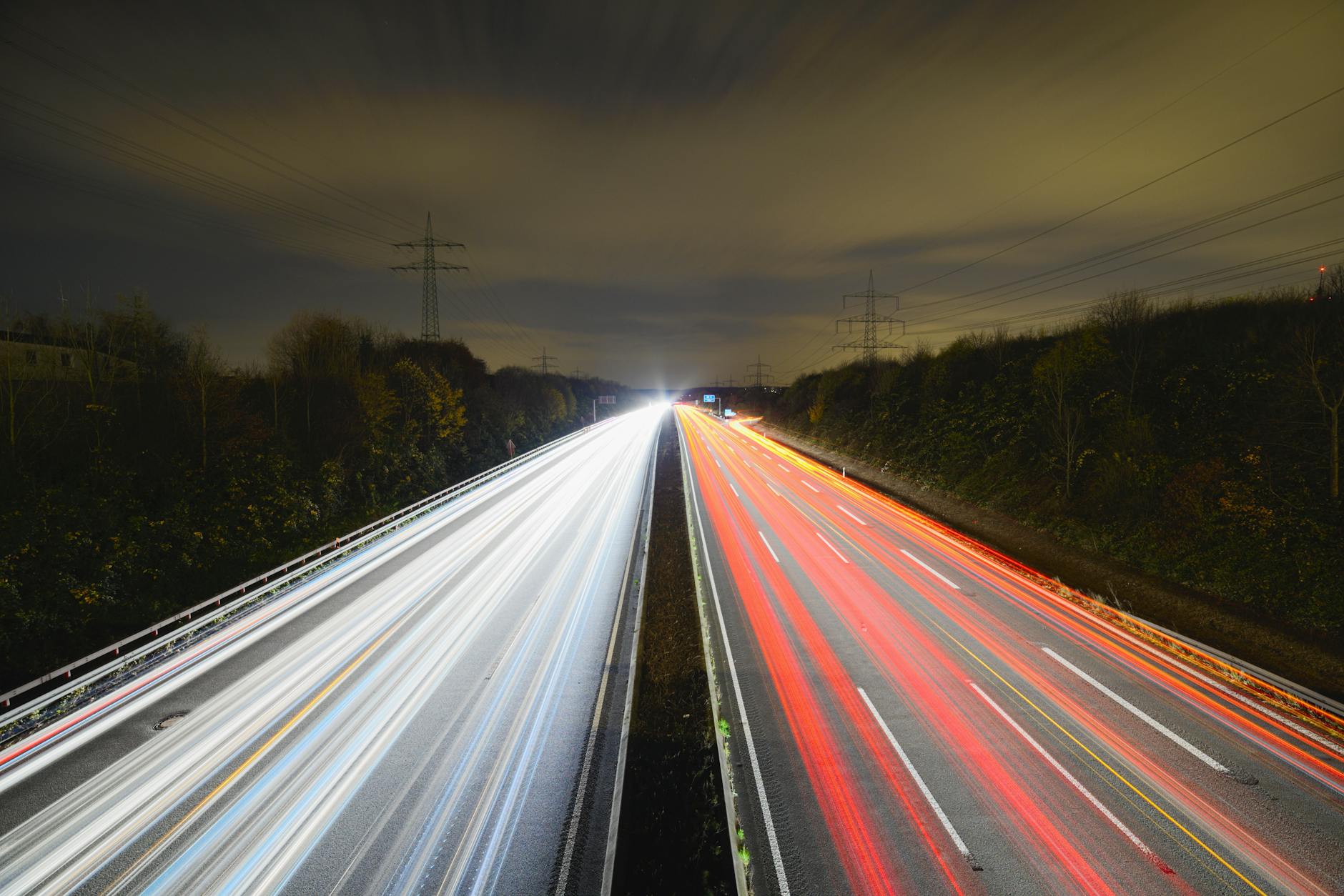
Photo by Willian Justen de Vasconcellos on Pexels.com
“You see a whole swath of the country that people on the coasts don’t,” says Clott, whose fascination with 41 dates back to his boyhood in Northwest Indiana…
Once Clott reached Miami, he’d taken a journey through a country he never would have seen on an interstate highway.
“You see regular people,” he says. “You don’t just see tourists. Even though you’re less than five minutes away from an interstate, you see a different America.”
The interstates have a life of their own. High speeds and limited impediments. Certain amenities available at rest areas and exits.
Many interstates trace paths from earlier highways that also sought to connect major population centers. These highways had sections of faster speeds and no stops but they also tended to go through communities and had stops there.
Is seeing “regular people” and “a different America” because of the different routes of these earlier highways or the different driving pace or the different attractions? One way to interpret the statements above is that these old highways are not the typical routes so drivers will see different things. Perhaps they see what is less glamorous or could see more day to day activity than tourist activity. As noted later in the article, US 41 will still help see Chicago but see different parts than you might via the interstate or common tourist routes.
Would these older highways be considered the back roads of the United States? In many communities, they are necessary daily roads for people and goods. They may not be scenic roadways in many places. They may not be meandering two lane roads. But they do offer an alternative to where the mass of drivers are.
(I have driven on US 41 in Michigan, Wisconsin, Illinois, Indiana, and Florida. While it has its points that are more highway-like with higher speeds and fewer lights, there are also plenty of moments of going right through communities.)
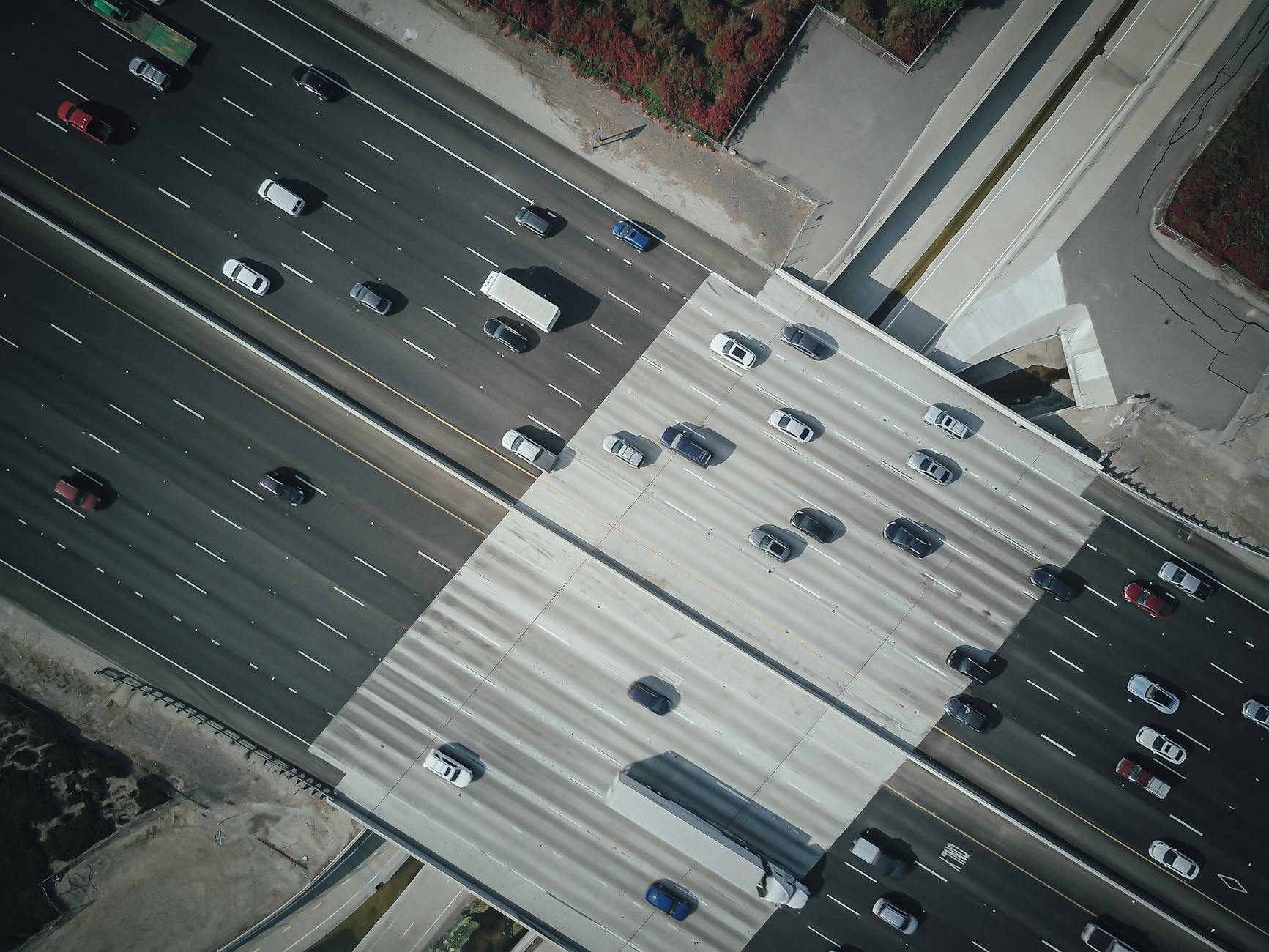
The tollway collaborated with Cook County on a broader North Avenue interchange project. Along with the ramp, it includes realigning County Farm Road and rebuilding and reconfiguring North Avenue, Lake Street, Northwest Avenue and I-290 Frontage Road.
“I’m surprised (the ramp) was never built originally when they built the tollway seeing as North Avenue is so busy,” Sherwin said.
A major hotel was built in Northlake near the Tri-State in 1968 “on the promise that they were going to get the ramp. The ramp didn’t come (and) the hotel went bust,” Sherwin recounted, adding the site is currently home to Concorde Place seniors residence.
“Here we are 57 years later; we finally got the ramp open.”
The best time for a lot of infrastructure improvements is in the past, before there is significant need now. This particular interchange has always had a weird convergence of roadways. Perhaps a ramp built decades ago could have made traffic flow better.
But this is easy to say in the present. What stopped the ramp from being constructed in the past? Money is often an issue; who will pay for the road improvement? Or the possible money needed to be spent elsewhere on bigger issues. Maybe the issue was land. Highway interchanges can be limited by the space they have. It is easier to construct interchanges when there is plenty of room for ramps and land is cheap.
And what happens if the ramp is a success and more and more people use it? Building more lanes and road capacity can lead to more use. Those who got on and off the highway elsewhere or who used alternate roads may now choose this improved interchange. The new interchange will alter the dynamic traffic conditions…hopefully for the better.
But to get around metropolitan areas in the United States almost requires using highways. Driving is required in most places and people might be able to avoid faster roads for specific destinations or shorter trips. However, completing a lot of trips – whether suburb to suburb or in and out of major population centers – will involve highway travel.
There are already numerous efforts to make highway driving safer. Vehicle features. Signs. Public service announcements. Traffic enforcement. Are there other methods to try or is this more of a question of public will – are people willing to change driving habits and our public infrastructure in order to reduce the number of deaths?
China boasts more than 100,000 miles of motorways – more than any other country in the world.
A staggering achievement, considering the country had no motorways at all in 1988.
And one city recently hosted a large traffic jam:
Footage shows the 24-hour traffic jam at Wuzhuang toll station, which left thousands stranded with “no way out”…
According to authorities, roughly 120,000 vehicles passed that day.
The unusually long queues were caused by millions of locals returning home after a national holiday, which spans across eight days from October 1 to October 8.
Do highways inevitable lead to traffic? Or would any amount of planning be able to avoid having traffic jams?
It would be interesting to consider how traffic jams are perceived around the world. I am familiar with the American experience and glad to not have to commute via highway every day.
And in today’s world of social media, is there a point where a traffic jam – typically regarded as an annoyance, an unhappy time – could become a chance to gain status and followers? The absurdity of being stuck for hours could lead to commentary and interaction.
Autonomous trucks are now driving highways at night, hauling food and dairy between Dallas and Houston…
Aurora’s trucks do have a human behind the wheel, just in case. So do autonomous Kodiak trucks operating on highways from Dallas to Atlanta, Houston and Oklahoma City—some of which drive at night…
Aurora is now testing the system between Phoenix and Fort Worth. The journey takes around 16 hours and typically requires two drivers to complete, with a stop for a handover. Federal law allows long-haul truckers to drive a maximum of 11 hours in a 14-hour period, followed by a mandatory 10-hour break.
There are a lot of potential consequences of this. One I have not seen discussed is what happens to the road trip establishments and culture in the United States. Drive any highway in the United States and they tend to be lined with certain establishments: gas, food, and lodging options, plus tourist sites. Drivers count on these and communities, businesses, and employees benefit from the revenue.
If more vehicles are autonomous, do these roadside features disappear? Or do the people still riding in the vehicles – they may or may not be in trucks, would likely still be in passenger vehicles – still need or want to stop? What if being in a vehicle becomes even more about only what is inside the vehicle; a person enters at the start of the journey, does what they want in the moving room, and only exits at the end? Or perhaps the autonomous vehicle will have to stop to recharge batteries?
“There is no doubt that the I-88 corridor will be the largest and most significant redevelopment opportunity in our city’s history,” Wehrli said.
A new study calls the corridor the only “opportunity area” of its scale left in the city. Much of the corridor in Naperville — once known as its “Innovation Corridor” — was developed with single-use, low-density office space and is underused and “underperforming relative to its potential,” according to the report by AECOM, a consultant hired by the Naperville Development Partnership.
“Nearly half of the city’s existing jobs are located in the corridor, which the report noted was an ideal location for certain high-growth industries,” Wehrli said. “Sectors like: ag and food tech, biotech, pharma, life science, energy, fintech, quantum and advanced computing, tourism, sports and hospitality.”…
Among its recommendations, the study suggests developing a new corridor brand identity and creating a special zoning district along I-88 that would allow for a more dense, mixed-use, pedestrian- and transit-friendly environment.
“The study sets aspirational goals that add 15,000 high-paying jobs in the corridor by 2045 if we target these industries,” Wehrli told a business-friendly audience.
Three features of this report strike me:
The emphasis on quality jobs is not a surprise. The jobs that came in the 1960s with Bell Labs and then other companies helped provide Naperville with a solid jobs base and a higher status. For a community that is used to having these jobs, it sounds like they want more of the same.
The mention of mixed-use development is intriguing. Naperville has limited the amount of housing in this corridor in the past. How much housing would they allow? What residents are they hoping to attract? How many large-scale mixed-use developments do they think the corridor can handle?
There is mention of zoning and branding unity that would be more “pedestrian- and transit-friendly.” Could this become a kind of linear neighborhood linked by mass transit and walking/biking paths? For decades the corridor was marked by proximity to a busy interstate that grew from two lanes in each direction in the late 1950s to four or more lanes each direction today. Could these new developments have significant connections to each other that go beyond cars and driving?
Illinois Department of Transportation leaders unveiled a new diverging diamond design they predict will expedite travel for drivers on the interstate and local roads…
“The modern design is a proven solution to improve safety and traffic flow in a busy area like where we are today,” IDOT Secretary Omer Osman said…
The interchange dovetails with Rock Run Collection, a major Will County development that will include housing, retail, restaurants, offices, and the relocated Hollywood Casino Joliet…
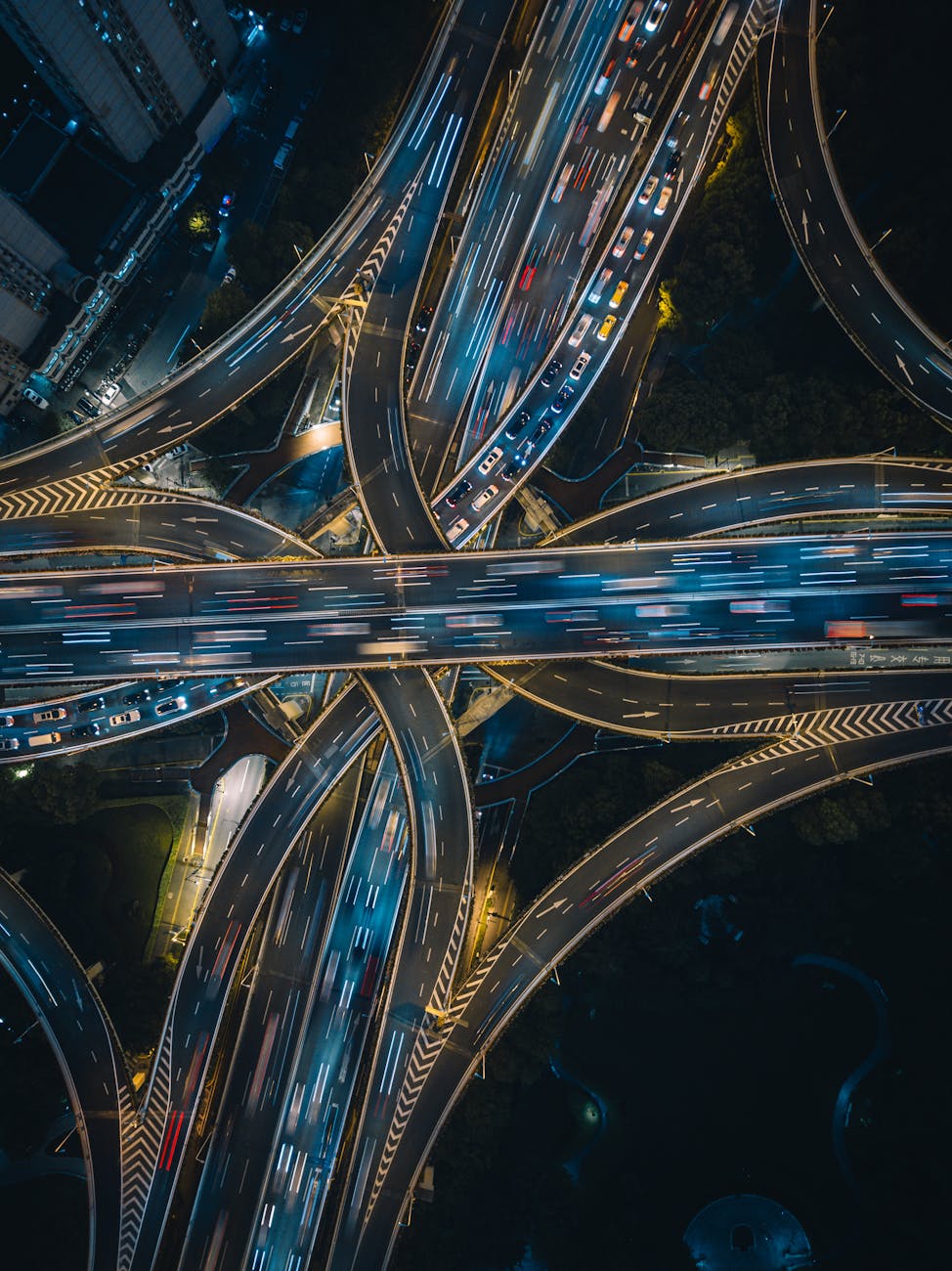
A diverging diamond has a smaller footprint than conventional cloverleafs and is cheaper to build.
Innovation to keep all the vehicles moving smoothly between interstate and a local major road.
What other major roadway changes could help speed up traffic and increase safety? Adding lanes does not necessarily speed up traffic. The Chicago region has plenty of left-turn on green signal only lanes that help reduce certain crashes. Protected bike lanes are only found in a few denser places.
Is the answer in better vehicle technology? Vehicles that talk to each other and/or driverless cars? Smaller or lighter vehicles?
Another possible solution is to reduce the amount of driving. This could be hard in sprawling suburban areas, like where these diamond interchanges are located. Introducing more mass transit options in the region is possible but it is costly, is harder to implement in the suburbs, and it might not find favor among residents.
The drivers at this busy interchange may come to appreciate their new diamond among the asphalt. Others may want to wait for more innovation that improves travel through suburbia.
The traditional American 9-to-5 has shifted to 10-to-4, according to the 2023 Global Traffic Scorecard released in June by INRIX Inc., a traffic-data analysis firm.
“There is less of a morning commute, less of an evening commute and much more afternoon activity,” said Bob Pishue, a transportation analyst and author of the report. “This is more of the new normal.”
Now, there is a “midday rush hour,” the INRIX report found, with almost as many trips to and from the office being made at noon as there are at 9 a.m. and 5 p.m.
Also, commuters have all but given up on public transportation. Ridership sank during the pandemic, Federal Reserve Bank of St. Louis data shows, and never fully recovered.
The rush hour increasingly seems to be “traffic all the time!”
Since this has now been going on for a few years and also includes changes to truck use and ride sharing, what are cities and regions doing differently? What incentives do drivers and organizations have to choose other than drive by themselves when they want?
There does seem to be some possible good will to change traffic patterns when there are major issues, like significant highway repairs or the Olympics. When does regular traffic become a large enough issue that people start acting together?
Even in deep-blue states, a bipartisan coalition keeps the highway funding spigot open, said Amy Lee, a postdoc at the University of California, Los Angeles who wrote her dissertation about California’s failure to constrain highway growth. “The construction-materials companies tend to be very big on the right, and organized labor tends to be very powerful on the left,” she said, and these forces form a pro-highway juggernaut. In January, a coalition of construction companies and labor groups sent a letter to California’s top elected leaders defending “funding for infrastructure projects that may potentially increase vehicle miles traveled”—i.e., highway expansions. (The Laborers’ International Union of North America did not respond to repeated requests for comment for this article.) As with electric vehicles, highway construction seems to be a topic in which environmental and union interests diverge.
Transportation departments don’t want to hear no on highways. In 2022 Oklahoma’s department of transportation preemptively bought 23 web domains, like oklahomansagainstturnpikes.com and stoptheeasternloop.com, that could theoretically be used to rally opposition to the state’s $5 billion highway plan. Speaking up against pavement within a department can be difficult and risky. Last year, Jeanie Ward-Waller, a Massachusetts Institute of Technology–trained engineer who served as the deputy director of planning and modal programs for California’s Caltrans, was demoted after questioning her agency’s plans to widen I-80 between Sacramento and Davis. In an editorial published in the San Francisco Chronicle, Ward-Waller wrote, “My concerns were repeatedly brushed off by my bosses, who seemed more concerned about getting the next widening project underway than following the law.”
At the federal level, even asking questions about the collective climate impact of highway building appears verboten. In 2022 Stephanie Pollack, the acting head of the Federal Highway Administration, called on state DOTs to measure the carbon emissions attributable to their highway systems. Republicans were incensed; 21 states filed a suit, and Republican Senate Minority Leader Mitch McConnell advised governors to simply ignore her.
Democrats have supported highway expansions too. The White House called the Bipartisan Infrastructure Law “a critical step towards reaching President Biden’s goal of a net-zero emissions economy by 2050,” but subsequent analysis by Transportation for America found that state DOTs used nearly a quarter of the $270 billion they received through the law to expand highways, a move sure to increase emissions. (After the infrastructure bill was passed, the head of Louisiana’s transportation department said that “some of the winners I think from this project funding will be things like the Inter-City Connector,” referring to the Shreveport project.)
With so many forces pushing for roadway expansions, opposing them requires political bravery.
As noted above, this system requires resources. And both major political parties tend to support it. They might fight particular projects (also highlighted in the article) but they generally find the money needed for fixing roads and creating new ones.
To reverse course then requires a major political change. Resources could be funneled elsewhere. The topic could become a regular campaign issue. It could join with popular support. How might it be pitched? Here are two areas where I could guess these political appeals might work:
The individual costs of driving are high. Paying for gas, insurance, maintenance, storing a vehicle, and more add up. Are all people interested in paying this year after year after year?
A desire among some (not all) for denser living areas that can support less driving. Even American cities can be sprawling but it seems there is some interest for communities that are more walkable and accessible by other means.
There are other arguments to make, of course. The two I listed get at different opportunities people might want. Pivoting from a transportation method that tends to privilege individual choices to travel wherever they want whenever they want might require providing different opportunities.
The National Highway Traffic Safety Administration is running radio ads that tell people to follow the speed limit in order to increase safety on roads. From their website:
For more than two decades, speeding has been involved in approximately one-third of all motor vehicle fatalities. In 2022, speeding was a contributing factor in 29% of all traffic fatalities.
Speed also affects your safety even when you are driving at the speed limit but too fast for road conditions, such as during bad weather, when a road is under repair, or in an area at night that isn’t well lit.
Speeding endangers not only the life of the speeder, but all of the people on the road around them, including law enforcement officers. It is a problem we all need to help solve.
Traveling at higher speeds mean it is harder to control a vehicle and those vehicles that do hit other things sustain more damage.
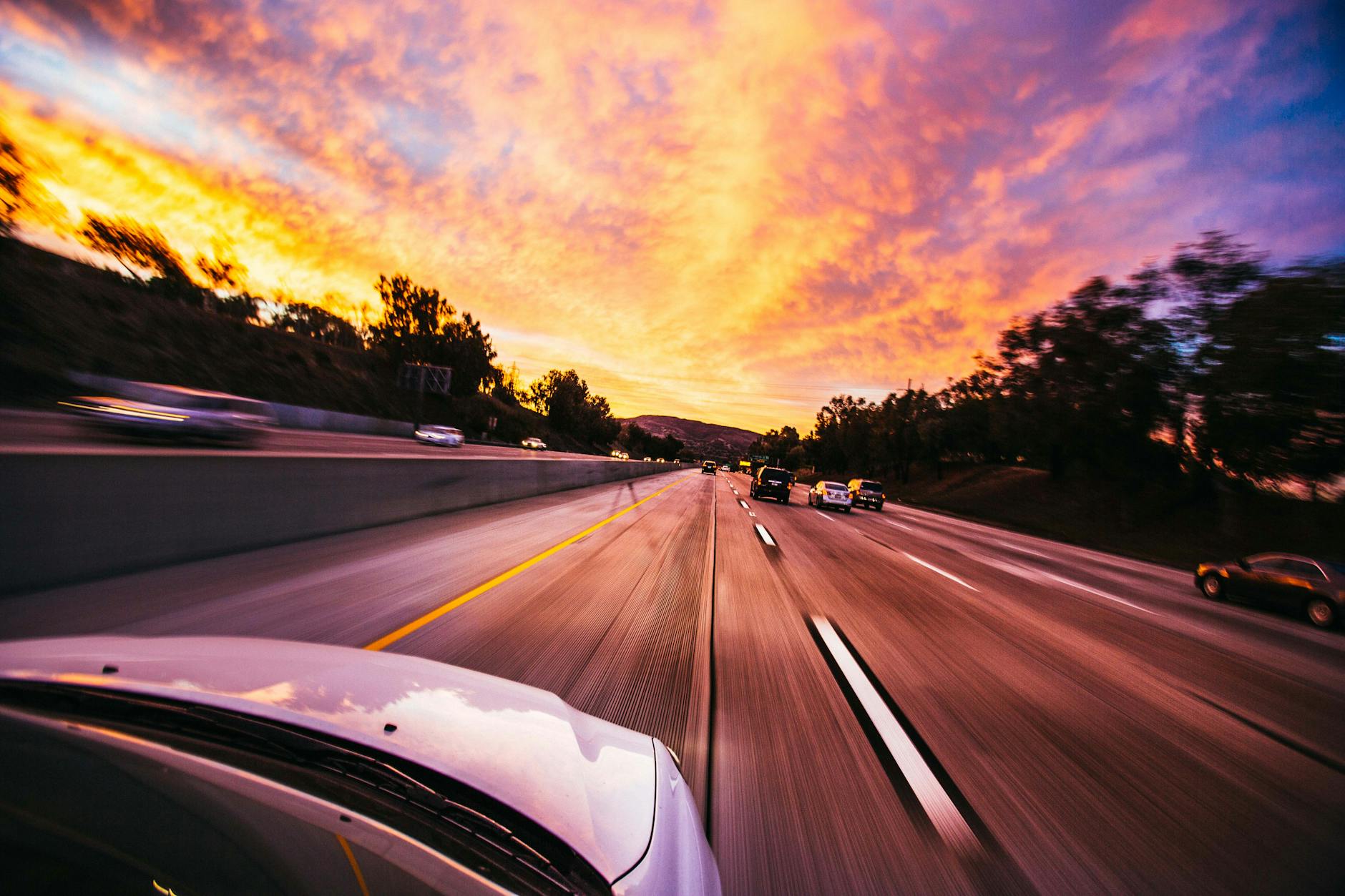
But speed limits can also serve other goals. Perhaps they are also about traffic and the number of vehicles on the roads. Having fewer vehicles means it is possible to go faster, having more vehicles means going at a slower speed makes more sense. Hence, more variable speed limits on highways as speed limits adjust to traffic and conditions.
The National Maximum Speed Limit (NMSL) was a provision of the federal government of the United States 1974 Emergency Highway Energy Conservation Act that effectively prohibited speed limits higher than 55 miles per hour (89 km/h). The limit was increased to 65 miles per hour (105 km/h) in 1987…
The law was widely disregarded by motorists nationwide, and some states opposed the law,[3][4] but many jurisdictions discovered it to be a major source of revenue. Actions ranged from proposing deals for an exemption to de-emphasizing speed limit enforcement. The NMSL was modified in 1987 and 1988 to allow up to 65 mph (105 km/h) limits on certain limited-access rural roads. Congress repealed the NMSL in 1995, fully returning speed limit-setting authority to the individual states.
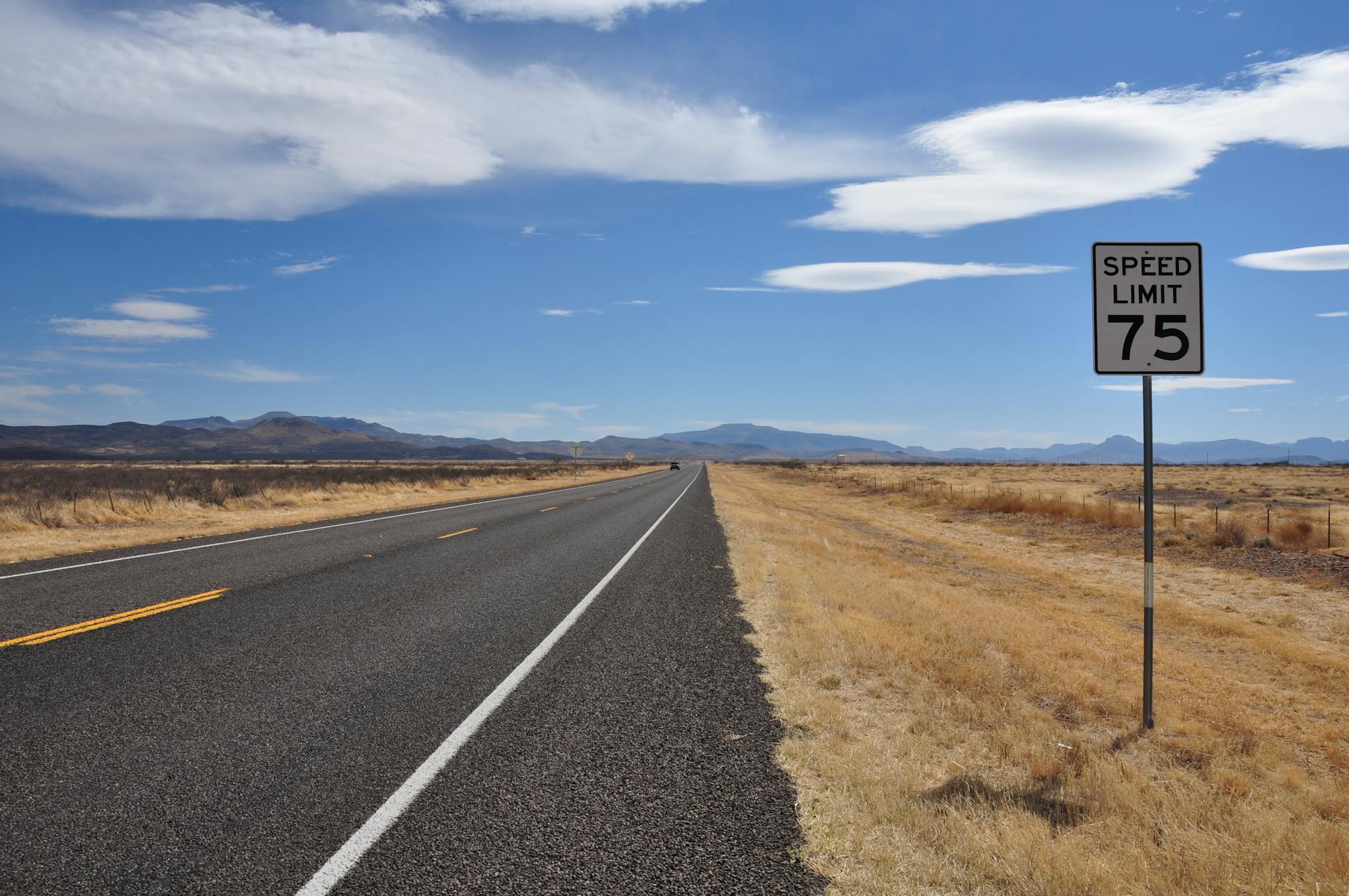
Montana, once known for its wild, limitless roads, did not want to be left behind as other Western states increase their speed limits. Idaho, Nevada, South Dakota, Utah and others have set 80 mile per hour speed limits on at least some sections of road.




 Legally Sociable