How about a speed range rather than a speed limit?

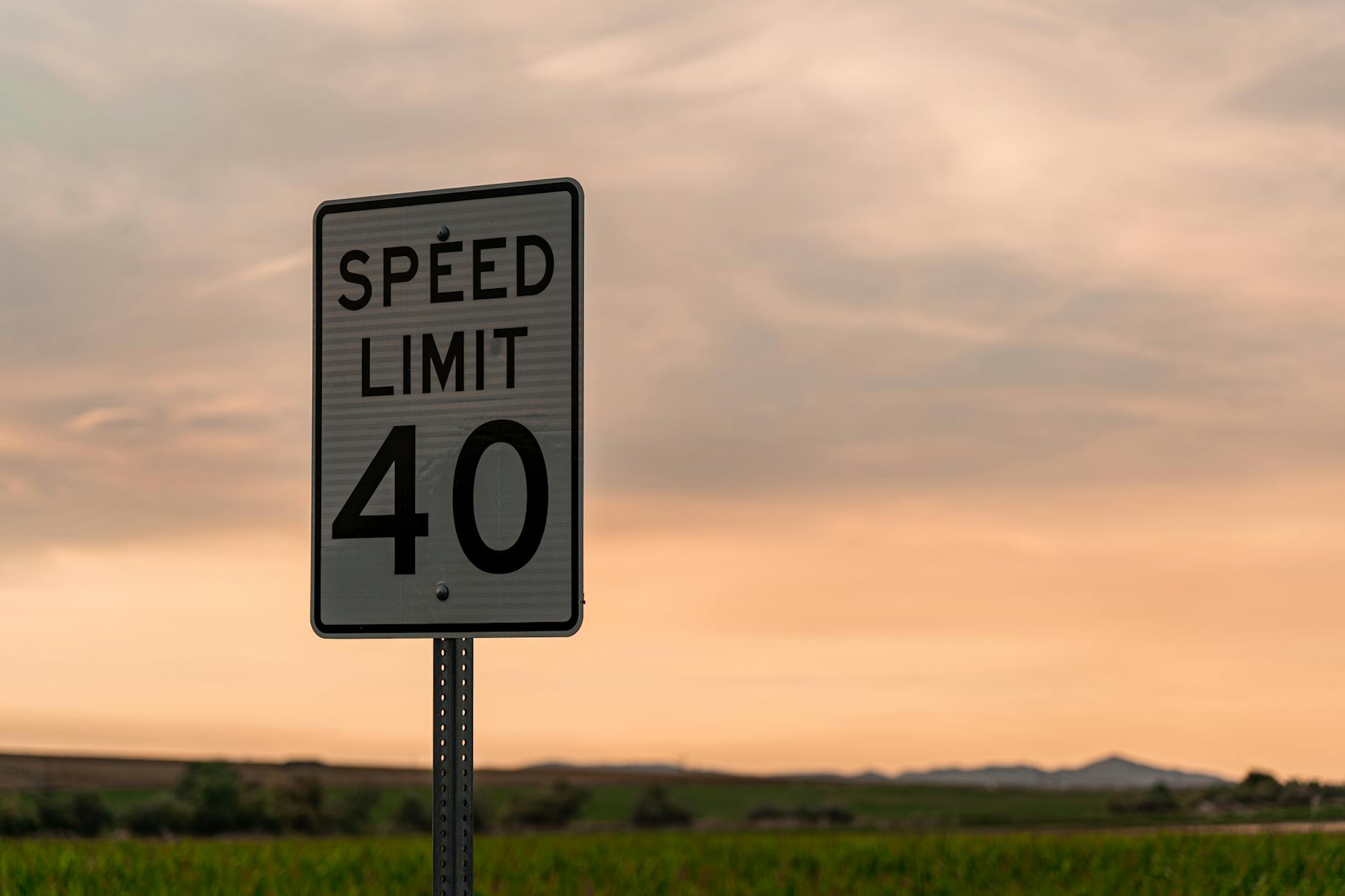
It is rare to find drivers on major roads that will only go as fast as the speed limit. If anything, the speed limit seems like an anchor at the bottom end of possible speeds so that people do not just drive at whatever speed they want. If the speed limit is 45, few will go only 42 or 44 but the speed limit might keep them from going 75 because that is far away from 45. Future technology might change this: if cars have speed limiters, where will the line be set?

Photo by Castorly Stock on Pexels.com

One way to address this is to have no speed limit. Only a few places do this.

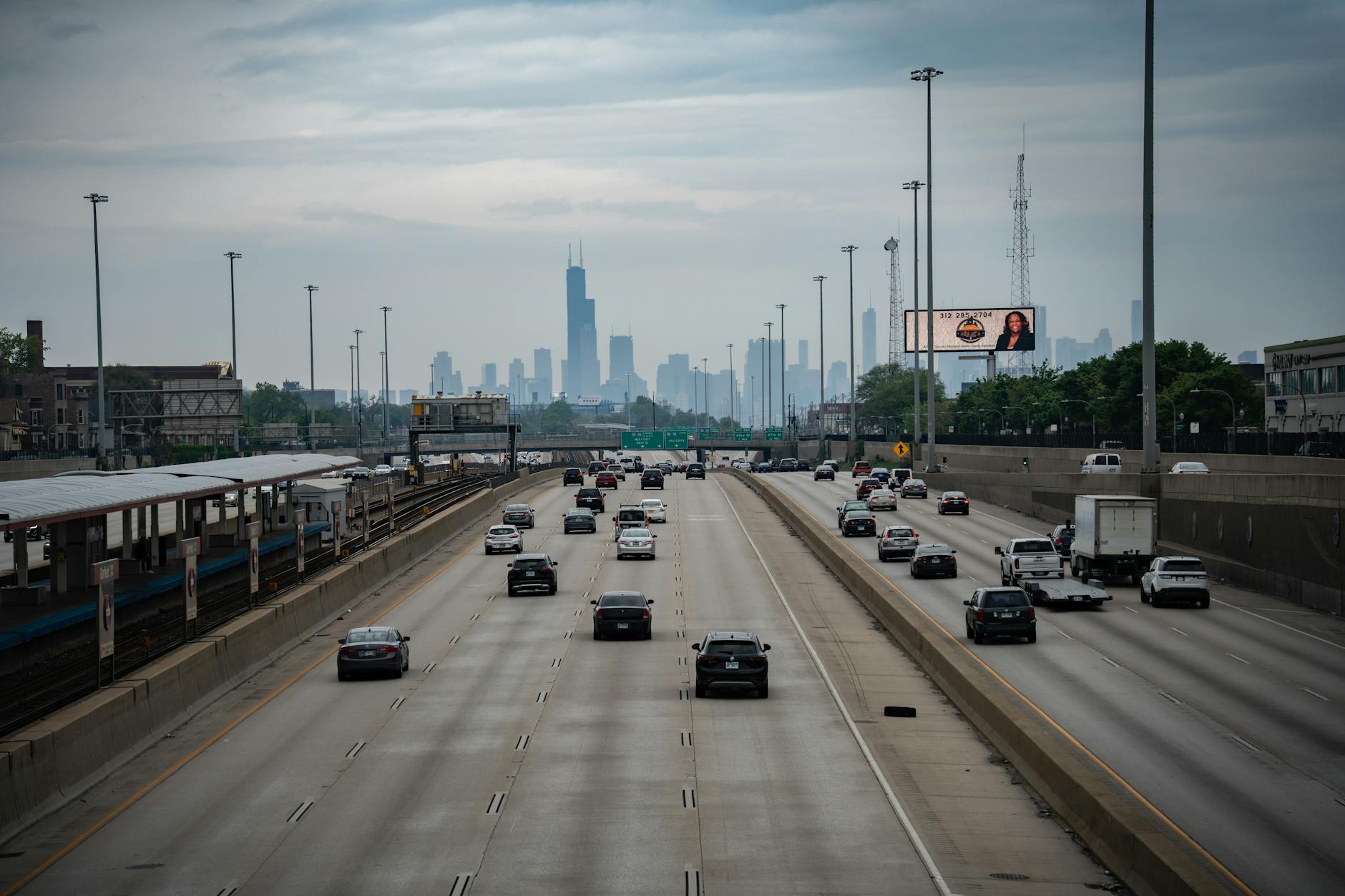
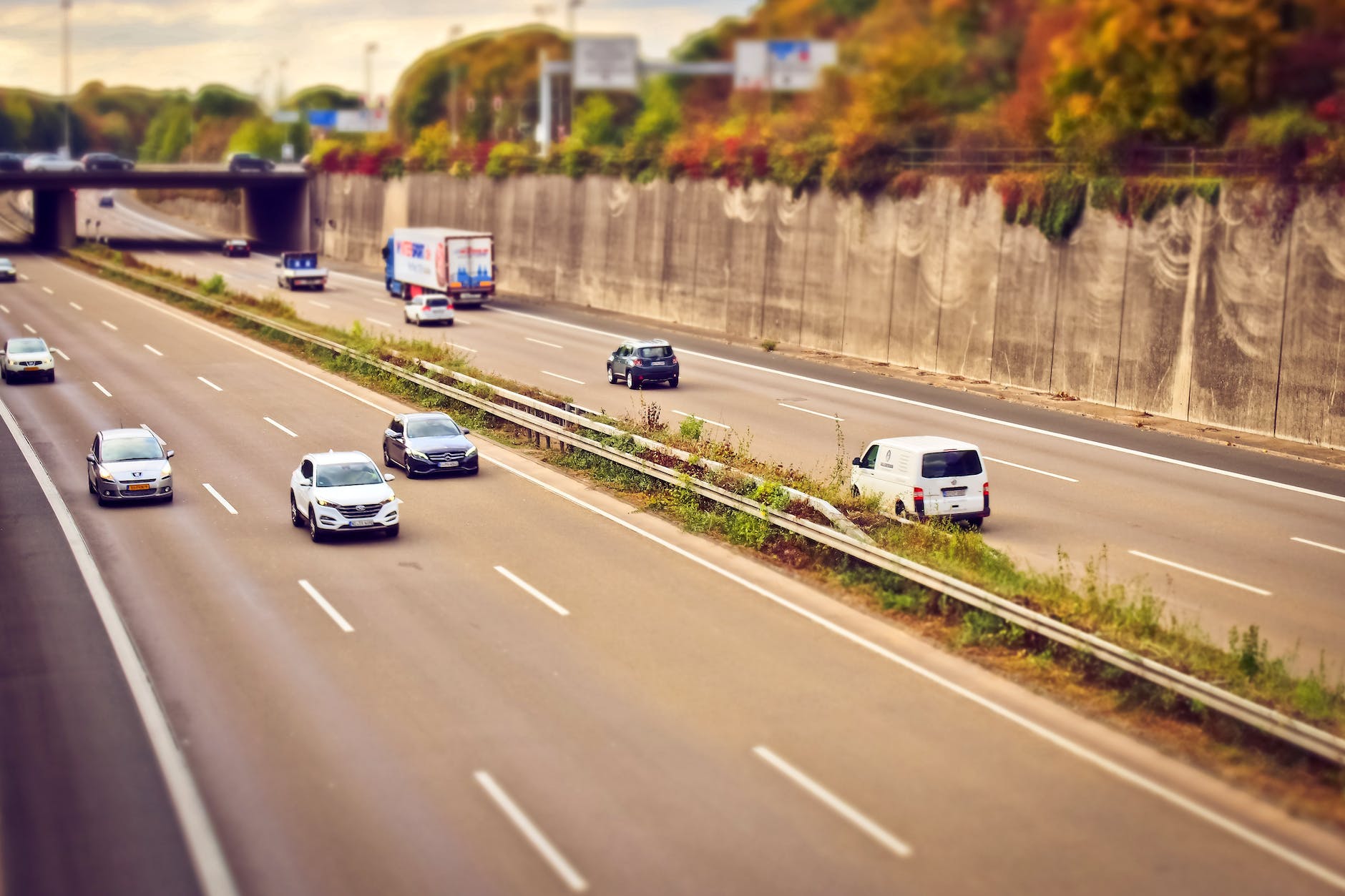
Why not try a speed range? Imagine Chicago highways that have a speed limit of 50-70. Some people might feel more comfortable at the lower end, some at the higher end.

Is the real issue that drivers will not follow any limit unless there is enforcement? Technology could lead to automatically fining drivers (speed cameras, GPS, toll devices, etc.). Or, is it about current conditions (less traffic can lead to higher speeds, more congestion slows speeds)? Some roadways now have variable speeds where digital signs change the speed limits for the given conditions.

All this to say, a speed limit seems more like a number that most American drivers treat as a recommendation and not an imperative. This has big implications for the driving experience, how Americans regard driving, and safety.

From Carmageddon to Highway-Fire-Mageddon to new transportation options in LA

Whereas construction closed down a significant Los Angeles highway in 2011 (and a follow-up in 2012), a fire has now closed down a mile stretch of important highway in Los Angeles:

Photo by moein moradi on Pexels.com

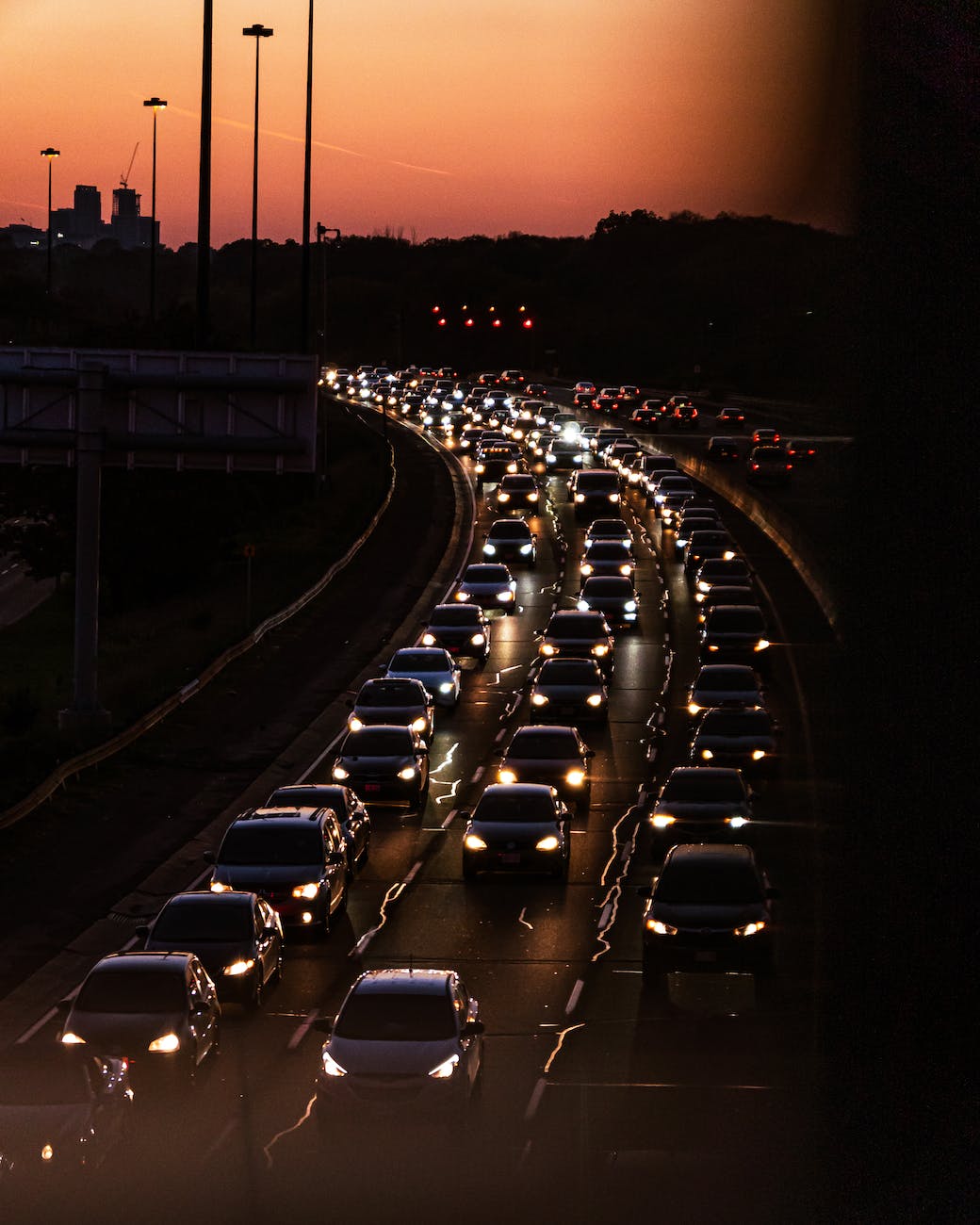
The situation poses a commuting challenge that L.A. has not seen in years, with hundreds of thousands of commuters facing detours and heavier-than-normal traffic. Starting Monday, some worked from home and others took mass transit, but many simply endured the delays.

The closure caused gridlock in some areas, but there was general sentiment that L.A. survived the first morning and evening commute without too much chaos thanks in part to warnings sent to residents’ cellphones…

Federal, state and local agencies are scrambling to determine what happens next after the sudden closure of the mile-long section of the heavily trafficked freeway between Alameda Street and the East L.A interchange, a key east-west route through downtown. Mayor Karen Bass said that U.S. Secretary of Transportation Pete Buttigieg called and reassured her that federal officials were aware of the impact from closing one of the busiest freeway corridors in the country.

“Losing the stretch of the 10 Freeway will take time and money from people’s lives and businesses,” Bass said. “It’s disrupting in every way. Whether you were talking about traveling to and from work, or your child care plans, and the flow of goods and commerce, this will disrupt the lives of Angelenos.”

Los Angeles and the region depend heavily on highways. This is true of all metropolitan areas in the United States but Los Angeles is famous for its driving and its lack of mass transit within a sprawling region.

While I am sure the focus here will be on getting this highway going again as soon as possible, why not think as well as future transportation options? The initial Carmageddons in Los Angeles went rather smoothly but this is another chance to think about additional travel options and building an adaptable and redundant system. If for a variety of reasons residents of the region cannot drive to work or where they need to go, do they have viable alternatives? Fires like this are rare but individuals face all sorts of challenges in getting where they need to go.

More broadly, can more people in the region regularly shift their transportation away from driving alone to other options? As the population of the region grows, the traffic is not going away. Roads do need to be maintained. Accidents will happen on the roadways. When I rode the LA subway on a recent visit, it worked okay one-way (the return trip was derailed by a long delay that pushed me to walking several miles) but it had limited options of where I could go. Are many people willing to ride buses and other forms of mass transit when they might drive?

The highway detours will end at some point but will driving return to normal immediately? Probably yes…but there will likely be more opportunities to consider other transportation options in the years to come.

What you see when you drive in American cities: signs

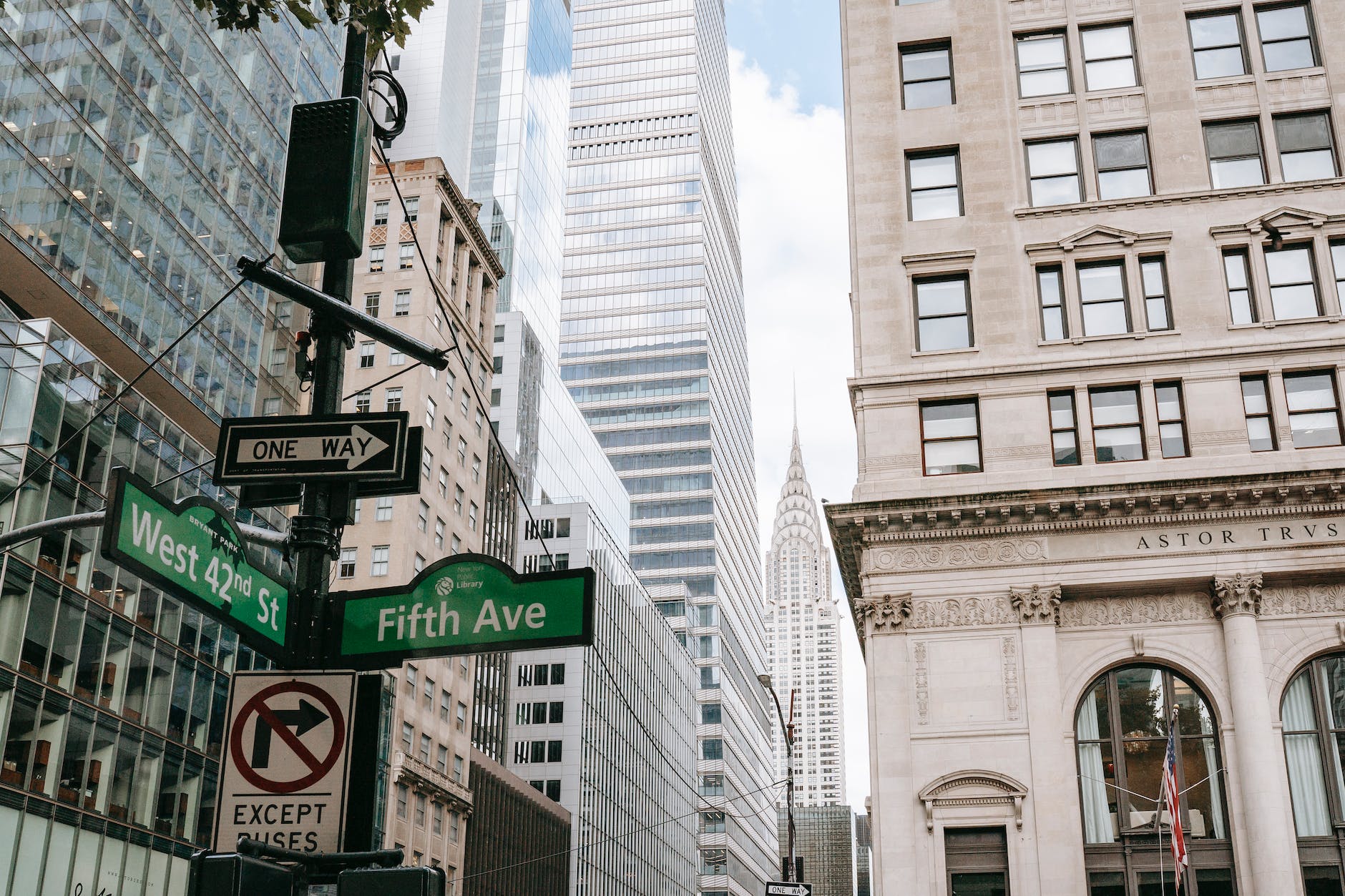
After seeing plenty of vehicles and buildings while driving recently through cities, I also observed a lot of signs. When driving at fast speeds, large signs are necessary so that drivers can read them and so that they catch people’s attention.

Photo by Charles Parker on Pexels.com

What can be learned from these signs? Here are a few of the domains:

-Information about roadways. From street signs to exit signs, there is a uniformity to information drivers need to navigate. These signs can help a driver navigate a complicated city full of other vehicles and buildings.

-Information about goods and services. Advertising signs are all over the place. They might be for a particular brand, a product, a store or restaurant, or an experience. While road signs are bland and to the point, advertisements tend use more images and text to deliver a particular message.

-Information about local attractions. These could be simple notes on highway signs for a stadium or park or more elaborate advertisement for specific local institutions.

In other words, there are a lot of signs vying for a driver’s attention. If there is time to read even most of the signs (such as being stuck in traffic or at an intersection), they can reveal much about the location and the city. But, add all these signs to the buildings and vehicles and it can be hard to take it all in.

What you see when you drive in American cities: buildings

Continuing a short series on what I observed of cities in recent driving journeys, I noticed many buildings. This included residences, businesses, office buildings, schools, skyscrapers in the bigger cities, and more. Some are newer, some are older.

Photo by Joey Kyber on Pexels.com

Driving by at a fast speed, it is easier to observe a sizable building. A really tall structure might be visible for miles. A long structure means a driver has a few seconds to see the building while driving by. Small buildings go by really quickly. The single-family home, an American favorite, is hard to see well at high speeds.

The scale between vehicles, buildings, and roadways can be interesting. Highways might be above the ground, at ground level, or below ground. Because of the highway speed, they are not at the same spatial scale as local roadways. Buildings can tower over a roadway, making it difficult to see over or around them.

The view from the highway does not always present the best side of buildings. In denser areas, the back side of buildings tend to face the highway as their primary orientation is toward a local street. However, some buildings, including suburban office buildings, are set back a bit more from highways and offer different views. Driving down major roads (not highways) in cities can often present a range of structures within a short amount of space. In a land where land uses can be rather uniform in places, the variety of urban structures can make for a fun sight.

While this is not new, I was reminded on these recent drives that many American buildings have hard or cold exteriors. This means a lot of brick, stone, metal, or glass. These materials might be durable or fit a particular style, but this does not mean the buildings necessarily look inviting or warm.

What you see when you drive in American cities: lots of motor vehicles

In recently driving in and around several big cities, I was struck by what I could (and could not) see. I certainly observed a lot of motor vehicles on highways and roads.

Photo by Miguel Barrera on Pexels.com

It is long evident that Americans prioritize cars and trucks on their roads. There might be room for some pedestrians (be safe!), mass transit, and bicyclists and scooter users but these are not as numerous as all of the cars and trucks.

The range of vehicles really does run the gamut. On the same major roads, one can find all sorts of trucks (delivery trucks, dump trucks, tankers, car carriers, etc.) and cars ranging from expensive luxury models to those who look pieced together to newer electric vehicles. If I wanted to see what Americans are driving for personal and business trips, I would recommend driving some of the highways that go right through urban centers and one can observe a wide variety.

Even with at least some people working from home, there are plenty of vehicles at many hours of the day. For many residents and companies, it is easiest to go via vehicle than other option. Driving is still a preferred method, even in cities with busy roadways.

If a driver truly wanted to be safe and only focus on the road around them, there is plenty to see. On many of these busy roads, tens of thousands or even hundreds of thousands of vehicles might pass by each day.

Trying to put back together urban neighborhood split decades ago by highways

New monies from the federal government are intended to help neighborhoods deeply affected by highway construction:

Photo by Pixabay on Pexels.com

Kansas City officials are now looking to repair some of the damage caused by the highway and reconnect the neighborhoods that surround it. To date, the city has received $5 million in funding from the Biden administration to help develop plans for potential changes, such as building overpasses that could improve pedestrian safety and better connect people to mass transit.

The funding is an example of the administration’s efforts to address racial disparities resulting from how the United States built physical infrastructure in past decades. The Transportation Department has awarded funding to dozens of projects under the goal of reconnecting communities, including $185 million in grants as part of a pilot program created by the $1 trillion bipartisan infrastructure law.

But the project in Kansas City also shows just how difficult and expensive it can be to reverse long-ago decisions to build highways that slashed through communities of color and split up neighborhoods. Many of the projects funded by the Biden administration would leave highways intact but seek to lessen the damage they have caused to surrounding areas. And even taking out a roadway is just a first step to reinvigorating a neighborhood.

“Once you wreck a community, putting it back together is much more work than just removing an interstate,” said Beth Osborne, who served as an acting assistant secretary at the Transportation Department during the Obama administration and is now the director of Transportation for America, an advocacy group.

In the name of fast travel between outlying areas and the city, such highways removed people and buildings, disrupted economic corridors, and created barriers between neighborhoods.

From the examples provided in this article, it sounds like this money will be used to try to reestablish streetscapes. Wide highways made it difficult for pedestrians to walk between places. Businesses had to rely on vehicle traffic. Decades after the highways were constructed, there may be relatively little activity on roadways near the highways.

Simply creating better paths over a major highway could be helpful. Removing a highway can also help, as evidenced by at least a few projects in American cities. But, there is a lot that goes into a streetscape. It takes time and resources to recreate thriving neighborhoods with multiple factors at play. Even then, vibrant sidewalks and streetscapes are relatively hard to find in American communities given the other priorities Americans emphasize.

What are the odds the new Kennedy Expressway construction ends in 3 years?

Chicago area drivers will soon face another major construction project, this time on the Kennedy Expressway, for several years:

Photo by Chait Goli on Pexels.com

The $150 million project will take place along a 7.5-mile stretch from the split at I-94 south to Ohio Street, and at the massive underpass near Hubbard Street downtown. It will include rehabbing 36 bridges and the highway’s reversible express lane access system, replacing overhead signs, upgrading lighting, paving and painting.

The work is designed to improve safety, traffic flow and reliability on the 10-lane expressway, used by more than 275,000 drivers each day, the Illinois Department of Transportation said. The last major rehabilitation of the 63-year-old roadway was in 1994, and bridges were last repaired a decade ago.

Construction is expected to take place in phases over the next three warm-weather seasons, starting with the inbound, or southbound, lanes this year…

The outbound work and the updates at Hubbard’s Cave are expected to be complete in late fall 2025.

The last major road project nearby went over budget and over time. Are there publicly posted odds regarding this project?

Given the importance of this stretch of highway for the Chicago road network, it is hard to say that the construction should not happen. Even as the cynic might note that as soon as this project is over the next stretch of the Kennedy will be under construction, roads do need repair. But, what are the consequences if the project is not completed on time? Are there any significant incentives that can help make sure this project stays on track and within budget?

It does not help that the timeline for this project is so long. At some point, the regular driver on the Kennedy may have a hard time remembering when the road was not under construction. In fall 2025, how many will remember the optimism of a prediction of 3 years? If it goes into 2026 and the cost went up some, how many will care? I will set a mental note for late 2025 but we will see what happens…

Accounting for the “iron law of congestion”

Why is building more lanes to address traffic issues not the best way to go? See the iron law of congestion:

Photo by Pixabay on Pexels.com

There’s a name for the principle behind that apparent paradox: induced demand. Economist Anthony Downs is often credited with first articulating this “iron law of congestion” in 1962, as construction crews were hacking interstates through American cities. Downs published a seminal paper with a stark warning: “On urban commuter expressways, peak-hour traffic congestion rises to meet maximum capacity.” In other words, adding lanes won’t cure snarled traffic; the additional car space inevitably invites more trips, until gridlock is as bad as ever.

Downs was not the first to sound an alarm about the futility of expanding urban roadways — not by a long shot. In 1932, an association representing streetcars warned that “as fast as improvements are made in existing arteries of travel … they are saturated by an increasing volume of traffic.” In 1955, urban observer Lewis Mumford wrote a series of essays in the New Yorker titled “The Roaring Traffic’s Boom,” in which he memorably compared a highway planner widening a congested highway to “the tailor’s remedy for obesity — letting out the seams of trousers and loosening the belt. [T]his does nothing to curb the greedy appetites that have caused the fat to accumulate.”

Downs’ iron law applies not only to U.S. cities, which have grown more traffic-jammed despite billions of dollars in fresh pavement, but also to those around the world. Highway expansions in Norway and Britain haven’t reduced congestion there, either. The principle now meets little opposition among economists and urban planners. “It’s widely accepted,” says John Caskey, who teaches induced demand as part of his urban economics course at Swarthmore College. “For economists interested in urban transportation, there isn’t really any debate.”…

But turning down a new highway lane remains politically challenging. “The highway construction system has vast momentum,” says Rose, the historian. “It has the authority of highway contractors, builders and labor unions. Here is something that labor and management really can agree on: a highway contract.” The auto industry, too, continues to benefit from ongoing investments that expand the “floor space” allotted to its products. In 2019, Tesla CEO Elon Musk tweeted that induced demand “is one of the most irrational theories I’ve ever heard.”

Build it and they will come.

As I read through the longer narrative in this article, it seems that the needs of the automobile were prioritized by drivers, businesses, those in the road industry, and politicians. This has been going on for roughly a century; would academic theories with evidence behind them be able to overcome these interests?

Perhaps at some point in the future, we will able to look back at “peak road” or “peak highway.” Is there a point where new roads and highways or lanes are no longer pursued in the United States? Even if population growth stagnated or slowed, would the United States continue to build roadways? Maybe the costs of maintaining all those roadways will help lead to this moment. It is hard to imagine other scenarios; even as fewer people drive to work compared to earlier years, traffic continues.

A hub-and-spoke highway system in the Chicago region leads to more traffic

In reaction to a new report suggesting Chicago area drivers faced the most traffic of any region, one expert highlights the design of the highway system in the region:

Photo by W W on Pexels.com

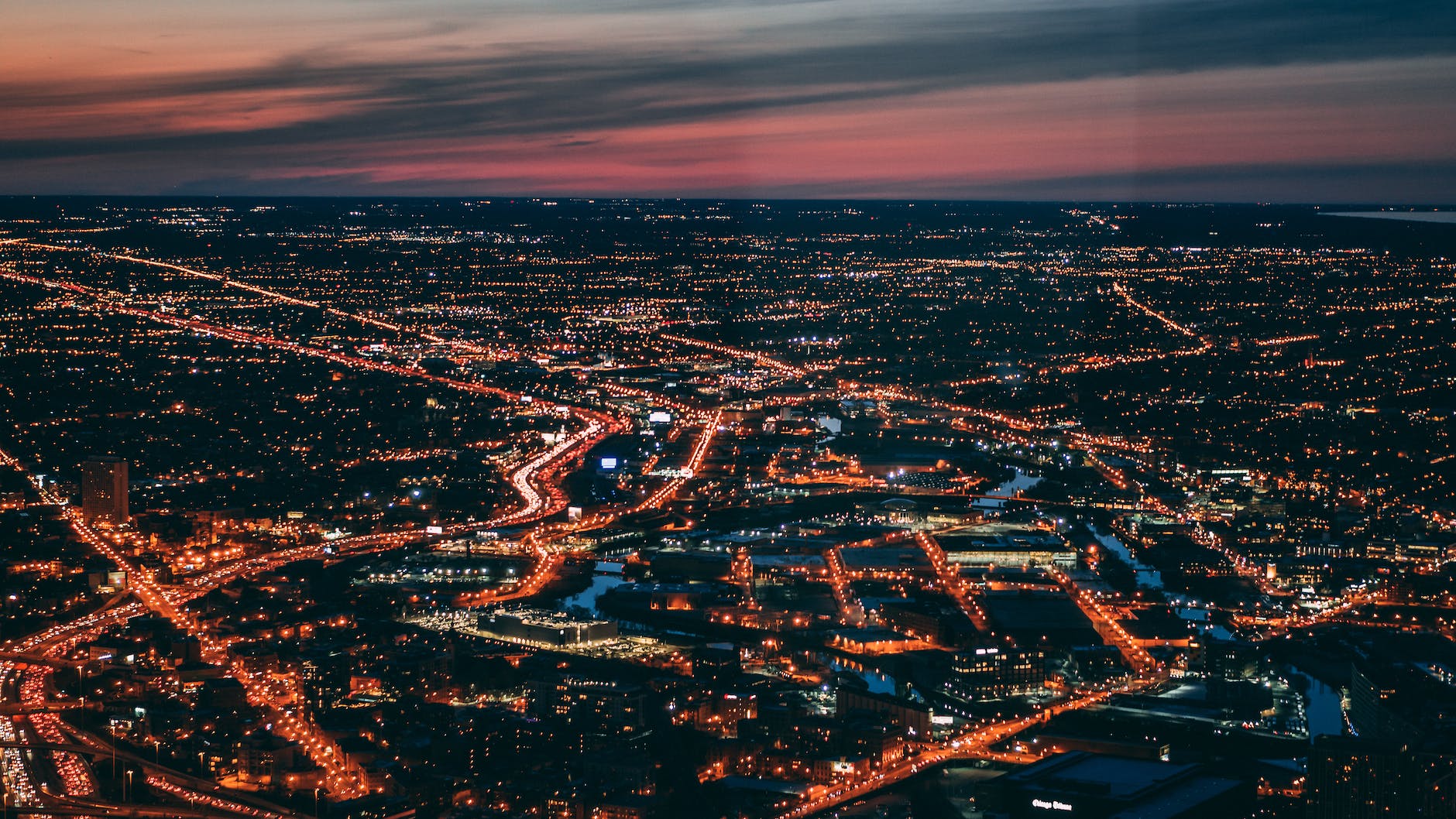
The design of Chicago’s expressways are also partly to blame, as they funnel traffic into downtown.

“The design of our expressway system has hurt traffic flow for generations,” Schwieterman said.

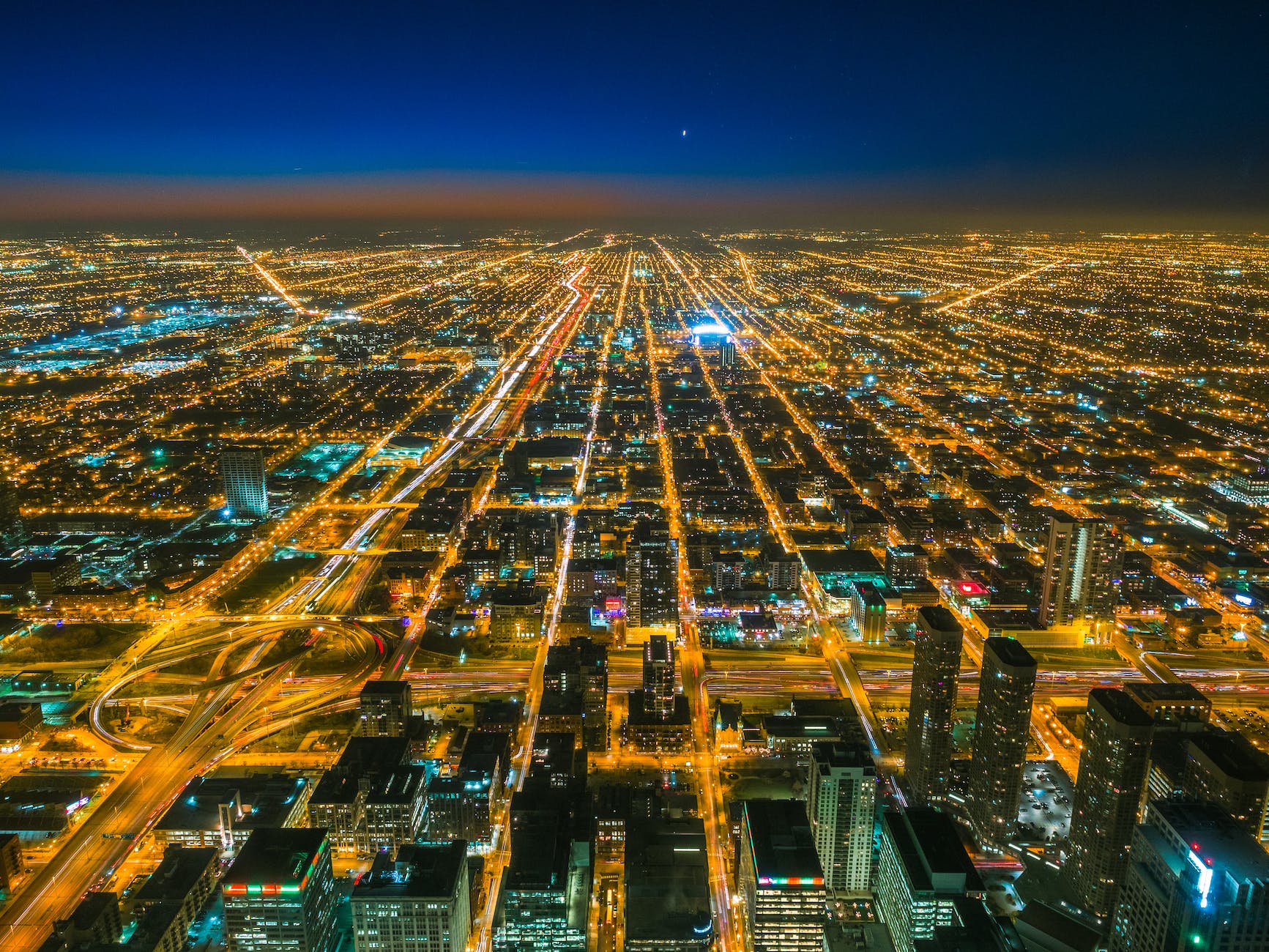
The Chicago highway system consists of numerous paths leading right to downtown. Several of these highways converge at the Jane Byrne Interchange, leading to traffic and construction issues. Another connects to the lakefront just south of Grant Park. There are several ring highways but they do not necessarily connect all of the relevant parts of the region. One short highway famously went to neither place in its name.

This is not limited just to highways; the railroad system in the region also operates this way. Numerous early railroads ended right in the heart of the city and along the riverfront. The current system has all sorts of congestion issues with the amount of railroad traffic trying to move in and through the region. Railroad passengers in the region cannot travel easily between suburbs because most trips require going into the city first and then going back out on another line.

At one time, this system may have made sense. The Chicago region, as in multiple regions in the Northeast and Midwest, was organized with a dense commercial district at the core. Today, this makes less sense in many US metropolitan regions where the many trips and commutes are suburb to suburb. Throughout a region, suburbs are job centers, entertainment centers, and residential communities.

Reconfiguring infrastructure like highways, railroads, and mass transit to fit these new realities – perhaps now exacerbated by more employees working from home – is a long process with multiple avenues to pursue.

Metrics we need: claim that an expensive and lengthy construction project will cut delays 50%

With the unveiling of the reconstructed Jane Byrne Interchange in Chicago, this promise was made:

Photo by Life Of Pix on Pexels.com

Illinois Department of Transportation engineers are promising a 50% improvement in traffic delays as the interminable Jane Byrne Interchange rebuild wraps up…

It’s estimated the redo could save more than $180 million hours annually in lost productivity from workers in traffic jams and result in a one-third reduction in greenhouse gases.

Can we start tracking this immediately and see if the promise is true?

With numerous major projects facing longer-than-predicted timelines and significant cost overruns, perhaps this is a way forward in marketing. Ignore the extra time and money; it will be worth it!

At the same time, why not use similar metrics for all sorts of infrastructure projects? Infrastructure is needed for many areas of modern life to go well. Yet, people may not want to endure construction or costs. Promises like this at least fix a number on what people might experience as a positive outcome. And if the modeling is so difficult, does this mean that it might be hard to justify a big project? (I could imagine a different number that is also accurate but less negative: without this project, there will be this % of a negative outcome.)