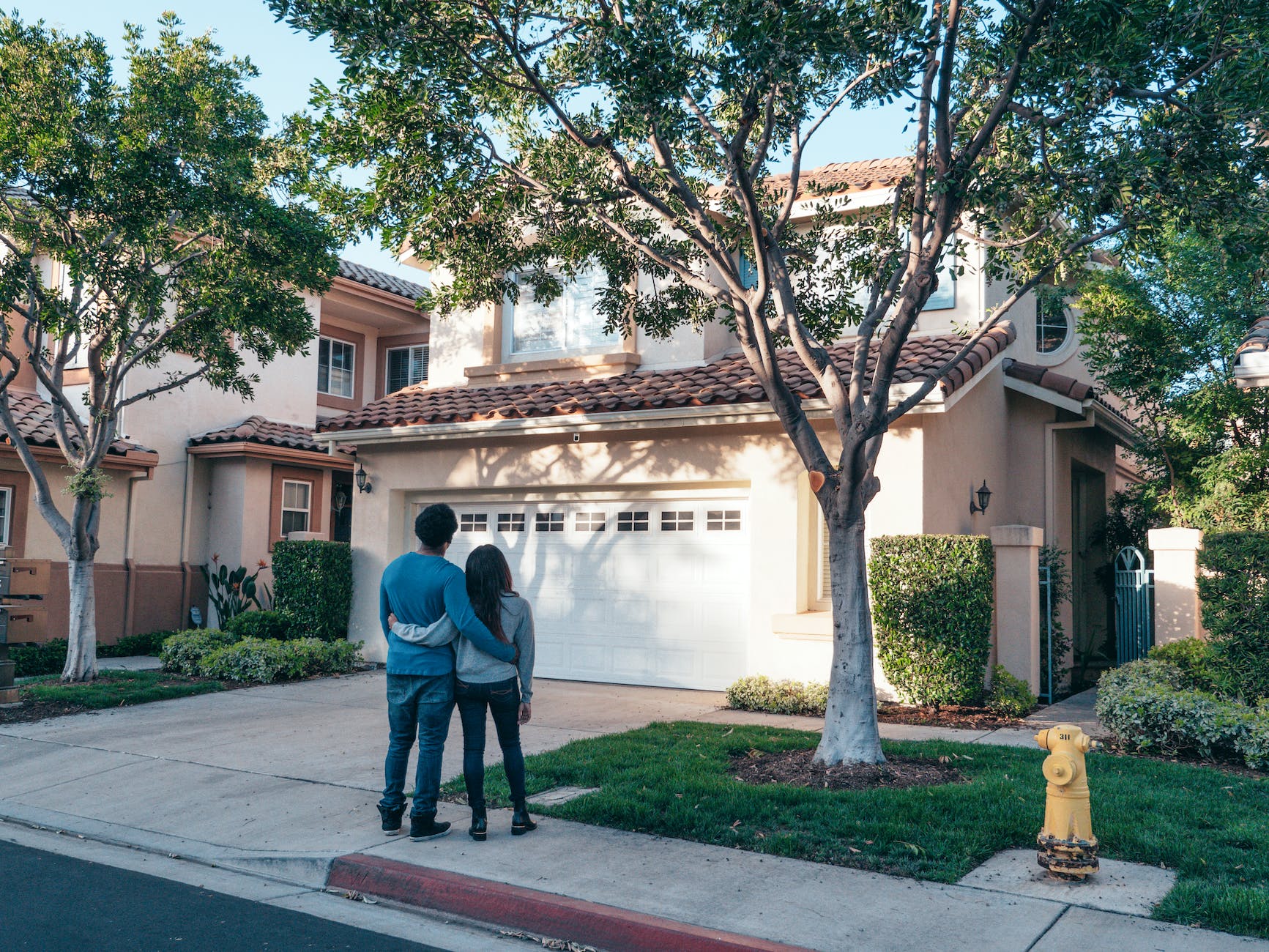
Baby Boomers own a lot of large homes

A new analysis suggests older adults own a larger proportion of large homes than they did 10 years ago:

Photo by Matthias Zomer on Pexels.com

As a result, empty-nest Baby Boomers own 28% of large homes — and Milliennials with kids own just 14%, according to a Redfin analysis released Tuesday. Gen Z families own just 0.3% of homes with three bedrooms or more…

This is a change from the historical norm, according to the research. Ten years ago young families were just as likely as empty nesters to own large homes…

For those who own their home outright, the median monthly cost of owning a home, which includes insurance and property taxes, among other costs, is just $612, according to the report.

“Logically, empty nesters are the most likely group to sell big homes and downsize,” said Bokhari. “They no longer have children living at home and don’t need as much space. The problem for younger families who wish their parents’ generation would list their big homes: Boomers don’t have much motivation to sell, financially or otherwise.”…

This speaks to one of the assumptions of American housing: older adults are expected to move out of larger homes and move to smaller homes or ones that better suit their needs later in life. This frees up their homes for the next generation to move into.

Is this the way it has always worked? Might patterns change heading into the future?

Several thoughts on these trends:

  1. Americans like bigger homes. As the size of American homes has increased, might Americans want to keep these larger homes as long as possible?
  2. Houses are places to live and strategic investments. Older residents may not need all that space but wouldn’t they want to cash out as late as possible on this large asset?
  3. An emphasis on living independently and youthfully may mean that staying in a house is a sign of vitality (while moving would be a sign of weakness). Why sell if you can still live in a big house?

This could be the product of a unique confluence of factors in recent decades: a sizable birth cohort, a change in what housing is and what housing is available, and an unprecedented growth in housing values.

“Stuck between the hot housing market and the hot job market”

Housing values are up and there are jobs to be had – but many of the jobs to work are in places where housing is expensive. What gives?

Photo by Ron Lach on Pexels.com

All over the country, employers like McDonnell are finding themselves stuck between the hot housing market and the hot job market. In Oregon, rural school districts have puzzled over how to provide enough housing for teachers. In rural Arizona, hospitals are renting out rooms to staff members. In Massachusetts, the state has helped support temporary housing for summer workers on Cape Cod.

The result is a kind of tug-of-war between two of the economy’s main pillars. On a small scale, these transactions are just business owners and employees working things out in one-to-one agreements. But the underlying tension caused by the housing market could permanently shape how people decide where to live, what jobs to take — and whether the economy is working for them.

No one thinks a lack of housing is enough to spoil momentum in the labor market. Employers have added workers for 34 consecutive months, after all, and the job market is still churning. But some economists still worry about the knock-on effects of the country’s housing challenges. Until enough homes get built in the places that need it most, more companies will have to get creative — through higher pay, remote work options or other perks — to ensure their workers can find a place to live…

Martin estimates that offers don’t work out more than half the time, largely because of housing issues. And even when they do, Martin said, she’s never seen so many professionals in mid-level management roles, earning $60,000 or $75,000 per year, who still need roommates to make it work.

I remember a presidential candidate suggesting people should be able to live near where they work

The most interesting part of the article above is that it sounds like at least a few employers are getting creative in providing housing so they can have workers and stable employees. If the market or government cannot provide housing, employers and organizations can help.

This is a long-term issue in the United States that sometimes goes by the name of “spatial mismatch.” This refers to the situations where the jobs available do not line up with where people live. Particularly with jobs scattered throughout metropolitan regions, workers have difficulty finding housing near work opportunities and/or need to commute long distances.

Since job growth has continued for a while now, does this mean only certain workers have been able to take advantage of certain jobs? For example, those with more resources or housing equity in their current location or an ability to commute long distances could have an advantage for jobs. At some point, will there not be enough workers to fill some of these spots?

If NIMBY movements wanted to protect property values, were they wildly successful?

The last fifty or so years of life in the United States has included numerous NIMBY efforts by residents (see recent examples here, here, and here). One of the reasons for NIMBY activity is to protect property values. Did NIMBY efforts lead to higher property values?

Photo by Monstera Production on Pexels.com

I was thinking about this recently after reading more Internet/social media chatter about the rise in housing values in recent decades. The appreciation in value is astounding in many places.

NIMBY efforts could have contributed to this in multiple ways. They may have limited housing supply. One common argument regarding promoting more affordable housing prices is to build more housing units. This will reduce demand for existing units.

Or, NIMBY movements may have limited what communities will build. When they do construct housing, it is of similar or better quality of what is already there so as to not create downward pressure on prices.

Or, effective NIMBY efforts have kept less desirable uses away from housing. In particular, single-family homes are often located away from other land uses perceived to threaten property values.

These actions led by residents may not be the only reason housing and property prices have soared. Residents are not the only actors with influence in housing markets and communities; certainly the actions of those involved in real estate, local officials, and others contributed to increased property values.

However, taking the long view, if NIMBYs have acted in order to protect property values, does it appear – whether they directly caused it or not – that this was successful?

Average sales price of houses up over 500% since 1983

An article on generational wealth transfers in the United States highlighted this significant rise in the average selling price of homes from 1983 to today:

From reading the chart, the rise in average prices is over 500% from roughly $90,000 in late 1983 to over $500,000 in early 2023. This, presumably, can be seen in communities across the country.

This is quite the rise. In this time, leaders promoted the ideology of homeownership. Americans came to see housing as more of a financial investment. It was the time of McMansions. Sprawl continued and zoning protected single-family homes.

Now there is a lot of money tied up in homes and real estate plus homes have become an even more important marker of wealth. As the article asked, will the transfer of wealth in these homes simply reproduce existing disparities in housing? Or, might there be ways that the increased value of housing help promote access and opportunities for others?

Trying to build more affordable housing, Hawaii edition

The housing situation in Hawaii has gotten worse:

Photo by Jess Loiterton on Pexels.com

The median price of a single-family home topped $1 million in most areas of Hawaii during the coronavirus pandemic and has declined only modestly since. The state has the fourth-highest per capita rate of homelessness in the nation after California, Vermont and Oregon. On Thursday, new data showed the islands experienced net population loss five of the last six years. In 2022, U.S. census data showed more Native Hawaiians live outside Hawaii than within.

Some of the action taken thus far:

In one of his first moves after taking office in January, Democratic Gov. Josh Green created a new housing czar to oversee the effort. One thing Chief Housing Officer Nani Medeiros is focused on is identifying roadblocks and redundant permitting at local and state levels that can hold up construction. The administration also wants to pour $1 billion into housing programs, including $450 million to subsidize the construction of affordable dwellings.

Lawmakers have sponsored bills to trim bureaucracy, fund public housing renovations and encourage construction of dense housing on state land next to Honolulu’s planned rail line…

Some moves to shore up affordable housing by easing development regulations are being met with trepidation by conservationists, who warn that going too far in that direction could endanger the islands’ world-famous ecosystems and farmland…

Currently, housing construction is not keeping up with demand. Only 1,000 to 2,000 new housing units are being built in Hawaii each year. Those numbers are dwarfed by the 50,000 new units a 2019 state-commissioned study estimated would be needed by 2025.

This sounds similar to addressing affordable housing in numerous United States locations: high prices, limited land, long wait times to approve projects and carry out construction, and concerns about expanding development. It sounds like there are concerns particular to Hawaii as well.

In the bigger picture, the United States would benefit from states, metropolitan regions, and/or cities that can solve some of these affordable housing issues. What is the best path forward, particularly in balancing the interests of property owners, those who want to preserve green space and habitats, and the needs for more cheaper housing? A successful blueprint, or even several, could go a long way.

Midwest leads the way in homes selling for under $250k in February

In a larger story about home prices falling in February, this graphic shows the percent of homes in each region sold in different price categories:

Only in the Midwest region are close to 50% of the homes sold at $250,000 or under. The Northeast is roughly at 33%, the South is roughly at 26%, and the West is roughly at 6%.

So does this mean there are more starter homes in the Midwest? Not necessarily. Perhaps this is linked to incomes in the region and less household wealth for people to spend on homes. Perhaps the housing stock of the homes is older and the homes need more rehab. Perhaps there is less demand for the homes due to slower population growth.

Still, the differences are stark. Could Midwestern states and communities advertise that they have cheaper housing? (Of course, an influx of residents could push housing prices up as has happened in certain locations throughout the United States.)

Homeowner’s wealth drops in recent months but still up significantly from beginning of pandemic

The amount of wealth homeowners in the United States has dropped in recent months:

U.S. homeowners have lost $2.3 trillion since June, according to a new report from the real-estate brokerage Redfin. The total value of U.S. homes was $45.3 trillion at the end of 2022, down 4.9% from a record high of $47.7 trillion in June. That figure signifies the largest June-to-December percentage decline since 2008.

But housing wealth is significantly up since the beginning of COVID-19:

“The housing market has shed some of its value, but most homeowners will still reap big rewards from the pandemic housing boom. The total value of U.S. homes remains roughly $13 trillion higher than it was in February 2020, the month before the coronavirus was declared a pandemic,” said Redfin Economics Research Lead Chen Zhao in the report.

“Unfortunately, a lot of people were left behind. Many Americans couldn’t afford to buy homes even when mortgage rates hit rock bottom in 2021, which means they missed out on a significant wealth building opportunity,” Zhao added.

If many Americans view housing as an investment, then owning a home during the pandemic has paid off. Just by being a homeowner at the right time, they benefited.

Hence, I am a little confused by the story that leads with the recent data. The recent drop is just a portion of the big gain from February 2020 on. People do feel losses strongly but the bigger picture is that homeowners have gained much in recent years.

Starter home prices up, luxury home prices down

Here is some data on prices on different ends of the housing market:

Photo by Miguel u00c1. Padriu00f1u00e1n on Pexels.com

Indeed, a Realtor.com report found that while starter homes — which it defines as all two-bedroom listings — seem unaffected by the current correction in the housing market, luxury homes have been feeling the full effects…

The price trajectory for luxury homes — which Realtor.com defines as the most expensive 10% of homes in any given market — however, went the opposite way.

Their prices “skyrocketed as the stock market surged and buyers sought more living space” during the pandemic: in the middle of 2021, there was a  40% year-over-year price increase for luxury homes but by the end of the year, the luxury market receded as recession fears increased. And in 2022, luxury homes have seen modest-to-stagnant price growth, around 2.5%, ending the year close to flat…

“If you think of luxury home purchases as discretionary, starter home purchases are almost the opposite,” Hale said in the report. “It’s more about timing and strategy.”

If starter homes are now more expensive due to demand and limited supply, does that make them more attractive to communities and developers to consider approving and building? One concern some communities have is that cheaper homes might devalue other homes in the community and/or bring different residents to a community. When they envision more affordable housing, they may have particular sets of people in mind.

This also reminds me of an earlier post about the number of larger homes that older Americans might bequeath to younger adults. Could an older McMansion be the starter home of the future?

Helping readers see patterns and the bigger picture in new housing price data

The headline reads:

Photo by Kindel Media on Pexels.com

Home prices fell for the first time in 3 years last month – and it was the biggest decline since 2011

This quickly relays information about recent trends – prices went down for the first time in a while – as well as longer patterns – biggest drop in over a decade.

Next are some figures on housing affordability:

Now, housing affordability is at its lowest level in 30 years. It requires 32.7% of the median household income to purchase the average home using a 20% down payment on a 30-year mortgage, according to Black Knight. That is about 13 percentage points more than it did entering the pandemic and significantly more than both the years before and after the Great Recession. The 25-year average is 23.5%.

The housing affordability statistic is put into terms accessible to a broad audience: nearly 33% of the median household income is needed to buy the average house with common mortgage terms. Additionally, this percentage is higher than recent years and a longer 25 year stretch.

Some housing markets are seeing bigger price declines than others:

Some local markets are seeing even steeper declines over the last few months. San Jose, California, saw the largest, with home prices now down 10% in recent months, followed by Seattle (-7.7%), San Francisco (-7.4%), San Diego (-5.6%), Los Angeles (-4.3%) and Denver (-4.2%).

It could be noted that these are expensive and hot real estate markets. Yes, they had larger drops but they had been pushed higher in recent years than many other markets.

And the article ends with information on mortgage rates:

The average rate on the popular 30-year fixed mortgage began this year right around 3%, according to Mortgage News Daily. It climbed slowly month to month, pulling back slightly in May but then shot more dramatically to just over 6% in June. It is now hovering around 5.75%.

This highlights the rise in mortgage rates this year. Some broader context might be helpful; what was the average rate before COVID-19 or over the last 10 years?

This article provides numerous statistics and often puts the figures in context. Yet, it does lead one lingering question: what is the state of housing prices overall? One answer might be change after a period of trends during COVID-19. Another might be to focus on different actors involved: how does this affect the housing industry or what about the difficulty of some to get into the housing market or it could be a story about higher housing values for many homeowners.

Statistics are not just facts thrown into a void; they require interpretation and are often applied to particular concerns or issues.

Higher housing prices mean suburbs are less affordable, Houston edition

New data suggests residents in the Houston region have fewer cheaper housing options in the suburbs:

Photo by Trace Hudson on Pexels.com

The Kinder Institute and Harvard University’s Joint Center for Housing Studies released Tuesday morning their annual reports on the state of housing in the Houston area and the nation. Together, they painted a picture of a deepening divide between the prospects of current homeowners, whose equity has been buoyed by record-breaking home price appreciation, and renters, who have seen the monthly costs of buying a home rise far more quickly than wages.

The median-priced home in the suburbs of Clear Lake and Jersey Village, for example, were priced between $162,000 and $175,000 in 2011, according to the Houston Association of Realtors. They now go for $300,000 to $317,000.

“You have to go farther and farther out until you find a home that’s affordable,” explained Stephen Sherman, a researcher at the Kinder Institute. “The whole saying is drive until you qualify. We’re finding that people will have to drive even more” — a development which will have rippling implications on traffic and the way floodwaters drain…

“Suburban Houston — and new homes in suburban Houston — used to be extremely affordable,” said Lawrence Dean, the Houston regional director for Zonda, which does market research related to new home construction. Since then, the costs of land, materials and labor have all shot up. These days, it’s near impossible to build a home for less than $200,000, he explained.

This gets at three long-standing questions about suburban life:

  1. How far will people be willing to drive from the big city or other population centers in order to get a cheaper, bigger home? In some metro areas, this extends past 40 miles and multiple ring highways. If more people can work from home, more suburbanites might be willing to be further out.
  2. Even as suburbanites protect and celebrate rising housing prices, this also limits what others can purchase. Suburbanites have a long history of moving in and pulling up the gates behind them. But, even as suburban homeowners watch their personal wealth grow, others will not necessarily get the same opportunities.
  3. Is the primary plan for affordable housing in American metro regions to just keep the sprawl going? At some point, this may not be possible due to conditions – see the price jumps in construction cited above – or changing ideologies about where to live.

It would be interesting to compare this to other metropolitan areas across regions and price points.