The motorized vehicles that make American parades possible

Numerous American communities held parades for July 4th. These parades are full of cars and motorized vehicles: they tow floats, they accompany walkers, and cars and vehicles (old and new) are on display.
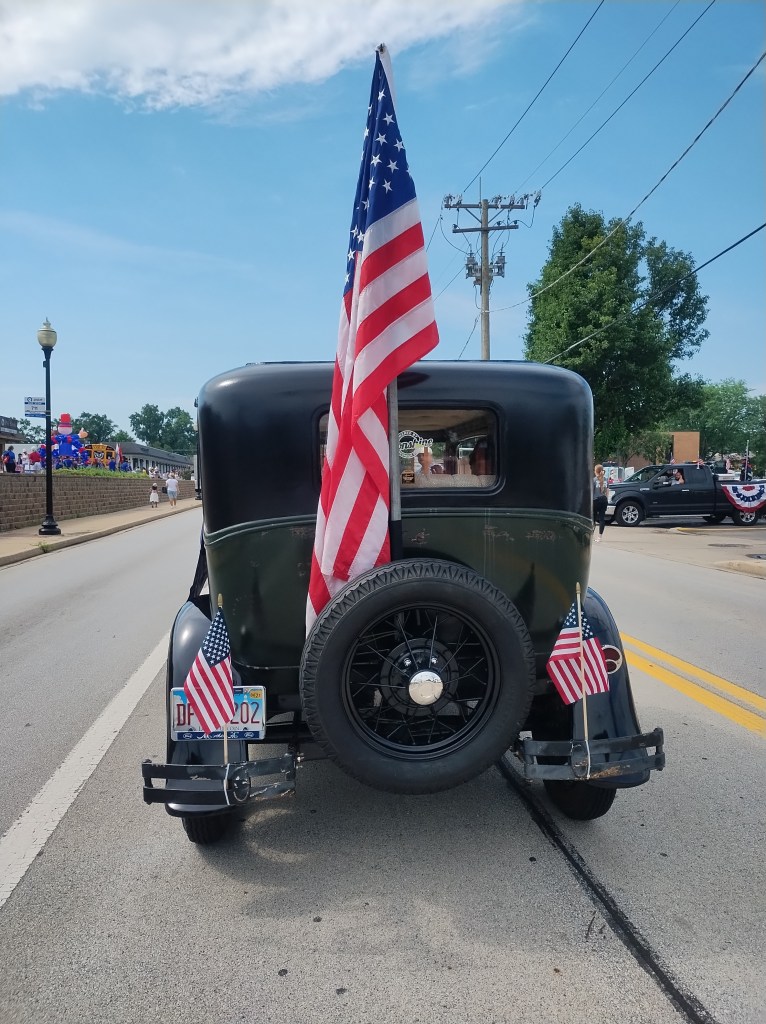
Cars have dominated the American landscape for roughly a century. Before this, the United States had roads and animals and people could carry things along those roads. Parades happened prior to cars but it is hard to imagine parades today without motorized vehicles traveling the route. Yes, there are people involved that attendees may want to see but driving is essential to make the parade happen.

Take a recent parade I participated in. Most of the members of the group walked. We carried a banner in the front with the name of our organization and members of the group walked behind it. But we also had a truck with this that included large signs about the organizations, supplies, and a few people.

There were multiple vehicles in front of us in the parade. July 4th parades often feature local emergency vehicles; in our case, big fire trucks honked their way along. As shown above, there was a group with antique cars and trucks. Behind us, several sports cars inched forward, revving their engines while traveling at 3 mph. The vehicles themselves may symbolize American freedoms.

Or I recall the 2016 parade for the World Series winning Chicago Cubs. That event brought millions to Chicago. Could the players have walked through the city streets instead of taking a series of busses along the route? (Such busses are a common approach for championship parades.)

Marches and parades without vehicles can still happen. But in a country full of driving, cars and vehicles are part of and enable many processions.
Archival cataloguing that revealed a rare first print of the Declaration of Independence

A volunteer in Britain made an exciting find last year that was just revealed:

Photo by Mingyang LIU on Pexels.com

Michael Scurr has been volunteering at Britain’s National Archives for the last 11 years, spending his Thursday mornings painstakingly cataloging documents for the benefit of future researchers.

Then one day last May the retired insurance executive made a discovery of his own while sifting through the letters of an 18th-century Royal Navy captain.

There, attached to a report on the capture of the American privateer Dalton on Christmas Eve 1776, was an enclosure identified only as “another paper.” Carefully unfolding the document, Scurr stopped when he saw the word “Declaration” printed across the top…

Researchers at the National Archives have since identified the document as a rare early copy of America’s founding document, printed just days after the original was signed on July 4, 1776, to spread the news that 13 rebellious North American colonies had severed ties with Britain.

It is one of just 11 original copies of the so-called Exeter printing of the declaration that are known to exist, and the only one identified outside the United States, the National Archives said on Thursday as it unveiled the find ahead of this weekend’s 250th anniversary of American independence. This version was printed in Exeter, New Hampshire, July 16 to 19, 1776.

I have benefited greatly from researching in several archives. Materials are catalogued at various levels of detail, perhaps just having a title on a box or folders that point to a theme or a person or a time period. And even with more detail, it is still fun – and sometimes dull – to go through what is available to see what is really there.

I cannot imagine what it would feel like to discover such a rare document. I use another example of an unexpected find in teaching about doing archival research. Such finds can help clarify historical narratives or reveal new narratives. With this find last year in England, I imagine it can help us better understand how news of the Declaration spread. With revolutionary activity before the document was signed and announced as well as after, how did the news spread and what exactly did that lead to? The date of July 4th may seem obvious now but it would have taken days for people to learn what had happened and respond.

Americans divided over 250th celebrations but might unite over soccer?

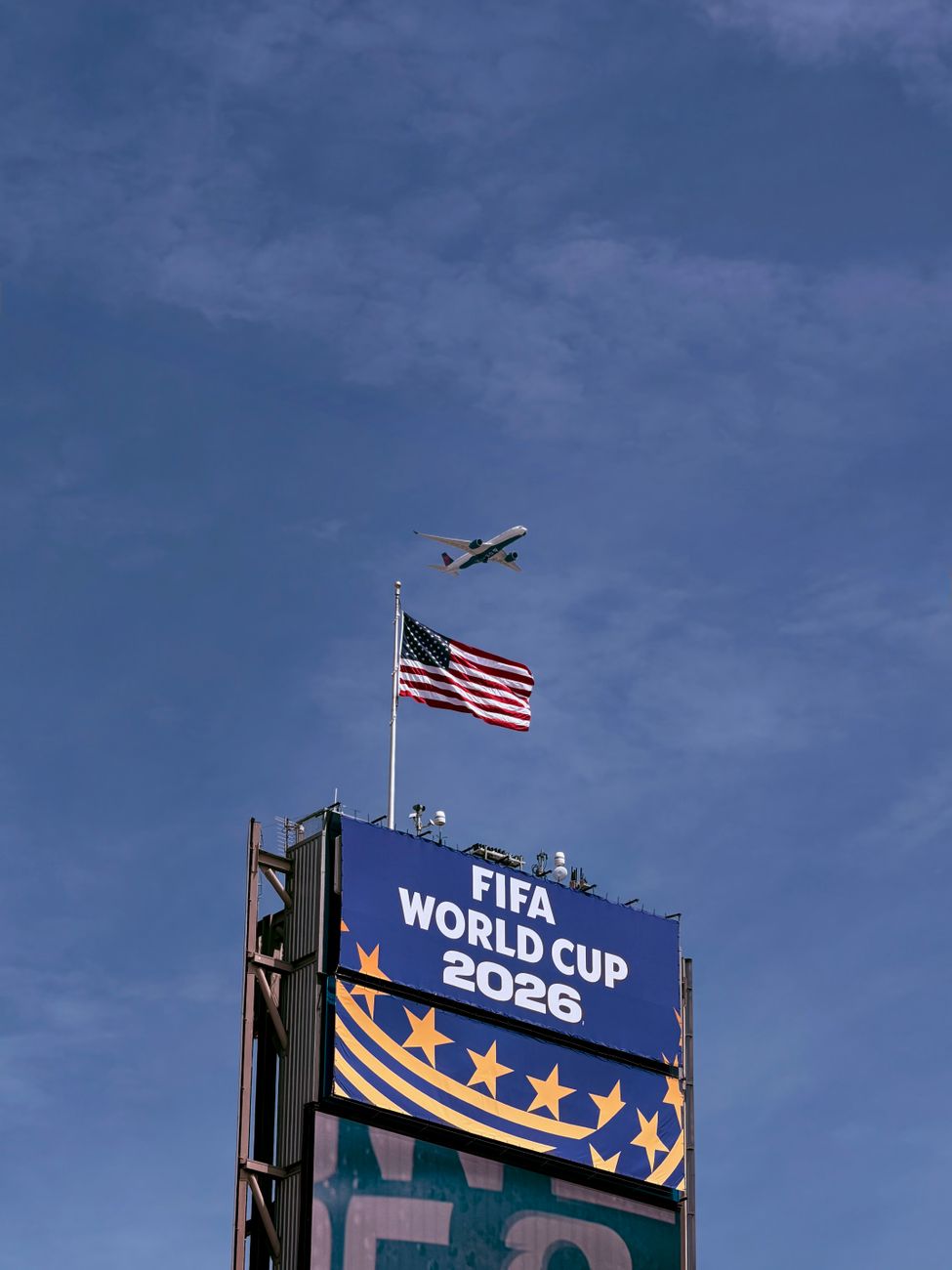
The US men’s soccer team has started out strong at the World Cup. American flags, sing alongs, celebrations of wins. Might their success bring Americans together in a fractured time? A few thoughts:

Photo by Dar ius on Pexels.com
  1. Americans like sports, both domestic and international.
  2. They may like sports but they really like winning at an international level. The Olympics and World Cup are good examples.
  3. For lots of reasons, the United States is not a world power at soccer – the team is good but not among the best. Do Americans see themselves as an underdog at the World Cup, and, if so, does this help bring people together?
  4. Does the unity while at a game or watching at the same time continue at all past the event or is it a completely in the moment phenomenon?
  5. Which Americans tend to follow soccer? How much does this fandom overlap with enjoying the NFL, MLB, or NBA? How does following soccer fit with political affiliations? Is following soccer seen as a repudiation of “typical” American fandom?
  6. If politics are like sports in certain ways, are sports still more interesting or worthwhile to more Americans (compared to politics)?

What might all these questions lead to? Many may enjoy the World Cup in North America and it could get interesting if the United States makes a deeper run than they have in the past. But conflicts over celebrating July 4th and the leadup to the midterm elections may render any World Cup togetherness a pleasant memory.

The American flag…everywhere

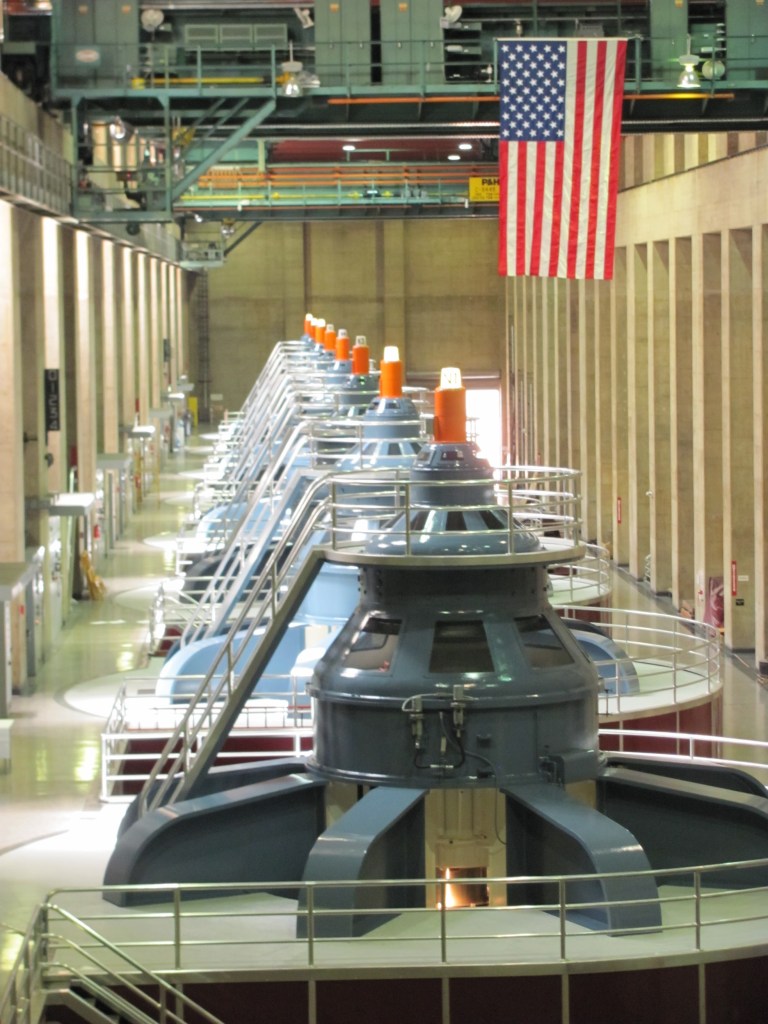
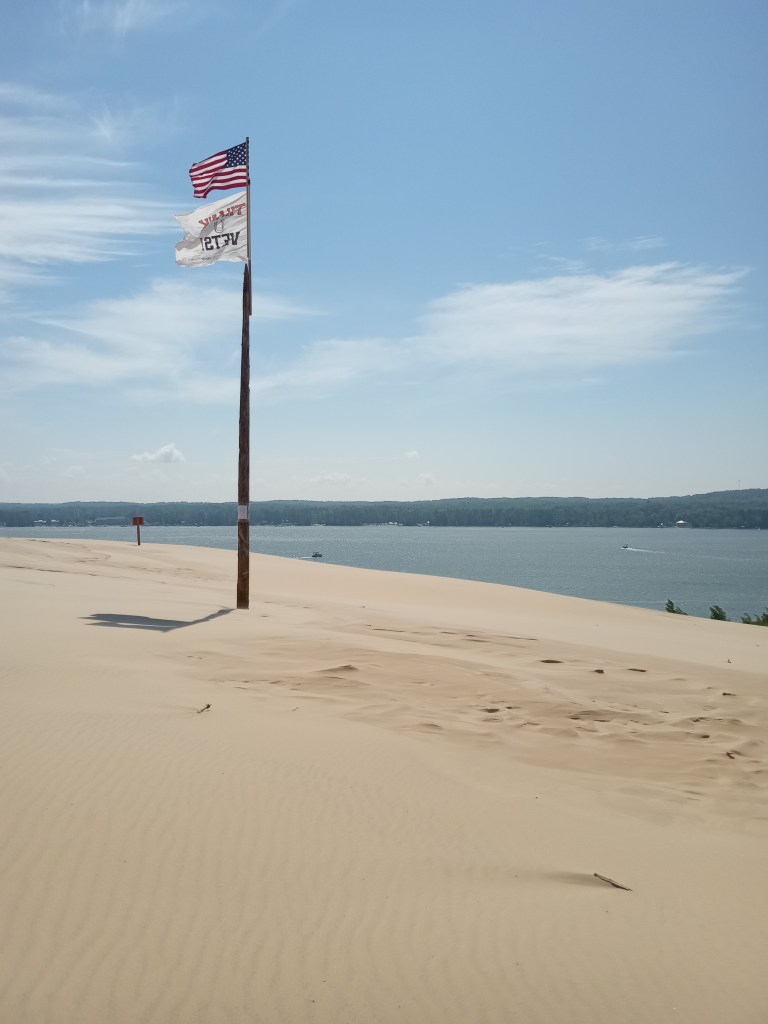
On July 4th, a day of American flags and celebrations, I was looking through old pictures in which the American flag was present. And it is all over the place – see examples below – including public spaces, sports stadiums, schools, churches, parks, clothing, train stations, dams, and more.

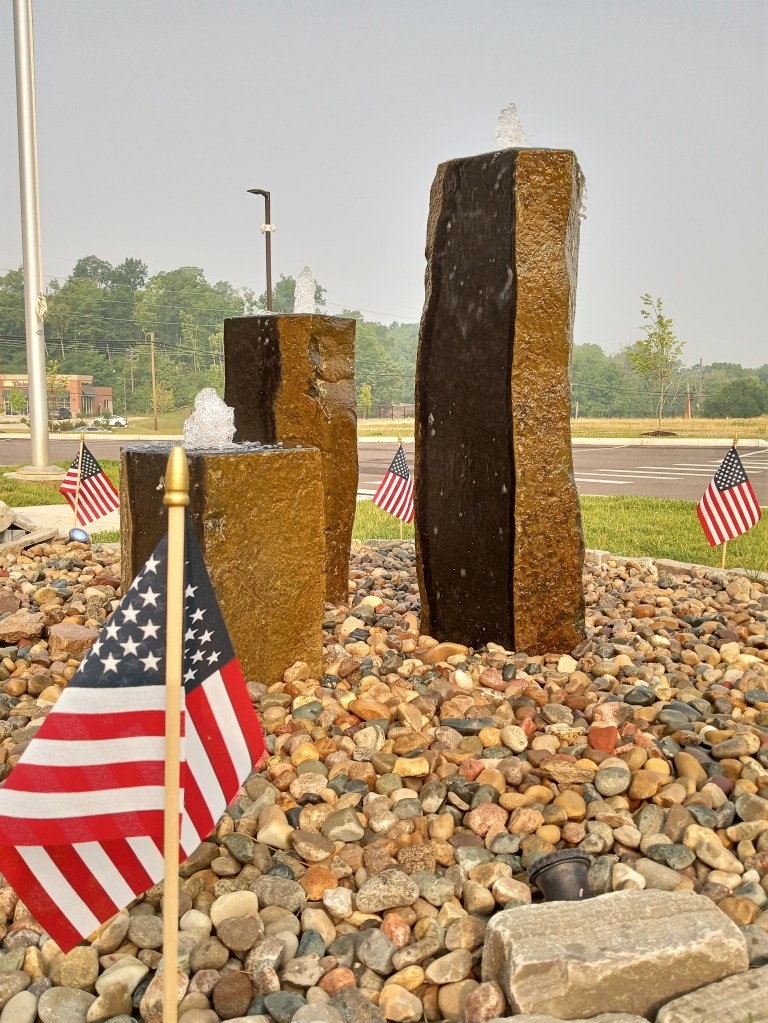
Adding American flags to a suburban hotel fountain

It is July 4th, a holiday that leads to displays of American flags almost anywhere. Here is a recent scene outside a suburban hotel:

Having flags near a fountain in a public park would not be unusual. It might be less expected to see flags surrounding a fountain in front of a hotel on private property not easily visible from the main road. And these flags are in addition to an American flag on a pole just a few feet away.

The public display of flags has been building for days and today is the day to celebrate. I wonder how many flags I could count on a typical trip through my suburban area…

54% of my block flew an American flag today and what this means

On a quick walk on this July 4th morning, I counted the number of residences on our block with an American flag on display. In roughly a quarter-mile of houses, 22 of 41 residences had a flag. What might this all mean? Several ideas:

Photo by David Dibert on Pexels.com
  1. The July 4th holiday tends to bring out the flags to symbolize the United States of America. Yet, is the number of homes with a flag displayed different than displays for other holidays? I would guess the numbers are not that different on this block regarding those who put something up for Christmas or for Halloween, the two primary holidays for decorations. I do not know if some people are celebrating all of the holidays or if different people are celebrating different holidays but this number of flags does not seem out of the ordinary.
  2. I have read online in multiple places that Americans are enthusiastic in displaying their flag compared to residents of other countries. Connected to #1 above, perhaps the real test of this is to see how many residents display flags when there is not a patriotic holiday? (At the same time, they might be frequenting other places that have a flag including schools, civic buildings, and churches.)
  3. YouGov recently released data on how Americans regard flags. Even with declining patriotism and less regard for the flag from younger Americans, 77% had a “very positive” or “somewhat positive” view of the American flag. This is quite a bit higher than any other flag asked about. The more popular a flag is, the more likely it is for homeowners to display it?

The use of flags in suburban settings and among single-family homes with their connection to the American Dream could make for a fascinating study, if it has not been done already.

Gallup: most Americans are proud to be American

In time for July 4th, Gallup has numbers on how many and which Americans feel “extremely proud” of the United States:

Proud to Be an American

In addition to the 54% who are extremely proud to be an American, 27% say they are “very proud,” 14% say they are “moderately proud,” 4% are “only a little proud” and 1% state that they are “not at all proud.”…

While most Americans are proud to be an American, certain groups are especially likely to say they are extremely proud. “Extreme pride” rises for each succeeding age group, from a low of 43% among those under 30 to a high of 64% among senior citizens.

Extreme pride also varies regionally, from a high of 61% in the South to a low of 46% in the West…

How proud are you to be an American --

None of these findings should be too surprising. Yet, one takeaway I have that I haven’t seen noted in the articles about these data is that almost all Americans have some pride in their country. Only 1% were “not at all proud” and then another 4% were “only a little proud.” This may be a product of the categories as well as a patriotic culture. Can you really distinguish between “very proud” and “moderately proud”? If you are “very proud,” what holds people back from being “extremely proud”? Perhaps the best way to get a handle on this would be to compare it to international data.

Bringing the McMansion float to the July 4th parade

The July 4th parade in Sudbury, Massachusetts was like many Independence Day parades in that it featured floats. However, this parade included one float about McMansions:

Spectators lined the parade route starting at the corner of Rte. 20 and Union Avenue, with adults waving flags as children scrambled for candy thrown from antique cars, fire engines and military vehicles.

About a dozen groups competed for ribbons awarded for the best floats.

Russell’s Garden Center re-purposed its Santa Claus mannequin into a Father Time display. The Sudbury Savoyards, the local Gilbert and Sullivan group, stuck a mock gondola for its upcoming production of “The Gondoliers” atop a VW bus. And the owners of the old Cutler Farm offered a visual commentary on how town open land has been developed first into “McMansions” and now condos.

For its float, the town chapter of the non-partisan League of Women Voters decorated a trailer with discarded water bottles, taking on a proposed but long-stalled expansion of the state’s bottle bill.

I’d really love to see this float. If I had to guess, I would think this was an anti-McMansion float decrying sprawl and promoting nostalgia for farm land and open land.