Would Americans choose lower property taxes if it means giving up local control of funding for local services?

This is an interesting “Would you rather?” for numerous American communities: would residents rather have higher property taxes or give up control of the local funding for schools and other local services because of lower property taxes?

Photo by Pixabay on Pexels.com

There is a silver lining, though. The most radical property tax–related proposals are argued for as either general anti-tax measures or as efforts to privatize schooling. Whatever you think of their intended goals, they would also have an unintended effect of ameliorating one of the worst features of the property tax: its localism.

If North Dakota voters had voted for a repeal of the property tax, much of the revenue used to replace it likely would have come from state taxes. (The group formed to oppose it was called “Keep it Local.”) Similarly, if the state government is supporting school choice vouchers with income or sales tax revenue, that means schools as a whole rely less on local property taxes.

Americans like local control, particularly in the suburbs. To give that up to governments elsewhere who may attach particular guidelines to the funding could be seen as a loss.

And there are some people willing to argue they are willing to pay higher property taxes for what they receive. It is less clear how many residents feel this way or that people do not find ways to limit their property taxes.

I am not sure this has to be pitched as an either/or: higher property taxes or lower taxes and give up financial control to other bodies. Here are two other options:

  1. Do Americans believe that local services can and should be provided more cheaply? This could be about containing costs of existing services.
  2. Another variation for #1 is cutting local services to limit costs.

Both of these options might be unattractive: local services tend to help enhance the status and value of properties and communities. Reducing these or threatening them could be perceived as backfiring and hurting everyone.

The choice might also depend on the local context. Would high housing values in some places lead to residents wanting to do a lot to limit property taxes? Or what if residents felt they could handle funding coming from other places? After all, real estate is local.

Suburban pattern #3 to watch in 2025: where suburbs will find revenue

What will 2025 bring in the American suburbs? A third thing I will be watching for is the search for municipal revenue.

Photo by Miguel u00c1. Padriu00f1u00e1n on Pexels.com

Every government body has a budget and sources of revenue. This includes suburban communities. They may receive money from taxes, fees, state government, the federal government, and other sources.

What will happen to suburban revenues in 2025? There are multiple threats:

  1. Slowing population growth or no population growth.
  2. Vacant office and retail buildings.
  3. Reduced funding from the federal and/or state governments.

And it is difficult to reduce municipal costs. As suburbs develop and mature, there are certain costs to maintain infrastructure and provide the services residents expect.

One way to boost revenues is to boost local taxes and fees. This may be unpopular among locals, particularly if they already perceive their local tax burden to be high. But more of this money can go directly to local operations and small increases can be sold as small burdens for individual taxpayers.

To some degree, municipal budgets are always tight. How many suburban communities have surpluses that enable them to keep spending and expanding services and amenities?

In 2025, some suburbs may face tough financial situations. What will they do in these situations? Where might they find extra money? How much goodwill will there be among leaders, residents, and other actors to find solutions?

The number of vehicles required to maintain a suburban county’s roads

The suburbs are known for driving and therefore have a lot of roads. How many vehicles does it take to maintain the county’s share of roads? Here is the number from DuPage County, Illinois:

Photo by Tom Fisk on Pexels.com

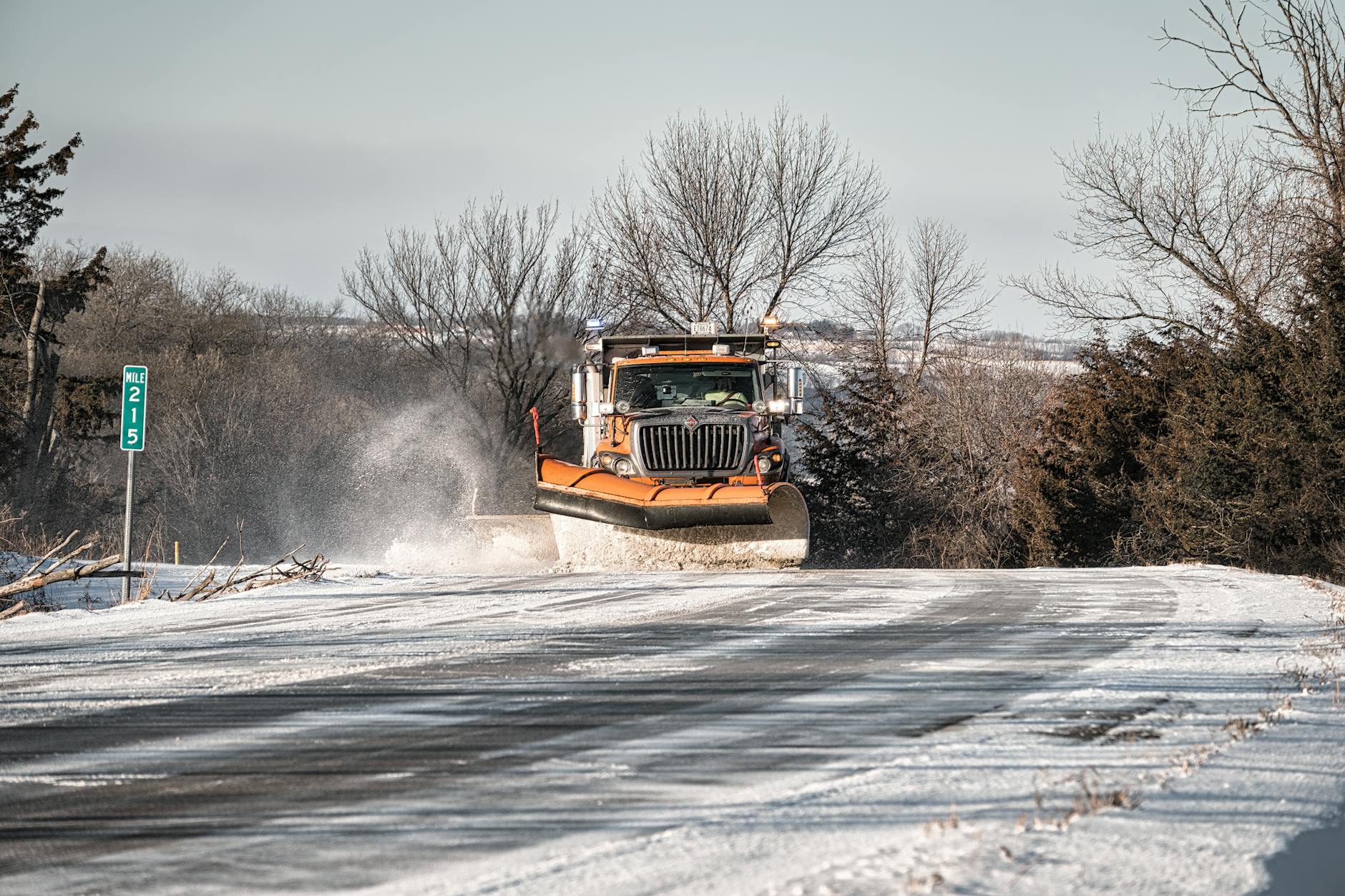
She noted the county’s division of transportation takes care of 220 miles of county highways and 92 miles of multiuse trails. It also maintains 650 vehicles in the countywide fleet and is responsible for snow removal on county roads.

This sounds like a lot of vehicles and I do not know if it is a lot or a little compared to similar-sized counties. At least in this story, the county is looking for a bigger transportation facility to meet all its need for space.

So in one suburban county, there are multiple actors responsible for the roads: the state for interstates and other highways, townships for some roads, municipalities for some roads, and the county for some roads. Is this the best way to approach things? Does each government body have similar vehicles? How close are each other’s roads to each other? If starting suburbia from scratch from this point on, would it be better to have one body address all the roads?

Roads are near sacred in the United States so I understand the attention paid to them. Yet the resources and energy required to maintain them, let alone expand them, is large.

Suburbanites who like to vote in national elections but not in local ones

Ahead of yesterday’s elections, I read this from the DuPage County Clerk:

Photo by Polina Kovaleva on Pexels.com

“While it’s too early to make predictions, it appears that DuPage County is on track to have a large turnout for this presidential election. There’s excitement in the air,” Kaczmarek says. “In 2020, the turnout was 76.55% with 491,067 ballots cast – the largest turnout in DuPage history.”

In recent years, DuPage County has had the highest voter turnout in the region in every election.

In other words, voter turnout was high with a presidential election. But this high level of turnout does not carry over to local elections. See posts from 2022, 2019, and 2018.

I can understand why turnout is high during presidential and national races. The rhetoric is persuasive, the stakes are high, and the advertising is plentiful.

But suburbanites like local government and local control. They like seeing their tax dollars at work in the community. They like the access to local leaders. They select communities based on particular amenities that they want to preserve or enhance.

National and state politics do affect what happens in communities. But the huge drop-off between voting for the president voting for the local mayor or council is a bit odd; in day-to-day life, the suburbanite may see experience more affected by local government than by the president. With the federal system the United States has, local government (municipalities, townships, counties, etc.) have significant decision-making and monetary powers. To not participate in local elections at similar rates to national elections is to indicate less concern and interest for the former.

Trying to count all the government bodies in Illinois

Different sources provide different counts of government bodies in Illinois:

Photo by Tim Mossholder on Pexels.com

There are so many units of government in Illinois that people can’t even agree on the total because of differences over what technically qualifies as a government body. The U.S. Census Bureau says 6,930, while the Illinois Department of Revenue, which tracks governments authorized to levy property taxes, reports 6,042. The state comptroller’s office lists 8,529, and a study by the Civic Federation tallied the number at 8,923 as of 2019.

Regardless of the exact answer, the number of governments in Illinois outpaces that seen in bigger states, including Texas (which has 5,533, according to the Census Bureau), Pennsylvania (4,851) and California, a state with a population three times the size of Illinois but half as many local government units…

Today the state has more than 5,700 special-purpose governments, including 851 school districts, 861 drainage districts, 838 fire protection districts, 376 library districts, 348 park districts and 320 multi-township tax assessment districts, according to the state comptroller’s office. Many of the state’s nearly 1,400 districts dedicated to roads and bridges have boundaries overlapping its 1,425 townships.

Most of these governments are outside the Chicago region and represent only a sliver of the state’s population. Nearly two-thirds of Illinois residents live in the six-county Chicago metropolitan area. Meanwhile, 51 of Illinois’ 102 counties have fewer than 25,000 residents, and 15 of those have a population under 10,000, according to a 2021 Civic Federation report. About two-thirds of Illinois’ school districts have fewer than 1,000 students enrolled, and there are 26 school districts with fewer than 100 students.

Two figures stand out:

  1. How do the different counters get to numbers so far apart? The difference is roughly 2,000 bodies of government – what exactly is the scope or taxing ability of these bodies? On the national level, who is considered to have an official count in these area?
  2. Americans tend to like local government that responds to local needs. On one hand, all these government bodies are exerting the will of the people to control local activity. On the other hand, this could be viewed as micromanaging. Certainly there are merges that could happen in some of these categories to take advantage of economies of scale and more efficiently serve a slightly larger population? (I have discussed townships before.)

The focus of this long article is the corruption and lack of oversight than can happen because of so many government bodies. The few times a resident might be reminded of all these bodies is when they see a property tax bill or during election season when there are candidates for all sorts of spots in different bodies.

So is one way to interpret the number of government bodies in Illinois is to suggest that the price of corruption is not enough to convince residents and/or local leaders to give up local control?

Acting at multiple levels to provide alternatives to lawns in a Minnesota suburb

If residents and leaders want more options to grass lawns available, who needs to act? This story about working to provide spaces for “the endangered rusty patched bumblebee” in one Minneapolis suburb describes what happened:

Photo by Abdul7amid Al Fadhly on Pexels.com

The city of Woodbury in recent years has made native landscaping and pollinator gardens more intentional in some of the city’s 500 stormwater basins. The homeowners associations that rule many of Woodbury’s residential developments, dictating everything from front door colors to permitted landscaping, have become more lenient. The just-built Westwind New Home Community has in its recorded covenant a stipulation that allows homeowners to use native plantings and shrubs.

The Legislature weighed in last year with a new law saying cities cannot ban pollinator gardens or native plantings in front yards, opening a path for those who want to create a bee-friendly spot. The conflict got widespread attention after the city of Falcon Heights sued a man who planted vegetables in his front yard…

When visitors ask her for advice, Boyle sends them to Metro Blooms, a Minneapolis nonprofit that helps communities create healthier landscapes. There’s some cost to a project like Boyle’s, but the larger barrier was the social stigma…

Hong has pitched an idea to developers to allow homeowners to choose their landscaping, much the same way they might choose the home’s paint color or countertops, and to give them the option of planting native grasses and pollinator gardens. If someone just bought a new house that came with sod and in-ground irrigation, “it’s asking a lot of the homeowner to rip that all out and do something different,” Hong said…

The counterargument is that most builders choose sod for new houses because of state and federal rules about stormwater and erosion control, said Nick Erickson, the senior director of housing policy for Housing First Minnesota, the state trade association for builders.

From the story, it sounds like at least these sets of actors have gotten involved: a municipal government, homeowner’s associations, the state legislature, non-profits, and some residents. On the other hand, developers and builders may privilege grass lawns because of state and federal guidelines. Additionally, the story hints at more informal interactions as residents talk offline and online about lawns and draw upon long-established patterns about lawns and yards.

All of this suggests to me that moving away from lawns is not an easy task. Americans, particularly in the suburbs, tend to like lawns and what they represent. To present viable alternatives takes work. Many homes already exist. What might motivate people to take out a lawn and replace it with something else? What incentives are available? In this particular situation, a danger to wildlife is motivating some people to act. Elsewhere, it might be drought or limited water supplies.

If people want to envision a United States with substantially fewer grass lawns in thirty years, this article hints that multiple actors will need to work. Each could have a part to play in incentivizing other options. And as noted above, having new homes that do not start with a lawn is a potentially powerful change that could take some time to pursue.

The culture wars come for traffic policies

Should motorists or others take precedence on streets and roadways? Legislative battles over traffic policy in Washington, D.C. show how this has become a culture war issue:

Photo by Sora Shimazaki on Pexels.com

One of the proposals would forbid Washington’s local government from banning right turns at red lights. Another would do away with the automated traffic-enforcement cameras that ticket D.C. drivers for speeding, blowing stop signs and other violations.

The provisions are not just a case of earnest traffic-engineering wonkery sneaking into Congressional oversight. They represent a culture-war cause just as real as D.C.’s needle-exchange efforts or mask mandates, two other targets of current GOP riders. At the core of it is the politically revealing question of cars versus other ways of getting around.

In blue cities across the country, local road policy in the past decade has been tweaked in the name of making things safer and more enticing for non-drivers — often by making things slower and more annoying for motorists…

In a polarized country, it was inevitable that this would become more than just a disagreement over traffic circulation and moving violations. After all, the 21st century push to promote alternative modes of transportation cites a Democratic-coded cause (climate change) to promote ways of getting around (by foot, bike, bus, or subway) that are a lot more convenient in dense blue cities.

On the right, for more than a decade, there’s been a refrain about the “war on cars” right alongside the war on Christmas. “There is a loud constituency that does not want you to drive your car,” said Jay Beeber, executive director for policy at the National Motorists Association, which has championed the measures dictating Washington policy. “A lot of this is virtue signaling.”

Four thoughts:

  1. Is it “inevitable” that this would become a culture war issue? I am sure there is an interesting history in here. Does this go back to seat belt laws? Speed limits on highways set in the 1970s?
  2. It is relatively easy to break this down into cities versus other areas. What about groups or political discussions in between such as suburbs promoting more walkability and bicycling, small towns and rural areas trying to lessen dependence on cars, and regions emphasizing different transportation policies? Are there Republicans for different road policies and Democrats for more driving?
  3. The interplay between federal and local policies is worth paying attention to. Americans tend to like local government oversight of local issues. Do Americans tend to think the federal government does too much regarding traffic policies or not enough?
  4. Where does this issue rank in the range of culture war issues? Is this more like a proxy war or the big issue? Americans like driving so this could get at core concerns about American ways of life.

Many years can pass – at least 17 for one suburban development – between proposing and completing a project

Some development projects take a long time from beginning to end. Here is a recent example from the Chicago suburbs:

Photo by Markus Spiske on Pexels.com

The Glen, a large residential development that was to be built in Elgin 17 years ago, has come back to life with the help of a new builder.

Moda Homes is partnering with Lennar Homes to build the first phase of a project that calls for 83 single-family homes, 54 age-restricted homes, a 150-unit senior assisted living facility and a neighborhood park on 73 acres off Nolan Road, according to plans presented to the Elgin Planning and Zoning Commission.

The unincorporated property was zoned in the early 2000s for a subdivision. Moda Homes is requesting the site be annexed into the city and a preliminary plat for the project be approved, both of which are now headed to the Elgin City Council for approval…

Elgin council members must approve the annexation agreement and the preliminary plans before construction can begin. A meeting date at which the project will reviewed has not been set.

If this is approved, this development may take about 20 years to complete.

This may seem like a long time. But lots of factors can slow down the process. This story does not say but I wonder if the 2007 proposal was shelved by the housing bubble of that era. Developers can face money issues or there can be a decrease in demand. With the current proposal, local officials might have concerns about annexation and the plans. Questions about or changes to the plan might slow or stop the process. And numerous other issues could pop up.

Perhaps a different question to ask is how long a development proposal “normally” takes. Then could such a prediction factor in local conditions (municipalities can vary), economic conditions, and particular developers or builders? If twenty years seems long, is 4-5 years “normal” from start to finish?

Of course, some developments are proposed – some seriously, some not so much – and never get built. In the Chicago area, think of the Burnham Plan or Frank Lloyd Wright’s idea for a one mile high skyscraper. For any development to be completed, lots of things have to go right.

We need solutions to continued low turnout – less than 20% – in Illinois elections

The primary elections earlier this week in Illinois excited few voters:

Photo by Tara Winstead on Pexels.com

Though thousands of properly postmarked mail-in ballots are still being tallied through April 2, state election officials believe it will be hard to crack 20%.

Unofficial results from the 20 most populated voting jurisdictions in Illinois — which represent more than 81% of all voters in the state — show less than 17% voter turnout combined.

Turnout tallies in the suburbs remain below 20% as well, with Lake County currently showing only 11.7% of registered voters cast a ballot.

Why so few voters?

“Most of the races were completely uncontested, with just one contested county board race on the Democratic side,” said Lake County Clerk Anthony Vega. “That lack of motivation could have resulted in voters not coming out.”

With that lack of choice, combined with the fact that Democratic President Joe Biden and former Republican President Donald Trump had all but secured their nominations ahead of Tuesday’s vote, low turnout was inevitable, experts said.

These are plausible reasons. Yet, I have heard little about significant solutions. Such options could come from multiple angles: local officials, voters, advocacy groups, the state government, employers, civic organizations, etc. Illinois may face serious problems in numerous areas but this strikes me as one that affects numerous others and is foundational for the supposed American system of government.

The one feature of this I think about is the ways that the suburbs grew, in part, because Americans like being closer to local government. Compared to big cities, states, and the federal government, a suburban resident can more easily interact with local officials and local government activity. But, if people do not even want to vote for those local measures – and there is a suggestion in this article that local referendums might have pushed voter turnout up a few percentage points – then this interest in or connection to local government may be severed.

Low turnout elections and planning tax-related questions on the ballot

A low percent of eligible suburban voters turn out in some years, meaning relatively few people often decide the fate of certain questions on the ballot:

Photo by Karolina Grabowska on Pexels.com

But a Daily Herald analysis of vote totals for 22 ballot questions posed to suburban voters in Cook, DuPage, Kane, Lake and McHenry counties last April showed District 101’s turnout was the highest of those initiatives. Fifteen of the 22 were decided by less than a quarter of the eligible voters, including four that were decided by less than 10% of eligible voters, records show…

Another analysis showed similar findings of recent ballot questions in Cook County:

The study showed that 75 property tax-related questions posed to voters during that time were decided by less than a third of those eligible to cast ballots.

Having these tax-related questions on the ballot in low-turnout elections may be intentional:

Ryan Tolley, executive director of Change Illinois, a nonpartisan, nonprofit group that advocates for ethical government and elections, said taxing bodies are deliberate about when they decide to pose questions to voters that could affect their property tax bills.

“They’re thinking about it strategically by putting them in an election when voter turnout is traditionally low,” he said. “Low voter turnout is often advantageous to them at the ballot box.”

Because voter turnout is traditionally highest for presidential elections, many taxing bodies try to avoid posing expensive ballot questions to voters then. Instead, they rely on voter apathy during local elections in odd-numbered years, nonpresidential general elections or primaries like the one coming up in a few days.

Suburbanites have opinions about local taxes in Illinois, a state with a lot of governmental bodies and high property taxes. Yet, voter turnout is often low, even with questions involving taxes up for vote.

In the short term, I do not think it is easy to boost turnout. This has been a trend for years now. Many people do not exercise their right to vote.

In the long term, one solution would be to limit the number of election cycles governments have. Why not limit local elections to 2 and 4 year cycles that line up with House and national elections? This would also save money as governments could consolidate election resources.

Another option would be to reduce the number of local government bodies in Illinois, thus reducing the number of elected members and initiatives. For example, abolishing townships would eliminate one layer of government whose services could be picked up by others.