“Map lines are inherently political”

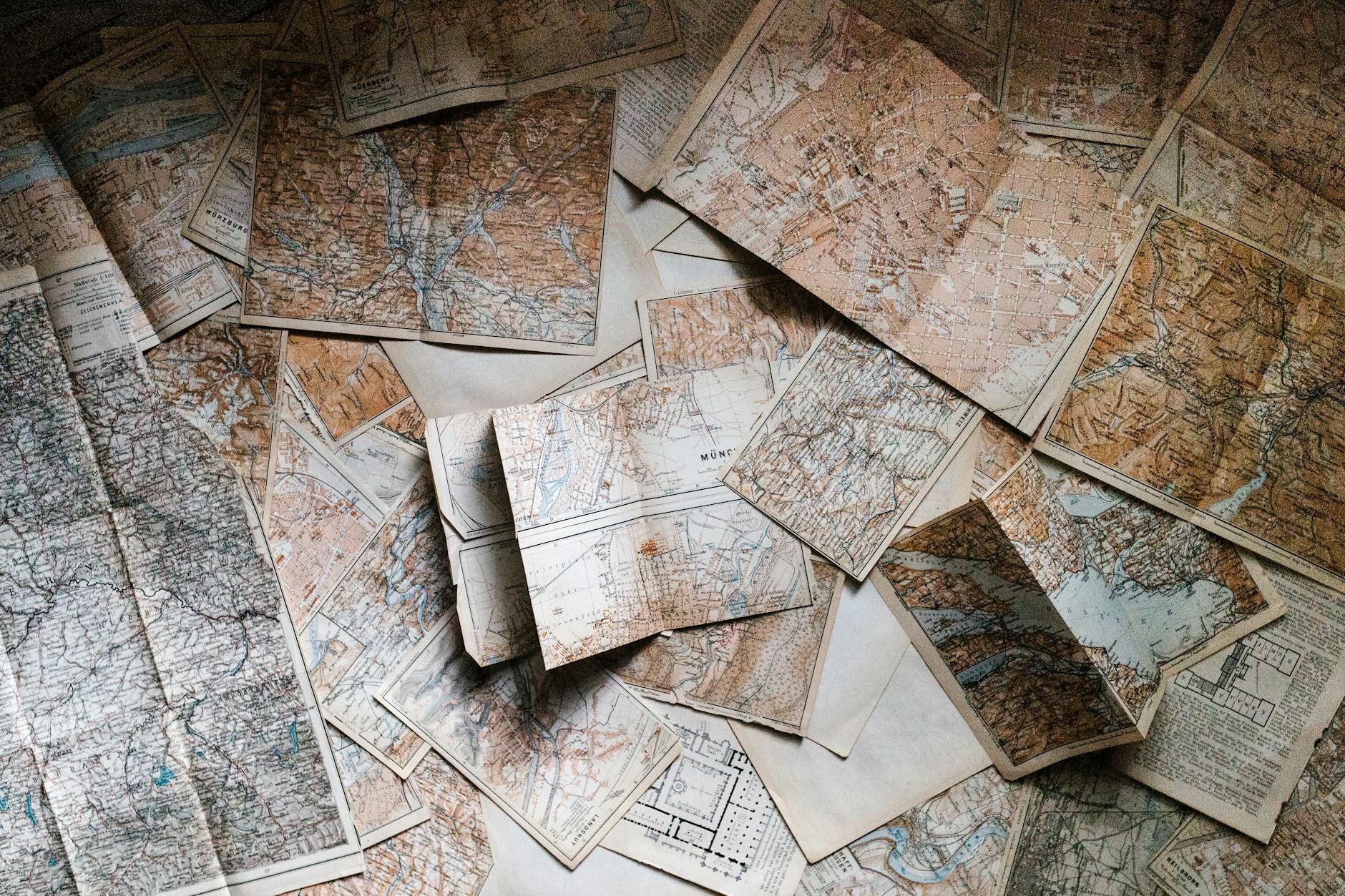
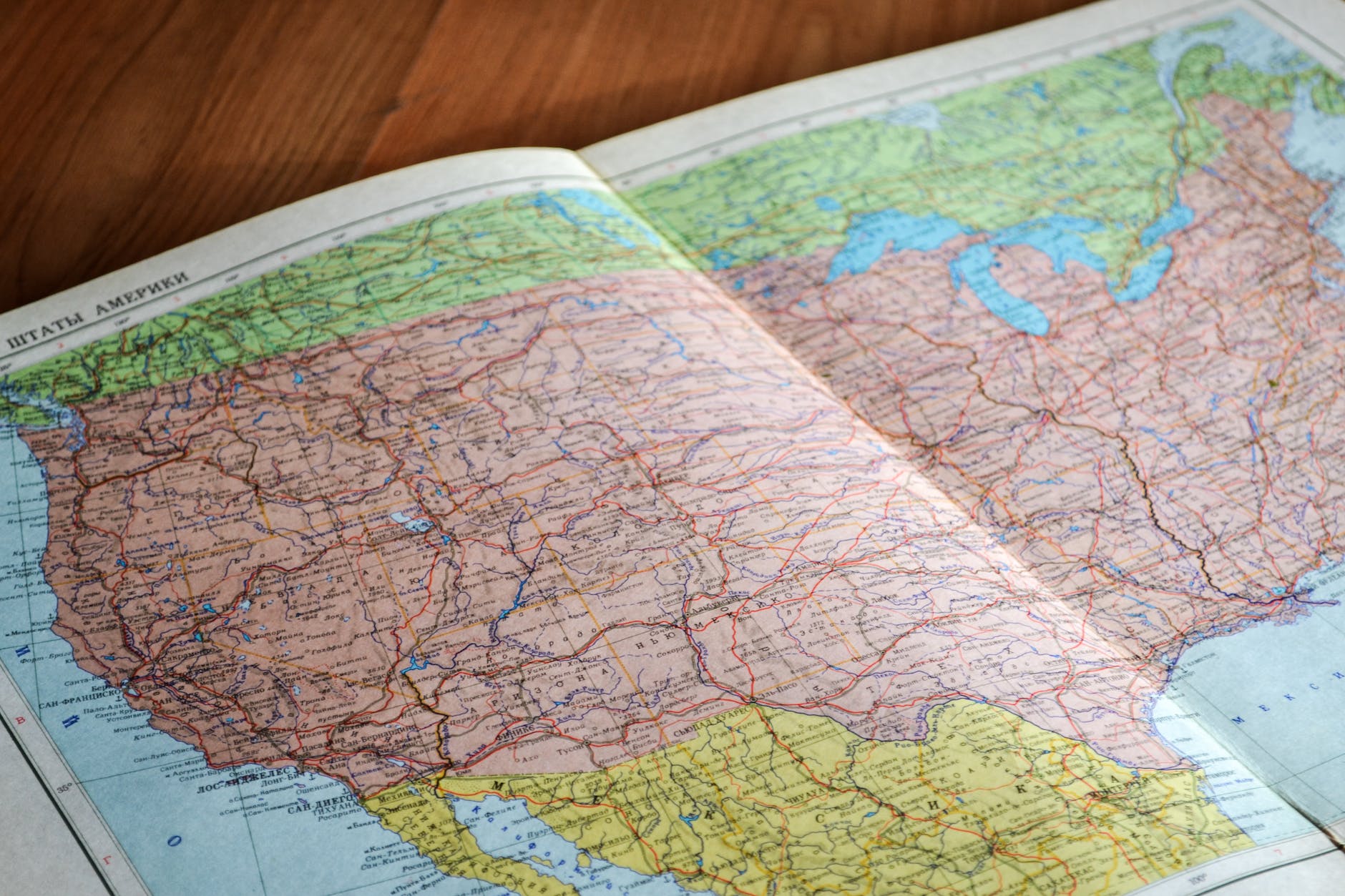
Maps document human interpretations of physical and spatial features:

Photo by Andrew Neel on Pexels.com

Map lines are inherently political. After all, they’re representations of the places that are important to human beings — and those priorities can be delicate and contentious, even more so in a globalized world where multiple nations often share the same maps.

Numerous examples follow:

The water bordered by the Southern United States, Mexico and Cuba will be critical to shipping lanes and vacationers whether it’s called the Gulf of Mexico, as it has been for four centuries, or the Gulf of America, as President Donald Trump ordered this week. North America’s highest mountain peak will still loom above Alaska whether it’s called Denali, as ordered by former President Barack Obama in 2015, or changed back to Mt. McKinley as Trump also decreed…

The Persian Gulf has been widely known by that name since the 16th century, although usage of “Gulf” and “Arabian Gulf” is dominant in many countries in the Middle East. The government of Iran — formerly Persia — threatened to sue Google in 2012 over the company’s decision not to label the body of water at all on its maps. Many Arab countries don’t recognize Israel and instead call it Palestine. And in many official releases, Israel calls the occupied West Bank by its biblical name, “Judea and Samaria.”…

The Associated Press, which disseminates news around the world to multiple audiences, will refer to the Gulf of Mexico by its original name while acknowledging the name Gulf of America. AP will, however, use the name Mount McKinley instead of Denali; the area lies solely in the United States and as president, Trump has the authority to change federal geographical names within the country.

Humans make meaning of the world around them and maps capture some of that meaning. And because meaning is sometimes agreed upon and sometimes contested, maps reflect these realities.

What are innovative ways to include multiple names or meanings on a map? Or layer changes in a map over time? I have seen some interesting displays online that attempt to do this. How can maps be more dynamic and flexible?

The awesome ability to see Earth from above

I can only imagine what it feels like to see the Earth from truly far away. From the first person who walked on the moon:

It suddenly struck me that that tiny pea, pretty and blue, was the Earth. I put up my thumb and shut one eye, and my thumb blotted out the planet Earth. I didn’t feel like a giant. I felt very, very small

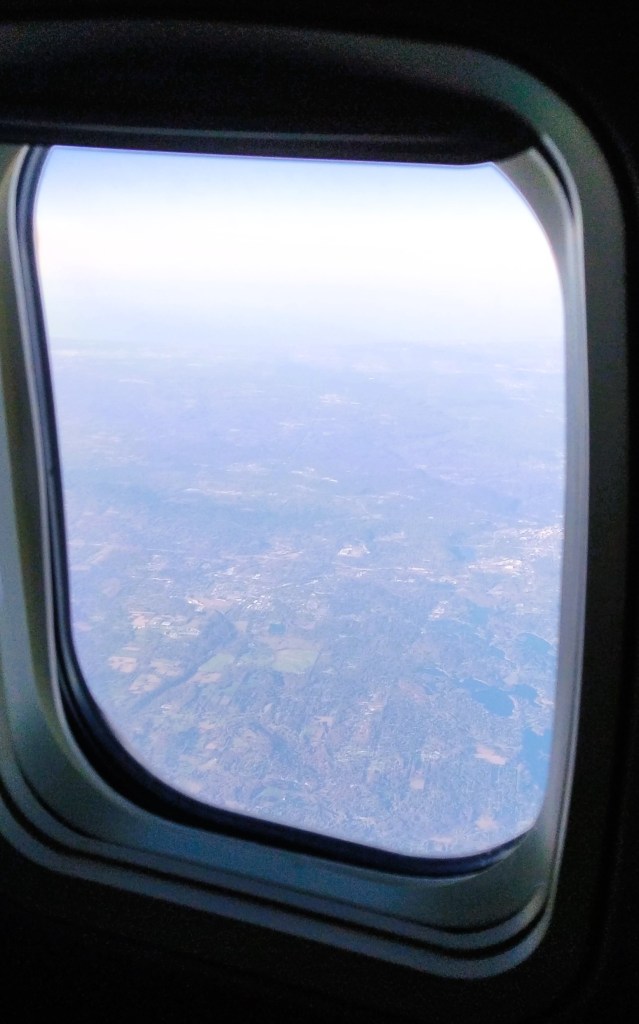
The closest I have come to that is a view like this:

This was my view from an airplane window on a recent trip. The landscape is not particularly special (no big mountains, no big cities, no big bodies of water, etc.) nor is the sky or atmosphere particularly noteworthy (it was cloudless and in the afternoon).

Yet, I enjoy looking out the window every time. To be able to fly thousands of feet above the ground and see it from this angle is exciting. A map can provide an overview from an above perspective but this is not the same as looking at the landscape as it moves below you.

From the ground, planes look very small flying through the air. But the view from the plane makes the landscape as a whole look big as it trails off to the horizon. I do not think I could get tired of this perspective from above and adding it to the very human experiences we all have rooted firmly to the ground.

Grocery stores as geographic boundary markers, California edition

Could the distribution of two grocery stores demarcate the boundary between Northern and Southern California?

Photo by Matheus Cenali on Pexels.com

If you’re shopping for bananas in NorCal, you’d likely head over to the nearest Safeway. But if you travel south of King City in Monterey County, that familiar chain is no longer an option — but the inside of Vons, found throughout SoCal, will feel eerily familiar. No matter where you are, there’s a clap of thunder before the produce aisle endures a quick “rainstorm.” 

That’s because the stores are owned by the same company and have been since 1997. After decades of competition, Safeway acquired Vons and eventually the stores had the same bright interior, wide aisles and even the same loyalty numbers. They’ve even adopted the same color red for their logo. Some Californians may not even realize they’re both owned by the same company and yet, they’ll still have a preference for one or the other. 

“It’s a common industrywide practice to keep the brand name that locals are familiar with in their region. There is a sense of pride among shoppers when they shop at their local supermarket,” Safeway spokesperson Wendy Gutshall told SFGATE.

Not all might agree with this:

Plenty of Californians would be offended by this discussion altogether, with no murmur of the very real Central California designation thrown in.

Where one neighborhood ends and the next begins or where a region stops and another begins can be contentious. How many names and areas should there be/ Which trait or pattern to consider? What if public opinion is mixed or divided?

Sometimes there are official or authoritative designations that can help. If the Census Bureau says your state is in the Midwest even though might consider themselves to live in another region, that is an authoritative voice. Or if online maps start labeling a neighborhood by a particular name, this reinforces that name.

What is interesting here is that this designation involves one major grocery company that has locations of two of its brands to geographic areas that do not overlap. What would happen if Albertsons started a Safeway in San Diego or a Vons in San Jose? Would people refuse to go there? Would expats from the other region flock to a more familiar store? There are other grocery stores – such as Walmart or Costco – that span both regions.

Building up mental maps with paper maps and atlases

Paper maps and atlases may be more than just backups to digital navigation tools:

Apps are invaluable when you miss your exit on the interstate or need the quickest route through gridlock. But dispensing directions in 10-mile increments on a tiny screen is not the same as spreading a U.S. map out and visualizing a journey.

Everyone has a “mental map … made up of both factual information about a place and also our own understanding and imagination about the place,” Maitha said. Paper maps help build that mental map and provide spatial awareness, he explained.

All of these options are aids to help humans. With a paper map or Waze, the external object is helping a person make sense of the physical world around them. Our brains could use the help as we get our bearings.

My sense is that the digital devices are very helpful in immediate information – what is the next step I take? – but not so great in providing the big picture. You can see a list of turns or a broad map. But, their primary value is right in front of the vehicle. The paper atlas or road map provides the big picture while not saying as much about what is right outside the vehicle.

Just recently, I spent some time examining a 1718 map of North America made by a French cartographer. In working on some research involving these areas, the paper map provided a sense of how the French viewed this part of the world. It does not provide granular detail but it hints at what they thought was important.

Like some of the people interviewed in this article, I will keep both my atlas and my devices with me while driving. Until the device can unfold a larger image of the full scope of a journey, I want that option and will continue to enjoy maps and atlases.

Google Maps can show you the locations of some Chicago area ghost towns

A journalist details some of the ghost towns in the south suburbs of Chicago that pop up on Google Maps:

Photo by John-Mark Smith on Pexels.com

Perhaps kept alive by the unrealized optimism of their founders, places such as East Orland, Rexford, Alpine Heights and Goeselville are long gone, but still show up as potential destinations on internet atlases such as Google Maps…

But Google “Alpine, Illinois” and the algorithm will pinpoint the long-forgotten downtown area of Alpine Heights at 167th Street and 108th Avenue…

“It amuses me that Goeselville still shows up on maps,” Bettenhausen said. “I can’t explain why this happens, because it really was not much more than a post office.”

I assumed Google Maps and other online mapping options are drawing on modern cartographic information. Does this mean this information includes older communities that have not officially existed for decades or that Google Maps draws on historical information as well?

I could imagine an improved Google Maps that is able to show places as they existed in the past. There is a small version of this available right now with Google Street View. If you walk along a street, you can often pull up a previous version of the same view. This only goes back less than two decades but you can still observe changes.

Imagine Google Maps with pictures of former buildings, how roadways used to appear, and older names. You might be able to peel back the layers and look at a place in the 1990s or the 1950s or the 1910s. It would take a lot of work to find and put together all of these images but the ability to see how places are transformed would be fascinating.

Take these suburban ghost towns. Imagine being able to see an old post office or train station. You might then compare what is there today. To do this today, this might require searching for older images online or going to a local historical society to find images.

I enjoy maps in the ground – and cite three examples

It is one thing to hold a paper map or look at a map in a book; it is another to encounter a map in the ground. In a recent trip to Holland, Michigan, I enjoyed seeing this map in the ground of a park overlooking Lake Michigan:

While the installation highlights the location of Holland, it also shows the size of Lake Michigan, one of the biggest freshwater lakes in the world.

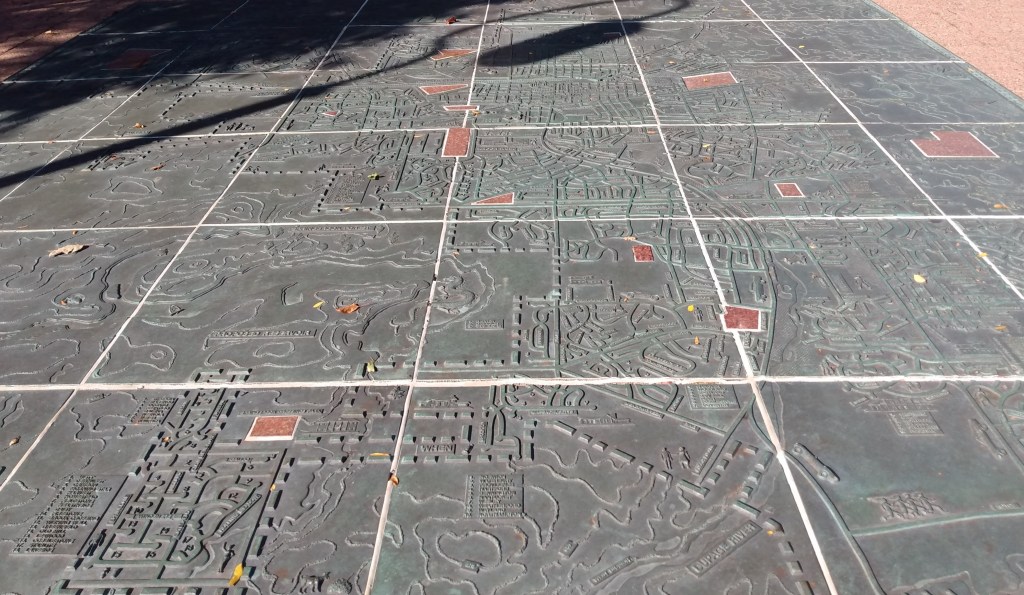
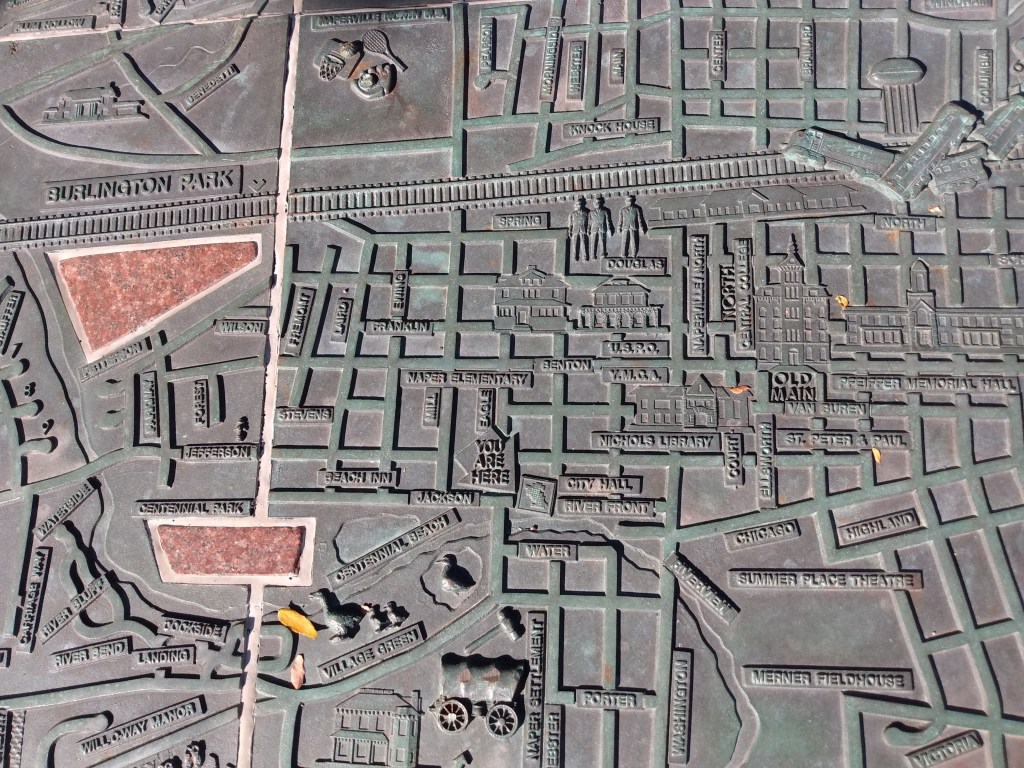
Here is another in-ground map, this time just southwest of the main library in downtown Naperville, Illinois:

The large map hints at the sprawling nature of the suburb while you can also see some of the details the community feels are important (see some of them in the close-up image of the downtown).

A third in-ground map that made a memorable impression of me as a kid was the Mississippi River installation on Mud Island in Memphis, Tennessee. To walk the vast length of the river, see important points along the way, and even play in the water was much fun.

To make the abstract map more concrete provides an opportunity to share places with a broad range of people passing by and help them better visualize the whole and its parts.

Robot vacuum as mapper and research tool for homes

The Roomba may also be a cartography tool to map homes:

Photo by Kindel Media on Pexels.com

The company announced a $1.7 billion deal on Friday for iRobot Corp., the maker of the Roomba vacuum cleaner. And yes, Amazon will make money from selling those gadgets. But the real value resides in those robots’ ability to map your house. As ever with Amazon, it’s all about the data

The Bedford, Mass.-based company’s most recent products include a technology it calls Smart Maps, though customers can opt out of sharing the data. Amazon said in a statement that protecting customer data is “incredibly important.”

Slightly more terrifying, the maps also represent a wealth of data for marketers. The size of your house is a pretty good proxy for your wealth. A floor covered in toys means you likely have kids. A household without much furniture is a household to which you can try to sell more furniture. This is all useful intel for a company such as Amazon which, you may have noticed, is in the business of selling stuff…

Amazon would not be alone in wanting to map your home. Apple Inc. also unveiled a tool in June for the next release of iOS, its mobile operating system, that uses the laser scanner on the latest iPhones to build 3-D models that it’s dubbed “RoomPlan”.

While I can imagine the commercial potential of this mapping (beyond retailers, this can be very useful for real estate businesses as well), I am also interested in the research potential. Such mapping could reveal how residents use space, floor plans, and people and pets moving through areas. Rather than relying on people’s reports on their interior activity or direct observations of this, the Roomba can be the research “eyes.” Equip it with a camera, microphone, and other sensors and it could collect all sorts of information (all agreed to by the research participants, of course). A vacuum and research device, all in one.

What the 2021 Rand McNally atlas highlights in the Chicago region

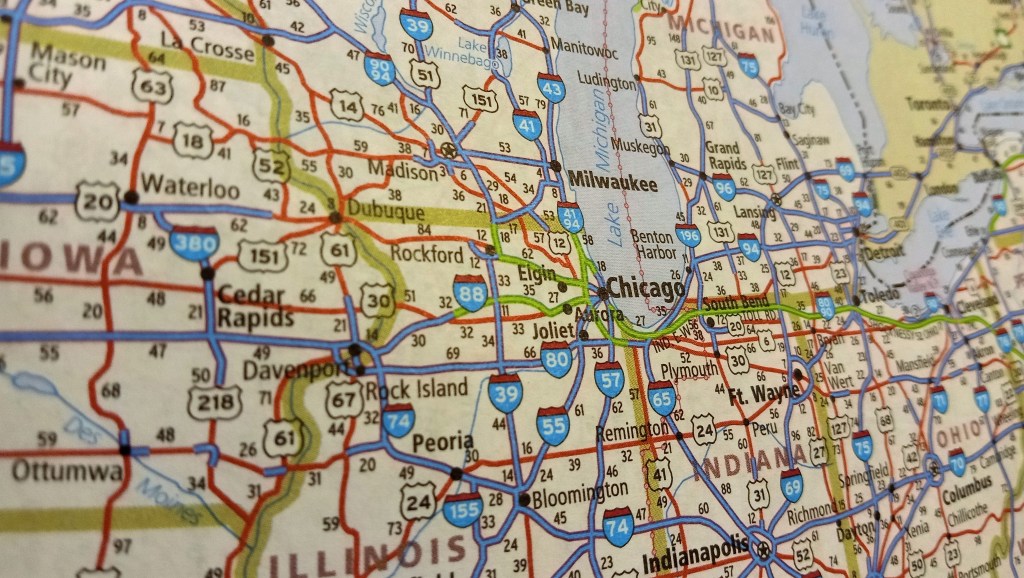
The new 2021 Rand McNally road atlas is available. Here is what they have for the Chicago region on the Illinois page (available on the preview):

RandMcNally2021Chicagoregion

As my family or I have owned a version of this atlas for many years, I have spent much time viewing this page. I can recall when new roads were added (like I-355). Here is what strikes me upon seeing the Chicago area in the 2021 version (not the more zoomed in regional map which can offer more detail):

  1. The map cannot mention the names of all of the suburbs; there is not enough room. The ones listed appear to be the suburbs larger in population mixed in with some of the communities between those.
  2. This particular map does not clearly mark the boundaries of Chicago. You can roughly see where Chicago’s edges are due to the positions of other communities. Yet, the edges of the suburbs are marked – see the orange areas versus white areas – though some of the non-suburban areas within the developed areas are oddly marked.
  3. What non-municipal features are noted is interesting. Midway Airport has a label, O’Hare does not. Four universities along the lakefront are marked but DePaul and many others in Chicago and the region are not. There are some natural features and parks visible but not many (for example, it would be very difficult to know from this map all the forest preserves present in the counties in the region).
  4. The lake is present and useful for the map because some of the labels can go off into the water rather than compete for space over land.
  5. You might be able to get a sense that the road system in the Chicago area is both easy to understand and has a complicated history. The roads are fairly straight and the main highways largely radiate out of Chicago (I-94 north, I-90 northwest, I-88 west, I-55 southwest, I-57 south). But, then there are some shorter highways, two ring highways (I-294 and I-355) but not a third one to service outer development, and the toll/non-toll options blend together.

Making this map likely required a lot of decisions as to what to include and what would help make the map readable.

Reminder of Chicago’s vital position in the American railway network

I recently saw a map on Reddit that displayed four maps of railway networks: Europe, North America, Southeast Asia, and Australia.RailwayNetworksJul2320

There is a lot that could be said with these maps. When I looked at the North America map, one thing jumped out at me: the centrality of Chicago to the passenger network (and to railroads more broadly). Not surprisingly, given the density of population and major population centers, there are more passenger trains between Washington, D.C. and Boston. The rest of the country is relatively sparse except for the convergence of lines in and out of Chicago. This is partly the result of geography – Chicago’s position at the base of the Great Lakes helps – but also the result of decisions to route traffic and develop infrastructure in and around Chicago and not elsewhere (like in St. Louis or Memphis or Cincinnati or other options). And a lot of rail traffic and freight runs through the region as well.

If a more robust passenger rail system develops in the United States, this map suggests Chicago will be in the thick of it. This would present an opportunity for a city that is already a transportation center with busy airports, crowded roads, and potentially more rail traffic and visitors. It is a little surprising that Chicago and Illinois leaders do not talk more about potential railroad options – consider the decades-long focus on a potential third airport, plans for highways that do not get off the ground, or the slow speed at which railroad congestion is addressed – as this could only add to what Chicago already has.

Maps, distortions, and realities

Maps do not just reflect reality; a new online exhibit at the Boston Public Library looks at how they help shape reality:

desk globe on shallow focus lens

Photo by NastyaSensei on Pexels.com

The original topic was to do an exhibition of a classic category of maps called persuasive cartography, which tends to refer to propaganda maps, ads, political campaign maps, maps that obviously you can tell have an agenda. We have those materials in our collections of about a quarter million flat maps, atlases, globes and other cartographic materials. But we decided in recognition of what’s going on now to expand into a bigger theme about how maps produce truth, and how trust in maps and other visual data is produced in media and civil society. So rather than thinking about just about maps which are obviously treacherous, distorting, and deceptive, we wanted to think about how every map goes about presenting the world and how they can all reflect biases and absences or incorrect classifications of data. We also wanted to think about this as a way to promote data literacy, which is a critical attitude towards media and data visualizations, to bring together this long history of how maps produce our sense of reality…

We commissioned a special set of maps where we compiled geographic data about the state of Massachusetts across a few different categories, like demographics, infrastructure, and the environment. We gave the data to a handful of cartographers and asked them to make a pair of maps that show different conclusions that disagree with each other. One person made two maps from environmental data from toxic waste sites: One map argues that cities are most impacted by pollution, and the other says it’s more rural towns that have a bigger impact. So this project was really meant to say, we’d like to think that numbers speak for themselves, but whenever we’re using data there’s a crucial role for the interpreter, and the way people make those maps can really reflect the assumptions they’ve brought into the assignment…

In one section of the show called “How the Lines Get Bent,” we talk about some of the most common cartographic techniques that deserve our scrutiny: whether the data is or isn’t normalized to population size, for example, will produce really different outcomes. We also look at how data is produced by people in the world by looking at how census classifications change over time, not because people themselves change but because of racist attitudes about demographic categorizations that were encoded into census data tables. So you have to ask: What assumptions can data itself hold on to? Throughout the show we look at historic examples as well as more modern pieces to give people questions about how to look at a map, whether it’s simple media criticism, like: Who made this and when? Do they show sources? What are their methods, and what kinds of rhetorical framing like titles and captions do they use? We also hit on geographic analysis, like data normalization and the modifiable area unit problem…

So rather than think about maps as simply being true or false, we want to think about them as trustworthy or untrustworthy and to think about social and political context in which they circulate. A lot of our evidence of parts of the world we’ve never seen is based on maps: For example, most of us accept that New Zealand is off the Australian coast because we see maps and assume they’re trustworthy. So how do societies and institutions produce that trust, what can be trusted and what happens when that trust frays? The conclusion shouldn’t be that we can’t trust anything but that we have to read things in an informed skeptical manner and decide where to place our trust.

Another reminder that data does not interpret itself. Ordering reality – which we could argue that maps do regarding spatial information – is not a neutral process. People look at the evidence, draw conclusions, and then make arguments with the data. This extends across all kinds of evidence or data, ranging from statistical evidence to personal experiences to qualitative data to maps.

Educating the readers of maps (and other evidence) is important: as sociologist Joel Best argues regarding statistics, people should not be naive (completely trusting) or cynical (completely rejecting) but rather should be critical (questioning, skeptical). But, there is another side to this: how many cartographers and others that produce maps are aware of the possibilities of biased or skewed representations? If they know this, how do they then combat it? There would be a range of cartographers to consider, from people who make road atlases to world maps to those working in media who make maps for the public regarding current events. What guides their processes and how often do they interrogate their own presentation? Similarly, are people more trusting of maps than they might be of statistics or qualitative data or people’s stories (or personal maps)?

Finally, the interview hints at the growing use of maps with additional data. I feel like I read about John Snow’s famous 1854 map of cholera cases in London everywhere but this has really picked up in recent decades. As we know more about spatial patterns as well as have the tools (like GIS) to overlay data, maps with data are everywhere. But, finding and communicating the patterns is not necessarily easy nor is the full story of the analysis and presentation given. Instead, we might just see a map. As someone who has published an article using maps as key evidence, I know that collecting the data, putting it into a map, and presenting the data required multiple decisions.