Are millennials going to the suburbs like boomers did?

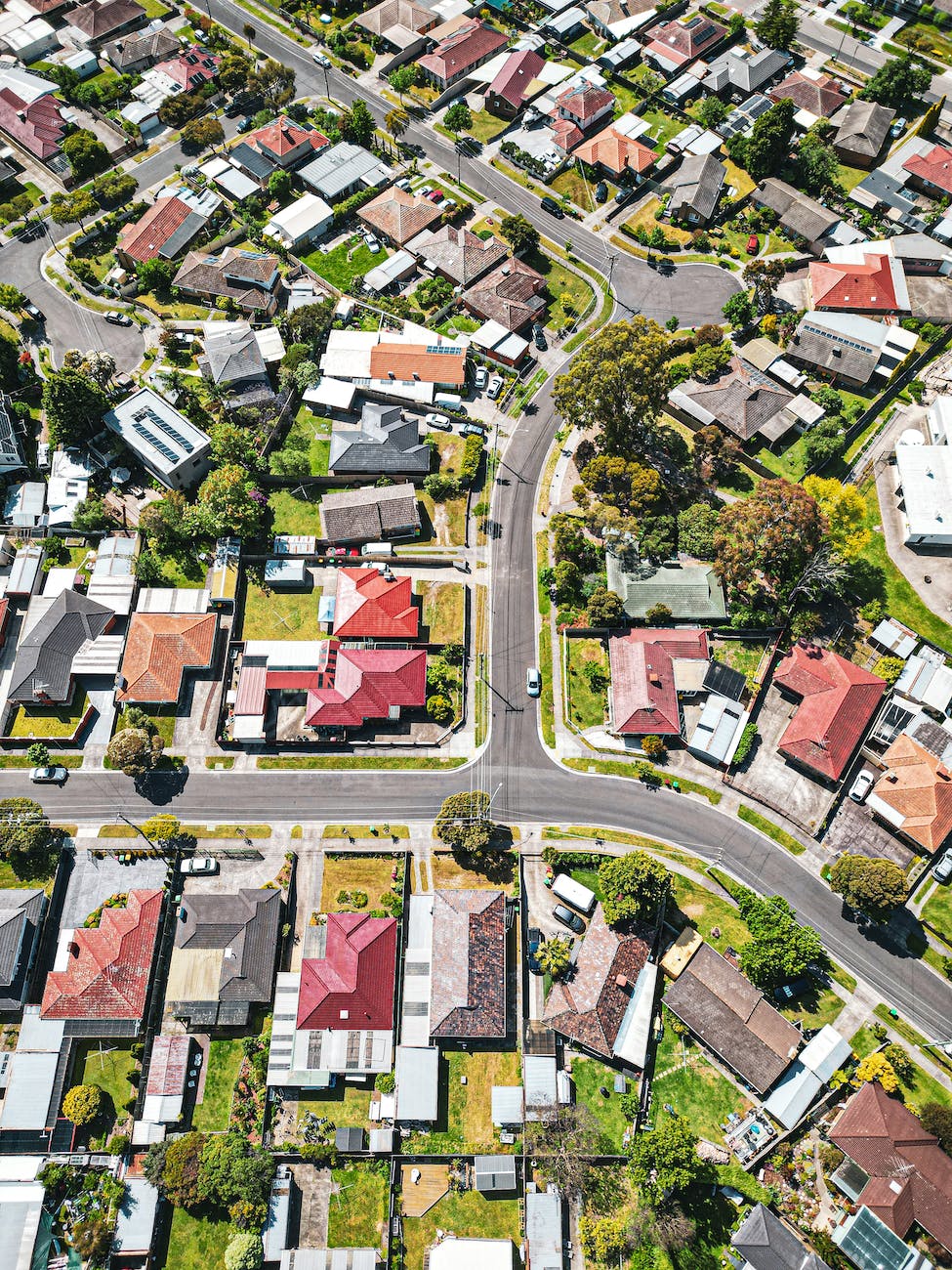
The American suburbs reach across generations:

Photo by RDNE Stock project on Pexels.com

But the reality of many millennials is starting to more closely mirror their parents’. They’re catching up on earnings and wealth, and while they’re still behind on homeownership, they’re not screwed. It may have taken them awhile to settle down, but they’re getting around to it and heading to the suburbs. In short, millennials are looking increasingly boomer-esque, and in some areas, they’re doing better than their parents.

The primary argument here involves wealth and homeownership. Are millennials at similar levels? Can they find the same kind of American Dream consisting of making it to the suburbs and owning their own house?

But it strikes me that there is a larger argument to make: these are longstanding cultural patterns, not just questions about economic resources. A later passage in the article hints at this:

In other words, it may not be that all the millennials headed to the suburbs want to be there, but in some cases, they feel like they have no choice but to exit urban centers and swallow a longer commute in the process.

“The plurality are moving to the suburbs, but that’s where the housing stock is,” Lautz said. Some of it has to do with having school-age kids, for example, but a lot has to do with affordability and availability.

Do economic conditions alone drive these choices – people need housing they can afford – or is it about influential ideologies that provide Americans particular messages about the suburbs? Americans prioritize certain things in suburbia. They like cheap and big houses. They like living near certain neighbors. They like particular amenities in their communities, including those they think help their children succeed.

If millennials do indeed end up in the suburbs at similar rates to previous generations of Americans, they may do so because this is what Americans have been doing for decades. There are economic imperatives for doing this – owning a suburban home is a primary vehicle for acquiring wealth – but also established patterns where they like driving, they are used to the ins-and-outs of sprawl, and they enjoy their private dwellings.


Are peripheral suburbs really “the most boring places in the world”?

Looking at data on where millennials are moving includes an evaluation of those places:

Photo by Helena Lopes on Pexels.com

To Lee and his colleagues’ surprise, millennials aren’t moving to nearby dense, walkable exurbs. They’re getting way out to peripheral suburbs.

“It turned out that millennials are moving to the most boring places in the world,” says Lee, who’s now a professor at Seoul National University. “They’re moving to really single-family-dominated areas with very few urban amenities.”

What might make these places less boring?

It’s expensive to live in the places millennials prefer: walkable communities with lots of shops, restaurants, and public space. An analysis published last year found that homebuyers in the 35 biggest American metropolitan areas paid 34% more to live in walkable neighborhoods, while renters paid 41% more. Paul Stout, a millennial landscape-architecture student with a popular urbanist TikTok account called Talking Cities, says he constantly hears from followers who wish they could afford a home within walking distance of places like coffee shops…

But while millennials wallow over the choice between a tiny apartment in a dense city and a lonely, sidewalk-less subdivision, urbanists insist any place can be dense and walkable as long as land-use laws allow it and people want to live there.

“There’s a lot of places in the suburbs that could be really lovely to live if you could only put a grocery store or a coffee shop on the corner,” Stout says. “I’m optimistic that you could actually make living walkable almost anywhere in the US, given the right package of zoning reform.”

America is not known for its walkability (see the dangers to pedestrians) or its third places. Instead, Americans often promote and move to suburbs built around single-family homes and driving.

Does this mean suburbs further out from the city are really “the most boring places in the world”? Or are millennials and many others pushed into binary choices where they prioritize cheaper and larger housing and thus give up other community features? In many American communities, they cannot have both cosmopolitan street life and ample affordable housing they can own.

And I would venture to guess that at least a few of American suburbanites do not find them to be boring places. (One could argue they were pushed into this option rather than chose it but that is a different argument.) Millennials and Gen Z may find them more boring than older adults and this would be interesting data to compare.

Catching up: over 50% of millennials own a house

The first part of the title of the post works two ways: I somehow missed this news earlier this year and the absolute number of the homeownership rate for millennials may matter less than how it compares to previous generations.

Photo by MART PRODUCTION on Pexels.com

The nation’s largest generation made the jump to a homeowner majority last year, reaching more than 18 million, according to a recent report from Rent Café. 

Rent Café’s report found that 51.5 percent of millennials now own a home. This population, which consists of those born between 1981 and 1996, added seven million homeowners in the previous five years alone…

Millennials became a homeowner majority generation when the average member was 34 years old while Gen X reached the milestone by 32 and baby boomers by 33…

Sky high mortgage rates also pushed many buyers out of the market and back toward renting. Rent Café’s report showed millennials are still the dominant renter generation in 2022

It takes time in life to develop the resources and connections to achieve homeownership. Since owning a home is an American ideal, it can serve as a marker of how successful Americans are.

Thus, the data cites above provides some hints regarding millennials. They were slightly older than the two previous generations for the average age for becoming a homeowner. Millennials have more renters than previous generations.

Trends could change in the future. Economic conditions could again become more favorable. New forms of housing options may develop. New policies could help promote homeownership.

However, this narrative is going pretty strong for the moment: millennials have had a harder time pursuing this basic marker of American success. And because the American dream is supposed to be attainable, this will have implications for discussions, policies, and communities.

The suburbs are not having a “surprise revival” as they never went away

A summary of several recent patterns involving the American suburbs starts with this:

Photo by Geometric Photography on Pexels.com

American suburbia— once marked by dying malls and empty office parks — is thriving.

But, given the already-existing love in the United States for the suburbs, are the suburbs back?

Take one of the pieces of evidence cited. A recent survey suggests a good portion of millennials want to settle in the suburbs:

For eight years now, as millennials have entered their thirties and forties, also known as “homebuying age,” Bank of America has surveyed over 1,000 members of the generation once a year for its Home Work series. And for 2023’s edition, it finds a “suburban nation” alive and well. Older millennials (age 31–41) are almost three times as likely to move into a house than an apartment, the survey found, and they’ve got a hunger for the Costco dog, so to speak. 

Migration patterns during the pandemic have clearly established that most homebuyers have wanted to flee big cities, with some “zoomtowns” such as Boise benefiting in particular. But the survey reveals something even more drastic. In a section called “suburban nation,” BofA reveals that 43% to 45% of millennials—of every age—expect to buy a house in the suburbs…

The interest is pervasive across the generation, and maybe means that the suburb is in for a new and better revival. And a 2021 study from Pew Research Center found that one in five adults preferred city life, compared to one quarter of adults in 2018, those who favored the suburbs increased post COVID-19 as well. One of suburbia’s worst qualities or stereotypes was its pervasive whiteness, now with the surge in interest the suburbs are starting to grow to reflect the diversity of the country at large. Big suburbs are actually now more racially diverse than the nation, according to a Brookings analysis

I take this less of millennials now really want to go to the suburbs and more of millennials are following the patterns of previous generations of Americans. What exactly the suburbs are today is different – they are more complex – but they are still structured around single-family homes, family life, and attaining the American Dream.

All places go through some fluctuations in conditions and appeal. It will take longer than just a few years to doom the suburbs as Americans have now devoted decades to celebrating and pursuing them.

If Americans moved less in 2020, the stories of people moving from places were specific to particular locations

One consistent pandemic story was that people fled urban neighborhoods for less dense locales. This narrative held for New York City and San Francisco, among other places. But, in light of mobility data from 2020 that showed just under 8.5% of Americans changed addresses, what really happened?

Photo by Helena Lopes on Pexels.com

Two recent stories help make sense of the patterns. Story number one:

“Millennials living in New York City do not make up the world,” joked Thomas Cooke, a demographic consultant in Connecticut. “My millennial daughter’s friends living in Williamsburg, dozens of them came home. It felt like the world had suddenly moved, but in reality, this is not surprising at all.”…

Demographic expert Andrew Beveridge used change-of-address data to show that while people moved out of New York, particularly in well-heeled neighborhoods, at the height of the pandemic, those neighborhoods recouped their numbers just months later. Regarding the nation as a whole, Beveridge said he’s not surprised migration declined.

Put together the attention New York City and millennials receive and that residents may have left for a while but not permanently, the population did not change dramatically.

Story number two:

Lake Forest has seen a dramatic uptick in the number of people relocating to the northern suburb during the coronavirus pandemic.

“We’ve had over a thousand new families move to Lake Forest in the last 18 to 24 months,” said Mayor George Pandaleon.

He attributes the surge to four things: space, schools, safety and savings…

The mayor also noted the suburb’s real estate market was soft, meaning there was a large inventory that made it relatively easy for people to find a place to live.

This relatively small and wealthy suburb – around 20,000 residents, median household income of over $172,000 – grew as it had multiple factors in its favor.

Put these two stories together and other data and what do we have of the great COVID-19 migration of 2020? Here is my guess:

-The media and the public were very interested in what might happen because of COVID-19. It seems plausible that COVID-19 might prompt people to move given fears about transmission through the air.

-Certain people in certain locations could afford to move: those with resources to buy homes and those with flexible work arrangements. Those with fewer opportunities could not. The same residential segregation and uneven development present at normal times affected COVID times as well.

-Millennials seem to get a lot of news coverage as the next generation as well as one supposedly holding different values than previous generations.

All of this did not add up to significant mobility across the United States or across many groups in the United States.

Use better social science categories than “generations”

Millennials, Boomers, the Silent Generation, Gen Y, etc. are all categories that people generally think describe real phenomena. But, are they useful categories for describing patterns within American society?

Photo by Sarah Chai on Pexels.com

This supposition requires leaps of faith. For one thing, there is no empirical basis for claiming that differences within a generation are smaller than differences between generations. (Do you have less in common with your parents than with people you have never met who happen to have been born a few years before or after you?) The theory also seems to require that a person born in 1965, the first year of Generation X, must have different values, tastes, and life experiences from a person born in 1964, the last year of the baby-boom generation (1946-64). And that someone born in the last birth year of Gen X, 1980, has more in common with someone born in 1965 or 1970 than with someone born in 1981 or 1990.

Everyone realizes that precision dating of this kind is silly, but although we know that chronological boundaries can blur a bit, we still imagine generational differences to be bright-line distinctions. People talk as though there were a unique DNA for Gen X—what in the nineteenth century was called a generational “entelechy”—even though the difference between a baby boomer and a Gen X-er is about as meaningful as the difference between a Leo and a Virgo…

In any case, “explaining” people by asking them what they think and then repeating their answers is not sociology. Contemporary college students did not invent new ways of thinking about identity and community. Those were already rooted in the institutional culture of higher education. From Day One, college students are instructed about the importance of diversity, inclusion, honesty, collaboration—all the virtuous things that the authors of “Gen Z, Explained” attribute to the new generation. Students can say (and some do say) to their teachers and their institutions, “You’re not living up to those values.” But the values are shared values…

In other words, if you are basing your characterization of a generation on what people say when they are young, you are doing astrology. You are ascribing to birth dates what is really the result of changing conditions.

As this piece notes, popular discourse often treats generations as monolithic blocks. Everyone in a particular generation has similar experiences, outlooks, values. Is this actually true? Or, are other social forces at work including changing conditions, lifecourse changes, social markers like race, class, and gender, and more?

I remember seeing earlier this year an open letter from social scientists to Pew Research asking them to discontinue using generation categories. This is one way that change could occur: researchers working in this area can replace less helpful categories with more helpful ones. This could be scientific progress: as our understanding of social phenomena develops, we can better conceptualize and operationalize these. With sustained effort and keeping up with changes in society, we could see a shift in how we talk about differences between people born at different times.

Yet, this also takes a lot of work. The generations labels are popular. They are a convenient shorthand. People in the United States are used to understanding themselves and others with these categories. Sociological categories are not always easy to bring to the public nor do they always find acceptance.

At the least, perhaps we can hope for fewer articles and opinions that broadly smear whole generations. Making hasty or less than accurate generalizations is not helpful.

More young adults pooling resources to purchase homes

Limited in pursuing the American Dream of homeownership by college debt, economic conditions, and high housing prices? More young adults are buying homes with other people:

Photo by Kindel Media on Pexels.com

For millennials, many of whom are getting married later in life, swimming in student-loan debt and facing soaring home prices, homeownership can feel more like a fantasy than an achievable goal. So, some first-time home buyers are taking a more creative route to make it happen—by pooling their finances with partners, friends or roommates.

Since 2014, when millennials became the largest share of home buyers in the U.S., the number of home and condo sales across the country by co-buyers has soared. The number of co-buyers with different last names increased by 771% between 2014 and 2021, according to data from real-estate analytics firm Attom Data Solution.

The pandemic added fuel to that trend, according to data from the National Association of Realtors. Among all age groups during the early pandemic months—April to June 2020—11% of buyers purchased as an unmarried couple and 3% as “other” (essentially, roommates). Those numbers were up from 9% and 2%, respectively, in the previous year.

This is an interesting situation: Americans continue to want to purchase homes. However, this is not within the reach of many unless they have ways to draw on additional resources.

I do wonder how this is connected to broader changes in households and the formation of families. How does this all work with more Americans living alone, changes in marriage rates, and extended emerging adulthood?

I have heard many warnings over the years about co-signing loans, even among family. Some of these arrangements could present complications in the long run:

Legal experts advise buyers to consult a real-estate attorney to help write a co-ownership agreement that covers every possible scenario, from job loss to marriage to personal fallouts. For example, who will hire the handyman if there is a plumbing issue? Who is in charge of collecting and making the mortgage payments? If one co-owner moves away, will the other co-owners have an option to buy them out or will there be a forced sale of the home?

While this is still a small minority of homeowners, it is worth paying attention to with high housing prices and economic anxiety.

A growing shortage of starter homes

Those looking for smaller homes to purchase are facing a limited supply:

Photo by RODNAE Productions on Pexels.com

The first rung on the homeownership ladder has long been an affordable “starter home.” These houses, with their smaller footprints and selling prices, allowed young homeowners to build wealth and upsize as they started their families…

Supply of “entry-level housing”—which Freddie Mac defines as homes under 1,400 square feet—is at a five-decade low.

Surging prices and stiff competition mean there aren’t enough smaller, more affordable starter homes to go around in many regions. The pandemic and subsequent recession, along with the student debt crisis and delayed family formation, contributed to frustration and despair among younger house hunters…

Lately, data from the National Association of Home Builders shows new construction is again giving priority to higher square footage for single-family homes, a trend likely spurred by the widespread shift to working from home and house hunters’ need for more space.

This has been building for years now with the factors cited above (and more – and it may not be the fault of millennials). Builders prioritized larger homes as they can profit more from each units and buyers wanted more features and/or larger homes.

I wonder about the role of local governments. How many urban neighborhoods and suburban communities allow for or encourage the construction of smaller homes. It might take some extra work for a community to work with a developer who is willing to construct smaller and cheaper homes. At the same time, some of the existing members of the community might not be happy about the change as smaller homes are often interpreted as dragging down values and the character of the community. At the least, wealthier communities are unlikely to encourage such homes unless they are at a higher price point – and then it is no longer a starter home.

The article also mentions the financial ramifications of not getting into a house earlier: on average, this lowers the amount of house wealth generated decades later. Might then then shift the emphasis of recent decades away from seeing homeownership as a financial nest egg or requiring a necessary return on investment?

Out with vacation McMansions but keep going with pricey, exclusive, luxurious homes

An article about a popular new development in Park City, Utah suggests millennials do not want McMansions but the rest of the text suggests they are not giving up on having nice homes:

https://www.benlochranch.com/

What Benloch Ranch represents is a collision of trends in real estate and demographics. Millennials of homebuying age are rejecting the sizes of their parents’ homes, so-called cookie-cutter McMansions. And the second-home market, hastened by COVID and the same millennial-buying population, is booming. The pandemic has forced buyers to value outdoor spaces and activities more than ever before. Benloch Ranch currently has a waitlist of 175 for its single-family lots…

The development’s amenities include more than 20 miles of trails, a ski hill, a skeet shooting range, an ice skating pond and 900 acres of open space…

A lot of millenials don’t want these big houses anymore. We’re redefining the size and scale of the house and altering the price point so it’s more affordable.”

According to data released by the Park City Board of REALTORS, the median price  single-family home rose roughly 26% year-over-year to $2.5 million. Benloch Ranch offers single-family homes starting at $695,000.

The pitch is an attractive one: lean into the terrain and the idea of sustainability, feature interesting architecture, provide amenities, be close to an exciting scene and in at the start of a new development. This is a shift to new preferences of millennial buyers. The vacation homes of today and the future may look different and there is money to be made.

At the same time, this is about vacation homes in a wealthy community. This development has potential because millennials with resources can afford a vacation home starting at $700k. Sure, there are no more McMansions with all of that wasted space and tacky design but this kind of life is only available to those who can buy into it. The price for these homes would be beyond the reach of many residents of the Salt Lake City region, let alone many residents of the United States.

Does this mean the McMansion vacation homes of an older generation will not find buyers? This will be worth watching, both for vacation homes and regular homes. If McMansions go out of style, this could be reflected in lower prices or modifications – imagine multiple units – or even redevelopment.

Are suburbs now cool or are they just an attractive option at the moment?

An analysis of why the suburbs are currently attractive to millennials starts with a headline about the suburbs being cool but mainly discusses practical life issues:

Photo by Leah Kelley on Pexels.com

Changing attitudes about commutes.

Credit analyst Kailyn Hart was living in a 1,300-square-foot apartment in bustling Mid-City, Los Angeles with her fiancé, Dominic Wilson, and their 1-year-old son when the pandemic forced her to begin working from home. Being able to work remotely gave Hart—who had been watching mortgage rates for a good buying opportunity since 2017 —the kick she needed to purchase a 4-bedroom, 2,300 square-foot house with a backyard in Fontana, Calif, a 47-mile drive from L.A. “My boss told me that I’ll at least be working remote until December, and after that I may only be going into the office just once or twice a week,” says Hart, 32…

A need for more space…

“We’ve seen a surge of buyers who want to leave downtown for the suburbs,” says Nicole Fabiano-Oertel, a real estate agent at Compass in Chicago. “The most common reason is they want more space, whether that’s indoor space or outdoor space, or both.”…

Why pay city prices, when you can’t live the city life?…

Corey Jones, a real estate agent with Better Real Estate in Plainfield, N.J., says affordability is a driving factor for a lot of urban residents who are decamping to the suburbs. “What we’re hearing from clients more and more now is: why rent and pay city prices when you’re working from home?”…

Good public schools.

Generally, public school systems in the suburbs outperform schools in urban areas with respect to test scores, graduation rates, and college placement. Suburban schools also usually have more outdoor space for sports and other recreation. And, a number of parents who send their kids to expensive urban private schools have expressed that they’re less willing to keep paying if the schools go remote this year.

None of these reasons sound particularly cool. They sounds more like calculated decisions given the current circumstances: Americans tend to like larger private spaces, they have a lot of stuff, and they think certain places are better for raising children. These are all part of the ongoing appeal of the suburbs.

Going further, I wonder when suburbs were cool. Even as Americans moved to suburbs in large numbers in the twentieth century, were they ever the place to be? All during this period, critics of the suburbs pounded away at the problems: exclusion, conformity, soulless, mass produced, overreliance on driving, and on and on. Even as millions adopted a suburban lifestyle, it was not always portrayed in media products as the exciting or hip or sophisticated choice. Suburbs may have more entertainment centers than ever but they do not compare to the vibrant cultural centers and neighborhoods of big cities.

Perhaps the connection here is that millennials may be more interested in suburbs right at this moment. As relatively young adults, they have a higher cool factor and are not as locked into life paths. Just moving to the suburbs suggests younger Americans think the suburbs are a viable option…and this may be as cool as the suburbs get.