Is Times Square beautiful?

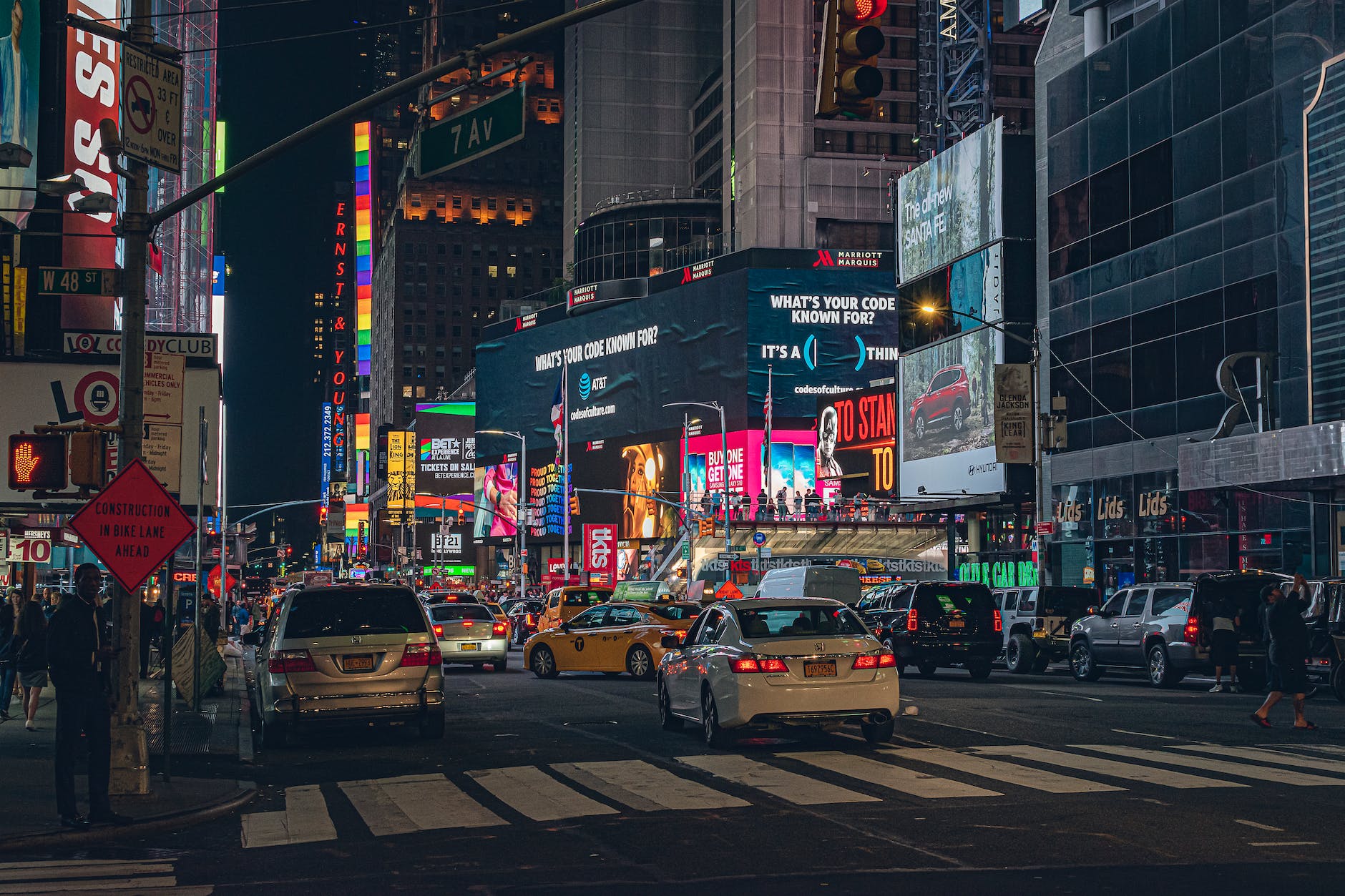
While busking as Mario, one writer describes Times Square in New York City:

Photo by Vlad Alexandru Popa on Pexels.com

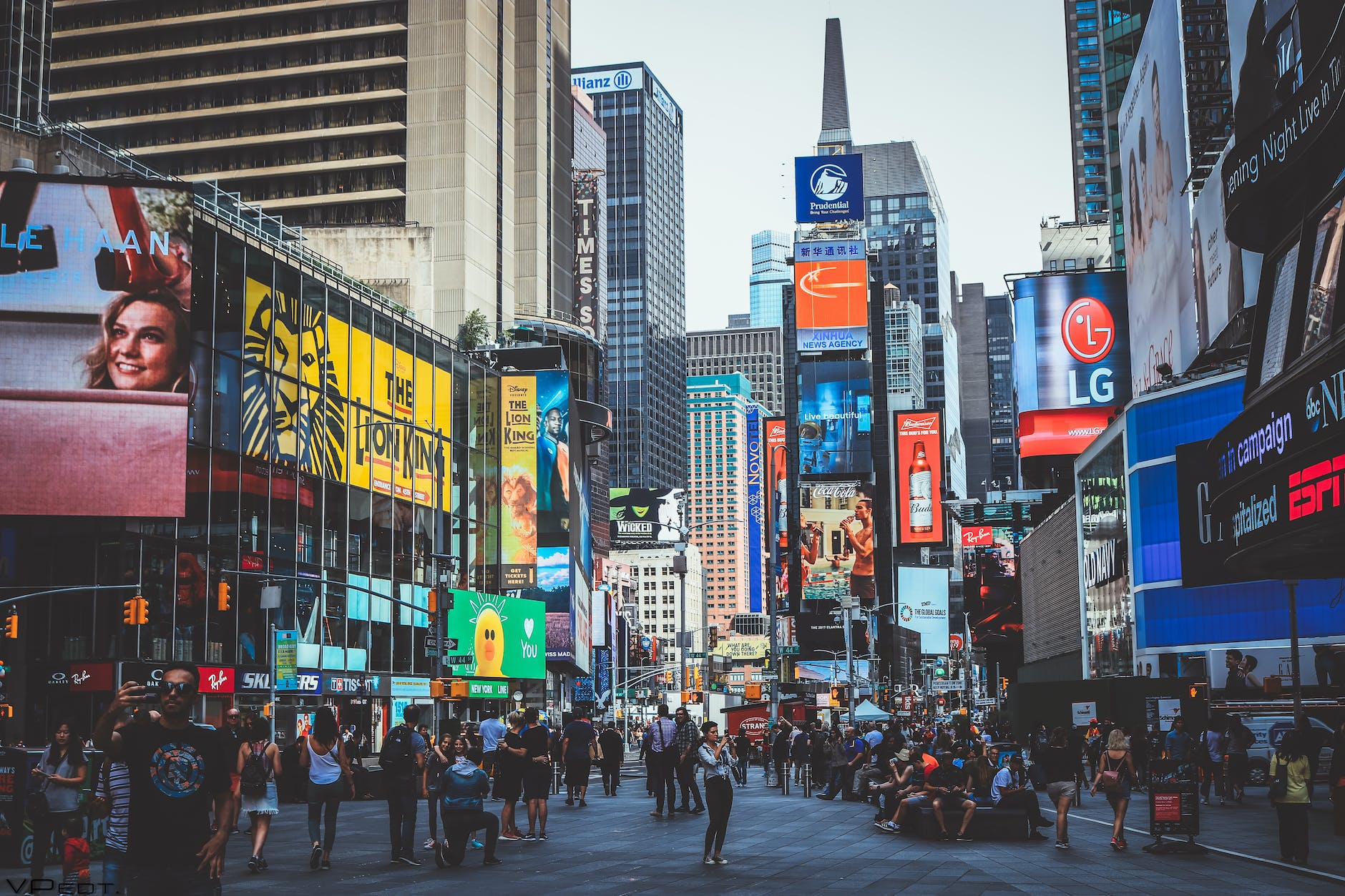
Times Square is beautiful when you judge it by aesthetics alone. Yes, plenty of great American sights are more spiritually fulfilling than this Cathedral of Stuff, but if you’re willing to set aside those exasperating anti-capitalist ethics for a few moments, I recommend letting the financial majesty of midtown wash over you. There is truly no joy quite like becoming entranced by a particularly sublime Coca-Cola advertisement, or being inexplicably inspired to take a picture of the Disney Store, and letting your brain cells atrophy away in dumbstruck glory. No, the only problem with Times Square is the obnoxious people who occupy it, and as I stood under the scarlet glow of an H&M sign, dressed in full Super Mario garb, gesturing toward the young families hurrying by—who were doing everything possible to finish up their Manhattan vacation without getting hustled into oblivion—I felt as if I was finally doing my part to make this city worse.

It is for sure a spectacle. Lights, noise, crowds. Activity at all hours. A place to see things and be seen. Can feel like the center of a universe.

Whether it is aesthetically pleasing is a whole different question. How do we judge beauty in cities? I suspect we could ask dozens of New Yorkers about what they find beautiful in their city and get even more responses. Is the problem the people who get in the way of the beautiful modern capitalist tableau?

There is nothing “natural” about Central Park

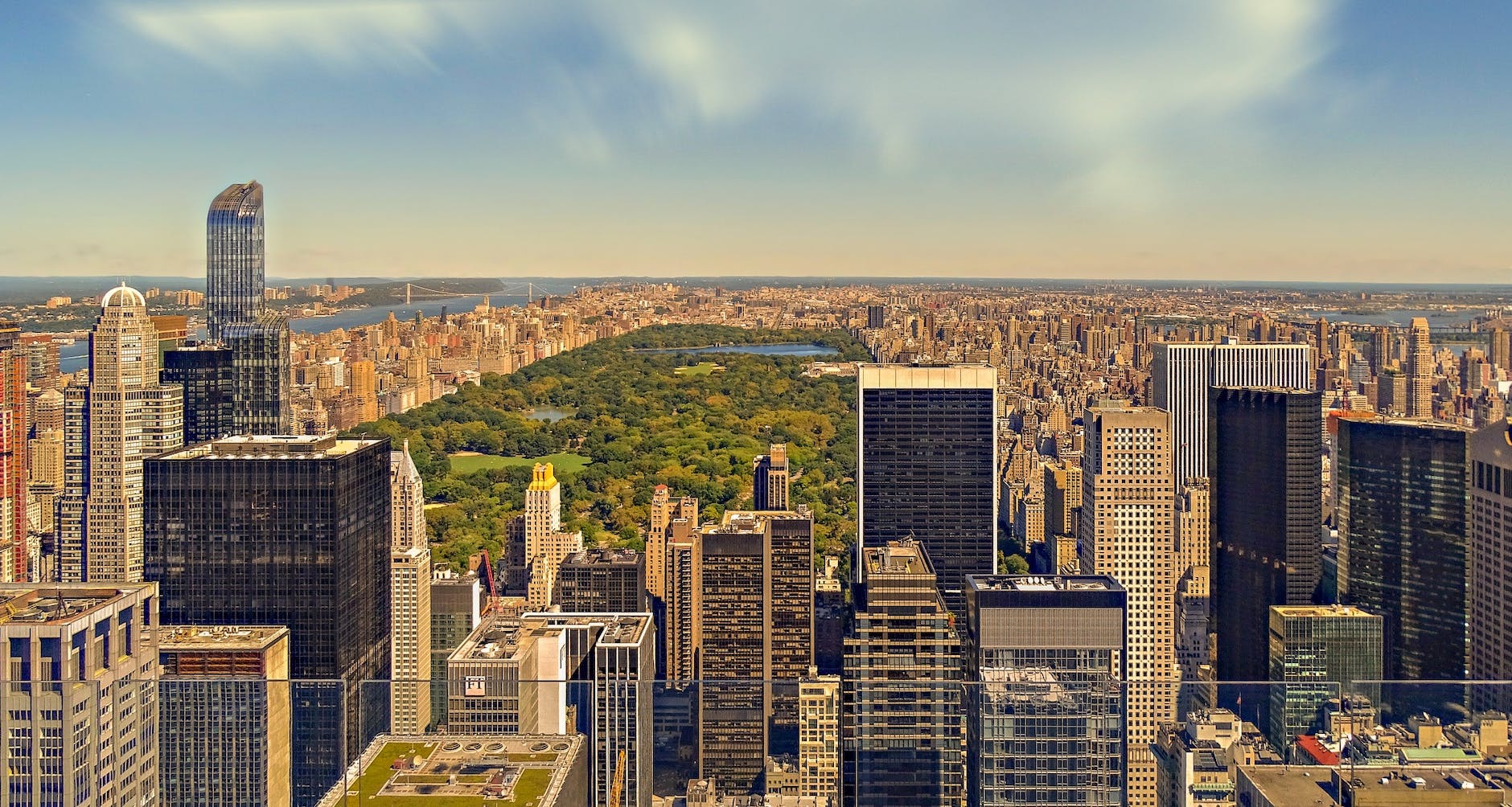
Humans like to cultivate nature in the city. Central Park in New York City is a great example. This 13 minute video from Architectural Digest explains.

Photo by Pixabay on Pexels.com

From the video:

Vaux and Olmsted’s design called for a radical departure in the thinking of what a grand civic garden should be. They rejected the idea of highly formal rigid gardens like those designed exclusively for the wealthy. Instead, they proposed a naturalistic setting, filled with meadows, woodlands, gurgling streams, and surprising vistas. The resulting work involved shifting over 5 million cubic yards of soil, planting over 500,000 trees and shrubs, and excavating more than seven lakes and other bodies of water, all done by hand. In fact, the boulders like this one, which the bolt is sticking out of are the only original pieces of natural landscape in the park, and even many of these were unearthed, scraped, and cleaned to appear as they do today.

It is hard to imagine New York City without this park yet it radically transformed the setting.

One of the world’s wealthiest men has a plan for Miami and thinks it could eclipse New York’s financial sector

Ken Griffin has a lot of money and big hopes for Miami:

Photo by Elvis Vasquez on Pexels.com

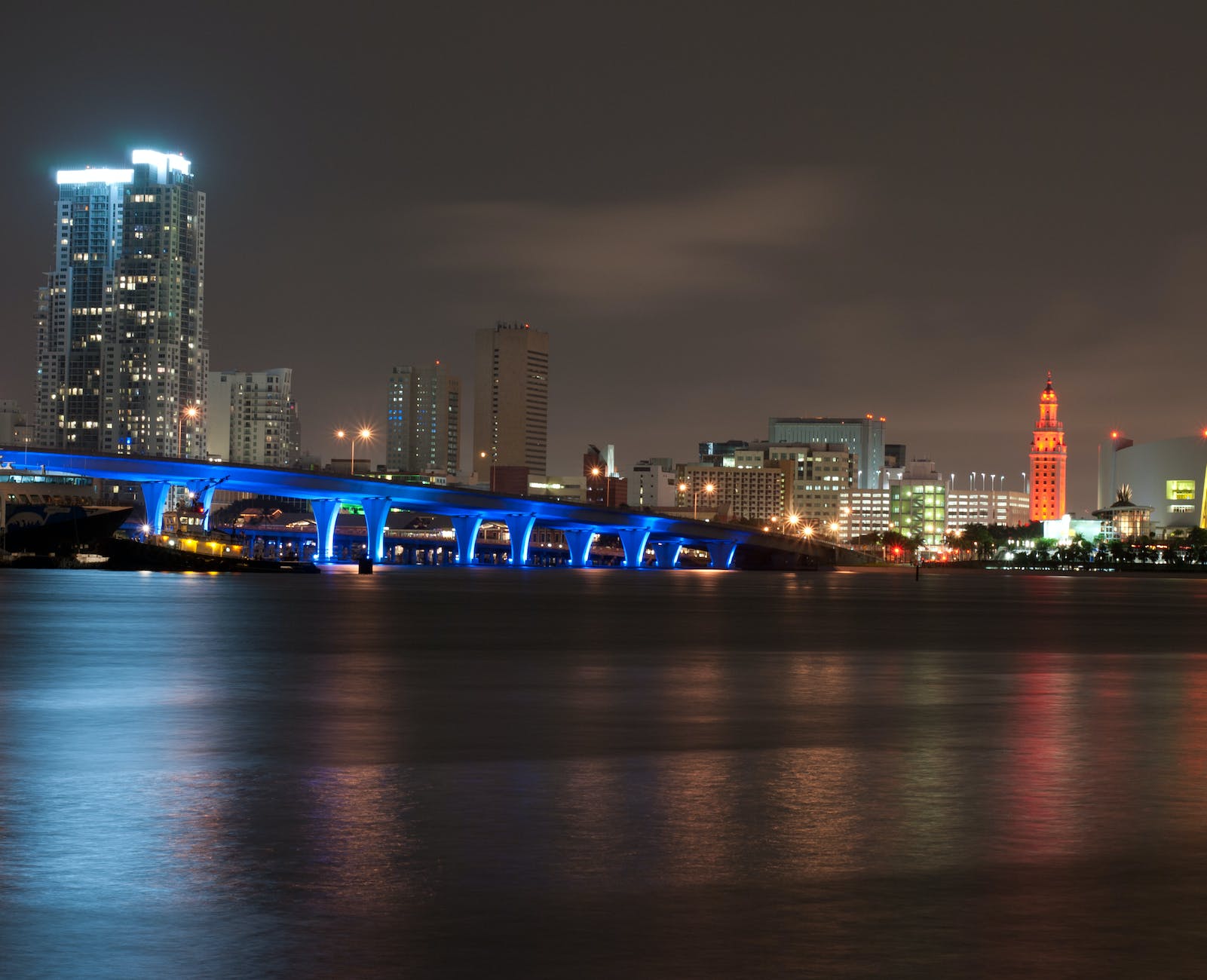
“We’ll see how big Wall Street South becomes,” Griffin said in an interview Tuesday with Bloomberg News at the Citadel Securities Global Macro Conference in Miami. “We’re on Brickell Bay, and maybe in 50 years it will be Brickell Bay North how we refer to New York in finance.”

Titans of Wall Street have flocked to South Florida in recent years, attracted by warm weather and lack of state income tax. But Griffin, who moved to Miami last year, plans to outdo them all by changing the face of the city with a more than $1 billion waterfront tower that will serve as Citadel’s headquarters, as well as political and philanthropic donations ranging from a children’s hospital to soccer.

Griffin, who is worth $35.4 billion, according to the Bloomberg Billionaires Index, still has high praise for New York, where Citadel maintains a considerable presence and intends to build an office tower. Citadel is planning a massive new Manhattan skyscraper that could rise to roughly 1,350 feet (411 meters) with 51 office floors and seven terraces…

“Miami, I think, represents the future of America,” he said.

Griffin has a vested interest in this matter. He just came from Chicago, a place where his politics did not necessarily align with others. He suggests Miami is pro-growth. He wants to spend his money locally.

It is true that New York City does not necessarily have to be the global financial capital forever. Places change, statuses rise and fall, industries shift and move. But, it would take a lot of change for New York City to be eclipsed by Miami as a financial center. For example, one ranking of global cities does not include Miami in its top 30 and New York City is #1. And the financial center aspect of New York is just one part of a city with numerous features and resources.

This sounds like boosterism. Griffin wants to raise the profile of Miami. He wants others to come to join him. He and the city can ascend together. There is money to be made in Miami – and in New York and in Chicago and in numerous other cities.

Skyscrapers happened because real estate was really expensive

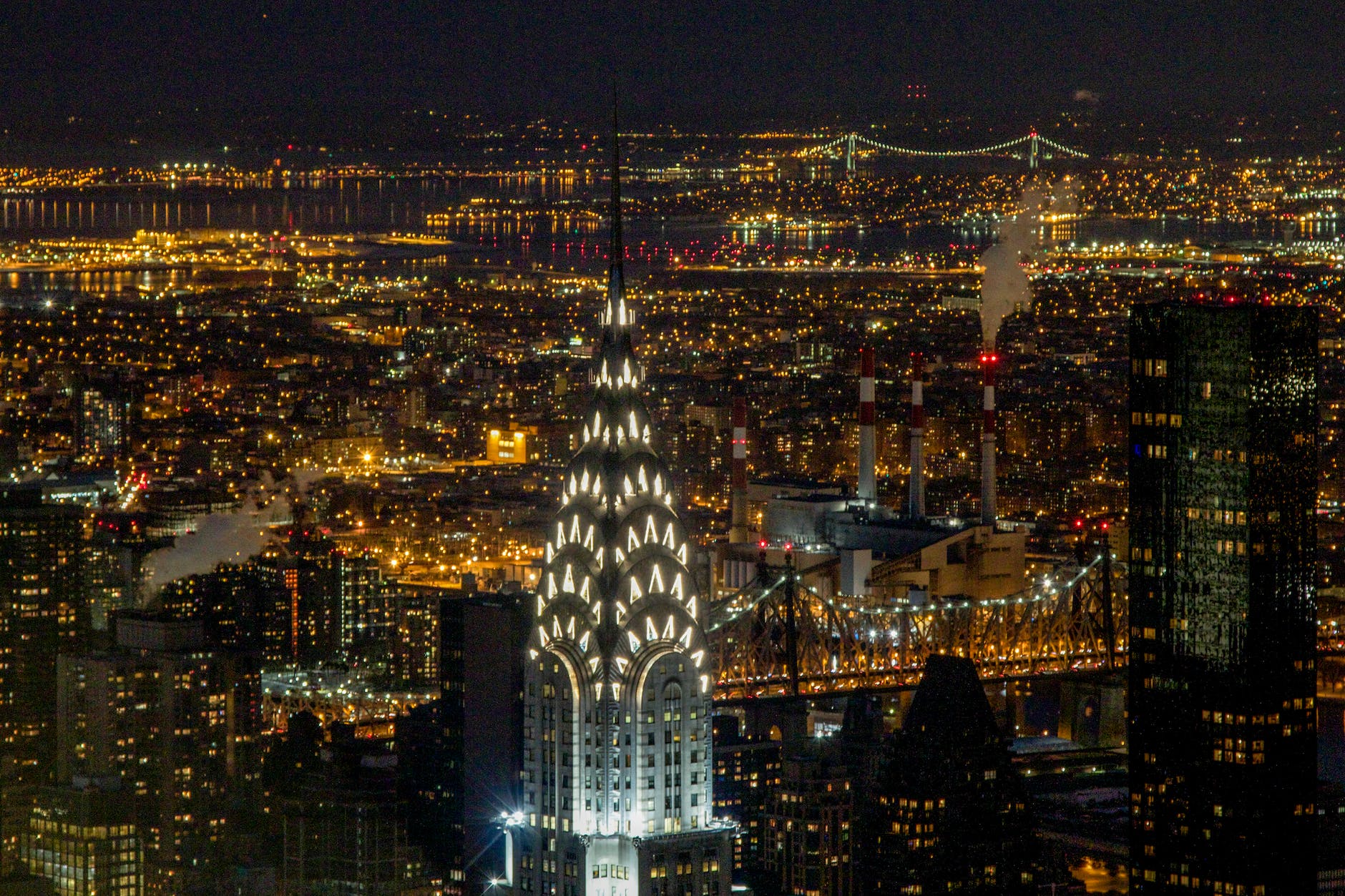
A quick history of the Chrysler Building in New York City provides a reminder of a key reason skyscrapers emerged in American cities:

Photo by Following NYC on Pexels.com

Dominating the New York skyline brought prestige and publicity, but tall towers also resolved a more prosaic problem: As land prices climbed, developers had to build upward to turn a profit, pushing their projects as high as engineering, natural light and, eventually, zoning would allow. “Skyscrapers were a self-fulfilling prophecy of the heated real estate market,” writes Neal Bascomb in his 2003 book Higher: A Historic Race to the Sky and the Making of a City. By the 1920s, with Europe in ashes after World War I, these buildings became brash totems of a new world order. Manhattan in particular had become the “harbor of the world, messenger of the new land … of the gold diggers and of world conquest,” wrote the German architect Erich Mendelsohn in his seminal 1926 book Amerika, published the year after New York overtook London as the world’s most populous city.

In a dense space like Manhattan, demand for land pushed prices up. To make more money from the same plot of land, skyscrapers offered more space. The addition of thousands of square feet of office space, even if it could be hard to fill at times, provided profit.

I would be interested to see analysis shows the profits of a skyscraper over a lifetime compared to other options builders, developers, and companies could have pursued. Instead of building up in major cities, here are other options they could have pursued: building underground; building dense and wide buildings (imagine ones that cover several city blocks at a height of ten stories or so); constructing large buildings in other parts of the city and suburbs; and pursuing multiple business districts rather than centralized locations where everyone wants to gather.

Even if there was profit at stake, there is also the matter of the prestige of skyscrapers. Skyscrapers are important symbols in a city skyline. Were skyscrapers both profitable and status-enhancing or did the increased status mean that the absolute numbers did not matter quite as much?

Housing migrants amid a tight housing supply

New York City does not have much available housing and this leads to problems:

Photo by Pixabay on Pexels.com

You can see it by looking at residential-vacancy rates, which have been as low as 2 percent in recent years. You can tell by looking at the size and price of rentals and homes for purchase: The average rent in Manhattan is more than $4,000, and the average home in Brooklyn costs roughly $1 million. You can see it in the shrinking of New York’s middle class and the stagnation of its population and the widening of its income and wealth inequality. Housing supply has simply not kept pace with housing demand, squeezing everyone except for the very rich.

The same forces shunting families to the suburbs are weighing on the migrants. The same forces driving New Yorkers out of unaffordable apartments and into homeless shelters are weighing on the migrants. Migrants cannot afford housing for the same reason that the city itself struggles to raise money for new facilities. New York really is full…

High housing costs have a way of making every problem a housing problem. A homeless person needing help with a substance-abuse disorder needs housing first. A migrant requiring legal aid more pressingly needs a roof over their head. And high housing costs, of course, force millions of vulnerable people into homelessness. “Our homeless-response system has turned into a crisis-response system,” Gregg Colburn, an associate real-estate professor at the University of Washington’s College of Built Environments, told me. “So many other systems have failed or delegated responsibility to it.”

The opposite is also true: Low housing costs make other problems simpler to solve. Cheap housing reduces the number of people who become homeless. It also allows the entities providing assistance to do more for less, because their overhead costs are lower. And it frees up lawyers to work on immigration cases, substance-use experts to work on substance-use issues, and mental-health counselors to work on mental-health issues.

It is enough to make one think that seriously and sufficiently addressing housing should be a major priority!

The problem is not just limited to New York City. Multiple big cities in the United States need more housing units and lower-priced yet good quality housing. Having a stable place to live at a reasonable price goes a long way to better life outcomes and opportunities.

But, adding a lot of good housing takes a lot of work and there does not seem to be political will to address it. Additionally, it can be easy to look for other solutions to some of the different problems listed above. Would building more good housing automatically solve these issues? No, but it could help a lot and make it more possible for people to live and enjoy major cities.

How much all the buildings in New York City weigh

New York City has a lot of buildings in its 300+ square miles. All those structures weigh a lot:

Photo by Michau0142 Ludwiczak on Pexels.com

New geological research warns that the weight of New York City’s skyscrapers is actually causing the Big Apple — whose more than 1 million buildings weigh nearly 1.7 trillion pounds — to sink lower into its surrounding bodies of water.

Given the innovations that helped give rise to all of these buildings, can we expect innovative solutions to the consequences of all that weight? One approach would be to create barriers between the surrounding waters and the habitable areas. However, that does not fully address the weight and the ground under the buildings. Are there ways to prop up large structures?

Basing arguments on absolute numbers vs. rates of gun violence

Can different statistics about the same topic support different arguments? If looking at gun violence, here is one conclusion based on rates:

Photo by Lukas on Pexels.com

In reality, the region the Big Apple comprises most of is far and away the safest part of the U.S. mainland when it comes to gun violence, while the regions Florida and Texas belong to have per capita firearm death rates (homicides and suicides) three to four times higher than New York’s. On a regional basis it’s the southern swath of the country — in cities and rural areas alike — where the rate of deadly gun violence is most acute, regions where Republicans have dominated state governments for decades.

Similarly, a 2022 brief posted by Drexel’s Urban Health Collaborative shows big differences in per capita gun deaths in major American cities with New York at the bottom of the listed cities.

But, the data could be interpreted in another way. Rates are expressed in the number of occurrences per a set amount of population. What do the absolute numbers say about gun deaths? One compilation of data from The University of Sydney shows 804 gun deaths in 2019.

Or, here is a 2022 article in the New York Times looking at shootings in the city:

Shootings are twice as high as in the years preceding the pandemic, and the burden falls primarily on Black and Latino neighborhoods. More than 1,800 shootings were reported annually in the past two years after dropping under 900 in 2018.

The absolute numbers sound high and can contribute to perceptions:

But fresh anxieties have driven warnings about a return to New York’s “bad old days,” when there were many years with more than 2,000 murders. To some, the resemblance between the periods lies not in the crime or the data, but in the coverage.

Rates are often used because they help make comparisons across communities with different population sizes. New York City has more shootings but it is also the largest city in the United States by a lot. There will be more crimes to possibly report on in a larger city but that is in part because of having a larger population.

Of course, if we are at a point where people just want to find a statistical interpretation that fits their perspective, we have bigger problems on our hands than simply discussing what numbers best reflect realities.

(See this earlier post involving rates on whether Chicago is the “murder capital” of the United States.)

Needing to study both facts and perceptions, NYC crime edition

How do we put together data on crime and people’s perception of crime?

Photo by cottonbro studio on Pexels.com

Emotional stories speak louder than facts, perhaps especially in a city as storied as New York. Writing of the city’s crime narratives during a much more dangerous era, Joan Didion wrote of observers’ “preference for broad strokes, for the distortion and flattening of character and the reduction of events to narrative” — in other words, the nearly universal desire to make stories out of feelings, and then believe them. And when people ask me if “New York is safe,” they don’t want to know about numbers. They’re asking about feelings.

How people perceive crime, and how politicians represent it to the electorate, has less to do with data and more to do with vibes. In October, while fact-checking the claims of rising violent crime that drove many midterm campaigns, the Pew Research Center’s John Gramlich noted that “the public often tends to believe that crime is up, even when the data shows it is down.” Data from the DOJ’s Bureau of Justice Statistics shows that there’s no increase in violent crime across the board in the US, and yet for most years in the last three decades, the majority of America adults thought there was more crime nationally than the year before, even though the opposite was true. Indeed, over three-quarters of those polled in October by Politico/Morning Consult said they thought violent crime was rising nationally and 88 percent said it was increasing or remaining the same in their own communities.

This is why sociologists and others need to study not just what is happening, the facts, and the real numbers. Perceptions also matter and may matter more so as they can drive emotions, behavior, and policies.

This is clear consistently in the area of crime and violence where what people think is thinking may not match reality. For decades, particular perceptions about crime have influenced actions. See, for example, how it plays out in suburban settings. Instead of zooming out and looking at the big picture, certain narratives can prove powerful and persistent.

Thus, presenting facts is not always an effective approach. In this particular case, what would be an effective narrative that would better match the figures?

From one sacred domain to another? Religious buildings as spaces for the arts

When studying the conflict that could arise when religious groups proposed zoning changes, I encountered a number of creative efforts by religious congregations to generate income with their building. Here is another use: creating spaces for the arts.

Photo by cottonbro on Pexels.com

“The problem is that, particularly in New York, congregations are housed in large, historic properties, with large amounts of deferred maintenance,” nonprofit leader Kate Toth told Religion News Service. “At the same time, membership in most religious communities is declining. Those are two difficult trends to square.”

But Toth has a solution to offer. Enter Venuely, a space sharing website launched this month. The interfaith platform borrows from other space sharing models like Airbnb to match houses of faith in New York Citythat have surplus space to short-term renters in search of a deal. It’s also founded by two nonprofit organizations (Bricks and Mortals and Partners for Sacred Places) that aim to develop capacity for faith communities, not line their pockets…

“We’re turning (the space) into an outreach mission for theater community, and because we’re nonprofit we can offer the space at a very good price,” said Hutt. “Churches have a lot of unused capacity. It makes a lot of sense for that space to be available for other organizations, especially when you have a mission match like we do with the theater community.”…

Looking ahead, St. Luke’s plans to use Venuely to rent its stained-glass adorned sanctuary as well as a multipurpose room to members of the arts community. For Strasser, opening the space up for nonprofit arts groups is an extension of what the church does on Sundays.

Many religious buildings are constructed with the idea that their spaces are sacred or can become sacred or are imbued with the sacred. They are physical buildings constructed by people yet when people of faith come together and experience fellowship and worship, the building is something different. My colleague and I wrote a book about this.

What then happens when the building is used for a different purpose? The religious congregation itself may do this; not all of their activity may be sacred in the same way or draw on sacred themes. There may be more profane activities in the buildings as well such as cleaning or people engaging in more mundane activities inside.

For some religious traditions and congregations, the arts is a relatively close domain to religious sacred space. Through music, art, theater, and other forms, the arts can invite creators and audiences to consider big questions and reflect on life. This all can be enhanced by a physical space that works with the creation. (Other religious traditions might be less open to this. Evangelicals, for one, are not known as a group that encourages the arts and may not want to share spaces.)

It will be interesting to see how Venuely does and how congregations, creators, and audiences respond to the possible venues.

A Brooklyn church pursuing a Jane Jacobs-inspired development

A plan is underway for a New York City church to work with a developer to construct a sizable development:

Photo by Pixabay on Pexels.com

A. R. Bernard, pastor of the largest evangelical church in New York City, has been working on a plan for more than 10 years. Now the proposal to build a $1.2 billion urban village and revitalize the struggling neighborhood around his church is progressing through the city’s approval process and closer to reality. The Christian Cultural Center (CCC) hopes developers could break ground in Brooklyn next year…

On 10.5 acres of church land, the proposed village would include thousands of units of affordable housing, a trade school, a supermarket, a performing arts center, 24/7 childcare for night-shift workers, senior living facilities, and other amenities designed to revitalize the East New York neighborhood…

“I’m a big Jane Jacobs fan, when it comes to understanding the urban landscape. And community means amenities are within a 1,000-foot walking distance,” Bernard said, referring to the urban planner who is famous for saving lower Manhattan from a highway and for her ideas on smaller-scale urban development focused on street life. “She was a genius. Absolute genius.” He sees this plan as a counter to the influence of the infamous urban planner and Jacobs nemesis Robert Moses, who had a history of dividing communities economically, including in this part of Brooklyn…

The church hopes this village can be a model for other cities and it could be scaled up or down, Bernard thinks. But he added that a church must be large enough, like CCC, to pull such a plan off.

As my research on religious congregations and zoning issues in the New York City region found, it is not necessarily easy for congregations to make significant changes to property. Lots of actors can express concerns.

But, some congregations have the resources and community presence to pursue projects like this and it might be difficult for others to propose and pull off the same plan. Affordable housing is needed all over and it sounds like the other parts of the project would also provide helpful facilities and services.

It would also be interesting to see how the congregation might serve as a physical and social anchor of a sizable new development as it matures.