Seven suburbs added over 40,000 residents between 2013 and 2023

American suburbs are used to growth; as a whole, they have been growing for decades. But some suburbs grow much more quickly than others. A recent analysis suggests these seven suburbs added more than 40,000 residents in just ten years: Meridian, Idaho, Horizon West, Florida, Buckeye, Arizona, Santa Clarita, California, McKinney, Texas, Frisco, Texas, and Enterprise, Nevada.
Photo by Erik Mclean on Pexels.com

All of these locations are in the South or the West. All of them are sizable communities; the smallest has over 60,000 residents and several are over 200,000 residents.

Imagine how this much growth in a short period of time could change a community. More development and land in the community. Increased levels of local services, everything from school to libraries to firefighters to road maintenance. More traffic and activity. A different sense of who the community is.

At some point, the rapid growth of these ten years slows or stops. There is less land for development. There is limited appetite for building up or at higher densities. Growth moves to other nearby communities or other metropolitan areas.

It may take years for these suburbs to settle into being a place (1) that once had such fast growth and (2) that lives with the consequences of their now larger size.

Will there ever be another Naperville in the Chicago area?

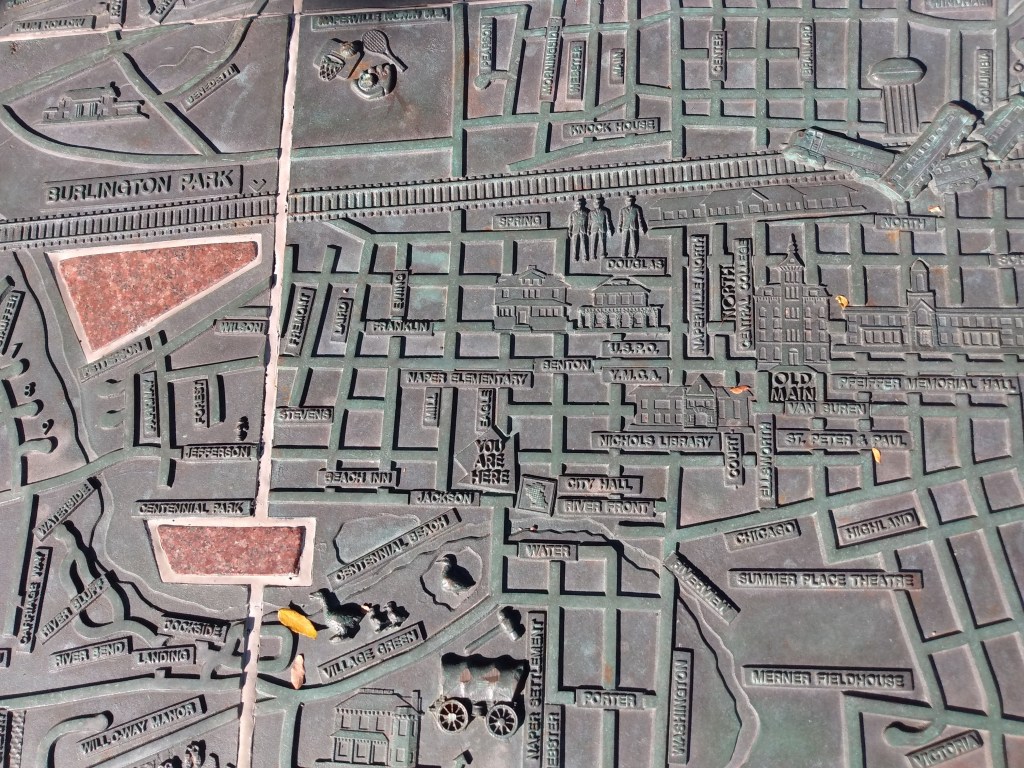
The suburb of Naperville, Illinois is marked by several characteristics: rapid growth from the 1960s onward, particularly between 1980 and 2000, and lots of land annexation; wealthier suburban residents and numerous white-collar jobs; and a lively downtown with national retailers, local stores, plenty of restaurants, and a nice Riverwalk. Will any Chicago area suburb trace a similar path in the future?

Here is why I would guess no:

  1. Limited population growth in the Chicago suburbs. The whole region is not growing much. Population growth in the suburbs could still be uneven; some places are perceived as more desirable or are more affordable and they could grow faster will others stagnate or even shrink. But explosive population growth in the Chicago area looks like it is done.
  2. At multiple points in Naperville’s history, leaders and residents discussed possible development and regulatory options. They tended to choose growth and in particular forms. These sets of decisions helped give rise to the particular traits of Naperville today. Even if another suburb tried to pursue the same path, not all the pieces might fall together in the same way.
  3. When Naperville grew from 1960 onwards, it was closer to the edge of the metropolitan region. Land was cheap and available. The city could annex land without running into other communities. That growth has since moved out further beyond Naperville’s ring, out to places like Aurora and Plainfield and Oswego. Any future Naperville will be 10-30 miles out from Naperville.
  4. Naperville itself – and other older suburbs – will likely change in the future. If Naperville wants to continue to grow in population, it will need to grow denser and taller. Infill development on small parcels could add lots of townhouses, condos, and/or apartments. Redevelopment in desirable areas and around mass transit options could lead to taller or denser buildings. This all could happen in numerous Chicago suburbs but this will move them away from homes dominated by single-family homes and lifestyles.

For more insight behind the argument above, see these published papers involving Naperville: “Not All Suburbs are the Same: The Role of Character in Shaping Growth and Development in Three Chicago Suburbs;” “A Small Suburb Becomes a Boomburb: Explaining Suburban Growth in Naperville, Illinois“; and “More than 300 Teardowns Later: Patterns in Architecture and Location among Teardowns in Naperville, Illinois, 2008-2017.”

Rapid population growth in Florida and Texas now slowing?

What happens if communities in Texas and Florida are now not growing as fast as in recent years?

Photo by brian neeley on Pexels.com

Fewer Americans are moving to boomtowns in Florida and Texas – once red-hot destinations that saw surging populations and soaring home prices.

Tampa, FL, had a net inflow of just 10,000 residents last year, according to fresh data from Redfin. That is less than a third of the 35,000 in 2023…

Meanwhile, Dallas – one of several Texas cities that boomed during the Covid-19 pandemic – saw a net inflow of around 13,000 residents in 2024, also down from 35,000 the year prior. 

Americans had previously been drawn to Sun Belt cities due to their warm weather, low tax rates and affordable housing compared to coastal cities.

But that appeal is fading fast. The cost of living has jumped, thanks to rising mortgage rates, skyrocketing home prices, and higher fees for insurance and HOAs – particularly after a string of natural disasters.  

Several long-term consequences come to mind in addition to the effects on the local real estate markets:

  1. Growth is good in the United States for a place’s status. To not grow – or even to level off – is considered bad. These places will be viewed as less desirable overall if they are not rapidly growing.
  2. How does this change local planning and revenue projections? Imagine you see growth going at a particular pace for a certain time. If that growth does not occur, there could be major changes in budgets and land use. (Whether these possibilities should have been factored in is another matter; who would have factored in a global pandemic?)
  3. What other places will take over as being the fast-growing places? Will places in Arizona or Idaho (or the West more broadly) look more attractive? Or perhaps just population growth as a whole slows in ways that few American places are growing quickly?

The reasons Americans move to exurbs – including economic opportunities

An overview of some booming American exurbs explains why they are growing:

Photo by Ruslan Burlaka on Pexels.com

Exurbs are areas typically located 40 to 60 miles from city centers and are often appealing to families seeking more space, affordable homes and a quieter way of life.

The trend has transformed once-sleepy rural towns into thriving cultural communities with booming populations and housing markets…

The COVID-19 pandemic has played a significant role in the shift to the exurbs, with many people now able to make a living from home thanks to an increase in remote work opportunities. 

This means they are no longer tied to big hubs where offices are based.  

Skyrocketing housing costs in major cities have also pushed many families to seek more affordable and spacious alternatives.

Finding affordable housing is a significant issue across American metropolitan areas. The thought often goes that the further one moves out from the center the more house a buyer can get. (This can ignore the pockets of cheaper housing that do often exist closer to the center of regions but the assumption is those who want these cheaper homes also want a particular kind of suburban community or way of life.)

But there is another component to the growth of exurbs and the suburban fringe. There are jobs and other economic opportunities on the edge of regions. Commuting to the big city is arduous from these far-out locations. The article above hints at the possibilities of working from home but numerous exurbs grew before this. Where are people working?

They are often working at companies and organizations in the suburbs. If I live 60 miles outside the big city, I may commute to a job 45 miles from the big city. Those edge cities spread throughout regions can provide thousands of good jobs accessible to those living in the exurbs. Or the new growth generates jobs and opportunities in the exurbs. Yes, some people can work from home but these are particular kinds of jobs and new growth leads to medical jobs, service jobs, and jobs in other industries that also find it attractive to locate in exurbs.

In other words, you cannot have the cheaper housing of the exurbs without also having jobs and opportunities in and near the exurbs.

American communities with population loss and East St. Louis

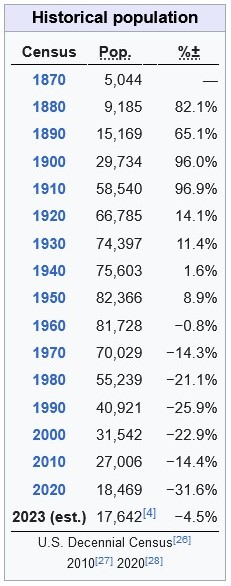
I was recently doing some research involving East St. Louis, Illinois, specifically considering the 1917 race massacre as part of a longer history of racialized property in Illinois. While doing this work, I noticed the population of the community. Here are the numbers (from Wikipedia):

As an industrial suburb across the Mississippi River from St. Louis, the community grew from a very small community to over 82,000 residents in 1950. Then came population decreases, leading to a population of under 18,000 today.

In the United States, population growth is good. It signals success and status. East St. Louis had this for the first eighty years or so of its history. But population loss is then bad. It hints that there are problems, that the community is losing status. A number of American cities and communities have experienced this since the middle of the twentieth century, often in the Northeast and Midwest and connected to the loss of manufacturing jobs. Think Detroit or Cleveland or Baltimore.

For a suburb to lose this many people also cuts across a narrative of suburban success. The endlessly growing suburbs does not apply to all communities. In inner-ring suburbs, communities with growing numbers of Black residents, and suburbs facing other concerns, the population could drop over time. Suburbs elsewhere might be growing but not in all suburbs.

How many suburbs have similar stories to East St. Louis and how do these narratives get told alongside the typical stories of suburban growth?

Build a Samsung semiconductor plant in a small town 29 miles from Austin and what could change?

One town on the edges of the Austin, Texas metropolitan region could be in for change:

Photo by Pixabay on Pexels.com

The tech giant is opening ‘the largest semiconductor manufacturing complex in America’ in Taylor, near Austin, bringing thousands of jobs and billions in investment to the area. 

Taylor is currently a small, quiet city with just 16,000 residents, but that is set to change.

Mayor Brandt Rydell told KVUE: ‘From 2020 to 2030, Taylor will be one of the most rapidly growing cities in Texas, if not the nation.’ 

The average house price is just $298,000, but with the plant expected to open later this year, house prices could rise as more luxury properties are built. 

The main focus in this article is the expected rise in housing values with some discussion of jobs and economic development. What else might change?

  1. Higher status. Not all suburbs have a major Samsung plant.
  2. More traffic. This includes employees traveling to and from the plant as well as supplies and products moving in and out.
  3. New civic service and local revenue issues to confront. How will the community spend new tax monies that come in? What services will the plant and its operations require?
  4. A larger population. Do some long-time residents dislike the changes? Does new development alter the character of the community?
  5. Will the arrival of Samsung lead to other businesses moving to town? Or support businesses (where will all those plant employees spend their money)?

In other words, come back to Taylor in ten years and it might look and feel different.

Questioning Census population estimates when they show declines in Illinois

A story on Census population estimates for Illinois’ communities includes some pushback against the numbers:

Photo by Thiago Matos on Pexels.com

While the 2020 census counted responses from household surveys, the annual estimates between the 10-year counts are based in part on counting births, deaths, and moves in and out, using the number of tax returns and Medicare filings.

The numbers do not reflect the recent influx of 41,000 migrants bused and flown to Chicago since August 2022. Census methodology does not account for migrant arrivals. Immigrants are typically hard to count because they may be transient, may not speak English and may want to stay under the radar, researchers said.

Oak Lawn Mayor Terry Vorderer, for one, didn’t buy the new estimates, noting that his town has added new townhomes while not losing housing stock…

Gov. J.B. Pritzker’s office also threw water on the results, highlighting past faulty counts made by the Census Bureau.

“For the last decade, the narrative that Illinois is losing population was fed, by what turned out to be, inaccurate annual preliminary estimates,” Pritzker spokesperson Alex Gough said in a statement. “Illinois remains one of the most populous states in the nation and is on the rise.”

International migration — which has risen nationwide — has nearly tripled in Illinois since 2021, Gough said. The state is in the process of challenging census data to ensure it receives adequate federal funding for programs like Medicare, affordable housing and homeland security, he added.

Is this about methods for counting populations or is this more about politics? For better or worse, these annual estimates have become media stories. Some places are gaining residents, others are losing. Communities with population loss have a hard time shaking all the associations that come with it. The implication is that population loss indicates decline and problems while growth is good.

On the other side, measuring populations is a sizable task. This is why so much effort is expended every ten years. The annual estimates have their own methodologies. They are estimates. This means there is some margin of error. These margins of error should be reported, even if the emphasis in the media continues to be on a concrete number of people gained or lost.

Census numbers might not be perfect but I would be interested in seeing the compelling evidence to suggest their estimates of population declines in some Illinois communities are far off or completely wrong.

A possible timeline of 50 years to build an American community for 50,000 people

One source suggests it might take 50 years to complete a proposed community in California for 50,000 people:

Photo by George Becker on Pexels.com

A group of Silicon Valley investors aiming to build a new city in California has collected enough support from residents to place a key zoning-change measure on the upcoming ballot.

The campaign said Tuesday it has surpassed the required 13,000 signatures, gathering the endorsement of more than 20,000 residents of Solano County, a largely agricultural community located northeast of San Francisco. The initiative, if approved by voters in the county, would pave the way from construction to begin by overturning restrictive zoning laws from the 1980s that limit development outside existing cities…

Completing the project in the region between the San Francisco Bay Area and Sacramento could take as long as 50 years.

Building a new community is a sizable project. Is 50 years a normal time frame or longer or short than what we might expect? A few thoughts:

  1. The United States has a history of fast-growing communities. A city like Chicago grew from over 4,000 residents in 1840 to nearly 1.7 million people in 1890. That is fast growth. Or think of boom towns in the West. Or suburbs that in the postwar era that gained tens of thousands of residents in short periods of time. Most communities do not grow as quickly.
  2. Plenty of news stories and opinion pieces in recent years have weighed in on development processes in California. If it takes longer to build in general in California, then 50 years might be longer than expected in the United States.
  3. Going from few residents to 50,000 residents in a few decades is an accomplishment. But the size of the community at its buildout would not even put it in the top 100 cities in California by population.
  4. What are the expected growth rates at different points in those 50 years? How many years from now until the first residents move in? When does the development truly pick up steam?

Cities and metro areas like growth – but do not necessarily like the changes it brings

Growth is good in the United States for cities and metropolitan regions. But, the changes that come with growth is not always viewed fondly by the people already there. The most recent example: Nashville.

Photo by Isaac Loredo Vargas on Pexels.com

Remacia Smith watches her children play in a grassy park by the Cumberland River, not far from where software giant Oracle said last week it would base its new headquarters. It is bittersweet—her hometown is thriving, but it has reached a point where it no longer works for her…

“There are pain points of this growth,” said Kate Webster, a 35-year-old real-estate agent who has lived in Nashville for 14 years. “But at the end of the day, I’d rather live in a city that is growing than one that is declining.”…

The region needs to focus on improving transit options and traffic flow, and on more housing options, Gaughan said. Many neighborhoods need to rezone for construction that allows more people to live there, he said.

John Michael Morgan, a lifelong resident of the area, said he remembers when Nashville’s prospects weren’t so hot. The growth is exciting, he said, but he worries about Nashville losing some of its personality.

“Nashville’s always been a big town that felt like a small town,” said Morgan, who is 44 years old. “Now we’re a big town that feels like a big town.”.

Change can be hard for residents of a community. They are used to the way things were. They may have moved there for particular features of the community.

Increased population growth tends to lead to more construction, higher housing prices, more traffic, and different streetscapes.

However, the United States tends to treat growth as a good thing. What community wants to stagnate or decrease in terms of population and business activity? How many people want to be in an undesirable community?

At some point, the growth in Nashville will level out and that will offer an opportunity to assess what has changed. Is the city and metropolitan region now a different place? What has fundamentally (and perhaps unalterably) changed?

The Rust Belt as potential “climate refuge”

If climate change prompts people to move, could the Rust Belt provide good places to live?

Photo by Miguel u00c1. Padriu00f1u00e1n on Pexels.com

Gibbons, who now works at the climate consulting firm Farallon Strategies, sees Michigan’s future in the Californians unsettled by wildfire. Those people are going to move somewhere. And so they should be persuaded to come to Michigan, she says, before they move to places like Phoenix or Austin. The Great Lakes region should market itself as a climate refuge, she thinks, and then build an economy that makes use of its attributes: the value of its water, its land, its relative survivability. In her vision, small northern cities, invigorated by growing populations, somehow manage to blossom into bigger, greener, cleaner ones.

“There’s no future in which many, many people don’t head here,” Gibbons told me. The only question is whether “we don’t just end up being surprised by it.” And so Gibbons wants to see the Great Lakes states recruit people from around the country, as they did during the Great Migration. Back then, recruiters spread across the South to convince Black people there that opportunity awaited them in the factories of the North: That’s what helped make Ypsilanti.

Internal migration has shaped the United States before, such as in the Great Migration cited here and the move of many West in different waves. But, has decades of decline in an entire region been reversed by internal migration?

Later in the article we read that some residents would not be thrilled with the idea of lots of outsiders moving in. I wonder how this might play out. Take a city like Detroit. Once one of the most populous American cities, the city lost hundreds of thousands of residents. The city’s status has dropped precipitously. Lots of people moving in could change things but don’t Americans tend to see population growth as a sign of health and vitality?

One last thought: would Rust Belt communities be willing to offer climate-related incentives to further entice people to move? A number of American communities already offer incentives. Imagine a “green moving package” that provides some assistance in finding affordable housing and work with limited climate impact.