The percentage of realtors under age 30 went up 400% (*from 1% to 4%)

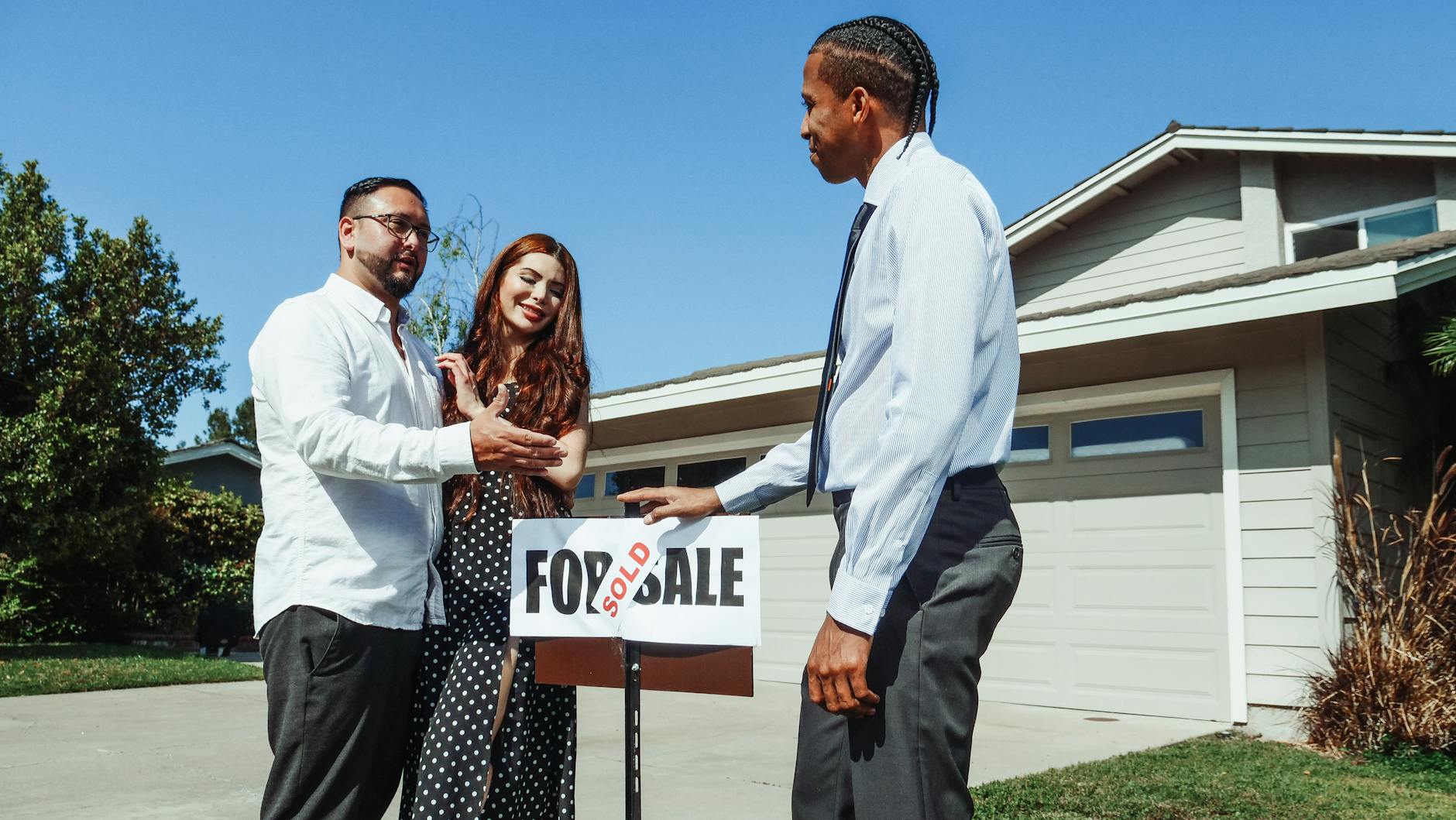
Some younger adults are moving into certain careers they feel offer them opportunities in an uncertain world. This includes becoming a realtor.

Photo by Alena Darmel on Pexels.com

Some Zoomers like Marmo are ditching four-year degrees in favor of work that unchains them from a desk, puts money in their bank accounts sooner, and — they hope — will survive the artificial intelligence boom that is already starting to change once-hot professions like software engineering, consulting, and marketing. Some are turning to blue collar work like HVAC servicing and wind turbine installation. Others are trying to start their own ventures via influencing and side hustles. And some see the lure in the licensed white-collar job, including working in real estate or insurance.

That shift in licensed jobs is slow, but growing. The share of Realtors younger than 30 grew from 1% to 4% in 2024, according to NAR’s member profile, and sits at 3% in 2025. Among insurance agents, the median age of an insurance principal who owns 20% or more of their agency is 55, with 22% of principals over the age of 66, according to a 2024 study of agencies conducted by the Big “I,” an association for independent insurance agents. Many are likely eying retirement, which could open up a huge amount of demand for young people to take up the trade.

Several Gen Zers I spoke to for this story told me they find appeal in working in real estate because there’s no ceiling on what they can earn. Rather than invest tens or hundreds of thousands of dollars in a four-year degree, they can spend a few weeks or months training to receive licenses and start working in fields where their hustle correlates to their payday…

Because it’s still something of a rarity to see a baby-faced real estate agent or teenager selling life insurance, the young people in licensure jobs I spoke to say that succeeding means not just learning the trade but competing against ageist stereotypes. The median age of a first-time home buyer has risen to an all-time-high of 38, according to NAR. That’s up from an average age of 33 a decade ago, according to a Zillow analysis. The idea of having a newly minted, 18-year-old real estate agent guide you through the biggest financial decision of your life is jarring. Katie Kenny, a 24-year-old Realtor in Chicago’s suburbs, says people meet her and are surprised, as they “expect the real estate agent to be like double my age,” she tells me. “They’re like, ‘oh, you’re young.’ And then when I open my mouth and start talking, they’re actually surprised because I do know a lot more, and I sound a lot more mature than what a normal 24-year-old would sound like.”

This article, like many articles, is trying to get a handle on a possible trend: younger people are pursuing different fields due to the world around them. There are numerous ways to report on this phenomena. This article uses a mix of statistics and interviews, considering broader patterns and hearing people describe their choices.

In the headline to the post, I highlight one way to report the data cited above. 400% growth in young realtors! 400% of anything sounds like a lot of change. A 100% increase or decrease would be noteworthy so 400% must mean a lot.

Another way to do this would be to take the approach above: the percentage of young realtors increased from 1% to 4%. This is not a big jump as both are small percentages. The odds of having a realtor under 30 years old is still 1 in 25.

Both of these options are factually correct. I would argue the second option is a better representation of the full context. Change happened but it is small change. If the same trend continues for 5 to 10 years, then there might be big change to report. Imagine the 30% of realtors under age 30 or 50%.

Someone will continue to track this data. It makes for interesting stories: “In an age of AI, college debt, and global crisis, more young adults in the United States are choosing to be realtors.” How big of a story it becomes partly depends on how it is told.

Rents set by algorithm and how housing prices are set

New tools allow landlords to set rental prices and this has led to lawsuits:

Photo by Meruyert Gonullu on Pexels.com

Instead of getting together with your rivals and agreeing not to compete on price, you can all independently rely on a third party to set your prices for you. Property owners feed RealPage’s “property management software” their data, including unit prices and vacancy rates, and the algorithm—which also knows what competitors are charging—spits out a rent recommendation. If enough landlords use it, the result could look the same as a traditional price-fixing cartel: lockstep price increases instead of price competition, no secret handshake or clandestine meeting needed…

According to the lawsuits, RealPage’s clients act more like collaborators than competitors. Landlords hand over highly confidential information to RealPage, and many of them recruit their rivals to use the service. “Those kinds of behaviors raise a big red flag,” Maurice Stucke, a law professor at the University of Tennessee and a former antitrust attorney at the Department of Justice, told me. When companies are operating in a highly competitive market, he said, they typically go to great lengths to protect any sensitive information that could give their rivals an edge.

The lawsuits also argue that RealPage pressures landlords to comply with its pricing suggestions—something that would make no sense if the company were merely being paid to offer individualized advice. In an interview with ProPublica, Jeffrey Roper, who helped develop one of RealPage’s main software tools, acknowledged that one of the greatest threats to a landlord’s profits is when nearby properties set prices too low. “If you have idiots undervaluing, it costs the whole system,” he said. RealPage thus makes it hard for customers to override its recommendations, according to the lawsuits, allegedly even requiring a written justification and explicit approval from RealPage staff. Former employees have said that failure to comply with the company’s recommendations could result in clients being kicked off the service. “This, to me, is the biggest giveaway,” Lee Hepner, an antitrust lawyer at the American Economic Liberties Project, an anti-monopoly organization, told me. “Enforced compliance is the hallmark feature of any cartel.”

The company disputes this description, claiming that it simply offers “bespoke pricing recommendations” and lacks “any power” to set prices. “RealPage customers make their own pricing decisions, and acceptance rates of RealPage’s pricing recommendations have been greatly exaggerated,” the company says.

It will be interesting to see how the courts decide in this area.

I would be curious to hear how this process differs from the way housing prices are determined. The “correct price” does not just emerge. There are a set of actors – such as realtors, appraisers, and websites – that contribute. There are local histories that inform current and future prices. The housing market follows particular patterns and I recommend reading sociologist Elizabeth Korver-Glenn’s 2021 book Race Brokers: Housing Markets and Segregation in 21st Century Urban America on this topic.

Is the primary difference that there is not a centralized tech source for housing prices? (But maybe there is – how much has Zillow and its Zestimate changed the game?) Or are the new actors viewed with more suspicion than others (tech sector versus realtors)? Or are we in a particular social moment where high costs of housing prompt more questions and thoughts about alternative?

Waiting for the realtor to advertise that they get the buyer the best price

I recently received a glossy mailing from a real estate agent describing their recent efforts on behalf of a property owner. A few excerpts from the advertisement:

Photo by Kindel Media on Pexels.com

***Multiple Offers in 24 hours***

My strategic marketing plan generated over 40 groups of potential buyers, igniting considerable excitement from the moment the property hit the market. By Saturday, we had received multiple offers, ultimately securing a contract that surpassed my client’s wildest expectations!

This sounds good for a homeowner looking to sell. They had multiple offers to consider. They got more money that they might have. This agent helped them move to the next stage with more money.

I do not recall getting an advertisement for a realtor that goes the other direction: I found the home buyer a great deal. I negotiated the price down. I helped point out features of the property that led to price reductions. I got the buyer a great deal.

There certainly is a market for getting sellers the most money they can. Americans value their homes for the money they can provide upon sale. They want to see a big jump in the value compared to the price at which they purchased the home.

Buyers also want good financial deals. If you wanted had a tight budget or wanted to buy investment properties, wouldn’t buyers rather have someone who keeps the price lower? I assume there are realtors who do this well and want to find clients.

Fewer than 10% of homes sold via virtual real estate transactions

A small percentage of homes are sold without the buyer seeing the property in person:

Photo by Kampus Production on Pexels.com

The National Association of Realtors first started collecting data on virtual real estate transactions in April 2020, according to Jessica Lautz, deputy chief economist and vice president of research. Virtual home sales, which are sometimes referred to as “blind offers” or “sight unseen sales,” peaked at 13% of all transactions in January 2022. By November 2022, that number dropped to 9%.

Lautz sees two drivers for virtual sales, beyond the pandemic. “It’s not only because inventory is tight, but people are moving longer distances. It might be very difficult to make your way to that home before it is under contract,” she said. “If you’re moving to a different state, the ability to quickly book a flight because that perfect home has just come onto the market may be impossible.”…

Lautz sees virtual transactions continuing, even if they’re less frequent. “If you had asked me that at the start of the pandemic, I would have thought it was a fluke. But it seems to be here to stay.”

Virtual transactions may reflect another shift, as the National Association of Realtors sees the median distance folks relocate increasing to 50 miles. “It makes sense because of housing affordability, people are moving farther out because of hybrid or remote work,” Lautz said. Being close to friends and family is top priority for so many buyers today, so they may be moving to a different area to seek that.”

Several thoughts in reaction to these numbers:

-I thought the percentage might have been higher during the pandemic. But, even then, seeing a property in person matter mattered.

-How much can technology remedy the desire to see a property in person? How long until prospective buyers could walk through a housing unit in the virtual realm? This is related to the biggest question I have: how well could technology substitute for being in a space? One matter is feeling like you were in person and could experience everything. Another matter is whether the technology allows you to consider everything. If that technology could be improved, maybe it can provide enough or all of the experience.

-Would more virtual showings increase the need for realtors or reduce them? If the main issue is technology being able to show everything about a unit, I could imagine it done without a realtor. If the main issue is about knowing a community and having connections, then the realtor continues even if the technology improves.

People using localized social media for an edge in searching for homes

Scroll through local Facebook or Nextdoor groups and there is a more common request these days: does anyone know of an upcoming listing for a 4 bedroom home in a desirable neighborhood? Or, perhaps a three bedroom townhome or house for rent at a reasonable price?

Photo by Omkar Patyane on Pexels.com

It is hard to know how many good leads are generated by such posts. They often ask for DMs. Generating more competition for such housing is probably not the goal – though landlords or sellers might be interested in drumming up more interest (also evidenced by pictures of homes soon to be on the market). The more direct interaction cuts out some of the middle actors.

Judging by the posts I have seen, the housing needs seem to be present. Even with economic instability during COVID-19, homes in desirable neighborhoods and communities have held their value or increased in value. The housing supply is limited. At least a few people have looked to move out of cities to quiet suburbs. Stories of bidding wars abound. Finding places at reasonable rents is hard.

I could imagine some broader partnerships between the socials and real estate websites. Imagine a special Zillow add-in to your Twitter feed or a Realtor.com bonus for Instagram. All of the real estate websites are competing and so are the social media platforms; which one can truly integrate real estate into their daily feeds beyond the posts of individual users? Say you are looking for a home with particulars and the social media plug-in can alert you to matches and you can get an exclusive bidding window; potential buyers could feel they get an in and realtors might like the added competition among buyers ready to spend.

All of this might matter less if there is more housing supply in the future. Yet, if real estate is truly so lucrative because there is only so much land in the first place, why wouldn’t it permeate even social media.

When realtors dislike McMansions

Realtors sell homes. So how do they feel about McMansions? A piece at Realtor.com offers some hints:

We’ve struggled to cover McMansions. For starters, they’re not pleasing to the eye. And, more importantly, we can’t put our finger on exactly what it is about these sad but pricey structures that inspires such a visceral negative reaction…

Q: We’ve grappled with this one for a long time here at realtor.com®. McMansions are like the classic definition of obscenity—”I know when I see it”—but we’ve never come up with a concrete definition for them…

All of the mail from realtors I’ve gotten has been really positive as well. I think that realtors are generally tired of McMansions, especially since they’re so difficult to sell. They find a lot of catharsis in reading McMansionHell.

Does this mean that realtors wouldn’t help sell or buy a McMansion because of their refined architectural sensibilities or because McMansions use of a lot of resources? While McMansions could generate profits for builders, they could also be good for realtors who could make larger commissions.

Based on this, I would enjoy seeing some realtors discuss their approach to McMansions. If I had to guess, I would imagine fewer realtors would be openly critical of such homes because it might limit their business. Perhaps some want to sell such homes while others avoid them like the plague. If they have strong feelings either way, would they openly share these opinions with buyers and/or guide them in certain directions? How many realtors live in homes that could be considered McMansions?

Real estate agents and steering today

Many real estate agents today won’t answer certain questions but does this eliminate steering?

Agents such as Foster and Thakkar are hypersensitive because they don’t want to run afoul of the Fair Housing Act, which prohibits discrimination on the basis of race, color, religion, gender, national origin, familial status, disability or handicap. The law is administered by the Department of Housing and Urban Development. Penalties for violating fair housing rules can be costly, so many real estate brokerage firms train agents on what constitutes “steering” of homebuyer clients as well as what could be interpreted as showing any form of bias against any “protected class.”

What can agents do when clients ask certain questions? Here are several of the examples provided:

“We can’t answer,” Foster said. “It’s all too subjective.” Instead, she refers them to online information sources about whatever they’re asking — websites that rate schools, statistical compilations on crime rates and the like…

“It’s a very common question,” he says: “Can you tell us how many other Indian families live on this street?” Even though he thinks he understands the thrust of the question — are there people like us around? — he declines to answer directly. Instead, he supplies them a list of the names of current owners on the street, allowing his clients to decide for themselves whether the names indicate that they are Indian or not.

Referring people to other sources may lead to issues:

But some fair housing advocates are concerned that the online information available today may actually enable a subtle form of racial steering when agents name specific sites that offer highly localized racial and ethnic breakdowns and refer clients to them. Lisa Rice, executive vice president of the National Fair Housing Alliance, a nonprofit group that has fielded teams of white and minority “testers” to detect bias in homes sales, thinks that in the event of fair housing complaints against those agents, the fact that they made such specific referrals could be held against them.

It seems to me that one of the best ways to eliminate this issue is to educate homeowners about all the potential information they can access. Stop them from asking in the first place. Realtors could even make this clear at the beginning. The Internet certainly presents a lot of available information to possible home buyers ranging from the Census to other data aggregators to message boards to municipal websites. In other words, it is not hard to find out this sort of information. Yet, this would go against the argument that realtors make about why they are still necessary: they have inside information about the home and the entire process. Additionally, all the online information is not necessarily easy to interpret. Say a homeowner is interested in future property values: can they make a prediction based on what is online? Or, say that an online message board suggests one thing is happening while the local newspaper claim something else is taking place. How could someone unfamiliar with the area make a judgment regarding conflicting information?

In the long run, if people want to fight residential segregation and housing discrimination (which are legitimate concerns), would it be better to remove real estate agents from the process or not?

Realtors argue their guild needs more professionalization

Real estate is an important part of the American economy but a recent report from the National Association of Realtors suggests realtors need more training:

In an unusual move for a major American trade association, the million-member National Association of Realtors has commissioned and released a frank and sometimes searing assessment of top challenges facing its industry for the next several years. The critiques hit everything from the professionalism and training of agents to the commissions charged consumers, and even the association’s ?leadership.

-“The real estate industry is saddled with a large number of part-time, untrained, unethical and/or incompetent agents. This knowledge gap threatens the credibility of the industry.” Ouch!

-Low entry requirements for agents are a key problem. While other professionals often must undergo extensive education and training for thousands of hours or multiple years, realty agents need only complete 70 hours on average to qualify for licenses to sell homes, with the lowest state requirement for licensing at just 13 hours. Cosmetologists, by contrast, average 372 hours of training, according to the report.

-Professional, hard-working agents across the country “increasingly understand that the ‘not-so-good’ agents are bringing the entire industry down.” Yet there “are no meaningful educational initiatives on the table to raise the national bar …”


This is a good example of maintaining professional standards, a key activity of many business associations. (For an award-winning sociological read on trade associations and a book for which I did a small amount of research work, see Solidarity in Strategy: Making Business Meaningful in American Trade Associations.) Keeping track of the actions of thousands of members is a difficult task. The NAR has the ability to bestow the name REALTOR®. Upping the standards with harder tests and stricter requirements has been done by lots of groups in order to improve their status.

But, this might also have some negative consequences:

1. Might it encourage more people to bypass realtors all together? This is easier than ever with the Internet.

2. If I remember correctly, the average age of realtors has increased in recent years. Might this simply increase that?

3. Might this issue be solved in other ways like if realtors worked within agencies that stressed standards or through mentoring programs that offer benefits for both parties?

4. Do realtors want more regulatory oversight like other groups – such as cosmetologists? This may help up their status but could lead to more hoops to jump through.