Chicago movie theaters converted years ago into churches

After writing Building Faith: A Sociology of Religious Structures with Robert Brenneman, I am always interested to see stories of buildings converted into religious spaces or vice versa. Here is a story about movie theaters that became churches in Chicago:
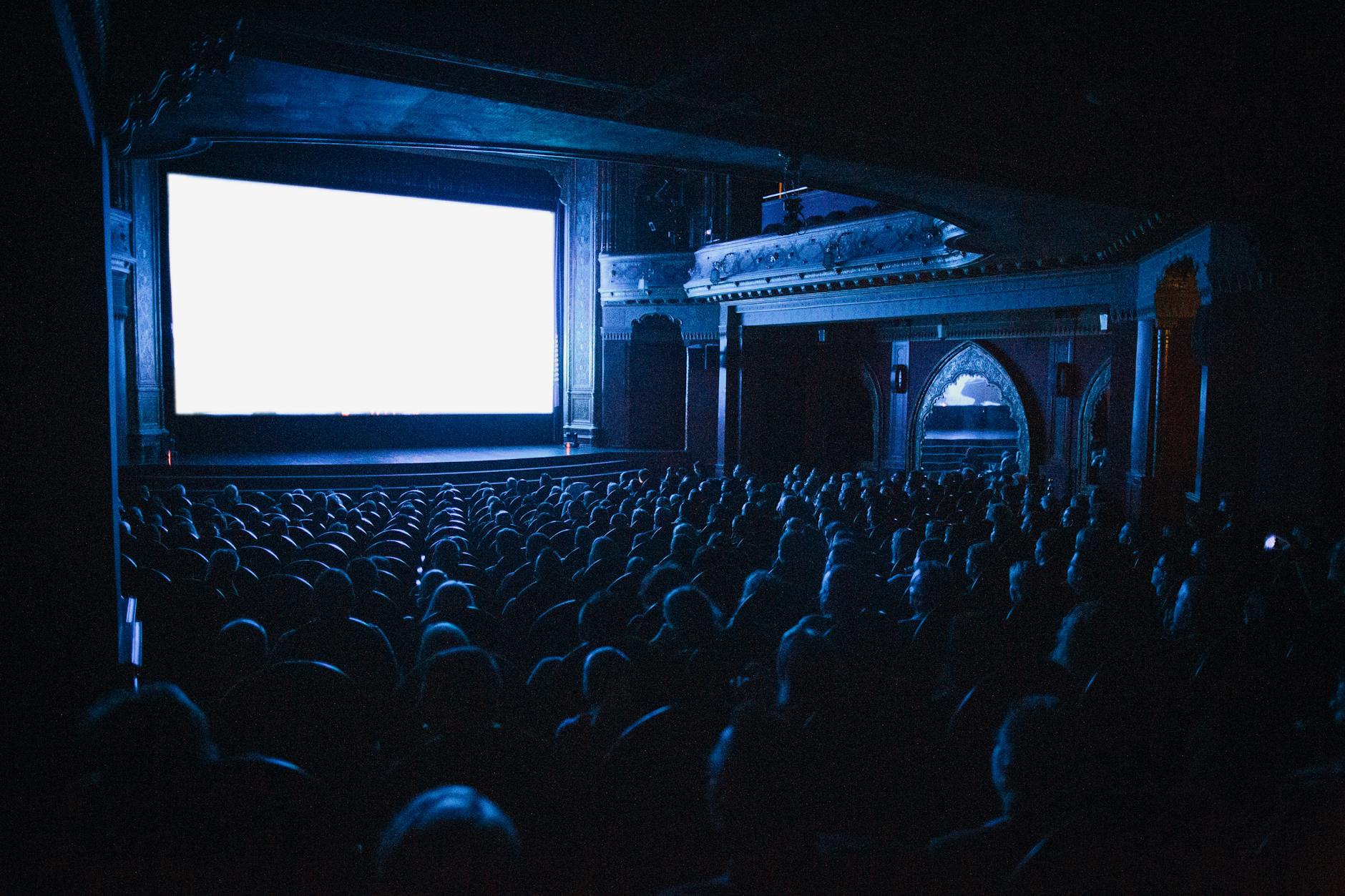
Photo by Bence Szemerey on Pexels.com

But since 1969, this building has been a church, shepherded by four generations of the same family. The blue part of the façade is their improvement to the building, 56 years of stewardship that extends up to today. They’re making extensive repairs to the roof this fall with a grant from Landmarks Illinois and remodeling the interior…

At 113 years old, the building once known as the Ideal Theatre is one of the oldest purpose-built movie theaters in the city, a rare remnant from before they blossomed into the grand movie palaces we treasure now.

And as the home of New Precious Grove Missionary Baptist Church for more than half a century, it’s a long-tenured piece of a Great Migration phenomenon, where Black people coming up to Chicago from the South created church communities as anchors, either transplanted from their place of origin or planted new…

Although the building’s façade has changed much since 1912, the red brick garland remains, along with one more hint of the entertainment that went on within: Above the door, a terra cotta panel depicts a lyre, the classical musical instrument. A historical photo of the building shows there were at least two more ornamental panels, comedy and tragedy masks on the two upper corners…

The palatial Central Park is also now a church, the House of Prayer Church of God in Christ since 1971. Another movie palace, the Ambassador, later Knute Rockne, about 3.5 miles from New Precious, is also a church now and also in need of protective roof repair.

It sounds like as neighborhoods and consumption patterns changed, at least several movie theaters became available and were converted into churches. Depending on the size and condition of the theater, it may not take much work for a congregation to make it a religious space. The rough structure of a movie theater seems like it could suit religious purposes; a theater would have a lobby at the front and then people would walk into a seating area with a screen and stage at the far end.

From the pictures in the article, it might be hard now for those passing by to see the movie theater in the past of the current structure. This could be due to the changes made by congregations but it may also hint at the ways the architecture of movie theaters has changed. The boxy multiplexes of recent decades look different compared to the ways movie theaters looked more like theaters – places for live stage performances – in the past.

It would be interesting to hear more about the building energy present in these congregations today. As Brenneman and I discussed in our book, we found congregations exhibit an energy about their buildings as they budget, maintain, and plan for their physical spaces.
“Visiting…is a spiritual experience” in what used to be a church

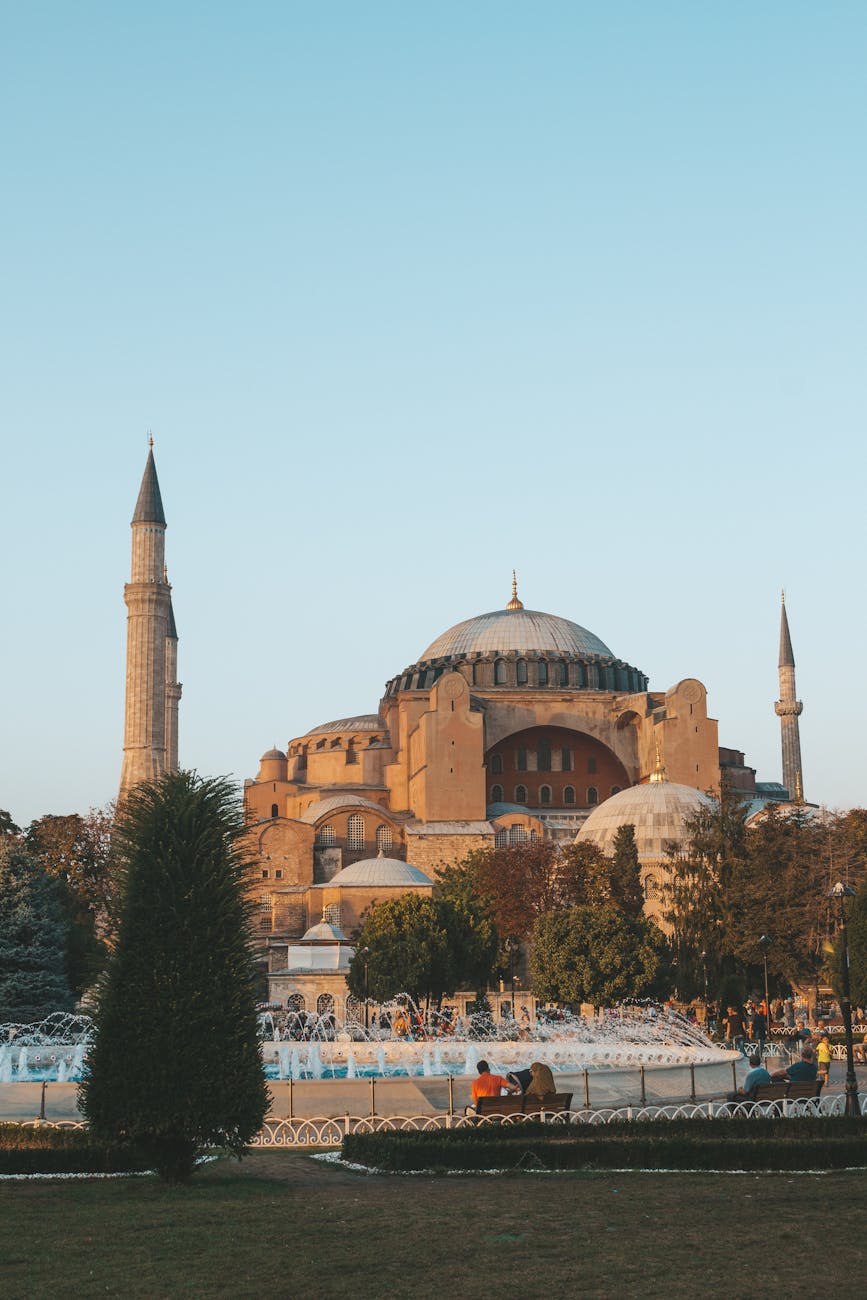
An article about visiting Hagia Sophia in Istanbul begins this way:

Photo by Emre Can Acer on Pexels.com

Whether you’re a believer or not, visiting Hagia Sophia is a spiritual experience. The architectural genius of this place of worship — which was built as a church in 537CE before its conversion into a mosque in 1453 — creates an illusion of vastness. It feels like the space starts to expand when you enter the building.

I bet the builders of the church intended for this to be the case: being in the religious space was to be “a spiritual experience.” I was struck by the contrast of this versus what people today might experiences in religious buildings. Not many religious buildings can come close to the scale or the history of Hagia Sophia yet how many of them regularly help produce a spiritual experience for visitors?

Many congregations have moved away from architecture and design that could prompt a spiritual experience. Perhaps they want to have a space that can serve multiple functions. Perhaps they have limited resources and so are renting a building. Perhaps they believe architecture and art distracts from the true goals of gathering together. Perhaps they utilize modern styles which not everyone interprets as spiritual.

Having co-authored a book about religious buildings, I also find the idea that one could have a variety of or no religious beliefs and still have a spiritual experience in this building interesting. Is this because it fits some template of what religious buildings could be or because of its particular architecture or its history? The building connects with human needs and aspirations? That a building could produce such emotions is worth considering further through study and experience.

Prominent crosses Christian congregations feature outside, inside, and online

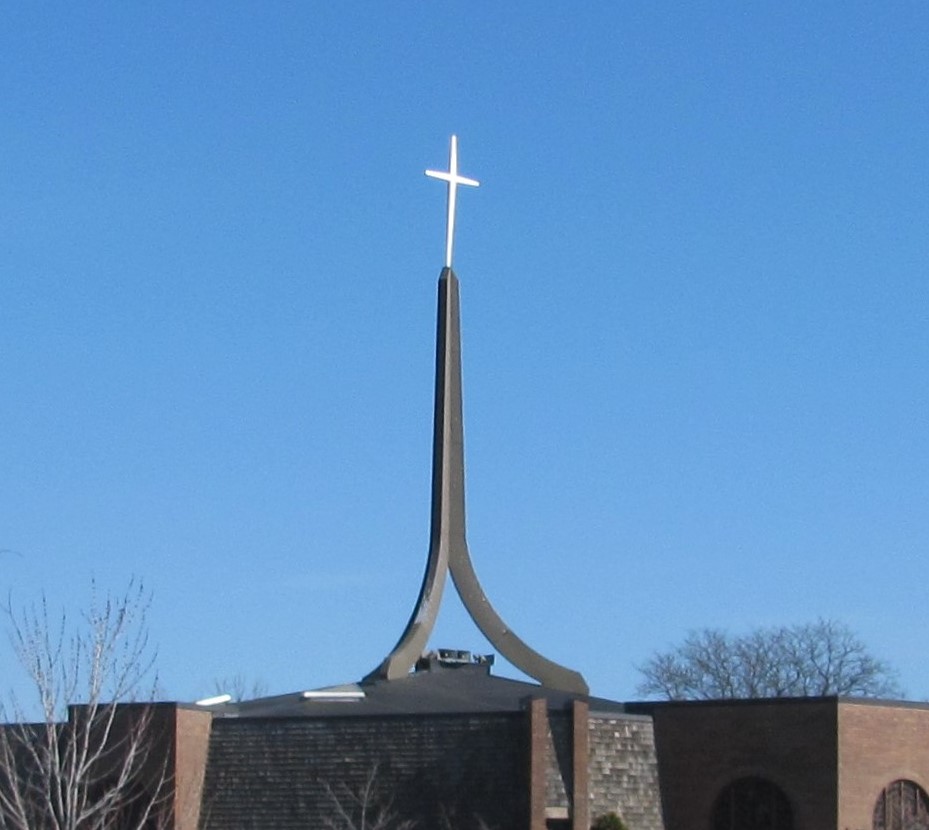
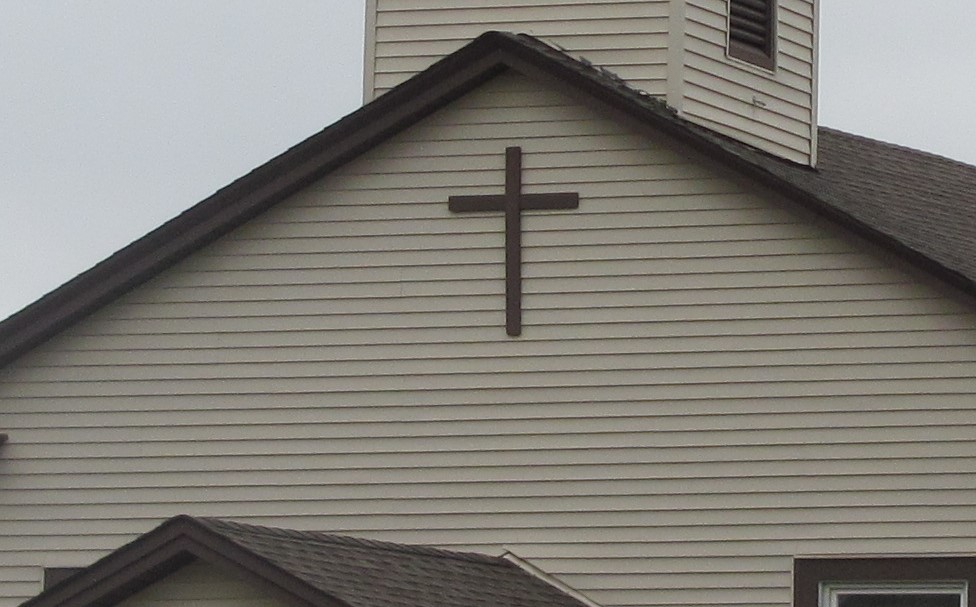
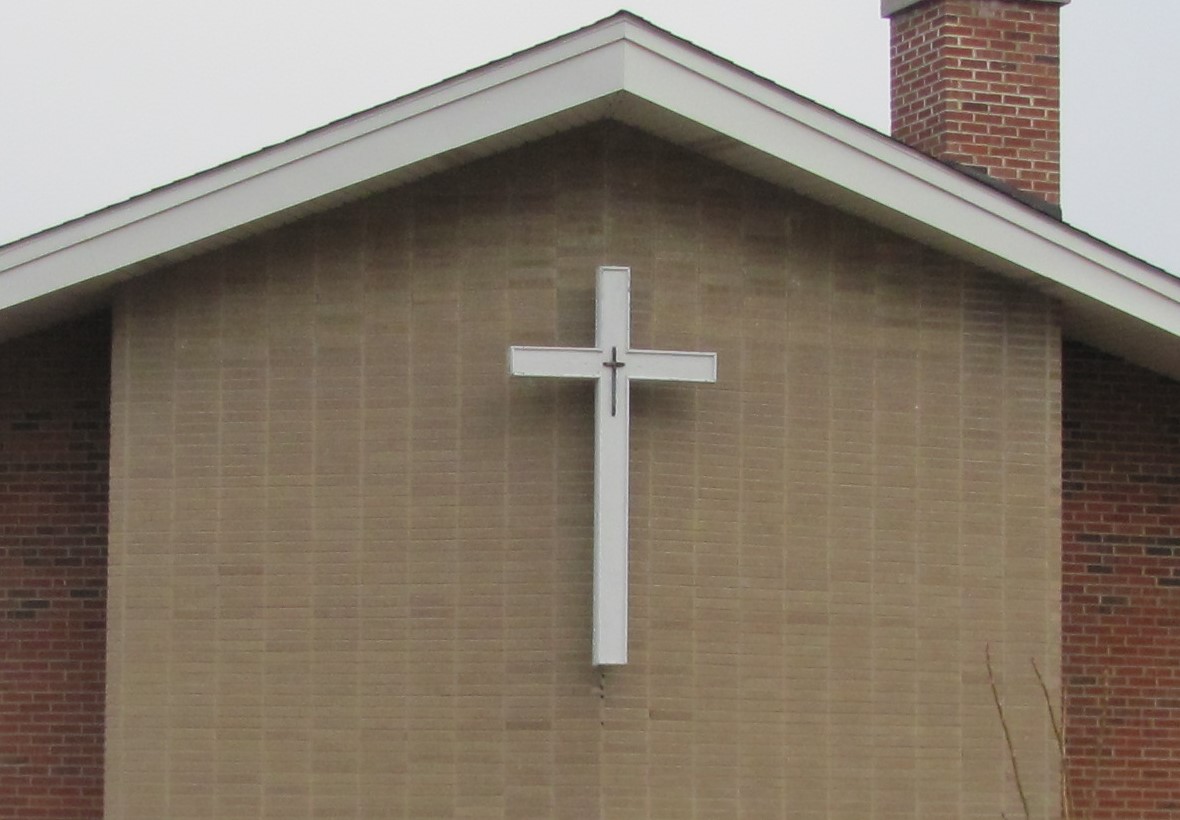
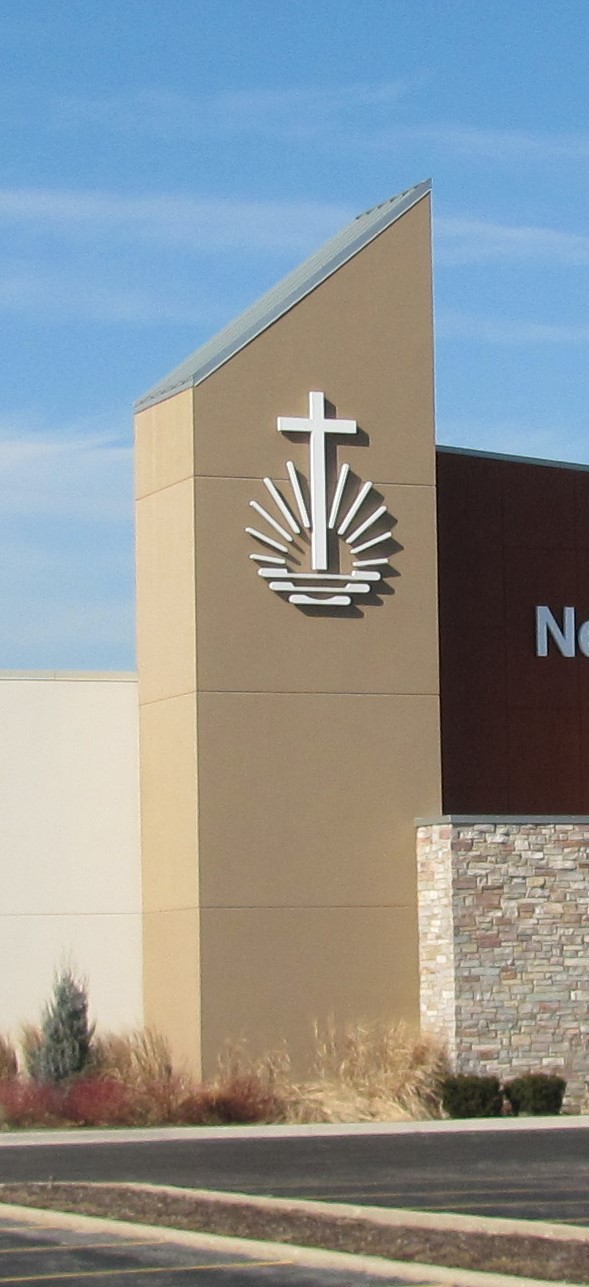
Working on some recent research involving religious buildings and also celebrating Easter yesterday, I was reminded of how many Christian churches feature crosses. Here are several local examples of church exteriors:

Not all churches have crosses on the outside. Some congregations want to avoid looking like a church and this could include eschewing traditional features like crosses or steeples. But many do feature crosses on the sides of buildings, on roofs, and on signs.

Similarly, if one were to walk into Christian churches, crosses are often present. They may be behind an altar or hanging on a side wall or incorporated in art or a bulletin.

And in looking for religious congregations online, I found many also feature crosses in the images they use. For example, in Facebook profile pictures and cover images, many Christian congregations feature a cross somewhere. In searching for congregations, a cross is a very common image one will find on social media and websites.

For these congregations that feature crosses, they likely see it as part of their theological foundations and part of their message of who they are. Christians are people of the cross and they share that image with the world. Whether one finds a congregation in a storefront, a school, an older religious building, or an online space, they are likely to find a cross somewhere and often prominently displayed.

Church hospitality to be marked by coffee, pastries, and catered food rather than meals prepared in kitchens

Fewer churches want to have large kitchens:

Photo by Isaac Taylor on Pexels.com

Newly built or remodeled churches typically have a space with a sink and a coffee pot, Slagill said. Possibly a microwave. But no expanse of countertop suitable for chopping carrots, potatoes, and onions to go into a big pot of soup. No oversized refrigerators for Jell-O salads. No industrial ovens large enough to cook three or four casseroles at once. Churches these days don’t have a lot of cupboards with drawers labeled “forks and knives,” “spoons,” and “serving utensils.”…

A recent exhibit of religious architecture in the 21st century curated by architect Amanda Iglesias included more than 40 churches from around the world. Only five had dedicated spaces for gathering around food.

“Culture has changed,” said Katie Eberth, an architect with Aspen Group, a leading firm in the field of church design. “It’s not part of the culture now, the church culture, where you have 20 women who come together and make a meal. Today we order Panera or Jimmy John’s.”…

Hospitality comes up a lot, according to Eberth. But when people talk about what that should look like in the physical construction of a building, they don’t talk about fellowship halls with long folding tables where everyone can sit together. They talk about a café serving coffee and pastries in the foyer…

The age of church kitchens didn’t really get going until rapid urbanization started in the 1880s.

“The city offered saloons, amusement parks, and pool halls, places designed to attract and corrupt young minds with fun,” historian Daniel Sack writes in Whitebread Protestants. “Churches were just one competitor in the free market of entertainment. . . . The church had to use every tool at hand, including food.”

Three thoughts in response:

  1. It sounds like food and drink will continue to be a staple of church interaction, just not food prepared in a church kitchen. Food continues to help facilitate conversation and interaction.
  2. I remember some of the books from the first two decades of 21st century about living Christian lives in suburbia highlighted the role of hospitality. Is it more considered more hospitable and inviting to have food and meals within the homes of church members rather than in a religious building?
  3. Comparing the physical spaces of a fellowship hall versus a cafe is interesting. The first is likely a large space that can be used in many different ways. Are the cafes cozier and more fixedly set up for socializing? In other words, is it just the food that is different or is there a different ambience in a foyer or cafe compared to a large room?

Filming a popular music video in a Brooklyn church leads to changes

Churches are not usually settings for popular music videos. After the release of a video from a popular new artist, there was some fallout:

Photo by Alem Su00e1nchez on Pexels.com

The priest who permitted Sabrina Carpenter to film her music video for “Feather” has been stripped of his duties.

On Monday, Nov. 18, Monsignor Jamie Gigantiello was relieved of his role after church officials determined that an investigation revealed other evidence of mismanagement, per the Associated Press.

Last November, just days after Carpenter, 25, released the visual for “Feather,” Gigantiello was disciplined and stripped of his administrative duties because of the video, per The New York Times.

The Diocese of Brooklyn shared a statement with the Catholic News Agency stating that Bishop Robert Brennan was “appalled at what was filmed at Annunciation of the Blessed Virgin Mary Church in Brooklyn.”

According to the outlet, the Diocese claimed that the Blessed Virgin Mary Church did not follow policy when it came to approving what gets filmed on Church property, and it was Gigantiello who gave Carpenter’s team permission to film the video.

As a researcher who has written about church buildings, I wondered how many churches or congregations would allow a music artist to film within their building. Would it matter what kind of music the video involved? Or if the artist had a personal connection with the faith tradition or the particular building? I would guess many religious congregations would hesitate before approving the filming of a music video in their space.

Religious buildings often work to separate profane – everyday – activities from sacred – transcendent – activities. How this is done can vary across religious traditions and spaces. If a congregation is renting space in a high school for services or is meeting in what used to be an Army barracks, how do they do this (see Chapter 6 in Building Faith for these examples and several others)? Or some religious traditions might mark religious spaces by distinct architecture and design while others argue they can do this in a multifunction space that can be a sanctuary at one moment, a gym the next, and a wedding reception space after that.

If this church had turned down the music video filming, where might they have gone next? Another religious building or a sound stage?

The oldest church building in what would become the United States

How many people in the United States know the location of the oldest church building within the country’s borders? According to the website for the church:

Photo by Genadi Yakovlev on Pexels.com

San Miguel Chapel is the oldest Catholic Church built in the United States part of whose original walls are still standing and which is still used regularly for religious services. It is the centerpiece of El Barrio de Analco National Register Historic District in Santa Fe, New Mexico. Adobe buildings like this chapel, historically, were not exclusively used for worship and ceremonies. Their size and location within the community allowed for a variety of gatherings.

During the 400+ years, first under the rule of imperial Spain, then Mexico, and finally the USA, the Chapel, dedicated to Archangel Michael, has been many things to many people. It has served as a place of worship for diverse groups of Native Americans; an infirmary for Franciscan missionaries; a target for autocratic officials and exploited Pueblo groups; a military chapel; a unique venue for talks, concerts, celebrations and ceremonies; and a sanctified space for Sunday Mass in Latin and English. Today and into the future, this treasured, privately owned, but ever-fragile structure requires constant vigilance and expert use of traditional construction methods and culturally authentic materials.

San Miguel Chapel first appears in the surviving historical written record in 1628. Construction my have begun by 1610 according to oral history, simultaneous with, or prior to, the official founding of Santa Fe. According to archeologists, this Franciscan-designed house of worship rests upon an early Pueblo settlement from circa 800-1300 CE.

The Importance of Oral Tradition: Few question whether or not the San Miguel Chapel in Santa Fe is the oldest Church in The United Staes, but many do question just how old it is. It’s no easy task to sift historical fact from traditional belief. Oral history holds that San Miguel Chapel was built around 1610, and it has been rebuilt and restored several times over the past 400 years. Oral tradition, stories told throughout the generations by local families and communities, remains a binding fabric of identity and historic pride for local people.

Official documentation stored in the Chapel was destroyed by fire during the revolt of 1680. However, many documents had previously been sent back to Mexico and Spain as reports to officials. Even today, documents naming San Miguel Chapel are being discovered all over the world, the latest one in London.

This might be a surprise for those oriented to a history of the United States oriented more to the East Coast or English settlement patterns or Protestant history in the US.

Additionally, this means the congregation and a building have been present for over 400 years, a large amount of years for a country often interested in youth and breaking away from older European patterns.

Finally, the building has been part of colonial activity, beginning with Spanish activity with Indigenous people to the aftermath of the Mexican-American war when the United States took control over land ceded to it.

As someone who has written about religious buildings, this was new and interesting information that came up in recent conversation about old religious buildings in the United States.

New mosque on 248th Avenue in Naperville almost complete after a long process

There is an update on a case of zoning conflict in Naperville regarding a proposed mosque (see a 2019 journal article here and two blog posts here and here):

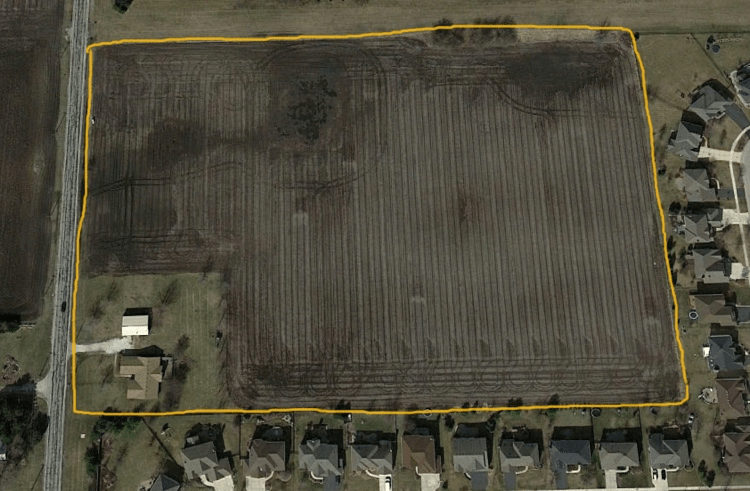
An aerial view of the property circa 2011 when originally purchased by the Islamic Center of Naperville.

Nearly two years after breaking ground, the first phase of the Islamic Center of Naperville’s mosque complex on 248th Avenue is nearly complete.

Phase one work — the construction of a 28,400-square-foot mosque — is set to finish in October, according to Islamic Center President Anees Rahman. As of mid-August, Rahman estimated the mosque was about 90% to 95% complete…

It took 15 meetings held over nine months for the proposed complex to receive a positive recommendation in October 2021 from the city’s Planning and Zoning Commission. The Naperville City Council unanimously OK’d the venture a month later — with a slate of restrictions.

Those included conditions aimed at addressing traffic, parking, fire safety and noise concerns raised by neighboring residents. As part of the approved plans, ICN agreed it would not proceed past phase two — a 41,749-square-foot school — until improvements to 248th Avenue are complete…

With traffic projections estimating the road will average 18,000 vehicles daily by 2050, the city is planning to widen 248th Avenue to five lanes between 95th and 103rd streets and to add storm sewers, curbs, gutters, street lighting, sidewalks and noise walls.

This sounds like a good outcome for the group and its members as the building will open soon. This provides space for worship and fellowship.

At the same time, this was a long process with a lot of public involvement. The property was originally owned by a church who did not build a church building on it. When it was sold to the Islamic Center of Naperville and they put forward plans, neighbors and others responded.

Given what I found in two studies (see more about the second one involving the New York City area) regarding local zoning conflict and religious buildings, proposals from Muslim groups receive more scrutiny. This particular building is almost complete but what are the consequences of longer processes and more questions compared to what others face?

I saw a sign for “Steeple Storage” – and drew the wrong conclusion

Fewer churches have steeples. What might a congregation do if they have a steeple but do not want it for the future?

Photo by Gustavo Rocha on Pexels.com

I recently thought I had found an odd solution to this issue. On a recent drive through Michigan, we passed a business named “Steeple Storage.” I thought they must store steeples. I have never heard of such a thing but perhaps there is some demand for churches to hold on to steeples even if they are no longer on their buildings. Imagine a storage facility you can enter where there are steeples from different traditions and time periods. The steeples are protected for posterity. Perhaps they could be used again later or end up in museums or archives.

Weeks later, it hit me: this business likely does not store steeples. The name might refer to a surname or some other feature of the company’s history. How much demand could there be for storing steeples?

I can see how I got to my first conclusion. I co-authored a book about religious buildings and am always looking for them. In particular, the shift from older architectural styles in religious buildings – including the use of steeples – to newer styles is fascinating.

In this, I was doing a very human thing: trying to find patterns. But, I was likely wrong. I saw a pattern that does not exist. It is not the first time this has happened and it won’t be the last. And I will hold on to a dream of steeples stored somewhere so that visitors, researchers, and people from the future can see what steeples used to look like.

Flower centerpieces and sacred places

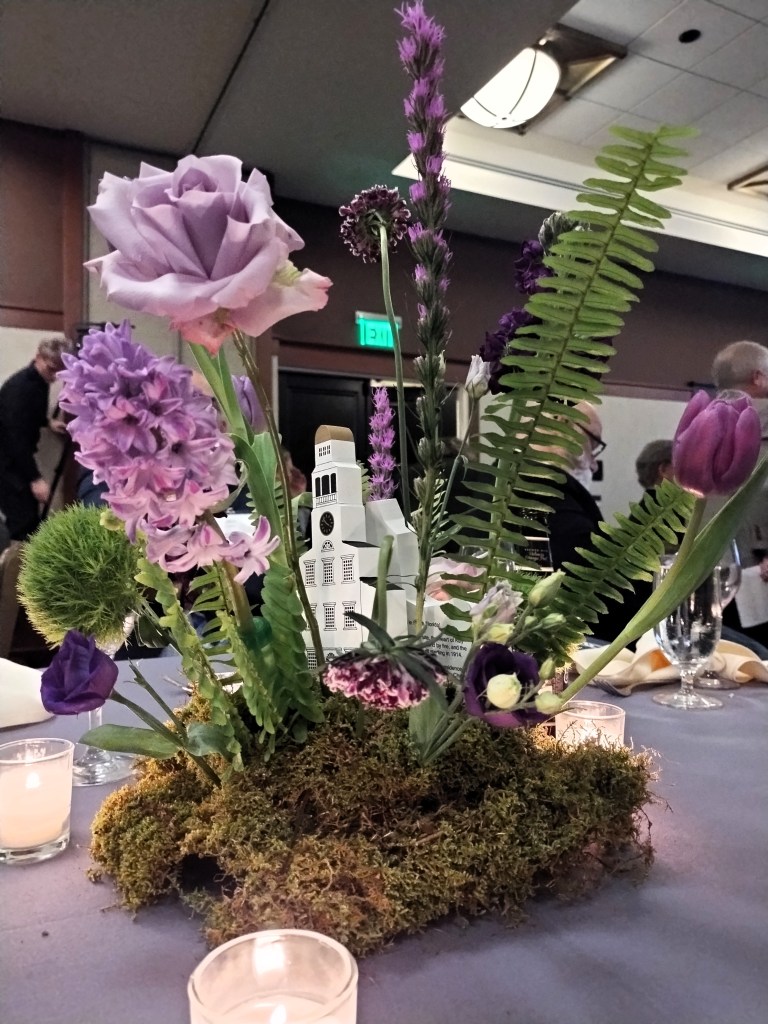
During a recent day of learning and good conversation, I enjoyed this centerpiece:

Where does one find flowers arranged around religious buildings? It makes total sense for a meeting of Partners for Sacred Places.

Robert Brenneman and I argued in Building Faith that religious buildings shape religious experiences and communities. I know nothing about centerpieces but perhaps they could have a similar effect. In a pleasant hotel meeting space with numerous round tables, the centerpieces might play multiple roles: (1) highlighting the topic at hand; (2) providing a focal point in the middle of a table that is difficult to talk across in a crowded room; and (3) providing beauty in a formal setting.

Buildings and physical settings can be purely functional. Imagine the same setting above with no tablecloth and no centerpiece. Yet, that bare bones approach is also influential. Perhaps it communicates efficiency and informality. Perhaps it reflects the resources available. The absence of decoration or “extras” could be highly intentional to promote a different message regarding beliefs and practices.

I am grateful for those with the skills and gifts to design and carry out these additions to our places.

Religion in the American suburbs: numerous religious buildings and buildings used by religious groups

Imagine a stereotypical suburban downtown in the United States. It has two story brick buildings with storefronts on the first floor. There are some offices and places to eat. A few people walk around while cars drive past parked vehicles. There may be train tracks and a station marking the ability to commute to the big city. Not far from such a streetscape are often church buildings of various denominations and traditions.

Photo by Jatuphon Buraphon on Pexels.com

Not all suburbs have downtowns. Many of the postwar suburbs are agglomerations of subdivisions, commercial areas, and industrial parks. But, religious buildings are there too. Go to a major intersection involving a highway; is there a megachurch nearby? Are there congregations meeting in former big box stores and in strip malls? There may not be an obvious walkable center to these suburbs but there are still plenty of congregations.

Religious buildings dot the suburban landscape. They may not be the most desirable land use with congregations not paying property taxes for their property and the opportunity costs of how valuable land might instead by used. Neighbors and local leaders may object to constructing a new religious building or a religious group altering an existing building. However, numerous residents attend these congregations. A number of these congregations and buildings are fixtures and centers in their communities. These congregations host services and can provide services to and space for the community.

These buildings range in size and architecture. Some of this depends on religious traditions. Some traditions have a particular approach to a building. Other traditions have more flexibility. People of faith in the suburbs may meet in a traditional-looking church – even as a member of a faith that is not Christian – or in a school, a movie theater, a mall, an office building, or a home. These approaches might be guided by financial resources or by concerns that certain styles may inhibit people from joining their community.

Thus, the American suburbs can include large Hindu temples, mosques and Islamic community centers, megachurches, and traditional religious buildings large and small. They can meet in old and new structures. They can move between locations as their congregations grows or shrinks, acquires resources or has difficulty finding resources.